16 Small Dining Room Ideas That Feel Open and Stylish
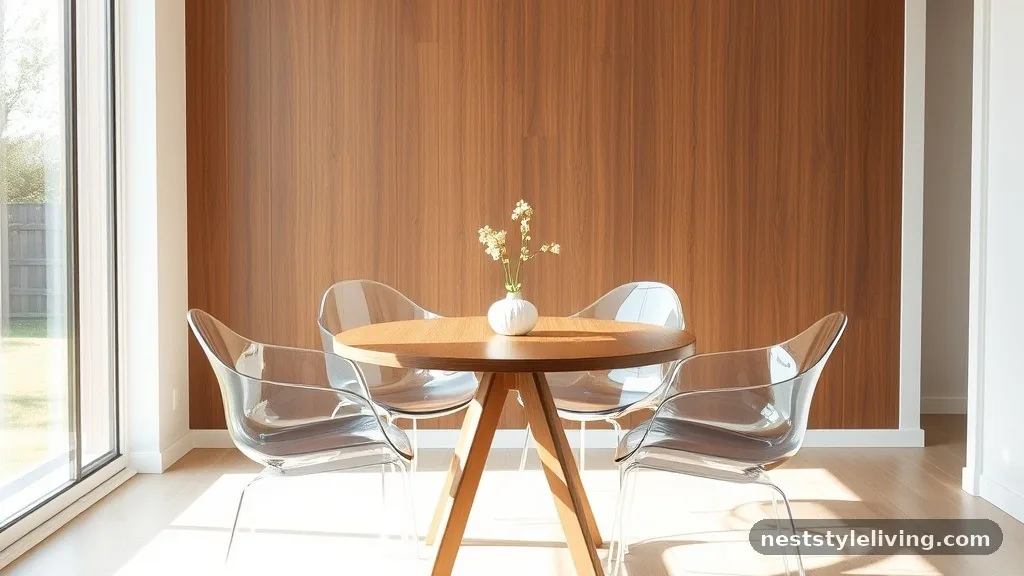
Achieving small dining room ideas that feel open and stylish requires a deliberate balance between scale, light, and visual weight. When square footage is limited, the goal shifts from filling the area with traditional sets to curating pieces that serve multiple functions without cluttering the floor.
By prioritizing transparency and clean lines, even the most compact corner can serve as an elegant gathering spot for meals. These design strategies will help you transform your eating space into a brighter, more inviting environment that maximizes every inch available.
1. Clear Acrylic Ghost Chairs
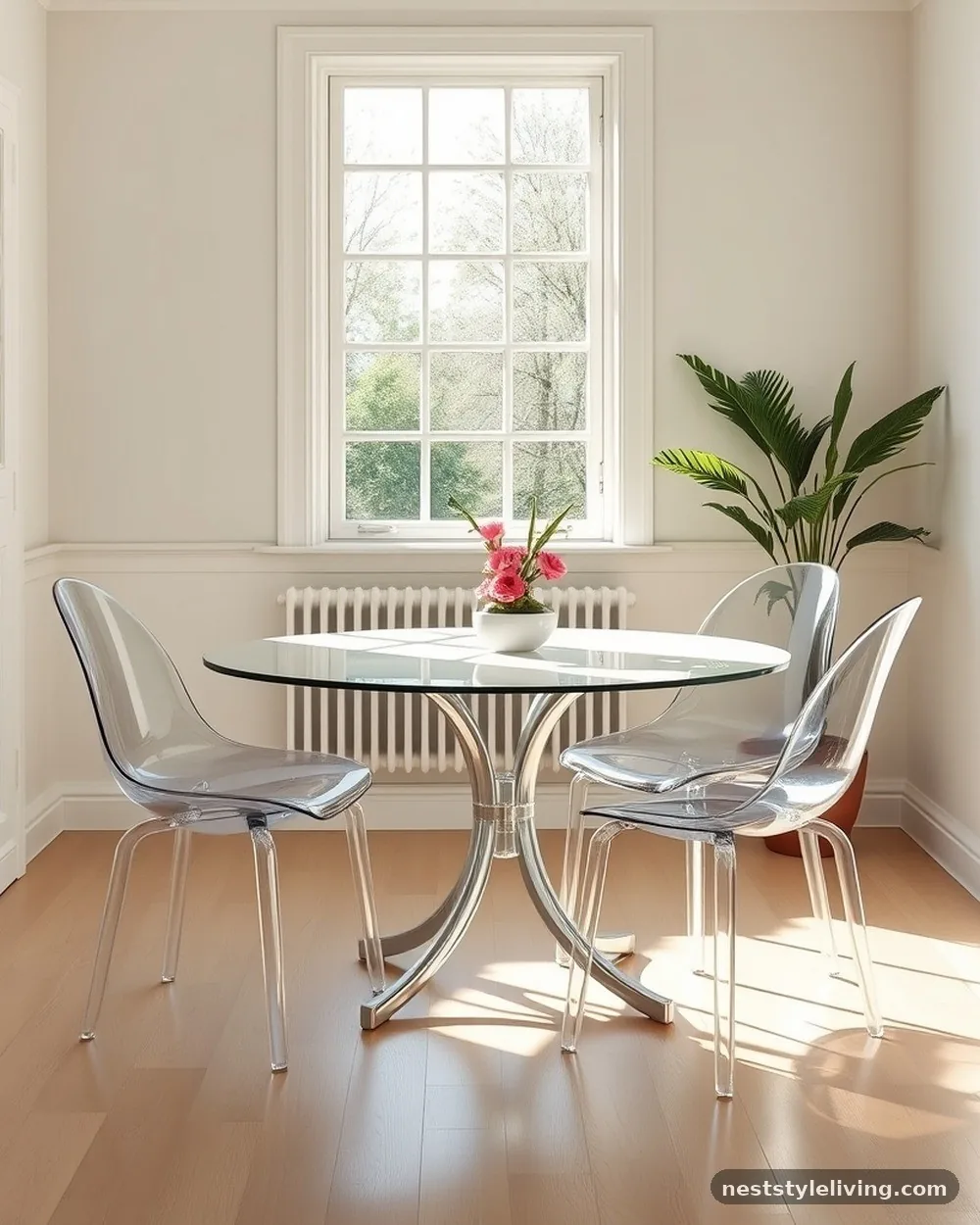
Ghost chairs are a staple for anyone aiming for an airy aesthetic because they occupy physical space while remaining virtually invisible to the eye. Made from high-quality molded polycarbonate, these transparent seats prevent the dining room from feeling boxed in by solid silhouettes.
They pair exceptionally well with minimalist tables, allowing the floor pattern or rug underneath to remain visible. Because they lack heavy frames, they reduce visual noise, which is essential for maintaining a sense of openness in tight quarters.
To keep these chairs looking pristine, avoid using harsh abrasive cleaners that can cause micro-scratches on the surface. Instead, wipe them down with a microfiber cloth and a mild soap-and-water solution once a week to remove dust and fingerprints.
2. Wall-Mounted Drop-Leaf Tables
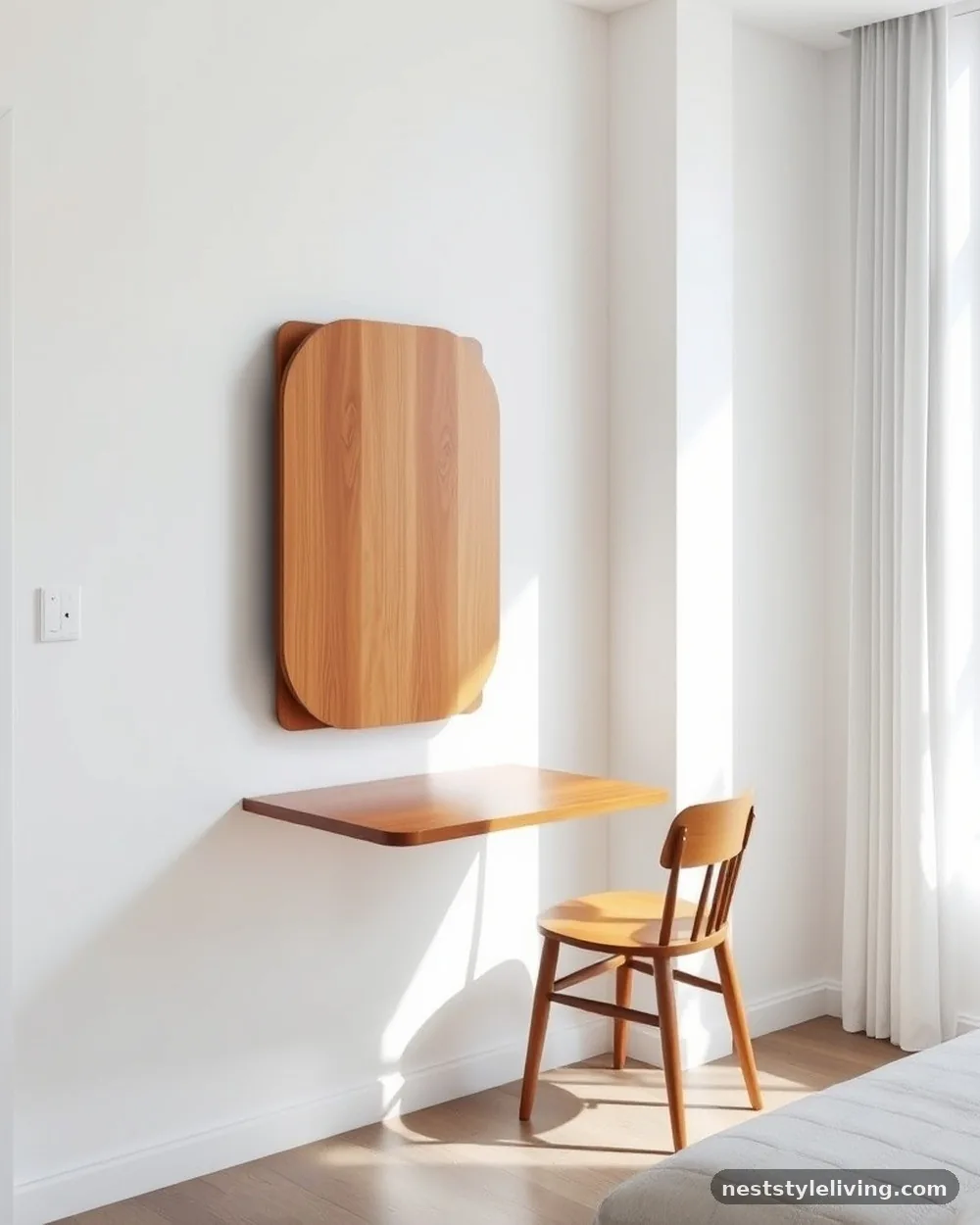
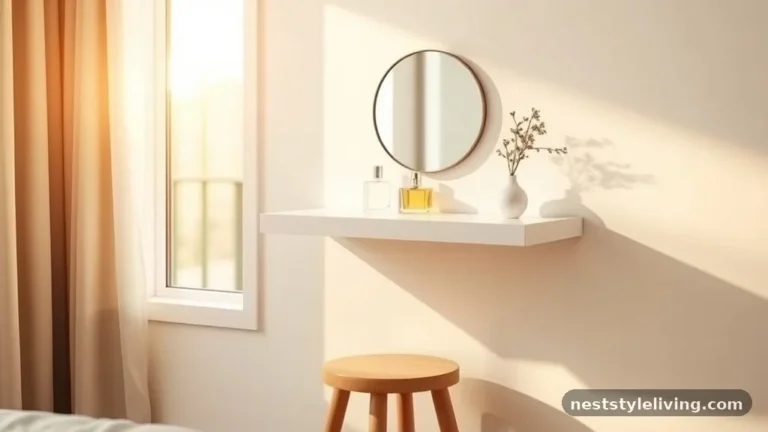
A wall-mounted drop-leaf table is a clever solution for rooms that serve dual purposes, such as a home office that transitions into a dining area. When the leaf is folded down, the unit hugs the wall, leaving the floor completely clear for movement.
When you need to host, simply lift the leaf and lock it into place. This piece removes the need for bulky table legs that often make a room feel smaller than it actually is.
Install the table at standard dining height, which is typically 29 to 30 inches from the floor, to ensure your existing chairs fit comfortably. Use heavy-duty wall anchors to ensure the mounting hardware can support the weight of dinnerware during use.
3. Oversized Statement Mirrors
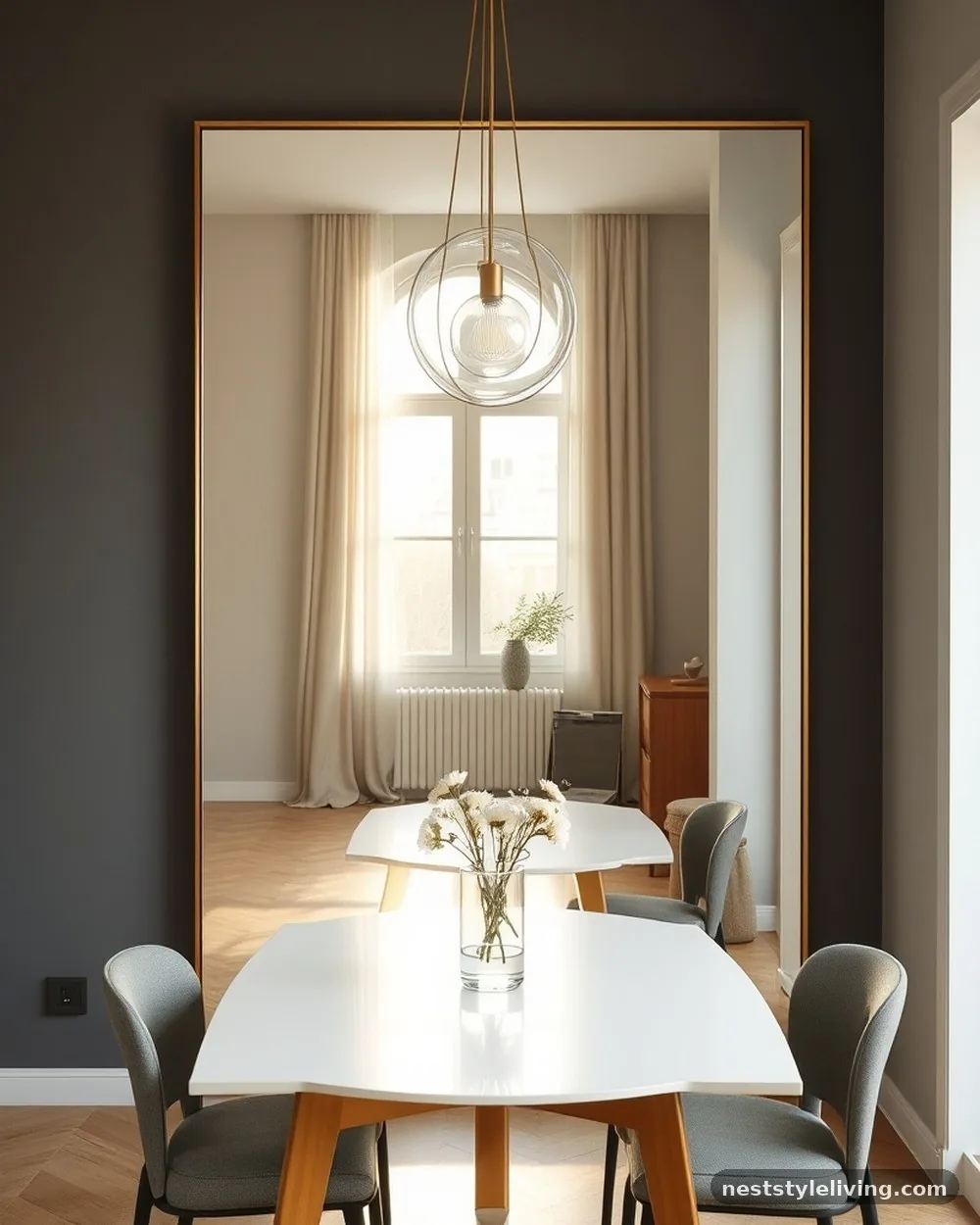
Placing a large, floor-to-ceiling mirror along one wall of your dining area is a classic trick to double the perceived size of the room. By reflecting the light from windows or pendant fixtures, a mirror creates the illusion of depth, tricking the eye into thinking the space continues beyond the wall. For a stylish touch, choose a mirror with a slim metallic frame that adds a hint of sophistication without creating a heavy visual block.
Position the mirror directly across from a light source, such as a window or a statement chandelier, to maximize the bounce of natural and artificial light. If you have a small, dark corner, place a floor lamp near the mirror to amplify the glow.
4. Pedestal Dining Tables
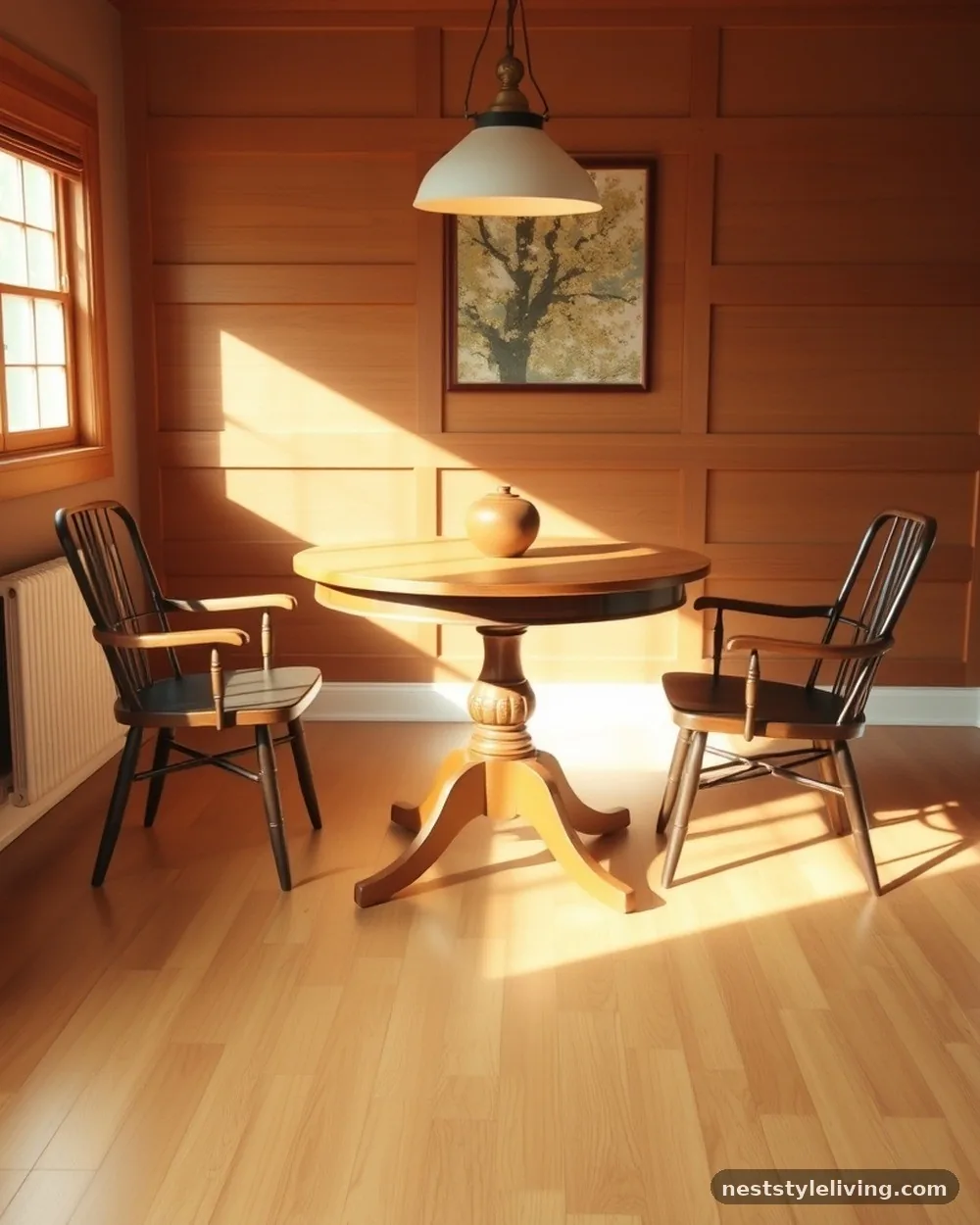
Traditional dining tables with four corner legs often create a crowded, chaotic look in small rooms because they limit how chairs can be tucked away. A pedestal base, by contrast, centers the support, which provides more legroom and makes the table feel less like a solid barrier. This design choice is particularly effective with round or oval tabletops, as they lack sharp corners that can cause bruising in tight traffic patterns.
When shopping for a pedestal table, prioritize models with a heavy, weighted base to prevent wobbling during meals. Measure the diameter carefully to ensure you have at least 36 inches of clearance between the edge of the table and the nearest wall or piece of furniture.
5. Floating Built-in Banquette
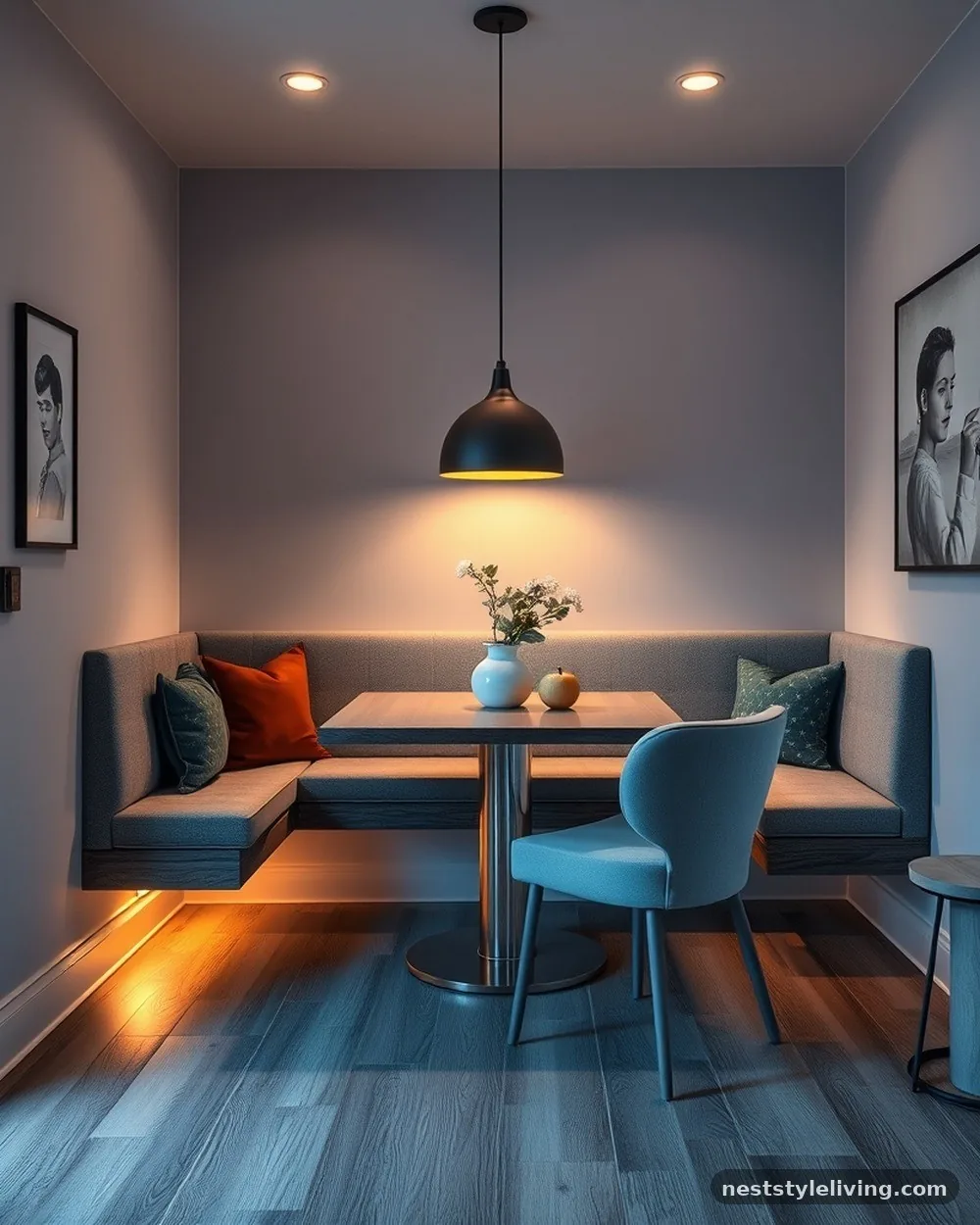
A built-in corner banquette transforms an awkward or underutilized nook into a cozy, efficient dining zone. By pushing the seating against the wall, you eliminate the need for aisle space behind chairs, allowing you to fit more people into a smaller footprint. To make the banquette feel lighter, leave the base slightly recessed or choose a floating design that attaches directly to the wall studs, revealing the floor underneath.
Incorporate hidden storage beneath the seat cushions by installing hinged tops or pull-out drawers. This allows you to tuck away placemats, extra linens, or seasonal dinnerware, keeping the tabletop clear and the overall look uncluttered.
6. Slim-Profile Industrial Shelving
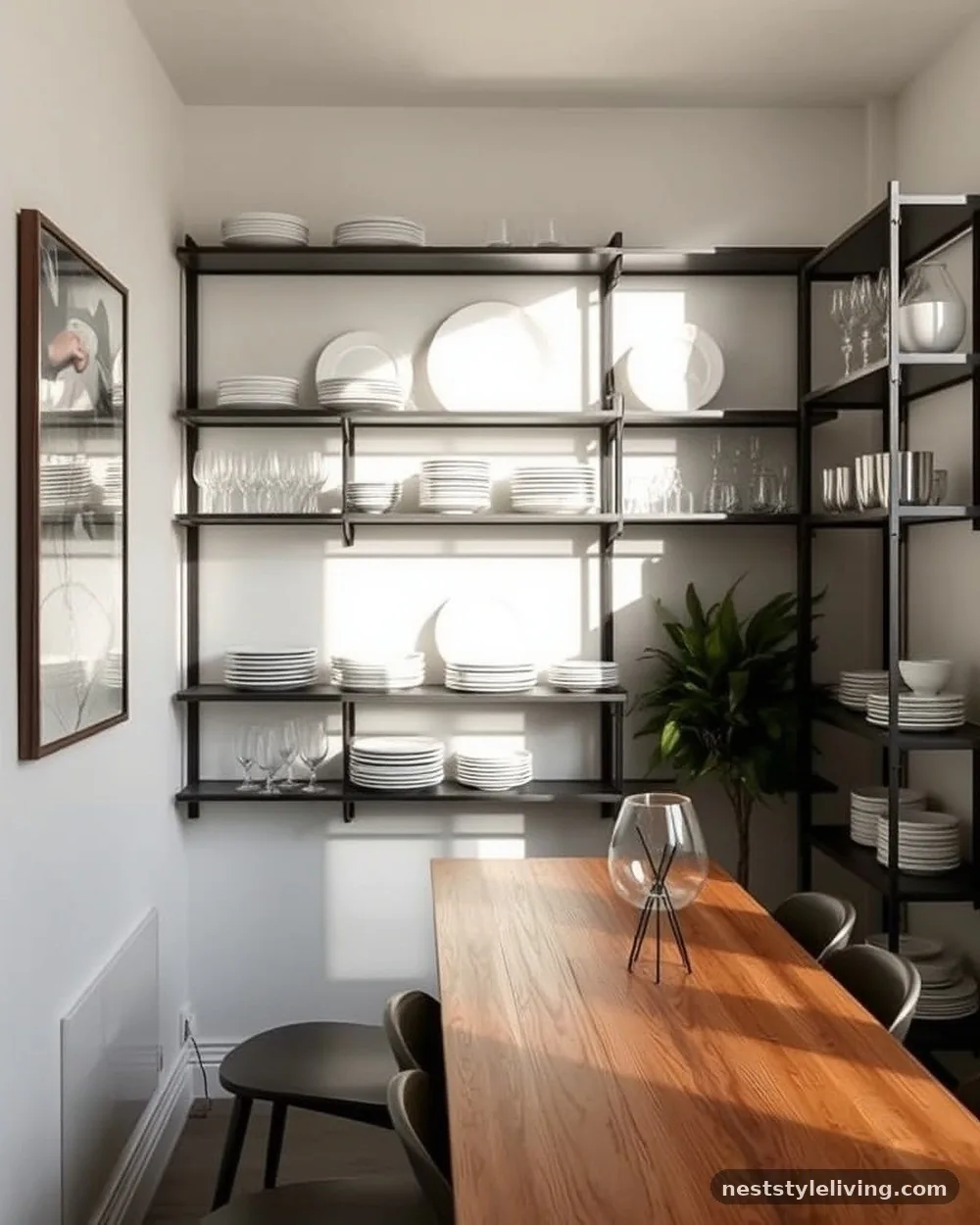
If you lack a dedicated buffet or sideboard, utilize vertical wall space with slim-profile industrial shelving. These units, typically made of thin iron or powder-coated steel, hold dinnerware or decorative accents without protruding far into the room. Because the shelves are open, they don’t trap light or create a sense of heaviness, keeping the walls feeling breathable and organized.
Mount your shelves at varying heights to create visual interest and draw the eye upward, which makes the ceiling appear higher. Keep the items on these shelves curated and tidy to avoid a cluttered appearance that can quickly overwhelm a small room.
7. Monochromatic Colour Palette
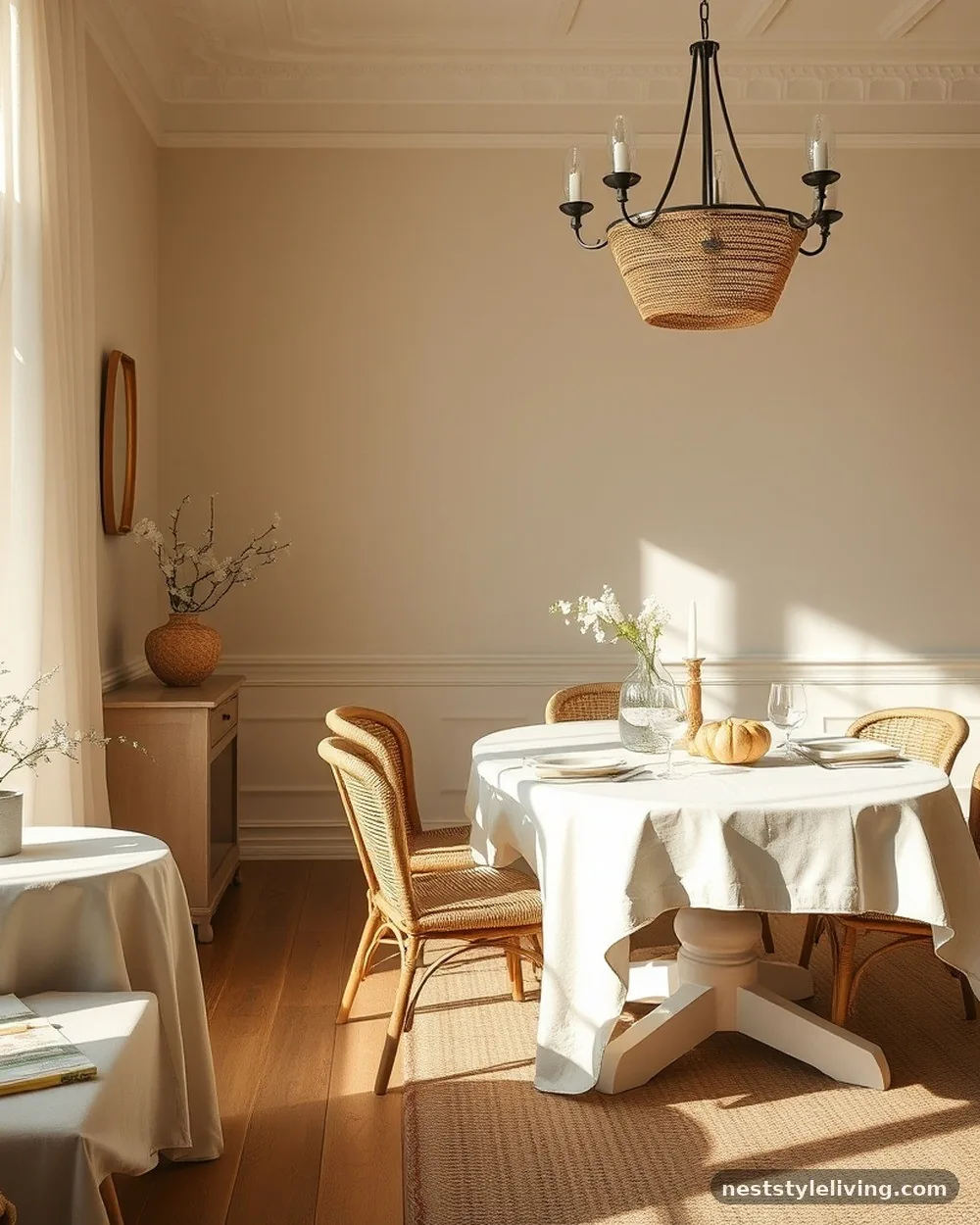
Using a single, light colour for your walls, trim, and large furniture pieces creates a sense of continuity that makes small dining room ideas that feel open and stylish much easier to achieve. By removing the harsh visual breaks that occur when different colours meet, the eye travels effortlessly across the room. Stick to soft whites, warm creams, or pale greys to keep the vibe serene and reflective.
If you find a monochromatic room too sterile, introduce texture rather than colour. Use a linen tablecloth, a woven rattan light fixture, or velvet chair cushions to add depth and warmth without breaking the cohesive, expansive colour scheme.
8. Low-Back Dining Chairs
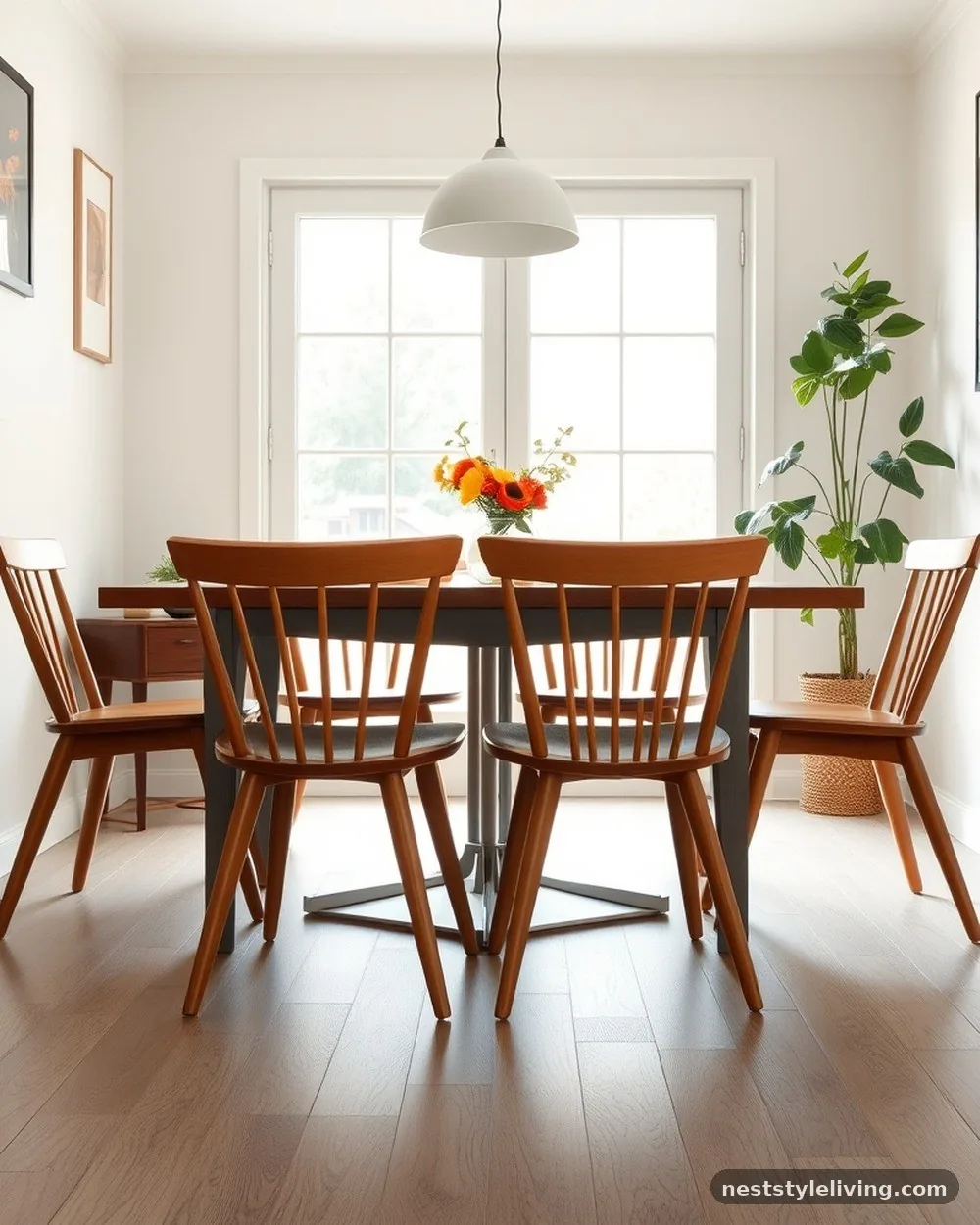
High-backed chairs can visually chop up a small room, creating a wall of furniture that blocks sightlines and makes the area feel confined. Low-back chairs, such as mid-century modern designs or simple wooden stools, keep the horizon line low and the room feeling airy. These pieces provide necessary comfort while allowing you to see through or over them, which preserves the feeling of openness.
Look for chairs with open back designs or thin spindles, as these allow more light to pass through the furniture. Test the ergonomics before committing, ensuring the back support hits at a comfortable point despite the lower profile.
9. Adjustable Corded Pendant Lighting
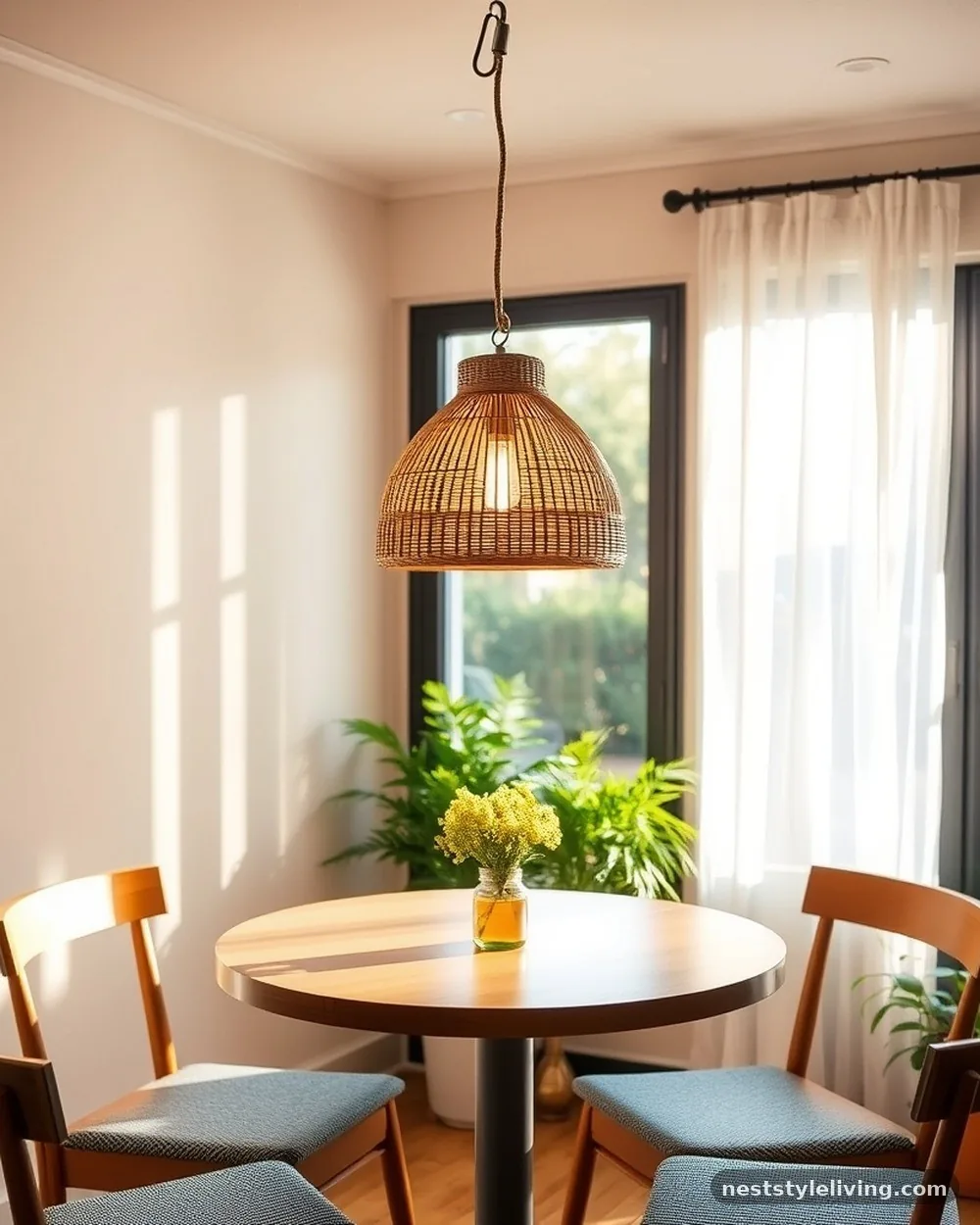
In a small space, floor lamps are rarely practical, so lighting must come from above. An adjustable corded pendant light allows you to center the fixture exactly over the dining table, even if the ceiling junction box is slightly off-center. Choose a shade made of glass, wire mesh, or woven bamboo to maintain a light, airy aesthetic that doesn’t dominate the ceiling space.
Ensure the bottom of the pendant sits between 30 and 36 inches above the table surface for the best lighting balance. Use a dimmer switch to adjust the mood, allowing the room to transition from a bright breakfast nook to a soft, intimate dinner setting.
10. Round Area Rugs
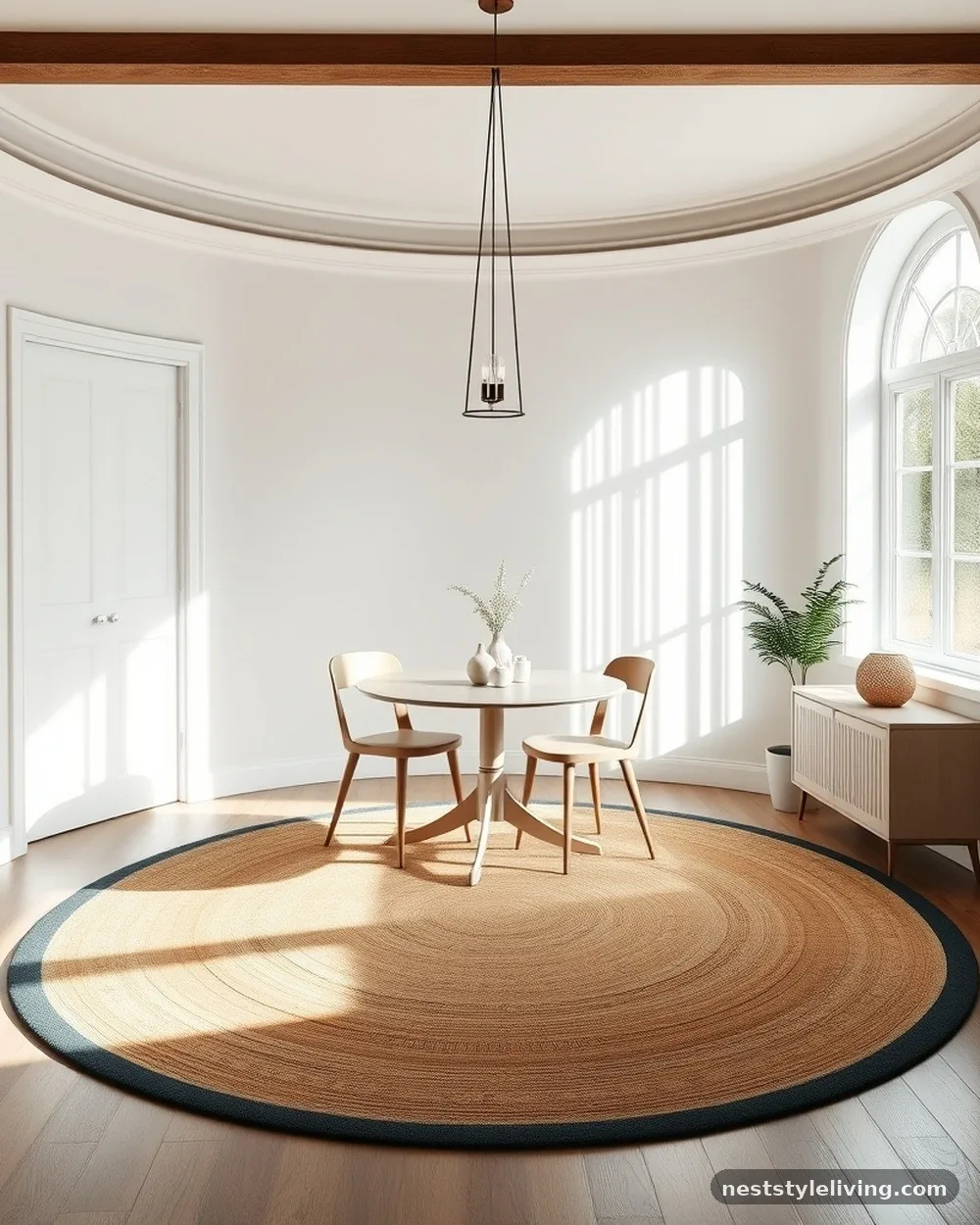
A round rug can soften the rigid geometry of a small, square room and create a designated zone for dining. Unlike rectangular rugs that might look awkward or mismatched in a tight space, a round rug centers the table and chairs, creating a focal point that feels intentional. Choose a low-pile or flat-weave material, as these are easier to maintain and won’t cause chairs to catch when guests pull them in and out.
Ensure your rug is large enough so that all chair legs stay on the rug even when guests are seated. A 7-foot round rug is typically the minimum size needed for a standard four-person round dining table.
11. Wall-Mounted Drop-Leaf Console
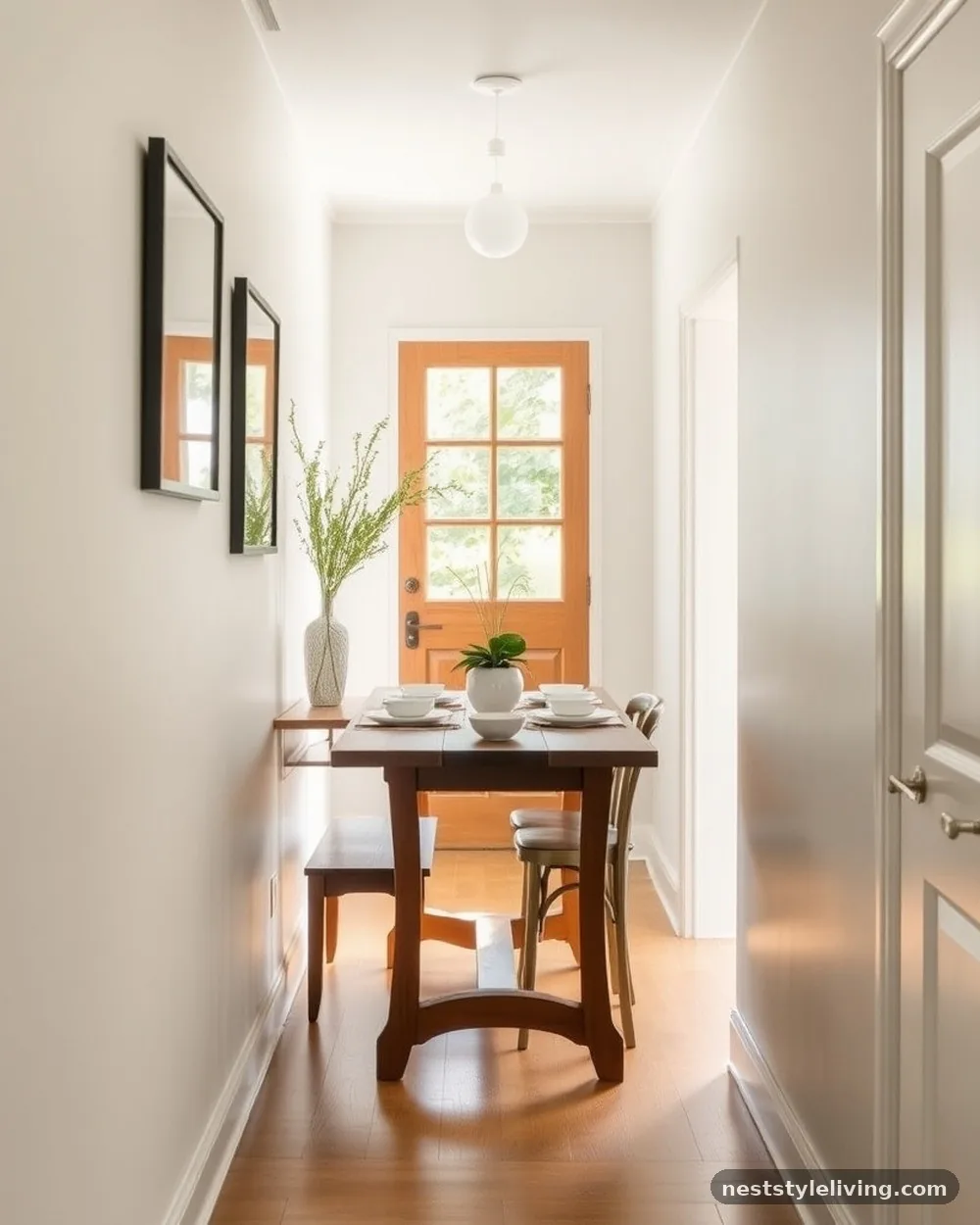
A narrow console table that doubles as a dining surface is perfect for studio apartments or multi-use hallways. When not in use, it acts as a slim storage piece for mail, keys, or a vase of flowers. When guests arrive, the leaves expand to create a functional eating surface that fits two to four people comfortably.
Look for a console with a sturdy piano hinge or a solid drop-leaf mechanism to ensure stability when the table is fully extended. Opt for a finish that matches your wall colour if you want the piece to disappear when folded down.
12. Glass-Top Dining Tables
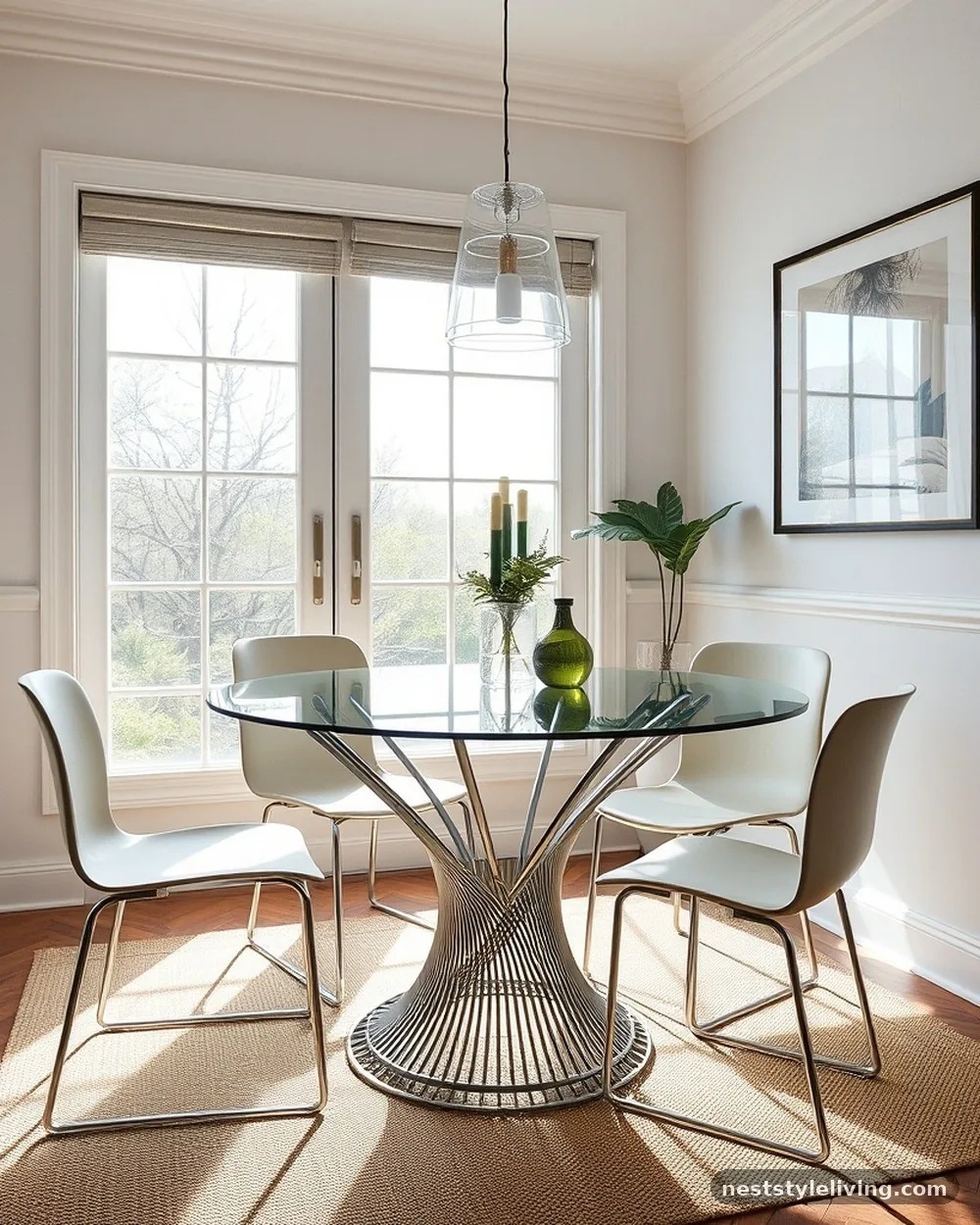
Glass tables are the ultimate choice for small spaces because the surface is transparent, allowing you to see the floor beneath the table. This effectively makes the table disappear, reducing the visual impact of the furniture on the room’s total volume. Pair a clear glass top with a metallic or sculptural base to add a touch of modern elegance without sacrificing the light, open feel.
Use a streak-free glass cleaner and a lint-free cloth to maintain the surface, as smudges are more visible on clear glass than on wood. If you have small children, consider a table with rounded or tempered glass edges to prioritize safety without compromising on style.
13. Vertical Art Galleries
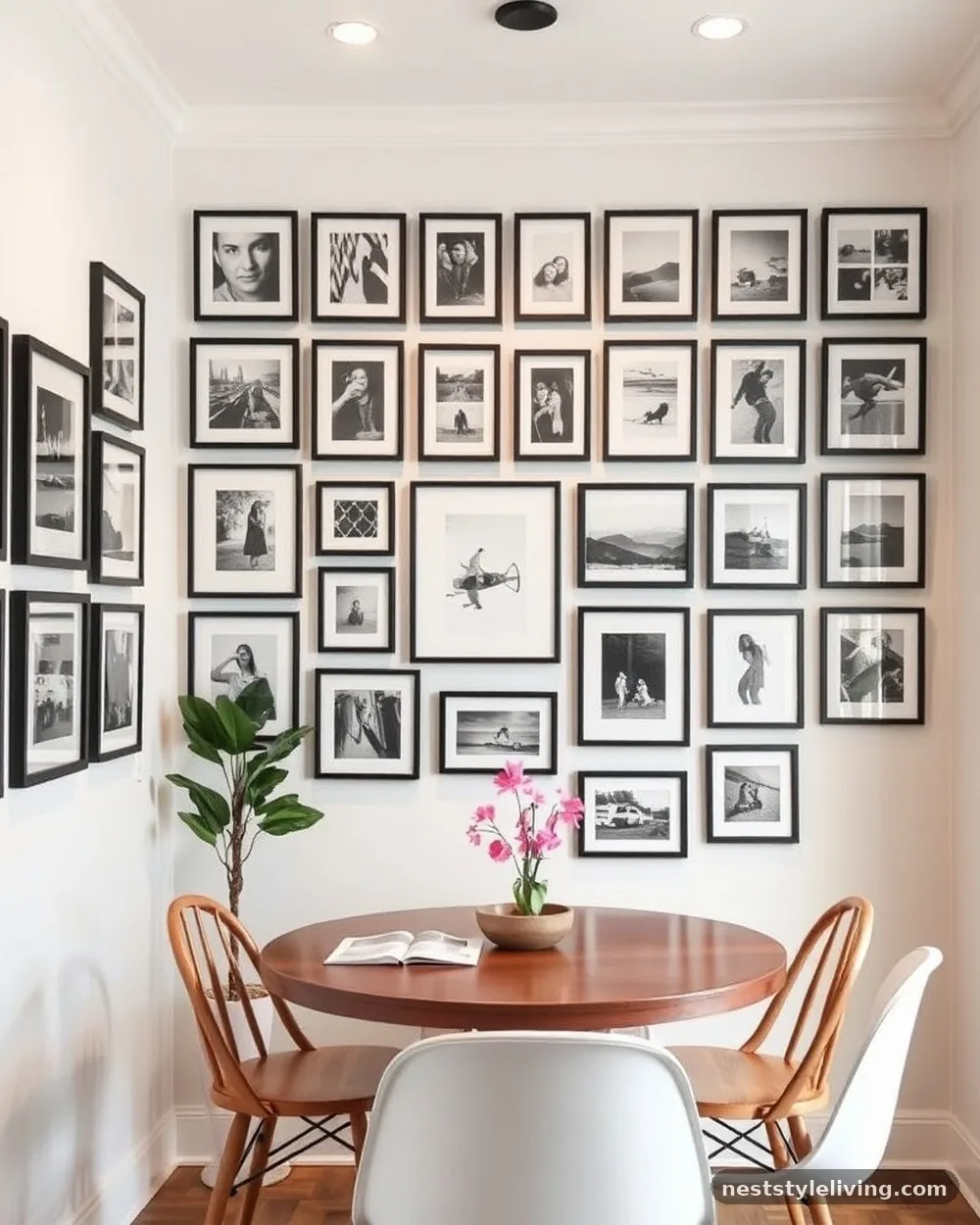
Instead of cluttering your surfaces with decor, use the walls to express your style. A vertical gallery wall draws the eyes up toward the ceiling, which helps the room feel taller and more expansive. By grouping smaller framed pieces into a single, cohesive arrangement, you create a point of interest that doesn’t take up any floor space or block traffic flow.
Use thin frames and uniform matting to keep the gallery wall looking organized and intentional rather than chaotic. Start by laying out your arrangement on the floor first to test the spacing before you commit to putting holes in the wall.
14. Multi-Functional Storage Ottomans
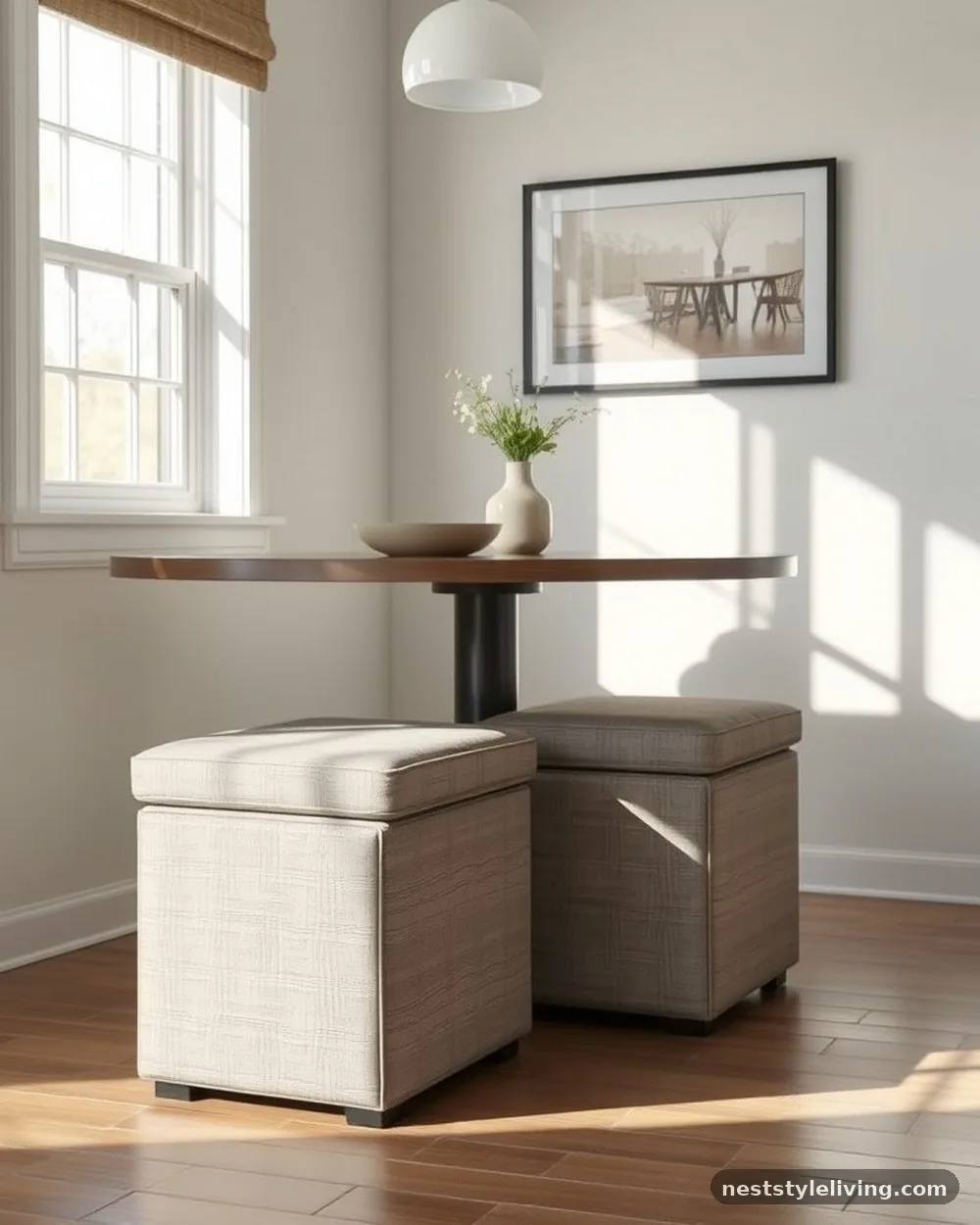
If you need extra seating for guests but don’t have room to store bulky chairs, consider using sleek, upholstered ottomans. These can be tucked under a console or table when not in use, and they provide hidden storage for extra placemats or chargers inside. Choose ottomans with a slim, architectural profile to ensure they don’t look like oversized lumps in your dining area.
Select a fabric that is durable and easy to clean, such as a high-performance polyester or a stain-resistant weave. This will keep the ottomans looking fresh even with frequent use as extra seating during larger gatherings.
15. Wall-Integrated Wine Racks
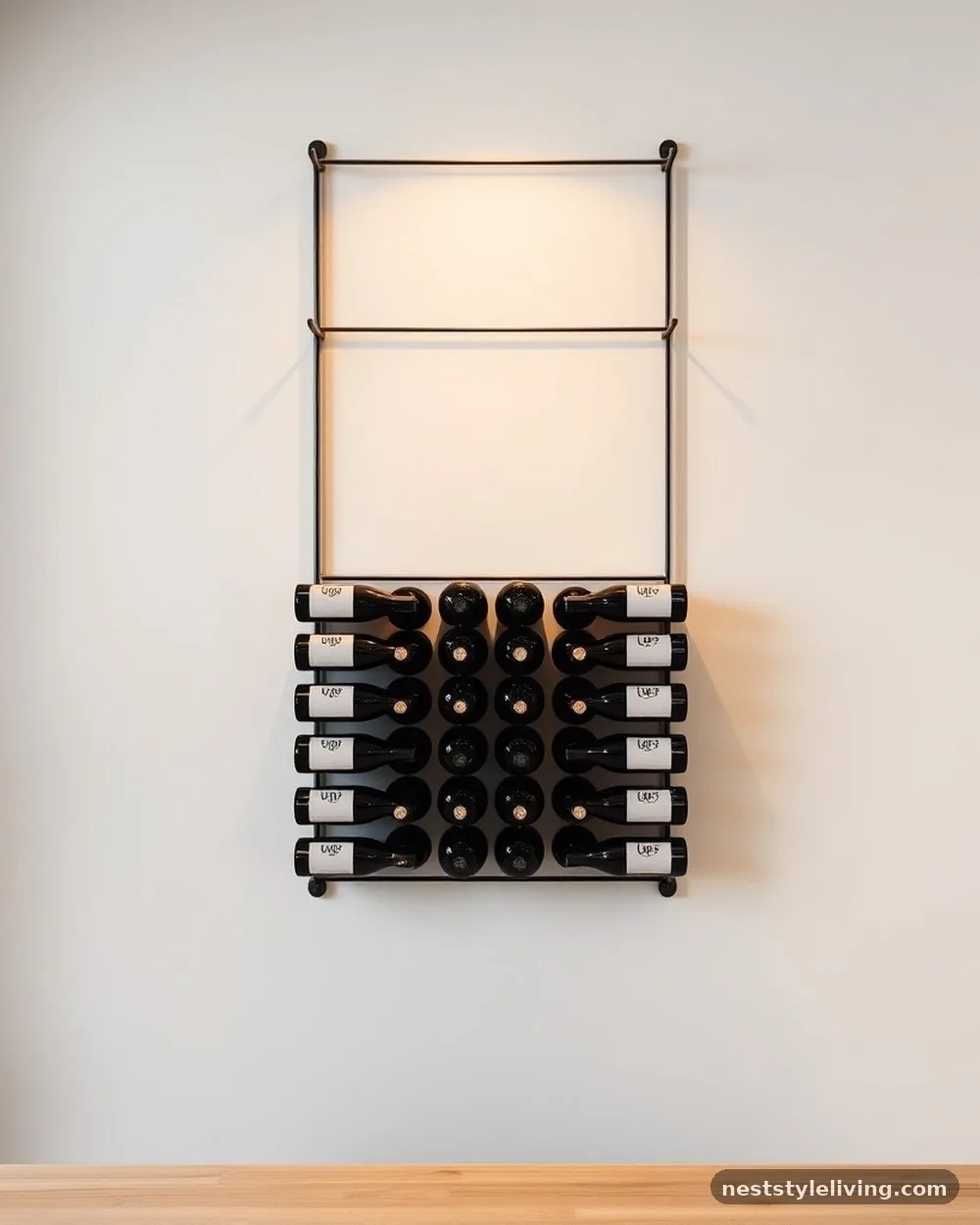
Free up your limited floor space by moving your wine collection to the wall. Vertical wine racks or floating wall-mounted bottle holders add a sophisticated, restaurant-like vibe to your dining area while keeping your bottles safely off the table. This keeps your surfaces clear for dining and adds a visual element that emphasizes the verticality of the room.
Install the rack away from direct sunlight and heat sources to ensure your wine stays at a stable temperature. Choose a design that displays the labels clearly so you can easily identify your favorite bottles without needing to pull them off the wall.
16. Slim Buffet Sideboards
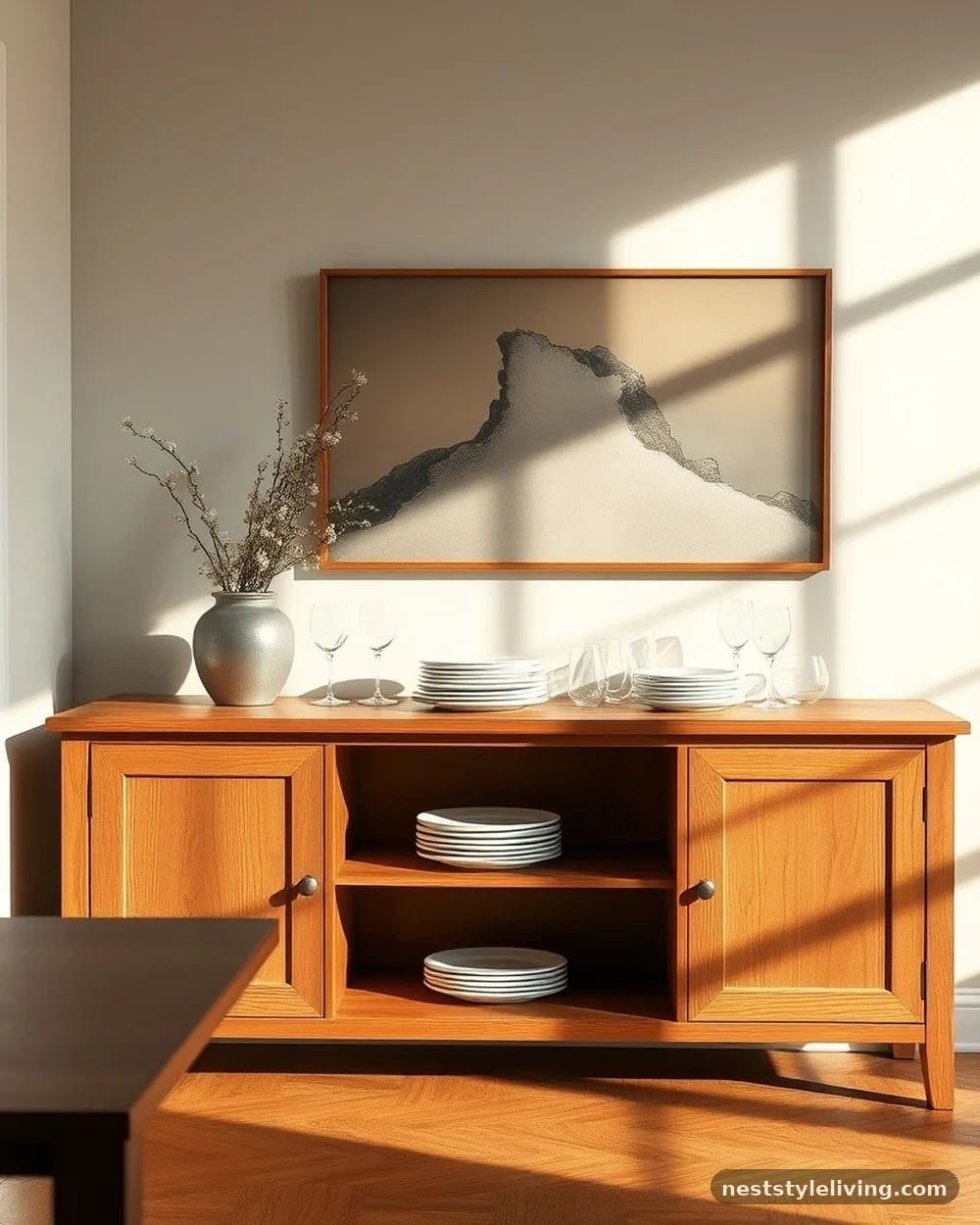
A shallow sideboard provides essential storage for dinnerware and serving pieces without the bulk of a traditional hutch. Look for pieces that are no more than 12 to 15 inches deep, which is sufficient for storing plates and glasses while keeping the walkway clear. Placing this against a wall creates a clean, organized look that anchors the room without making it feel crowded.
Choose a sideboard with sliding doors rather than hinged ones, as this prevents the need for extra clearance space in front of the unit. Use the top of the sideboard as a serving station or a decorative display to keep your main dining table free of clutter.
Frequently Asked Questions
What are some ideas for a very small dining room?
For extremely compact areas, focus on multi-functional furniture like wall-mounted drop-leaf tables or nesting chairs. Use vertical space for storage, rely on light-reflecting surfaces like mirrors, and choose transparent materials to minimize visual weight.
What are dining room trends for 2026?
Current trends emphasize modularity and natural materials, such as light woods and tactile textiles. There is a strong shift toward “quiet luxury,” where high-quality, understated pieces replace overly ornate decor, and smart, integrated lighting becomes a standard feature.
What are common dining room design mistakes to avoid?
The most common mistake is choosing furniture that is too large for the room, which disrupts traffic flow. Another error is poor lighting, such as a single, dim overhead bulb that creates harsh shadows, or neglecting to scale the rug correctly, which can make the floor space feel disjointed.
What are some popular design styles for small rooms?
Minimalism remains the most popular style for small spaces because it prioritizes function and clean lines. Scandinavian design is also highly sought after for its use of light colours and natural wood, which inherently make a room feel brighter and more open.
Conclusion
Creating a dining area that feels open and stylish is entirely achievable, even when your square footage is limited. By selecting furniture that emphasizes transparency, utilizing vertical space for storage, and maintaining a cohesive colour palette, you can transform a cramped corner into a sophisticated, airy space. These small dining room ideas that feel open and stylish serve as a roadmap for making intentional design choices that maximize both utility and aesthetic appeal.
Remember that the best dining room designs are those that prioritize how you actually live. If you only host occasionally, opt for flexible, stowable furniture that keeps the area clear for daily tasks.
If you love long dinners, invest in comfortable seating that fits the space perfectly. Start with one or two of these adjustments, and watch as your dining area begins to feel more spacious and inviting than you ever thought possible.