22 Small Laundry Room Ideas That Maximize Every Inch
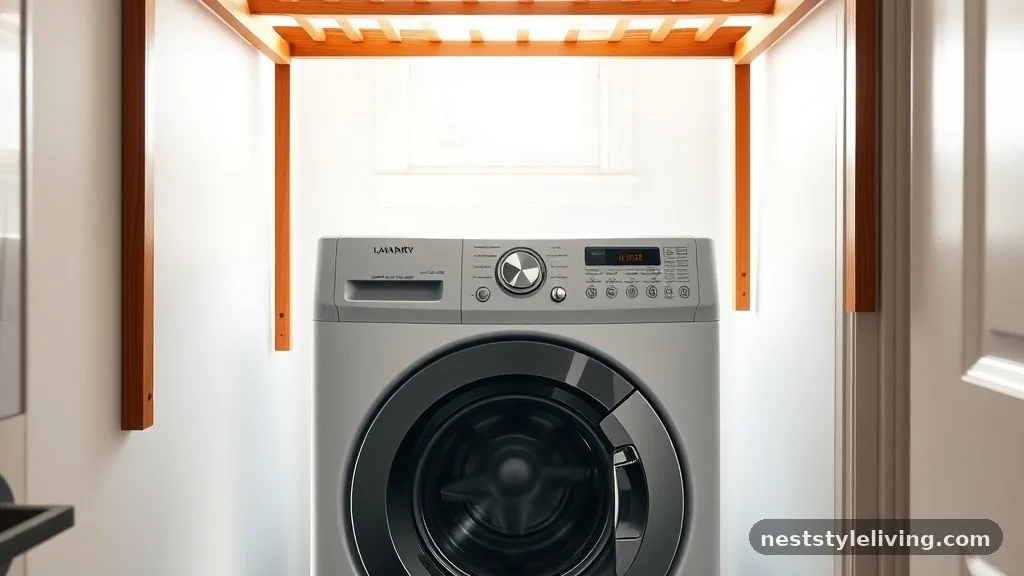
Transforming a cramped utility area into a functional sanctuary requires intentional planning and a focus on vertical utility. When you implement small laundry room ideas that maximize every inch, you turn a forgotten closet or narrow corner into a high-performance zone that handles heavy-duty loads with grace.
Achieving this balance involves selecting space-saving hardware, utilizing often-ignored wall surfaces, and choosing a color palette that visually expands the footprint. Whether you are dealing with a stacked unit or a side-by-side configuration, the following strategies will help you reclaim your square footage and create a workspace that is as efficient as it is visually appealing.
1. Vertical Drying Racks
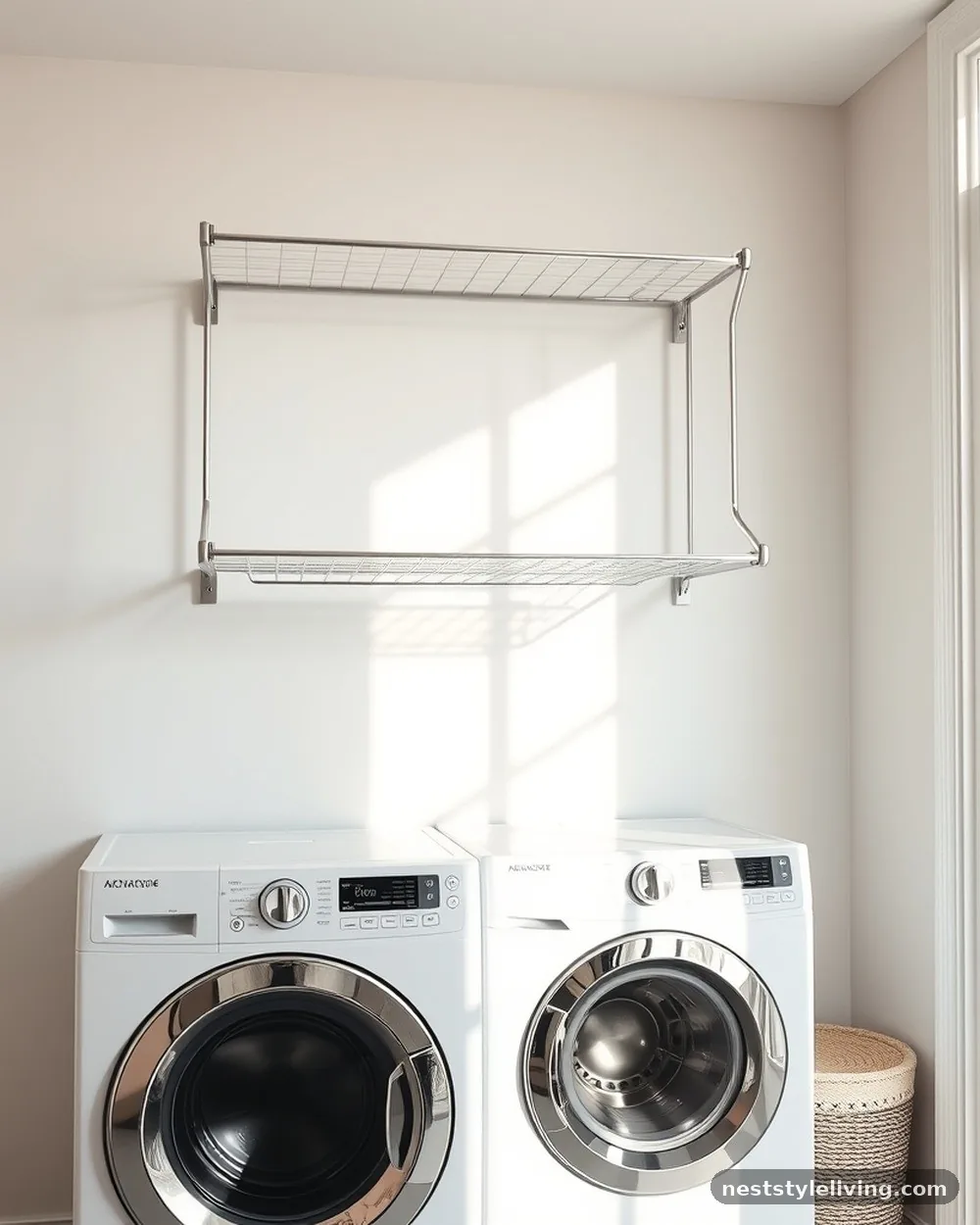
Wall-mounted, fold-down drying racks are essential for anyone lacking room for a traditional floor-standing unit. These fixtures typically feature a concertina or drop-leaf design that sits flush against the wall when not in use. By utilizing the vertical plane, you keep your floor clear for movement or basket storage.
Many models are constructed from powder-coated steel or sustainably sourced wood, ensuring they can handle the weight of heavy damp denim or oversized towels without bowing. They disappear into the architecture of the room, making them ideal for high-traffic or multi-purpose laundry areas.
Look for a rack that spans the width of your available wall space above the washer or dryer, ensuring it is mounted directly into studs for maximum weight capacity. You can install these using standard drill bits and heavy-duty anchors to ensure they remain stable under the strain of wet, heavy garments.
2. Over-the-Door Utility Organizers
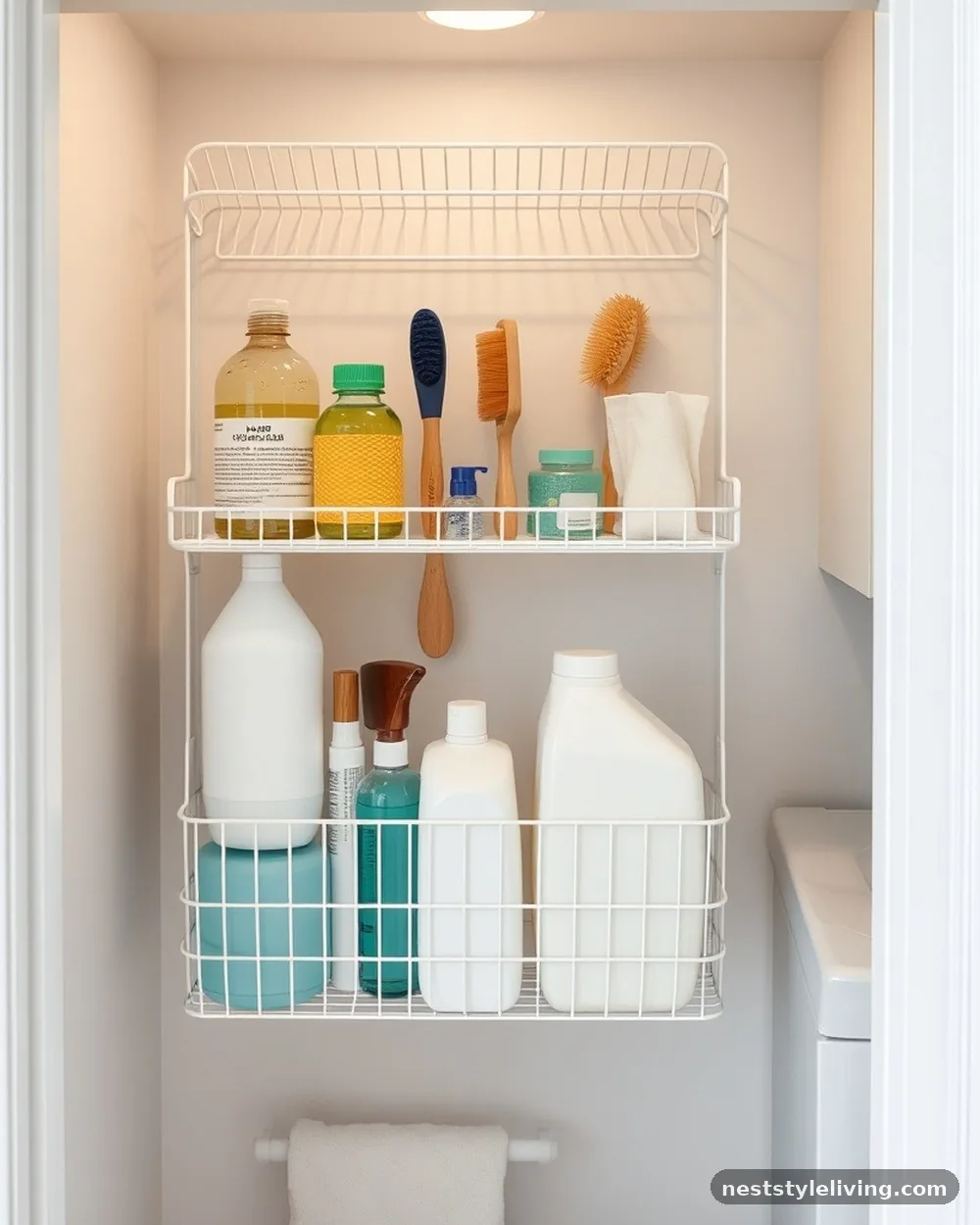
The back of a laundry room door is often the most overlooked asset in a compact footprint. By installing a heavy-duty, over-the-door rack, you create instant storage for ironing supplies, stain sticks, and lint rollers.
These organizers usually feature a mix of adjustable baskets and hooks, which are perfect for items that usually clutter your folding surface. Choosing a white or metallic finish helps the organizer blend into the door, preventing the room from feeling visually overwhelmed or cluttered with plastic components.
Measure the clearance between your door and the door frame to ensure the rack doesn’t interfere with the latch mechanism. When selecting an organizer, prioritize wire mesh or solid metal construction over fabric pockets, as metal is easier to wipe clean when a laundry detergent bottle inevitably leaks or spills.
3. Pull-Out Slim Carts
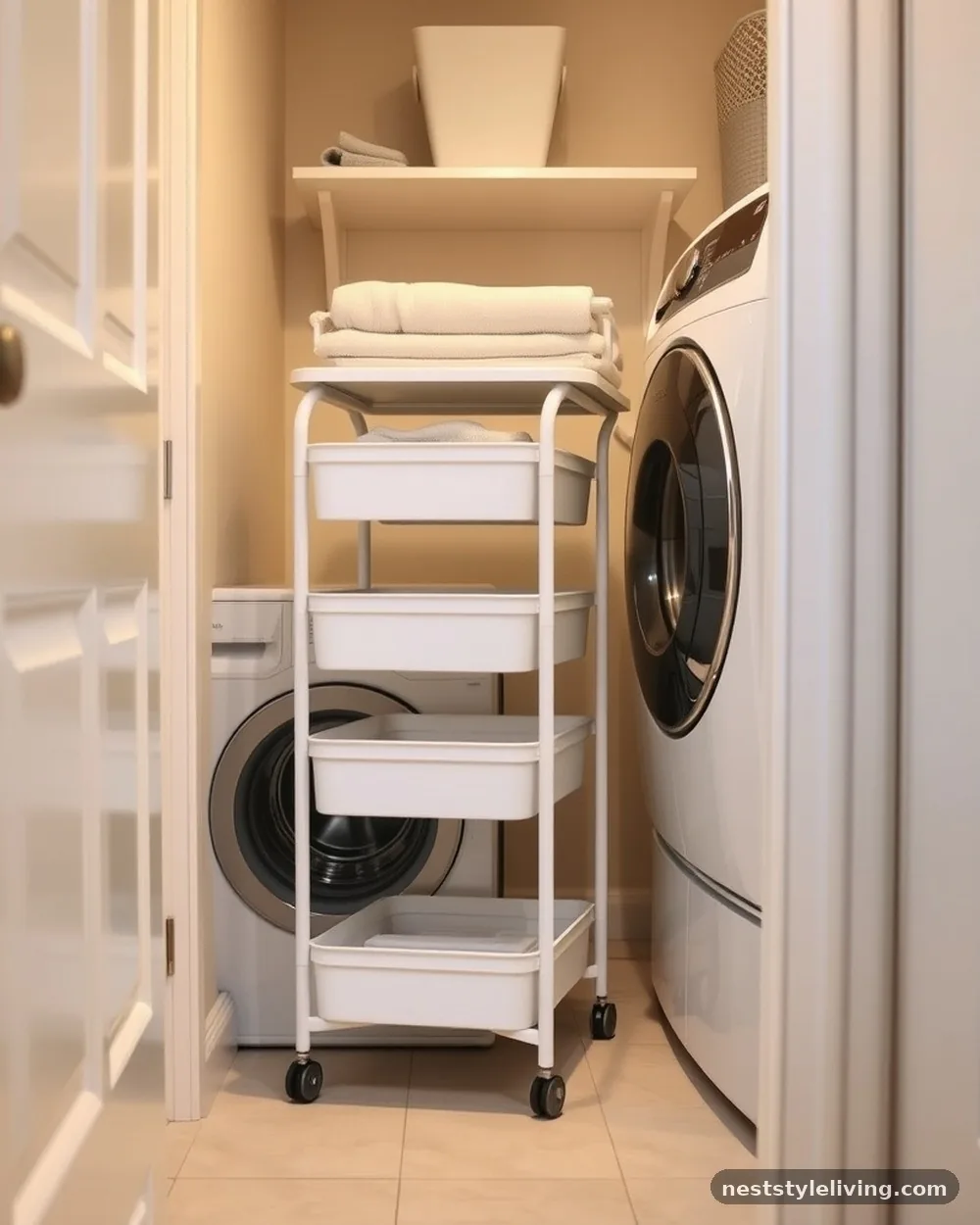
Narrow gaps between your washer and dryer are prime real estate for a rolling, slim-profile utility cart. These carts are specifically designed to be roughly five to six inches wide, allowing them to slide into tight crevices while providing three or four tiers of storage for detergent pods, dryer sheets, and mesh garment bags. Because they are on wheels, they offer the flexibility to be rolled out entirely, making it easy to access the back of the machines for maintenance or cleaning.
Choose a cart with a handle on the front panel so you can pull it out with a single, smooth motion. If your floor is uneven, look for models with locking casters to ensure the cart doesn’t drift or bump against your appliances during the vibration of a spin cycle.
4. Floating Shelves Above Appliances
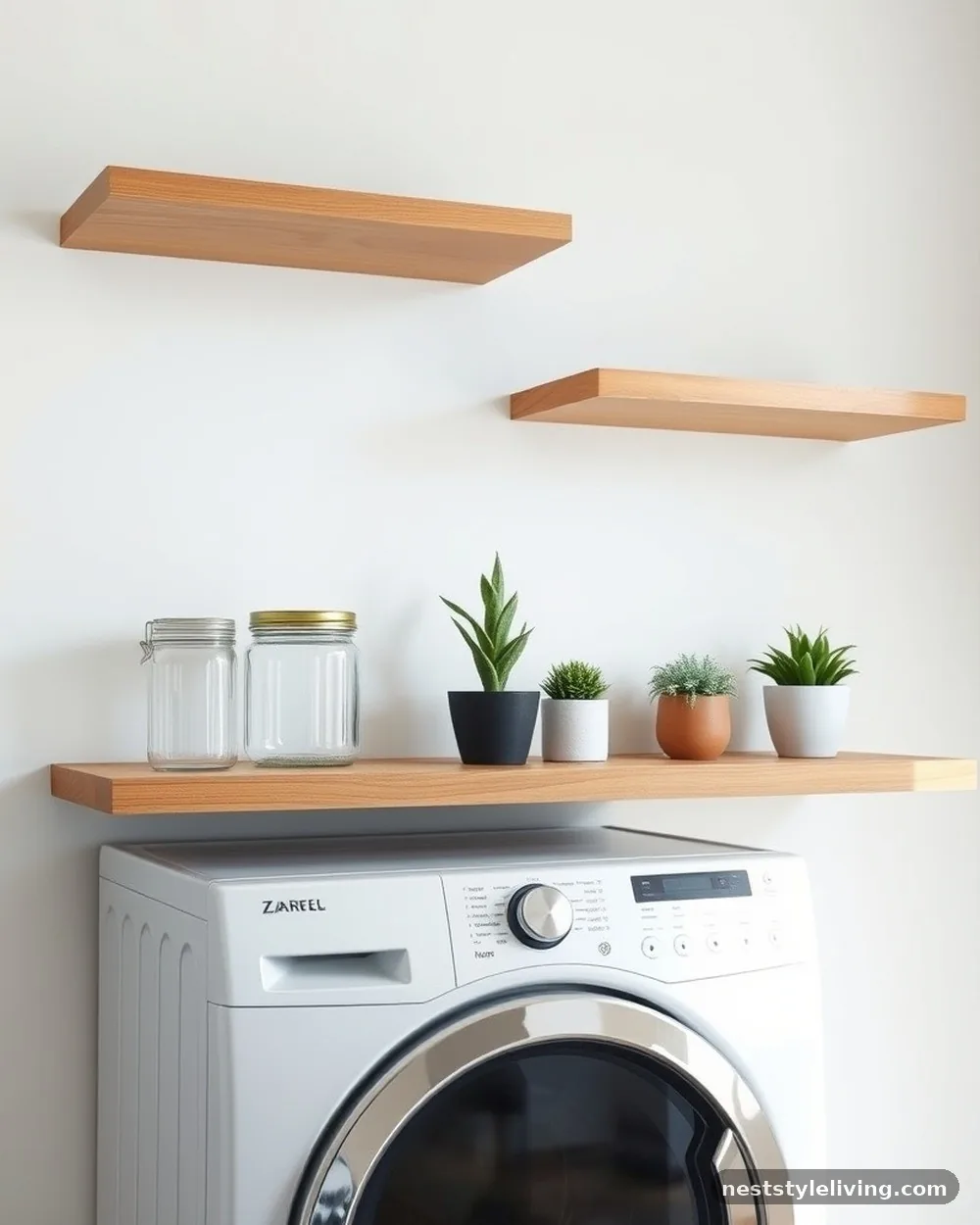
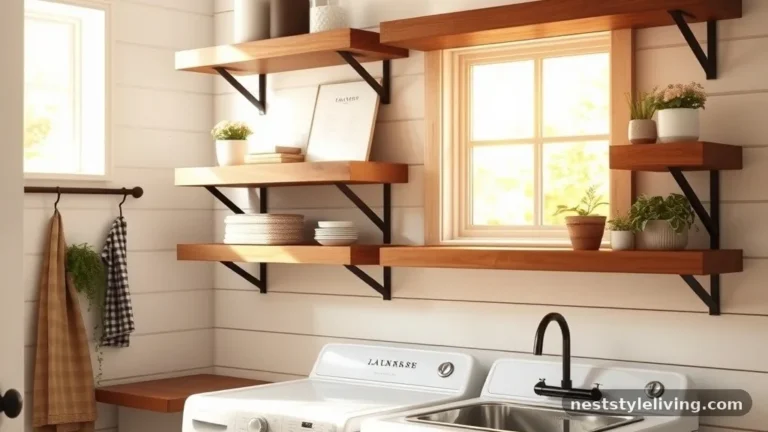
When floor space is non-existent, the area directly above your washer and dryer becomes the primary storage zone. Floating shelves provide an open, airy alternative to bulky cabinetry, making a small laundry room feel larger.
By mounting two or three thick, deep shelves, you create a dedicated space for glass jars holding laundry powder, decorative baskets for cleaning rags, and perhaps a small potted plant to add life to the room. The key is to keep the items on these shelves organized and uniform to avoid a cluttered look.
Mount your shelves at a height that allows you to open the lids of top-load machines or access the detergent dispensers of front-load units without obstruction. Use decorative brackets if you want an industrial or farmhouse aesthetic, or opt for hidden internal hardware for a clean, modern finish.
5. Magnetic Appliance Storage
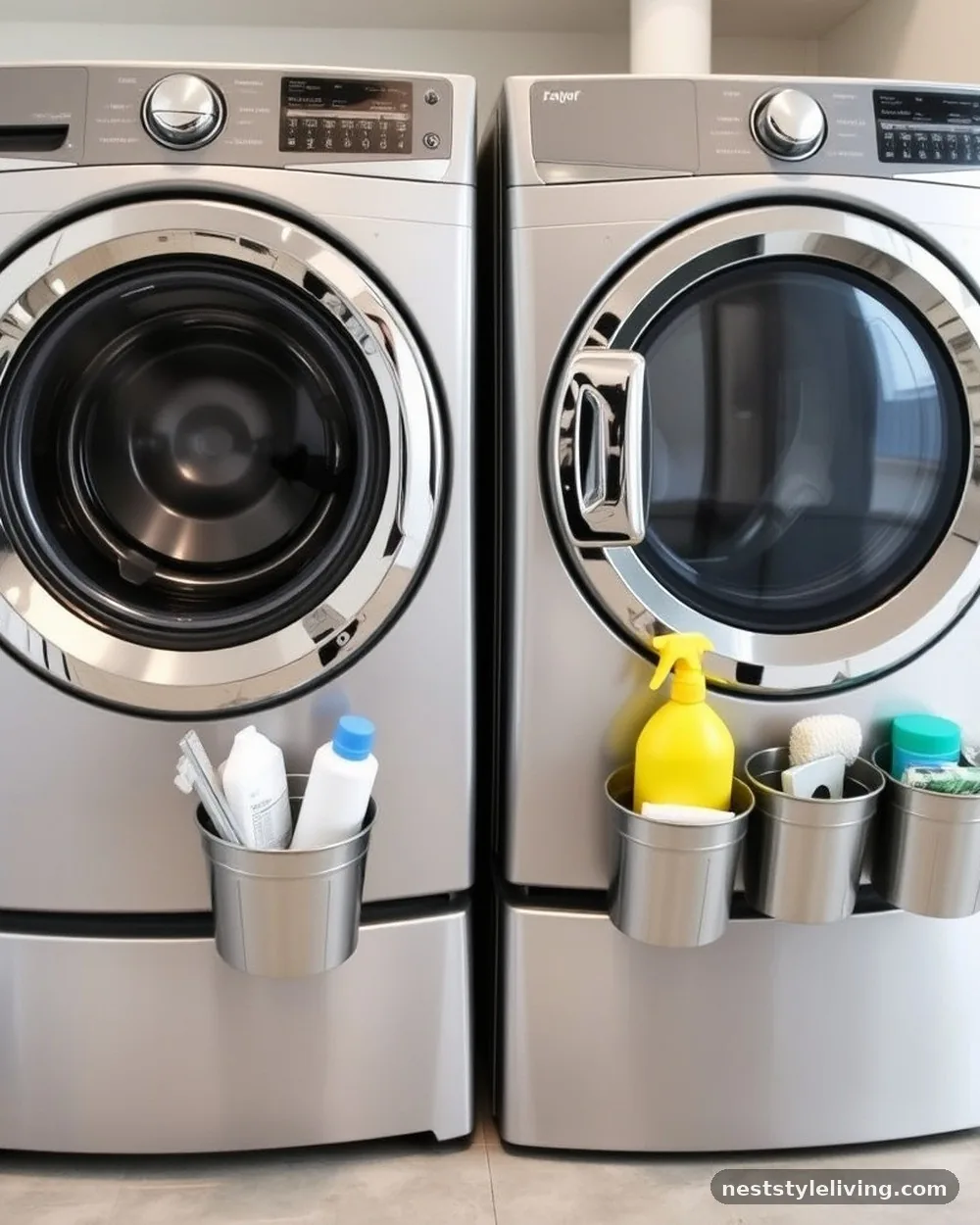
If your machines have metal casings, you can use the sides of the appliances as storage surfaces by attaching magnetic hooks and bins. These magnetic organizers are perfect for holding frequently used items like a handheld steamer, a small broom, or even a pair of scissors for cutting tags off new clothes.
This strategy turns the exterior of your washer and dryer into an active storage wall, freeing up your limited shelf space for larger items. It is a non-permanent solution that requires zero drilling, making it ideal for rentals.
Select high-strength neodymium magnets to ensure the bins do not slide down the side of the machine when loaded with weight. Test the magnets on an inconspicuous area of your machine first to ensure they do not scratch the finish, or apply a thin strip of felt or silicone to the back of the magnet.
6. Built-in Folding Countertop
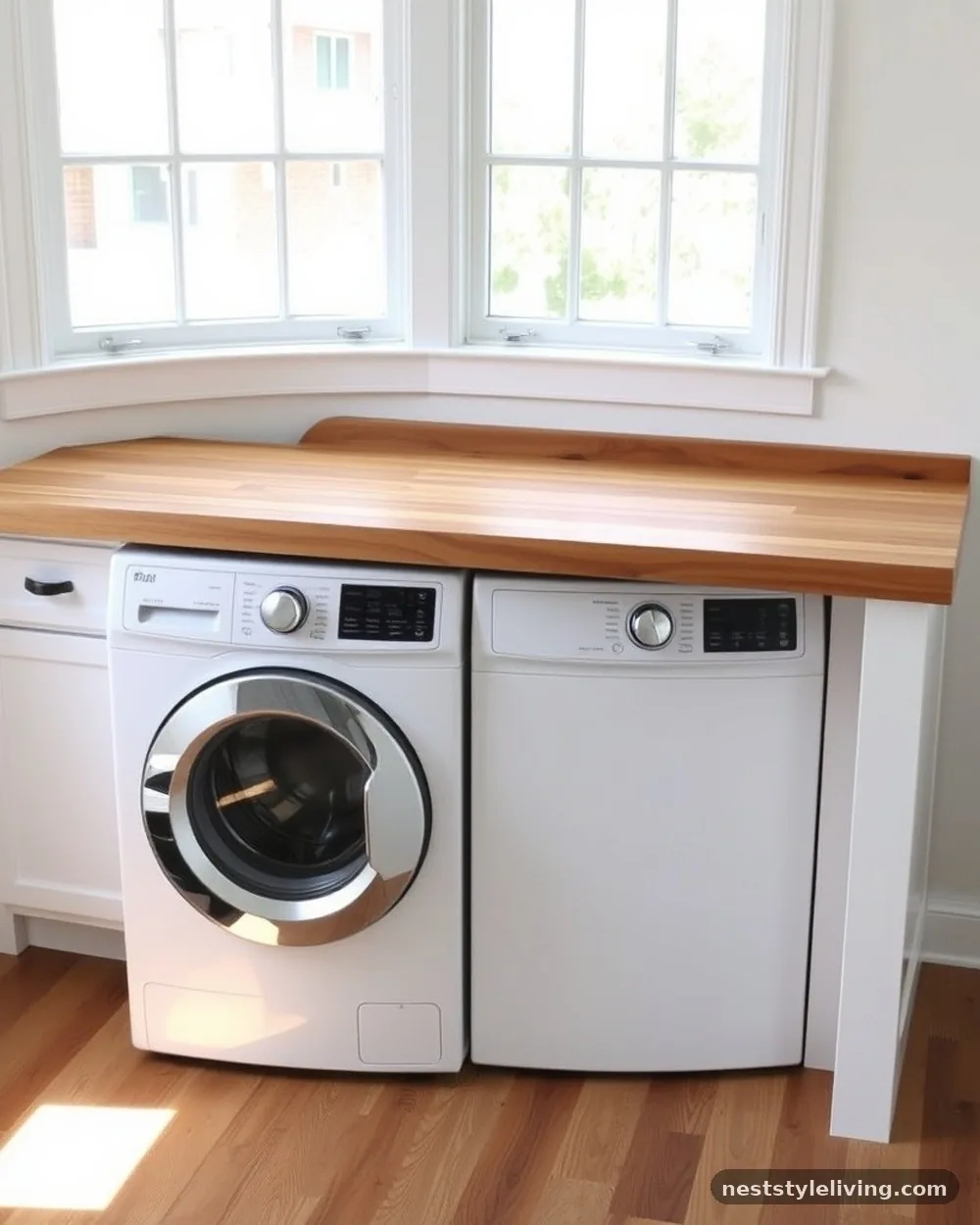
A custom-cut piece of butcher block or laminate spanning the top of side-by-side front-load washers and dryers creates a seamless, functional surface for folding clothes. This bridge creates a single, continuous workspace that prevents socks from falling into the crevice between machines.
It also provides a dedicated spot for a basket, turning a laundry room into a place where you can actually finish a task rather than just washing and moving on. The wood tones add warmth to what is often a cold, sterile environment.
Measure the total width of your machines and ensure the countertop is cut to allow for a slight overhang, which makes it easier to clean underneath. Seal the wood with a water-resistant polyurethane or oil finish to protect it from detergent drips and moisture, ensuring it lasts for years.
7. Recessed Wall Niche
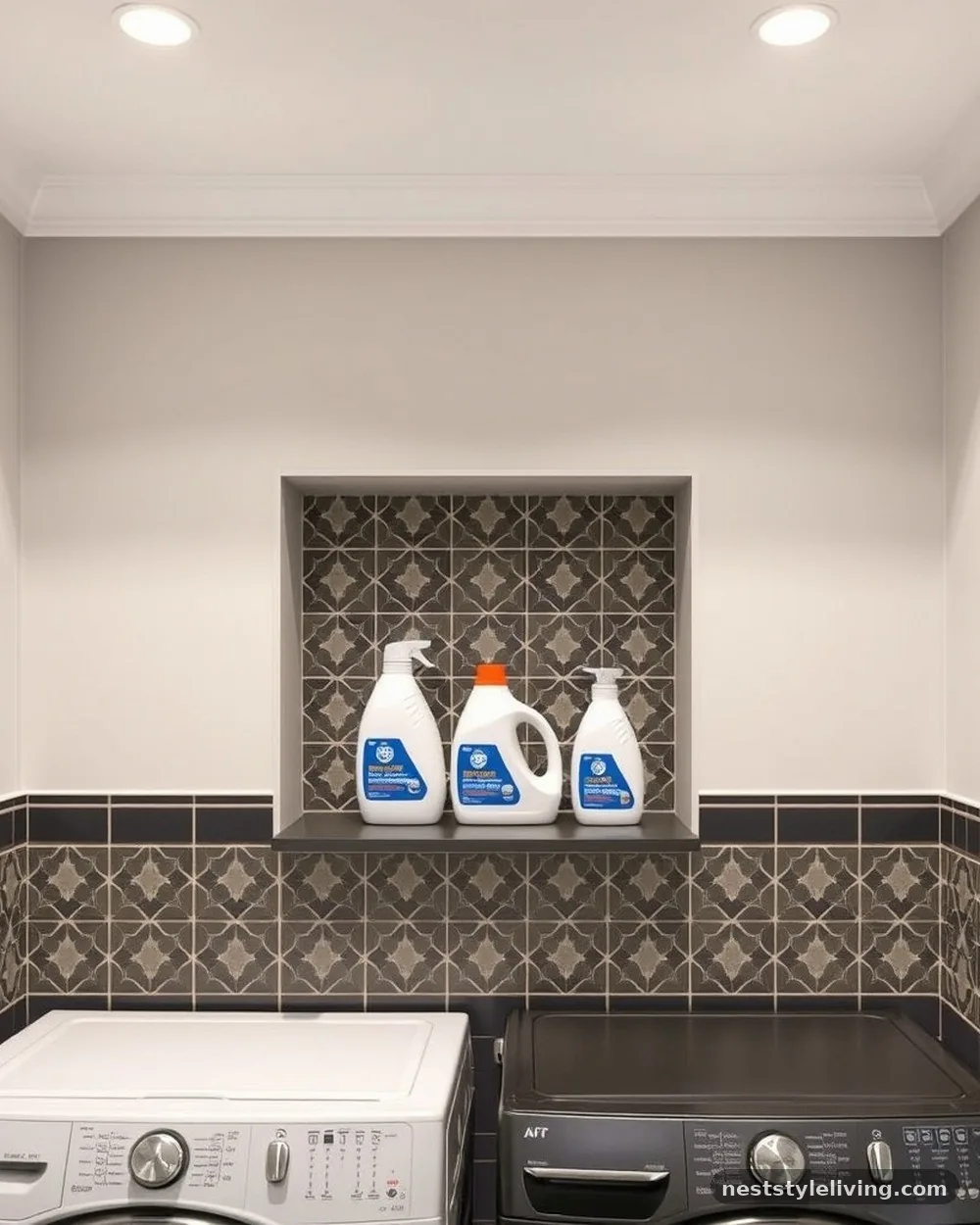
If you are renovating, carving out a recessed niche between the wall studs is a sophisticated way to gain storage without encroaching on your floor space. This is perfect for storing detergents, fabric softeners, and other essentials directly behind or beside your machines.
By tiling the back of the niche with a fun pattern or painting it a bold color, you turn a functional storage space into a deliberate design feature. It is a permanent, high-end solution that makes a tiny laundry area feel custom-built.
Consult a professional to ensure that the wall you are cutting into is not a load-bearing wall or housing plumbing and electrical lines. Once the niche is framed, install glass or wood shelves to maximize the vertical space inside the cutout.
8. Ceiling-Mounted Drying Rod
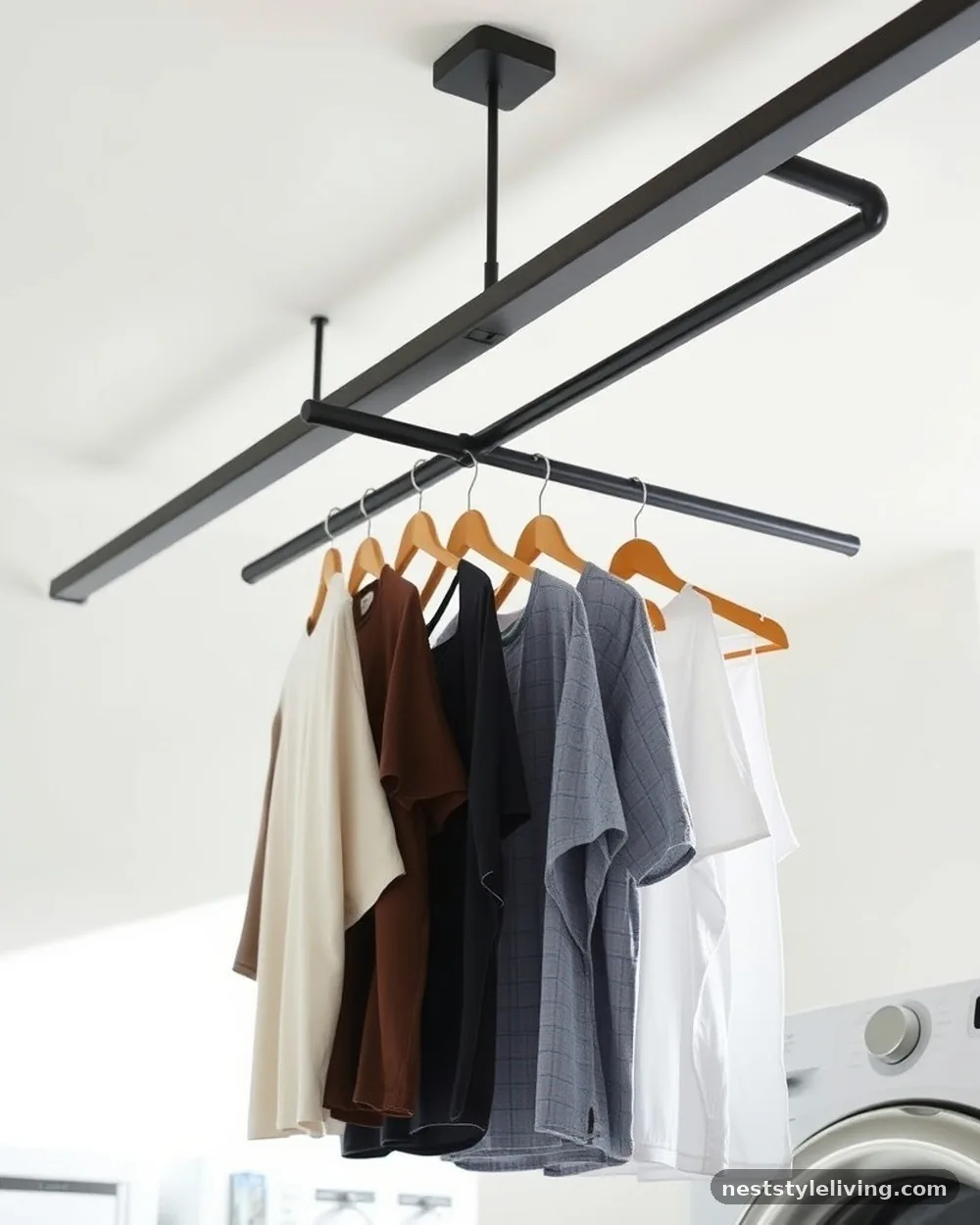
A heavy-duty tension rod or a dedicated ceiling-mounted rail allows you to hang delicate items that need to air dry on hangers. This keeps your clothes out of the way of your workspace and utilizes the high, unused space in the room.
This method is particularly effective for shirts that tend to wrinkle; hanging them immediately after a wash prevents the need for intense ironing later. The visual lines created by the rod can also draw the eye upward, making the room feel taller.
Install the rod at a height that allows your longest garments to hang without touching the top of your machines. Use heavy-duty toggle bolts to secure the brackets into the ceiling joists, as wet clothes carry significant weight and can pull standard drywall anchors loose over time.
9. Decorative Wallpaper
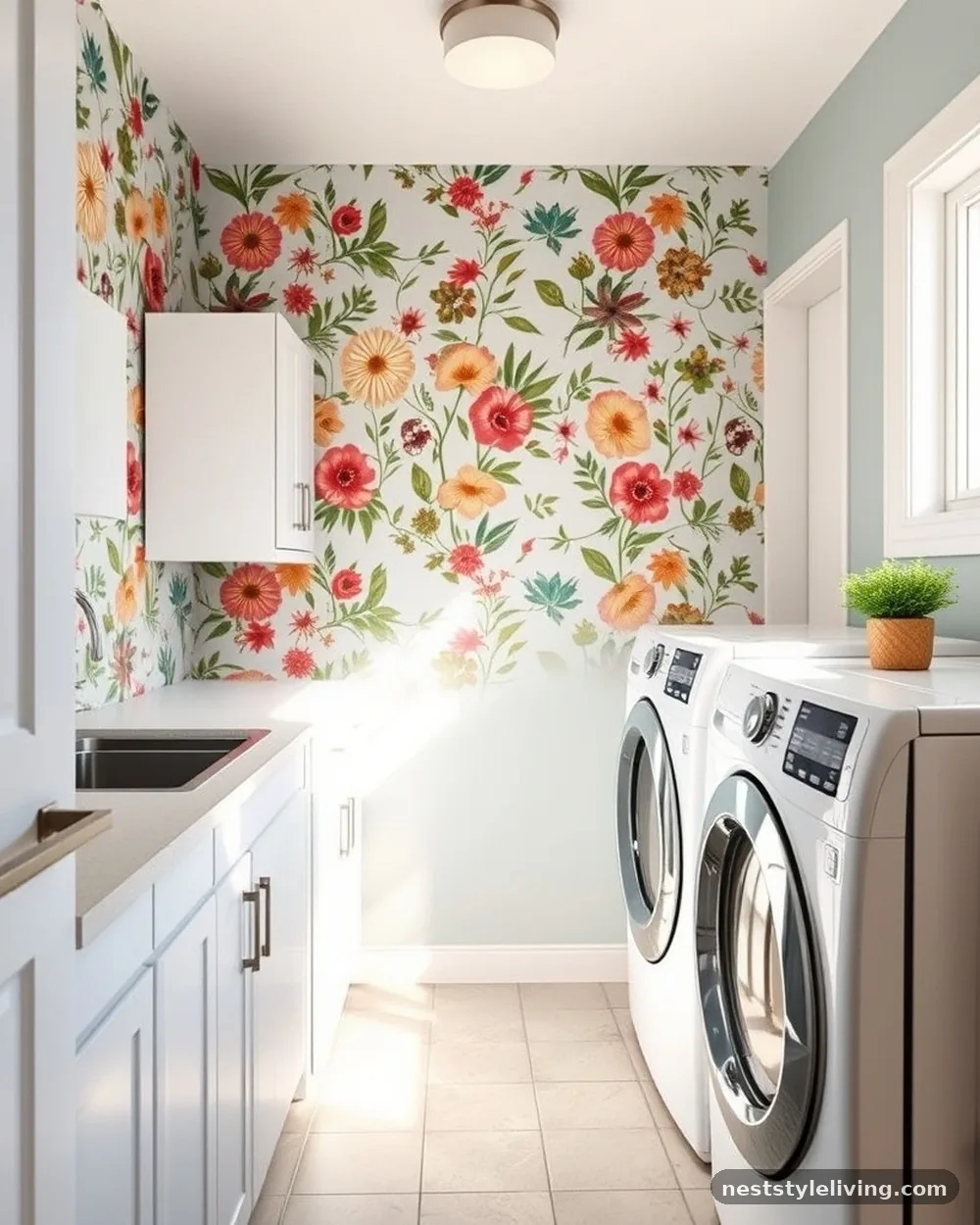
Wallpaper is a powerful tool in a small room because it draws attention to the walls and away from the cramped floor footprint. Choosing a bold, large-scale botanical or geometric print can make a small laundry room feel like an intentional design statement rather than a utility closet.
By covering the walls in a high-quality, moisture-resistant wallpaper, you add character and depth that paint alone cannot achieve. It is an excellent way to inject personality into a space that is often neglected in home design.
Opt for peel-and-stick wallpaper if you are a beginner or a renter, as it is easy to apply and remove without damaging the walls. Before applying, ensure the surface is clean, dry, and primed so the adhesive bonds correctly and the paper remains smooth despite the occasional humidity of the laundry area.
10. Under-Cabinet Lighting
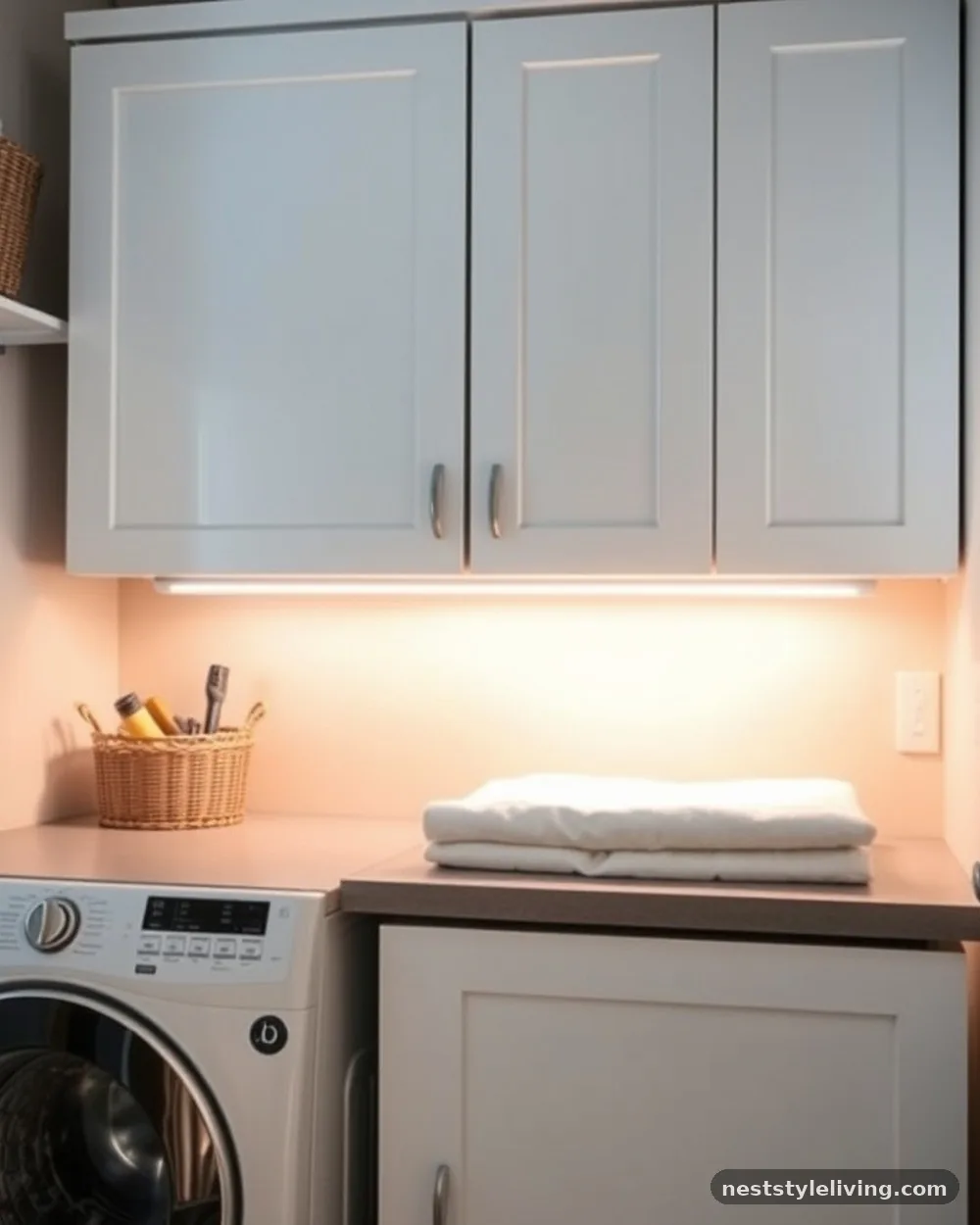
Good lighting is essential in a room that is often tucked into a dark corner of the home. Installing slim, LED under-cabinet or under-shelf lights brightens your folding surface and makes it easier to spot stains or read garment care labels.
These lights are typically battery-operated or plug-in strips that require minimal installation effort. By illuminating your workspace, you reduce eye strain and make the process of sorting clothes much more pleasant.
Choose warm-white LED strips to keep the room feeling cozy rather than clinical. Place the light source at the front edge of the shelf to avoid creating harsh shadows over your folding area, ensuring the light is directed exactly where your hands are working.
11. Wall-Mounted Ironing Board
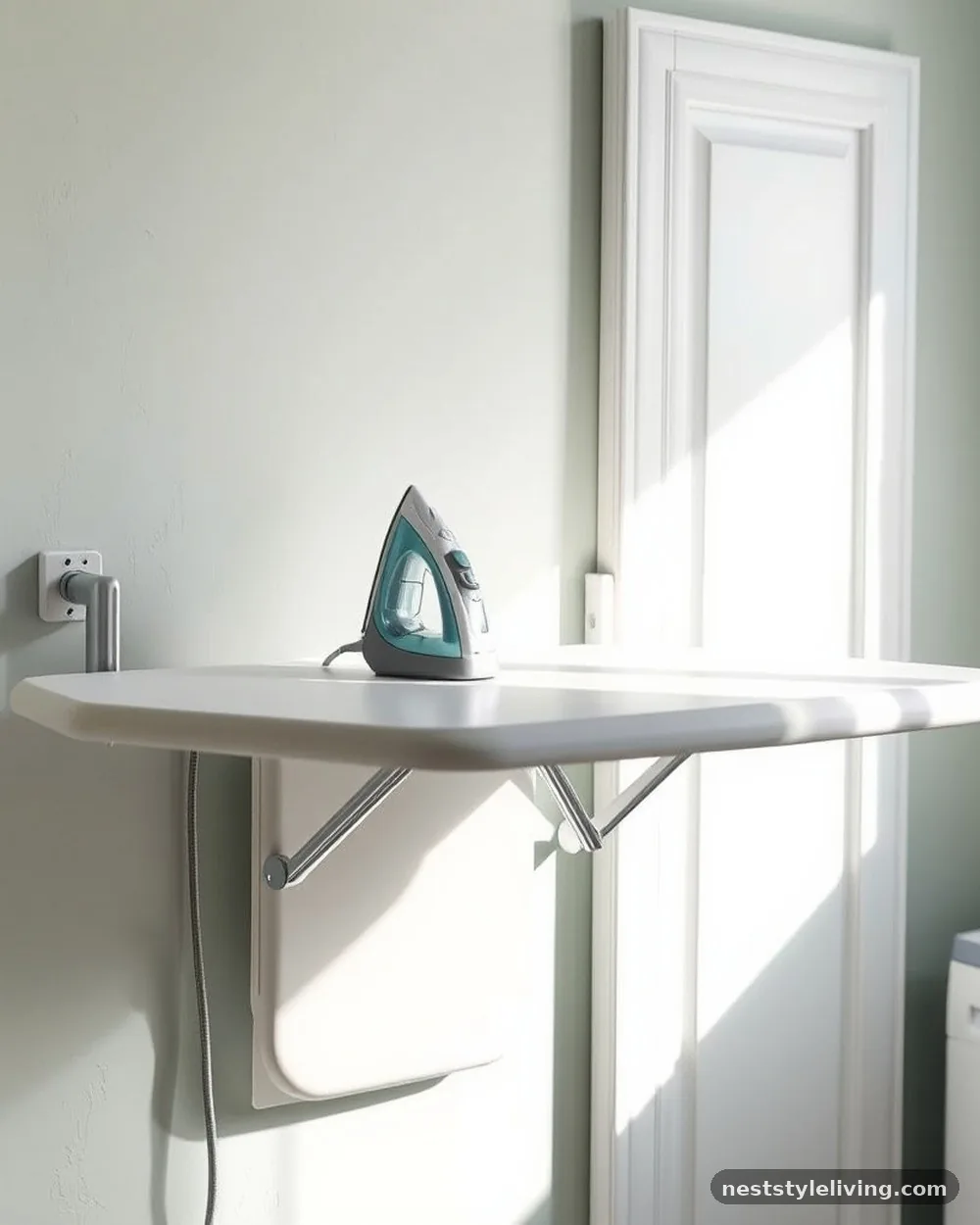
Traditional ironing boards are notorious for being bulky and difficult to store in a small room. A wall-mounted, fold-down ironing board solves this problem by disappearing into a slim cabinet or folding flat against the wall when not in use.
Some models even feature a small storage compartment for your iron, keeping all your pressing tools in one place. It is a sleek, efficient way to handle wrinkles without needing a permanent floor footprint.
Ensure you install the board at an ergonomic height for your specific needs, usually around 30 to 36 inches from the floor. Check that the wall surface is flat and clear of any obstructions, such as electrical outlets or light switches, that might prevent the board from folding flush.
12. Wire Basket Wall Grid
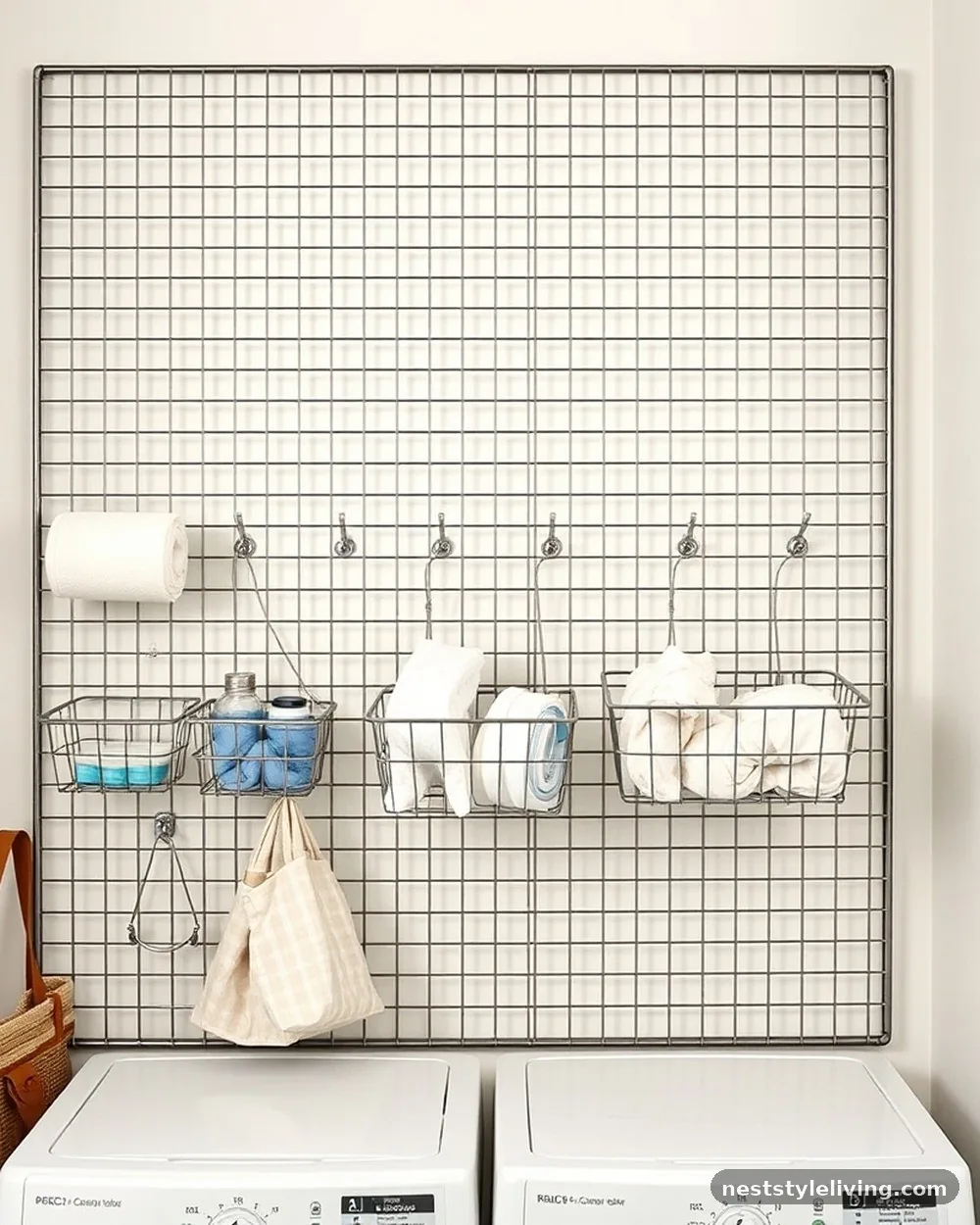
A wire grid panel is a versatile storage solution that allows you to customize your organization as your needs change. You can hook various bins, clips, and shelves onto the grid to hold everything from dryer balls to stray socks.
This is a highly visual system that keeps your most-used items within arm’s reach while maintaining a clean, industrial look. It is particularly effective for small laundry rooms because it is lightweight and doesn’t feel as heavy as solid cabinets.
Mount the grid using stand-off spacers to ensure there is a small gap between the grid and the wall, which makes it easier to hook accessories on and off. Organize your frequently used items at eye level and keep the less frequently used supplies near the bottom of the grid.
13. Pull-Down Hanging Bar
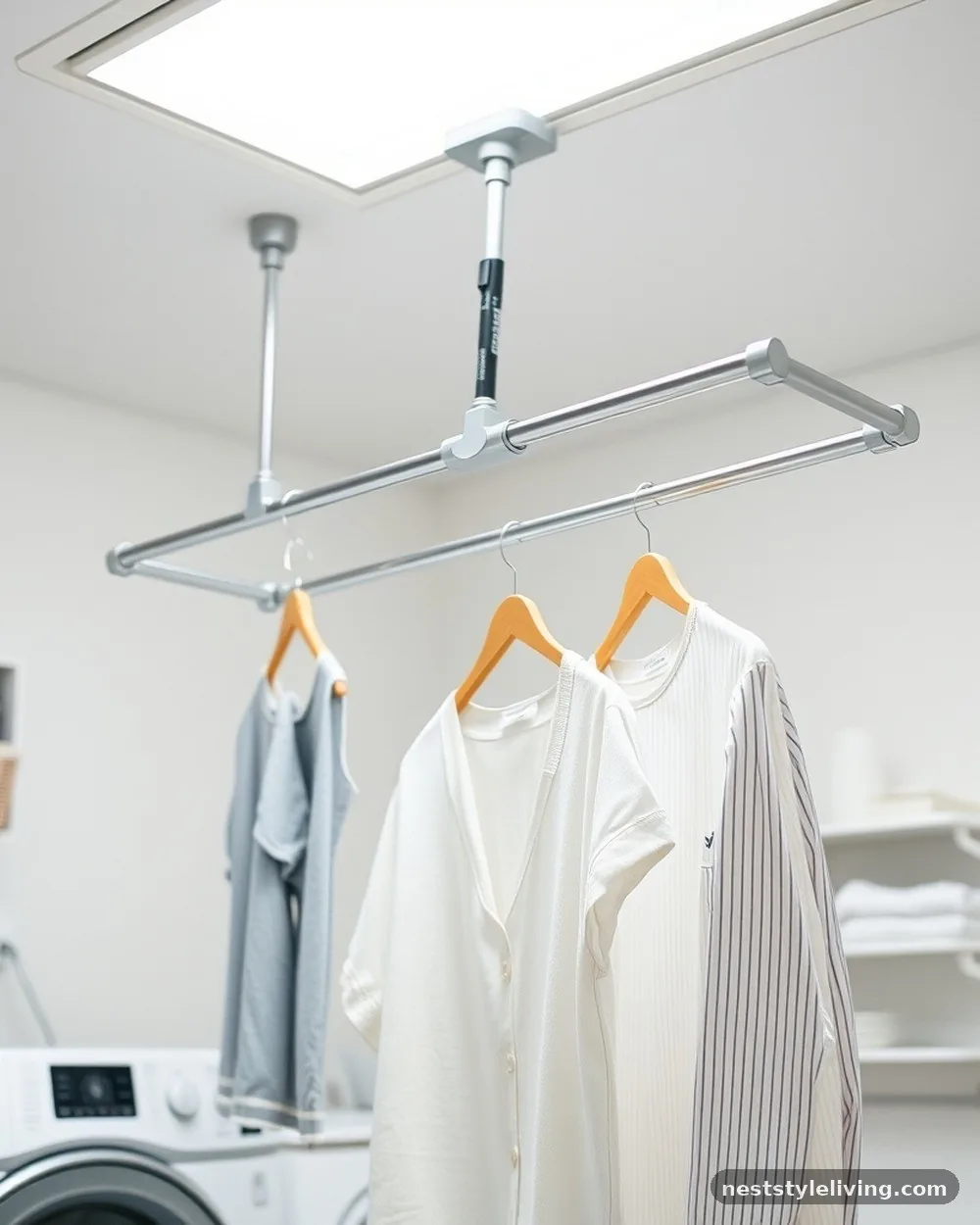
For those who do not have enough ceiling height for a fixed rod, a hydraulic pull-down bar is a clever, space-efficient alternative. This hardware allows you to pull the rod down to your level for loading clothes and then push it back up toward the ceiling for storage.
It is perfect for maximizing the high, dead space in a laundry room that is otherwise inaccessible. It provides a significant amount of linear hanging space without occupying any floor area.
Check the weight capacity of the pull-down mechanism before purchasing, as some are intended only for light shirts while others can handle heavy coats. Ensure the mounting brackets are anchored into the wall studs, as the repeated motion of pulling the bar down creates significant leverage that can loosen weaker fasteners.
14. Rolling Laundry Sorters
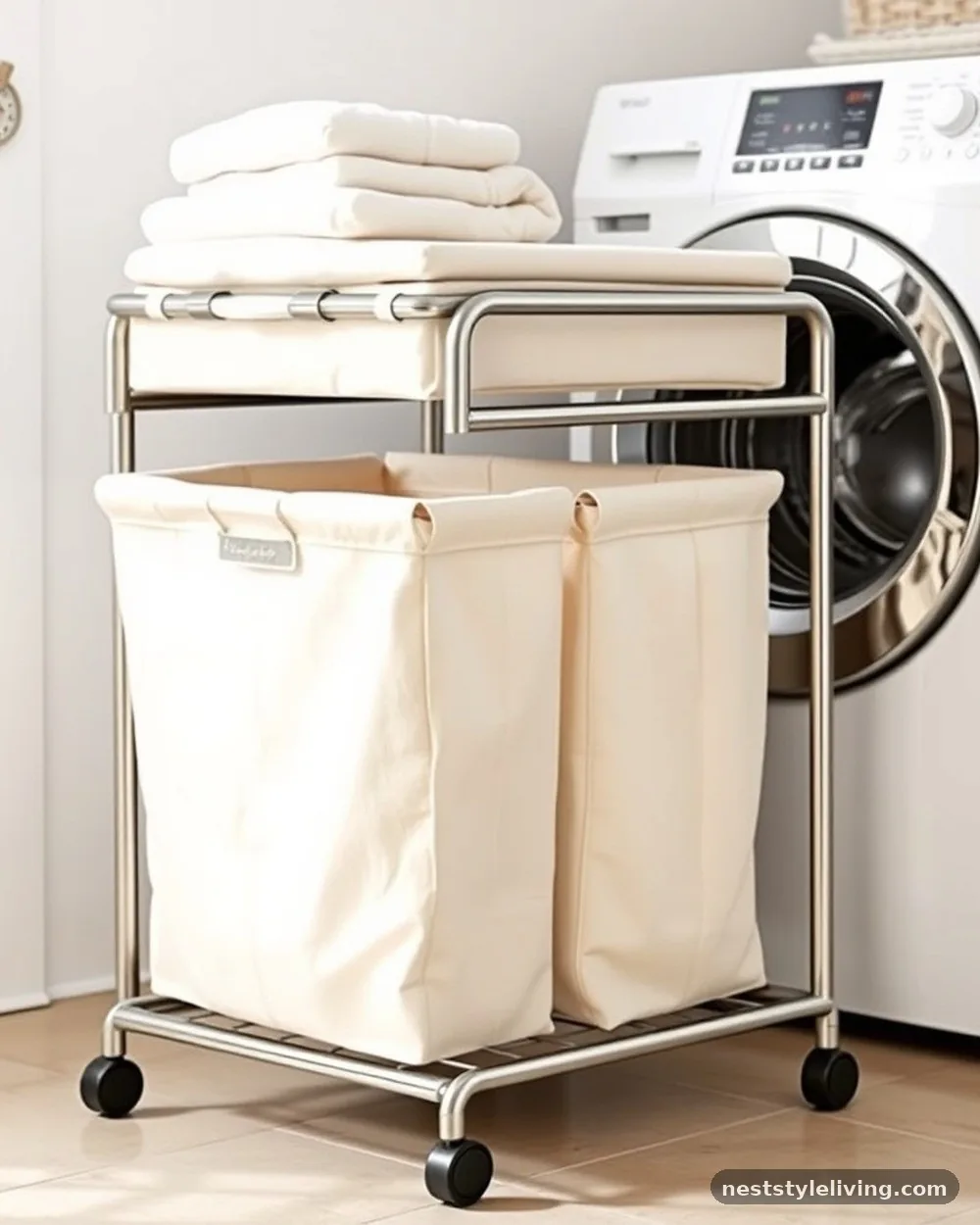
Instead of piling dirty clothes on the floor, use a slim, rolling laundry sorter that fits neatly against a wall or in a corner. These units often feature two or three canvas bags on a metal frame, allowing you to separate lights, darks, and delicates before you even reach the washer.
Because they are on wheels, you can easily roll the entire sorter to the machine when it is time to do a load. This keeps the room tidy and speeds up your workflow significantly.
Look for a sorter with removable bags that are machine-washable, as they will eventually absorb odors or collect dust. Choose a frame with locking casters to ensure it stays in place when you are loading it, preventing it from sliding around on slick laundry room floors.
15. Clear Acrylic Storage Bins
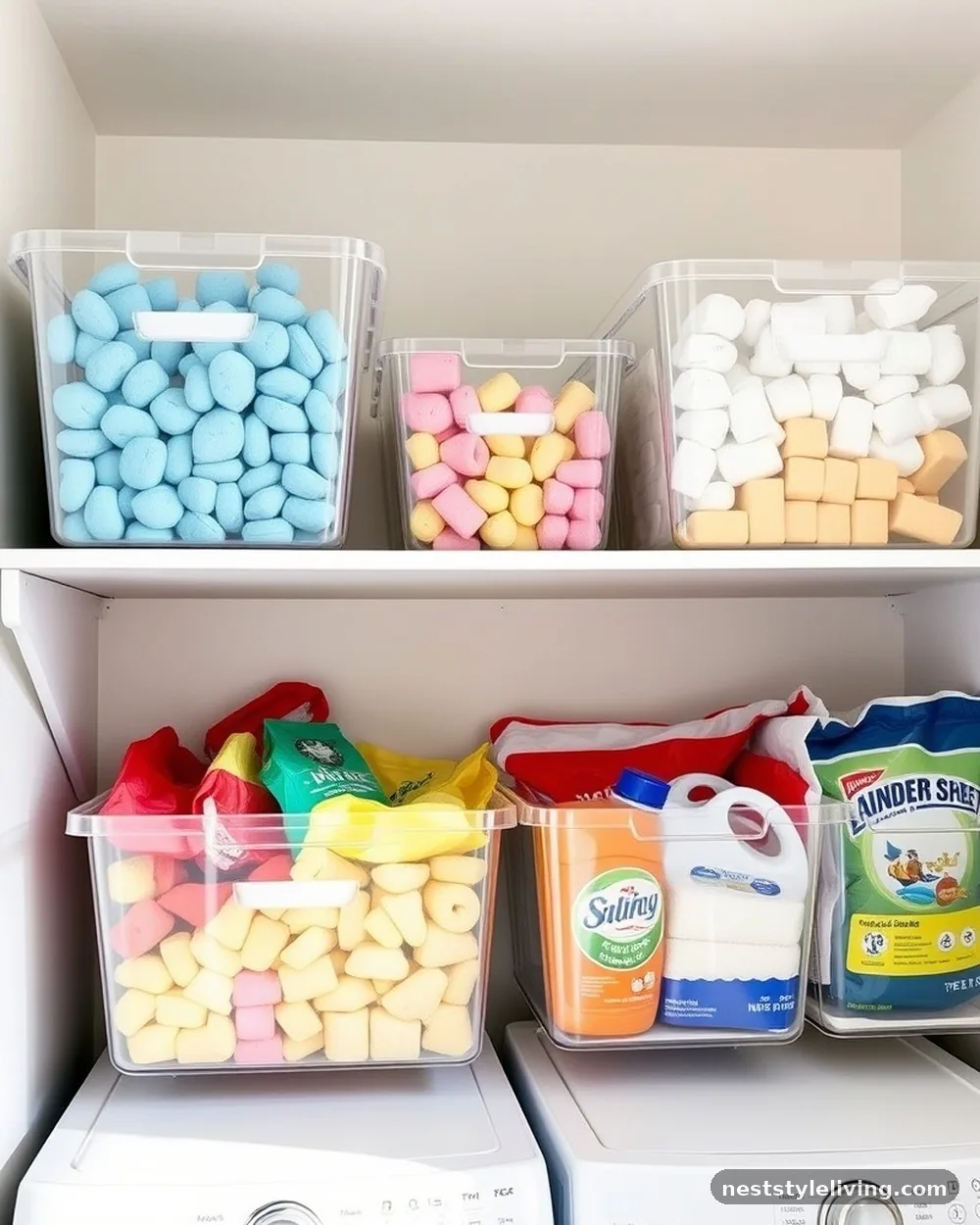
When you have limited space, visual clutter makes a room feel smaller than it actually is. Clear acrylic bins allow you to see your supplies, such as detergent pods, clothespins, or dryer sheets, without the visual weight of opaque plastic or wicker.
They maintain a clean, organized look while keeping your items contained and accessible. Placing these on high shelves keeps them out of the way, while the transparency ensures you know exactly when you are running low on supplies.
Use a label maker to add simple, clean labels to the front of the bins to keep your inventory organized. Since acrylic can crack under heavy impact, place these on shelves that are low enough to reach easily but high enough that they won’t be knocked over during your daily routine.
16. Pegboard Organization System
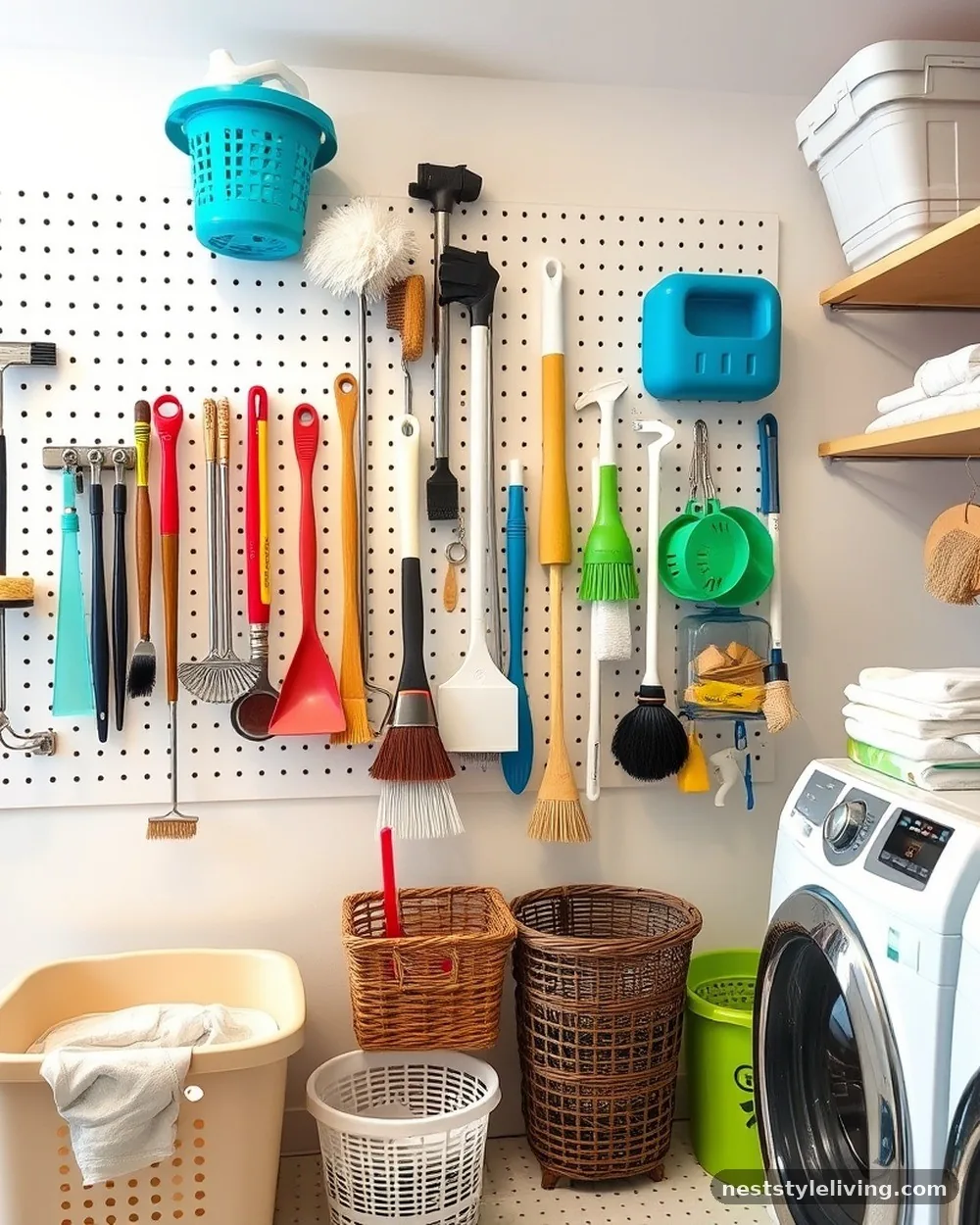
A floor-to-ceiling pegboard is the ultimate way to maximize every inch of a small laundry wall. You can hang tools, brushes, baskets, and even a fold-down table from the pegboard, creating a fully customizable storage wall.
This system is incredibly flexible, allowing you to move your storage layout as you acquire new tools or change your detergent brands. It provides a uniform, professional look that is very popular in modern design.
Paint the pegboard the same color as the wall to make it blend into the background, or choose a contrasting color to make it a bold design feature. Use a mix of long and short hooks to create depth and ensure that your most frequently used items are the easiest to grab.
17. Slim Utility Cabinet
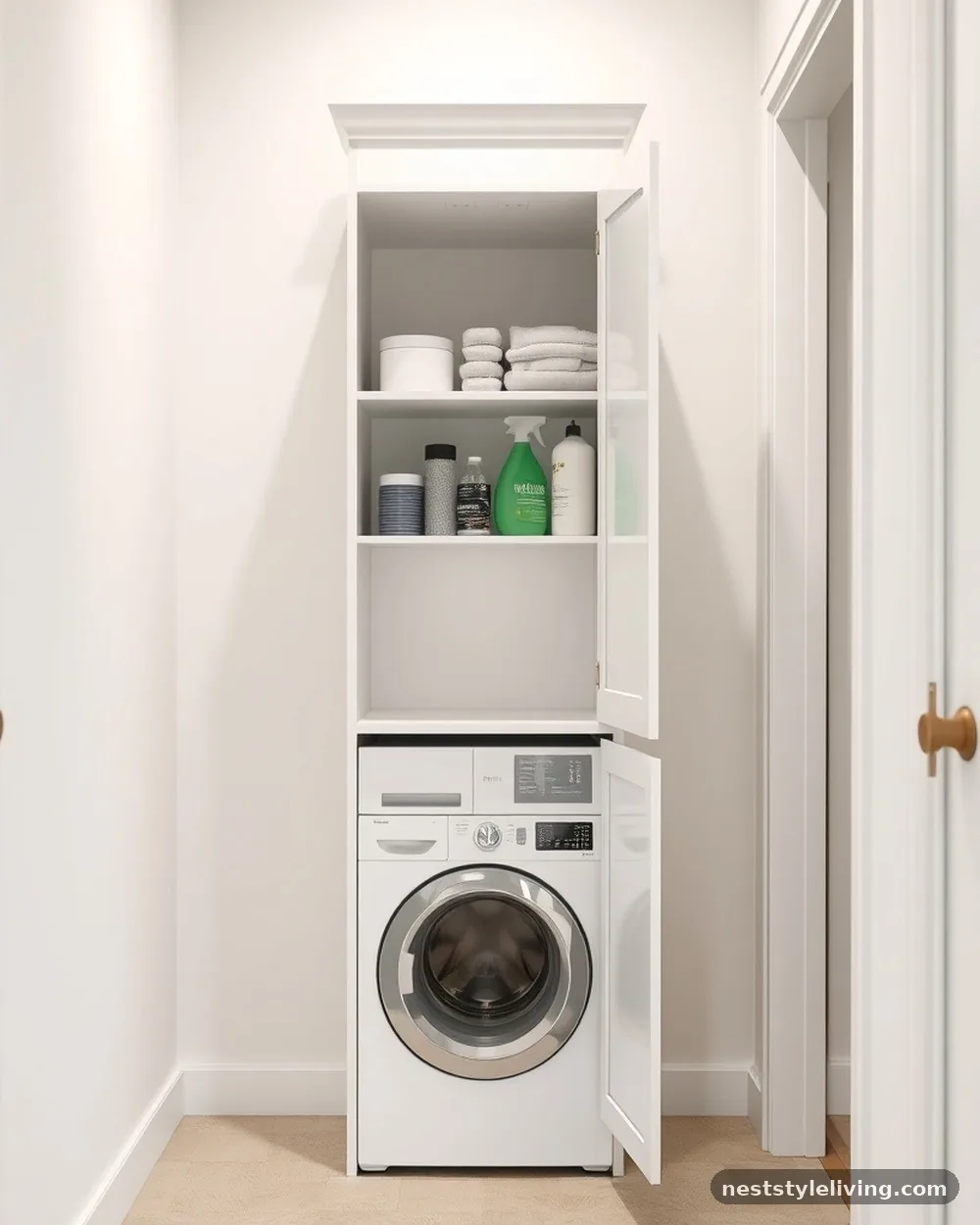
If you have a narrow gap between your machines and a wall, a custom-built or store-bought slim utility cabinet is a game-changer. These cabinets are often only 8 to 12 inches wide but extend to the full height of the room, providing massive amounts of vertical storage.
They are perfect for hiding away brooms, ironing boards, mops, and cleaning chemicals that you do not want on display. A door keeps the interior hidden, which immediately makes the room feel less chaotic.
Install a magnetic catch or a push-to-open latch to keep the door flush and clean-looking. Consider adding a few small shelves inside the cabinet for smaller items like stain removers, ensuring the shelves are adjustable so you can accommodate taller cleaning tools on the bottom.
18. Drop-Down Work Surface
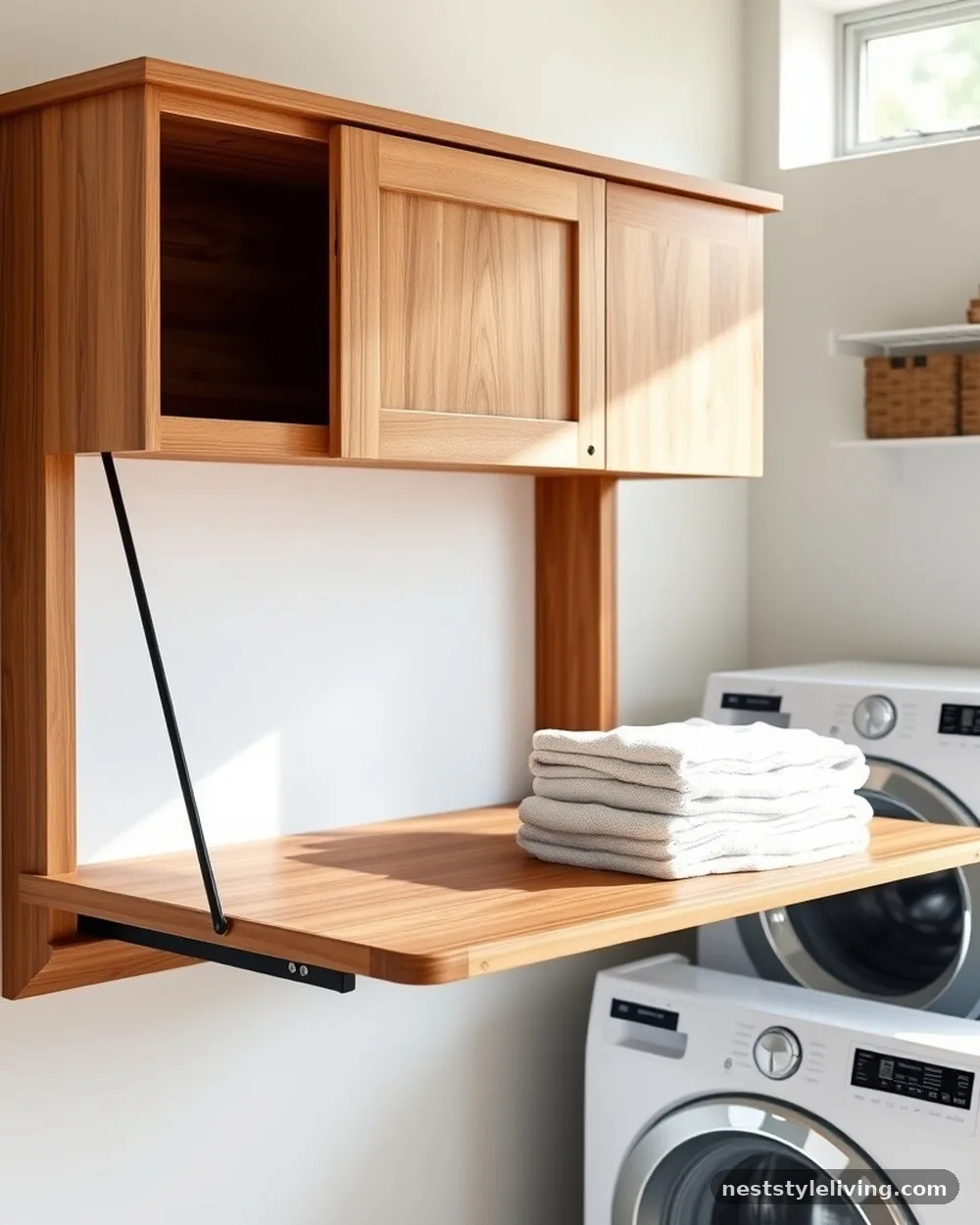
If you lack the floor space for a permanent table, a wall-mounted, fold-down desk is an excellent solution. When you need to fold laundry or treat a stain, simply pull the table down; when the task is finished, fold it flat against the wall.
This is a brilliant way to gain a large workspace without sacrificing permanent floor area. The underside of the table can even be painted or decorated to look like art when it is in the closed position.
Ensure the hinge mechanism is rated for the weight of a full basket of laundry, as you will be putting pressure on the edge of the table while folding. Mount it at a comfortable height for folding, which is typically slightly higher than a standard dining table, to prevent back strain during long sessions.
19. Corner Shelving Units
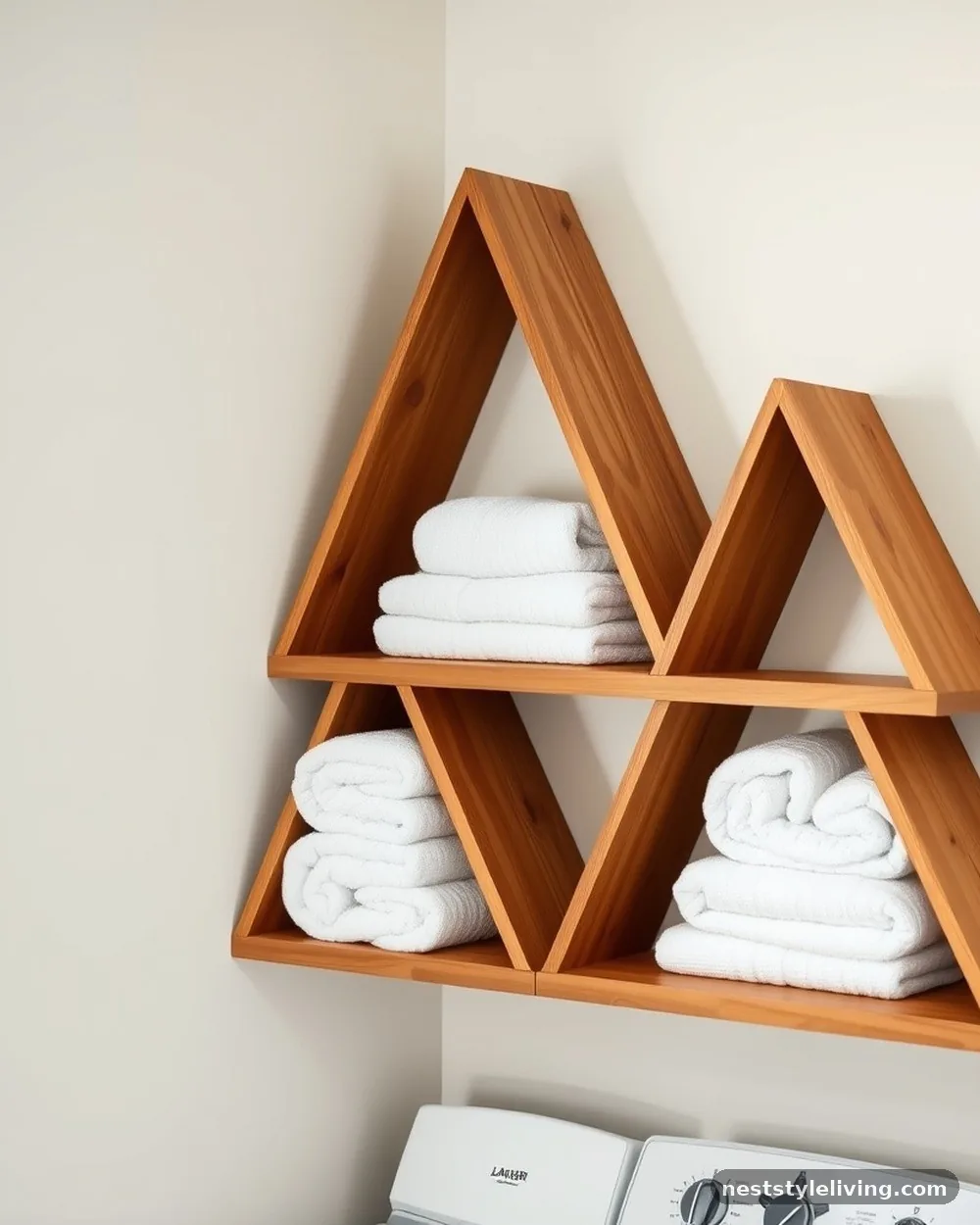
Corners are often dead space in a small room, but they can be utilized effectively with triangular shelving units. These shelves are perfect for stacking towels or storing baskets of cleaning supplies that don’t fit on standard rectangular shelves.
By installing a series of corner shelves, you utilize the perimeter of the room, leaving the center open for your machines and your own movement. This layout creates a nice flow and prevents the room from feeling like a tunnel.
Use wood or glass shelves that match the other accents in your room to create a cohesive look. When mounting, ensure you are anchoring into the corner studs, as this will provide the most secure hold for heavier items like stacked linens or large bottles of detergent.
20. Tiered Basket Displays
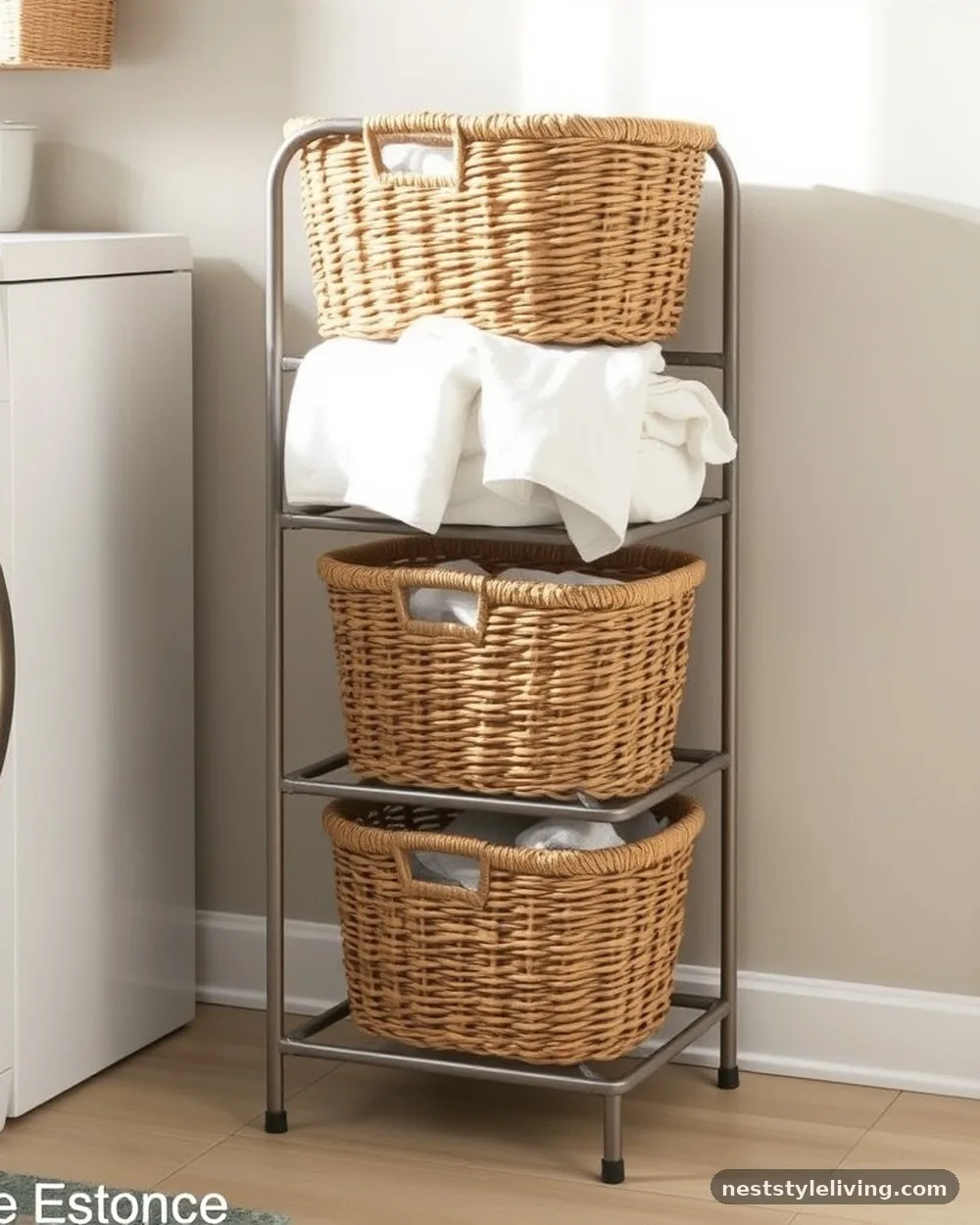
Rather than using one large, bulky hamper, use a tiered system of smaller baskets to organize your laundry. This allows you to categorize items by type or family member, making it easier to manage the laundry process.
Stacking these baskets in a vertical rack saves floor space and keeps the room looking intentional. When choosing baskets, look for materials like seagrass or wire that allow for airflow, which is crucial in a damp laundry environment to prevent mold.
Place the baskets on a narrow, vertical shelving unit to keep them off the floor. If you have the space, label each basket to ensure everyone in the household knows exactly where their clean clothes or dirty items should go, keeping the sorting process efficient.
21. Task-Specific Wall Hooks
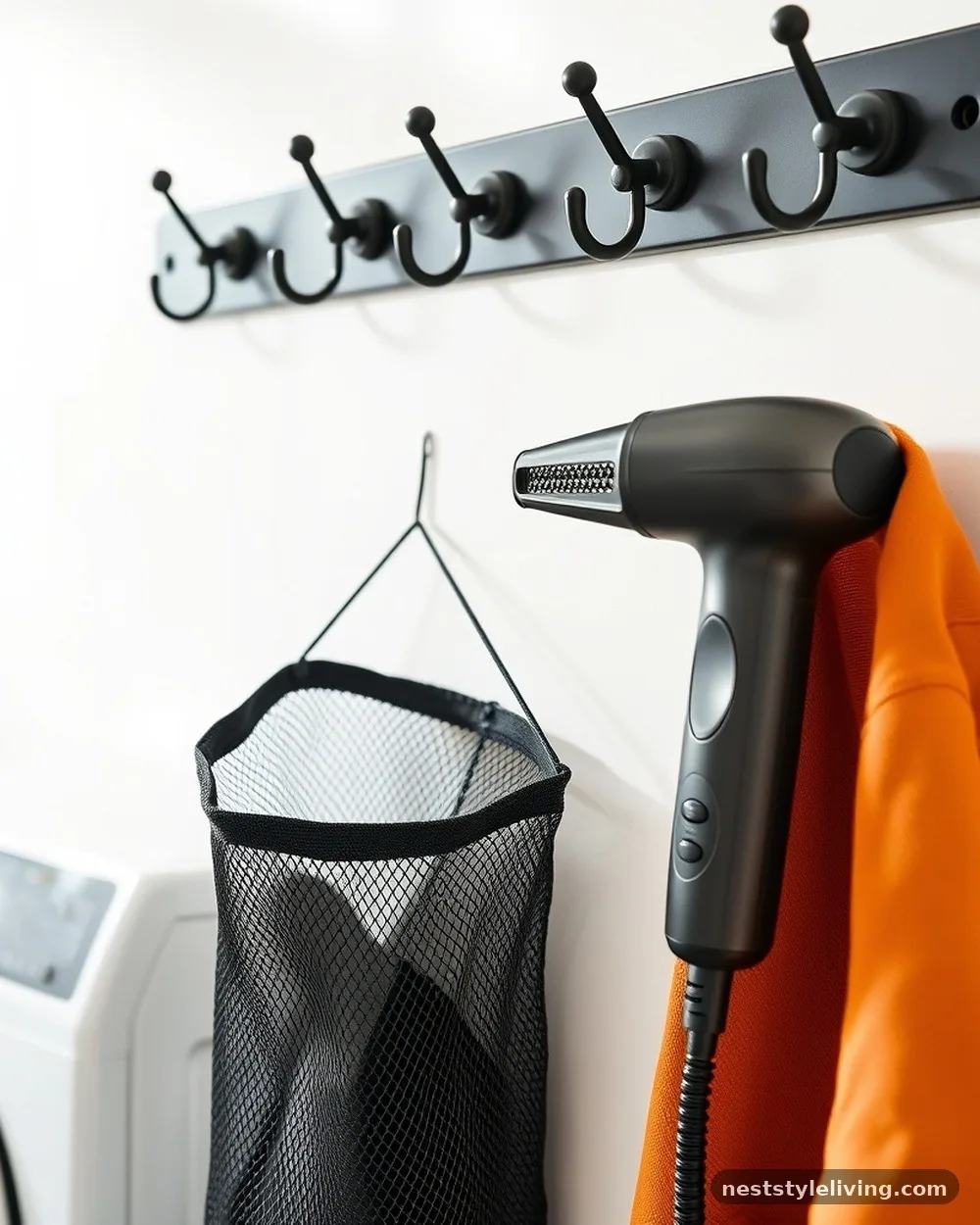
Never underestimate the power of simple hooks for managing a small space. Installing a row of heavy-duty hooks at eye level allows you to hang damp towels, mesh bags, or even a handheld garment steamer.
This keeps your surfaces clear and ensures that items that need to dry are exposed to air. Hooks are incredibly easy to install and can be placed almost anywhere, making them the most versatile tool in your arsenal.
Choose hooks with a wide, rounded profile to avoid creating permanent creases in your clothing. Use a consistent finish for all your hardware—such as matte black, brushed nickel, or brass—to ensure that even these simple additions contribute to a polished, professional aesthetic.
22. Slide-Out Ironing Board Drawer
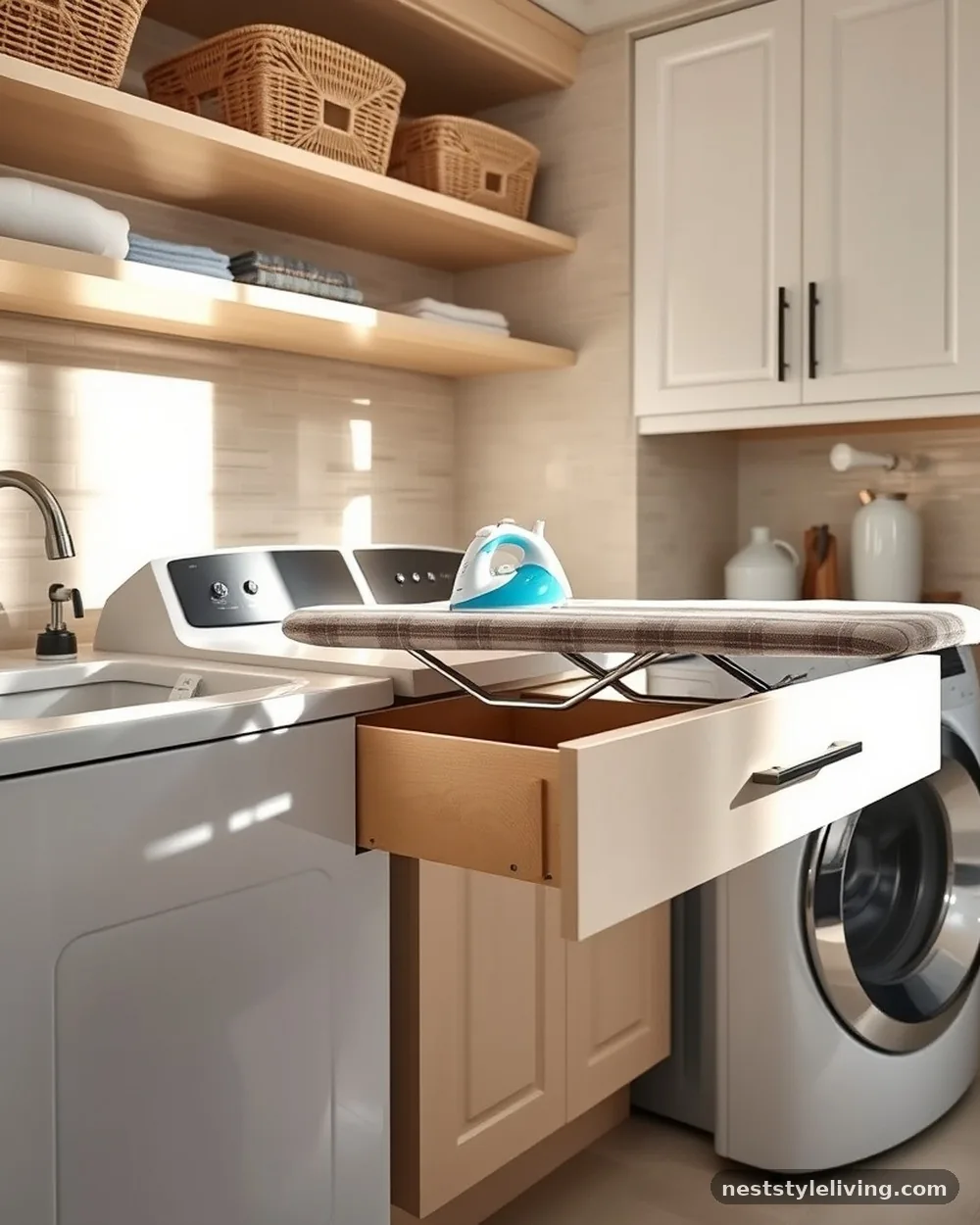
If you have cabinetry, replacing one shallow top drawer with an integrated ironing board is a clever way to save space. These boards are stored inside the drawer and pull out on heavy-duty slides, clicking into a stable position when fully extended.
It is a hidden, high-end feature that makes ironing feel like a seamless part of your laundry routine. Because it is built directly into the furniture, it requires absolutely no setup time and zero storage space in your closets.
Check the drawer depth and width requirements before purchasing, as these units need specific cabinet dimensions to fit correctly. The slides should be high-quality, full-extension ball-bearing glides to ensure the board doesn’t wobble when you apply pressure during the ironing process.
Frequently Asked Questions
How do I maximize space in a tiny laundry room?
Maximizing space in a tiny laundry room is primarily about moving storage from the floor to the walls. Use vertical organizers, wall-mounted drying racks, and floating shelves to keep the floor clear.
If you have a side-by-side washer and dryer, building a countertop over them creates a massive, functional workspace that doubles as a folding station. Additionally, utilizing the back of the door for storage and choosing slim, rolling carts for the gaps between appliances can help you squeeze every ounce of utility out of a very small footprint.
What is the ideal size for a small laundry room?
While there is no single “ideal” size, most efficient small laundry rooms function well within a footprint of about 25 to 30 square feet. This size is usually enough to accommodate a stacked washer and dryer, a small utility sink, and some vertical shelving.
The key is not the total square footage but the layout; a well-planned 5×5 foot space can often be more functional than a poorly organized room that is twice as large. Focus on keeping the flow between the machines and the folding area as short as possible.
What are the trends for laundry room design in 2026?
Current trends lean heavily toward “laundry-luxe,” where utility spaces are designed to look like high-end mudrooms or secondary kitchens. You will see more custom cabinetry in moody, saturated colors like navy, forest green, or charcoal, paired with natural wood countertops.
There is also a major shift toward hidden appliances, where washers and dryers are paneled to match the cabinetry. Finally, there is a focus on high-quality, durable materials like quartz or butcher block that can withstand the moisture of a laundry environment while looking beautiful.
What are some ideas for a very small laundry room?
For a very small laundry room, think about modular, multi-purpose items. A wall-mounted, fold-down desk can serve as a folding station when you need it and disappear when you don’t.
Use magnetic storage on the sides of your metal appliances to hold small tools, and install a ceiling-mounted drying rod to keep delicate items out of the way. If you are really tight on space, consider a stackable washer-dryer unit to free up half of your floor space for a tall, slim utility cabinet that can hold all your cleaning supplies.
How do I keep a small laundry room organized?
The secret to maintaining an organized laundry room is to ensure every item has a specific home and that you don’t store things you don’t use regularly. Use clear, labeled bins to keep small items contained, and try to keep the folding surface clear of anything that isn’t currently being processed.
If the space is small, you must be ruthless about decluttering. Only keep the detergents and supplies you actually use, and move seasonal items or bulk cleaning supplies to a different part of the home to keep the laundry space focused on its primary job.
The process of refining your home’s utility areas is about more than just aesthetics; it is about creating a system that makes daily chores feel manageable. By applying these small laundry room ideas that maximize every inch, you can transform a cramped, chaotic space into a highly efficient zone that works for your lifestyle. Whether you choose to install a custom countertop, utilize vertical wall space with floating shelves, or simply add a few well-placed hooks, every change you make will contribute to a more functional home.
Take a look at your own space today, identify one area where you can add a vertical storage solution, and begin the process of reclaiming your square footage. Your laundry routine will become significantly more efficient with these intentional, space-saving upgrades.