18 Small Bedroom Vanity Ideas That Maximize Space
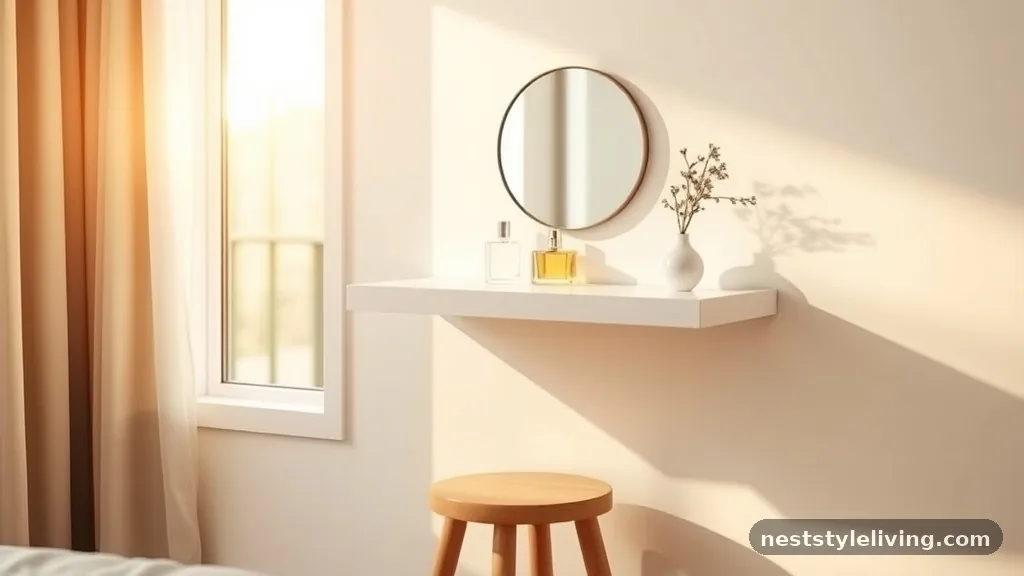
Finding effective small bedroom vanity ideas that maximize space requires shifting focus from traditional, bulky furniture toward agile, wall-mounted, and multi-functional designs. When square footage is tight, you need solutions that serve your morning routine without overwhelming the room.
These concepts prioritize vertical storage and footprint reduction, ensuring you can maintain a dedicated grooming station even in the most modest quarters. By selecting the right hardware and layouts, you transform a cramped corner into a highly efficient zone for your daily rituals.
1. Wall-Mounted Floating Shelves
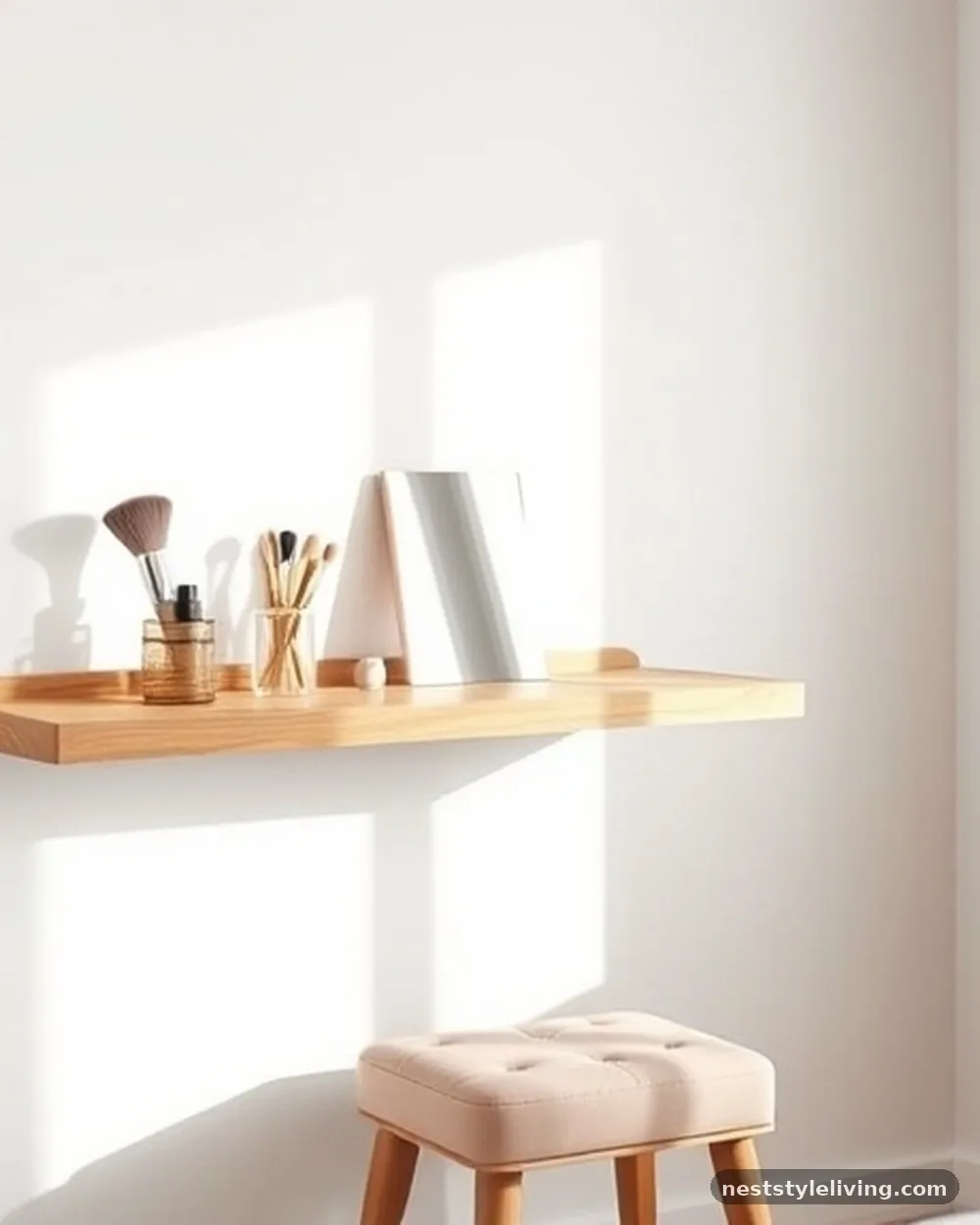
Floating shelves serve as the ultimate minimalist vanity by eliminating the need for bulky table legs that consume floor area. By mounting a single, sturdy wood or lacquered shelf at waist height, you create a dedicated surface for your makeup palette and brushes.
This approach keeps the floor visible, which tricks the eye into perceiving the room as larger and less cluttered. The lack of a base also allows you to tuck a small ottoman or stool completely under the shelf when it is not in use, ensuring you maintain a clear pathway through your bedroom.
To ensure stability, use heavy-duty steel brackets hidden behind the wood or drywall anchors specifically rated for the weight of your cosmetics and styling tools. If you are mounting onto drywall, always locate the studs to prevent the shelf from pulling away from the wall over time.
2. The Corner Wedge Desk
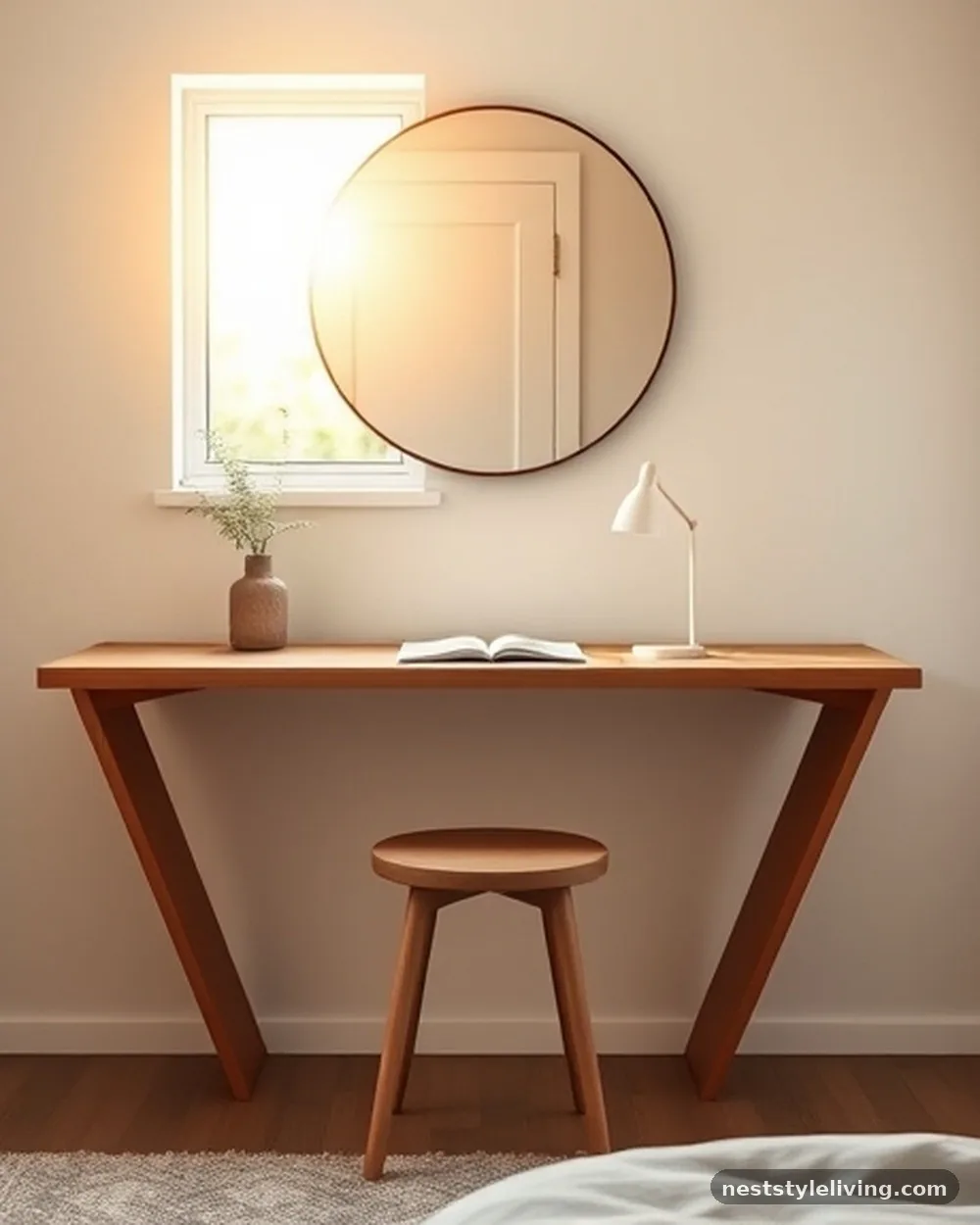
A corner vanity is one of the most effective ways to utilize the “dead” space where two walls meet. By installing a triangular or wedge-shaped desk, you fill an otherwise unusable gap with a functional station.
This configuration keeps your grooming area tucked out of the main traffic flow of the bedroom, preserving the open feel of the center space. Look for designs that feature a single central leg or wall-mounted corners to maximize the legroom beneath the desk.
Measure the angle of your corner precisely before purchasing or cutting your wood surface, as many residential walls are not perfectly ninety degrees. Use a template made of cardboard to test the fit against the walls, ensuring the edges sit flush before you commit to permanent installation.
3. Mirror-Integrated Cabinet Doors
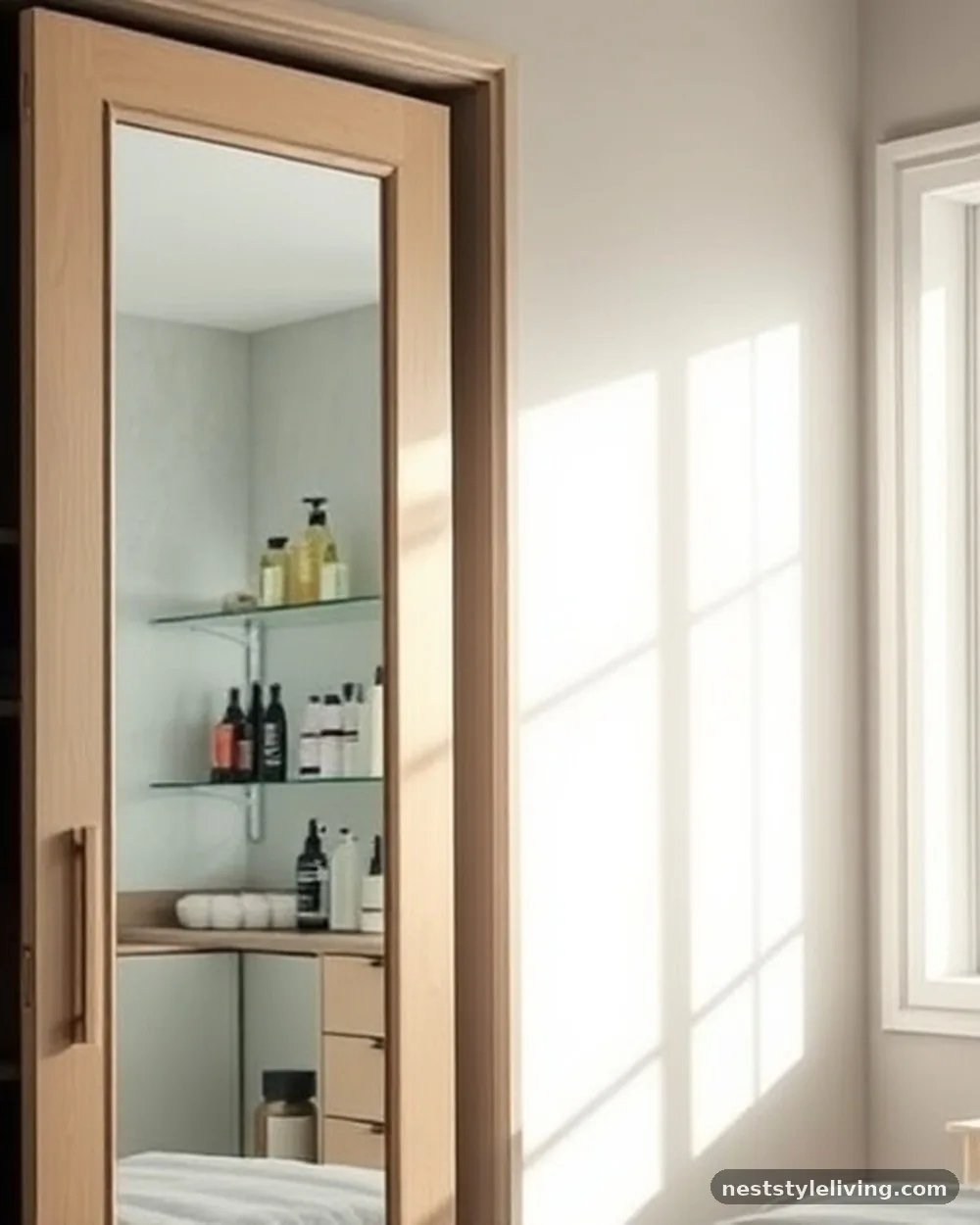
If your bedroom closet is close to your sleeping area, consider replacing a standard door panel with a full-length mirror that hides a shallow, built-in vanity. Behind the mirror, you can install slim shelves that house your perfumes, skincare, and brushes.
This design effectively hides all your clutter behind a sleek, reflective surface, which also helps bounce natural light around the room. It is a dual-purpose solution that saves space by integrating storage into an element you would need in the room regardless.
Choose a piano hinge for the door to ensure it can support the weight of the glass mirror without sagging over time. Keep the internal shelving shallow—no more than four inches deep—to ensure that standard-sized bottles and compacts fit without the door hitting the frame.
4. Slim Profile Console Tables
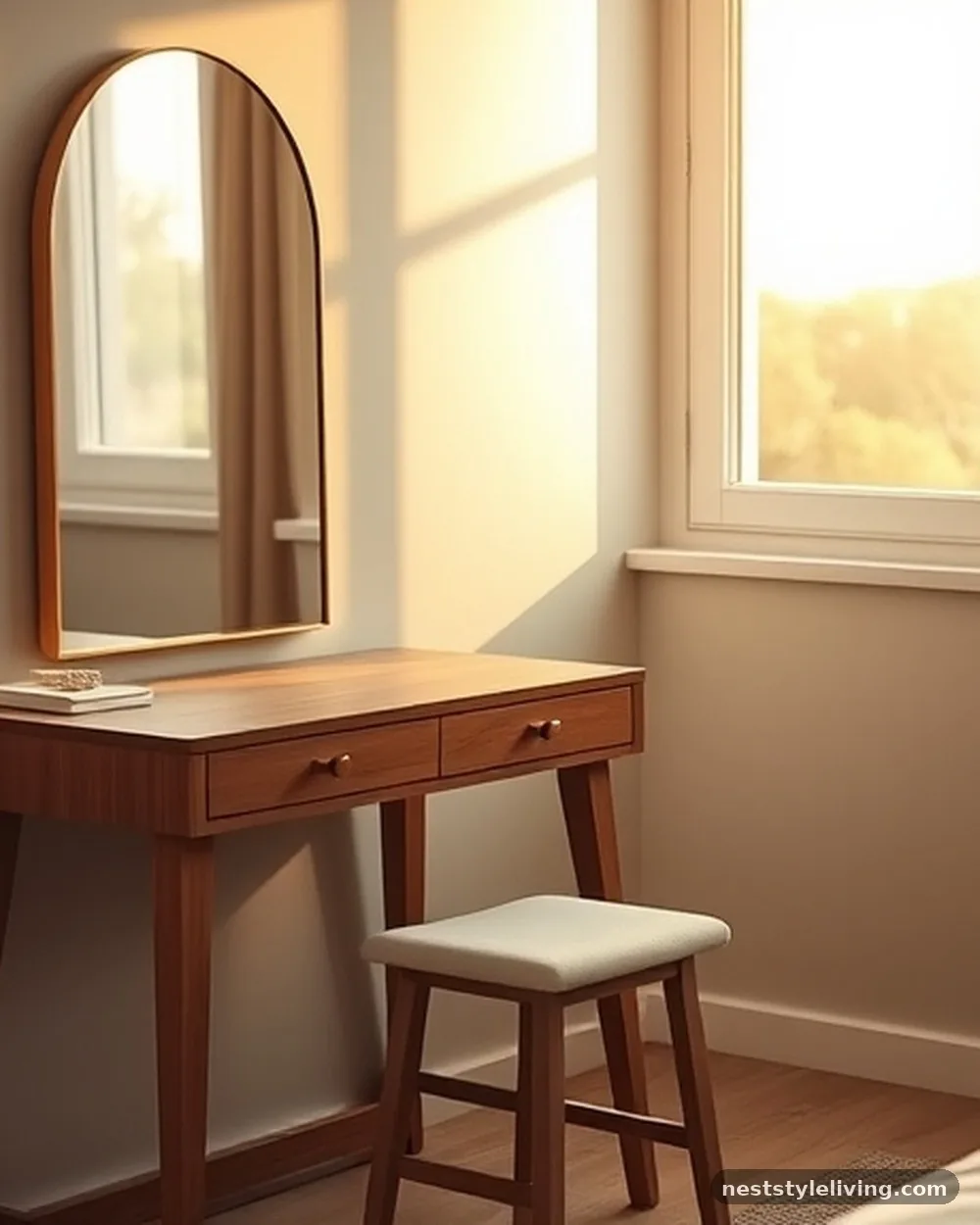
A console table with a very narrow depth—often around 12 to 14 inches—can function perfectly as a vanity desk. These pieces are designed for hallways and entryways, making them naturally suited for small bedrooms where space is at a premium.
By pairing a slim console with a large, round mirror mounted directly above it, you create a sophisticated focal point that doesn’t dominate the room’s layout. Look for models with thin, tapered legs to enhance the airy, lightweight aesthetic of the furniture.
If the table does not have built-in drawers, use clear acrylic organizers on the surface to keep your makeup sorted. This maintains the clean look of the console while preventing the tabletop from becoming a chaotic pile of products that makes a small room feel messy.
5. Fold-Down Murphy Vanities
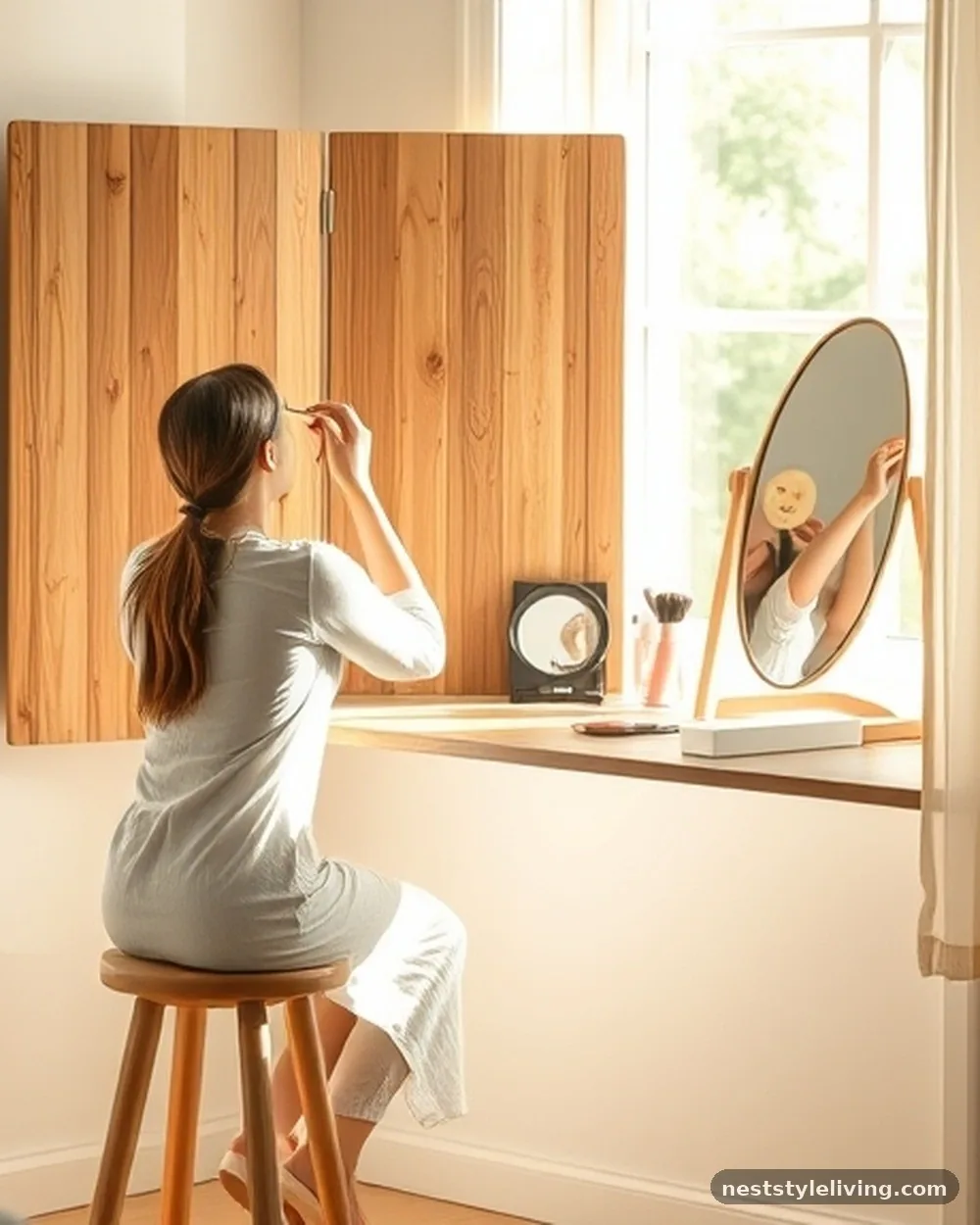
A wall-mounted fold-down desk acts as a disappearing act for your vanity needs. When you are done applying your makeup, you simply flip the surface up, revealing a flat, decorative panel that sits flush against the wall.
This is perhaps the most radical way to clear floor space, as the entire unit effectively vanishes when not in use. Many versions include a small mirror on the interior side of the door, making the transition from desk to wall art seamless.
Use a high-quality magnetic latch to ensure the desk stays securely closed against the wall when folded. If you plan to keep electrical tools like hair dryers plugged in, install a recessed power outlet behind the unit so cords don’t interfere with the closing mechanism.
6. Vertical Tiered Trays
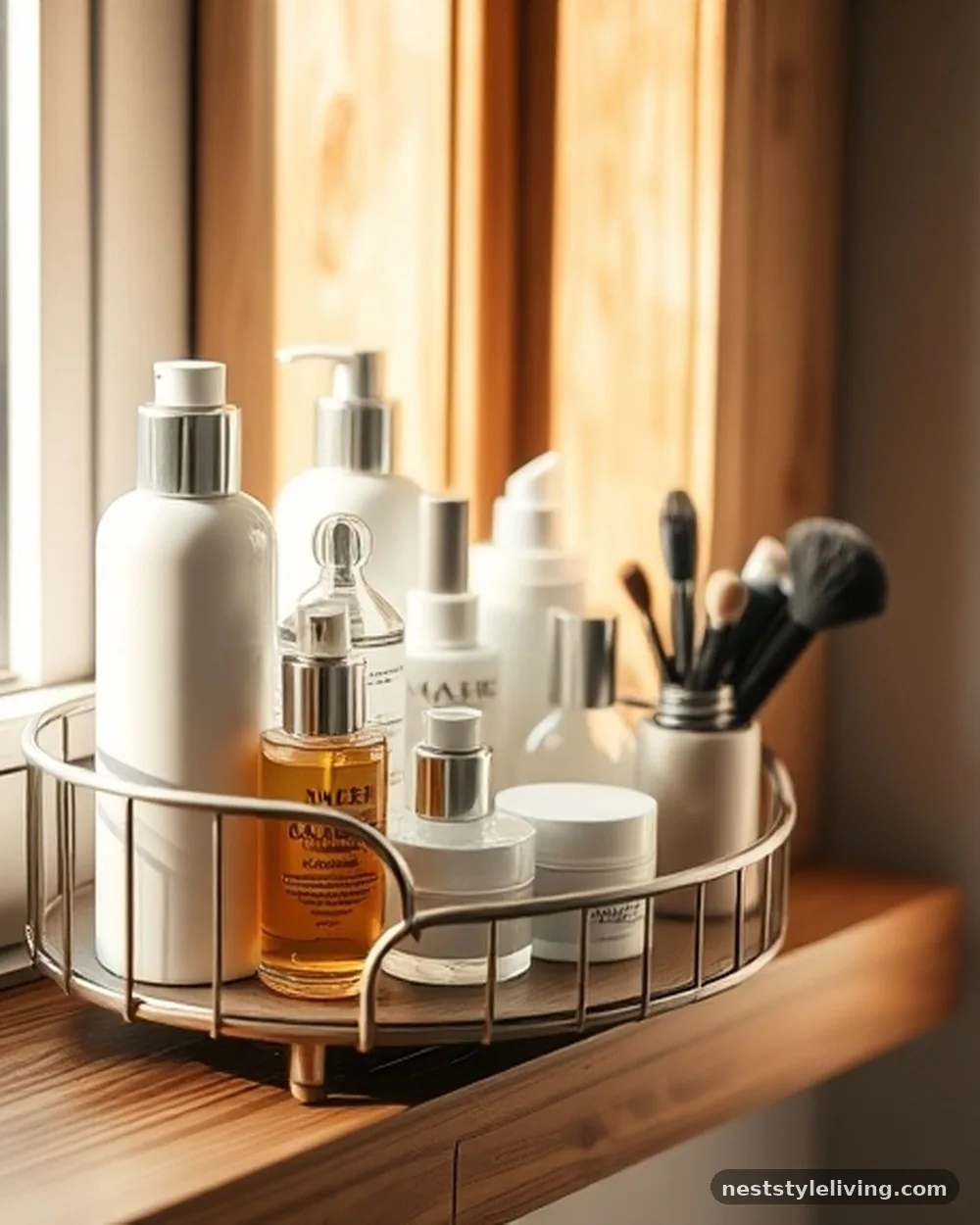
Sometimes you don’t need a larger table; you just need to better utilize the vertical space on the surface you already have. By using a two or three-tier rotating tray, you can stack your essential skincare and makeup items upward rather than spreading them outward.
This keeps your footprint small while allowing you to store a significant amount of product within a six-inch circle. It is an ideal solution for those using a narrow window sill or a small bedside table as a makeshift vanity.
Pick a tiered organizer made of clear acrylic if you want to minimize visual weight, or choose a matte metal finish to match your bedroom hardware. A rotating base is essential here, as it allows you to access items on the back of the tray without knocking over the items in the front.
7. Window Sill Extensions
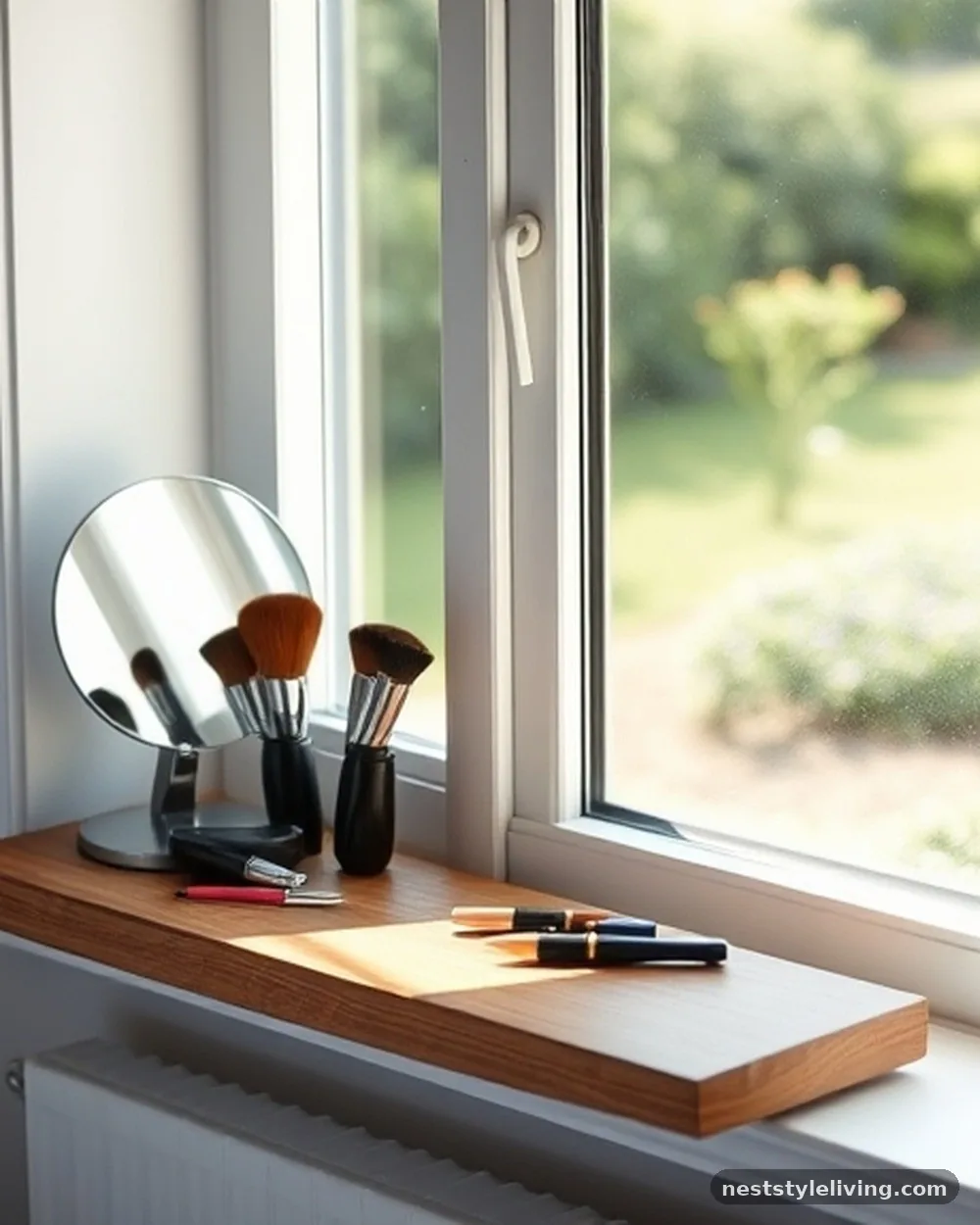
If your bedroom has a window with a wide enough sill, you can extend the depth by adding a custom shelf or a wider board. By placing your mirror directly against the window glass, you gain the benefit of consistent, natural light for your makeup application.
This setup is highly efficient because it utilizes existing architectural features rather than bringing in new, bulky furniture. It works best when you have a view that doesn’t require constant privacy, or when you use translucent roller shades to filter the light.
Ensure the wood you add to the sill is sealed with a moisture-resistant finish, as windows can occasionally produce condensation. Use L-brackets to support the overhang if you are extending the sill more than three inches, as the weight of your vanity items will create leverage that could damage the existing window frame.
8. Pull-Out Vanity Drawers
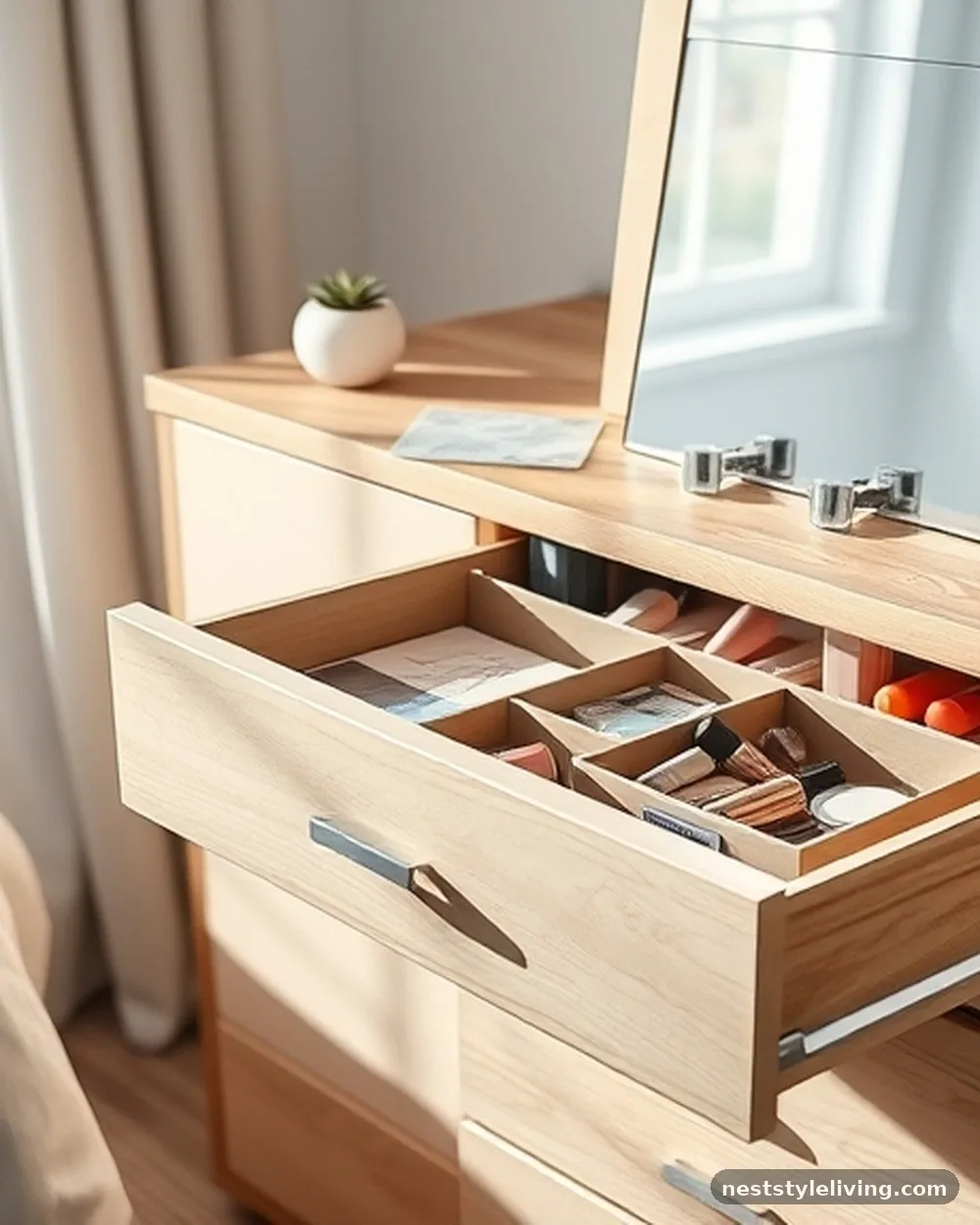
If you are designing a custom built-in for your bedroom, integrate a sliding vanity drawer into your existing dresser or wardrobe unit. This drawer features a flip-up mirror and compartmentalized storage for makeup, allowing you to pull it out when you need to get ready and push it away when finished.
It is a “hidden” vanity that keeps surfaces completely clear, which is critical for maintaining a sense of order in a small bedroom. This method is excellent for those who prefer an ultra-minimalist environment.
Install heavy-duty, full-extension drawer slides that are rated for at least 50 pounds to ensure the drawer doesn’t wobble when extended. You can also add a small battery-operated LED light strip inside the drawer frame to illuminate your products as soon as you pull it open.
9. Over-the-Door Hanging Organizers
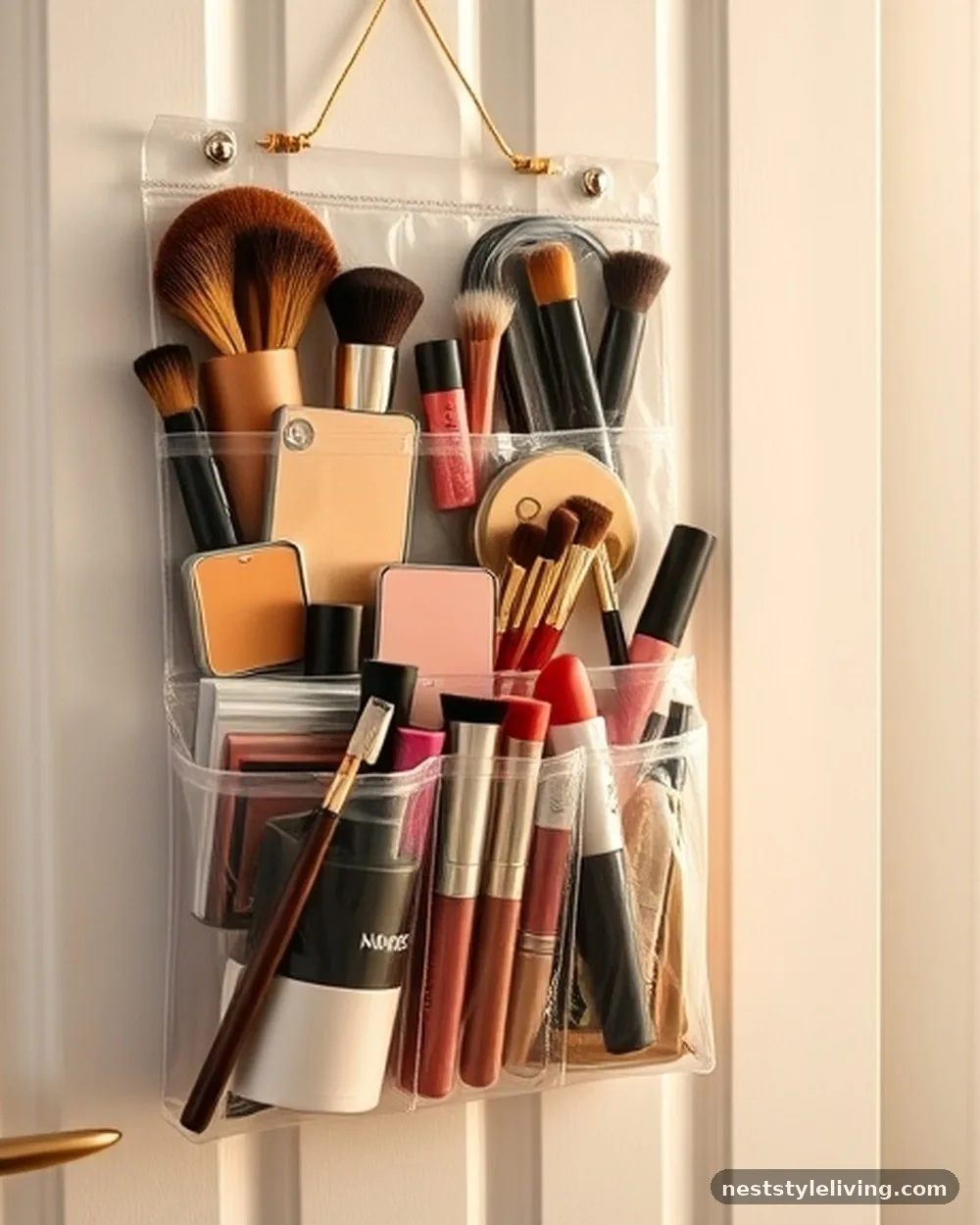
While often used for shoes, a clear pocket hanging organizer on the back of a bedroom door can store an entire collection of makeup, brushes, and accessories. By clearing these items off your tabletop, you can use a much smaller, lighter surface for your actual vanity desk.
This strategy shifts the storage burden from your limited horizontal surfaces to the vertical space behind your door. It is a low-cost, high-impact way to keep your room organized without installing permanent shelving.
Choose organizers with clear pockets so you can see exactly what you have without having to search through opaque bags. If you find the organizer swings too much when you open the door, use removable adhesive strips at the bottom corners to keep it flat against the door panel.
10. Minimalist Pedestal Tables
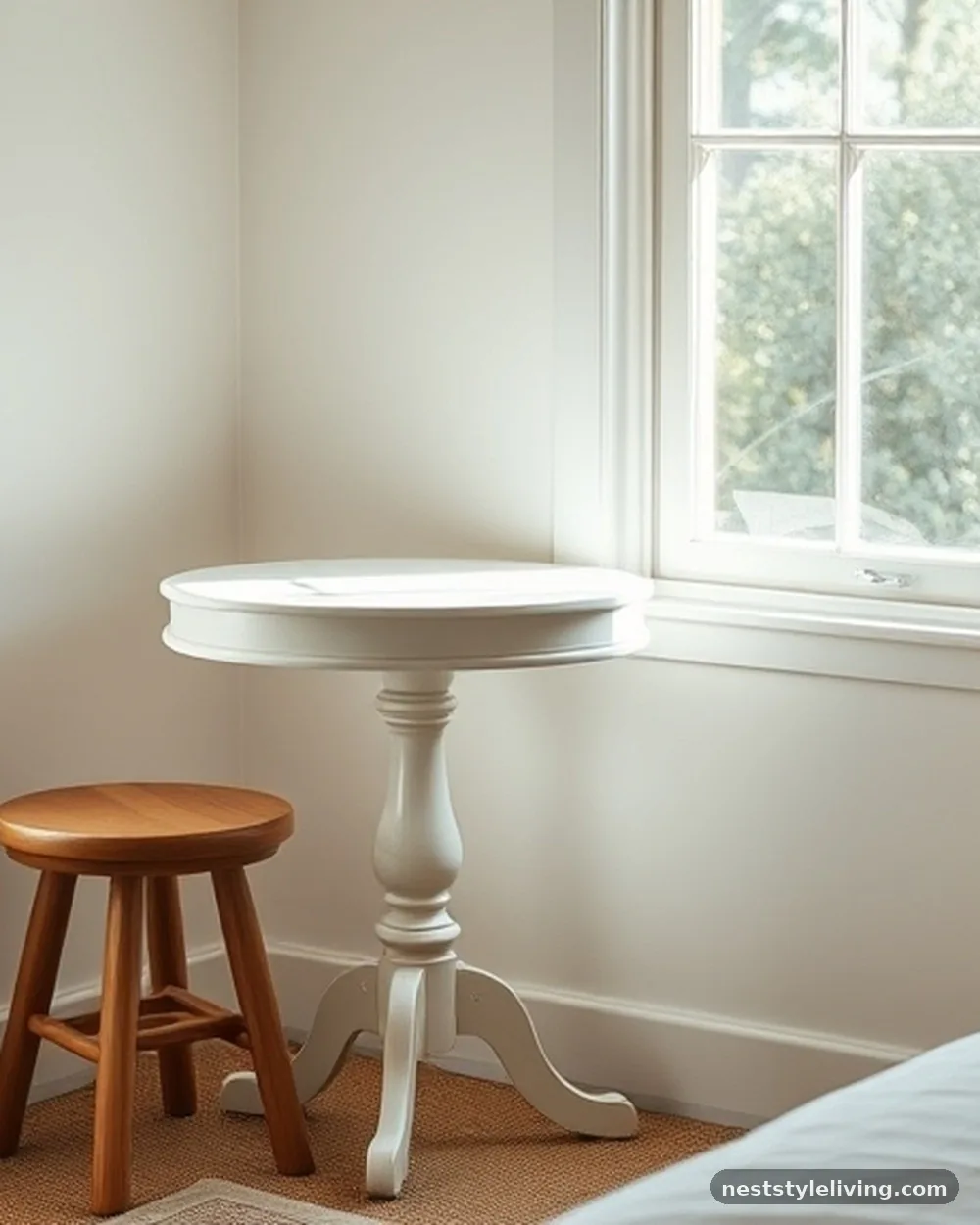
A small, round pedestal table provides a compact footprint while offering enough surface area for a mirror and a few essentials. The single central support allows for more legroom than a four-legged table, making it feel less restrictive in a tight space.
Because it lacks corners, it is safer for navigating small bedrooms and looks less like a “heavy” piece of furniture. Pair it with a stool that can be tucked away to keep the area completely open when you aren’t using it.
Look for a table with a weighted base to ensure it remains stable when you lean on it or place heavy items on one side. A tabletop diameter of 18 to 24 inches is usually sufficient for a vanity, providing enough space for a mirror and a small tray for your daily products.
11. Magnetic Wall Panels
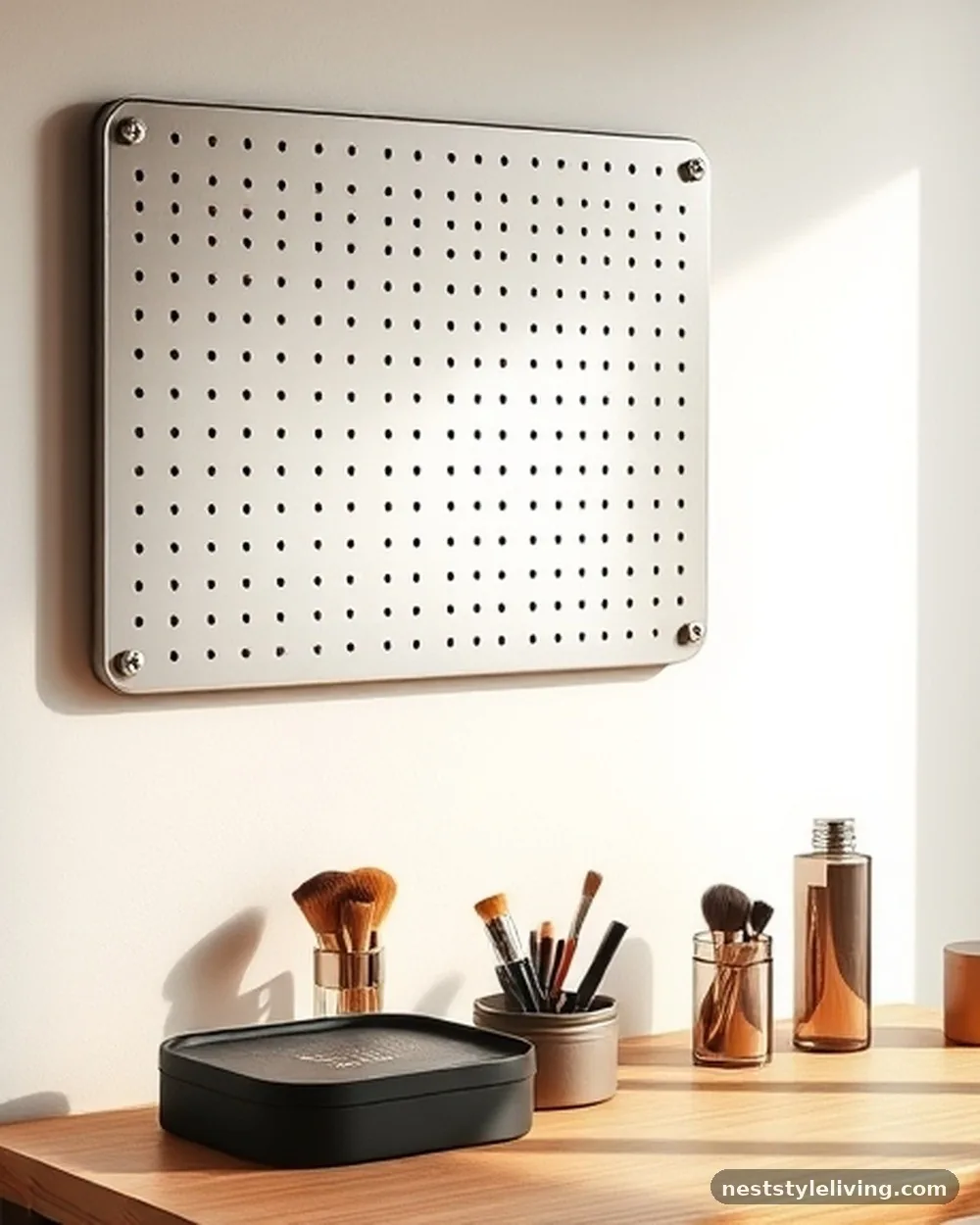
Install a sleek magnetic board or a metal pegboard behind your vanity surface to keep tools and products off the table. You can attach small magnetic tins to hold brushes, tweezers, and eyeliners, effectively clearing your workspace.
This setup turns your wall into a functional storage system that can be customized as your collection changes. It is particularly helpful for small rooms because it keeps the tabletop completely clear for the actual process of applying makeup.
Use strong neodymium magnets for your containers to ensure they don’t slide down the board when you pull a tool out. If you prefer a warmer look, opt for a cork board with push pins or a wooden pegboard where you can hang small baskets and hooks for your various grooming items.
12. Recessed Niche Shelving
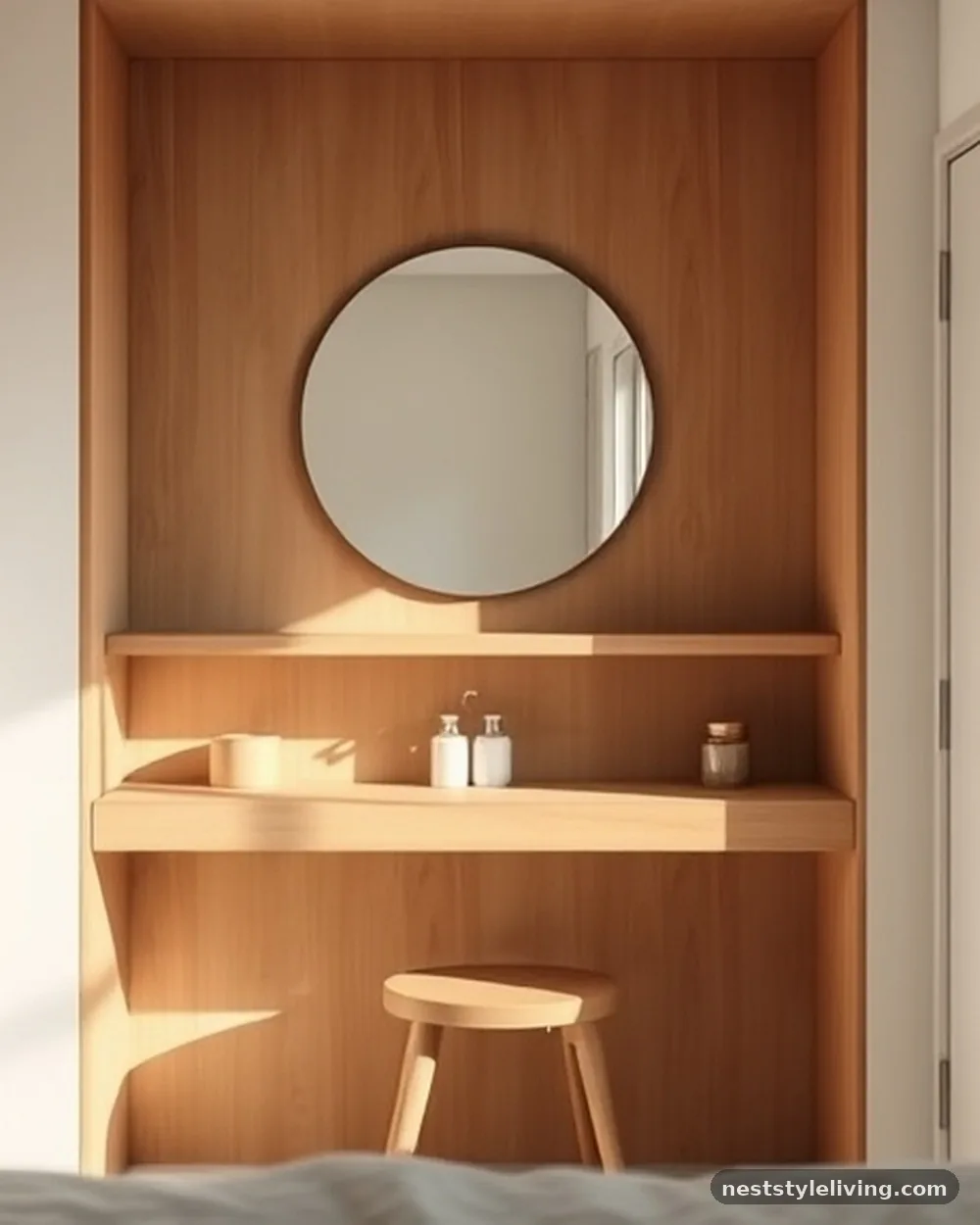
If you are renovating, carving a niche into the wall between the studs creates a “built-in” vanity that takes up zero floor space. By adding a simple shelf inside the wall cavity and a mirror on the back, you create a private grooming station that is flush with the wall.
This is a sophisticated way to manage storage in a small room, as it utilizes the hidden depth of your wall structure. It creates a clean, architectural look that feels intentional rather than like an afterthought.
Add a small light fixture at the top of the niche to ensure your face is properly illuminated. Since you are working inside the wall, check for any electrical wiring or plumbing pipes in the stud bay before you start cutting the drywall to avoid costly repairs.
13. The Ladder Shelf Vanity
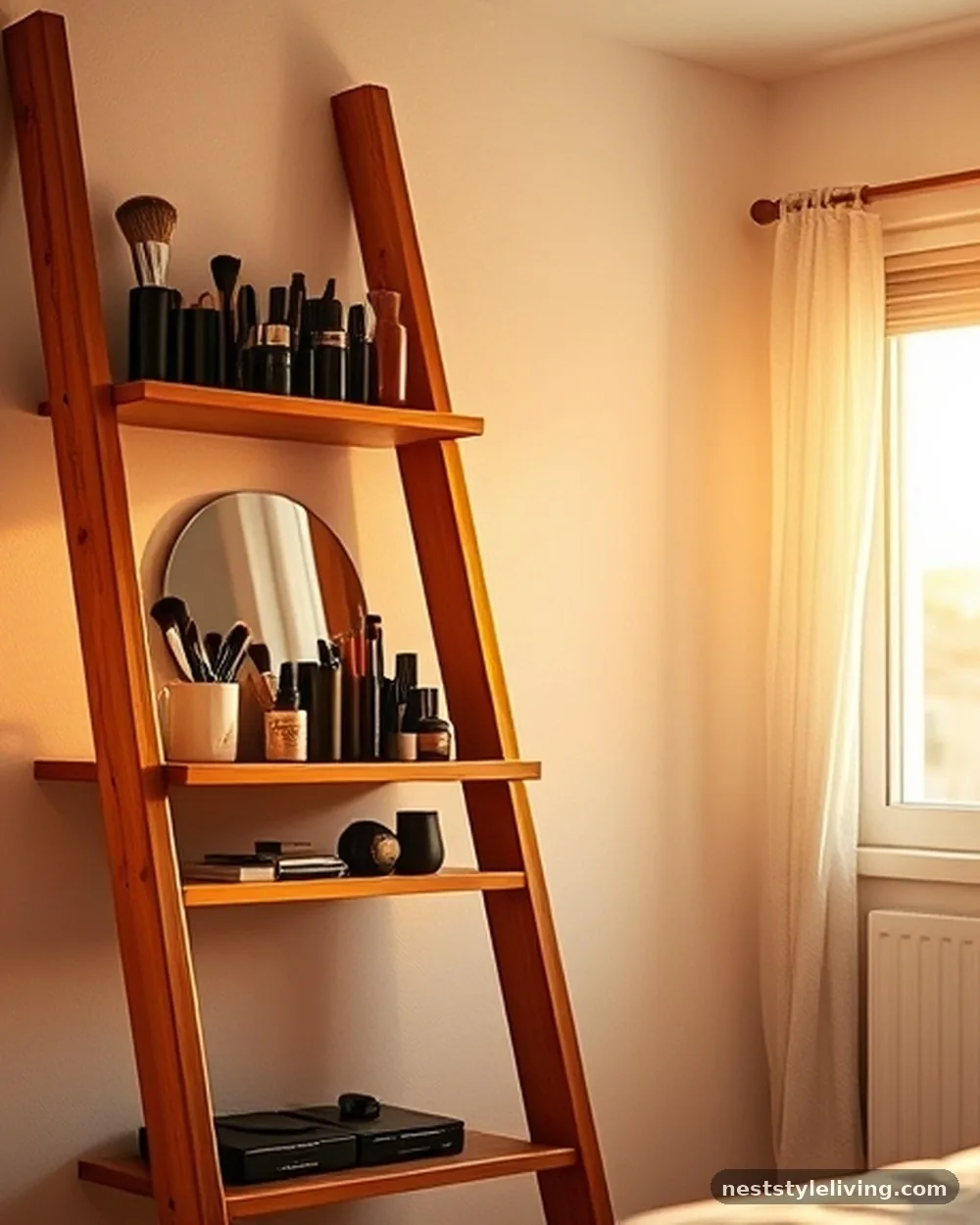
A leaning ladder shelf is a vertical storage powerhouse that fits into a very small footprint. By using the middle shelf as your primary vanity desk and the shelves above for storage, you maximize the use of vertical space.
Because the piece leans, it is naturally stable and adds a decorative element to the room. This style works well in smaller bedrooms where you need to balance function with a casual, open aesthetic.
Secure the top of the ladder to the wall using a small L-bracket to prevent it from sliding or tipping. If the shelves are too deep for a vanity, choose a ladder unit specifically designed with a wider base shelf to provide the necessary depth for your mirror and products.
14. Swing-Arm Mirror Mounts
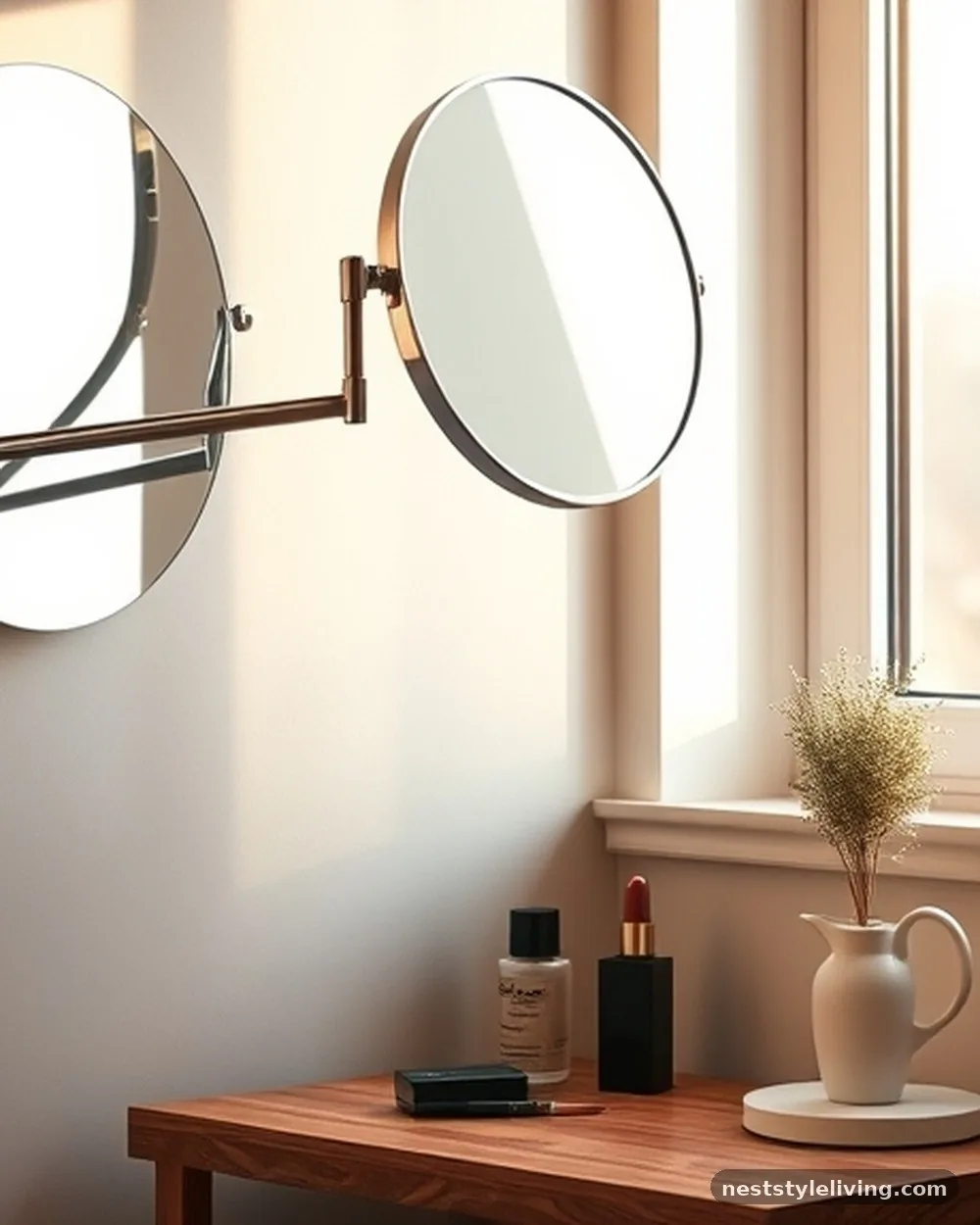
Rather than placing a large mirror on your vanity surface, mount an adjustable swing-arm mirror to the wall. This frees up the entire tabletop for your products and allows you to pull the mirror out only when needed.
A swing-arm mirror is a classic, professional touch that saves space by separating the reflective surface from the work surface. It also allows you to adjust the angle and proximity to your face, which is a major advantage for precise makeup application.
Install the mirror at a height that aligns with your eye level when seated. If you choose a model with a built-in light, ensure you have a way to hide the cord, perhaps by running it along the wall and down to an outlet behind your vanity chair.
15. Clear Acrylic Furniture
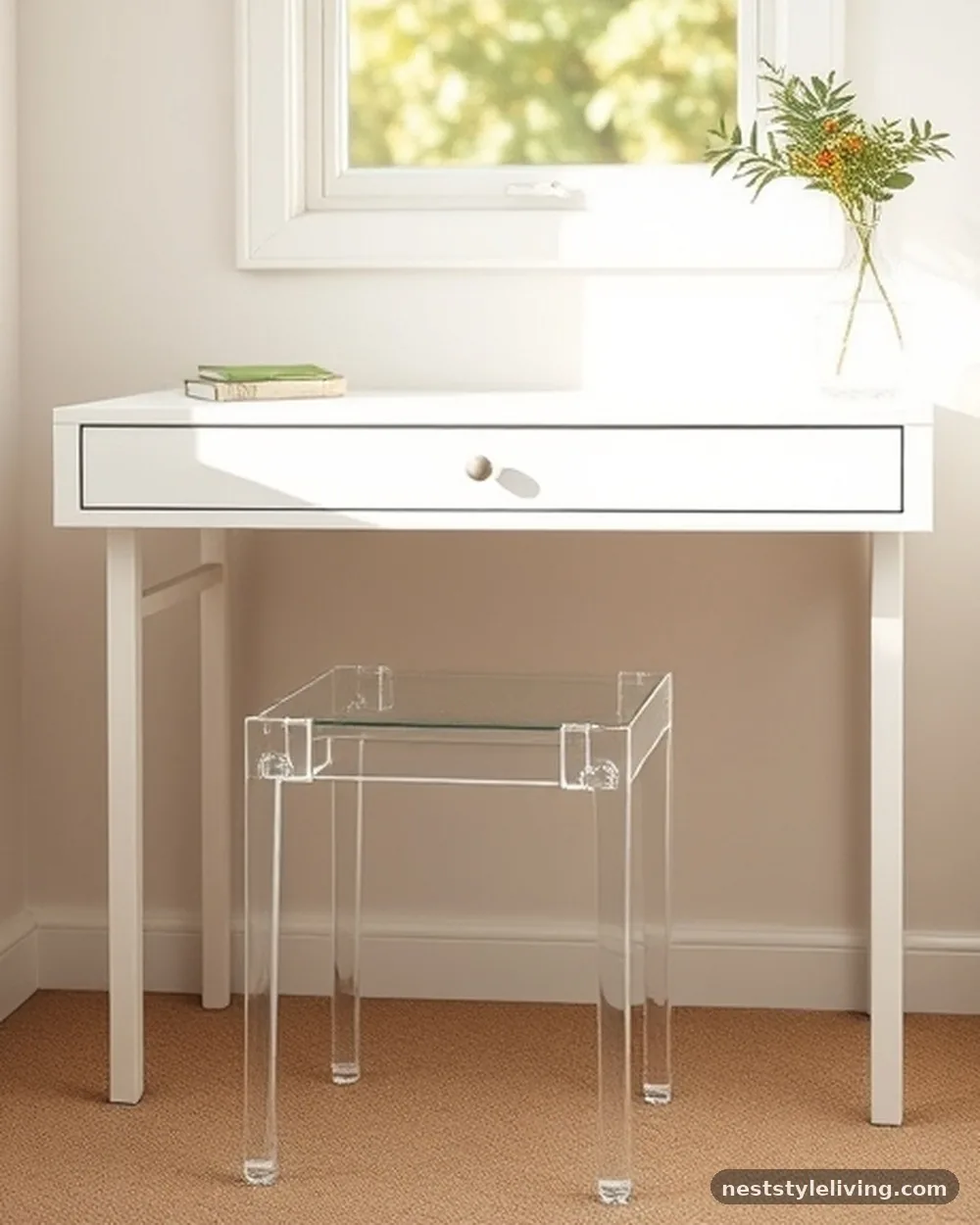
“Ghost” furniture, such as clear acrylic chairs or small side tables, is a visual trick that makes a small room feel significantly larger. Because the material is transparent, it doesn’t interrupt the line of sight across the room, which prevents the space from feeling cluttered.
Using a small, clear vanity stool or a transparent acrylic table allows you to have the necessary furniture without the visual weight of wood or metal. It is a functional way to introduce a vanity without sacrificing the feeling of openness.
Clean acrylic with a specialized plastic cleaner and a soft microfiber cloth to prevent scratches. Avoid using abrasive sponges or harsh chemicals, which can cloud the material and diminish its transparency over time, ruining the “invisible” effect you are trying to achieve.
16. Under-Bed Vanity Storage
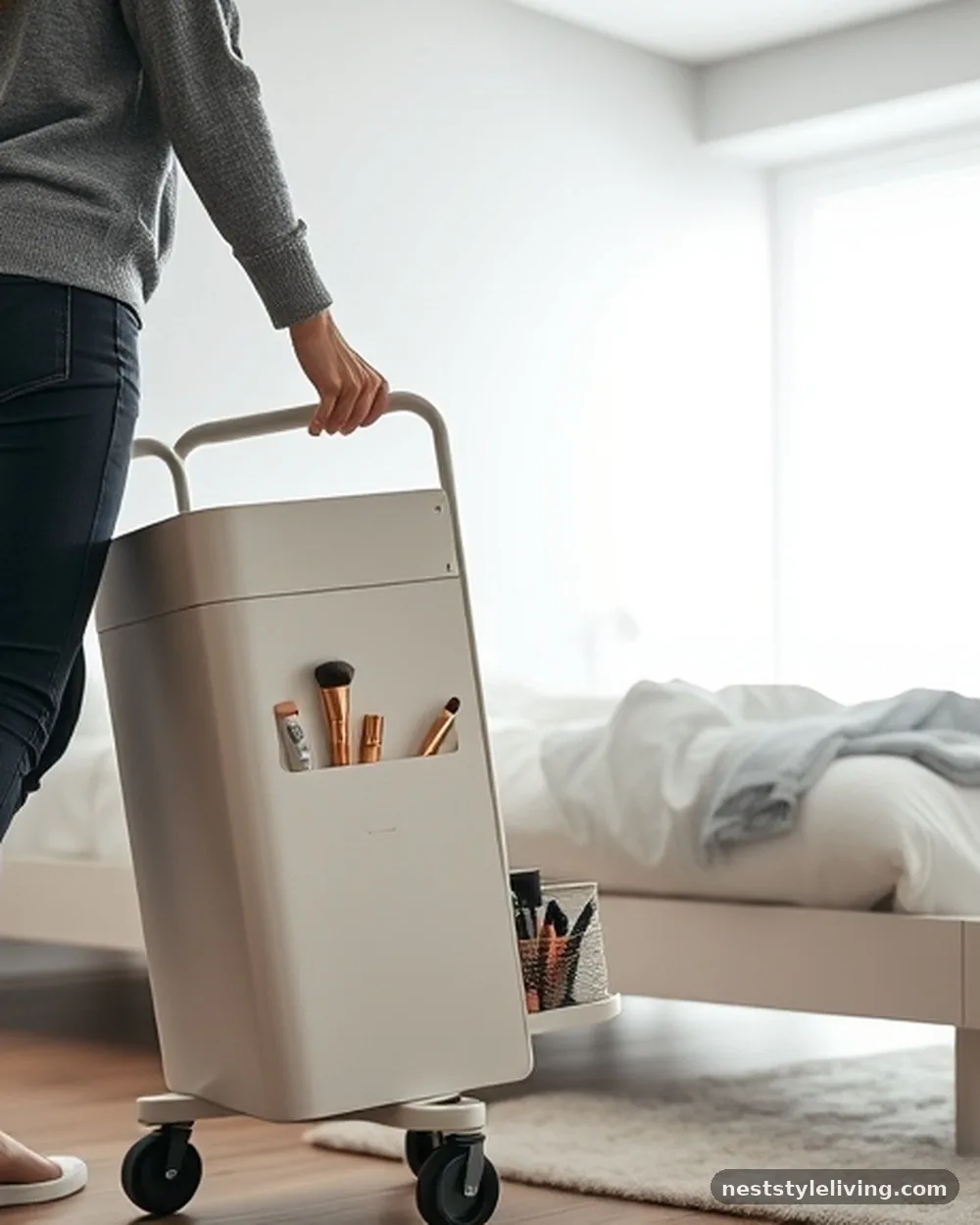
If your bedroom is truly tiny, consider keeping your vanity tools in a rolling cart that lives under your bed. When it is time to get ready, you pull the cart out and use a wall-mounted mirror to create an instant station.
This keeps your bedroom completely free of vanity furniture during the day, which is the ultimate way to maximize floor space. It is a practical solution for those who only need a vanity for a short period each day.
Choose a cart with high-quality caster wheels that can roll easily over your specific flooring, whether it is carpet or hardwood. Ensure the cart height is at least two inches lower than the clearance of your bed frame so it slides in and out without getting stuck.
17. Tucked-In Vanity Stools
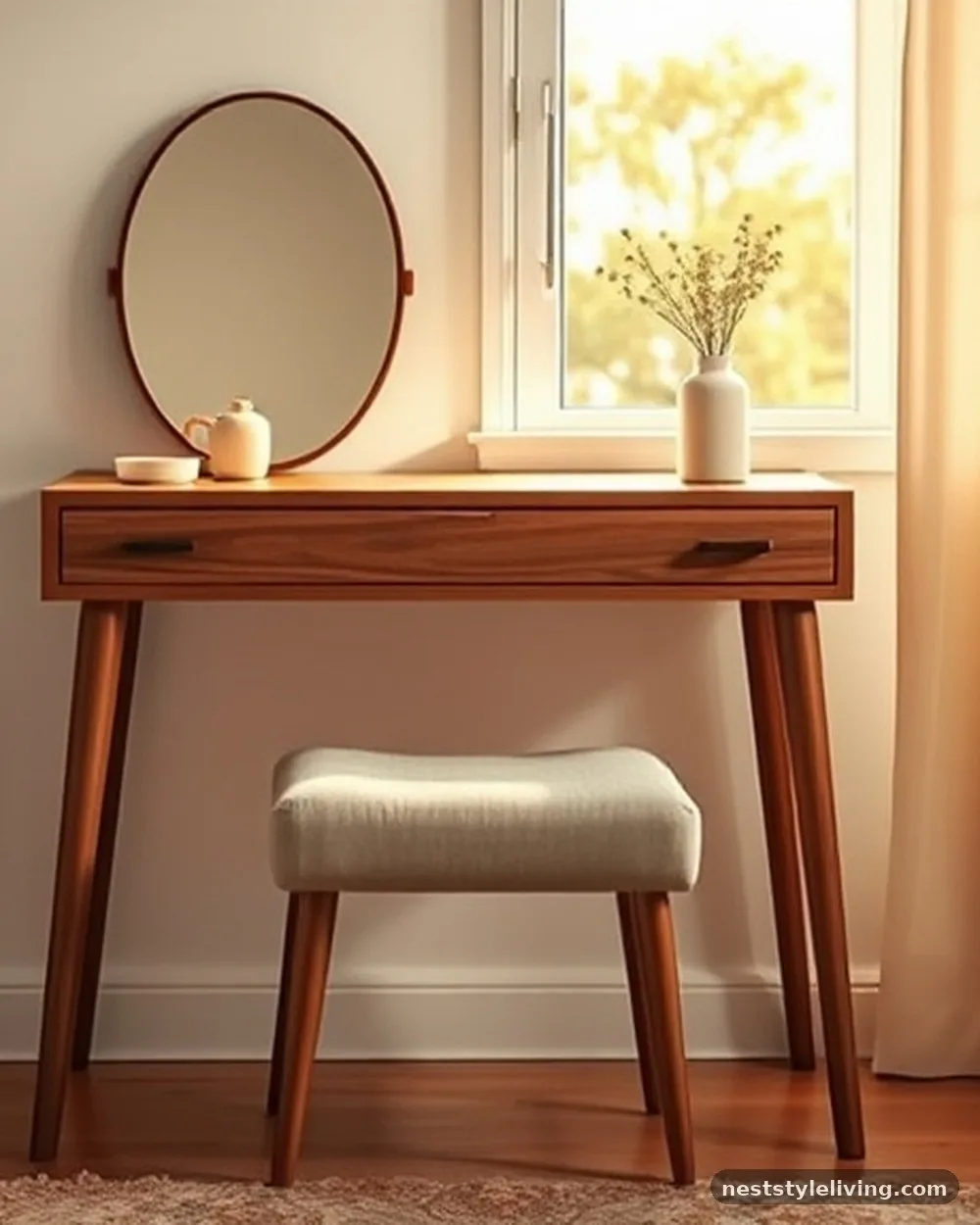
The chair you choose for your vanity is often the biggest space-waster in a small bedroom. Opt for a backless stool or a “pouffe” that can slide entirely underneath your vanity desk, effectively disappearing when not in use.
Avoid chairs with arms or wide backs, as these create visual clutter and block walkways. A simple, upholstered stool can also double as extra seating for guests when you aren’t using it at the vanity.
Look for a stool with a sturdy, low-profile frame that matches the style of your room. If you choose an upholstered top, select a high-performance fabric that can easily be wiped clean, as it will inevitably be exposed to makeup spills or hair products.
18. Battery-Operated LED Lighting

Proper lighting is essential for a vanity, but bulky light fixtures can take up valuable space. Use battery-operated or rechargeable LED light strips that stick directly onto the frame of your mirror. These provide bright, even illumination without the need for cords, outlets, or heavy fixtures.
By using stick-on lights, you can transform any surface into a professional-grade vanity area regardless of where it is located in the room. This keeps the look clean and avoids the need for dedicated wiring.
Choose strips with a “daylight” color temperature to ensure you can see your makeup colors accurately. Rechargeable versions are preferred over battery-operated ones, as they save money and reduce waste, and you can simply plug them into a USB port once a week to keep them bright.
Frequently Asked Questions
How can I light a small vanity without a large mirror fixture?
Use stick-on, rechargeable LED light bars that attach directly to the glass or the wall surrounding your mirror. These provide bright, professional-quality lighting without the bulk of a traditional vanity frame. You can also use a portable, battery-powered ring light that sits on your desk and can be packed away when not needed.
What is the minimum depth needed for a functional vanity desk?
You can get away with a depth as shallow as 10 to 12 inches if you use a wall-mounted mirror and organize your products vertically. This is enough space to hold a mirror, a few brushes, and your daily makeup essentials. If you need space for a laptop or larger items, aim for 15 to 18 inches.
Is it better to use a floating shelf or a small table in a tiny room?
A floating shelf is almost always better for space maximization because it keeps the floor clear, which makes the room feel larger. A table, even a small one, creates a visual barrier and occupies floor space. If you have the wall capacity, opt for a floating shelf to maintain an airy, open feeling.
How do I manage clutter on a very small vanity surface?
The key is to use vertical storage and keep only your daily essentials on the tabletop. Use rotating tiered trays, magnetic wall panels, or drawer organizers to ensure everything has a specific place. If it doesn’t fit on the desk, it should be stored in a drawer or a wall-mounted basket rather than left on the surface.
Can a corner be used effectively for a vanity?
Yes, a corner is often the most wasted space in a small bedroom. A custom-cut triangular desk or a wall-mounted corner shelf can turn an awkward, empty nook into a highly efficient grooming station. It keeps the vanity out of the main flow of the room while providing enough surface area for your daily routine.
Conclusion
Maximizing your limited square footage doesn’t mean you have to sacrifice the convenience of a dedicated grooming area. By applying these small bedroom vanity ideas that maximize space, you can create a functional, stylish, and highly organized station that fits your specific room layout. Whether you choose a floating shelf, a corner desk, or a clever fold-down design, the key is to prioritize vertical storage and clear floor space.
Start by identifying the most underutilized wall or corner in your bedroom and choosing a solution that integrates into your existing aesthetic. With the right hardware and a commitment to keeping surfaces clear, you can enjoy a professional-grade vanity experience every single morning. Take a look at your room today and see which of these space-saving strategies will work best for your lifestyle.