13 Japandi Bathroom Ideas That Make Relaxing Feel Luxe
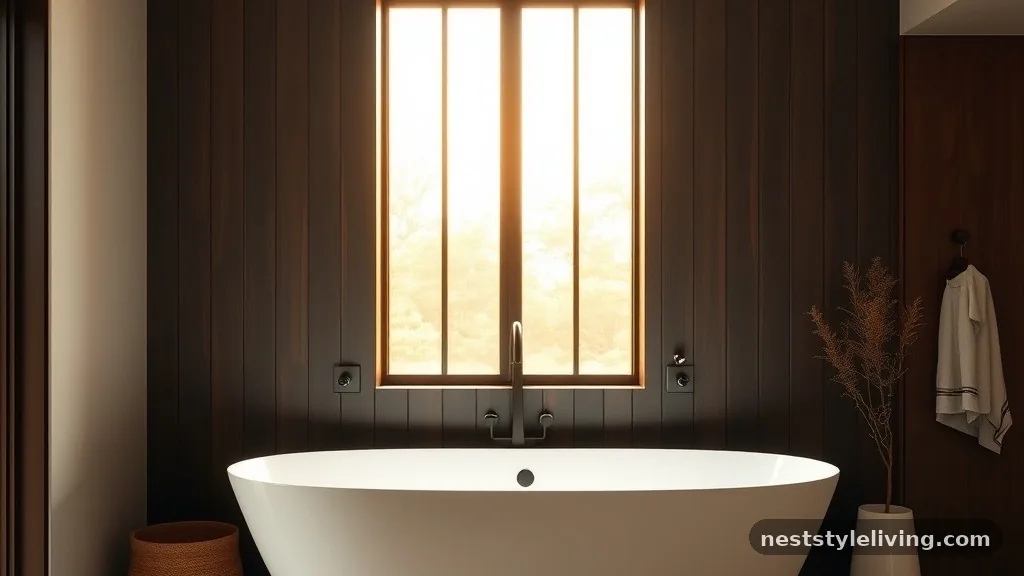
Transforming your daily routine into a restorative ritual requires the right balance of minimalism and warmth, which is exactly why Japandi bathroom ideas that make relaxing feel luxe have become such a sought-after aesthetic. By blending the rustic simplicity of Japanese design with the functional comfort of Scandinavian style, you can create a sanctuary that prioritizes tranquility over clutter.
This approach relies on raw textures, a muted color palette, and an emphasis on natural light to turn a standard utility room into a private spa. If you are ready to rethink your space, these thirteen design concepts will help you craft a serene environment that feels both sophisticated and grounded.
1. Shou Sugi Ban Wood Accents
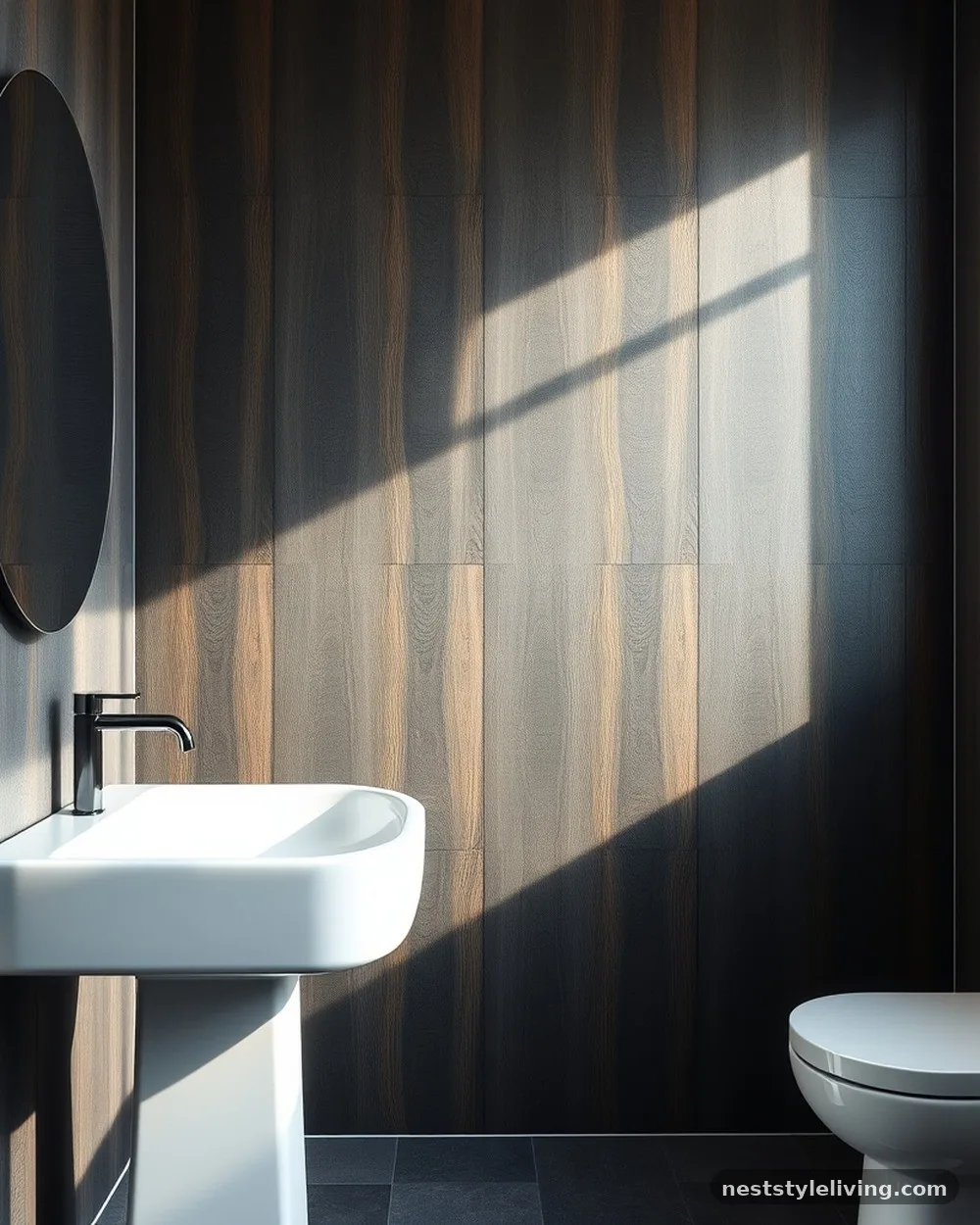
Shou Sugi Ban, the ancient Japanese technique of charring wood, creates a dramatic, charcoal-toned aesthetic that adds instant depth to a sterile bathroom. In a Japandi design, this charred finish acts as a bold anchor against lighter elements like white ceramic or pale oak.
The wood texture is rich and tactile, offering a sophisticated contrast that feels both organic and modern. Because the process naturally makes the wood more resistant to moisture and decay, it is a practical choice for high-humidity areas, provided the surface is properly sealed with a high-quality matte finish.
Incorporate this look by installing charred wood panels as a feature wall behind a vanity or as custom shelving. Ensure you choose cedar or larch, which take the charring process well, and finish them with a non-toxic, water-repellent sealant to maintain the matte, velvety look without risking water damage over time.
2. Matte Sandstone Vessel Sinks
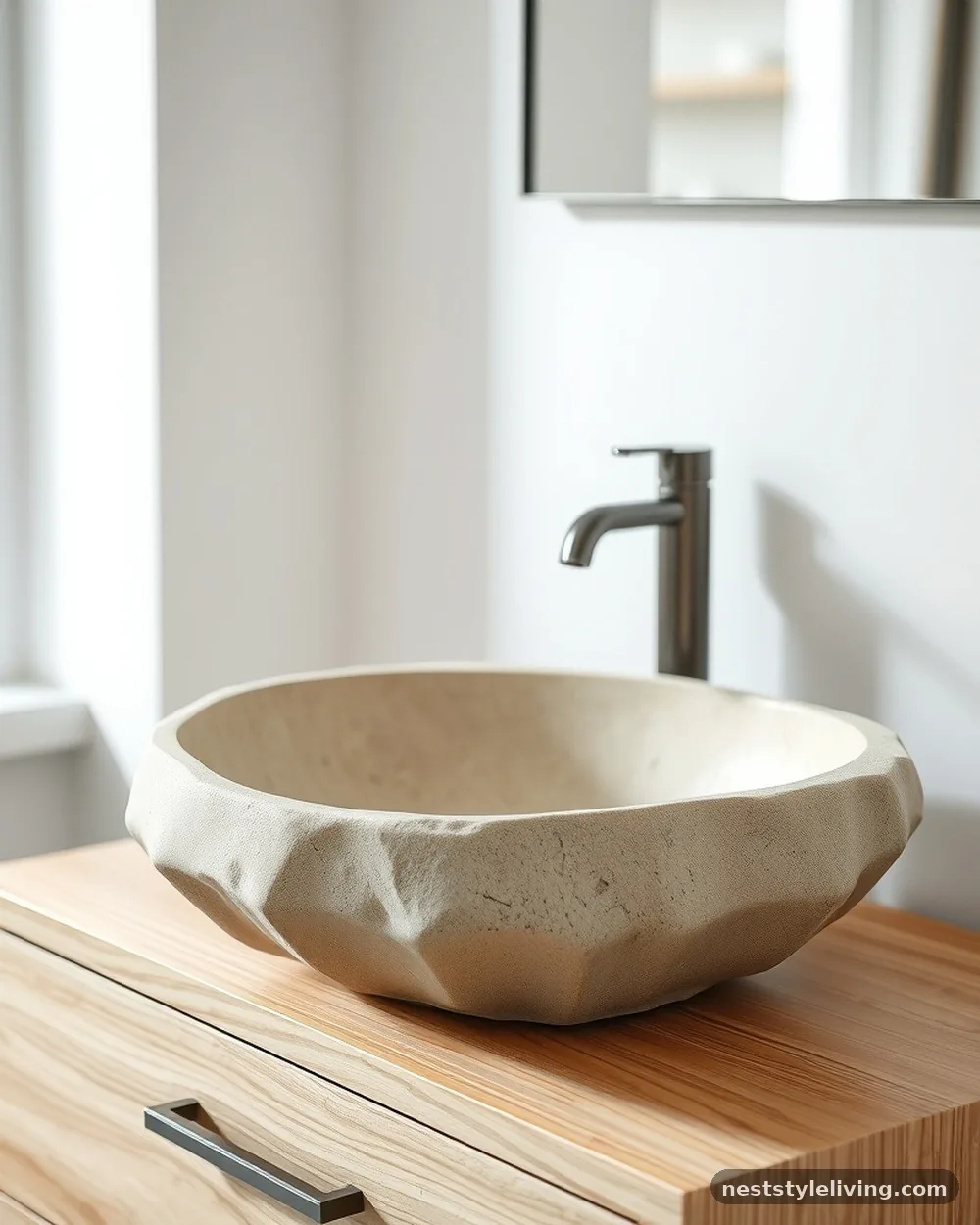
Moving away from traditional glossy porcelain, a matte sandstone or river stone sink provides a rugged, earthy focal point that defines the Japandi look. These sinks often feature organic, slightly irregular shapes that mimic the raw beauty of nature, softening the rigid geometry of standard bathroom fixtures.
The tactile quality of stone invites a sensory experience every time you wash your hands, reinforcing the connection to the natural world. Maintenance is straightforward, requiring only a gentle, pH-neutral cleaner to ensure the stone’s porous surface remains free of soap scum without stripping its natural character.
When selecting a vessel sink, look for one carved from a single block of natural stone to ensure durability. Pair it with a wall-mounted faucet in a brushed nickel or matte black finish to keep the vanity deck clear and emphasize the sculptural nature of the stone basin itself.
3. Wabi-Sabi Inspired Ceramic Tiles
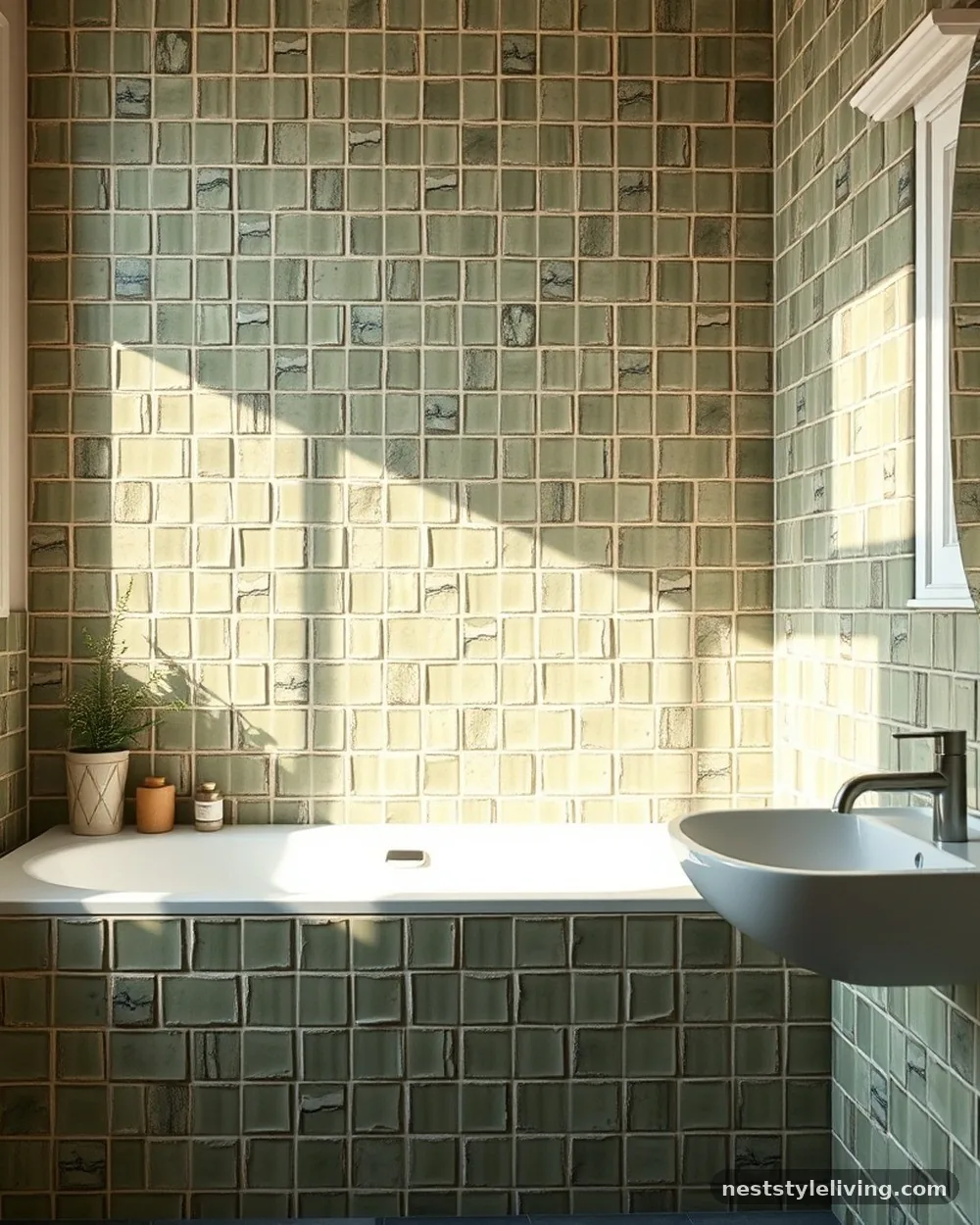
Embracing imperfection is the heart of the wabi-sabi philosophy, and it translates beautifully into handmade ceramic tile choices. Opt for tiles that feature subtle variations in glaze, slight irregularities in shape, or hand-pressed edges to avoid the sterile, mass-produced look of standard factory-made options.
These tiles catch the light differently across their surface, creating a dynamic visual interest that feels lived-in and calm. The color palette should remain grounded in earthy tones like greige, muted sage, or warm clay to keep the atmosphere soothing rather than overwhelming.
Apply these tiles in a floor-to-ceiling application for a monolithic, spa-like feel. To ensure the look stays clean, choose a grout color that matches the tile as closely as possible, which minimizes visual lines and allows the beauty of the ceramic texture to remain the primary focus.
4. Bamboo Slatted Ceiling Panels
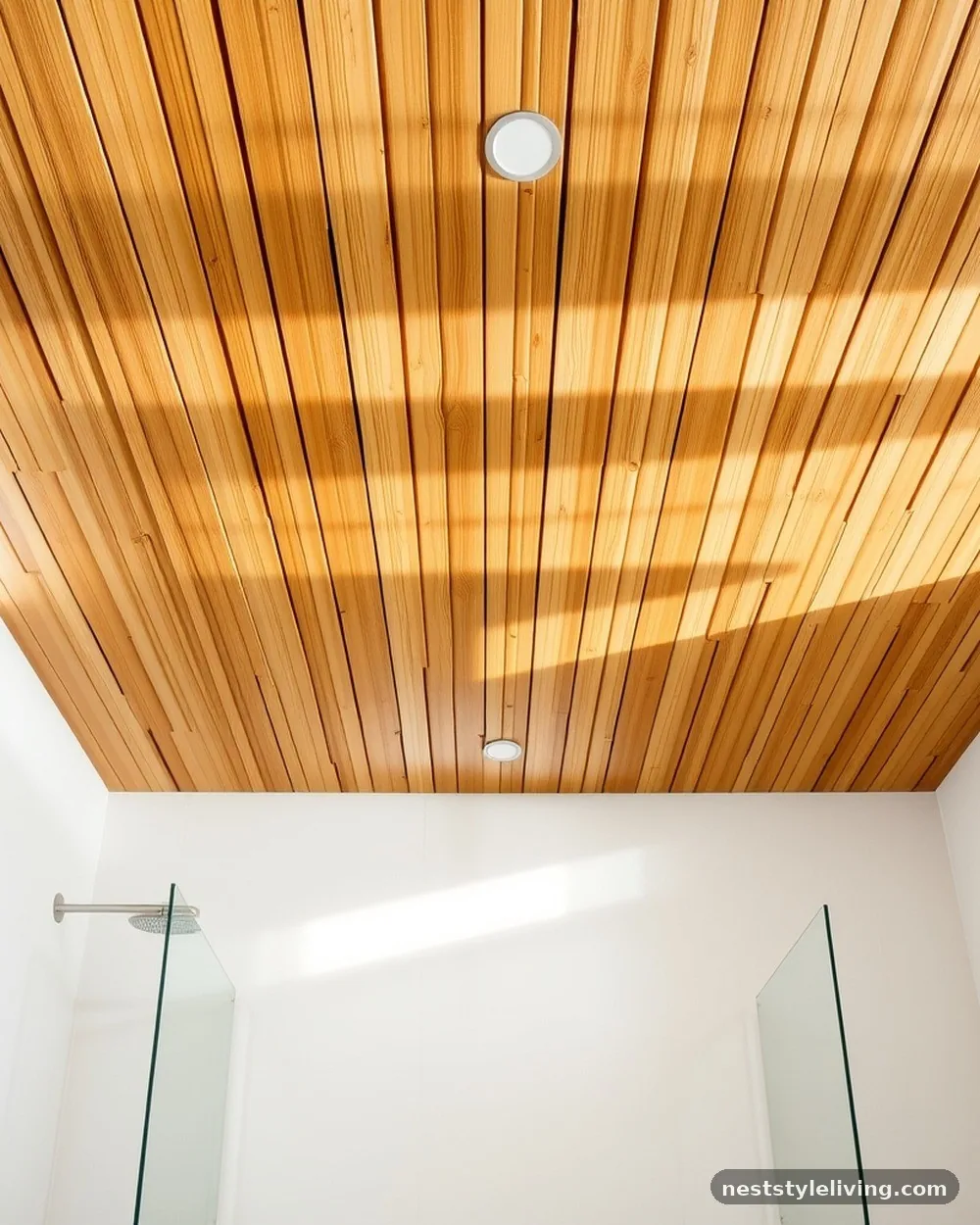
Bringing natural materials overhead is a clever way to add warmth to a room that often feels cold due to tile and glass. Slatted bamboo or light wood panels create a linear, rhythmic pattern that draws the eye upward, making the room feel taller and more expansive.
This architectural detail mimics the eaves of a traditional Japanese home, providing a sense of shelter and quietude. The slats also serve a functional purpose by masking recessed lighting, allowing the glow to diffuse softly across the ceiling rather than creating harsh, direct beams.
Install these slats using a modular framing system that allows for easy access to plumbing or electrical components hidden above. Use light-toned bamboo or white oak to keep the space feeling airy, and ensure the wood is treated with a specialized moisture-resistant varnish to prevent warping in the bathroom environment.
5. Paper-Style Diffused Lighting
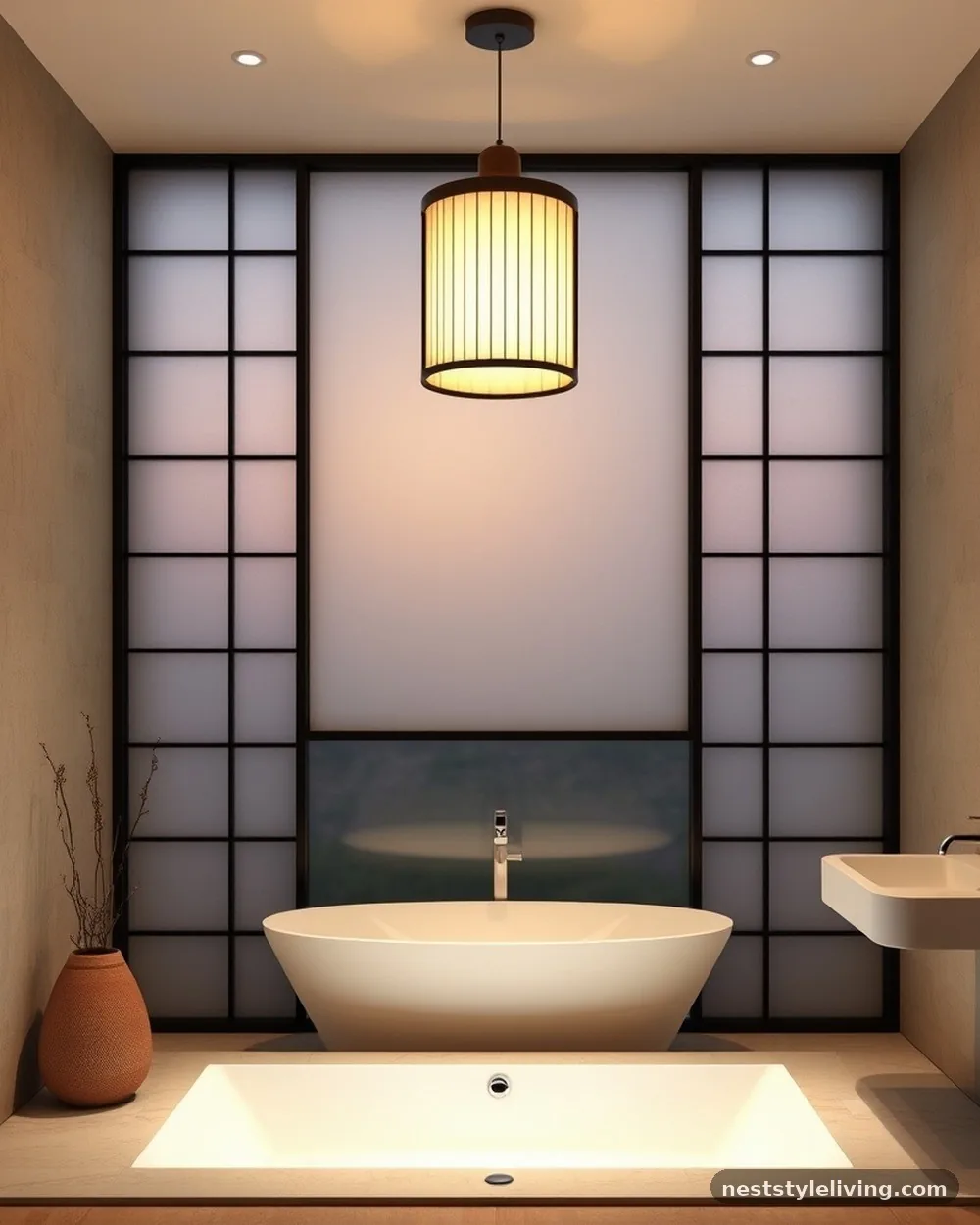
Lighting is the most critical element for setting a mood, and Japandi style favors the soft, diffused glow associated with Japanese shoji screens or washi paper lanterns. Instead of harsh overhead spotlights, use fixtures with linen or frosted glass shades that mimic the look of paper.
This creates a gentle, ambient light that eliminates deep shadows and makes the bathroom feel like a peaceful retreat. A warm-toned LED bulb, typically in the 2700K range, is essential to replicate the natural, golden light of dawn or dusk.
Replace standard vanity lights with cylindrical, paper-effect wall sconces placed at eye level on either side of the mirror. This placement provides even, flattering illumination for grooming while maintaining the low-contrast, relaxing atmosphere that defines the Japandi bathroom aesthetic.
6. Minimalist Floating Teak Vanities
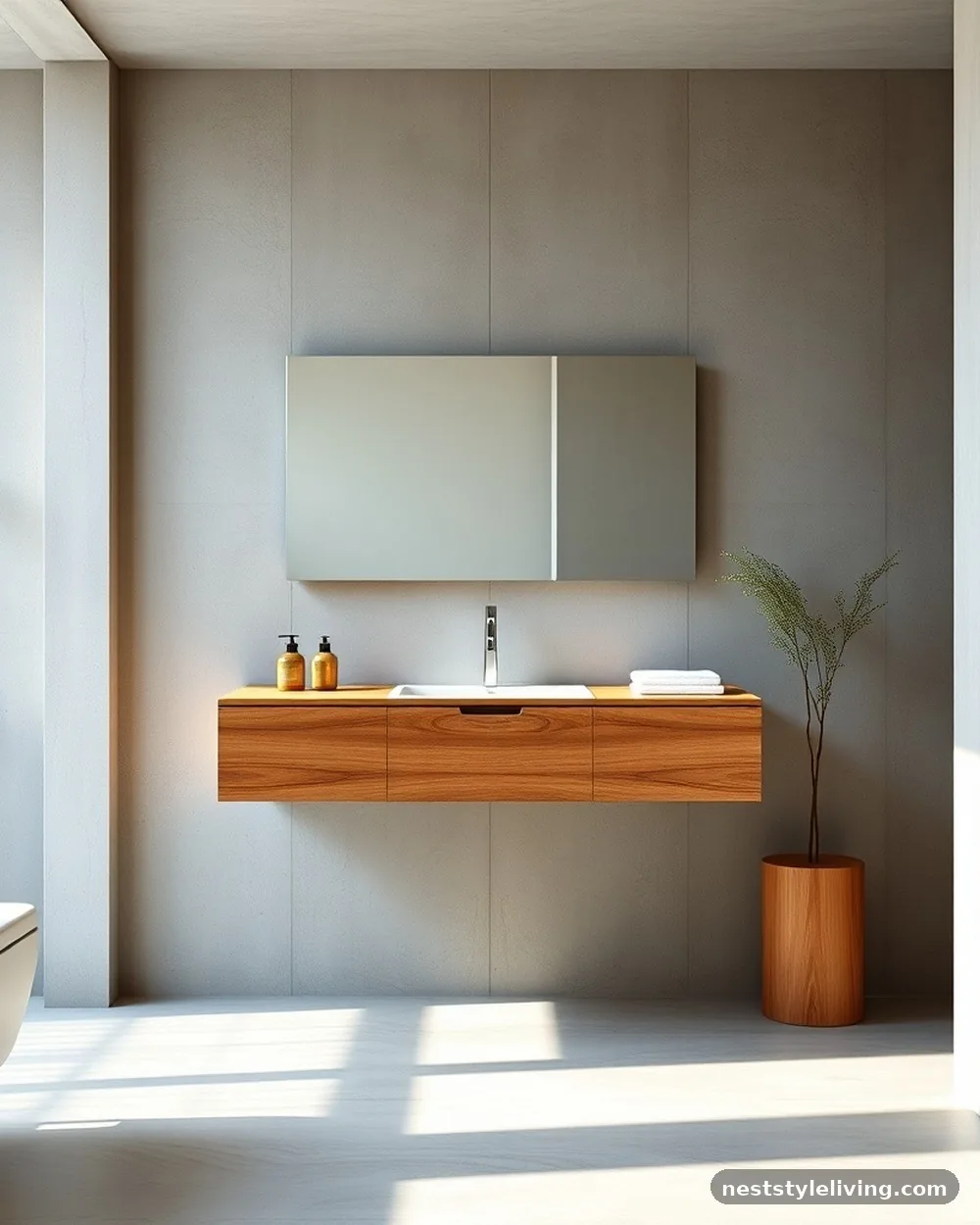
A floating vanity made from teak or another durable, light-toned wood is a hallmark of Scandinavian efficiency fused with Japanese simplicity. By lifting the storage off the floor, you create a sense of lightness and increase the visible floor space, which is an excellent trick for making a small room feel larger.
Teak is naturally oily and water-resistant, making it one of the few woods that can handle the bathroom environment without significant degradation. The design should focus on clean lines, touch-to-open drawers, and no visible hardware to maintain a serene, uncluttered appearance.
When installing a floating vanity, prioritize wall blocking to ensure the unit can support the weight of a heavy stone sink. Keep the surface completely clear of bottles or accessories, using the internal drawers for storage to uphold the minimalist principles of the design.
7. Neutral Linen Shower Curtains
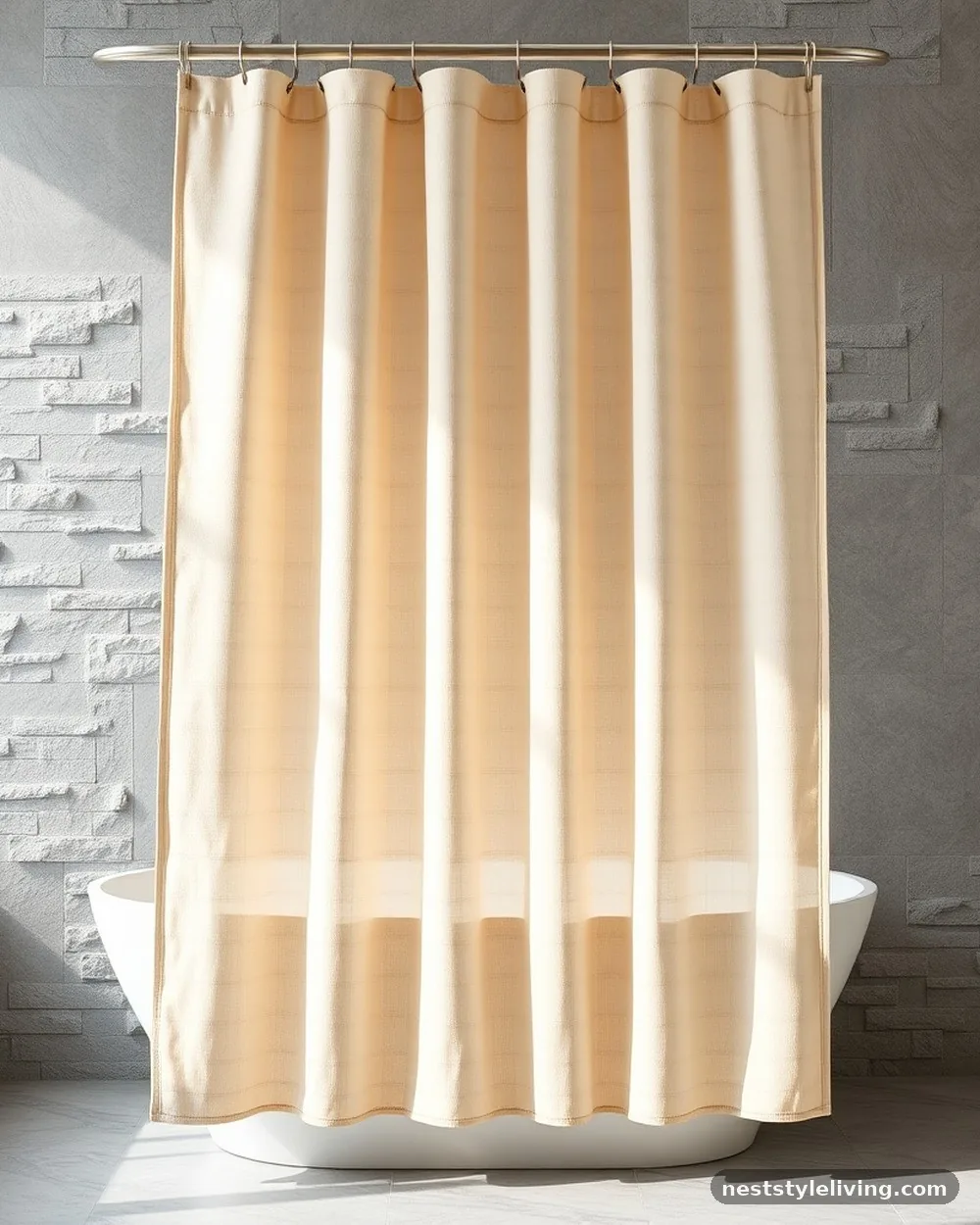
Textiles play a vital role in Japandi design by introducing softness to hard-surfaced rooms. A heavy, high-quality linen shower curtain in a natural beige, oatmeal, or soft grey adds an organic texture that contrasts perfectly with stone or tile walls.
Unlike synthetic plastic curtains, linen breathes and drapes beautifully, adding a touch of understated luxury to the bathing area. It provides a tactile, fabric-first look that makes the shower feel more like a dedicated room within a room, enhancing the sense of privacy and comfort.
To keep the linen functional, pair it with a high-quality, waterproof liner hidden behind the fabric. Wash the linen curtain periodically to prevent mildew buildup, and choose a weighted hem to ensure it hangs straight and maintains its crisp, clean lines over time.
8. Sunken Pebble Shower Floors
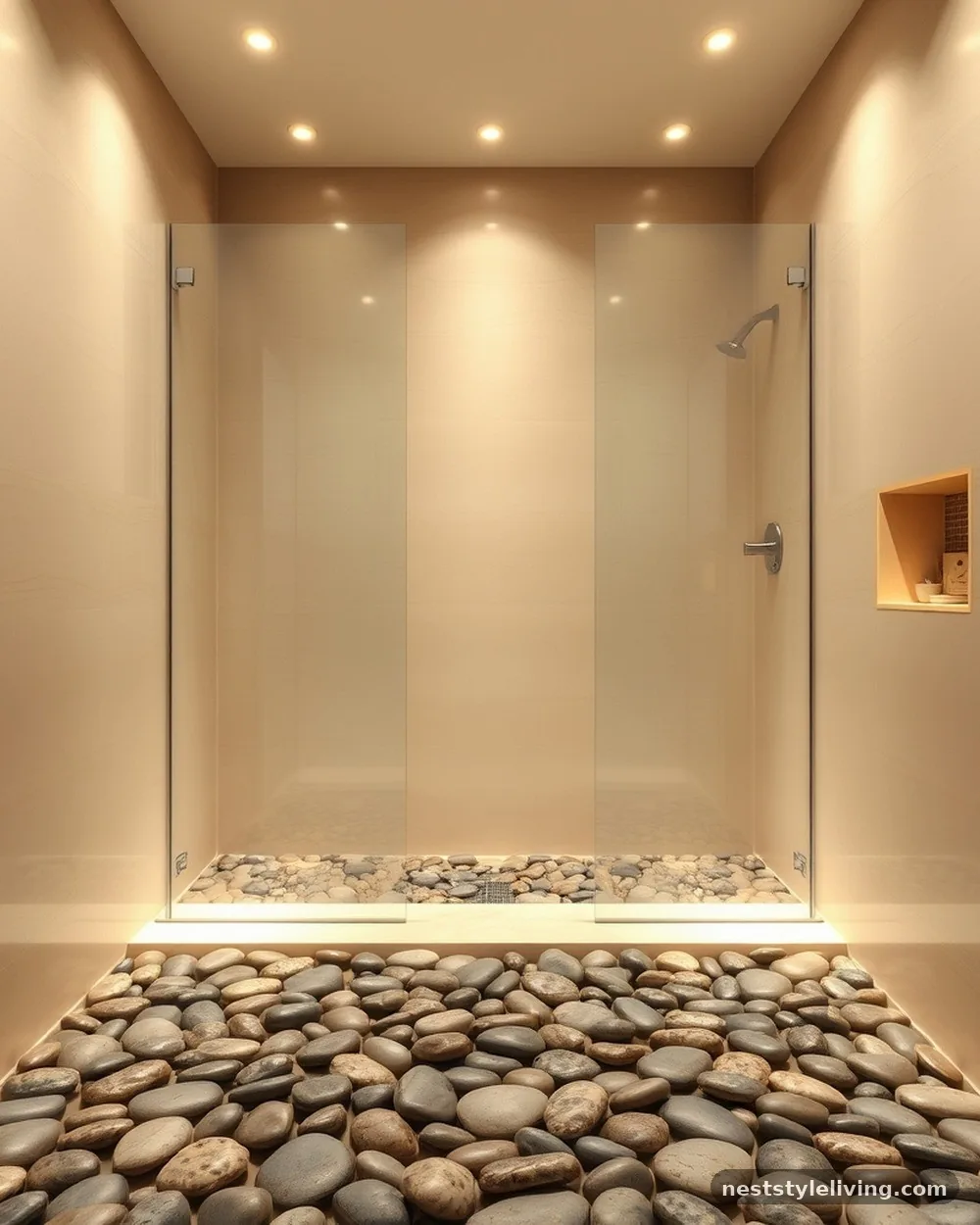
Recreating the experience of a natural hot spring, or onsen, is a key element of Japandi bathroom ideas that make relaxing feel luxe. Using smooth, river-washed pebbles on the shower floor provides a gentle, stimulating massage for your feet while creating a seamless, organic transition from the bathroom floor.
The rounded shapes of the stones offer a nice contrast to the sharp, linear tiles often found in modern bathrooms. This feature is not only visually striking but also highly durable and slip-resistant, provided the stones are set correctly in a high-quality epoxy grout.
When installing, choose a mesh-backed pebble tile sheet to ensure consistent spacing and easy application. Use a dark or charcoal grout to make the individual stones pop, and seal the entire surface with a matte stone sealer to prevent water absorption and maintain the natural color of the pebbles.
9. Low-Profile Platform Bathtubs
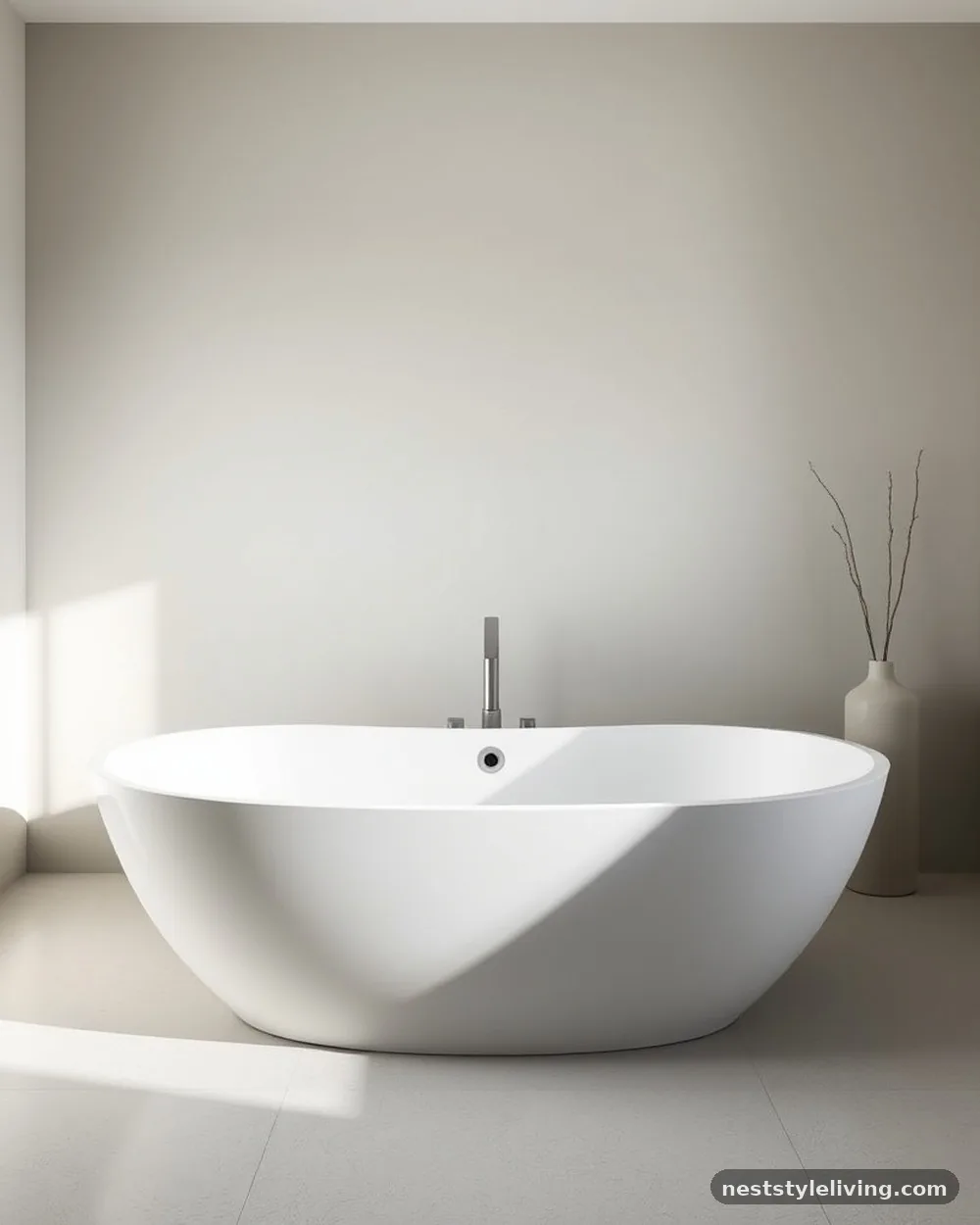
The bathtub is the centerpiece of a luxury Japandi bathroom, and the ideal choice is a deep, low-profile soaking tub. These tubs are designed for immersion, often modeled after the traditional Japanese furo, which emphasizes vertical depth rather than horizontal length.
A matte white, resin-based freestanding tub offers a clean, sculptural look that fits perfectly into a minimalist space. By keeping the profile low, the tub feels less like a bulky appliance and more like a permanent, integrated feature of the room’s architecture.
Position the tub in a corner or under a window to create a dedicated “bathing zone.” If you have the floor space, surround the base with a small bed of polished river stones or a slatted wood platform to create a visual transition between the wet area and the rest of the floor.
10. Branch-Based Towel Rails
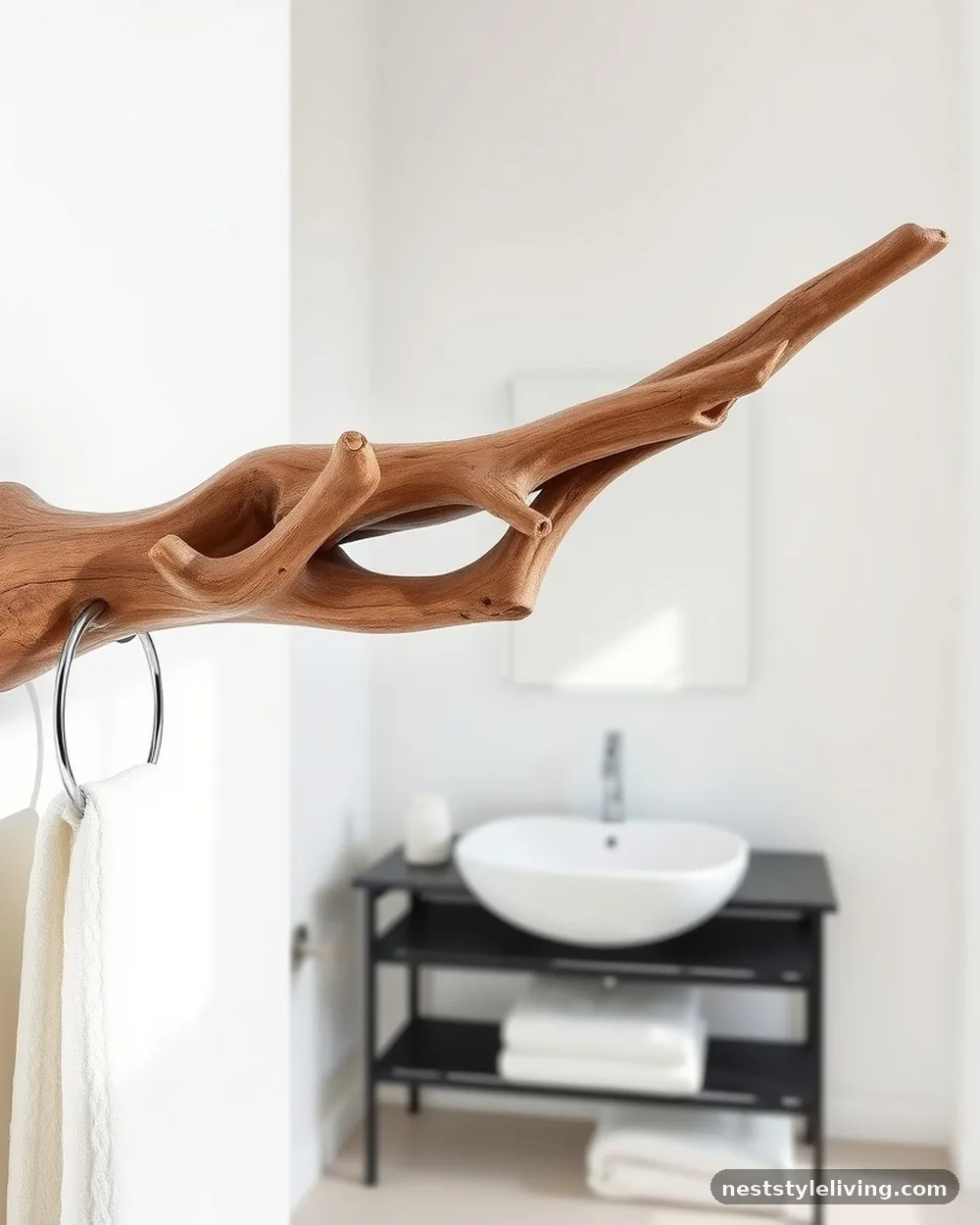
Adding a touch of the outdoors is essential for Japandi style, and using a treated, natural wood branch as a towel rail is a simple way to achieve this. Look for a sturdy, naturally shaped piece of driftwood or a sanded branch that has been cleaned and sealed to prevent splintering.
This adds a sculptural, one-of-a-kind element to the bathroom that breaks up the monotony of sleek, manufactured surfaces. The organic shape of the wood provides a beautiful contrast to the straight lines of the walls and vanity, adding a sense of movement and history to the room.
Mount the branch using discreet, heavy-duty metal brackets that allow the wood to stand slightly away from the wall. Ensure the wood is thoroughly dried and finished with a water-resistant oil, such as tung oil or Danish oil, to protect it from the moisture of wet towels.
11. Monochrome Grayscale Color Schemes
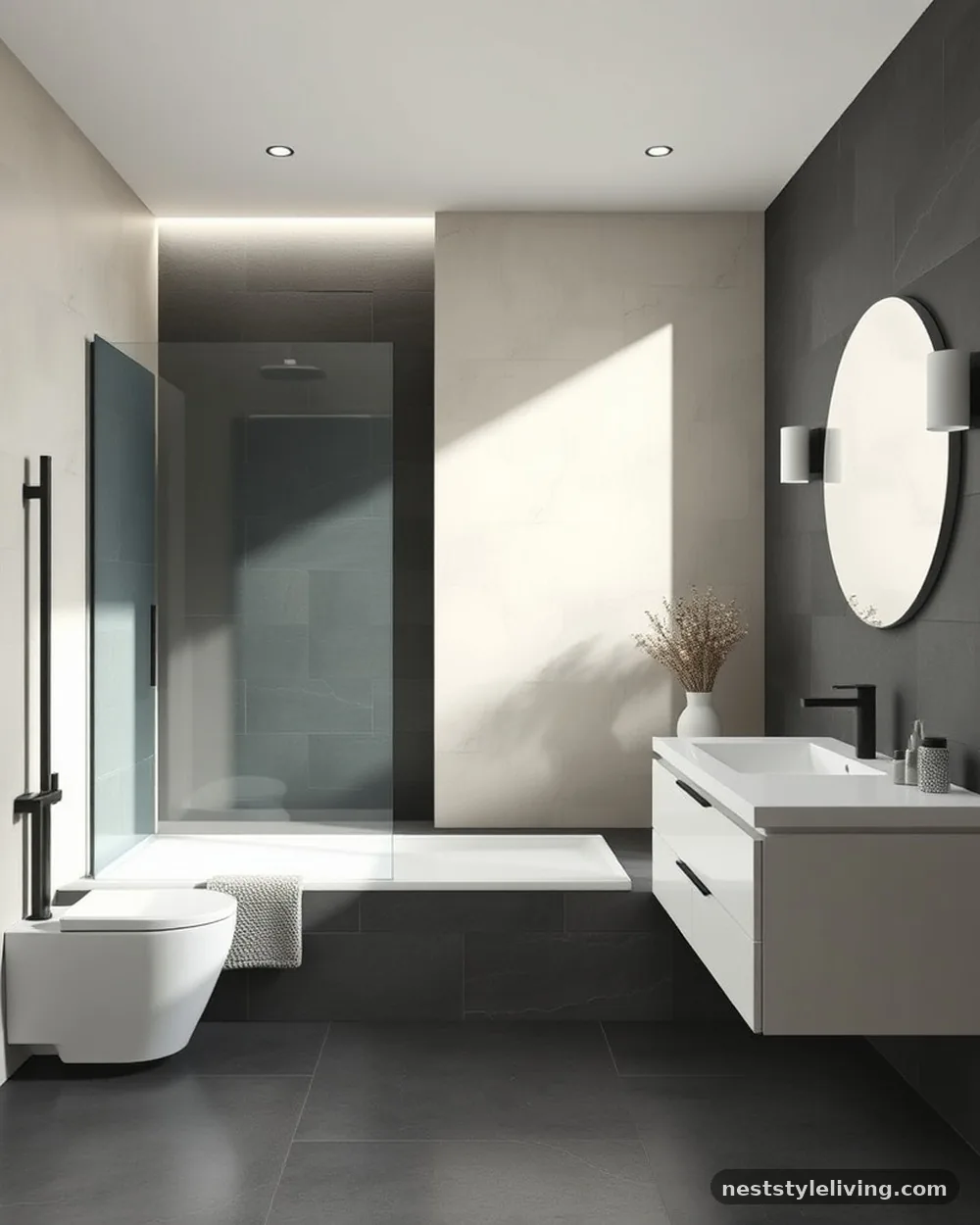
The Japandi color palette is famously restrained, relying on a monochrome grayscale to create a sense of calm and visual cohesion. By using varying shades of charcoal, slate, mist, and off-white, you can define different zones in the bathroom without resorting to loud patterns or conflicting colors.
This approach allows the textures of the materials—the grain of the wood, the pores of the stone, the weave of the linen—to take center stage. The result is a sophisticated, gallery-like feel that naturally lowers stress levels by reducing visual clutter.
Apply these shades strategically: use the darkest charcoal for the floor to ground the space, mid-tones for the walls, and the lightest off-whites for the ceiling or linens. This hierarchy of color makes the room feel balanced and intentional, ensuring that the design feels curated rather than merely grey.
12. Integrated Recessed Niches
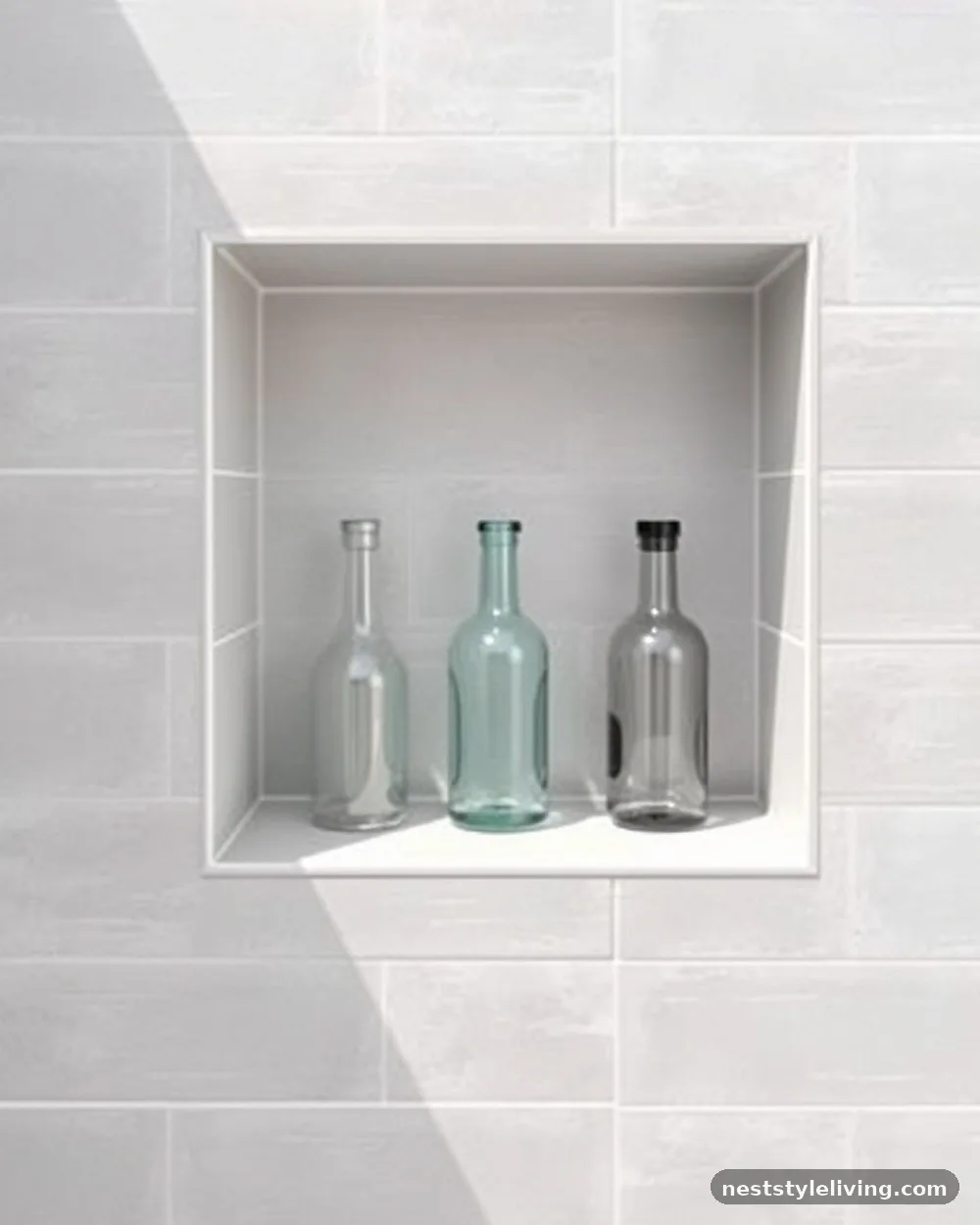
Visible clutter is the enemy of a relaxing, luxurious bathroom, which is why integrated storage is so important. Recessed niches within the shower or above the vanity allow you to store toiletries without needing external shelves that take up space and break the visual flow of the walls.
These niches should be lined with the same material as the walls to create a seamless, built-in look. By keeping your soaps, shampoos, and lotions tucked away, you maintain the minimalist aesthetic that is the hallmark of the Japandi style.
When planning your layout, ensure the niches are placed at an ergonomic height for easy access. Consider adding a subtle, waterproof LED strip at the top edge of the niche to create a soft, upward glow that highlights your curated bottles or a single piece of decor.
13. Potted Bonsai or Ferns
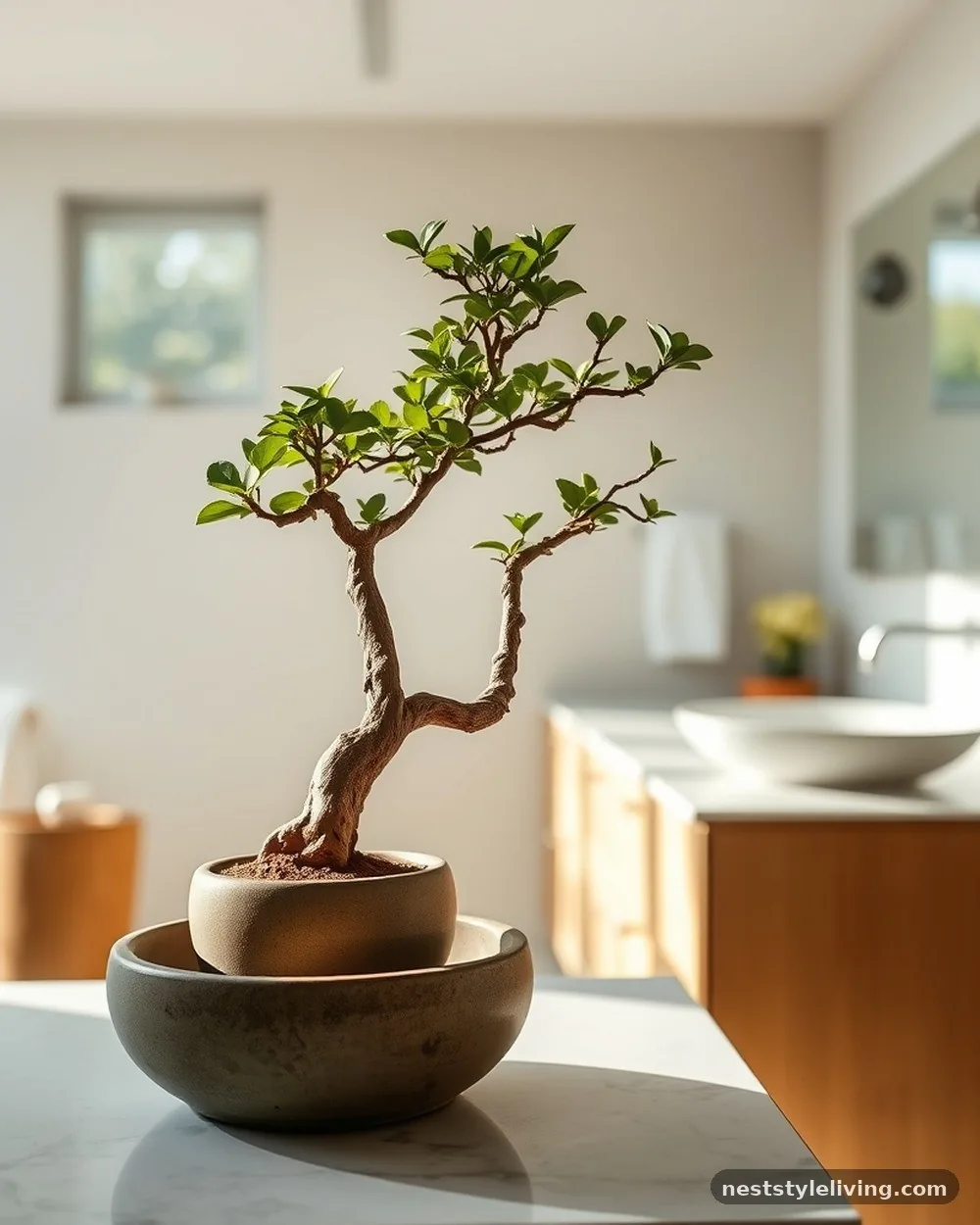
No Japandi space is truly finished without a touch of living greenery to bridge the gap between the indoors and the natural world. A single, well-placed bonsai tree or a lush, shade-loving fern adds life, color, and oxygen to the bathroom. These plants thrive in the humid environment, making them perfect for a spa-like setting.
Choose a simple, unglazed ceramic pot that complements the earth tones of your space. The presence of a living plant reinforces the connection to nature and provides a focal point that changes and grows over time.
Place your plant on a small stool or a corner of the vanity where it can receive indirect light. Rotate the pot occasionally to ensure even growth, and keep the soil lightly moist to maintain the health of the plant in the bathroom’s unique micro-climate.
Frequently Asked Questions
How do I prevent my Japandi bathroom from feeling too cold?
The key to avoiding a sterile, cold feel is to layer textures and introduce warm-toned woods. While the color palette leans toward neutrals, using materials like teak, oak, or bamboo adds natural warmth that balances the coolness of stone and tile. Incorporating soft, ambient lighting and plush textiles like linen or organic cotton towels also prevents the room from feeling like a clinical environment.
What are the most common mistakes when designing in the Japandi style?
The most common mistake is over-accessorizing, which ruins the minimalist ethos of the design. Japandi is about intentionality, not just empty space; every item should have a purpose or provide genuine aesthetic value. Another mistake is using high-contrast colors or busy patterns, which disrupt the calm, monochromatic flow that defines this particular look.
Can I achieve a Japandi look on a budget?
Yes, you can achieve this aesthetic without a total renovation by focusing on decluttering and swapping out small details. Replace bright-colored plastic accessories with wooden or ceramic alternatives, upgrade your lighting to warmer bulbs, and introduce a single, high-quality plant. These small, low-cost changes can significantly shift the mood of your bathroom toward a more serene, Japandi-inspired retreat.
What materials are essential for a Japandi bathroom?
The core materials include natural wood (teak, oak, or cedar), raw stone (sandstone, river stone, or slate), linen, and matte ceramic. These materials are chosen for their durability, their ability to age gracefully, and their tactile, organic quality. Avoiding high-gloss plastics and polished chrome helps maintain the grounded, earthy vibe that makes these spaces feel so relaxing.
Conclusion
Creating a space that prioritizes peace and order is a transformative process that directly influences your daily well-being. By focusing on the interplay of natural light, raw materials, and a minimalist approach, you can successfully implement Japandi bathroom ideas that make relaxing feel luxe.
This design philosophy is less about expensive fixtures and more about the deliberate selection of elements that foster a sense of calm. Whether you start with a simple update to your lighting or commit to a full bathroom refresh using natural stone and wood, the result will be a sanctuary that serves as a quiet escape from the modern world.
Embrace the beauty of imperfection and the power of simplicity to turn your home into a place of true restoration. Start by identifying one area of your bathroom that currently feels cluttered and replace it with a single, high-quality material or storage solution.
Taking these small, mindful steps will help you cultivate the serene environment you deserve. We invite you to explore these concepts further and begin shaping a bathroom that reflects a more balanced, intentional way of living.