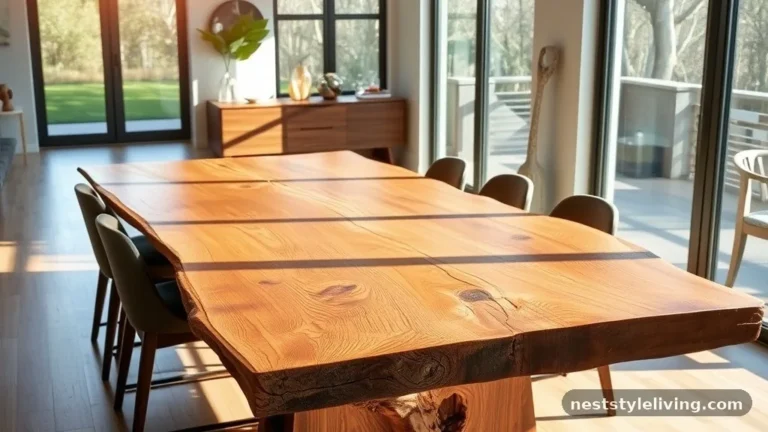
18 Lemon Centerpiece Ideas for a Designer-Level Look
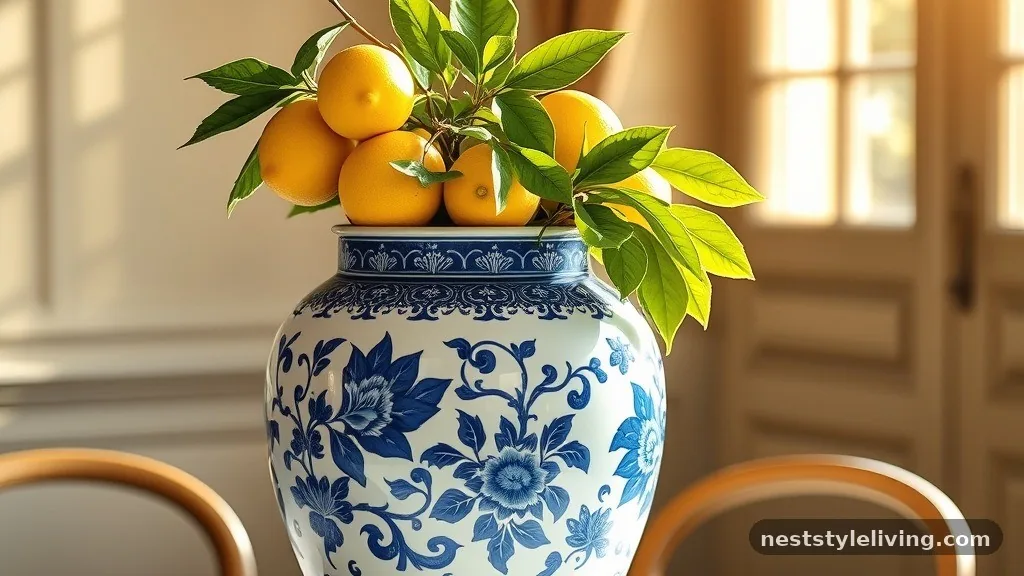
Incorporating fresh citrus into your home decor provides an immediate sense of vibrancy and warmth that few other styling elements can match. When you explore various lemon centerpiece ideas for a designer-level look, you quickly realize that the key lies in balancing the bright, organic texture of the fruit with sophisticated vessels and complementary foliage.
Whether you are aiming for a rustic farmhouse aesthetic or a polished, modern dining room presentation, these arrangements offer a timeless appeal that transcends seasonal trends. By choosing the right combination of containers and secondary textures, you can transform a simple bowl of fruit into a professional-grade focal point for any table.
1. Blue and White Chinoiserie Vessels
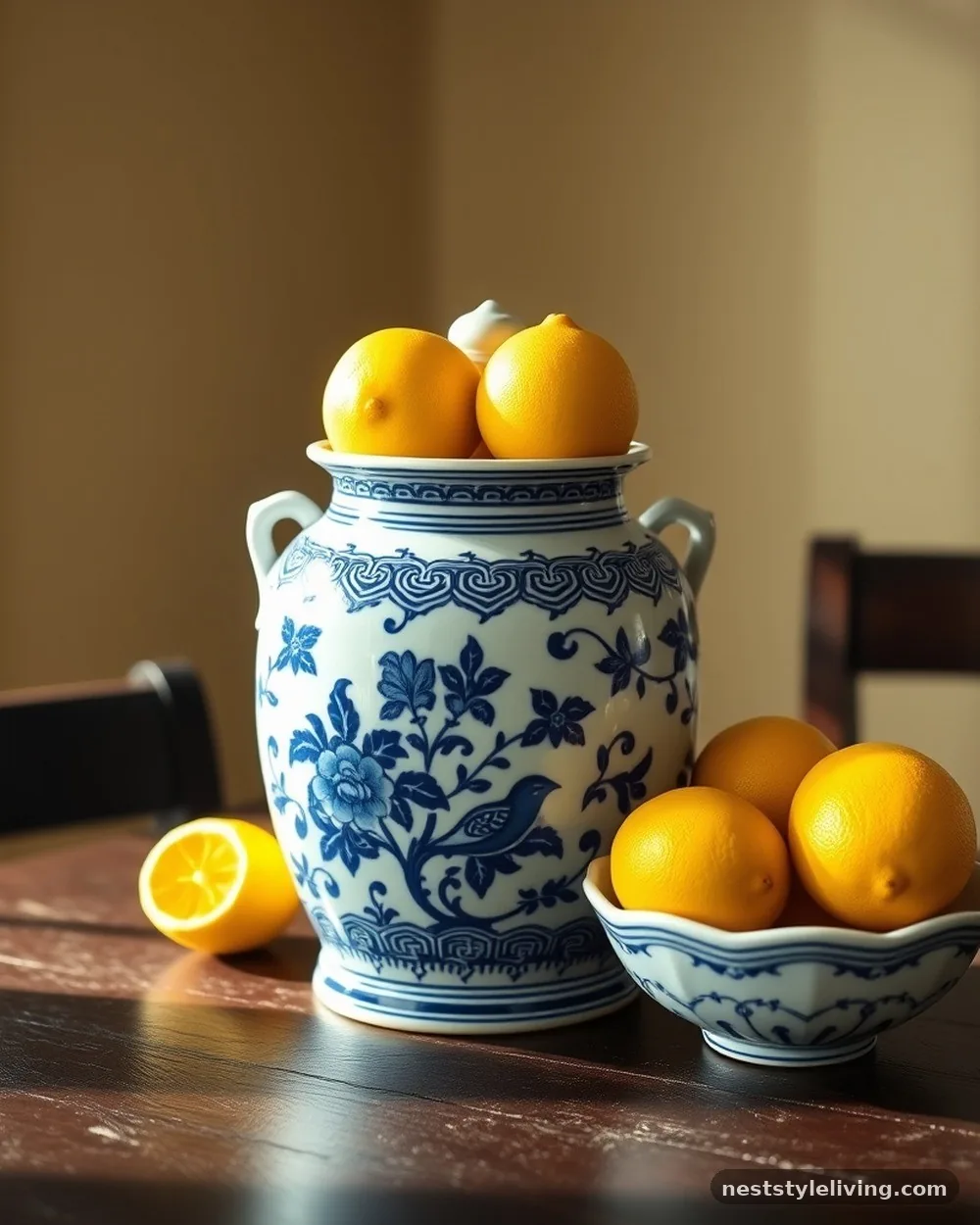
The high-contrast pairing of deep cobalt blue patterns against the bright, saturated yellow of citrus creates an instant visual impact. Using a classic ginger jar with the lid removed or a wide, shallow porcelain bowl allows the lemons to stand out as the primary focal point.
The intricate designs typically found on chinoiserie ceramics provide a formal, curated backdrop that prevents the fruit from looking too casual or rustic. This style works exceptionally well in dining rooms featuring traditional or transitional furniture, as the blue tones ground the space while the lemons add a necessary pop of brightness.
To achieve this look, search for vintage or reproduction ceramic bowls that feature a slightly wider opening to maximize the surface area for the fruit. Place a layer of green moss or dark-leafed ivy at the bottom of the vessel to create a nest for the lemons, which prevents them from rolling and adds a layer of organic depth.
2. Tiered Wooden Dough Bowl
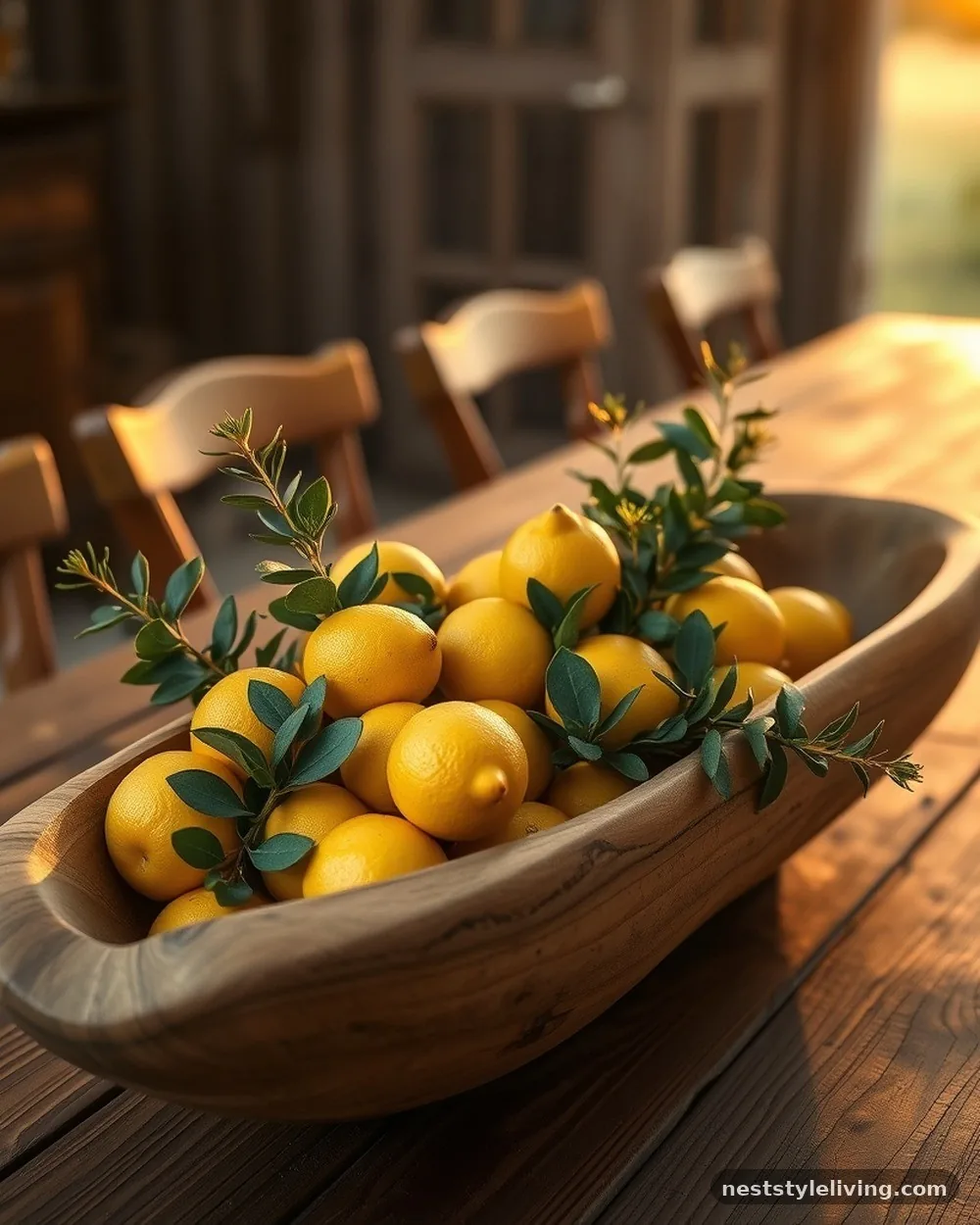
A long, hand-carved wooden dough bowl brings a sense of history and texture to a table setting. When filled with an abundance of lemons, the contrast between the rough, weathered wood and the smooth, waxy skin of the fruit creates a tactile experience that feels both grounded and abundant.
This arrangement is particularly effective on long, rectangular farmhouse tables where you need a substantial piece to anchor the space. You can incorporate sprigs of fresh eucalyptus or rosemary tucked between the fruit to introduce a subtle, earthy scent that enhances the overall sensory experience of the centerpiece.
Source a dough bowl that has been treated with a food-safe wax to ensure the wood retains its natural color without absorbing moisture from the fruit. If the bowl is particularly large, use a small amount of crumpled kraft paper or a hidden riser in the center to create a mound, allowing you to use fewer lemons while still achieving a full, overflowing look.
3. Glass Cylinder with Submerged Slices
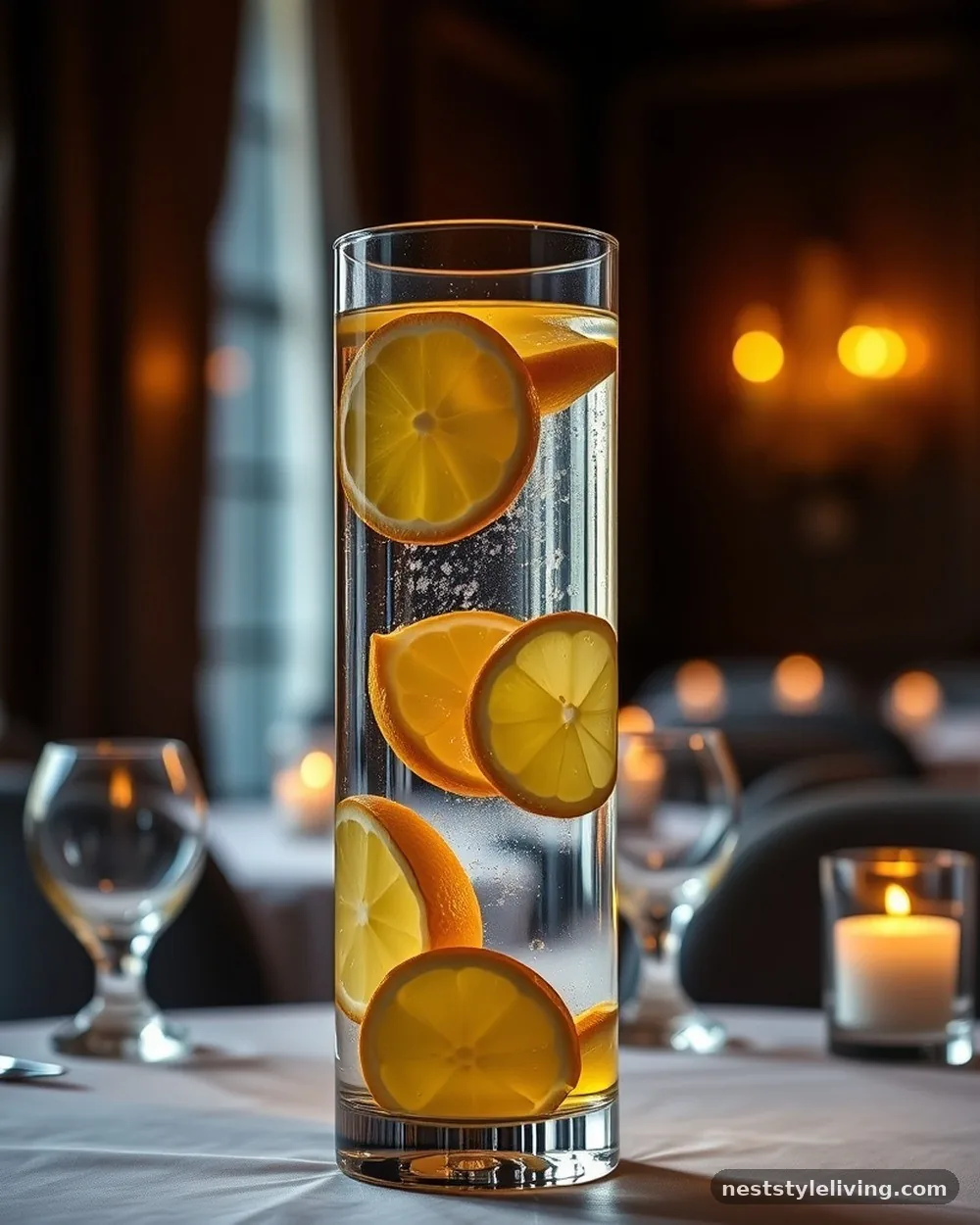
For a sleek, modern aesthetic, a tall, clear glass cylinder filled with water and sliced lemons offers a minimalist approach to table decor. The refraction of light through the water and glass makes the yellow slices appear magnified, creating a sculptural effect that feels incredibly clean and architectural.
This style is popular for evening events because it interacts beautifully with ambient lighting, casting soft, golden shadows across the tabletop. It is a highly effective way to use fruit as a medium for light play rather than just a traditional bowl filler.
Use filtered water to prevent mineral deposits from clouding the glass over time. To keep the slices evenly distributed, alternate them with clear, polished river stones or glass marbles at the base, which will help hold the fruit in place and prevent them from floating to the surface in an unorganized cluster.
4. Pedestal Compote with Trailing Ivy
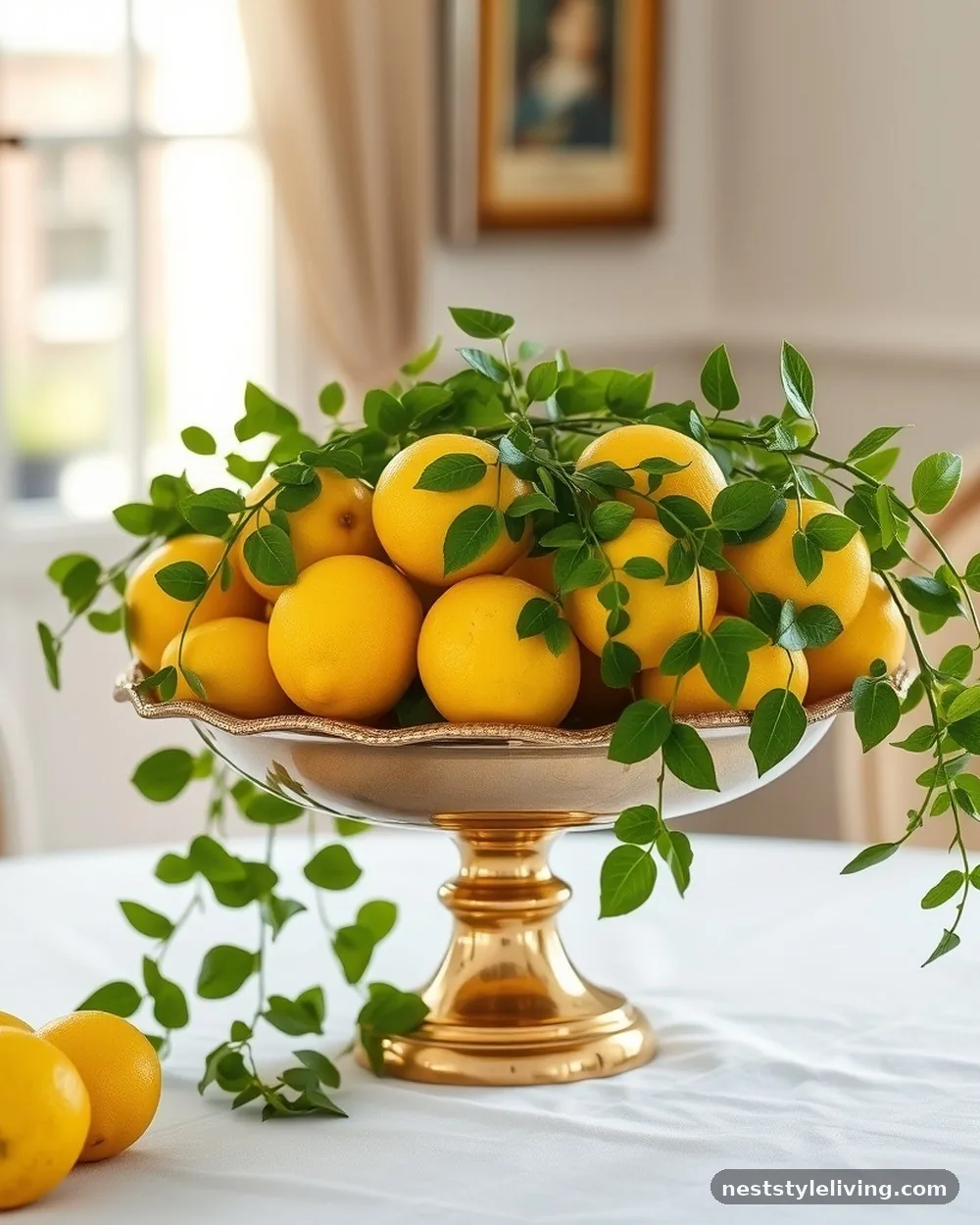
Elevating your fruit arrangement on a pedestal compote instantly adds a sense of formality and height to a table. A brass or silver compote dish creates a luxurious contrast with the casual nature of lemons, making the centerpiece feel appropriate for a dinner party or a sophisticated brunch.
By allowing long, trailing stems of English ivy to spill over the edges of the pedestal, you soften the transition between the hard metal of the bowl and the tabletop. This creates a cascading, organic silhouette that feels elegant rather than static.
Invest in a compote dish with a wide, shallow basin to ensure the lemons are visible from all angles. When arranging, start by securing the ivy stems with a small amount of floral putty or a wire frog at the base of the bowl to ensure the greenery stays exactly where you want it as it drapes toward the table surface.
5. Rustic Terracotta and Dried Lavender
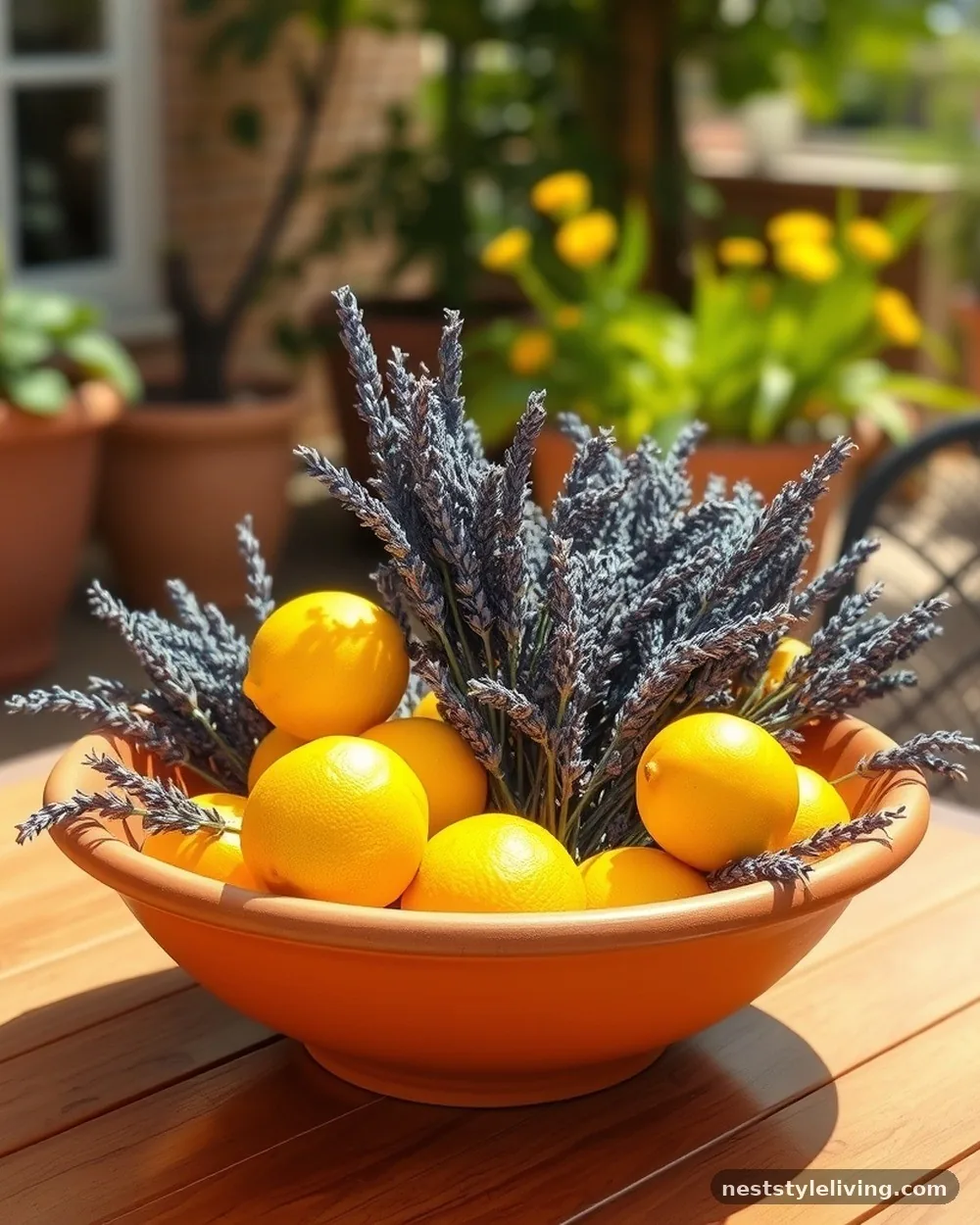
The earthy, porous texture of terracotta provides a warm, Mediterranean aesthetic that pairs beautifully with the vibrancy of fresh lemons. Using a wide, low-profile terracotta pot or dish creates a sense of casual, European-style living that is perfect for outdoor dining or sun-drenched breakfast nooks.
Tucking dried lavender bundles between the lemons introduces a muted purple color that complements the yellow, while also providing a gentle, relaxing fragrance. This combination is durable and holds up well in warmer environments, making it a reliable choice for long-term display.
Choose a terracotta vessel with a slight patina or white-wash finish to add depth to the material. Before adding the fruit, line the bottom of the pot with a small piece of burlap or a linen napkin to protect the lemons from the rough, abrasive surface of the clay and to catch any natural debris.
6. Silver Tray with Potted Herbs
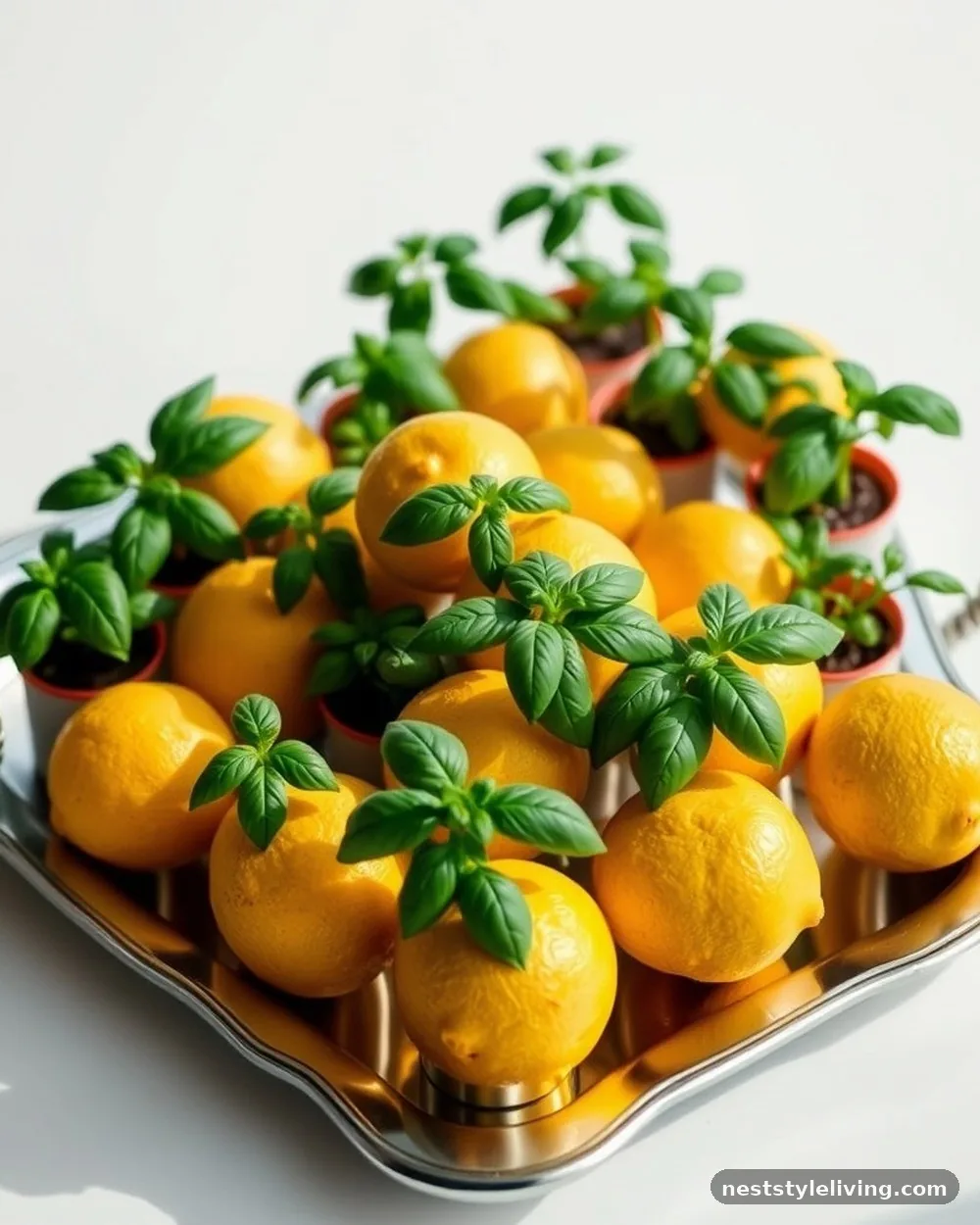
Using a silver serving tray as the base for a centerpiece allows you to create a structured, movable arrangement that feels very intentional. Place a mix of fresh lemons and small potted herbs, such as basil or thyme, directly onto the tray.
The reflective quality of the silver makes the yellow of the lemons appear more vibrant, while the green of the herbs provides a necessary organic balance. This layout is incredibly practical for a table that serves multiple purposes, as you can easily lift the entire tray to clear the surface for serving food.
Select a tray with a low gallery rail to keep the lemons contained. If you use potted herbs, ensure the pots are small enough to sit flush against the fruit, and consider wrapping the plastic nursery pots in plain white fabric or twine to maintain a cohesive, designer-level look that hides the utilitarian containers.
7. Woven Rattan Basket with White Florals
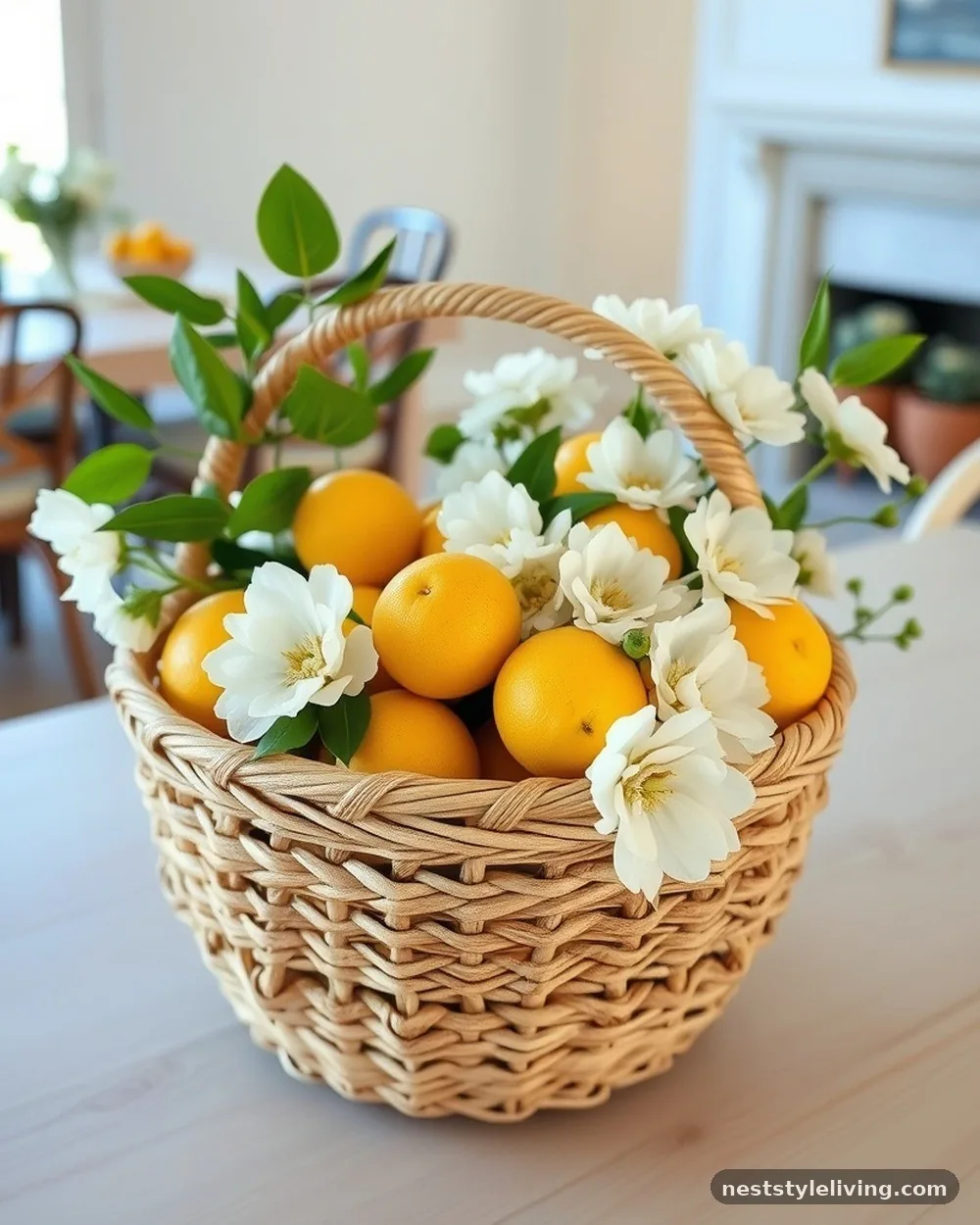
A tight-weave rattan basket introduces a natural, woven texture that makes a lemon centerpiece feel light and airy. Pairing the golden fruit with crisp white flowers, such as white ranunculus or spray roses, creates a classic, high-end look that is perfect for spring or summer gatherings.
The warmth of the rattan complements the yellow of the lemons, while the white florals add a layer of sophistication that prevents the arrangement from appearing too simple. This look is ideal for casual yet chic spaces that lean toward a coastal or cottage aesthetic.
Ensure the basket has a flat, stable bottom to prevent tipping. Use a small amount of damp floral foam hidden inside the basket to hold the stems of the flowers in place, which will keep them fresh for longer and ensure they remain upright amidst the weight of the lemons.
8. Geometric Gold Wire Frame
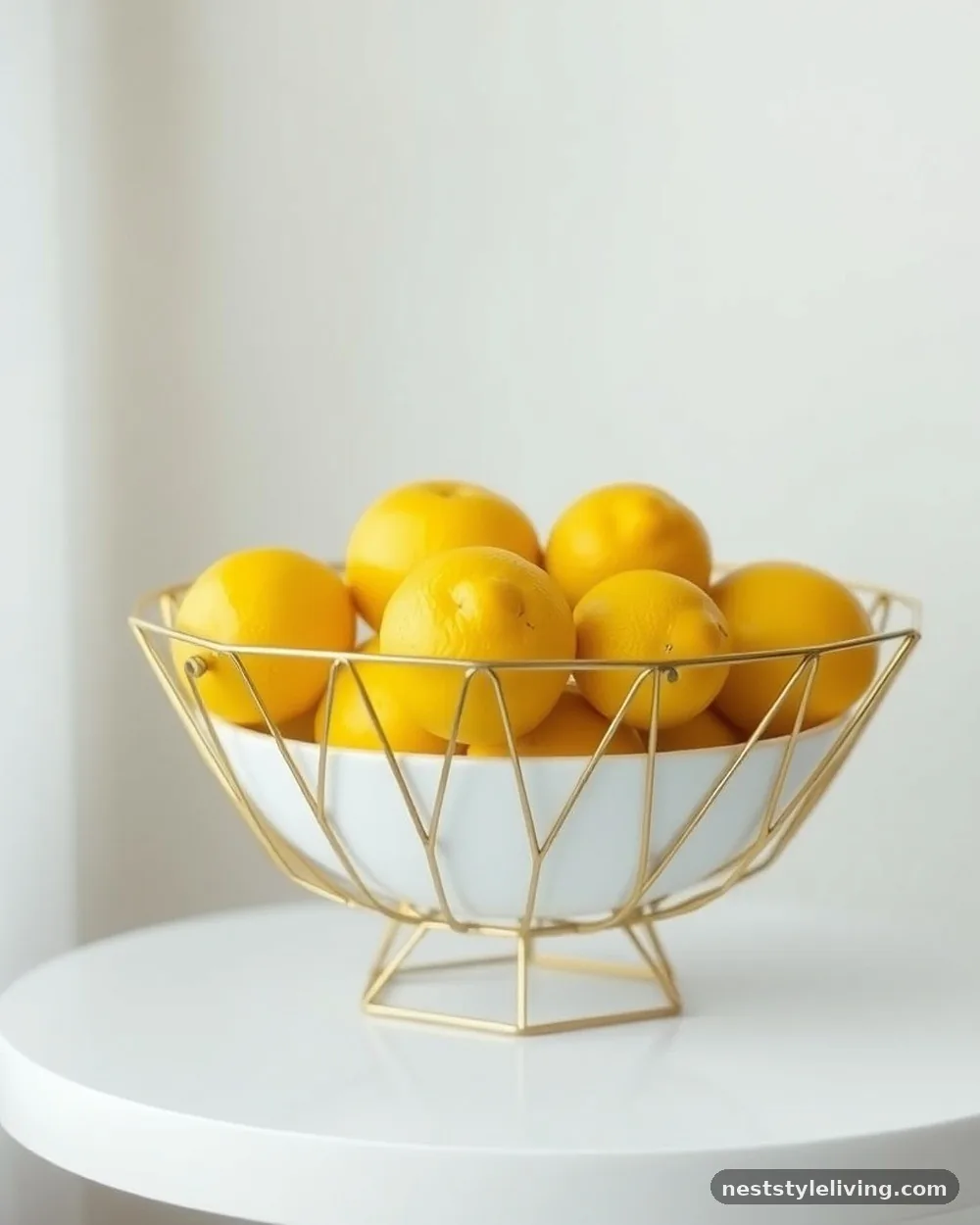
A gold or brass wire-frame bowl offers a modern, airy interpretation of the traditional fruit bowl. Because the frame is open and skeletal, the lemons become the star of the show, visible from every angle.
This style is excellent for smaller tables where you want to keep the visual weight light while still adding a strong color statement. The metallic finish adds a touch of glamour that contrasts with the matte, textured skin of the fruit, creating a refined balance between industrial design and organic elements.
Place the bowl on a dark-toned table to make the gold wire pop against the wood or lacquer surface. Since the bowl is transparent, ensure the lemons you select are uniform in size and free of blemishes, as the open structure provides no place for imperfections to hide.
9. Stacked Lemon and Boxwood Topiary
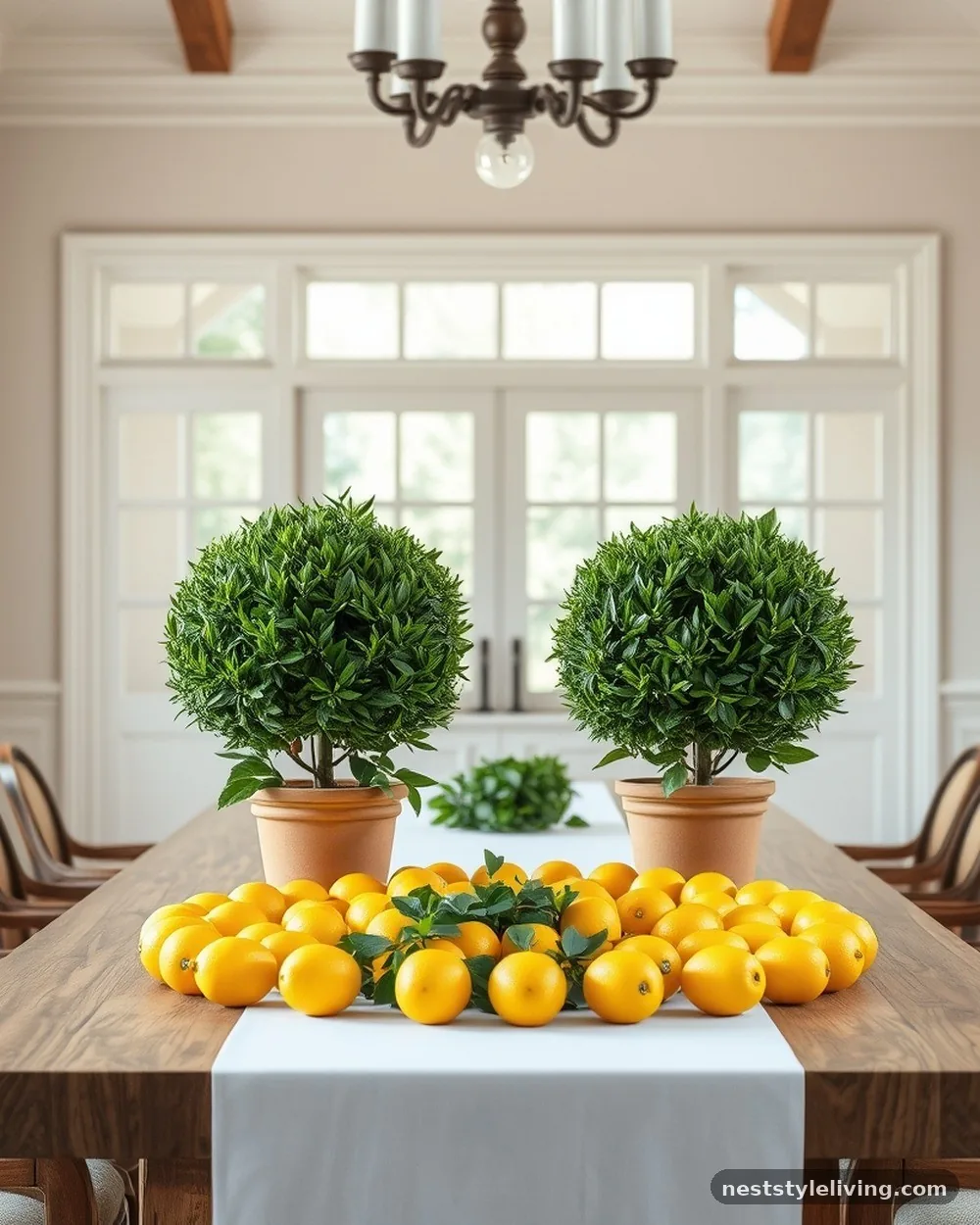
If you want to create a vertical statement, consider using a small boxwood topiary as the base and surrounding its trunk with a ring of lemons. The deep, dark green of the boxwood provides a perfect color contrast to the bright yellow fruit, while the height of the topiary adds a formal, architectural element to the table.
This arrangement is particularly effective in pairs, placed on either end of a long dining table, to create a sense of symmetry and balance. It is a highly sophisticated look that mimics the appearance of classic conservatory decor.
Use a boxwood topiary in a ceramic pot and place it on a larger, flat platter or charger. Arrange the lemons in a tight circle around the base of the pot, using a small amount of double-sided tape or floral tack if necessary to keep them from rolling off the platter.
10. Marble Slab with Scattered Citrus
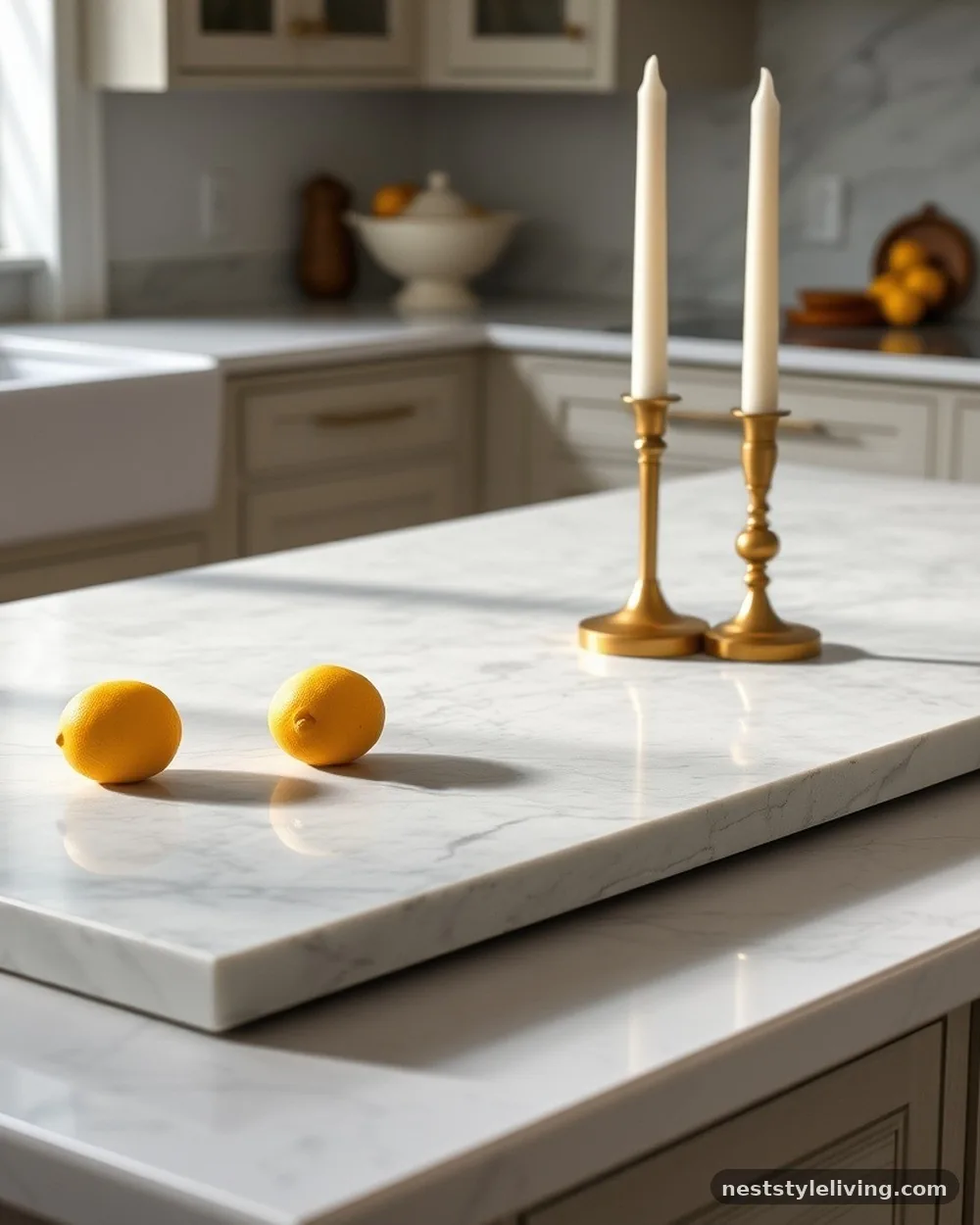
A large, honed marble slab serves as an elegant, low-profile base for a minimalist citrus display. By scattering a few lemons across the surface alongside a single, tall taper candle in a brass holder, you create a look that feels curated and effortless.
The cool, grey-veined marble provides a neutral, high-end background that makes the yellow of the fruit stand out with startling clarity. This is a perfect centerpiece for a kitchen island or a marble-topped coffee table where you want a clean, uncluttered aesthetic.
Opt for a slab with a natural stone edge to emphasize the organic feel of the piece. To keep the look balanced, limit the number of lemons to three or five, and ensure they are placed asymmetrically to maintain a modern, artistic composition rather than a rigid, symmetrical one.
11. Apothecary Jars with Lemon and Water
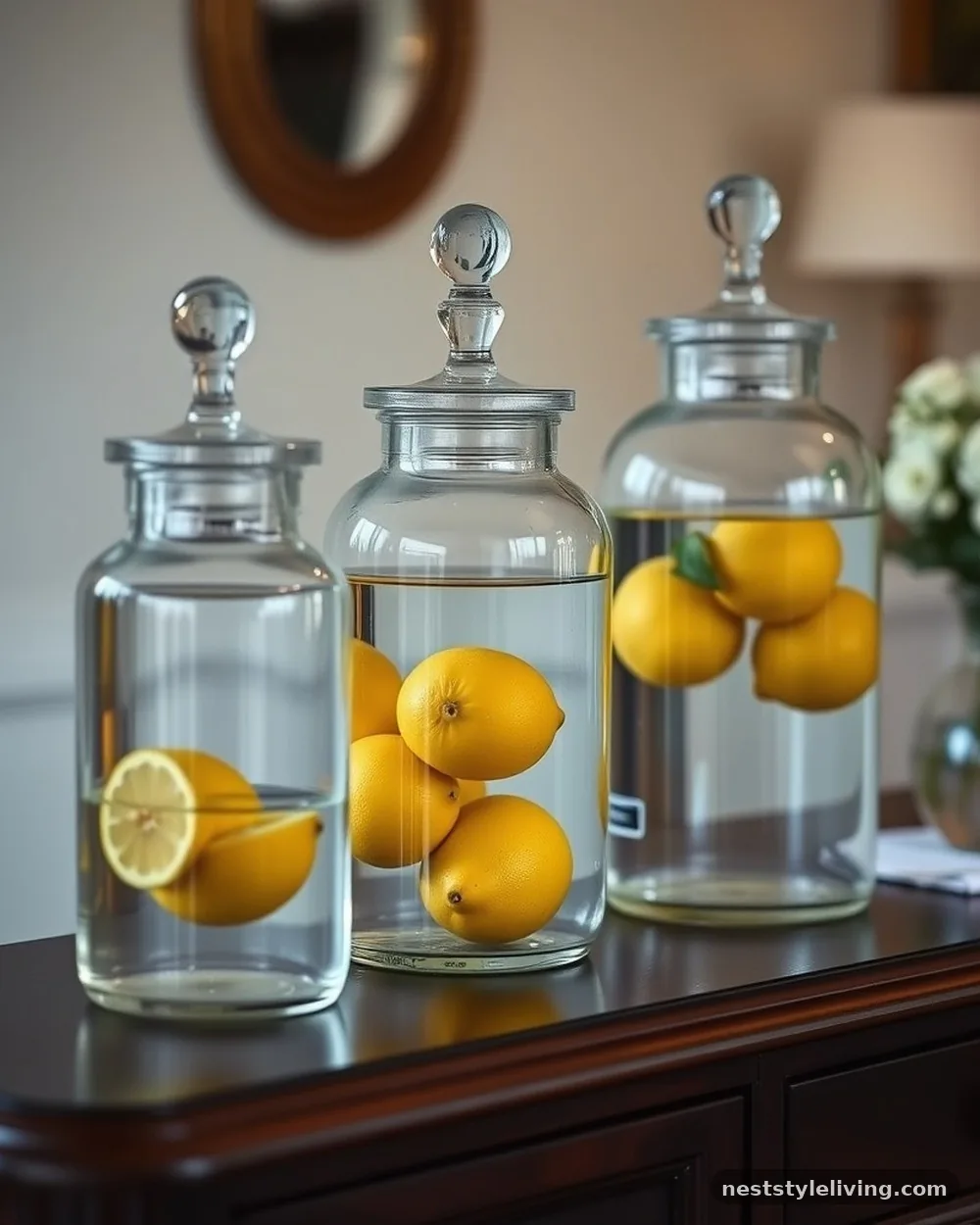
Using a set of three apothecary jars of varying heights creates a dramatic, museum-quality display. Fill each jar with water and submerge whole lemons, which creates a stunning, distorted visual effect that is both playful and sophisticated.
Because the fruit is protected by the glass, this centerpiece is remarkably low-maintenance and can stay on a table for several days without needing attention. The height of the jars makes them an excellent choice for a buffet table or a console where you need to draw the eye upward.
Add a single sprig of greenery, like a bay leaf, into each jar to break up the color and add a touch of depth. Use distilled water to prevent cloudiness and ensure the glass remains crystal clear, as any mineral buildup will detract from the clean, designer-level look you are trying to achieve.
12. Copper Bowl with Dark Foliage
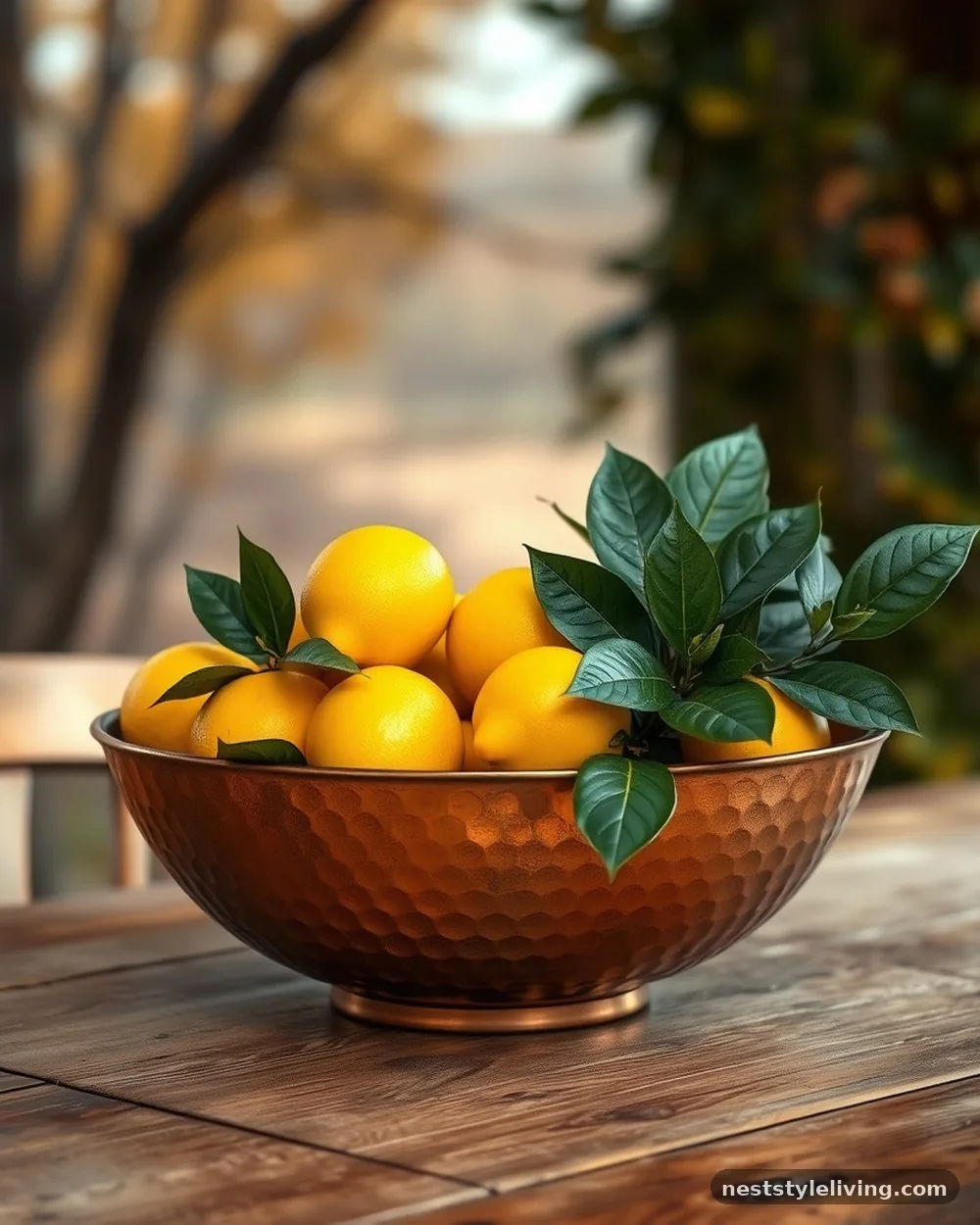
Copper is a fantastic material for a lemon centerpiece because its warm, reddish-orange undertones interact beautifully with the yellow fruit. A hammered copper bowl adds a rustic, artisanal quality to the table, especially when paired with dark, moody foliage like deep green camellia leaves or dark ivy. This is a particularly strong choice for autumn or winter transitions, as the deep colors of the leaves and the warm metallic bowl provide a cozy, grounded feel that elevates the fruit beyond its usual summer associations.
Keep the copper polished if you want a bright, reflective look, or allow it to develop a natural patina if you prefer a more vintage, lived-in aesthetic. When arranging, ensure the dark leaves are tucked deep into the bowl so that the yellow lemons sit prominently on top, creating a high-contrast focal point.
13. Wicker Tray with Lemon and Blue Hydrangeas
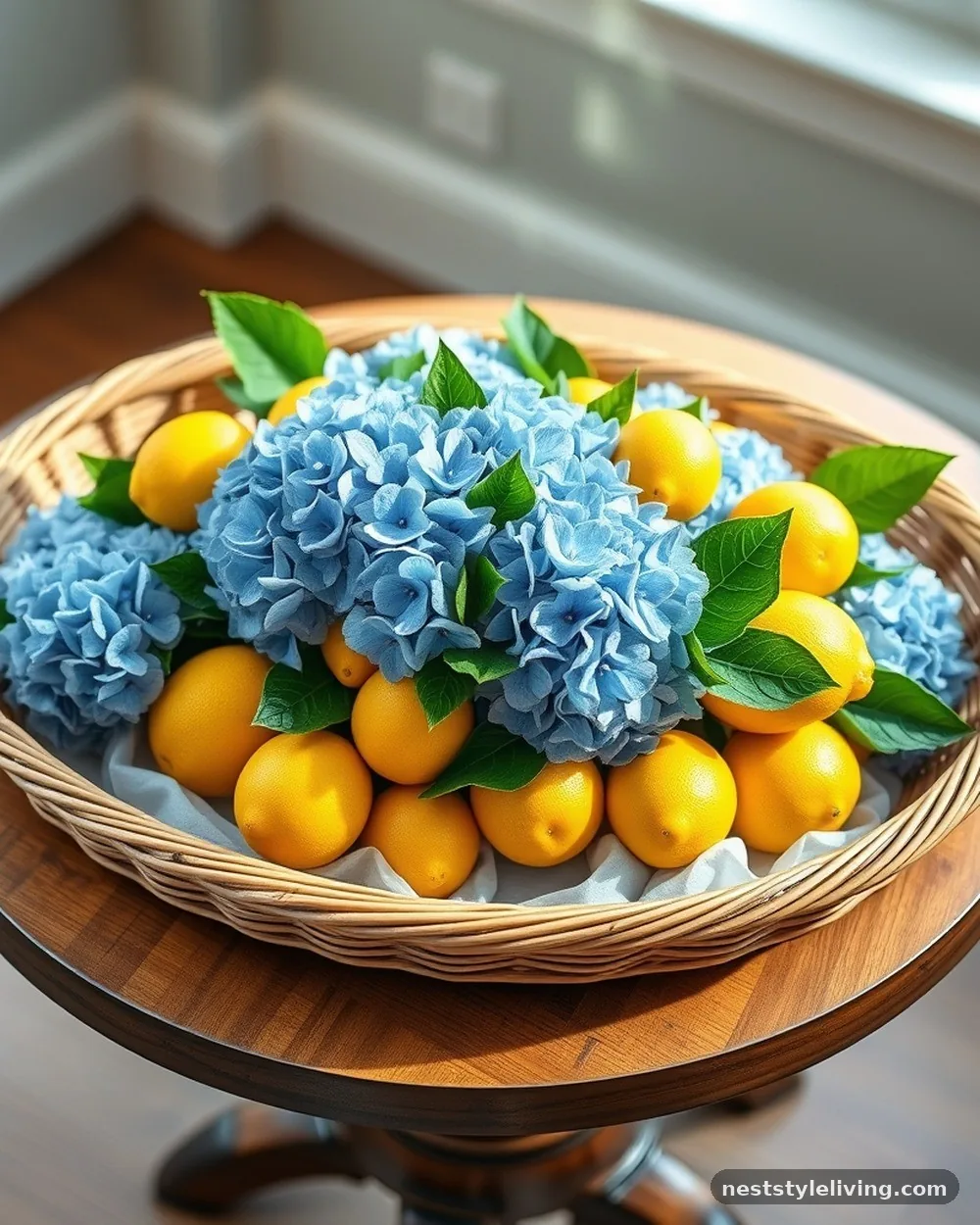
Combining a woven wicker tray with the vibrant yellow of lemons and the soft, cool tones of blue hydrangeas creates a quintessential coastal or garden-inspired centerpiece. The tray acts as a frame, keeping the disparate elements contained and organized, while the hydrangeas add a voluminous, soft texture that contrasts with the firm, spherical shape of the fruit. This arrangement is perfect for a large, round dining table, as the tray provides a clear boundary for the centerpiece, making it feel like a unified, intentional design rather than a collection of items.
Select hydrangeas that have a slightly green or antique tint to bridge the gap between the yellow lemons and the blue petals. Since hydrangeas require water, use a small, hidden floral water tube or a small glass jar concealed by the lemons to keep the stems hydrated without needing to fill the entire tray with water.
14. Concrete Basin with Minimalist Citrus
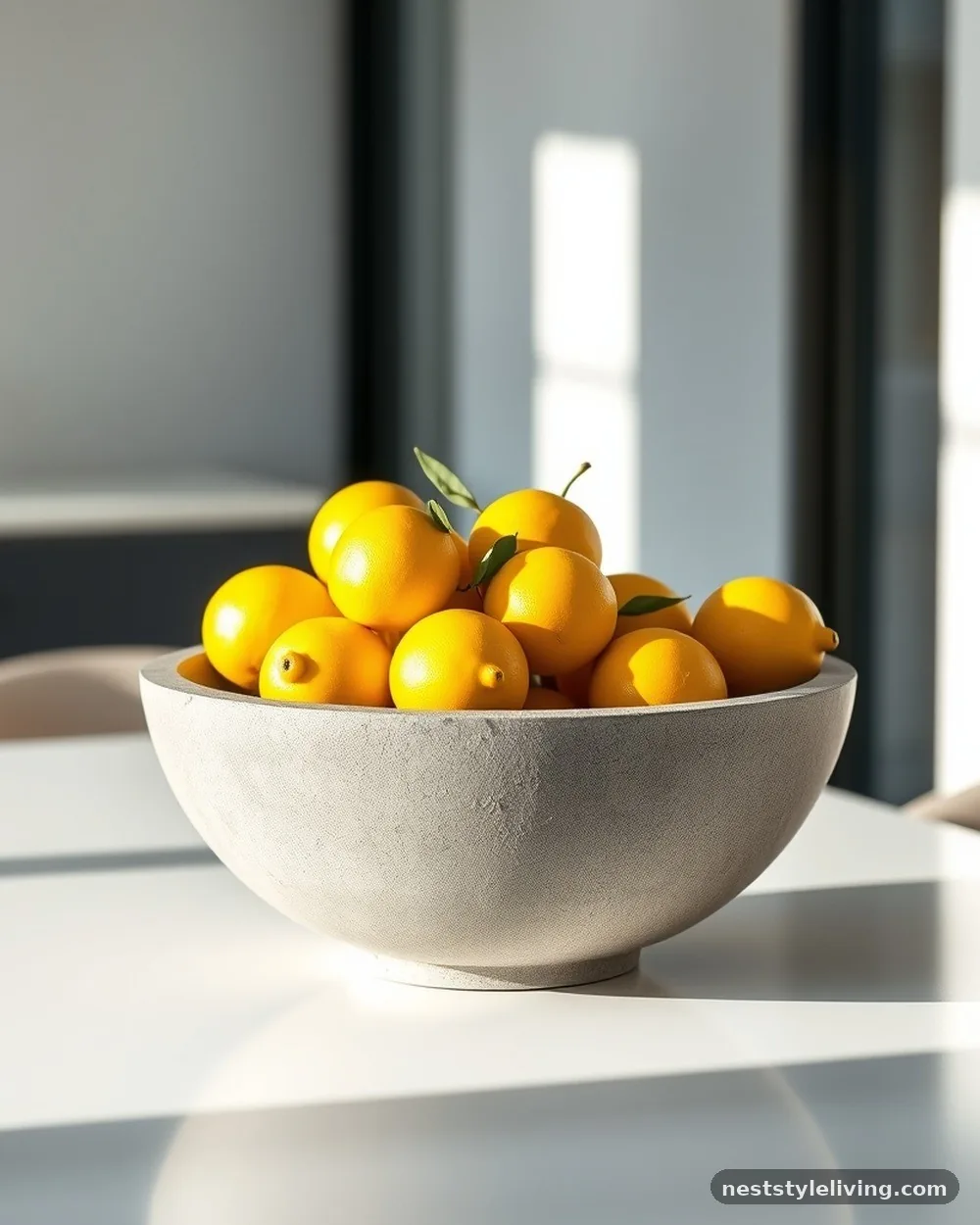
For an industrial or modern loft aesthetic, a heavy, gray concrete bowl provides the perfect contrast to the bright, cheerful lemons. The rough, matte texture of the concrete creates a sophisticated tension with the waxy, vibrant skin of the fruit.
This look is intentionally understated and relies on the purity of the color contrast rather than complex arrangements. It is an excellent choice for a contemporary dining space where you want the centerpiece to feel like a piece of modern sculpture rather than a traditional floral arrangement.
Choose a bowl with clean, geometric lines to enhance the modern feel. Because the concrete is porous, ensure your lemons are clean and dry before placing them in the bowl to prevent any oils from the fruit from staining the material over time.
15. Wooden Plank with Votives and Fruit
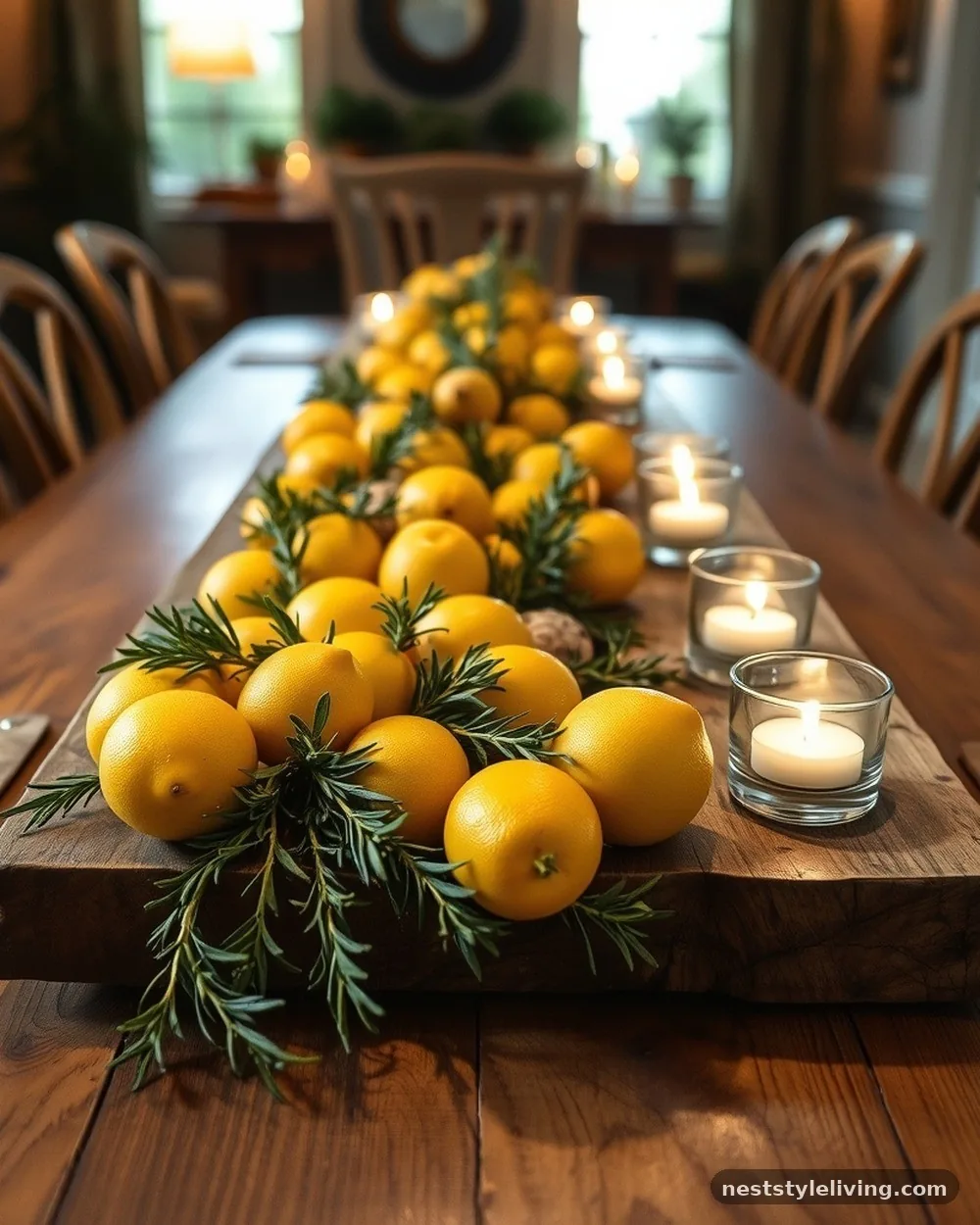
A long, rustic wooden plank can serve as a base for a low-profile centerpiece that stretches across the entire length of a table. By alternating clusters of lemons with small glass votive candles and sprigs of fresh rosemary, you create a rhythmic, balanced display that feels like a professional tablescape.
This layout works well for long dinner parties because it stays low enough to allow for easy conversation across the table. The warmth of the wood and the flickering candlelight make the yellow of the lemons glow, creating an inviting atmosphere.
Use a piece of reclaimed wood that has been sanded smooth to prevent splinters. Space your votives evenly between the lemon clusters and ensure the candles are in clear glass holders so the light reflects off the wood and illuminates the fruit from below.
16. Footed Glass Bowl with Lemon Leaves
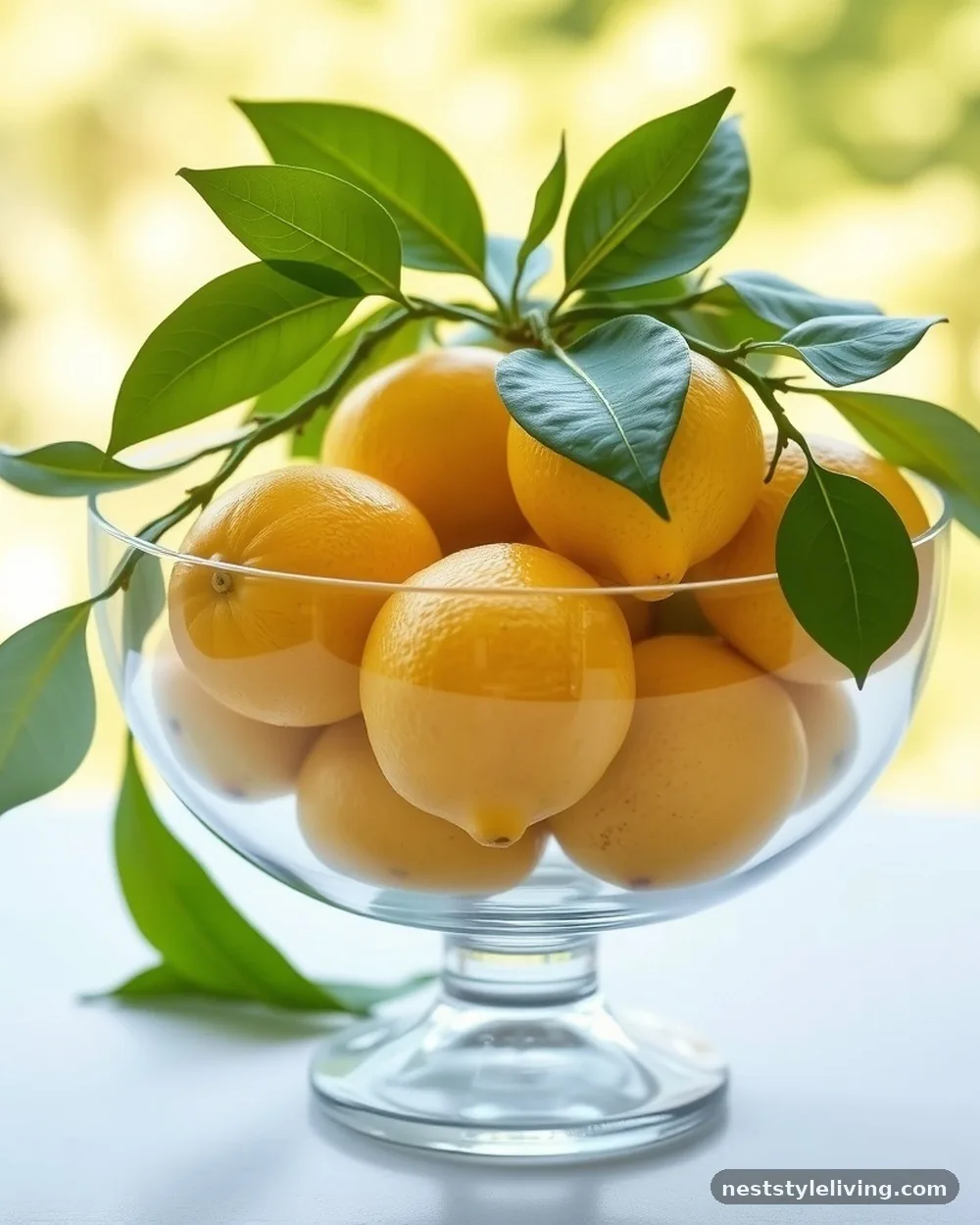
A footed glass bowl elevates the fruit above the table surface, giving it more presence and importance. By including the stems and leaves attached to the lemons, you add a layer of natural, organic detail that makes the centerpiece feel fresh and gathered from a garden.
The transparency of the glass allows you to see the stems and leaves inside the bowl, which adds a complex, layered look that is much more interesting than a simple pile of fruit. This is a sophisticated way to highlight the natural beauty of the lemon plant itself.
Look for lemons with their leaves intact at a specialty grocer or farmer’s market, as these are often fresher and more vibrant. If the leaves are sparse, tuck in a few extra sprigs of lemon leaf or bay leaf to ensure the arrangement looks lush and full from all sides.
17. Enamelware Basin with Wildflowers
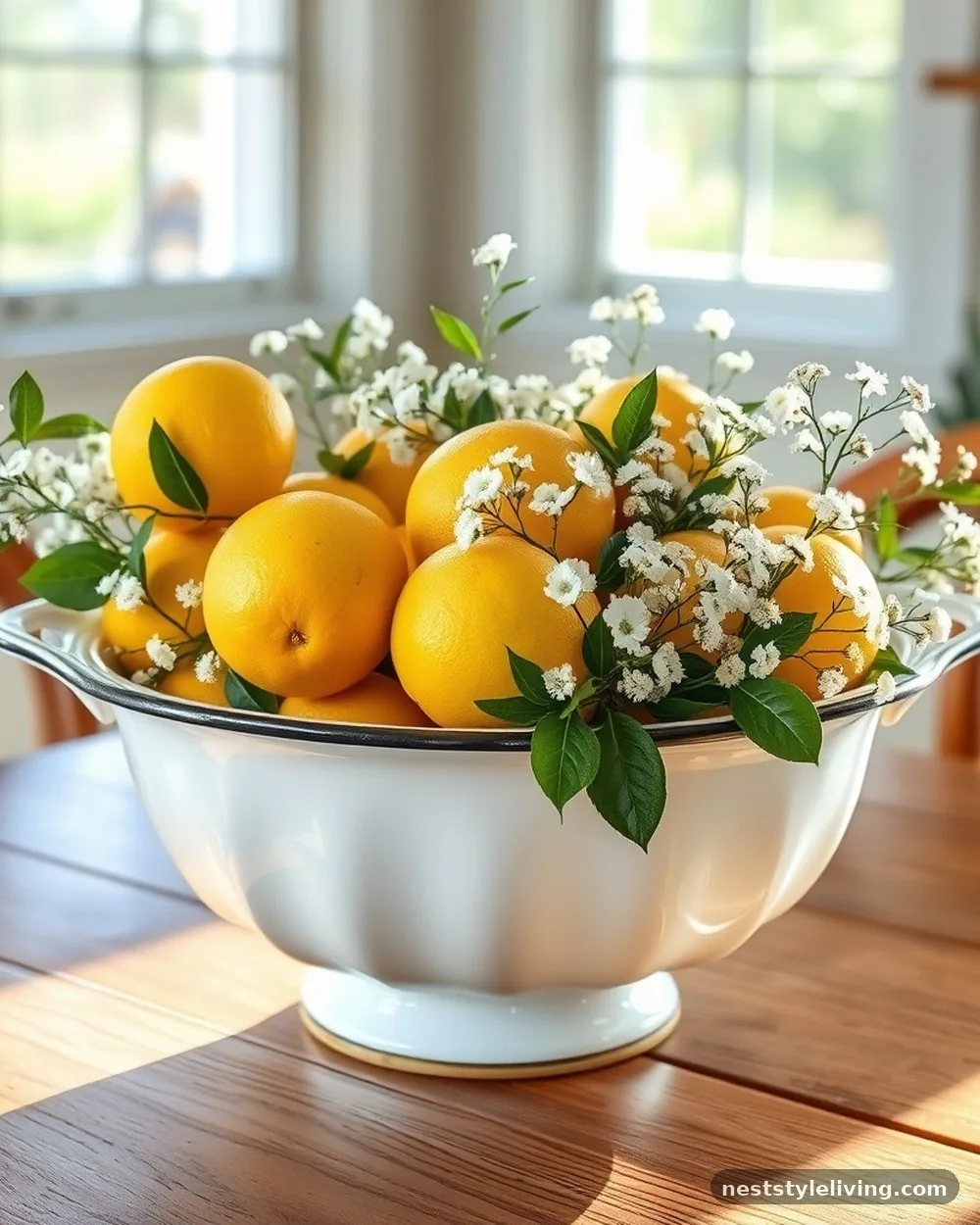
Vintage white enamelware provides a clean, bright, and slightly nostalgic backdrop for a lemon centerpiece. When filled with lemons and tucked with small, delicate wildflowers like baby’s breath or chamomile, the arrangement feels light, airy, and effortlessly charming.
The white enamel reflects light, making the yellow of the fruit pop, while the small flowers add a soft, textural contrast that keeps the look from feeling too heavy or uniform. This is a perfect choice for a breakfast table or a casual sunroom setting.
Ensure the enamelware is free of chips or rust to maintain a clean, designer-level look. Arrange the lemons first to create a stable base, then use the wildflowers to fill the gaps, ensuring they sit slightly above the fruit to add height and a sense of movement to the arrangement.
18. Tiered Serving Stand with Alternating Fruit
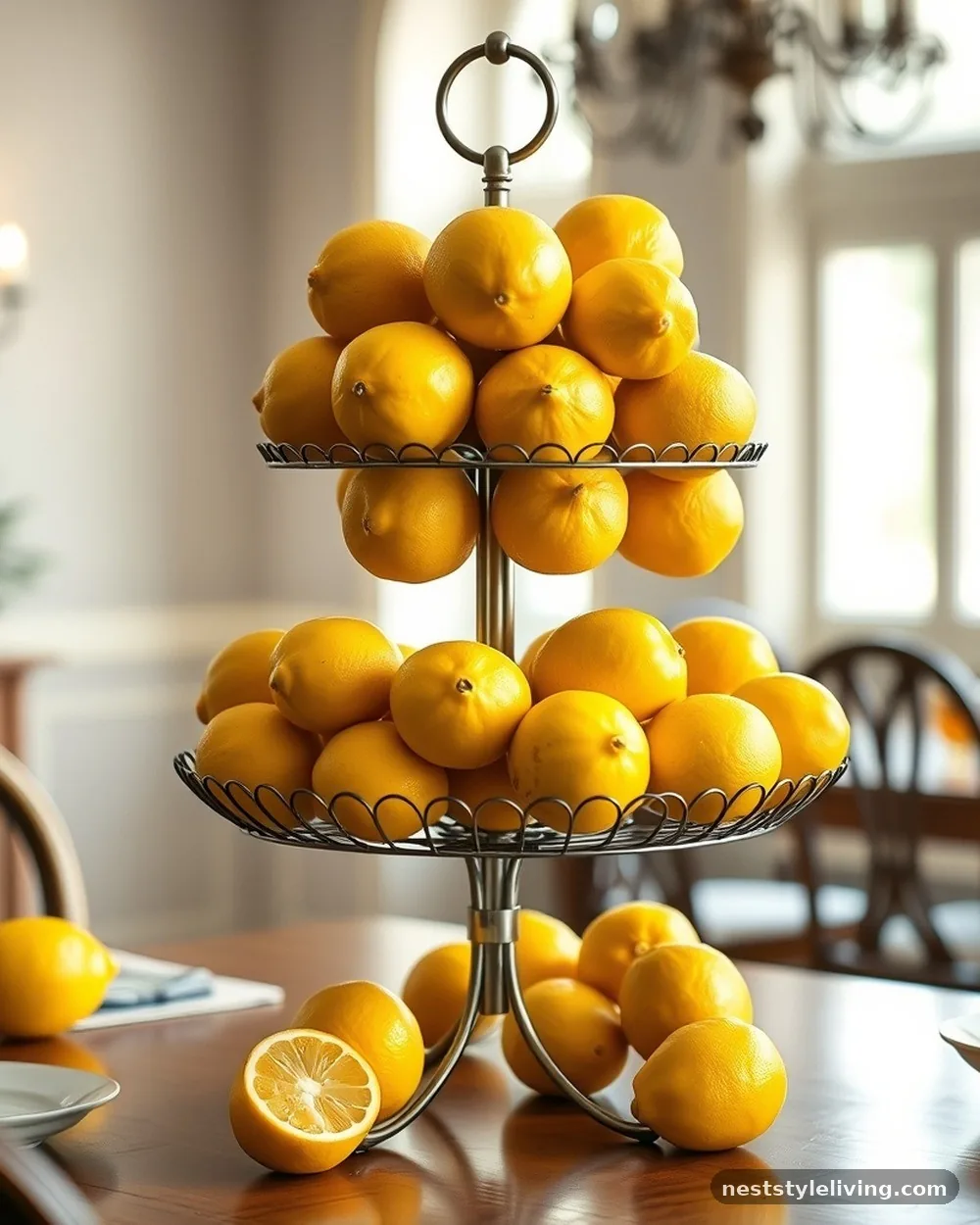
A tiered serving stand, often used for desserts, can be repurposed to create a stunning, multi-level lemon centerpiece. By placing lemons on both the bottom and top tiers, you create a sense of verticality and abundance that draws the eye.
You can alternate the lemons with other citrus like limes or oranges to add subtle color variations, or keep them strictly yellow for a more monochromatic, high-end look. This is a great way to save space on a crowded table while still making a dramatic design statement.
Use a stand with a metallic finish, like gold or matte black, to match your room’s hardware. If the tiers are wide, use a small amount of greenery or filler to keep the fruit from rolling off the edges, and ensure the stand is placed on a level surface to prevent the entire structure from becoming unstable.
Frequently Asked Questions
Is lemon decor still in style for modern interiors?
Yes, lemon decor remains highly relevant because it taps into the enduring appeal of Mediterranean and organic-modern design. The key to keeping it current is avoiding kitschy, overly themed accessories and focusing instead on fresh, high-quality fruit paired with sophisticated materials like marble, brass, or high-end ceramics. When styled as a centerpiece, the bright color serves as a functional design element that adds life and warmth to a neutral room, making it a timeless choice rather than a fleeting trend.
What are the latest trends in centerpiece design?
The current trend leans toward “curated naturalism,” which emphasizes organic elements arranged with intentional, architectural structure. Designers are moving away from overly symmetrical floral arrangements and toward centerpieces that feature a mix of textures, such as fresh fruit, dried botanicals, and sculptural candles. Incorporating height through pedestals or tiered stands is also very popular, as it creates a more dynamic, multi-dimensional look that works well for both photography and everyday dining.
How do I keep a fruit-based centerpiece looking fresh?
To maintain the appearance of your centerpiece, choose fruit that is firm and free of soft spots, as bruised fruit will degrade quickly and attract insects. Replace the fruit every 4 to 5 days to ensure the arrangement stays vibrant and clean. If you are using fresh foliage in your arrangement, keep the stems in a hidden water source or mist them lightly with water to prevent wilting, and always remove any leaves that start to turn brown or yellow immediately to keep the display looking crisp.
Can I mix different types of fruit into a lemon centerpiece?
Mixing fruit is an excellent way to add depth and complexity to your centerpiece. Combining lemons with limes creates a classic green-and-yellow palette that feels fresh and zesty, while adding blood oranges or kumquats introduces warmer, sunset tones that can make the arrangement feel more sophisticated. The secret is to maintain a consistent scale and texture; if you mix fruits, try to keep them of similar sizes so the arrangement feels cohesive rather than cluttered or accidental.
How do I choose the right container for a lemon centerpiece?
The container should be chosen based on the desired mood of the room. Use glass or clear acrylic for a modern, minimalist look that allows the fruit to take center stage.
Opt for ceramic, stone, or metal vessels if you want to ground the arrangement and add a specific architectural or rustic texture to the table. Always consider the height of your container—low-profile bowls are best for dinner tables where you want to facilitate conversation, while tall stands or jars are better for consoles or buffet tables where you want to create a vertical focal point.
Conclusion
Creating a designer-level look with fruit relies on the thoughtful interplay of texture, color, and vessel selection. By moving beyond a simple bowl and incorporating elements like elevated stands, metallic accents, or organic foliage, you transform everyday lemons into a deliberate, professional-grade statement. Whether you prefer the sleek lines of a glass cylinder or the rustic charm of a wooden dough bowl, these lemon centerpiece ideas provide a reliable framework for any interior style.
Experimenting with these placements and materials will allow you to maintain a fresh, vibrant aesthetic that feels both curated and inviting. We encourage you to start with one of these arrangements on your own table and observe how the simple addition of bright, natural color shifts the entire atmosphere of your living space.