18 Winter Floral Arrangements for a Magical Home
Creating winter floral arrangements for a magical home transforms cold, grey days into a vibrant sanctuary of natural beauty. By selecting hardy textures and seasonal palettes, you can curate displays that capture the unique, quiet elegance of the frost-covered outdoors. These compositions rely on a mix of structural branches, resilient blooms, and deep greenery to provide long-lasting visual interest throughout the season.
Whether you are aiming for a minimalist aesthetic or a lush, abundant centerpiece, understanding how to pair these elements ensures your space feels intentional and warm. This collection of ideas offers concrete ways to bring the garden inside, ensuring your living space remains a welcoming retreat regardless of the temperature outside.
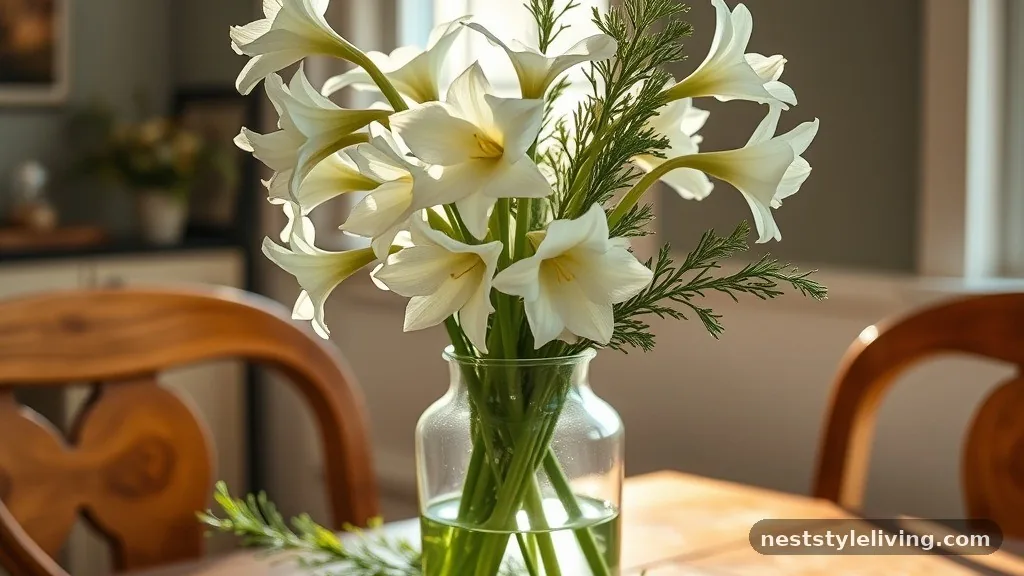
1. White Amaryllis and Cedar Sprigs
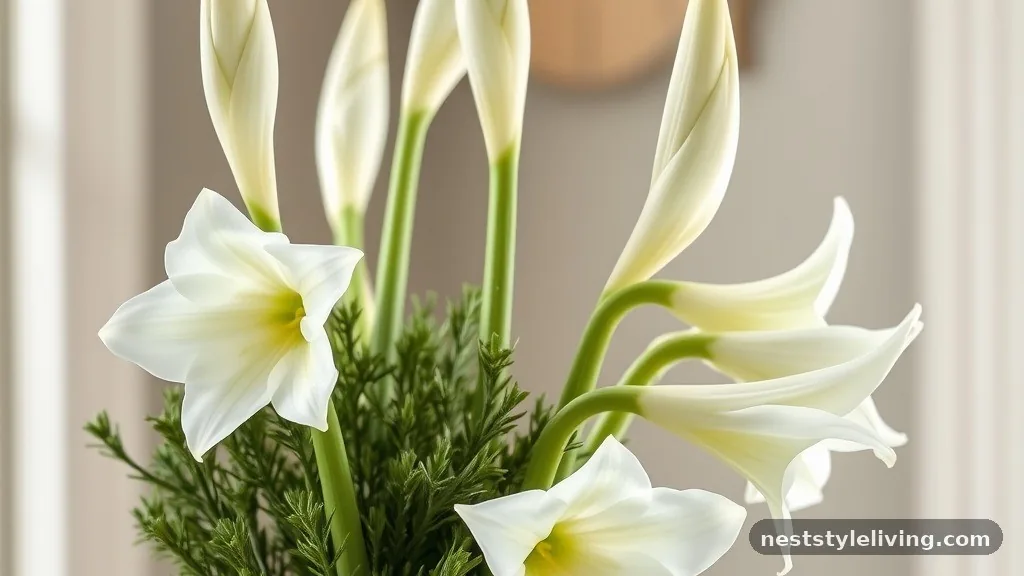
The stark, sculptural beauty of white amaryllis provides an immediate focal point, especially when contrasted against the deep, forest-green hue of fresh cedar sprigs. These flowers boast massive, trumpet-shaped blooms that emerge from thick, sturdy stalks, giving them an architectural presence that few other winter flowers can match.
Placing them in a heavy, clear glass vessel allows the roots or the water-submerged stems to contribute to the visual texture, creating an arrangement that feels both clean and organic. The cedar provides a subtle, spicy fragrance that fills a room without becoming overwhelming, while its needle-like foliage softens the bold lines of the amaryllis petals.
To ensure longevity, trim the amaryllis stems at a sharp angle every few days and keep the water levels consistent, as these thirsty blooms will drink significantly as they open. If the stems start to curl or fray at the bottom, wrap a bit of floral tape around the base to prevent splitting.
2. Dried Eucalyptus and Silver Brunia
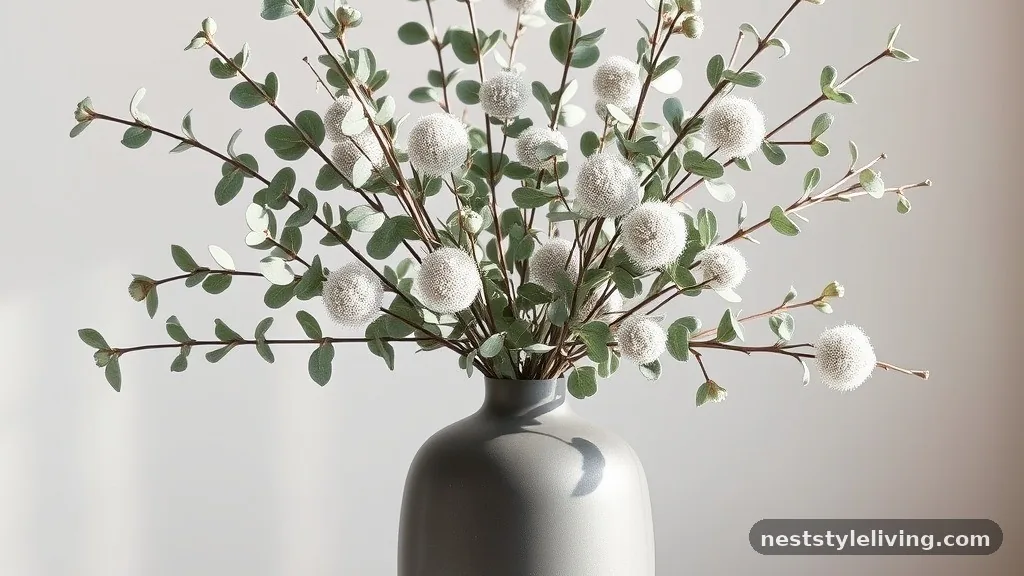
Dried eucalyptus offers a muted, sophisticated sage tone that pairs perfectly with the textured, metallic-looking spheres of silver brunia. This arrangement leans into a monochromatic, modern aesthetic, making it an excellent choice for minimalist sideboards or narrow entryway tables where you want a refined look without the mess of shedding petals.
The eucalyptus leaves, when dried properly, maintain a soft, leathery feel and a lingering herbal scent that lasts for months. Silver brunia adds a unique, tactile element, resembling tiny, frosted berries that catch the low, slanted light of winter afternoons.
Use a tall, matte ceramic vase in a neutral grey or cream to ground the arrangement, ensuring the height of the eucalyptus branches creates a balanced, asymmetrical silhouette. Avoid placing this display in a humid room, such as a bathroom, to keep the dried leaves crisp and prevent them from softening over time.
3. Foraged Holly and Winterberry
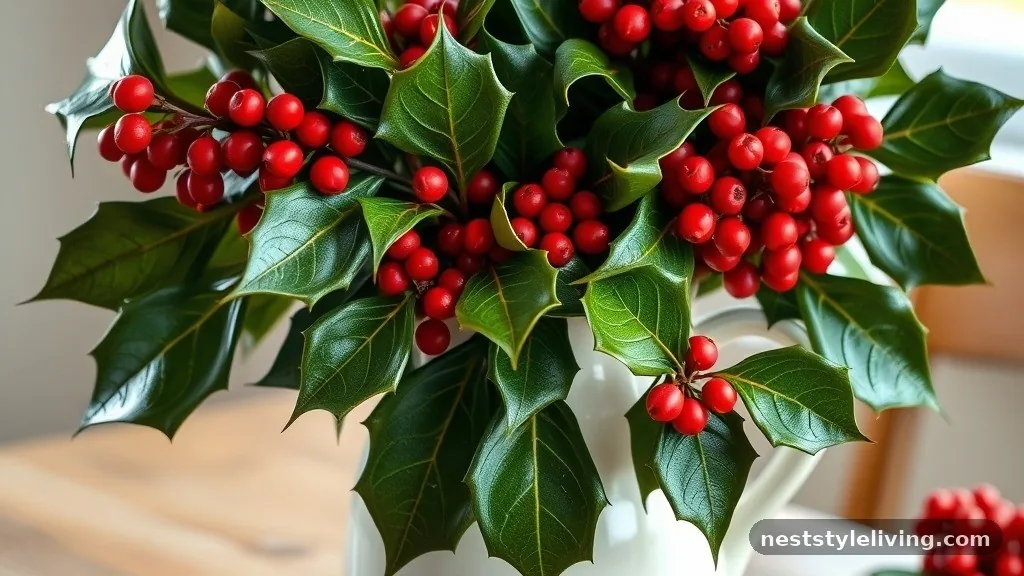
Nothing says mid-winter quite like the vibrant, glossy pop of red berries against deep, waxy green leaves. Foraging for holly and winterberry allows you to bring the raw, untamed spirit of the woods into your living room, creating a display that feels grounded and authentic.
These branches are incredibly durable, often lasting for weeks in a vase of water without needing much maintenance. To keep the look intentional rather than chaotic, prune the branches so they vary in height, allowing the berries to cascade slightly over the rim of a rustic stoneware pitcher or a copper vessel.
When harvesting, look for stems with dense clusters of berries and minimal leaf damage, then give the ends a fresh cut before placing them in room-temperature water. If you find the berries are too heavy for your chosen container, add a few heavy river stones to the bottom of the vase to act as a ballast and prevent tipping.
4. Paperwhites in a Shallow Copper Bowl
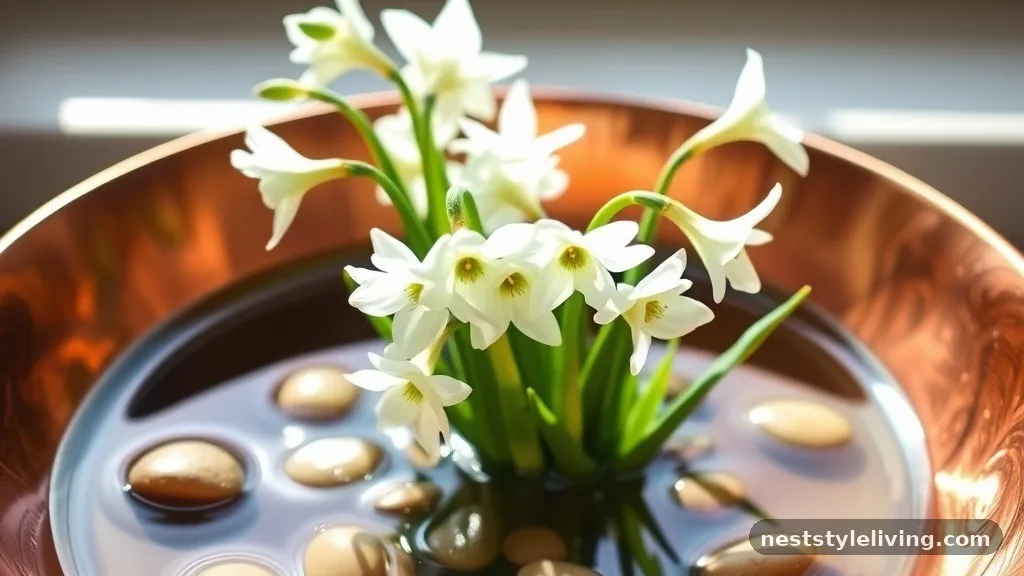
Paperwhites are iconic for their delicate, star-shaped white flowers and intense, sweet fragrance that can brighten even the gloomiest January morning. Planting them in a shallow copper bowl creates a stunning contrast between the bright, clean petals and the warm, reflective metal.
Because they grow from bulbs, you can keep them in a layer of decorative pebbles and water, which keeps the arrangement clean and prevents the need for potting soil inside the home. The bulbs themselves look interesting as they begin to sprout, providing a sense of growth and anticipation throughout the winter weeks.
Place the bowl in a bright, indirect light source to prevent the stems from becoming too leggy and leaning over. If the stems do begin to sag as they grow tall, use a thin piece of twine or a decorative ribbon to loosely gather them together for a more upright, structured appearance.
5. Frosted Pinecones and Magnolia Leaves
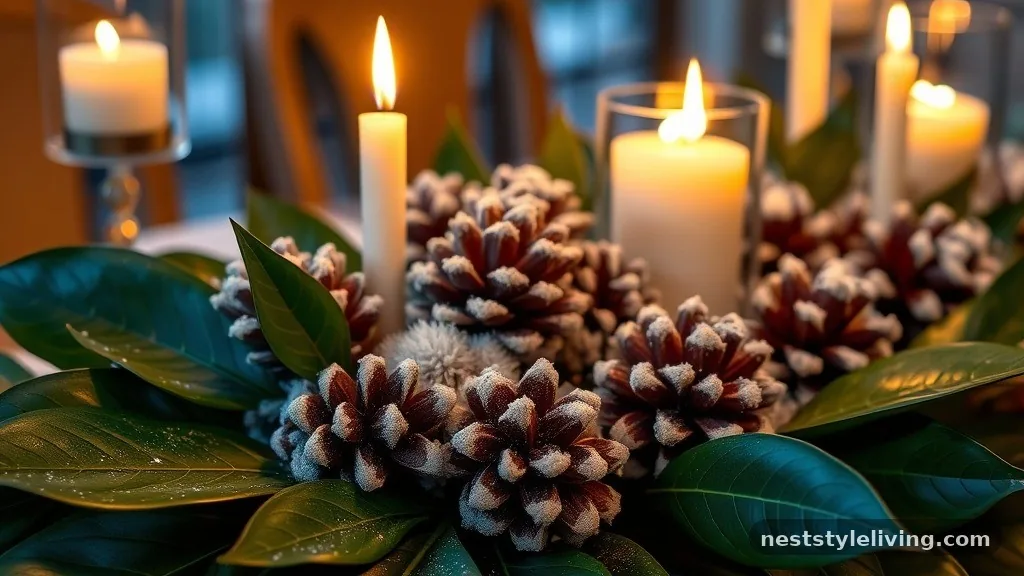
Combining the rustic, woody texture of pinecones with the thick, glossy, dark green leaves of a magnolia tree creates a sophisticated, woodland-inspired arrangement. The underside of magnolia leaves often features a soft, velvet-like brown texture, which adds a layer of warmth that complements the natural brown of the pinecones.
This setup works exceptionally well as a low, sprawling centerpiece for a dining table, where it can be woven around candles or other seasonal decor. You can lightly dust the pinecones with faux snow or a metallic gold spray to give them a subtle, festive shimmer that catches the light during evening gatherings.
Use floral wire to secure the pinecones to wooden skewers, which allows you to insert them firmly into a bed of damp floral foam or directly into the foliage. This technique keeps your arrangement stable and allows you to adjust the spacing between the leaves and the cones until you achieve the desired density.
6. Anemones and Bare Birch Branches
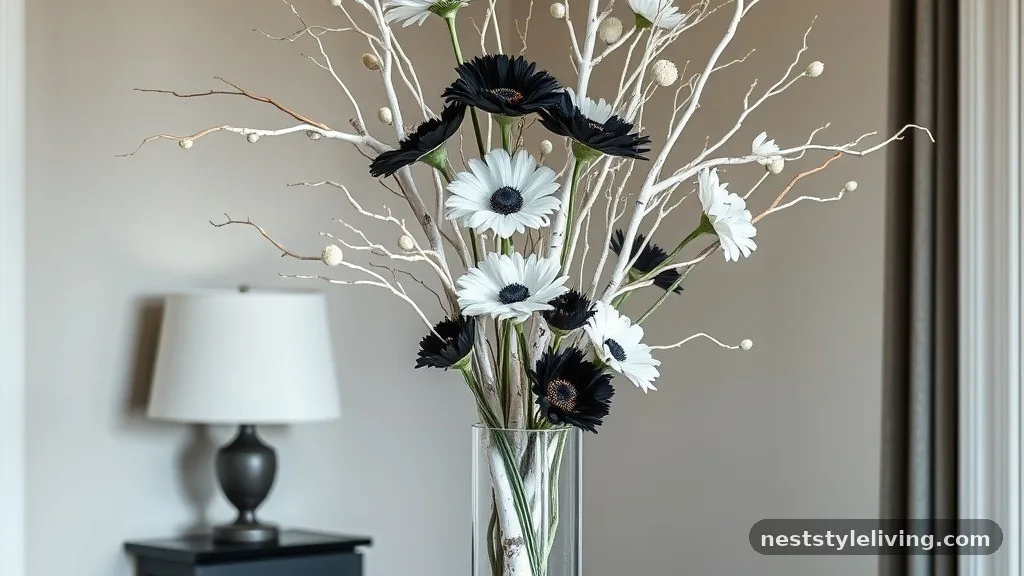
Black-and-white anemones are the height of floral elegance, featuring striking dark centers that command attention when paired with the stark, papery white bark of birch branches. This combination creates a high-contrast, artistic display that feels very intentional and contemporary.
The birch branches provide height and structure, mimicking the appearance of a winter forest, while the delicate anemones provide a soft, velvet-like point of interest. This arrangement is ideal for a high-traffic area like a console table, as the simplicity of the color palette prevents the space from feeling cluttered during the busy holiday or post-holiday season.
Anemones are quite sensitive to temperature, so keep them away from direct heat sources like radiators or fireplaces to ensure the petals stay firm. Change the water daily and re-trim the stems to keep the blooms hydrated, as these flowers are particularly prone to wilting if they are not consistently supplied with clean, cool water.
7. Dried Hydrangeas and Seeded Grasses
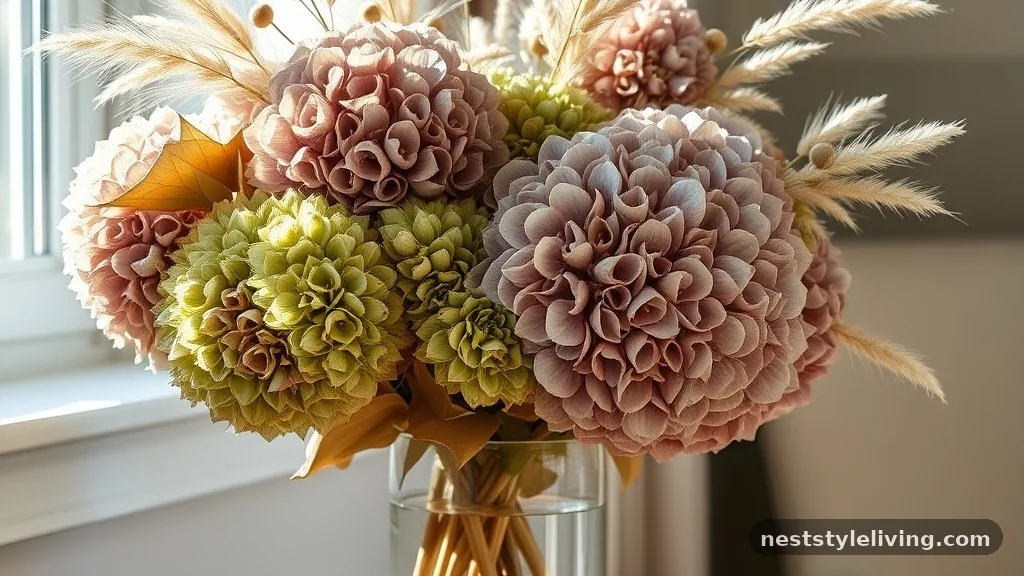
Dried hydrangea heads are one of the most versatile winter floral elements, as they transition from fresh, bright colors to muted, antique shades of mauve, green, and parchment. When you pair these voluminous, globe-like structures with the airy, wispy texture of dried seeded grasses, you get a beautiful play between mass and line.
This type of arrangement is inherently low-maintenance and works well in rooms with neutral or earthy color schemes. Place them in a tall, narrow glass cylinder to highlight the contrast between the thick, woody stems of the hydrangeas and the delicate, swaying nature of the ornamental grasses.
To preserve your dried hydrangeas, keep them out of direct sunlight to prevent them from fading too quickly or becoming brittle. If they start to collect dust, use a can of compressed air or a very soft, dry paintbrush to gently remove the particles without damaging the fragile, papery petals.
8. Hellebores in a Footed Glass Urn
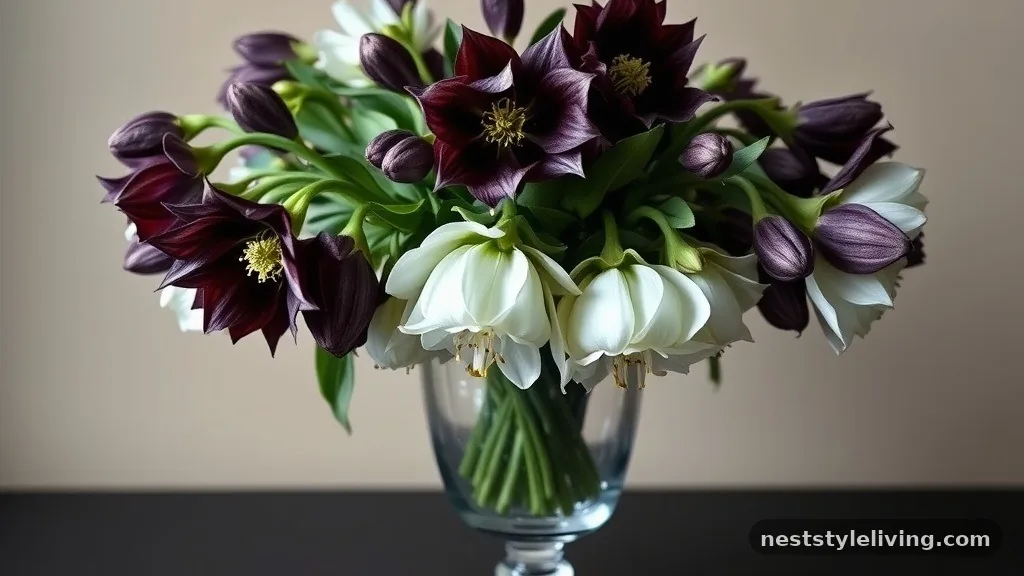
Hellebores, often known as the Lenten Rose, are among the few flowers that bloom in the dead of winter, offering a beautiful, nodding shape that looks exquisite when elevated. A footed glass urn allows the flowers to hang slightly over the edge, showcasing their complex, multi-layered petals and unique color variations, which range from deep plum to soft, mottled pinks and whites.
This arrangement feels like a piece of Dutch still-life art, bringing a moody, romantic atmosphere to a home office or a quiet reading nook. Because hellebores have relatively short stems, a pedestal-style vessel is the most effective way to give them the prominence they deserve.
When you cut hellebores for an arrangement, make a small vertical slit in the bottom of the stem to help them absorb water more effectively. This simple step can significantly increase the lifespan of the blooms, keeping them fresh and perky for much longer than they would last with a standard cross-cut.
9. Red Roses and Juniper Berries
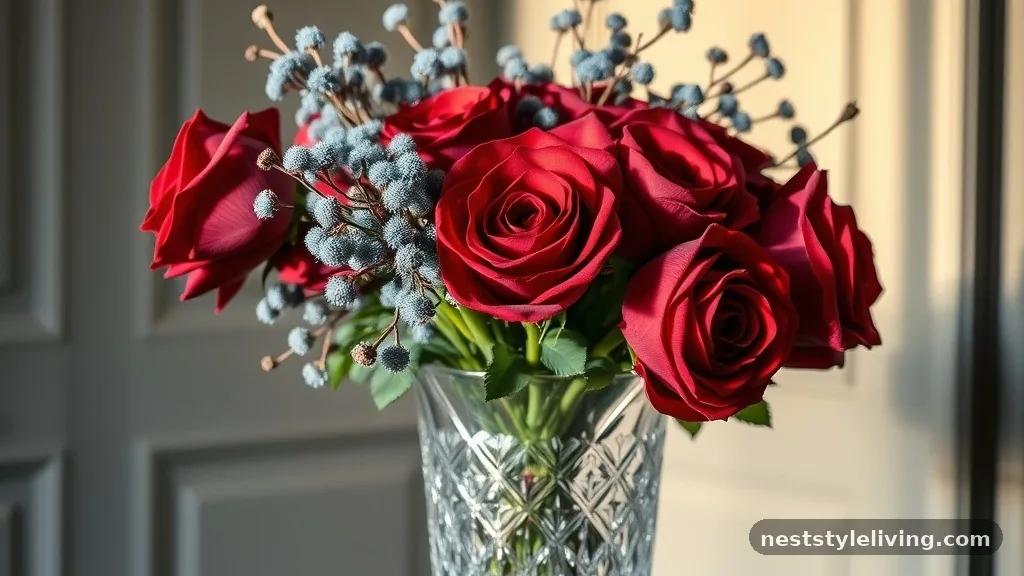
While roses are often associated with summer, deep red varieties possess a dramatic, velvety quality that feels perfectly at home in a winter setting. Pairing them with the cool, dusty blue of juniper berries creates a classic, high-contrast look that is both timeless and festive.
The juniper adds a refreshing, pine-like scent and a delicate, feathery texture that offsets the heavy, rounded shape of the rose heads. This combination is particularly effective in a heavy crystal vase, which reflects the light and enhances the richness of the deep red petals and the dark, evergreen foliage.
To keep the roses looking their best, remove any leaves that would fall below the waterline to prevent bacterial growth. Keep the arrangement in a cool spot, away from drafts, and use a floral preservative packet in the water to provide the necessary nutrients for the roses to fully open and thrive.
10. Pussy Willow and Forsythia Branches
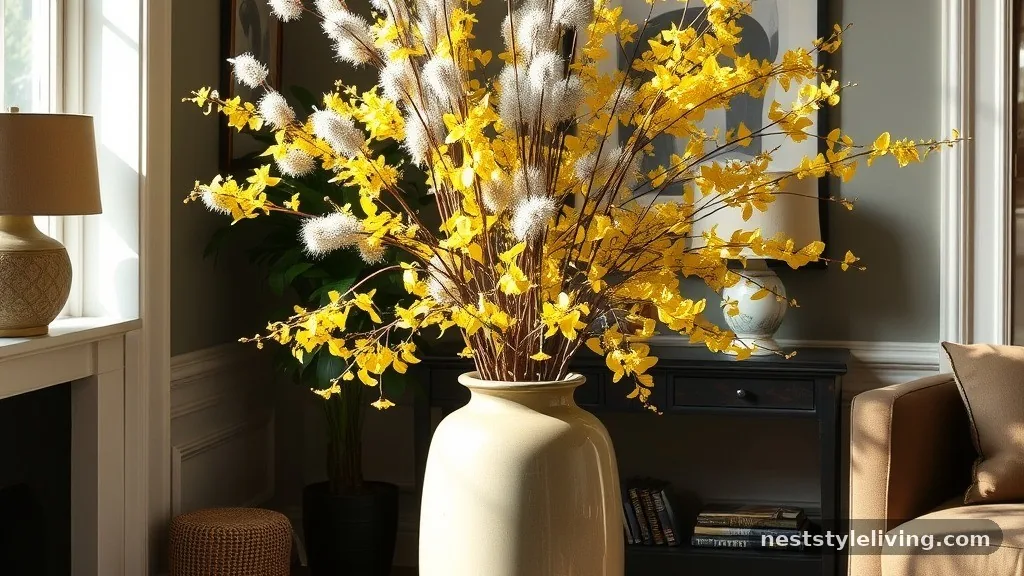
For a display that celebrates the promise of coming spring, force branches of pussy willow and forsythia to bloom indoors. The fuzzy, soft catkins of the pussy willow provide a tactile, neutral base, while the yellow buds of the forsythia offer a bright, optimistic burst of color.
This arrangement is exceptionally long-lasting, as the branches will continue to develop and open over several weeks in a warm, bright room. Because these branches are tall and architectural, they look best in a heavy ceramic floor vase that can support their weight and height, making them a perfect choice for an empty corner that needs a bit of life.
Place the branches in a vase filled with warm water and keep them in a well-lit area, but avoid placing them directly in the path of a heater, which will cause them to dry out too quickly. If you want to speed up the blooming process, place the container in a sunny window and mist the branches with water daily.
11. Dried Lavender and Wheat Sheaves
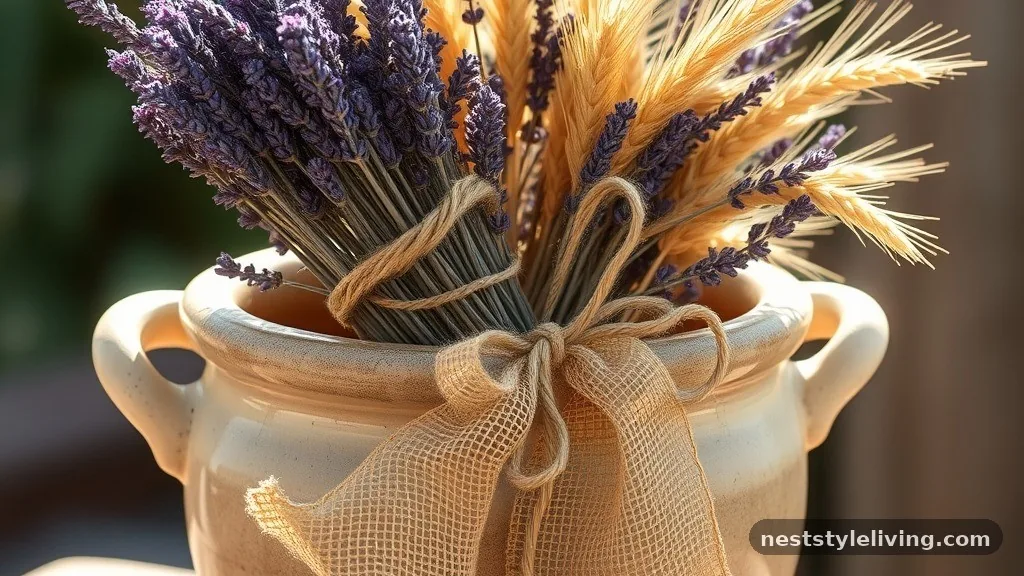
For a rustic, farmhouse-inspired look, combine bundles of dried lavender with golden, sun-dried wheat sheaves. The purple, aromatic scent of the lavender provides a calming, sensory experience, while the wheat adds a warm, textured gold tone that feels cozy during the cold winter months.
This arrangement is incredibly durable and can last for an entire season without any water or special care. Tie the bundles together with a thick, burlap ribbon or a piece of velvet twine to emphasize the rustic aesthetic, and place them in a wide-mouthed stoneware crock or a galvanized metal bucket.
Since this arrangement doesn’t require water, it is an excellent choice for bookshelves, mantels, or windowsills where you don’t want to worry about potential spills. If the lavender scent fades, you can add a few drops of high-quality essential oil to the dried stems to refresh the fragrance throughout the room.
12. Ranunculus and Dusty Miller
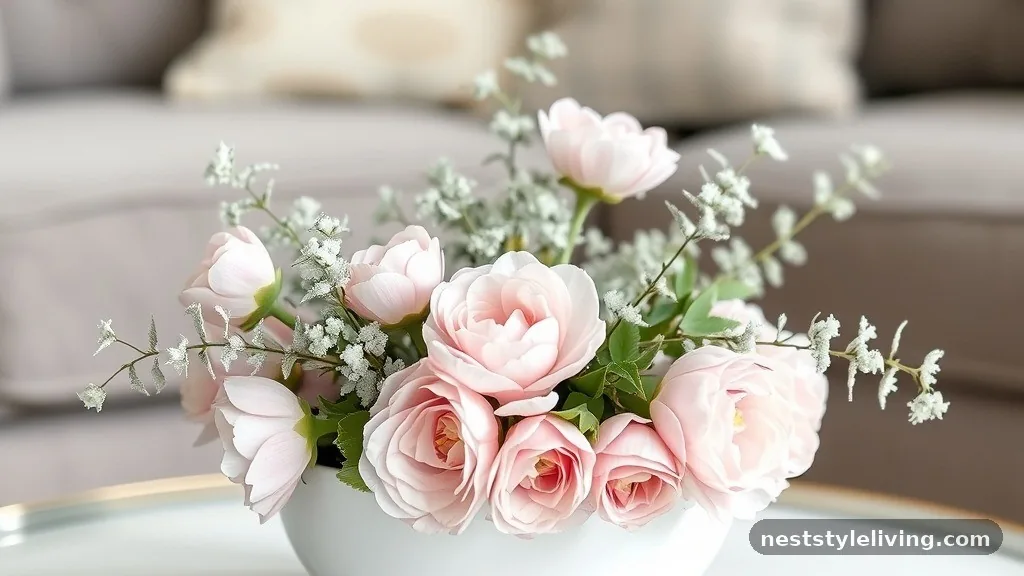
Ranunculus flowers are prized for their layers of paper-thin, delicate petals that create a perfectly rounded, tight blossom. When arranged with the soft, silvery, fern-like leaves of Dusty Miller, the result is a dreamy, frosted display that feels like a winter wonderland.
The cool, grey-toned foliage acts as a bridge between the vibrant or pastel colors of the ranunculus and the surrounding home decor. This combination is particularly popular for coffee table arrangements, as it is low-profile and allows for conversation to flow easily over the top of the flowers.
Ranunculus stems are quite hollow and can be fragile, so handle them with care when trimming and placing them into your vase. Ensure the water is kept clean, as these stems are susceptible to clouding the water quickly; changing the water every two days will keep the arrangement looking crisp and fresh.
13. Pine Branches and White Carnations
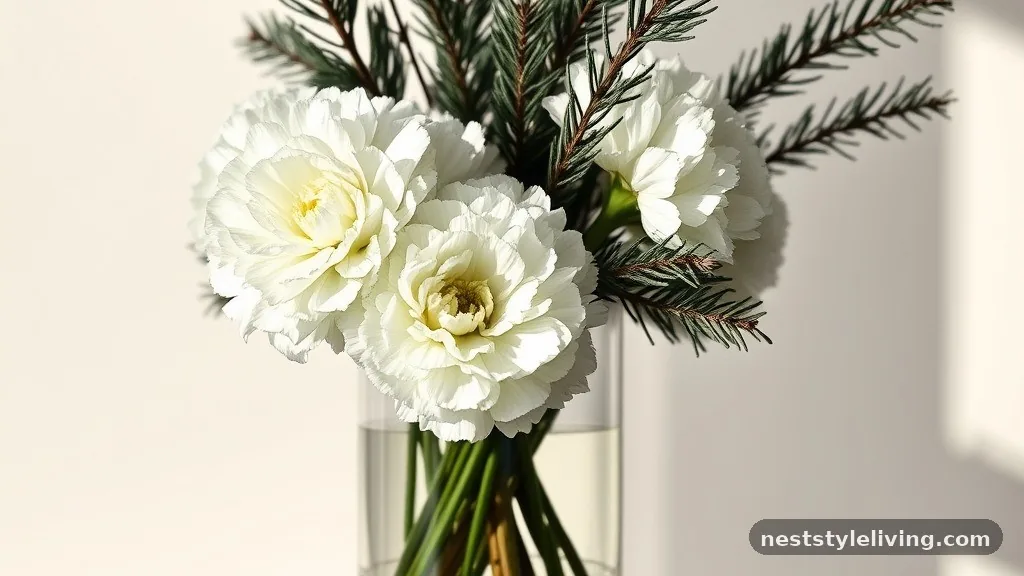
White carnations are often overlooked, but they have a ruffled, cloud-like texture that looks surprisingly elegant when paired with the deep, dark needles of pine branches. This arrangement is a budget-friendly option that offers high impact, as both materials are widely available and very resilient.
The contrast between the bright, clean white of the flowers and the dark, textured green of the pine creates a classic winter look that fits almost any interior style, from modern to traditional. Use a simple, cylindrical glass vase to keep the focus entirely on the contrast between the two elements.
To make the carnations look more expensive, group them tightly together in the center of the arrangement so they form a single, large, massive sphere of white. The surrounding pine branches will then frame this central focus, creating a professional-looking display that hides the stems and provides a lush, dense appearance.
14. Dried Thistle and Dark Green Foliage
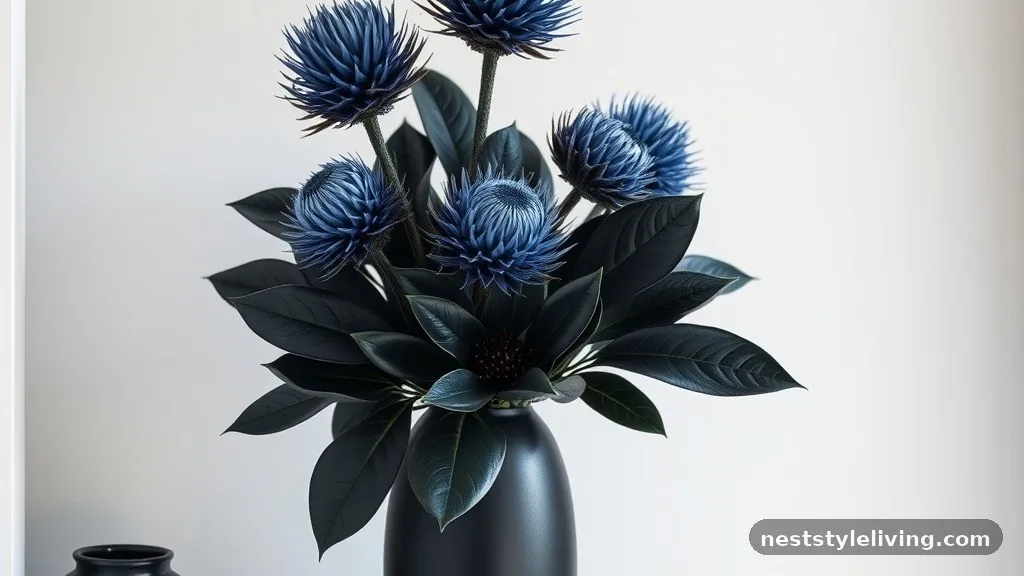
Blue thistle, with its spiky, metallic-looking heads, brings an edgy, sculptural quality to winter floral arrangements. Pairing it with dark, glossy foliage like camellia leaves or dark ivy creates a moody and sophisticated composition that stands out in a minimalist home.
The blue-grey hue of the thistle works beautifully with cool-toned interiors, adding a bit of visual interest without the need for bright colors. This is a great choice for those who prefer a more avant-garde or structural approach to floral design, as the thistle holds its shape perfectly even when dried.
When handling the thistle, be aware that the spikes can be sharp, so use gloves or a pair of kitchen tongs to position the stems. If you are using fresh foliage with the dried thistle, keep the water level low so that only the stems of the fresh leaves are submerged, ensuring the thistle heads stay dry and maintain their structure.
15. Amaryllis and Oranges on a Tray
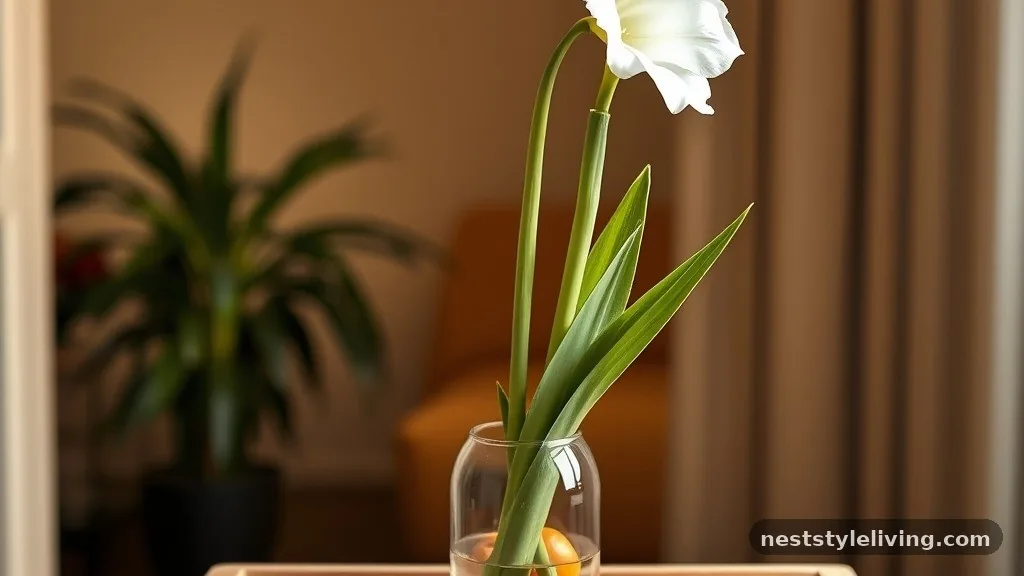
Integrating fruit into your floral arrangement adds a layer of organic texture and a pop of warm, citrus color that feels very seasonal. Pairing tall, elegant white amaryllis with a base of whole, bright orange citrus fruits creates a festive and welcoming look for a kitchen island or a dining sideboard.
The contrast between the smooth, vibrant skin of the fruit and the soft, delicate petals of the flowers is visually arresting. You can nestle the amaryllis stems directly between the oranges in a wide, low bowl, using the fruit as a natural support system to hold the heavy stems upright.
To prevent the fruit from rolling, use a bowl with a flat bottom and arrange the oranges in a stable, pyramid-like structure. If you find the amaryllis stems are too long, trim them slightly so the flowers rest just above the level of the fruit, creating a dense, abundant look that feels luxurious and inviting.
16. Winter Ferns and Dried Seed Pods
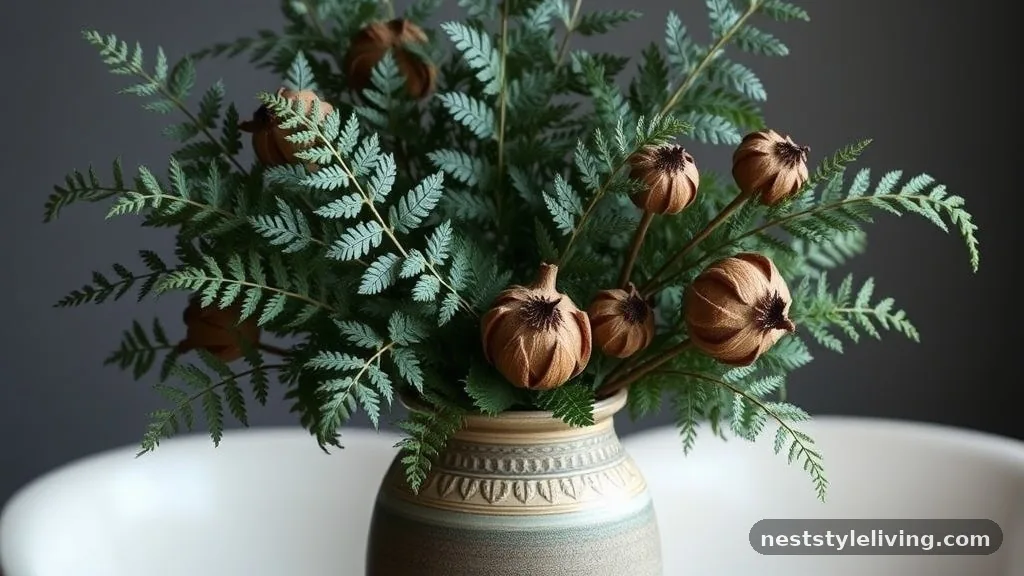
Ferns are often associated with the forest floor, and their delicate, lacy fronds look beautiful when arranged with the woody, architectural shapes of dried seed pods like lotus heads or poppy pods. This combination celebrates the transition of nature from the lush greenery of the past season to the structural, bare bones of winter.
The deep, dark green of the ferns provides a rich background for the earthy, brown tones of the pods, creating an arrangement that feels grounded and natural. This style works best in a rustic, handmade ceramic vase that highlights the organic, slightly wild nature of the materials.
Keep the ferns well-mistened if you are using fresh varieties, as they can dry out quickly in the heated, dry air of a typical winter home. If you prefer a completely maintenance-free option, use preserved ferns, which have been treated to stay soft and pliable without the need for water or sunlight.
17. White Roses and Eucalyptus Leaves
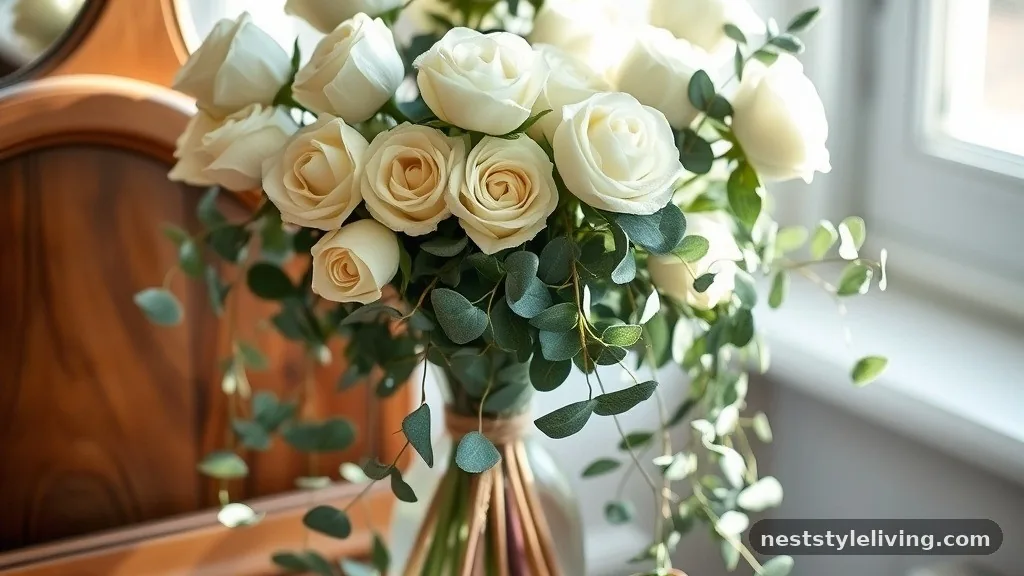
White roses are the epitome of grace, and when paired with the long, trailing stems of eucalyptus, they create a soft, romantic arrangement that is perfect for a bedroom or a vanity. The eucalyptus leaves provide a beautiful, dusty blue-green contrast that softens the crisp white of the roses and adds a sense of movement to the display.
This arrangement is light and airy, avoiding the heaviness that some winter displays can have. It is a perfect way to bring a touch of life into a space that is otherwise dominated by heavy blankets and warm, winter textiles.
To keep the eucalyptus from wilting, ensure the stems are cut at an angle and placed deep in the water, as they require significant hydration. If the roses start to droop, you can gently wire the heads to provide extra support, allowing them to remain upright and beautiful for several days longer than they would on their own.
18. Holly Sprigs and White Candles
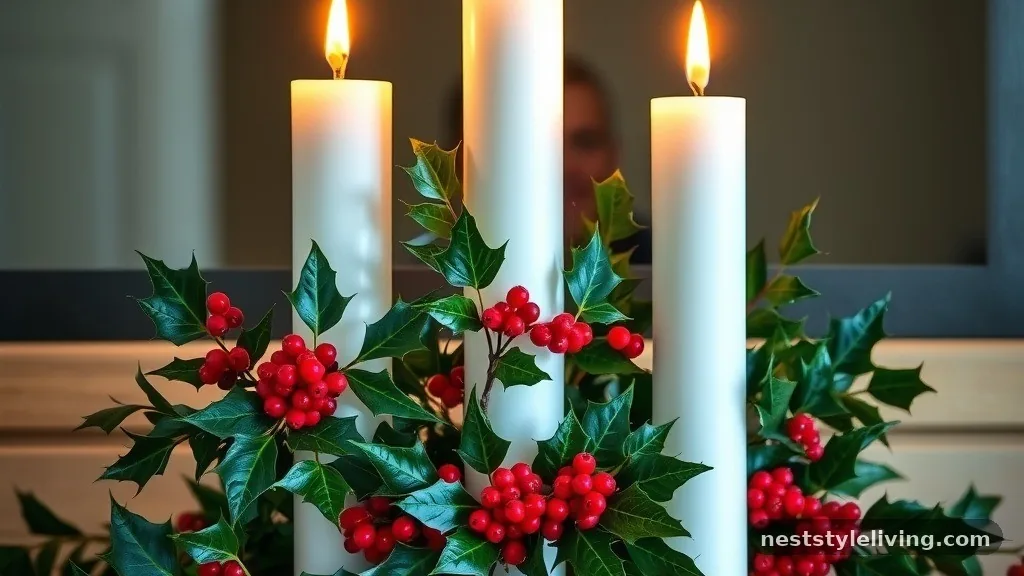
Sometimes the best arrangement isn’t just flowers, but a combination of greenery and light that creates a focal point for the room. Placing clusters of holly with its bright red berries around the base of tall, white pillar candles creates a stunning, glowing centerpiece.
The reflective surface of the wax combined with the glossy leaves of the holly produces a warm, inviting atmosphere that feels like the heart of a winter home. This arrangement is particularly effective on a mantelpiece or a coffee table, where it can be lit in the evenings to create a cozy, magical glow.
When using fresh holly, ensure it is kept well away from the flame of the candle to prevent it from drying out or catching fire. Use a flame-retardant tray to hold the candles and the greenery, which protects your furniture from wax drips and makes it easy to move the display when you need the surface space.
Frequently Asked Questions
What is the best way to keep winter flowers fresh?
The key to longevity is proper hydration and temperature control. Always trim stems at a sharp angle to increase the surface area for water absorption, and use a clean vase to prevent bacterial growth.
Keep your arrangements away from direct heat sources like vents, radiators, and fireplaces, as these will dry out the blooms rapidly. If possible, keep the room slightly cooler at night, which mimics the natural environment and helps the flowers stay firm for longer.
How do I choose the right vase for a winter arrangement?
Select a vessel that complements the style of your flowers. Tall, clear glass is perfect for showing off long-stemmed blooms like amaryllis or lilies, while rustic stoneware, copper, or ceramic vases add warmth and weight that suits the moody, earthy tones of winter greenery and berries. Consider the scale of the room; a large, floor-standing vase works for entryways, while a shallow, footed bowl is ideal for a dining table where you want to maintain visibility across the room.
Can I mix dried and fresh flowers together?
Mixing dried and fresh elements is a fantastic way to add texture and depth to your arrangements. The trick is to ensure the fresh stems are properly hydrated in a water-filled vase, while the dried elements are carefully placed or wired to lean on the fresh stems.
Be mindful that the moisture from the fresh flowers shouldn’t directly touch the dried ones, as this can cause them to soften or mold. This technique is especially effective for adding structural, woody elements to soft, delicate floral displays.
What is the 3:5:8 rule for floral design?
The 3:5:8 rule is a variation of the Golden Ratio used to create balanced, aesthetically pleasing arrangements. It suggests that the height of the vase should be about three parts, the flowers should be five parts, and the total height of the arrangement should be eight parts. While you don’t need to measure with a ruler, following this ratio helps ensure your display doesn’t look too top-heavy or too short for its container, creating a natural sense of proportion that feels right to the eye.
Are there specific flowers that thrive in winter?
Yes, many flowers are naturally suited to the cooler months. Amaryllis, paperwhites, hellebores, and anemones are classic choices that actually prefer the cooler temperatures of winter.
Additionally, roses are widely available and hold up well in indoor environments. When looking for greenery, holly, cedar, juniper, and eucalyptus are hardy, long-lasting options that provide the perfect structural base for your winter floral arrangements for a magical home.
Creating Your Winter Sanctuary
Transforming your living space with these arrangements is about more than just decoration; it is about embracing the season’s unique character. By using a mix of hardy greens, structural branches, and resilient, elegant blooms, you can curate a environment that feels both peaceful and alive. These compositions serve as a reminder that beauty persists even in the coldest months, offering a visual warmth that comforts the spirit.
As you experiment with these combinations, pay attention to the light in your rooms and choose vessels that reflect your personal style. Integrating these winter floral arrangements for a magical home will undoubtedly provide you with a sense of accomplishment and a sanctuary that feels truly special. Start with one simple display this week and watch how it changes the entire mood of your room.