15 Playroom Ideas for a Fun Organized Kids Space
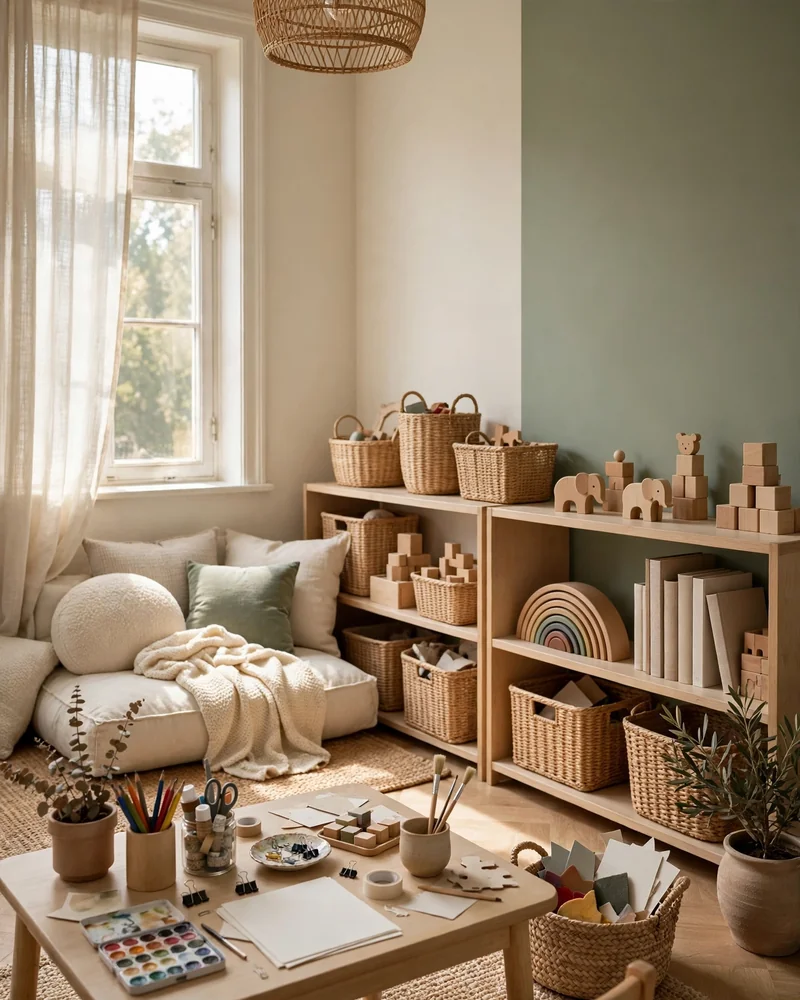
Finding the right playroom ideas can feel like a balancing act: you want a space that sparks your kids’ imagination while still looking like a room you love. A great playroom should be both fun and organized — a place where toys have a home, creativity has room to roam, and cleanup doesn’t take all evening. The good news is that 2026’s playroom trends lean exactly this way, favoring intentional design with warm neutral bases, smart color pops, and defined zones that help kids play longer and stay more focused.
This list brings together 15 kid-approved playroom ideas that blend playful style with clever organization. From Montessori-inspired low shelves and cozy reading nooks to toy rotation systems and multifunctional furniture, each idea works for real homes and real budgets. Whether you’re working with a whole spare room or a small corner, you’ll find ways to create a playroom your kids will love — and one that stays beautifully under control.
1. Carve Out Defined Playroom Zones
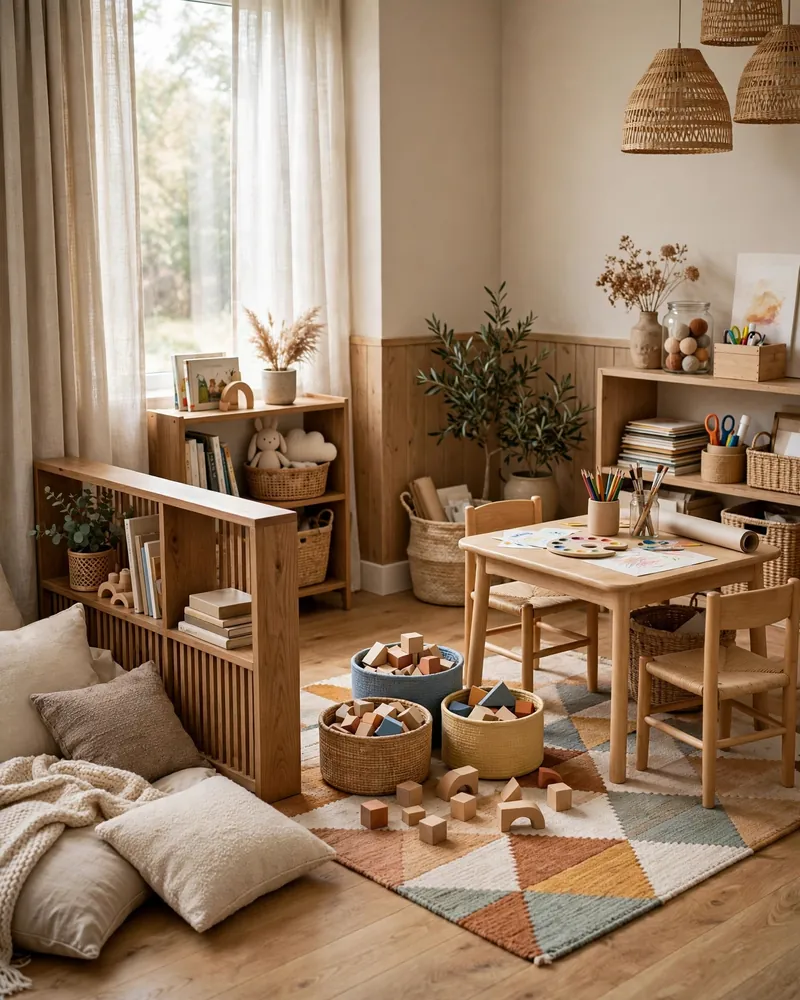
The single most transformative of all playroom ideas is zoning: dividing the room into clearly defined areas for different types of play. A cozy reading zone with floor cushions, an art zone with a small table, and an active zone with soft mats instantly make the space feel intentional instead of chaotic. Kids move naturally between activities when each spot has a purpose, and cleanup is easier because every toy has a home base.
Use rugs, shelving units, or low bookcases as soft dividers to mark each zone without building walls. You don’t need a huge room for this to work — even a small playroom can hold two or three mini-zones with low, flexible furniture. Try a quiet reading corner, an open building area, and a table zone for art. When kids can see at a glance what each area is for, they play more independently and tidying turns into a quick, obvious routine.
2. Make a Small Playroom Feel Bigger with Vertical Storage
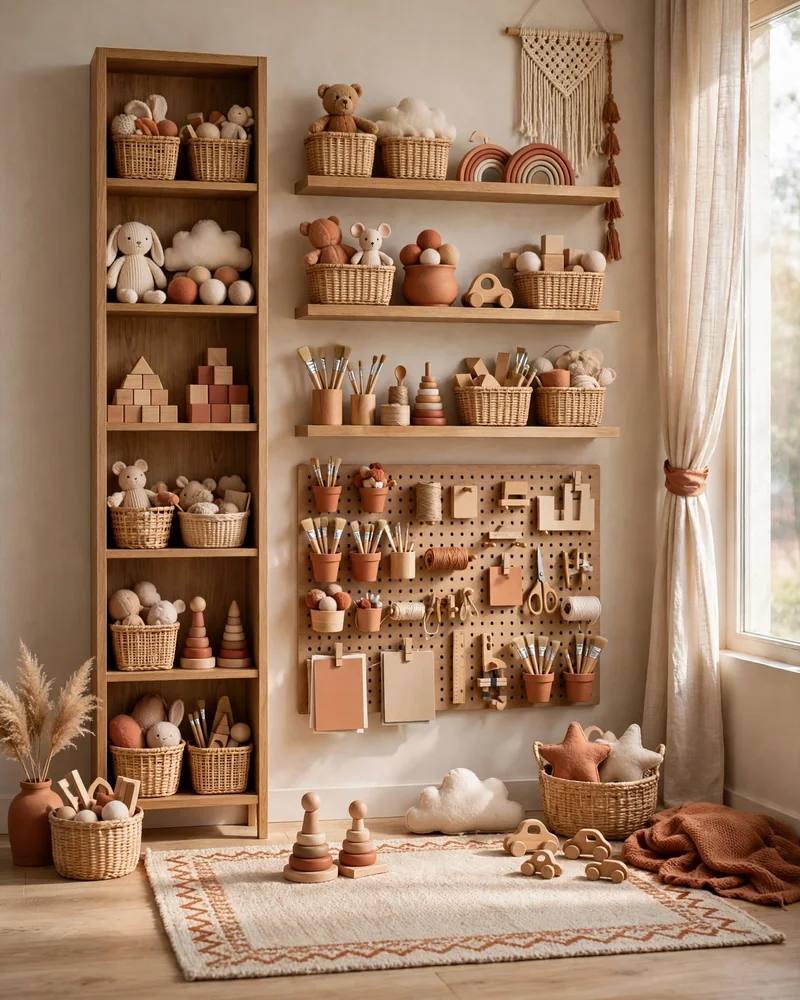
Small playroom ideas work best when you think upward. Floor space is precious for active play, so push storage to the walls with tall bookcases, wall-mounted shelves, and pegboards that keep toys off the ground but within reach. Floating shelves above a desk or reading nook can hold books and art supplies without eating into play space, and a slim rolling cart can be parked in a corner and wheeled out for craft time.
Keep the lowest shelves at kid height so children can grab and return toys themselves — this is where self-tidying habits are born. Use the higher shelves for items that need supervision or for your toy rotation stash. A tall, narrow cabinet painted in a cheerful color can double as decor while swallowing boxes of games and puzzles. In a compact playroom, every vertical inch you claim is another square foot of floor left free for building, dancing, and imaginative adventures.
3. Keep a Warm Neutral Playroom Base
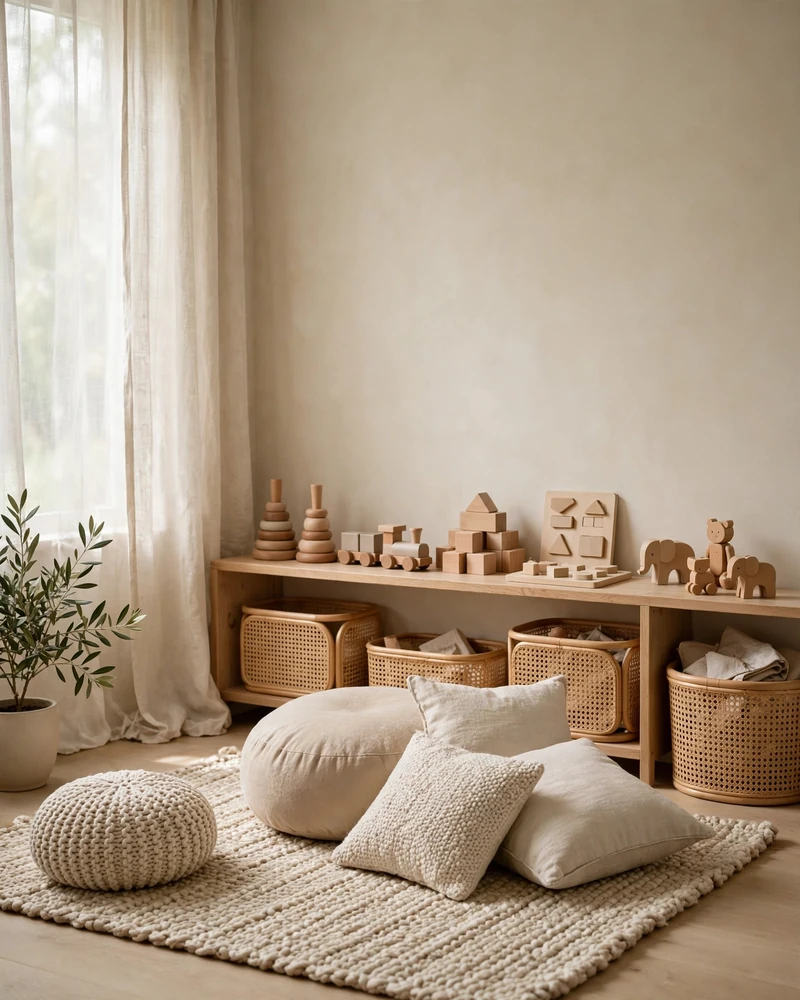
One of the most loved kids playroom decor trends for 2026 is warm minimalism: a calm, neutral playroom foundation that lets color and playfulness layer on top. Think wood tones, creams, soft beiges, and gentle grays on the big surfaces — walls, flooring, and main furniture. Parents are discovering that when the space feels serene, kids play longer and stay more focused, without the visual noise of bright plastic on every surface.
Layer warmth into the neutral base with natural textures: a chunky woven rug, cane baskets, linen curtains, and cozy floor cushions. Wooden toys in natural finishes blend beautifully with this palette and stay out as decor. The magic of a neutral playroom is how forgiving it is — swap a rug, change the art, or rotate the toys, and the room feels brand new without repainting a thing. It’s a timeless backdrop that grows with your kids from toddler years through elementary school.
4. Set Up Montessori-Style Shelves at Kid Height
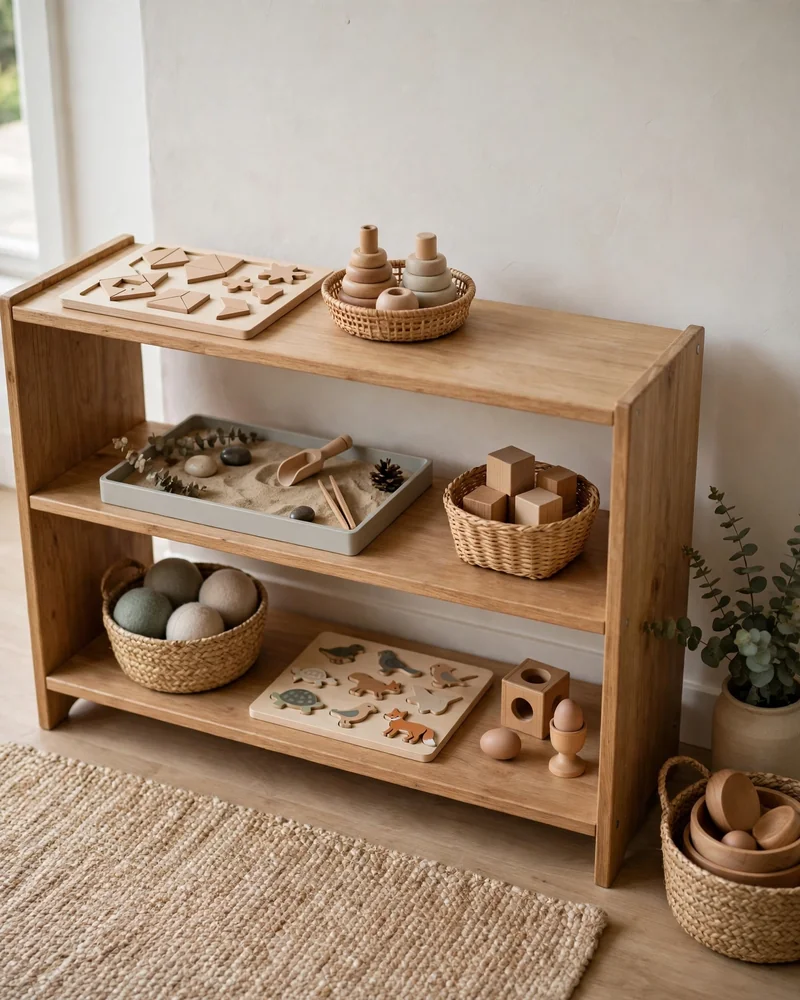
Montessori playroom ideas have moved from niche to mainstream, and for good reason: low, open shelves at kid height give children real independence. Instead of digging through a toy box, kids can see every option and choose an activity themselves — and just as importantly, they know exactly where each item goes back. This visibility is the secret to a playroom that stays organized without constant adult policing.
Keep the display limited: a handful of puzzles, wooden toys, art materials, and books, each in its own basket or tray with breathing room between them. Fewer choices lead to deeper, more focused play and much easier cleanup. Rotate the selection every few weeks from a stored stash so the shelves always feel fresh. Choose sturdy, low shelving anchored securely to the wall, and watch your kids take genuine pride in resetting their own shelves — independence is the most underrated of all playroom ideas.
5. Build a Cozy Playroom Reading Nook
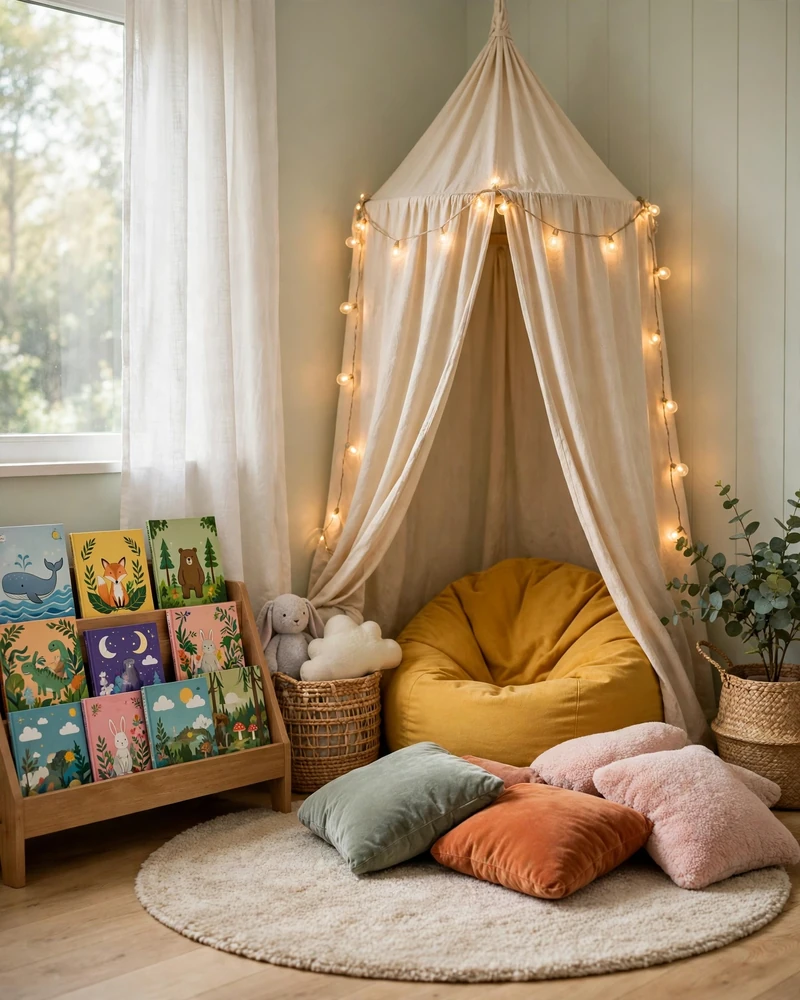
A playroom reading nook gives kids a quiet retreat inside an active room, and it does double duty as one of the most effective calm-down corners you’ll ever build. Tuck it into an unused corner with a soft rug, floor cushions or a bean bag, and a low bookshelf with forward-facing books so covers are visible and irresistible. Add string lights or a paper lantern for a warm glow that makes the nook feel magical.
Keep the nook’s collection small — a rotating selection of 10 to 15 favorites is plenty — and store the rest out of sight for future swaps. A small canopy or teepee over the nook adds enclosure without taking up floor space, and a stuffed animal or two makes it instantly inviting. Many families find their kids gravitate to the reading nook for wind-down time after active play, which naturally builds quiet, independent reading habits into the daily routine.
6. Playroom Wall Ideas That Spark Creativity

Walls are some of the most underused real estate in a playroom, and the best playroom wall ideas turn them into interactive decor. A chalkboard wall (or a large framed chalkboard panel if you don’t want to paint) gives kids an ever-changing canvas for drawing, practicing letters, and displaying their work. Pair it with washable chalk markers for bright color without the dust.
Other winning playroom wall ideas include a magnetic paint section for letters and shapes, removable wall decals that can change as interests evolve, and a low gallery rail where kids can clip up their latest masterpieces. Peel-and-stick wallpaper in a fun pattern can define one accent wall without a long-term commitment. Wall-mounted features keep the floor clear for play while adding layers of personality — and most are removable, so the room can grow up alongside your kids.
7. A Playroom Storage Wall That Makes Cleanup Easy

If there’s one thing that separates a calm playroom from a chaotic one, it’s playroom storage ideas that kids can actually use. A dedicated storage wall — low cubbies with labeled bins, open shelving, and clear containers — turns cleanup into a simple sorting game. Label bins with pictures as well as words so even pre-readers can put things away, and group items by activity (blocks, art, dress-up) rather than by type.
Mix open bins for everyday toys with a few closed cabinets for items that need supervision or that look cluttered, like craft supplies and games with small pieces. Uniform bins in a single color keep the wall looking calm even when full. Place the most-used toys at kid height and seasonal or rotation items higher up. When every toy has a labeled home, kids take ownership of tidying — and you stop spending your evenings hunting for missing pieces.
8. Try a Toy Rotation System for a Calmer Playroom
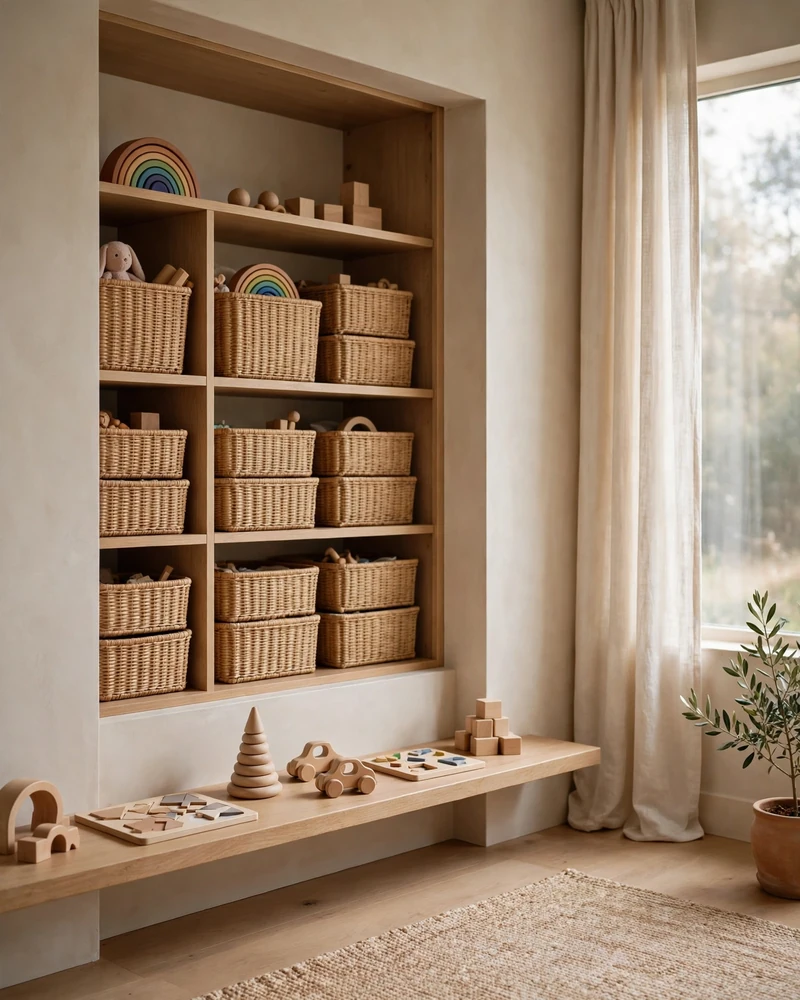
Among all playroom organization ideas, toy rotation delivers the biggest payoff for zero cost. Instead of displaying everything at once, keep a small, curated selection out and store the rest in a closet or bins elsewhere. Every few weeks, swap in a new batch — kids rediscover forgotten favorites with fresh excitement, and the playroom feels brand new without buying a single toy.
Start by sorting toys into categories like building, pretend play, art, and puzzles, then build each rotation around a mix of open-ended and skill-building options. A simple rotation closet or a few labeled bins in the garage works perfectly as your storage bank. This system cuts visual clutter dramatically, which helps kids focus and makes cleanup genuinely quick. Many parents say toy rotation is what finally ended the daily toy explosion — and their kids play more deeply with less.
9. Kids Playroom Decor with Smart Color Blocking
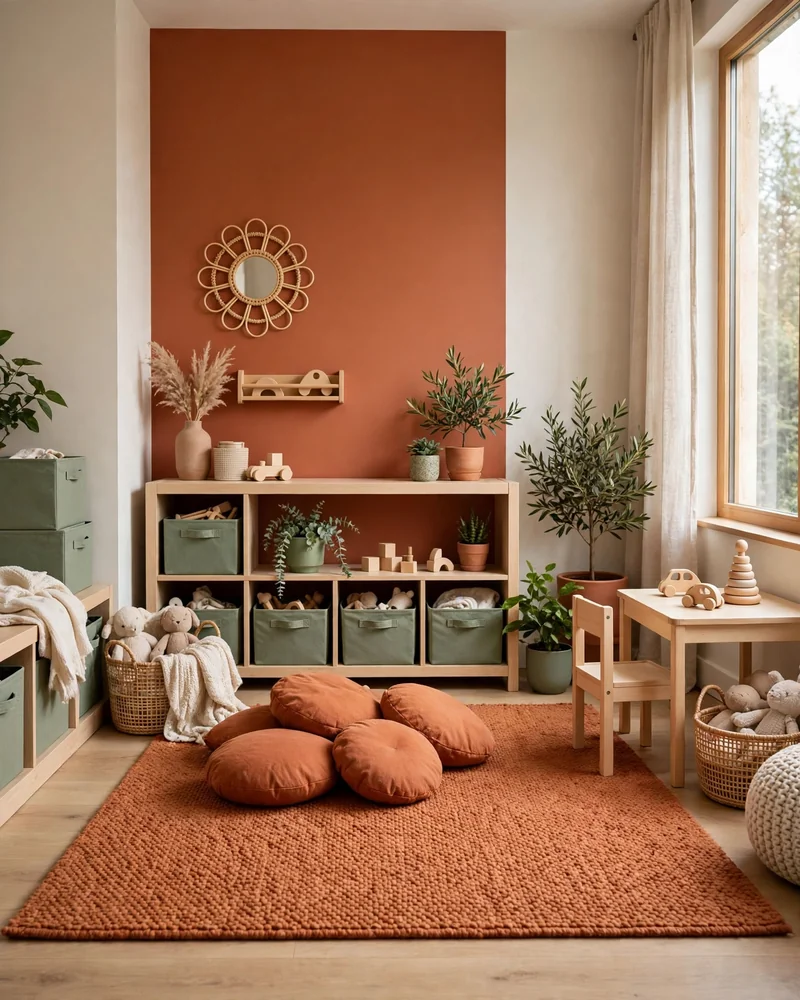
The all-neutral playroom had its moment, but 2026 welcomes color back — thoughtfully. Smart color blocking is one of the freshest kids playroom decor ideas: instead of rainbow overload, choose one or two intentional colors and repeat them through the room. Sage green, terracotta, and deep blue are the standout shades this year, each bringing energy while staying timeless.
Start small if you’re color-shy: a painted accent wall behind the reading nook, a bold rug under the art table, or colorful climbing holds on an active-play wall. Repeating the same color in two or three places — say, terracotta cushions, a terracotta rug, and terracotta bins — creates cohesion instead of chaos. This approach gives the playroom personality and warmth while keeping the overall look sophisticated enough that you actually enjoy walking in.
10. A Vintage Playroom Shelf with Retro Charm

Riding the wave of 2026’s nostalgia trend, vintage playroom decor brings warmth and character that brand-new plastic just can’t match. Dedicate one shelf or cabinet to retro-style toys and classics: wooden building blocks, a retro telephone, vintage-style tin toys, classic board games, and well-loved picture books. These tactile, screen-free toys fit perfectly with the growing desire for analog, grounded childhoods.
Style the shelf like decor, not storage — group items in odd numbers, mix heights, and leave some breathing room so it reads as a display. Thrift stores and flea markets are treasure troves for affordable vintage finds, and a honey-toned wooden cabinet keeps everything looking cohesive. Kids are surprisingly drawn to these simple toys, and the shelf becomes a conversation piece that gives your playroom a collected, one-of-a-kind personality.
11. A Safe Playroom Space for Toddlers
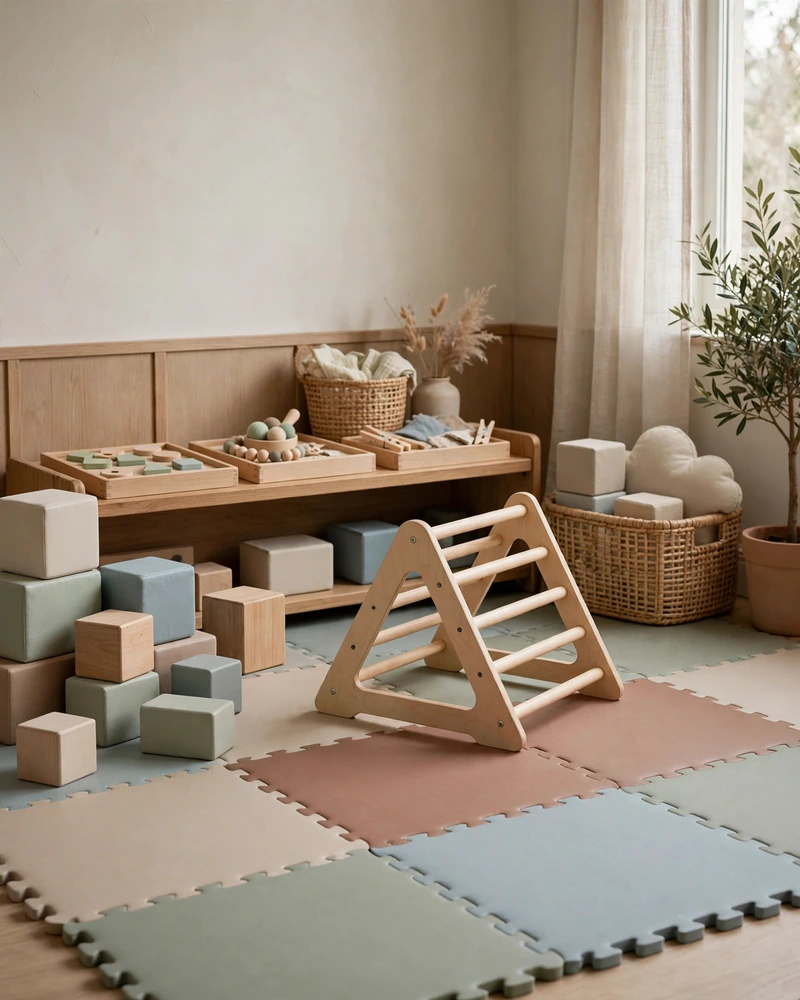
A playroom for toddlers needs its own rules: everything soft, low, and within reach. Dedicate a corner to your youngest players with interlocking foam mats, a small slide or Pikler triangle for climbing, and chunky building blocks they can stack and knock down safely. Keep this zone free of small parts, magnets, and anything that belongs to older siblings — safety first, always.
Low, stable shelving with just a few activity trays works beautifully for toddlers: a sensory bin with rice or water beads, simple peg puzzles, and sturdy board books. Because toddlers explore with their mouths, choose washable materials and wipeable mats. If older kids share the space, use a rug or low shelf to visually separate the toddler corner, and keep big-kid toys with small pieces on higher shelves. A thoughtfully zoned toddler area means everyone plays safely side by side.
12. A Dress-Up Corner for Imaginative Play
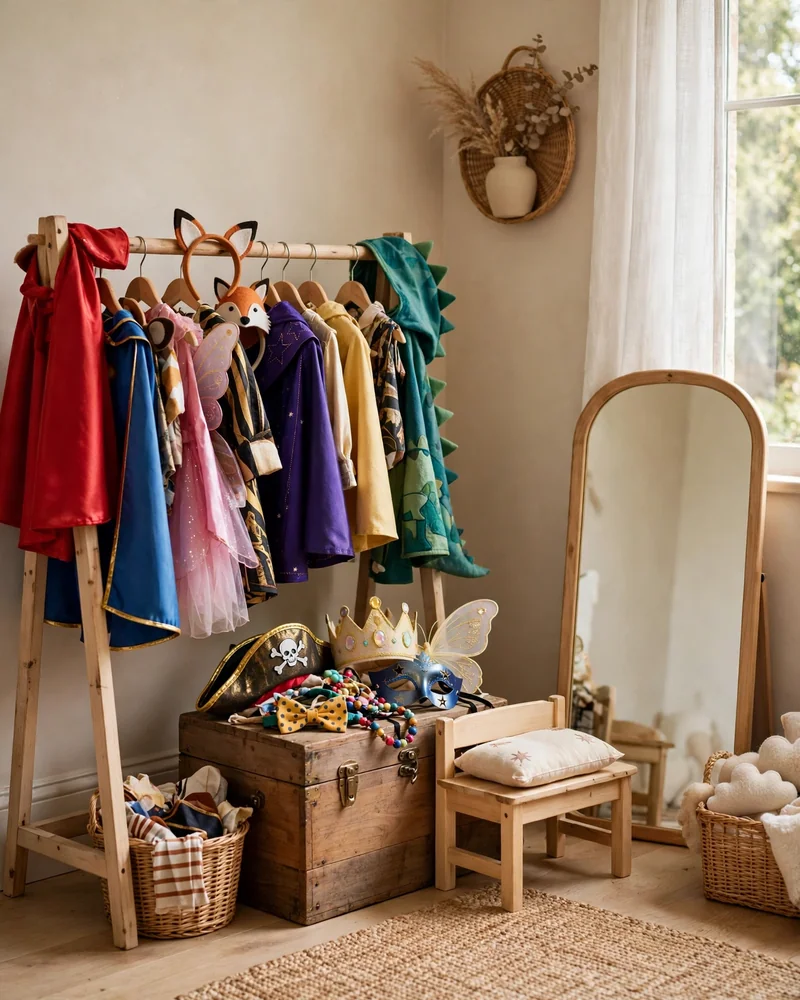
Dress-up play is a childhood essential, and a dedicated corner keeps costumes from swallowing the whole room. A low clothing rack with costumes, capes, and hats, plus a small trunk for accessories and a child-safe mirror, creates an irresistible invitation to pretend. This is one of those kids playroom ideas that costs almost nothing but delivers hours of imaginative adventures daily.
Keep the collection edited: rotate costumes seasonally and store off-season outfits elsewhere so the rack never overflows. A small bench or stool beside the mirror gives kids a spot to sit while transforming, and a labeled bin for crowns, wands, and masks keeps the little pieces contained. The dress-up corner doubles as a reading-aloud stage or puppet theater spot, making it one of the hardest-working small zones in the playroom.
13. A Building Zone for Little Architects

Blocks, LEGO, and magnetic tiles deserve their own dedicated building zone — it’s where some of the deepest play happens. A low table or a large play mat on the floor defines the space, with sorted storage nearby: clear divided bins for LEGO by color, trays for magnetic tiles, and a basket for wooden blocks. Kids build longer when they can spread out without their creations getting trampled.
One of the smartest playroom ideas for builders is a “save shelf” — a designated spot where unfinished creations can live untouched until tomorrow. It teaches respect for ongoing work and prevents the frustration of a build getting cleared away mid-project. A wipeable mat under the zone makes cleanup of stray pieces fast, and sorting bins by color or type turns end-of-day cleanup into part of the play.
14. Multifunctional Furniture That Hides the Mess

Multifunctional furniture is the secret weapon of an organized playroom: every piece works twice as hard. Storage ottomans hide toys while providing extra seating, a window bench with lift-up storage becomes a reading spot, and a craft table with built-in drawers keeps supplies contained. These pieces are especially powerful in small playrooms or in shared living spaces that double as play areas.
Look for closed storage disguised as beautiful furniture — a handsome cabinet that swallows board games, a coffee table with hidden compartments, a daybed with drawers for dress-up clothes. When the mess can disappear behind a door in thirty seconds, the room stays guest-ready and you stay sane. Bonus: pieces that grow with kids, like an adjustable-height table that shifts from toddler crafts to homework, stretch your investment for years.
15. A Display Rail for Your Kids’ Masterpieces
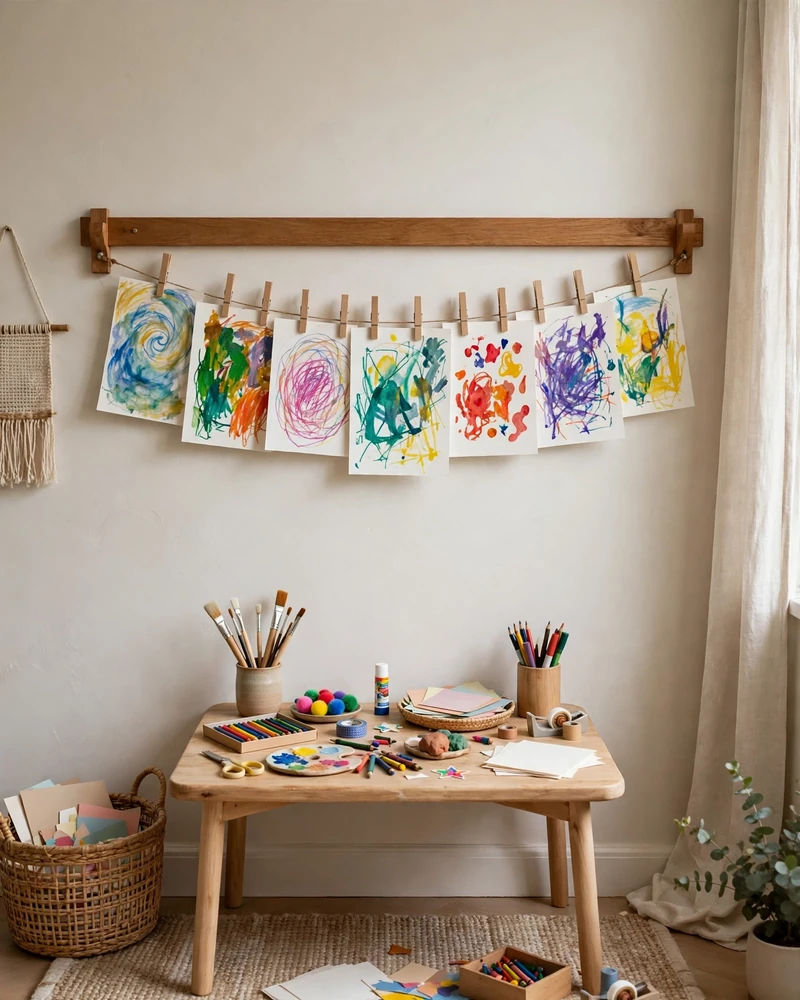
Every playroom needs a gallery, and a display rail is the simplest, most charming way to give kids’ art the spotlight. Mount a wooden picture ledge or a wire with clips at kid height, and let children hang their latest creations themselves. Swapping the display is easy, which keeps the wall feeling fresh and gives kids a genuine sense of pride and ownership over their space.
This small touch solves a real problem, too: instead of artwork piling up on tables and counters, every new piece gets a designated showcase spot. Rotate the display weekly, photographing favorites before they cycle out to make room. Pair the rail with the art zone so finished work flows straight from the table to the wall. It’s a small detail with a big emotional payoff — kids who see their work celebrated create more of it.
Frequently Asked Questions
How do I organize a small playroom?
Start by decluttering and keeping only what your kids actually use, then think in zones and think vertical. Low open shelves at kid height, labeled bins grouped by activity, and wall-mounted storage keep the floor clear for play. A toy rotation system is especially powerful in small playrooms — with fewer toys out at once, the room stays manageable and cleanup takes minutes instead of hours.
What zones should a playroom have?
The most useful playroom zones are an active zone (climbing, building, open floor play), a creative zone (art table, craft supplies, building materials), and a quiet zone (reading nook, puzzles). You can define zones with rugs, low shelving, or furniture placement rather than walls. Even a small playroom can hold two or three mini-zones if you keep furniture low and flexible.
How many toys should you keep in a playroom?
Less than you think. Most families find that a curated selection of 10 to 20 open-ended toys out at a time leads to deeper, more focused play than a room full of options. Store the rest out of sight and rotate them every few weeks. Fewer choices reduce overwhelm for kids and make tidying dramatically faster — and favorites always feel new again after a break.
How often should I rotate my kids’ toys?
Every two to four weeks works well for most families, though there’s no rigid rule — rotate based on interest and clutter rather than a schedule. Watch for signs like toys being ignored, the room feeling overwhelming, or cleanup taking too long. Keep a few all-time favorites out permanently and rotate the rest from your storage stash.
What is the best color for a playroom?
A warm neutral base — creams, warm beiges, soft grays, and natural wood tones — is the most versatile choice, since it stays calm and lets you layer color through rugs, art, and toys. If you want color on the walls, 2026’s favorites are sage green, terracotta, and deep blue, used as intentional color blocking rather than all-over rainbow. These shades feel energetic yet timeless and work from toddler years through elementary school.
Conclusion
A playroom that is both fun and organized is absolutely within reach — and it doesn’t require a designer budget. Start with the bones: defined zones, kid-height storage, and a calm neutral base. Then layer in the personality: a cozy reading nook, a chalkboard wall, a vintage toy shelf, and color blocking that makes the room sing. The real magic happens when organization becomes part of the design, so cleanup feels natural instead of like a chore.
Pick two or three ideas from this list to start with, and build from there as you see what your kids gravitate toward. Small changes like a toy rotation system or a display rail can transform how the room feels almost overnight. However you approach it, remember that the best playroom is one where kids play independently, creativity flows freely, and the evening cleanup takes minutes — here’s to many happy, organized play sessions ahead.
Emma Carter is the founder and writer behind NestStyleLiving.com, where she shares practical, budget-friendly home decor ideas. She believes every room should work beautifully for real life — especially rooms built for little kids and their big imaginations.
Looking for more kids’ space inspiration? Check out these favorites from NestStyleLiving.com: