19 Winter Window Box Ideas That Add Instant Charm
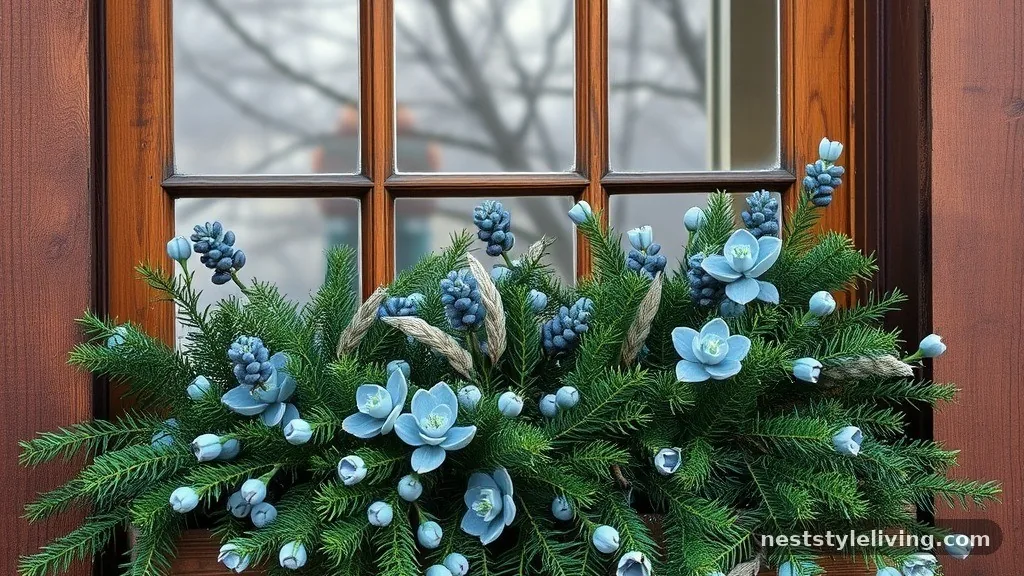
Transforming your home’s exterior during the colder months is easily achieved through carefully curated winter window box ideas that add instant charm. While many homeowners clear their containers after the first frost, these displays offer a perfect opportunity to celebrate the seasonal transition. By layering textures, incorporating hardy greenery, and utilizing unexpected natural elements, you can ensure your home remains inviting even when temperatures drop.
These design concepts focus on durability, aesthetics, and seasonal flair to help you maintain a polished look through the harshest months of the year. Whether you prefer a minimalist approach or a festive, maximalist display, these nineteen concepts provide the inspiration needed to refresh your curb appeal.
1. Noble Fir and Eucalyptus Cascade
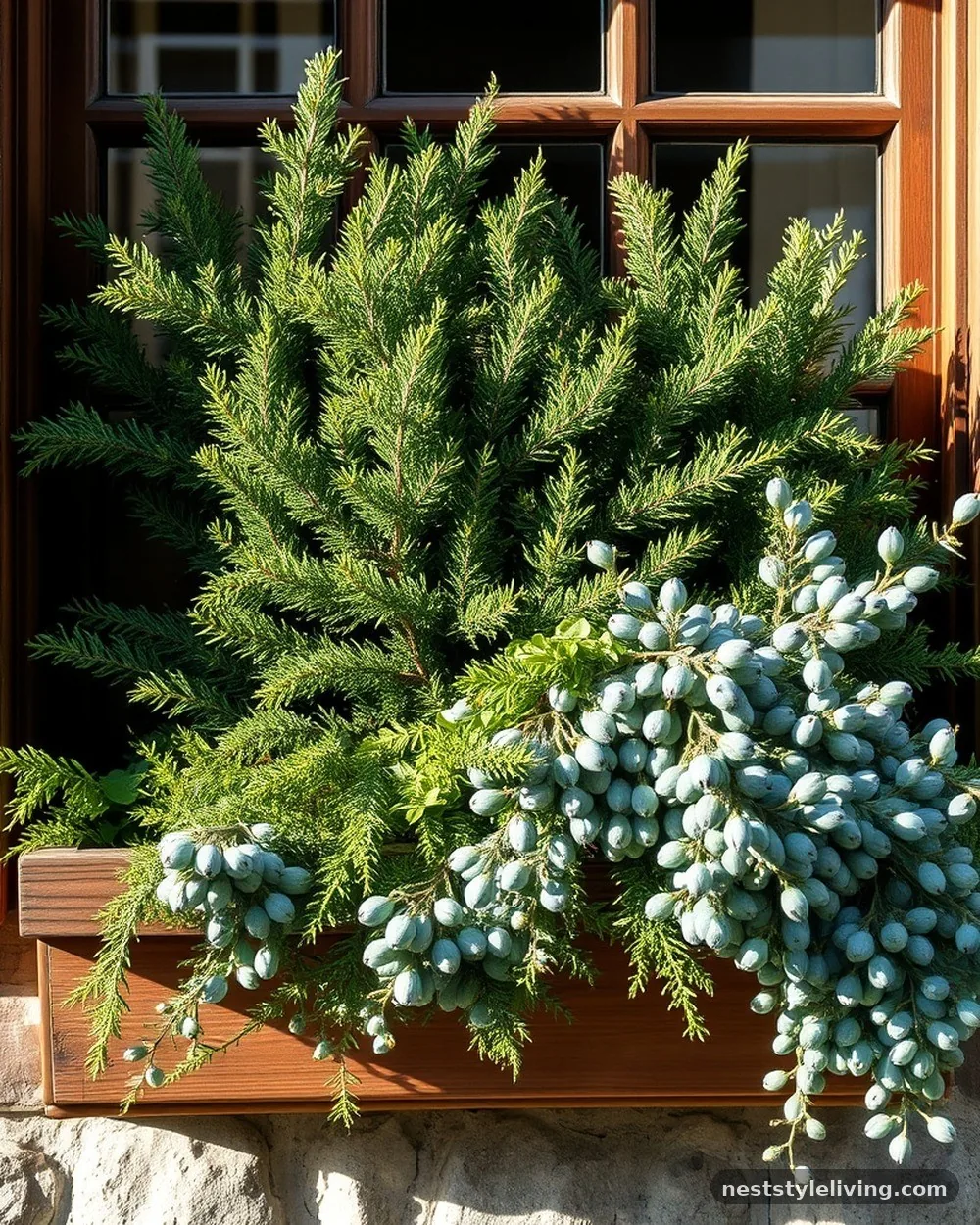
This classic combination relies on the deep, cool-toned needles of Noble fir paired with the dusty, silver-blue leaves of seeded eucalyptus. The fir provides a dense, structural base that holds up well against freezing winds, while the eucalyptus adds a softer, more organic movement that drapes gracefully over the front of the box.
This pairing feels sophisticated and professional, often seen on historic homes where a refined, evergreen look is preferred over bright holiday colors. The contrast between the dark, waxy needles and the matte, rounded eucalyptus leaves creates a high-end visual texture that remains vibrant throughout the entire season.
To keep this display fresh, insert the stems into floral foam soaked in an anti-desiccant spray or simply push them directly into damp soil. If you live in an area with frequent freeze-thaw cycles, use floral wire to anchor the heavier fir branches to the window box frame to prevent them from shifting during heavy wind or snow events.
2. Boxwood and Berry Clusters
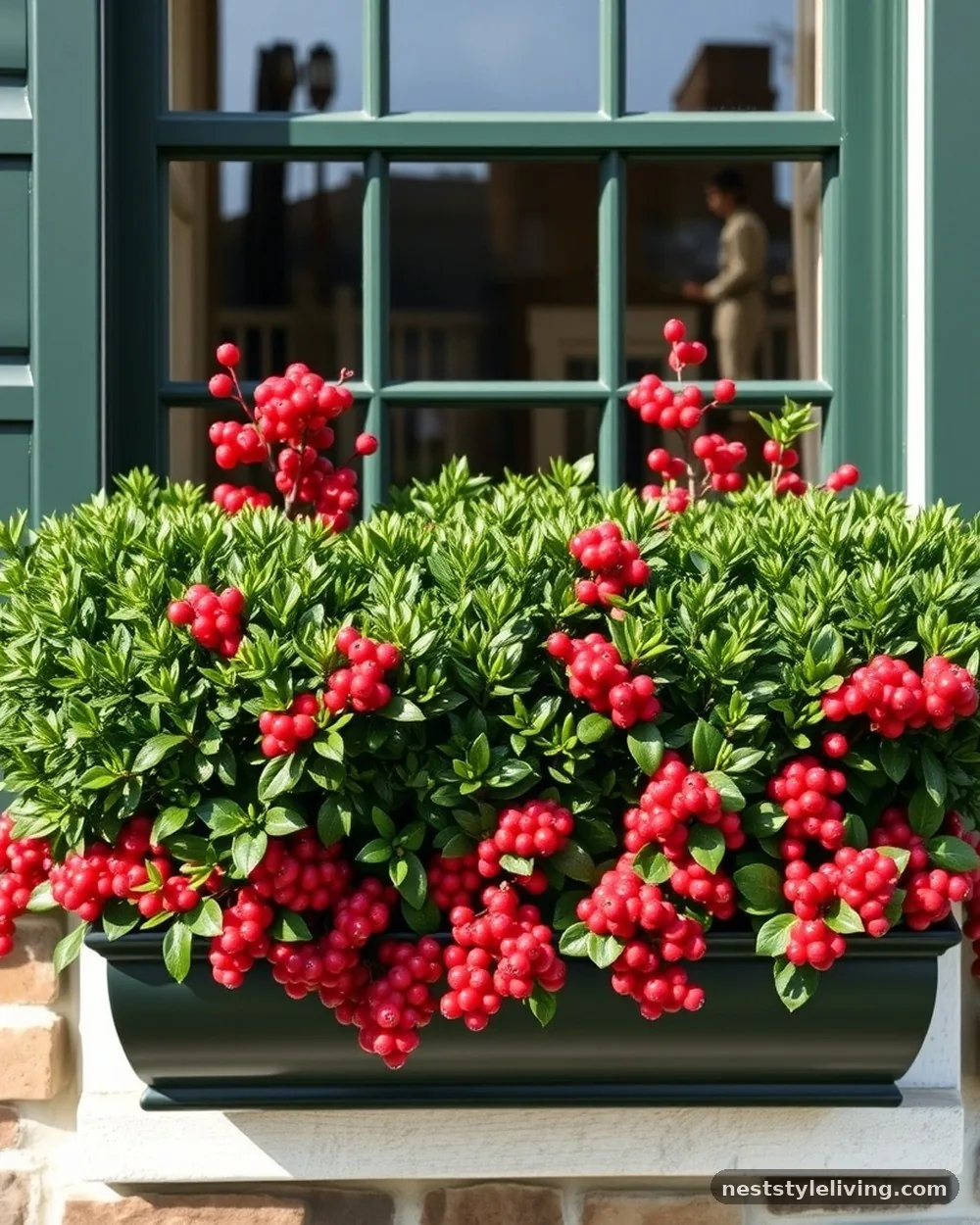
Boxwood is the gold standard for formal, year-round window box structure because of its tight, glossy foliage that remains green even in deep winter. By interspersing clusters of artificial or preserved red winterberry stems, you create a high-contrast look that feels traditional and cheerful.
The dark green of the boxwood acts as a neutral canvas, allowing the vibrant red berries to pop, which draws the eye directly to your windows. This combination is particularly effective for colonial or cottage-style homes where symmetry and clean lines are prioritized.
When installing, ensure you use high-quality faux berries with wire stems, as real berries may attract birds or succumb to rot too quickly. Place the boxwood sprigs in a grid pattern first, then tuck the berry clusters into the gaps to create a balanced, intentional appearance that looks like a miniature hedge.
3. White Birch Logs and Pinecones
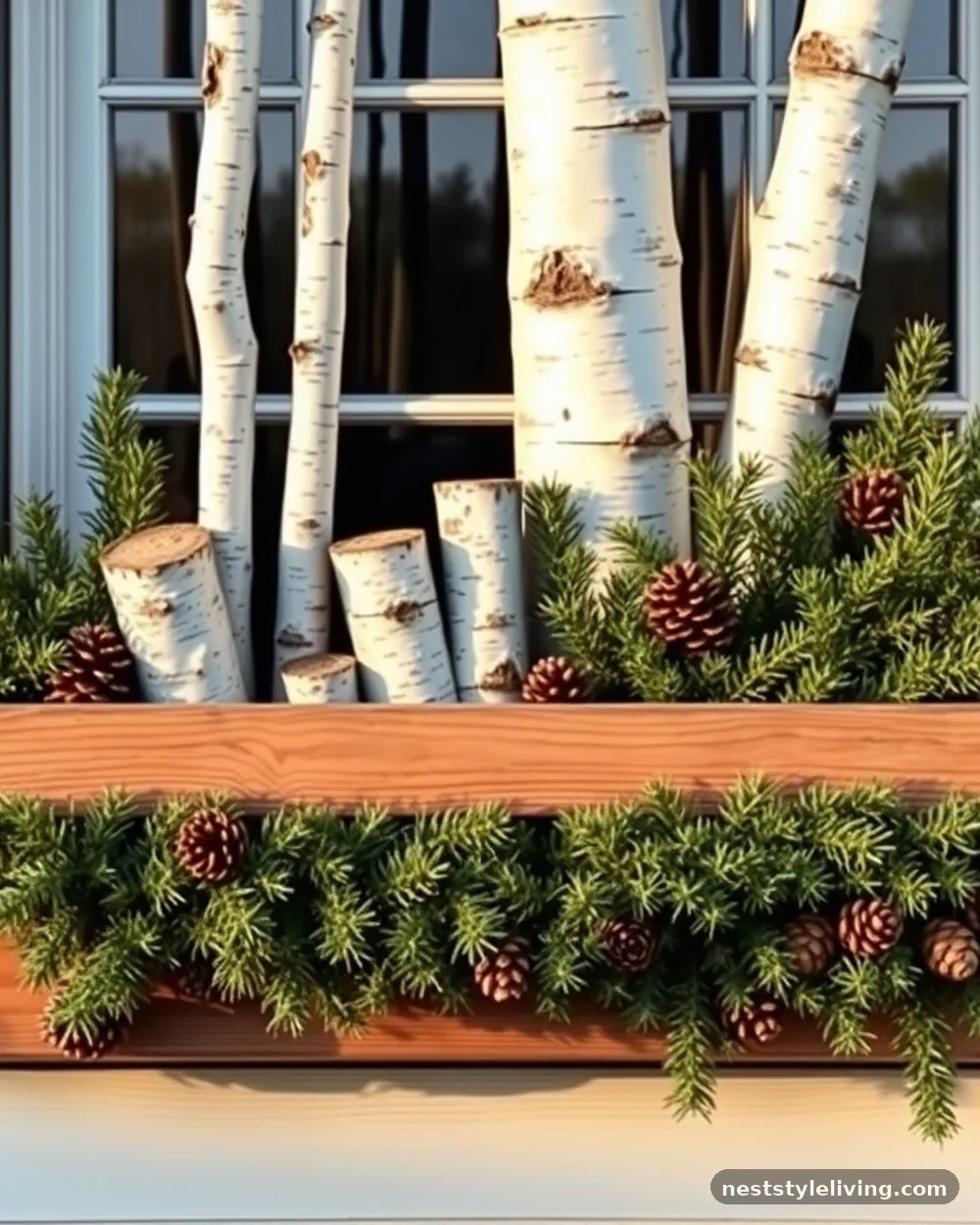
For a rustic, woodland aesthetic, nothing beats the stark, vertical contrast of white birch logs placed upright in your window box. The bright, papery bark of the birch stands out beautifully against a backdrop of dark evergreen boughs, adding a sense of height and architectural interest.
Surround the base of the logs with large, oversized pinecones and smaller hemlock cones to create a textured, earthy foundation. This display works exceptionally well for mountain homes or cabins, as it mirrors the natural landscape and feels grounded rather than overly decorated.
To stabilize the logs, secure them to the back of the window box using zip ties or heavy-duty outdoor wire. Once the logs are vertical and secure, fill the remaining space with pine boughs and tuck the pinecones into the soil or foam to ensure they don’t blow away during winter storms.
4. Dried Hydrangea and Ornamental Grasses
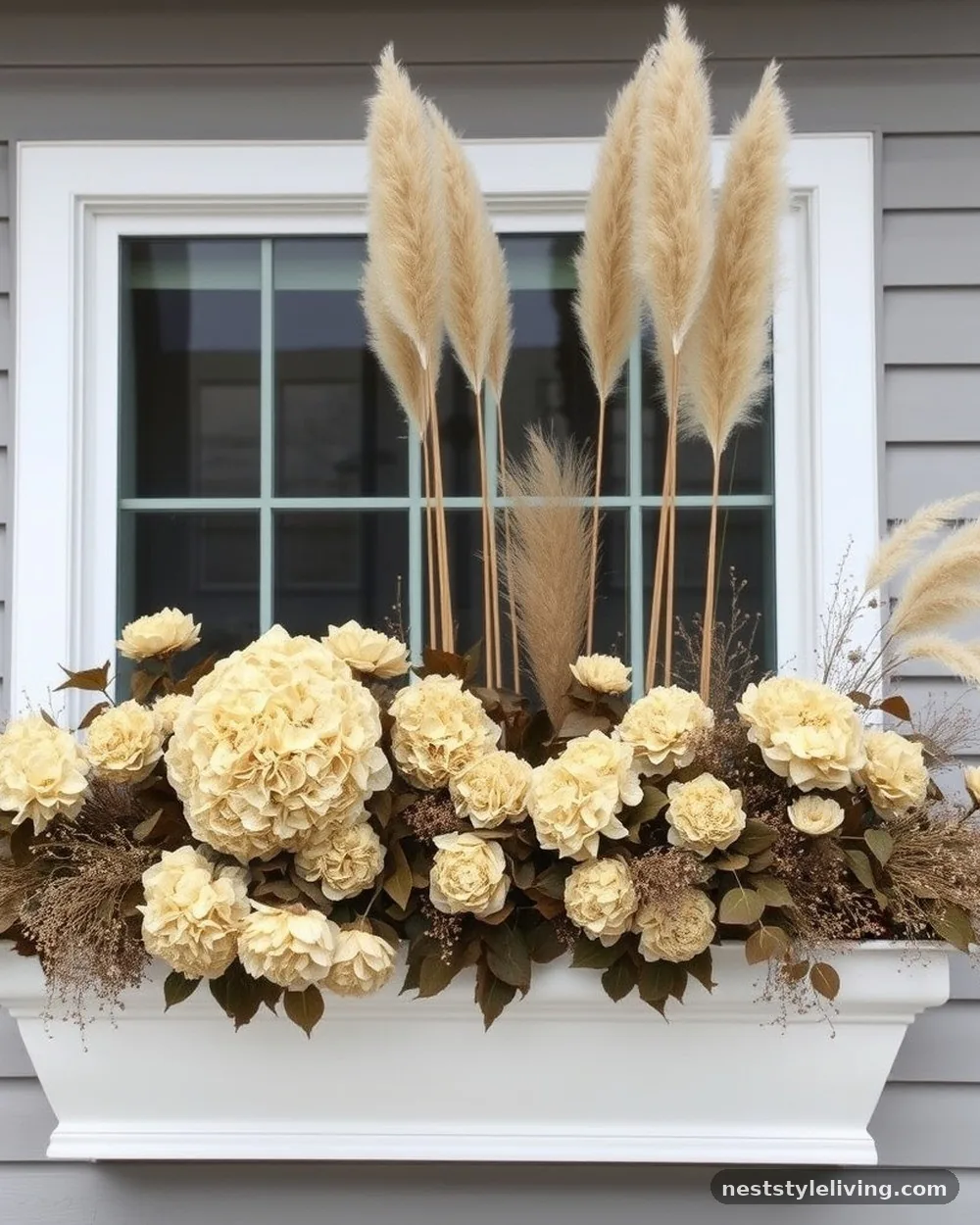
If you prefer a muted, monochromatic palette, using dried hydrangea heads from your summer garden creates a stunning, ethereal effect. The faded, parchment-like petals of the hydrangea bring a vintage, soft quality to the window box, especially when paired with tall, feathery ornamental grasses like miscanthus or fountain grass.
This look is sophisticated and understated, moving away from traditional holiday colors in favor of soft creams, tans, and dusty purples. It is an ideal choice for a home with a neutral exterior color palette, such as grey, white, or light blue siding.
Harvest your hydrangea heads after they have begun to dry on the bush but before they turn brittle. Spray them with a light coat of clear floral sealant to protect them from moisture, then arrange them in the center of the box, surrounding them with the upright, swaying grasses for movement and height.
5. Cedar Sprigs and Copper Accents
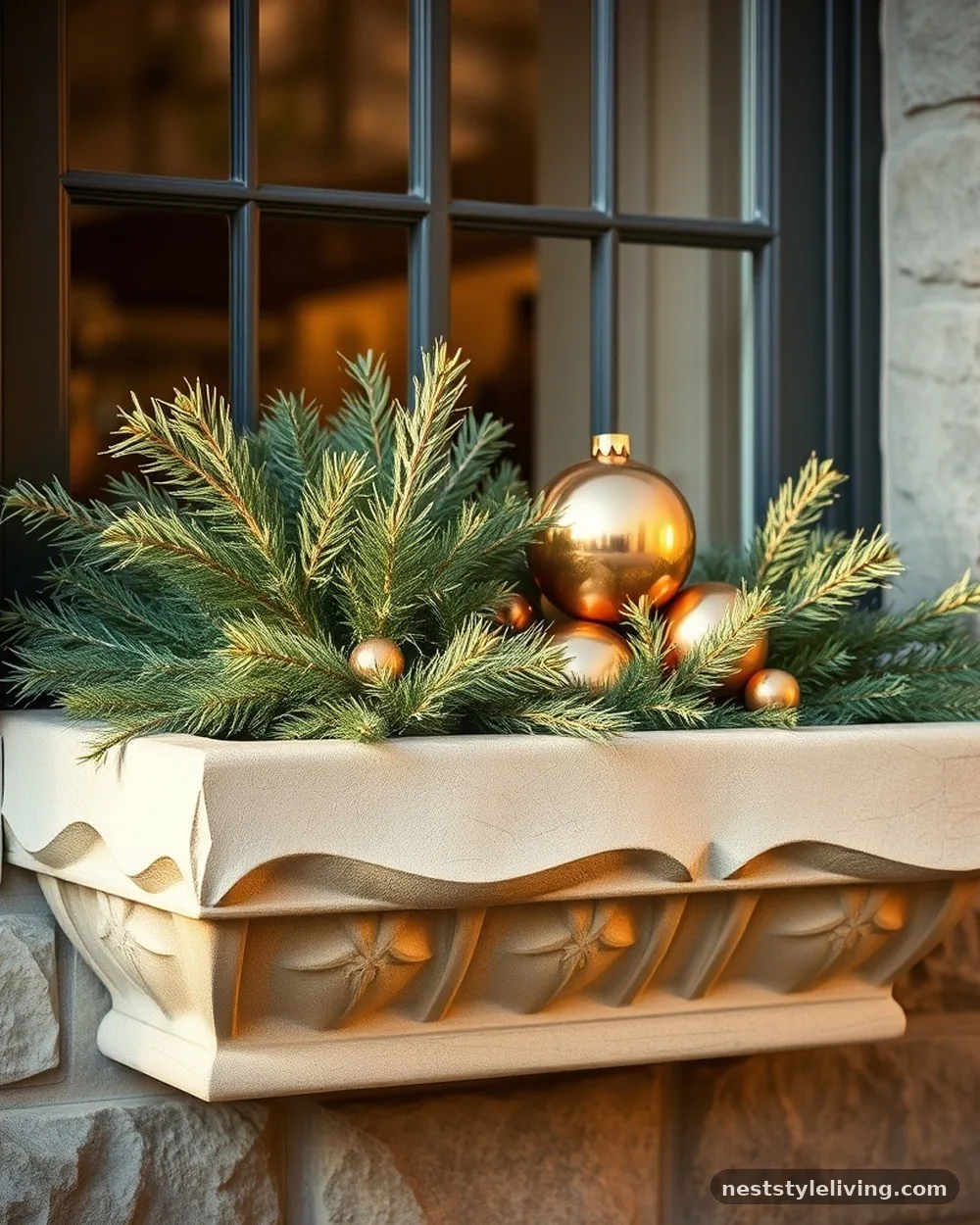
Cedar offers a wonderful, feathery texture and a pleasant scent, making it a favorite for winter arrangements. When paired with copper ornaments or metallic ribbon, the warm tones of the copper reflect the low winter sunlight, adding a cozy, glowing quality to the display.
The combination of the warm metal and the cool green cedar creates a balanced, inviting look that feels luxurious without being garish. This style is particularly well-suited for homes with brick or stone facades, as the copper complements the natural earth tones of the architecture.
Use copper wire to wrap bundles of cedar together, then place these bundles into the box. Incorporate copper-colored spheres or ribbons near the front edge so that they catch the light, ensuring the arrangement looks as good at dusk as it does in the bright morning sun.
6. Juniper and Silver Sage
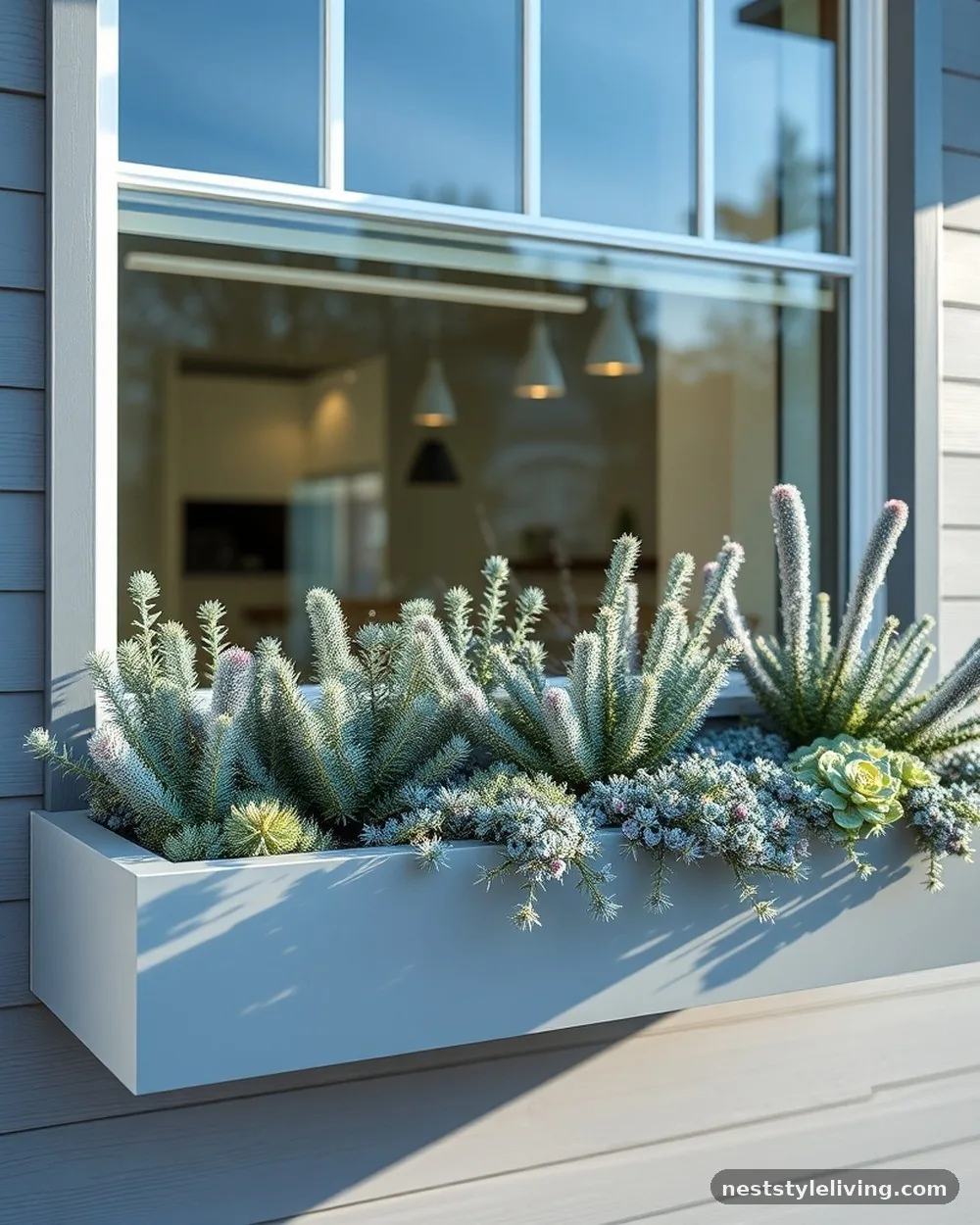
Juniper is famous for its dusty, blue-green berries and prickly, needle-like foliage, which creates a rugged, wintry appearance. When paired with silver sage, which maintains its cool, metallic color through the coldest months, the overall effect is icy and modern.
This is a perfect choice for minimalist or contemporary homes that want to embrace the winter theme without relying on traditional red and green colors. The silver and blue hues feel crisp and clean, reflecting the colors of a snowy landscape even when no snow is on the ground.
Layer the juniper at the back of the box to provide height, and place the silver sage near the front so its distinct, light-reflecting leaves are prominent. If you find the juniper too prickly to work with, wear heavy gardening gloves to prevent scratches while you trim the branches to the desired length.
7. Magnolia Leaves and Gold Ribbon
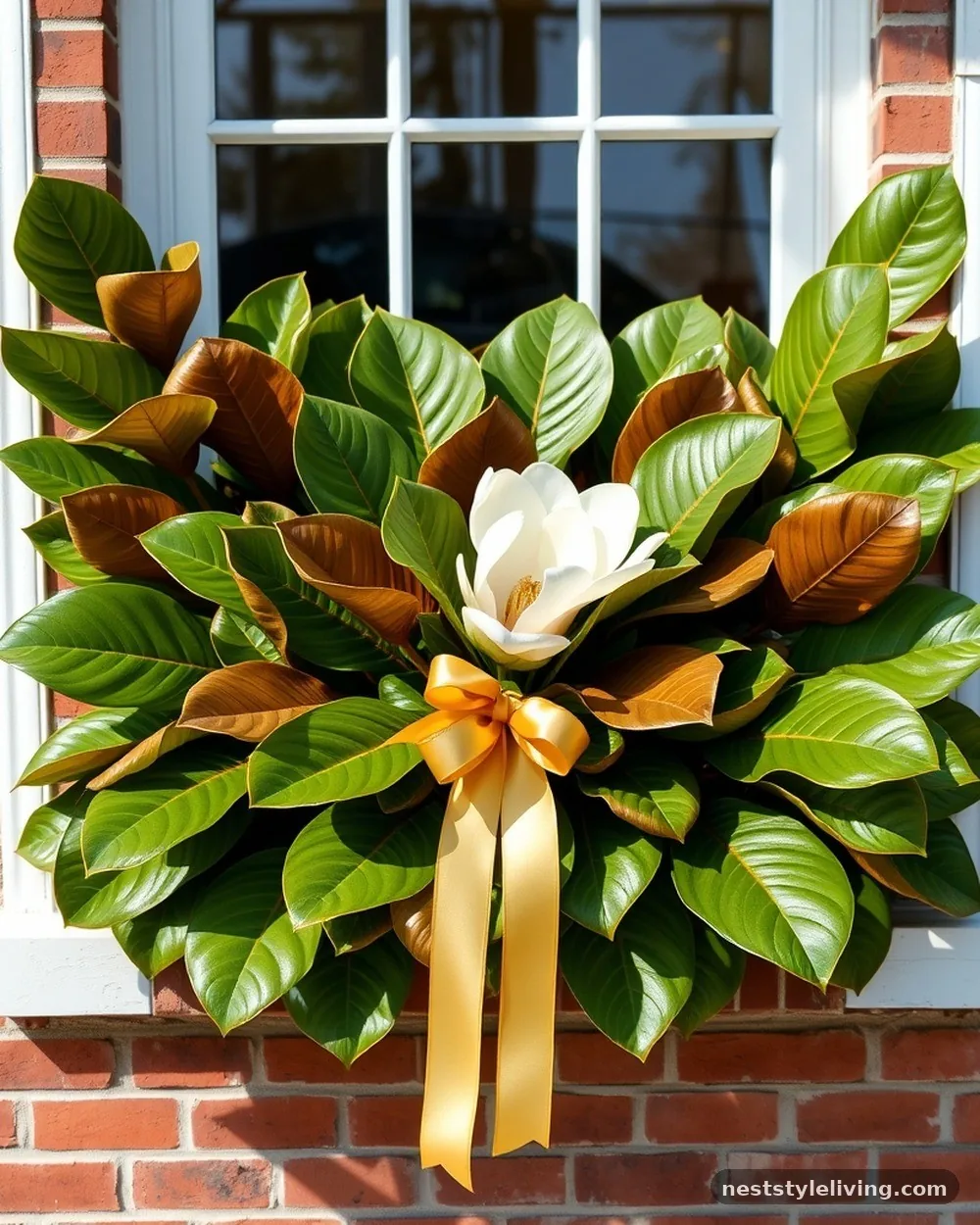
Magnolia leaves are a classic choice for winter decor because of their dual-toned nature: a rich, glossy green on the top and a soft, fuzzy, bronze-brown on the underside. By flipping some of the leaves to show the bronze side, you create a rich, multi-dimensional look that feels expensive and timeless.
Adding a simple, wide gold ribbon woven through the leaves adds a touch of elegance that shines against the dark foliage. This combination works beautifully on traditional brick homes, adding a sense of Southern charm and warmth to the winter exterior.
Preserve your magnolia leaves by soaking them in a mixture of one part vegetable glycerin to two parts water for several days before using them. This keeps the leaves supple and prevents them from curling or turning brown, allowing your display to look fresh and lush for the entire season.
8. Red Twig Dogwood and Winterberry
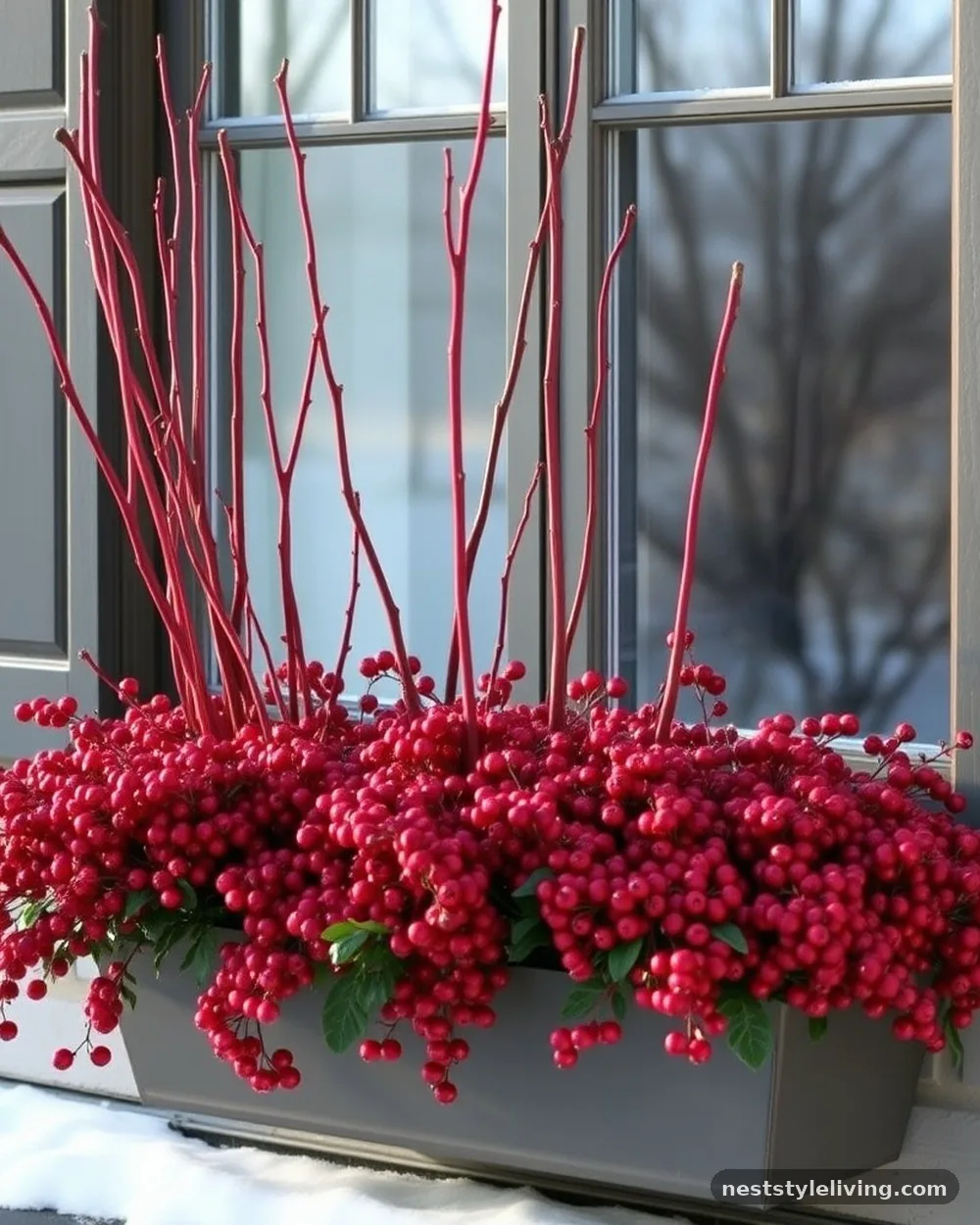
The intense, vibrant red of dogwood stems provides a striking vertical element that looks like glowing embers against a snowy backdrop. By grouping these stems with bundles of winterberry, you create a high-energy, festive display that is impossible to miss.
The verticality of the dogwood stems adds necessary height to the window box, preventing it from looking flat or sunken. This is an excellent choice for a home that needs a pop of color to break up a dark or monochromatic exterior paint scheme.
Cut the dogwood stems to varying heights to create a natural, forest-like appearance. Push them deep into the soil or floral foam to ensure they stay upright, then fill the gaps with shorter sprigs of pine and winterberry to create a dense, full look that covers the container entirely.
9. Spruce Tips and Frosted Glass Ornaments
Spruce tips are the foundation of many professional-grade winter window boxes because they are incredibly dense and offer a classic “Christmas tree” look. Elevating this look with frosted glass ornaments adds a magical, wintry sparkle that catches the light beautifully.
The frosted finish of the ornaments mimics the look of ice, making the display feel integrated with the winter environment. This style works best for homeowners who want a festive look that isn’t too bright or overwhelming, focusing instead on texture and subtle light play.
Use glass ornaments with secure metal caps and wire them directly onto the spruce branches. Avoid placing the ornaments too close to the edge of the window box where they might get knocked off by wind or neighborhood pets, and choose shatterproof frosted plastic if you live in a high-traffic area.
10. Norfolk Island Pine and Velvet Bows
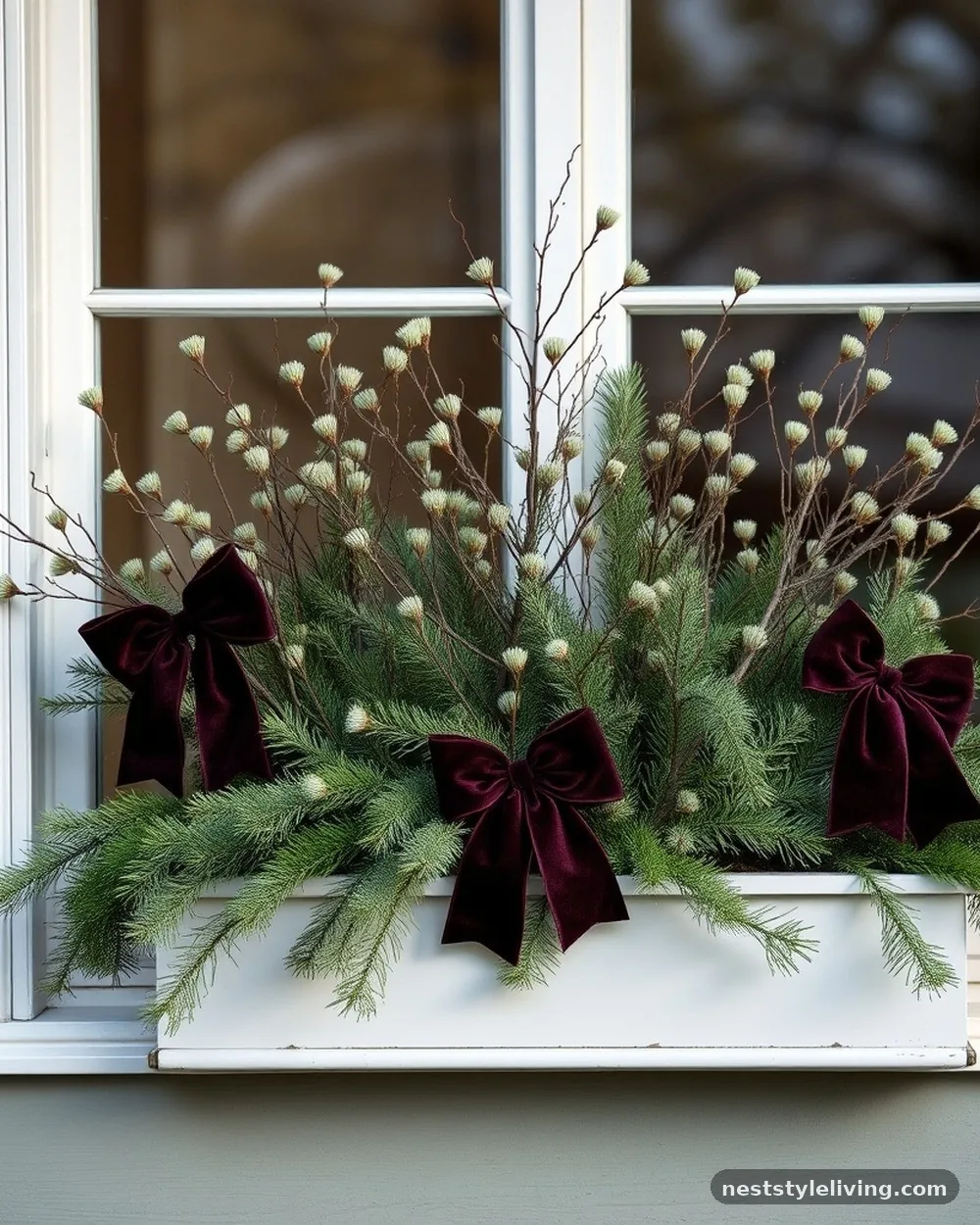
Norfolk Island pine is a softer, more delicate-looking evergreen that adds a touch of grace to any window box display. When paired with large, deep burgundy or forest green velvet bows, the look becomes sophisticated and cozy.
The softness of the velvet contrasts with the needle-like texture of the pine, creating a tactile experience that feels very high-end. This design is perfect for homes with classic architecture, as it feels nostalgic and intentional, reminiscent of traditional holiday decor from decades past.
Secure the velvet bows to the front of the window box using floral wire, ensuring they are protected from heavy rain by tucking them slightly under the overhang of the box. Use water-resistant velvet ribbon to ensure the material maintains its shape and color even when exposed to snow or damp, foggy weather.
11. Holly Branches and Pinecone Sprigs
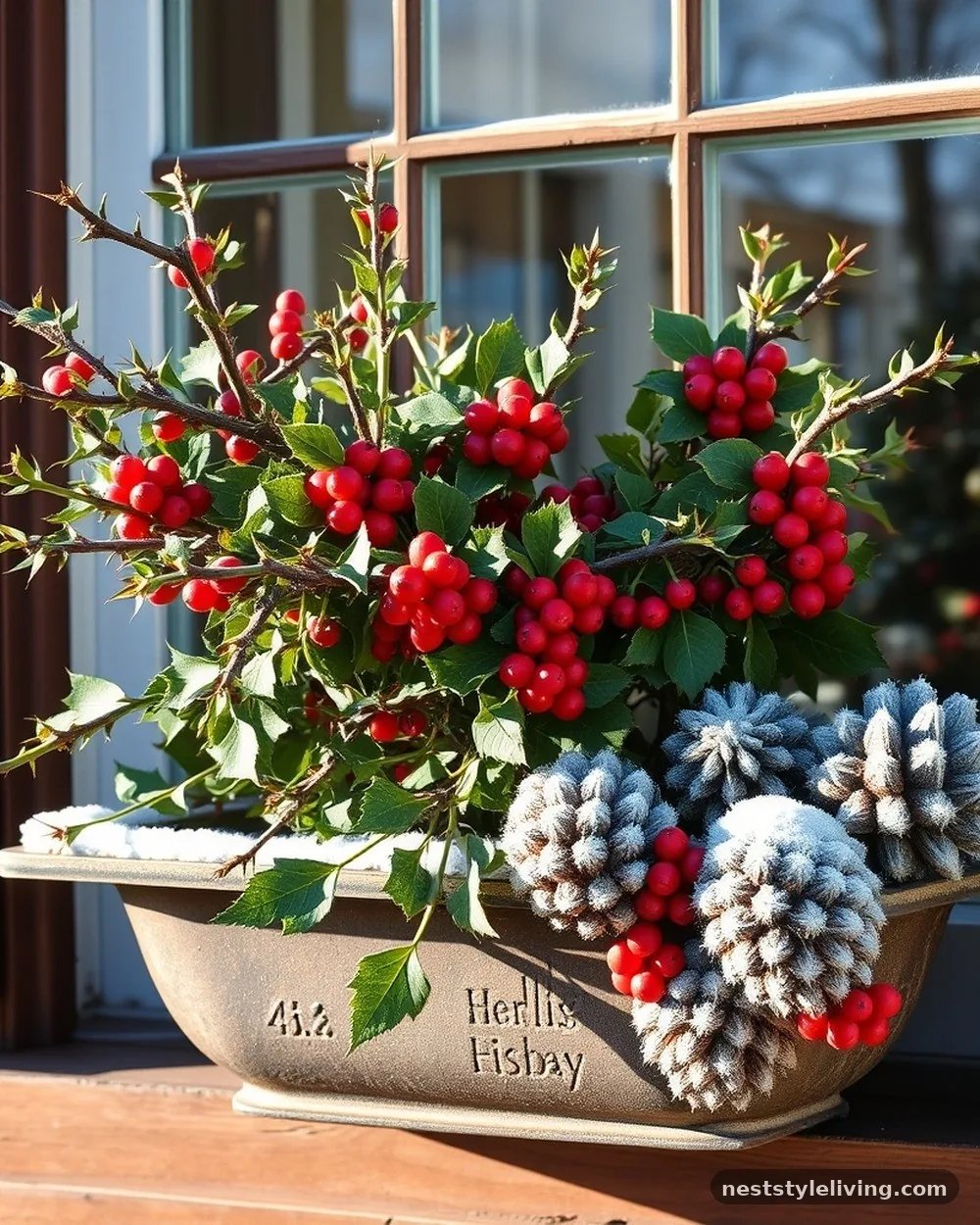
Holly is synonymous with winter, and its jagged, glossy leaves and bright red berries provide a natural, festive display. By keeping the arrangement simple—just holly branches mixed with a few large, dusted pinecones—you create a clean, classic look that never goes out of style.
The sharp edges of the holly leaves provide a nice contrast to the rounded shape of the pinecones, creating a balanced, natural composition. This look is ideal for traditional, rustic, or farmhouse-style homes where natural elements take center stage.
Be sure to wear thick, puncture-resistant gloves when handling holly, as the leaves can be quite sharp. Trim the branches so they sit at different angles in the box, and tuck the pinecones in between the branches so they appear to be resting naturally within the greenery.
12. Leyland Cypress and Twinkling LED Lights
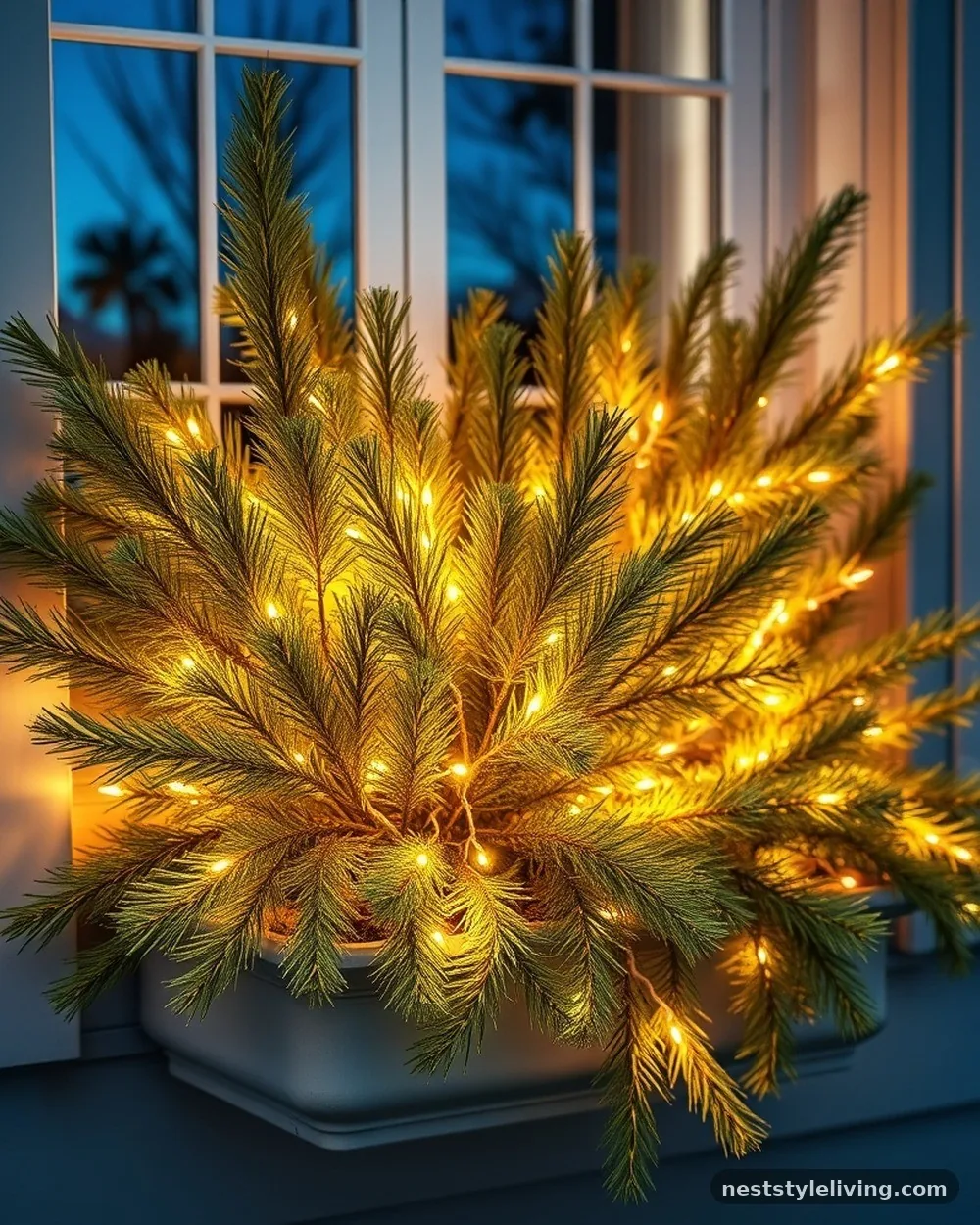
Leyland cypress is a fast-growing, feathery evergreen that is perfect for filling out a large window box. By weaving a string of battery-operated, warm-white LED lights through the branches, you add a warm glow that makes the exterior of your home feel incredibly welcoming.
The fine texture of the cypress hides the wires of the lights, leaving only the soft glow visible. This is a fantastic choice for homes in urban areas where you want to add a bit of light to the streetscape during the darkest months of the year.
Choose a set of lights with a built-in timer, so they automatically turn on at dusk and off after six hours. This saves battery life and ensures your window boxes are glowing exactly when you arrive home in the evening, creating a seamless and efficient outdoor lighting solution.
13. Eucalyptus and Dried Orange Slices
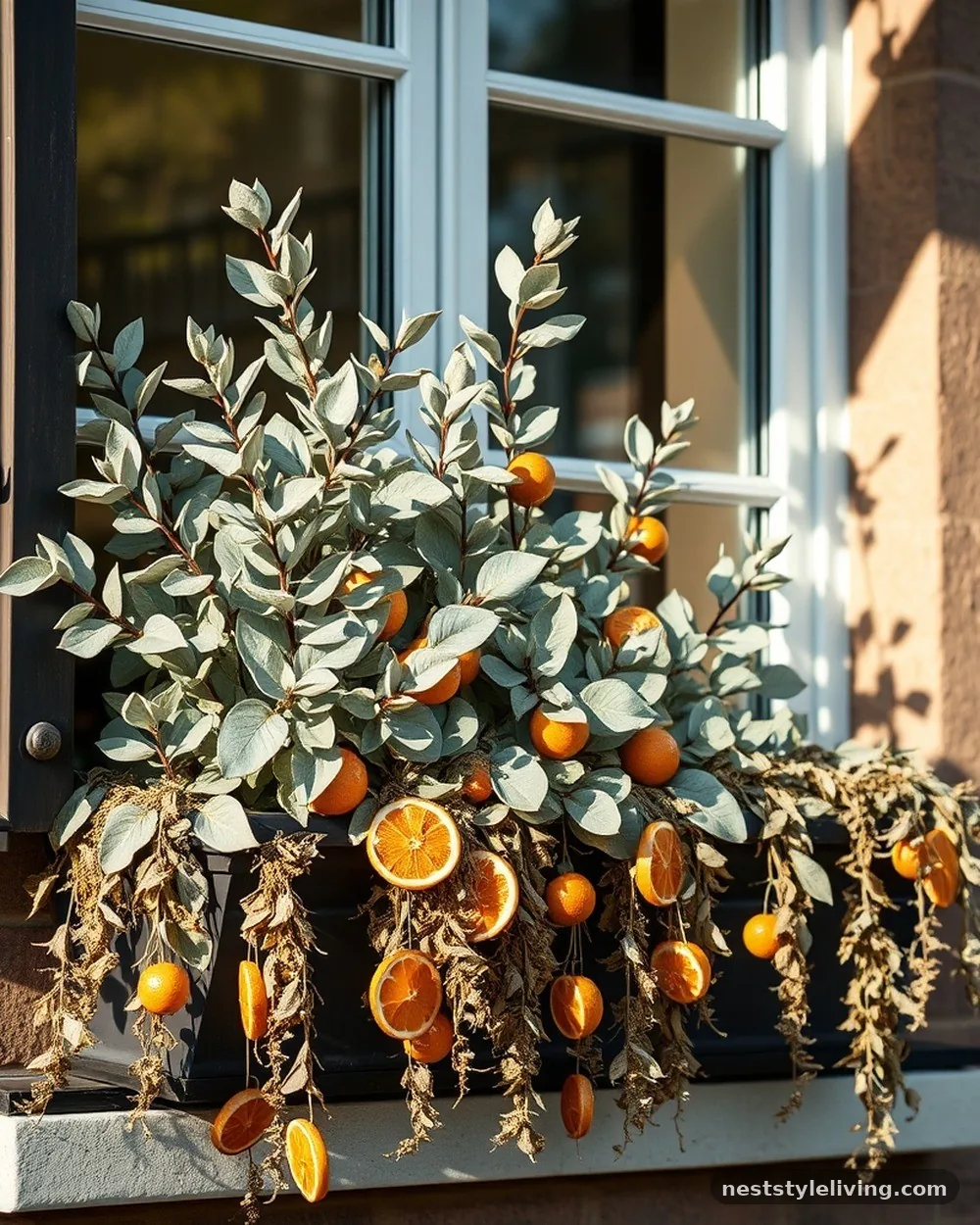
For a more modern, artisanal look, combine the silver-toned leaves of eucalyptus with dried orange slices strung on twine. The citrus adds a pop of bright, warm color that contrasts perfectly with the cool, dusty blue-green of the eucalyptus.
This display feels very intentional and crafted, perfect for a home with a modern or bohemian aesthetic. The dried oranges also offer a pleasant, subtle fragrance, which is a lovely surprise when you open the window near the box.
Dry your own orange slices by placing thin rounds on a parchment-lined baking sheet at a very low temperature in the oven for several hours. Once they are firm and dry, string them on twine and weave them through the eucalyptus branches, securing the ends to the corners of the window box.
14. Scotch Pine and Painted Branches
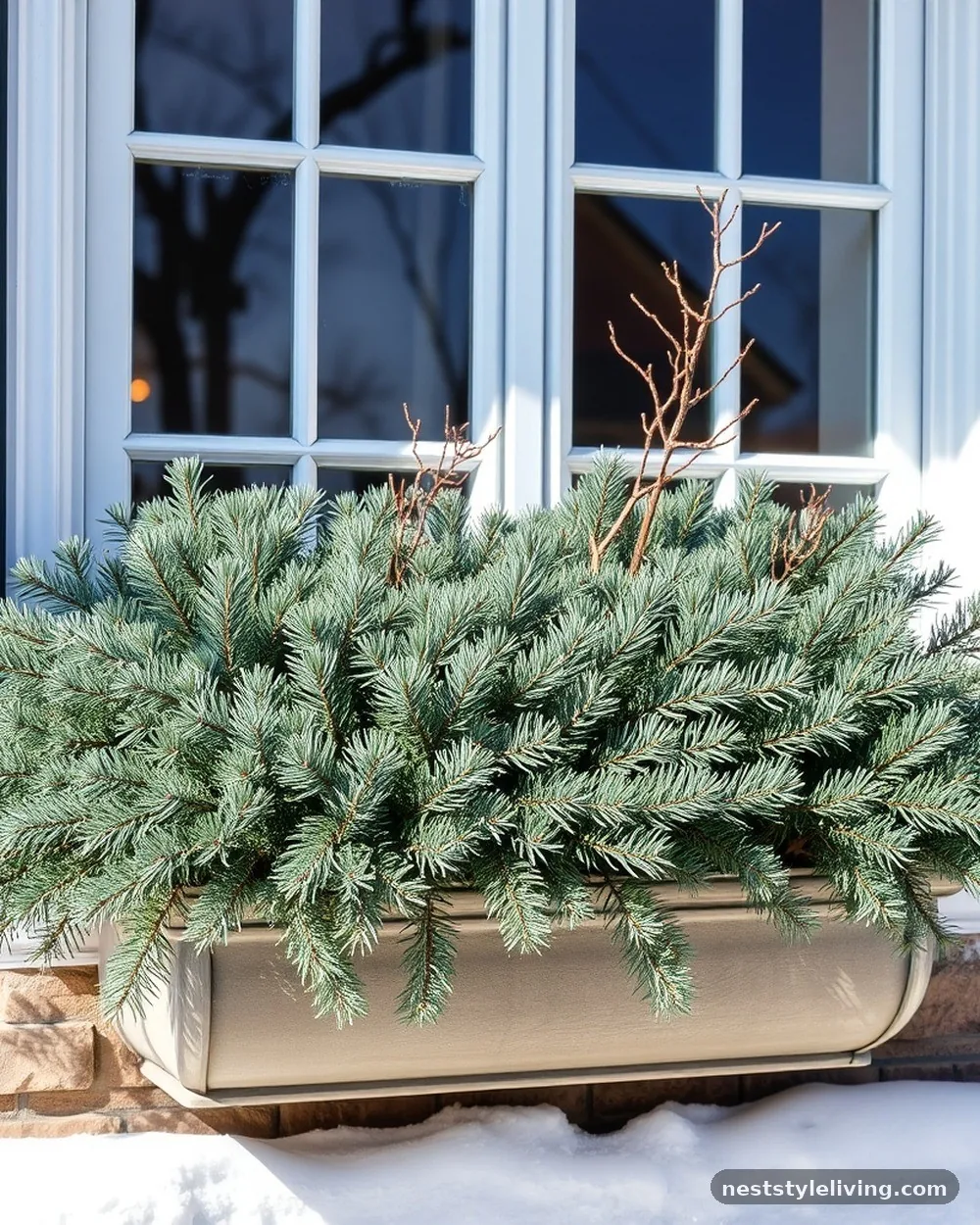
Scotch pine has a unique, bluish-green hue and a slightly twisted needle structure that adds character to any container. By adding a few branches that have been spray-painted gold or silver, you introduce a touch of glamour that elevates the natural greenery.
This creates a high-contrast look that feels both rustic and refined. It’s an excellent way to use branches you might have pruned from your own yard, giving them a new, metallic life for the winter season.
Use a high-quality metallic spray paint in a well-ventilated area, applying light, even coats to the branches. Once dry, insert the painted branches into the center of the window box as focal points, allowing the natural Scotch pine to surround them and provide a lush, textured base.
15. Hemlock and Birch Bark Accents
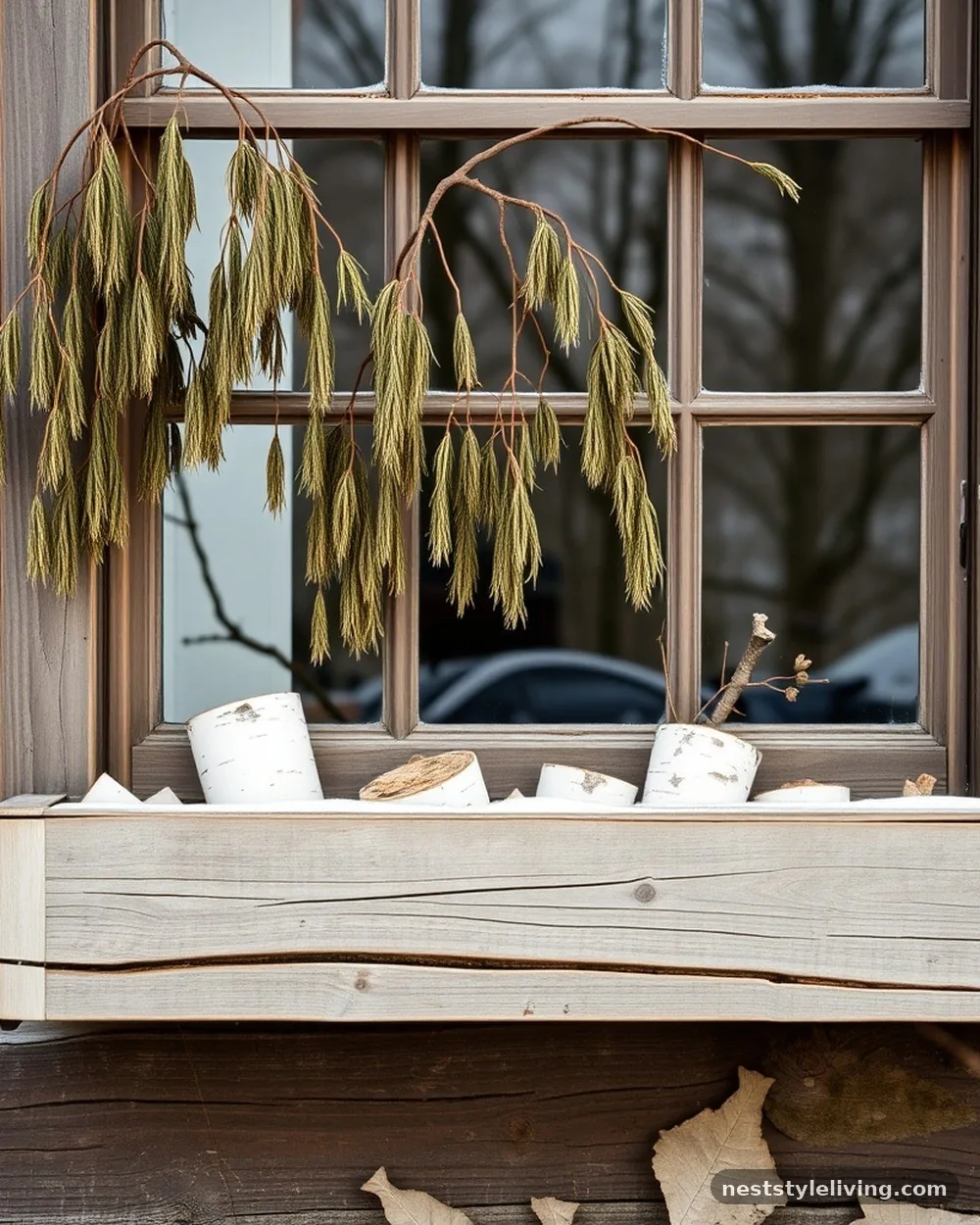
Hemlock is known for its delicate, soft needles and graceful, drooping branches, which make it perfect for the edges of a window box. By tucking pieces of birch bark into the soil between the hemlock sprigs, you create a layered, woodland-inspired look that feels very organic.
The contrast between the dark, soft hemlock and the bright, textured birch bark is visually striking and mimics the forest floor. This style is perfect for a cottage or cabin, adding a touch of natural, untamed beauty to your home’s exterior.
Collect fallen birch bark from your yard or purchase sheets from a craft store. Tear them into varying sizes and tuck them vertically into the soil near the front of the box, ensuring they are anchored well so they don’t shift when it gets windy or rainy.
16. Fraser Fir and Gilded Pinecones
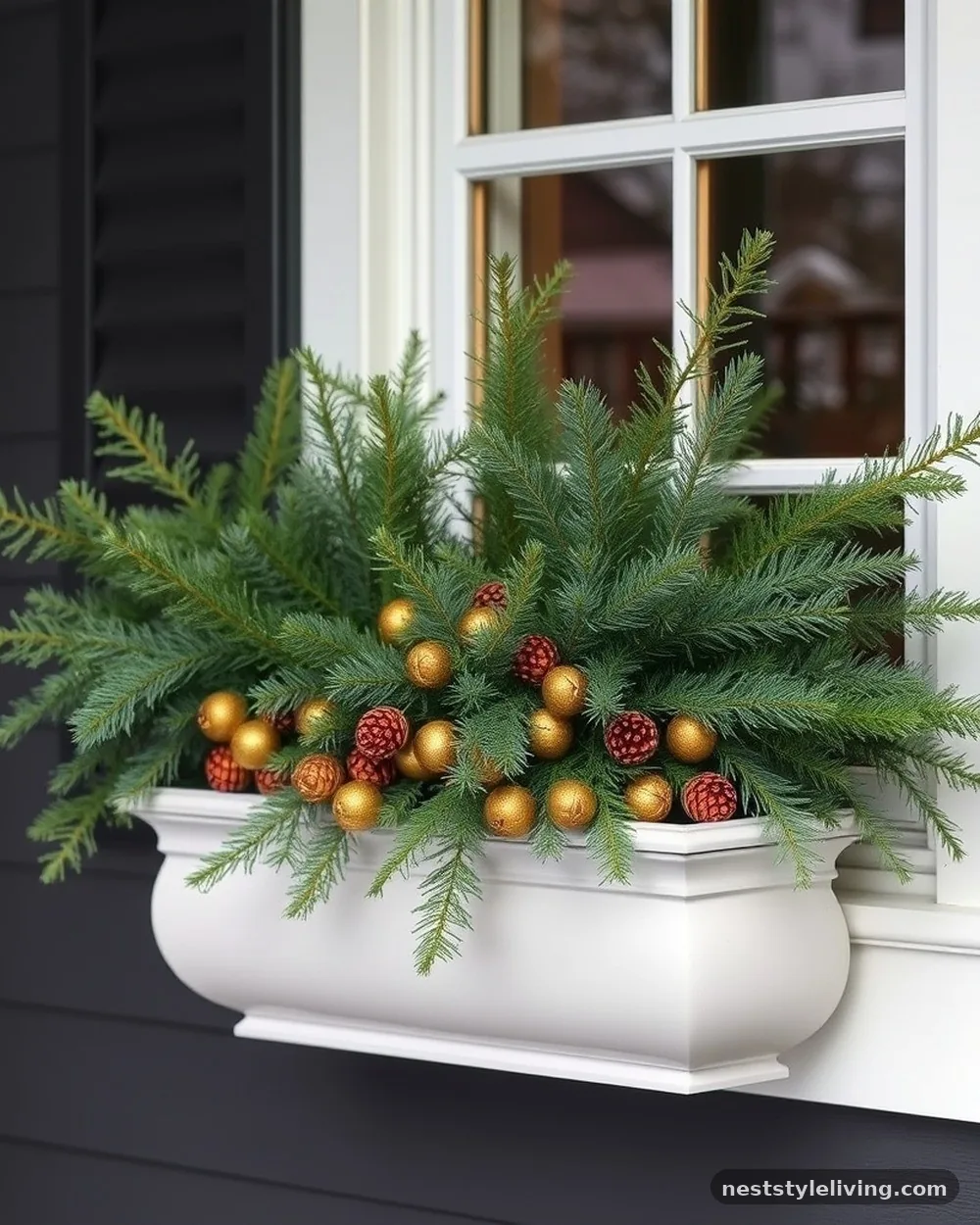
Fraser fir is perhaps the most popular holiday evergreen because of its excellent needle retention and deep, rich color. By taking standard pinecones and painting just the tips with gold or bronze paint, you create a sophisticated, shimmering accent that looks beautiful against the dense green fir.
This is a classic, upscale look that feels timeless and appropriate for any style of home. It’s a great way to add a bit of elegance to your outdoor space without needing to purchase expensive holiday decorations.
Use a small paintbrush to apply metallic paint to the edges of the pinecone scales, or simply dip the tips into a shallow container of paint. Let them dry completely before placing them into the fir branches, ensuring they are nestled securely so the gold tips catch the light.
17. Rosemary and Winterberry
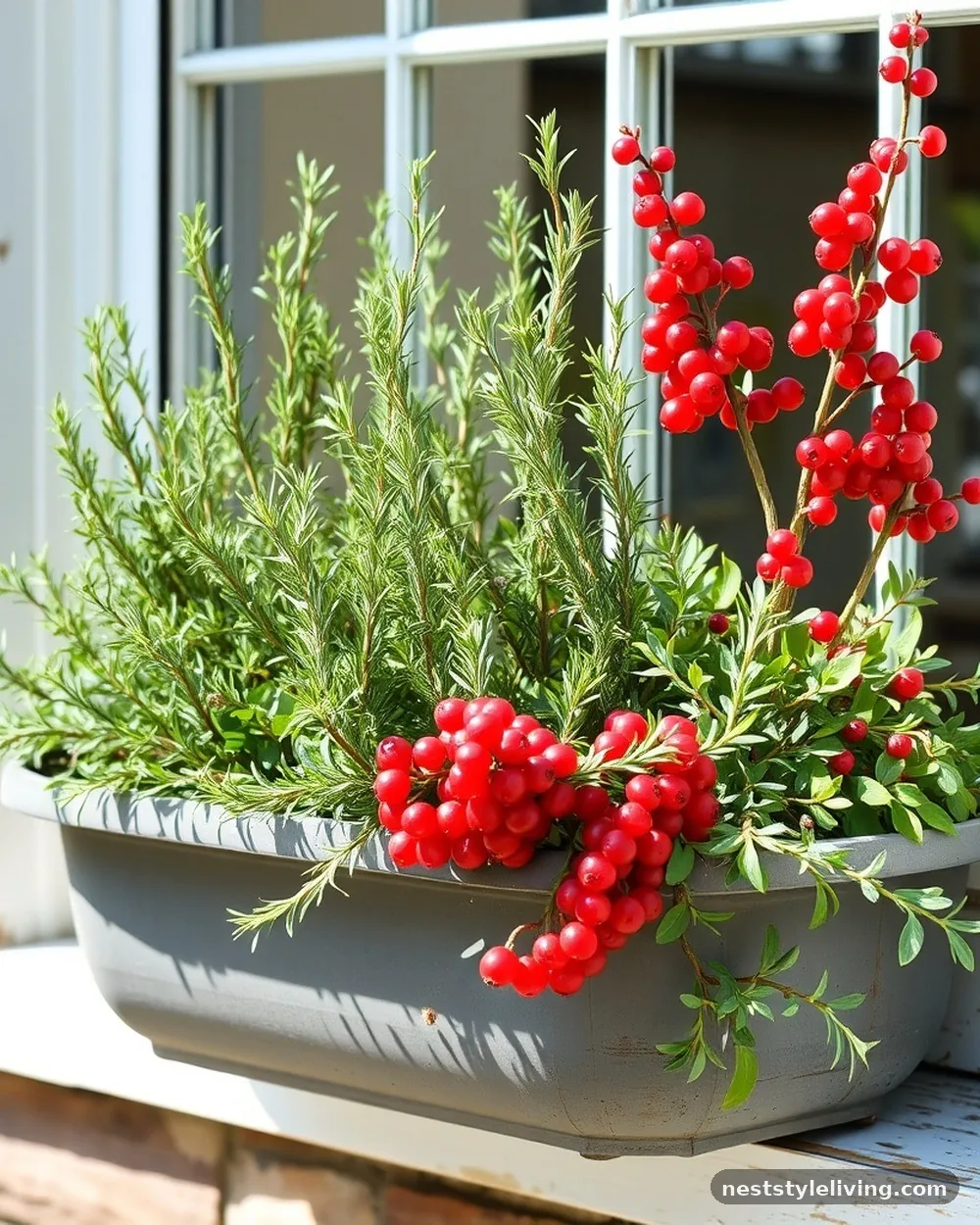
For those in milder climates, using living rosemary plants in window boxes provides a wonderful, aromatic, and culinary-friendly display. The needle-like, dark green leaves of the rosemary look similar to evergreen branches, and when paired with bright red winterberry, they create a festive, kitchen-garden aesthetic. This is a practical and charming idea for a home where the window box is near an entryway or kitchen window, allowing you to easily snip a bit of fresh herb for your winter cooking.
Ensure your window box has excellent drainage, as rosemary hates sitting in water. If you live in a colder climate, treat this as a temporary arrangement, as rosemary may not survive a hard freeze, and replace the plants as needed to maintain the fresh, green look throughout the season.
18. Yew and Red Velvet Ribbon
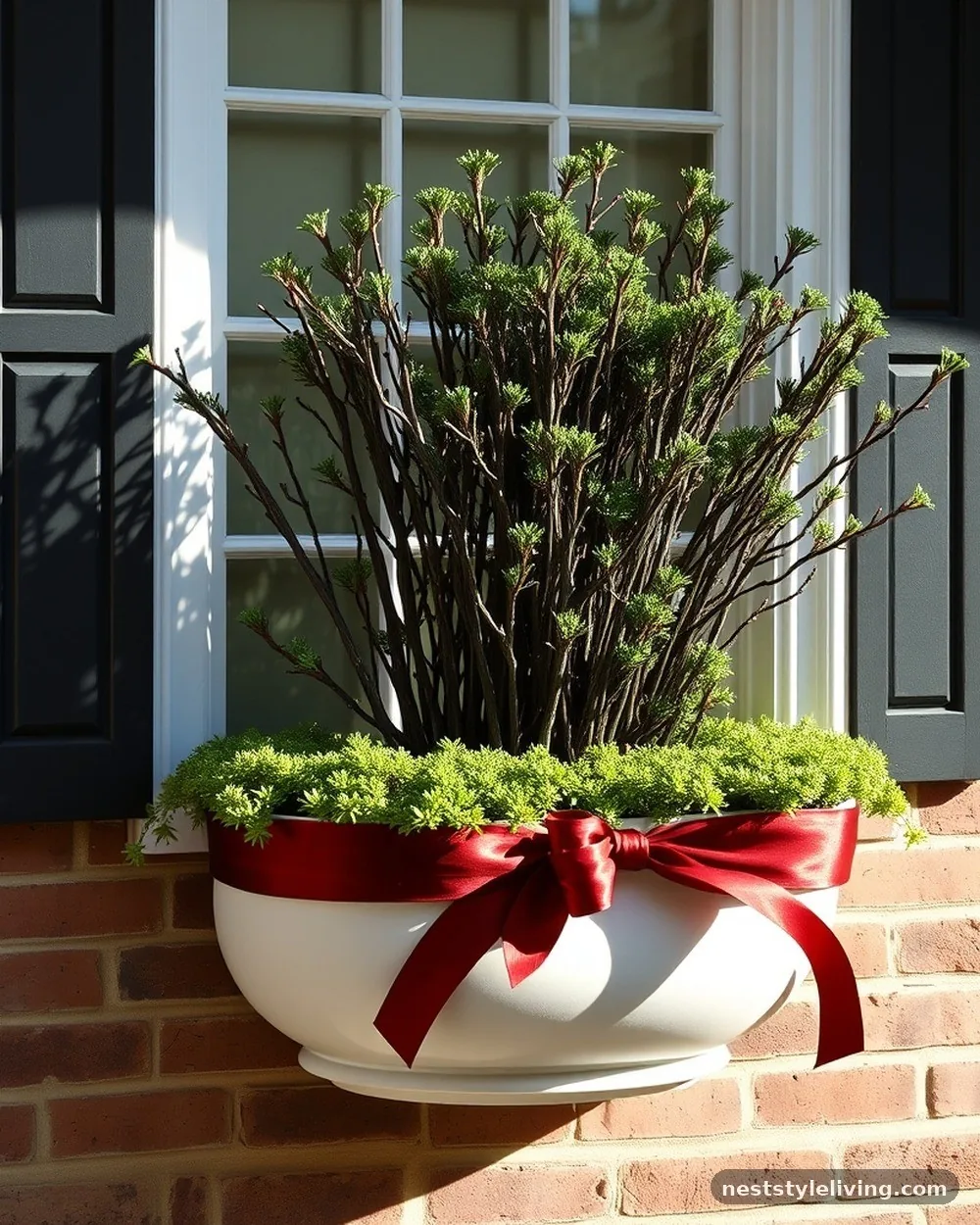
Yew is a classic, dark-green evergreen that provides a very formal, structured appearance, often associated with English gardens. When you add a simple, thick red velvet ribbon tied in a bow or woven through the branches, the look becomes elegant and traditional.
The deep, dark green of the yew makes the red ribbon stand out with striking intensity. This is a perfect choice for a brick home or a house with classic, symmetrical architecture, as it emphasizes the clean, refined aesthetic of the building.
Use a heavy-duty, outdoor-rated velvet ribbon to ensure the color doesn’t bleed when it gets wet. Secure the ribbon with floral wire to the center of the yew branches, and consider using a waterproof spray on the ribbon to keep it looking plush and vibrant throughout the entire winter season.
19. Mugo Pine and White Ornamentation
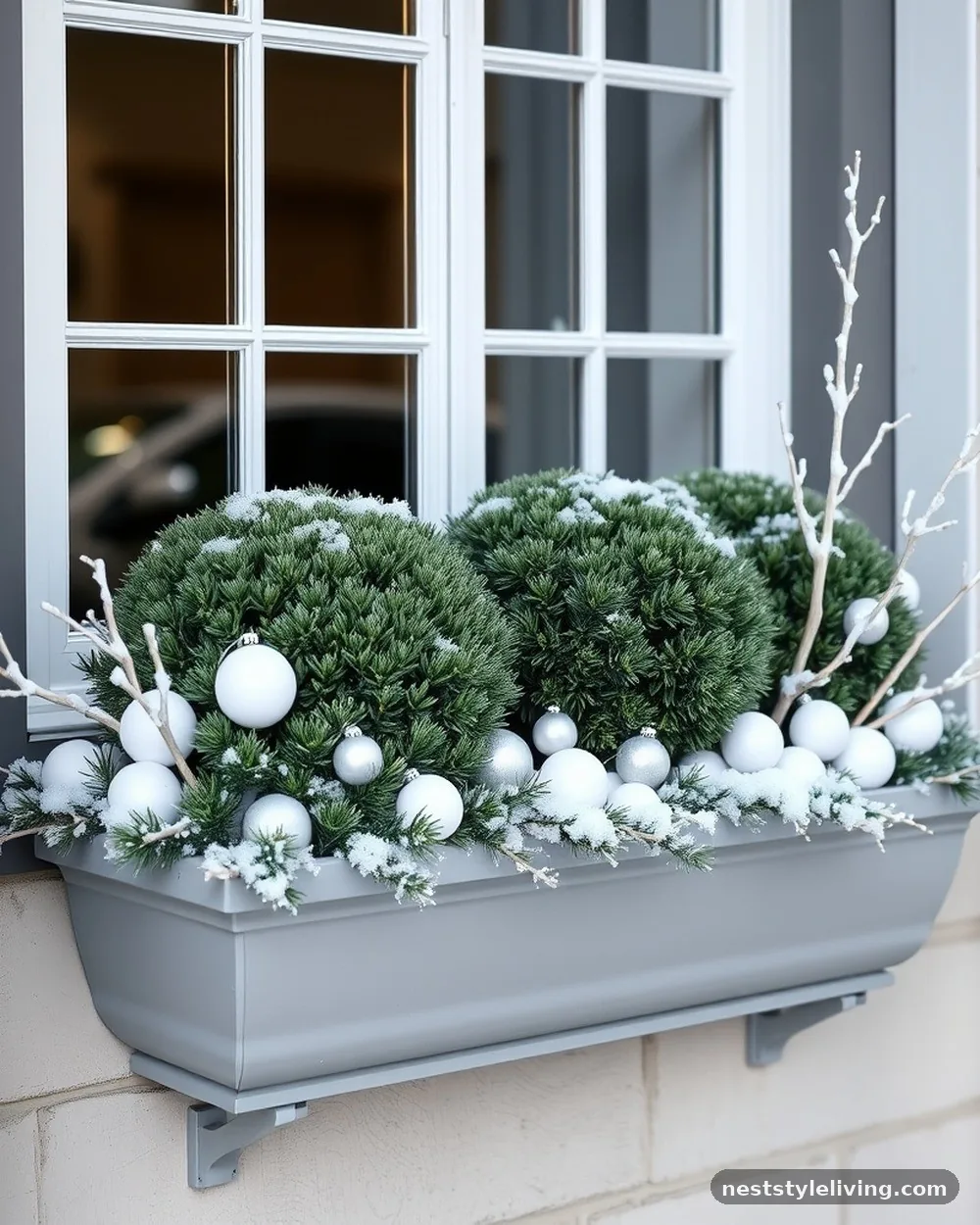
Mugo pine is a dwarf variety that is dense, rounded, and extremely hardy, making it a great choice for a low-maintenance window box. By pairing it with white, matte-finish ornaments or white-painted twigs, you create a clean, snowy aesthetic that feels very modern and serene.
The white elements look like patches of snow resting on the deep green pine, which is a lovely way to embrace the winter theme without using traditional red and green. This look is perfect for a home with a sleek, contemporary, or minimalist design.
Use ornaments of varying sizes to create a sense of depth and interest. Place the larger ornaments deeper in the box and the smaller ones near the edges, ensuring they are securely wired to the pine branches so they remain in place throughout the winter, regardless of the weather conditions.
Frequently Asked Questions
How do I keep my winter window box plants from drying out?
Even in winter, plants can lose moisture, especially during windy days or periods of low humidity. If the soil is not frozen solid, check it periodically and give the plants a light watering on a mild day. If you are using cut evergreen branches in floral foam, ensure the foam stays moist by pouring a small amount of water directly into it once a week, as this helps the branches maintain their color and prevents them from becoming overly brittle.
Can I use real fruit in my outdoor window boxes?
Using real fruit like apples, oranges, or pomegranates adds a beautiful, natural touch, but be aware of your local wildlife. In many areas, birds and squirrels will quickly discover and eat the fruit, which can lead to a messy window box. If you want the look of fruit, consider using high-quality artificial versions that are specifically designed for outdoor use, as they will maintain their appearance without attracting pests or rotting during the winter months.
What is the best way to anchor tall branches in a window box?
Tall branches, such as birch logs or dogwood stems, need a secure foundation to prevent them from falling over in the wind. The best method is to use a block of florist’s foam or a mixture of soil and sand at the base of the box to create a firm grip. For extra stability, use heavy-duty outdoor zip ties to secure the base of the branches to the back of the window box or the window frame itself, ensuring they remain upright and safe.
How long should I expect winter window box displays to last?
A well-constructed display using hardy evergreens like fir, pine, and cedar can easily last through the entire winter season, from late November until early spring. The key is to use fresh, hydrated boughs and keep them out of direct, intense sunlight whenever possible. If you notice the needles turning brown or brittle, you can simply pull out the affected pieces and replace them with fresh clippings from your yard or a local garden center to keep the arrangement looking vibrant.
Is it necessary to use floral foam for these arrangements?
Floral foam is very helpful for holding branches in place and keeping them hydrated if you are using fresh cuttings, but it is not strictly necessary. You can also use a dense base of soil, sand, or even small rocks to hold your branches upright. If you choose not to use foam, make sure you pack your greenery tightly so the branches support one another, and use floral wire to bind bundles together before inserting them into the box for extra stability.
Conclusion
Integrating these winter window box ideas that add instant charm is a simple yet effective way to maintain your home’s curb appeal during the dormant season. By focusing on textures like deep green needles, silver-toned foliage, and natural accents like pinecones or birch, you create a welcoming exterior that celebrates the unique beauty of winter. These projects are accessible, customizable, and provide a refreshing change of pace from the typical floral displays of the warmer months.
As you select the elements for your own containers, consider how the colors and materials complement your home’s existing architecture. With a little planning and the right materials, your windows will remain a highlight of your home throughout the winter, inviting a sense of warmth and intentional design to your outdoor space.