19 Cozy Winter Bedroom Ideas for a Warm Restful Retreat
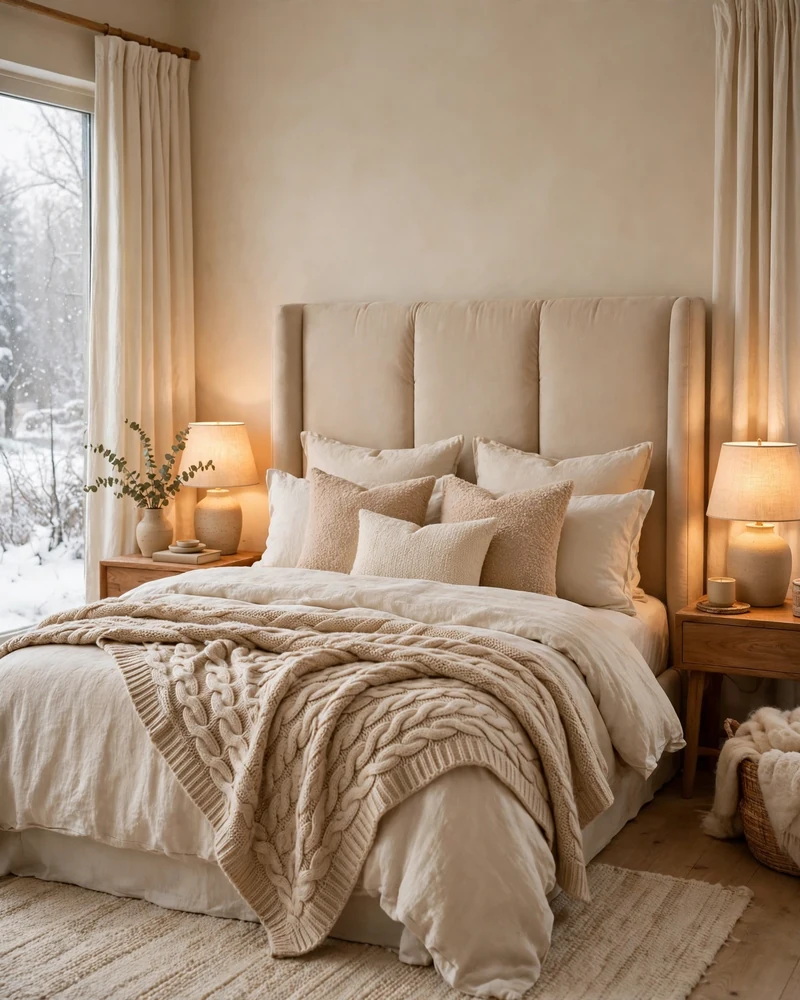
When the nights turn frosty and the days shrink, your bedroom should work harder than any other room in the house. These cozy winter bedroom ideas are built for the long stretch of deep winter — the quiet months, when what you really want is a warm, layered retreat that cocoons you from the cold. Designers in 2026 are calling it the cocoon bedroom: a move away from cold, all-white minimalism toward rich textures, upholstered surfaces, warm colors, and soft, low lighting.
The formula is simpler than it looks. Start with layered bedding winter style — flannel sheets, a heavier duvet, a quilted coverlet, a chunky throw — then extend the layering to the floor with a thick rug and a sheepskin beside the bed. Add warm-white light in the corners, a tall padded headboard you can lean into, and a few restrained natural accessories like ceramics, dried branches, and candles. No themed decor, no holiday motifs — just warmth you can feel, idea by idea.
1. The Cocoon Bedroom: Upholstered Walls That Hug You

The cocoon bedroom is 2026’s defining bedroom trend, and it starts at the wall behind your bed. Instead of a lone headboard, designers are running padded upholstery across the full width of the wall — tall panels in boucle, washed linen, silk, or mohair that wrap the bed in softness. The effect is exactly what the name promises: the room seems to close gently around you, absorbing sound and softening every hard edge.
You do not need a full renovation to get there. Tall upholstered panels, a wide padded headboard reaching halfway up the wall, or fabric-wrapped panels behind the bed deliver most of the feeling for far less. Keep the fabric in a soft neutral — oatmeal, warm taupe, clay — so the texture does the work. Once the walls go soft, everything else in these cozy winter bedroom ideas falls into place.
2. Flannel Bedding for Winter That Feels Like a Warm Hug
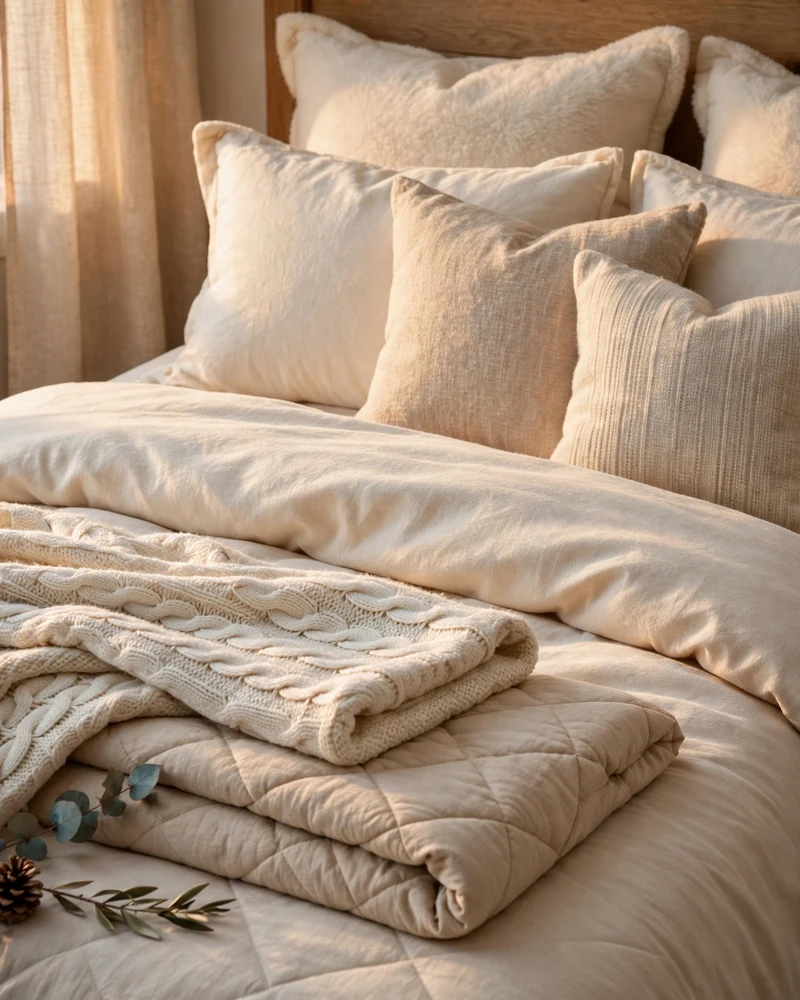
Ask bedding experts for their number-one flannel bedding winter pick and you will get the same answer: start with the sheets. Brushed cotton flannel has a lightly fuzzy surface that traps warmth the moment you slide in, yet quality fibers still breathe so you do not overheat. It is the single fastest way to make an ordinary bed feel like winter bedding — and unlike a new duvet, it costs very little.
Pair the sheets with a mid-weight blanket or lightweight quilt before the duvet, and fold a textured throw across the foot of the bed for nights that bite. Choose warm bases — cream, ivory, oatmeal, cocoa — rather than icy white. Small-scale patterns like woven stripes, ticking, or subtle winter florals add interest without stealing the calm. Your bed becomes the reason you actually look forward to cold nights.
3. Chunky Knit Bedroom Layers at the Foot of the Bed

Nothing says winter quite like a chunky knit bedroom layer. A thick cable-knit or oversized woven throw folded across the foot of the bed adds instant visual weight — it grounds the whole bedscape and tells your eyes, before your body even arrives, that this bed is warm. The deep texture also plays beautifully against smoother layers: linen duvet covers, cotton sheets, velvet pillows.
Drape the knit loosely rather than folding it into a perfect rectangle; a slightly rumpled throw reads relaxed and inviting, like a bed you can sink into. In neutral bedrooms, pick a knit in a deeper accent tone — chocolate brown, bark, or muted burgundy — to pull the 2026 winter palette onto the bed. Bonus: it doubles as a reading blanket for lazy winter mornings without disturbing the rest of the layers.
4. Winter Bedding Ideas: Build a Seven-Layer Bed

Among all winter bedding ideas, the layered bed — sometimes called “cozy maxing” — does the most real work. Instead of one heavy blanket, multiple lighter layers trap body heat between them and let you adjust through the night: mattress topper for insulation, warm flannel or brushed-cotton sheets, a mid-weight blanket or light quilt, a winter duvet, a coverlet on top, a textured throw at the foot, and layered pillows that block drafts.
The trick is mixing weights and textures rather than piling on bulk. Natural fibers regulate temperature far better than synthetics, which trap heat and leave you clammy by 3 a.m. End with a quilted or waffle-weave coverlet as the visible top layer — it seals in warmth and looks finished even when the bed is only half made. Three to four visible layers is the sweet spot; the rest works invisibly underneath.
5. Boucle Bedroom Decor: A Nubby Reading Chair
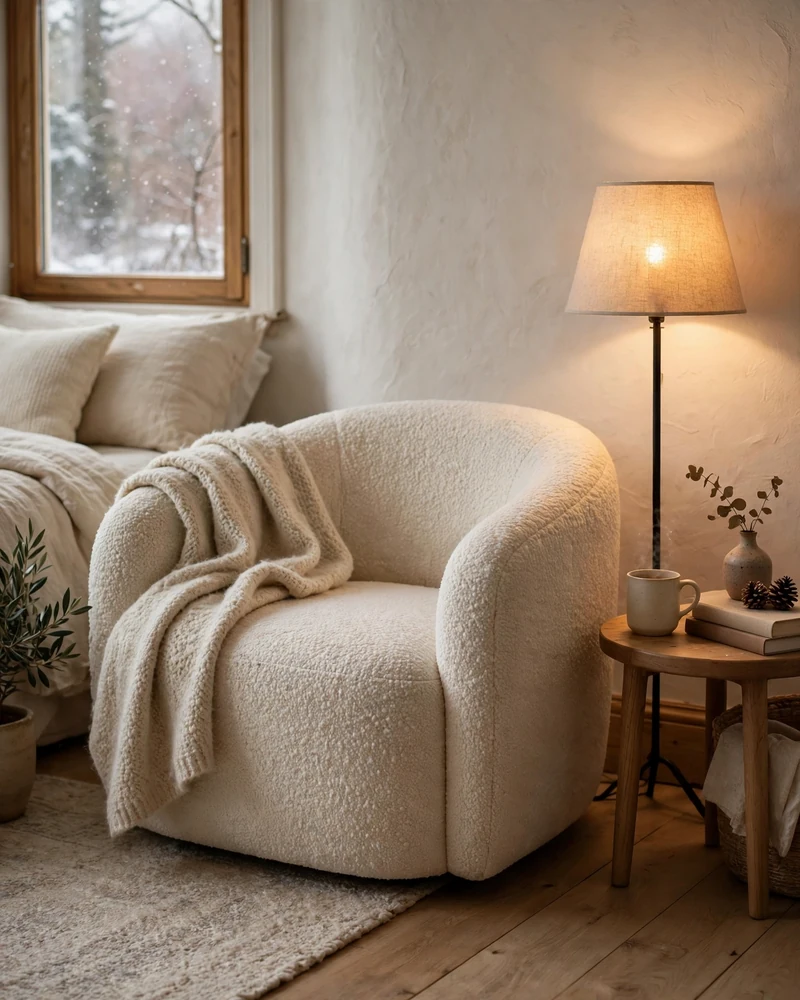
Boucle bedroom decor brings the nubby, looped texture that makes 2026 interiors feel so touchable. A single boucle accent chair in a corner — curved, low, and soft — turns dead floor space into a winter reading spot and adds a completely different surface to a room that might otherwise be all smooth cotton and linen. Contrast is what makes texture read as cozy.
Place the chair near a floor lamp with a warm-white bulb, add a small side table for tea, and drape a wool throw over one arm. Cream or ivory boucle works with nearly any palette, and the chair does double duty as a place to lay out clothes on frosty mornings. One well-chosen nubby piece has more impact than five small boucle accessories scattered around the room.
6. Cozy Winter Bedroom Colors: Chocolate, Burgundy, and Deep Green

The most-searched cozy winter bedroom colors for 2026 follow a clear recipe: a foundation of cream, warm beige, taupe, soft gray, or off-white, with deeper accents doing the seasonal work. Chocolate brown, deep green, and muted burgundy add richness without repainting a single wall — swap pillowcases, add a rust-toned throw, or hang warmer-toned art and the whole room shifts warmer.
Trending muted tones like charcoal, bark, and clay work the same magic on textiles and upholstery. The 60-30-10 rule keeps it balanced: roughly 60 percent warm neutral base, 30 percent secondary depth, 10 percent rich accent in pillows, art, or lighting. If you want drama, color-drenched walls in a saturated-but-not-bright tone like deep blue-gray or smoky olive wrap the room like a warm blanket.
7. Cozy Bedroom Lighting: Campfire Effect, Not Stadium
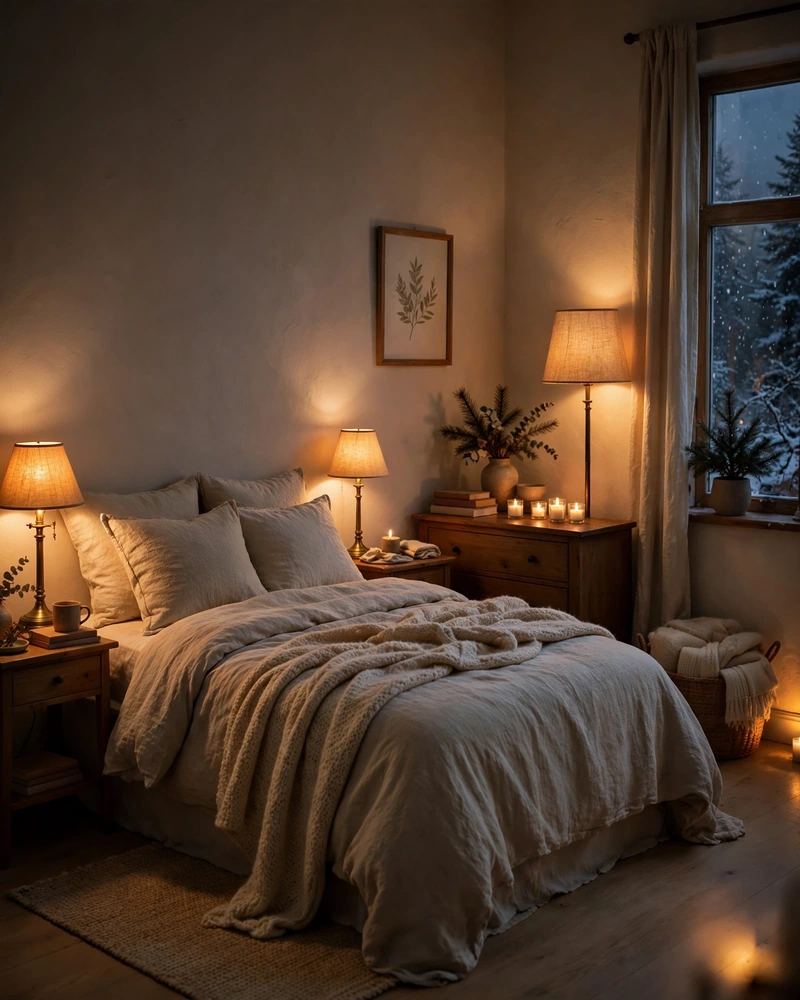
The golden rule of cozy bedroom lighting in winter is simple: campfire effect, not stadium. One bright overhead fixture flattens everything and kills the mood. Instead, layer three zones — bedside lamps for reading, a floor lamp or wall sconce washing a wall with ambient glow, and small accents like candles or warm-white fairy lights on the dresser for that soft twinkle.
Stick to bulbs at 2700K or lower so the light reads warm and golden, and put dimmers everywhere you can. Fabric or rattan shades diffuse the glow beautifully, and lighting the corners softens shadows so the room feels larger and gentler. This is the single most underrated winter upgrade: change nothing else, and layered low light alone will make the room feel ten degrees warmer.
8. Sheepskin Rug Beside the Bed for Cold Mornings

The first step out of bed on a winter morning should never land on cold floor. A plush sheepskin or shag rug beside the bed turns that moment into something you almost look forward to — thick, warm, and soft under bare feet. It is the most-loved practical move in every winter bedroom decor roundup for a reason: it costs little and you feel it daily.
Size it generously so both feet land on softness when you sit up. In a larger bedroom, extend the idea with a proper area rug that runs at least 18 to 24 inches beyond the sides and foot of the bed. Natural cream or oatmeal sheepskins blend with every palette, while faux-fur options give the same plush look at a friendlier price.
9. Waffle-Weave and Quilted Coverlets for Warm Winter Bedding Layers
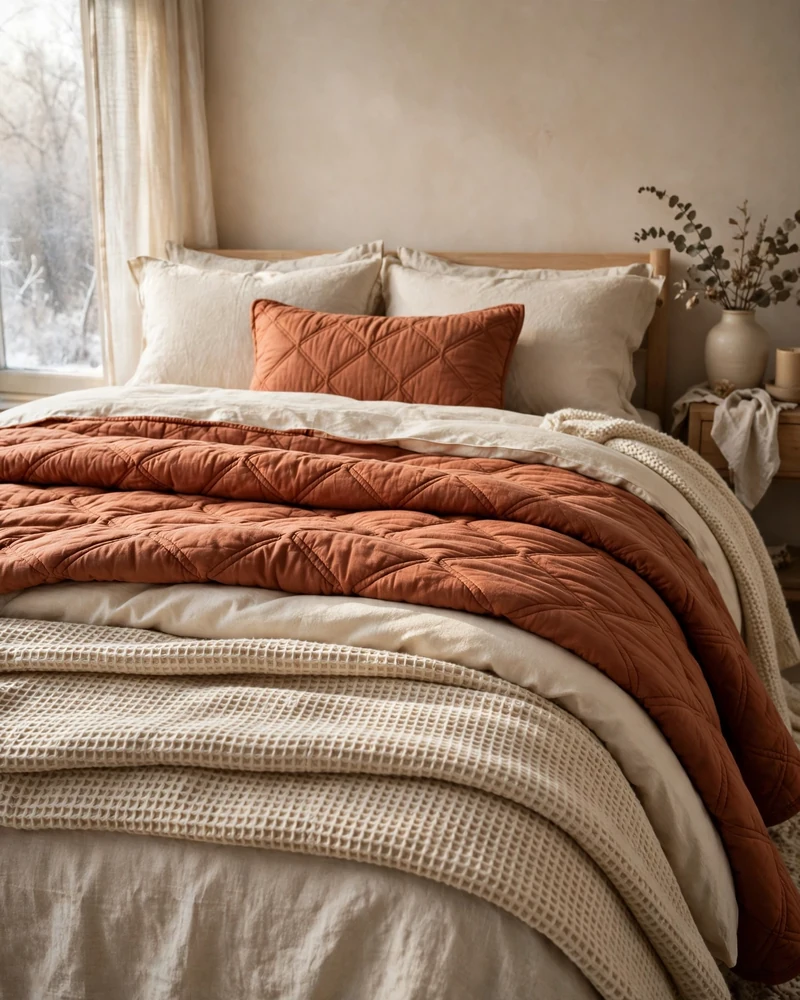
Warm winter bedding layers need a beautiful top layer, and this is where waffle-weave and quilted coverlets earn their place. Spread over the duvet, a quilted coverlet adds real insulation while looking polished and intentional — stitched texture catches winter light in a way flat bedding never does. Waffle weave, meanwhile, brings a subtle geometric pattern and a softer hand than plain cotton.
Use the coverlet as your color statement: terracotta, rust, cacao, or deep olive over a cream duvet creates instant seasonal depth. Fold it back during the day for a styled, hotel-like look, or let it hang slightly over the sides for a draped, relaxed effect. Either way it adds dimension to the bed while quietly doing the work of trapping warmth all night.
10. Velvet Pillows in Muted Burgundy

Few winter bedroom decor swaps deliver as much luxury per dollar as velvet pillows. Velvet catches light with a soft sheen that makes even a plain neutral bed look rich and deliberate, and in muted burgundy — one of 2026’s defining winter accents — it brings the season’s warmth without any holiday association. The contrast of smooth velvet against nubby knits is the texture mix that makes a bed look professionally styled.
Layer four to six pillows in mixed sizes: sleeping pillows in warm-neutral cases at the back, then velvet and linen or boucle accents in front. Deep green and chocolate velvet work just as well if burgundy is not your shade. Keep the rest of the palette calm so the velvet reads as the room’s jewel, not one more pattern in a crowd.
11. Tall Upholstered Headboard Bedroom in Boucle

If you change one piece of furniture this winter, make it the headboard. The upholstered headboard bedroom is 2026’s centerpiece move: tall, padded, and enveloping, often in curved or rounded shapes upholstered in velvet, linen, or boucle. It gives you something soft to lean into while reading and anchors the entire bed visually — no wonder designers call it the piece that changes the whole room’s direction.
Look for a headboard that reaches at least halfway up the wall; the height is what creates the cocoon effect. Soft neutrals keep it timeless, while deep earthy tones like bark or muted burgundy make it the room’s statement. Bonus comfort: upholstered headboards are kinder to lean against on cold mornings than wood or metal, and they absorb sound so the room sleeps quieter too.
12. Layered Double Rugs for Extra Winter Warmth

Interior designers’ quietest winter trick is layering rugs the way you layer bedding. Start with a plain, larger base rug — a flatweave or low-pile piece in a warm neutral — then float a smaller, richly textured rug on top: a shag, a thick woven wool, or a sheepskin. The double layer insulates against cold floors far better than either rug alone and looks collected and intentional.
Keep the base simple so the textured top layer gets the attention, and anchor at least the front two-thirds of the bed so the layers read as one composition. This works beautifully in rooms where wall-to-wall carpet is not an option and costs less than replacing a single large rug. In the morning, your feet hit plush texture instead of bare floorboards — small luxury, big winter payoff.
13. Warm Bedroom Ideas for Winter: A Candlelit Corner

Among the simplest warm bedroom ideas winter searchers love is the candlelit corner: a small, dedicated spot where warm light pools and the room feels alive. Group a few candles — real or flameless — on the dresser or a side table, add a bud vase with dried branches, and let that one glowing vignette become the room’s evening focal point.
Choose scents that read as winter without shouting holiday: vanilla, warm linen, cedar, or soft amber rather than anything pine or spice-heavy. Flameless candles with timers give you the glow on dark afternoons with zero worry. Keep the styling restrained — a tray, two candle heights, one natural element — and the corner feels like a boutique hotel detail rather than a display.
14. Layered Bedding in Winter Whites and Warm Beige
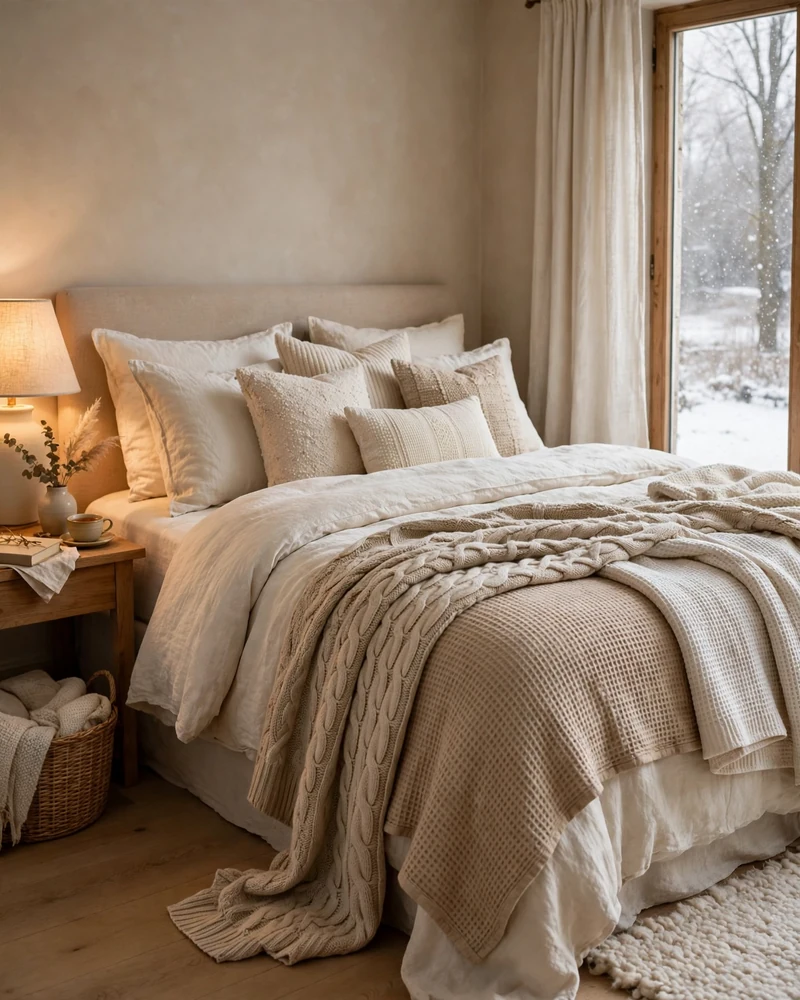
Layered bedding winter style does not have to mean dark and moody. A palette of winter whites, cream, and warm beige can feel just as cocooning — the trick is piling on texture so the neutrals read as warm rather than flat. Mix a linen duvet, a waffle-weave blanket, a cable-knit throw, and pillows in ticking stripes, simple embroidery, and nubby wool.
Work in slightly different shades — ivory, oatmeal, warm gray, cocoa — so the layers separate visually instead of blurring into one pale mass. This is the look designers mean when they say a room can stay neutral and still feel luxurious: enough layered texture, and color becomes almost unnecessary. Finish with warm-white bedside lighting and the whole bed glows softly in the evening.
15. Restrained Winter Bedroom Decor: Ceramics, Branches, and Baskets
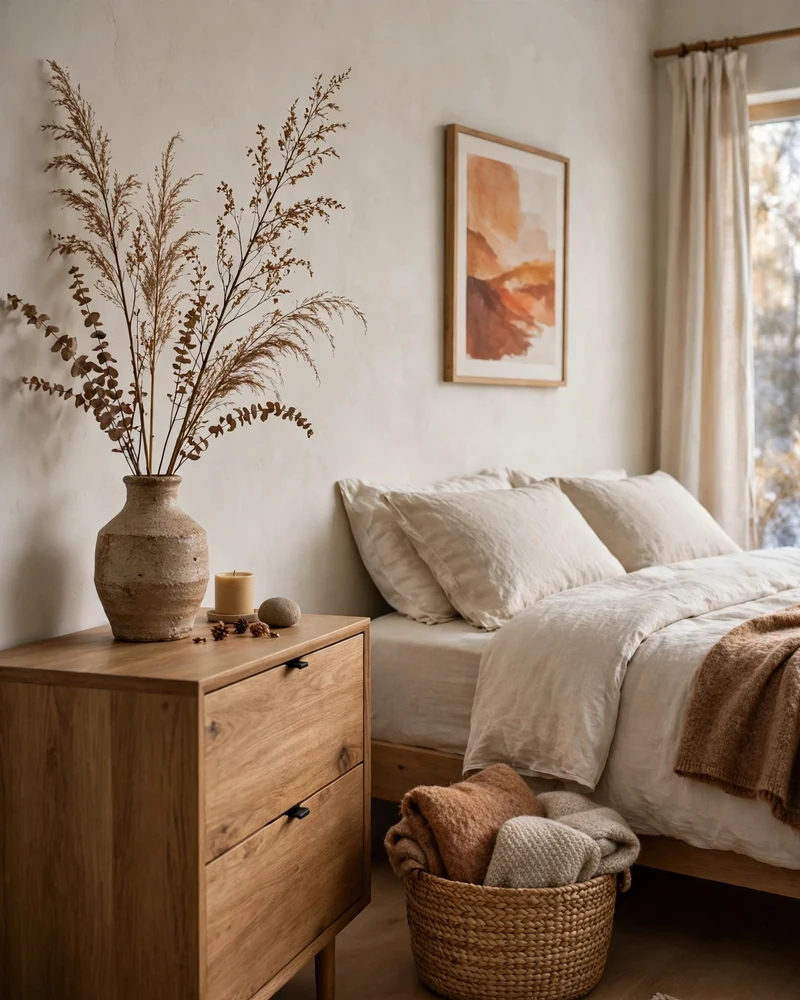
The 2026 approach to winter bedroom decor is refreshingly restrained: no themed overload, no holiday motifs — just a few natural, everyday pieces that nod to the season. A handmade ceramic vase with dried branches on the dresser, a woven basket holding folded throws beside the bed, one piece of simple artwork in warm tones. Keep accessories limited and let the furniture and textiles be the stars.
This is also the most budget-friendly way to shift a room into winter: you are styling what you already own. Swap lightweight summer accessories for heavier, earthier ones, and choose materials with natural warmth — wood, clay, wool, rattan — over anything shiny or synthetic. The room feels seasonal because it feels grounded, not because it is decorated for a holiday.
16. A Heavier Duvet With a 13.5 Tog Rating

For truly cold nights, upgrade the heart of your warm winter bedding layers: the duvet itself. Bedding specialists recommend a 13.5 tog rating for deep winter — the weight does more than trap heat, it creates a comforting, tucked-in feeling that helps you sleep deeper. Down and down-alternative fills with baffle-box stitching keep the warmth evenly distributed with no cold spots.
If a new duvet is not in the budget, fake the upgrade: layer a thicker duvet cover over your existing insert, or add a quilt between the sheets and the duvet for a serious insulation boost. Just remember breathability — natural fills and fibers regulate temperature through the night, while cheap synthetics trap heat and leave you overheating by morning.
17. Brass and Warm Metal Accents That Glow

In a room built from soft neutrals and deep textures, warm metals are the jewelry. Brushed brass or antique gold lamp bases, a copper-toned tray on the dresser, warm-metal picture frames — each one catches the low winter light and throws it gently back into the room. Against cream bedding and chocolate velvet, brass glows like candlelight even in daylight.
You need very little: two matching bedside lamps in a warm metal, or one statement floor lamp, will carry the effect. Pair with matte black only sparingly, since black absorbs the very light you are trying to multiply. The goal is reflective warmth, not sparkle — think burnished and soft, never chrome or mirror-bright.
18. A Thick Rug Pad Under Your Existing Rug

Here is the winter upgrade nobody sees but everybody feels: slide a thick rug pad under the rug you already own. It adds real insulation against cold floors, makes any rug feel plusher underfoot, and keeps the rug from shifting — all without buying a single new textile. For larger bedrooms, designers suggest two rugs: a plain base and a textured layer over it, with the pad working invisibly beneath.
Choose a dense felt or memory-foam pad rather than a thin rubber one; the cushioning is the whole point. This is the rare decor move that improves comfort, safety, and even your heating bill, since less warmth escapes through the floor. If your bedroom is above a garage or unheated space, the difference on the first cold morning is dramatic.
19. The Down-Alternative Quilt for Draft-Free Sleep

End your winter bedding ideas research with the unsung hero of cold-weather sleep: a good quilt. Spread over your duvet, a modern quilted layer adds serious insulation while looking effortlessly styled — and unlike patchwork stereotypes, today’s designs come in calm solids and subtle stitch patterns that suit any winter bedroom. Down-alternative fills give allergy sufferers the same loft and warmth without the sneezing.
Let the quilt drape slightly over the sides of the bed for a relaxed, enveloping look, or fold it back in the morning to show off the layers beneath. Rust, terracotta, cacao, and hazelnut are the warm hues designers reach for in 2026, while oatmeal and charcoal stay timeless. Either way, drafts stop at the quilt — and you sleep straight through the coldest nights.
Frequently Asked Questions
How do I layer my bed for winter?
Start with warm flannel or brushed-cotton sheets as a base, then add a mid-weight blanket or light quilt, followed by a winter duvet with a 13.5 tog rating. Finish with a quilted or waffle-weave coverlet on top and a textured throw folded at the foot of the bed. Three to four visible layers is the sweet spot — enough to trap heat between layers while still letting you peel one off if you get too warm. Use natural fibers throughout so the bed breathes and regulates temperature instead of trapping heat.
What is the best material for winter bedding?
Flannel, brushed cotton, velvet, fleece, and wool are the best materials for winter bedding because they trap heat while feeling soft against the skin. Flannel sheets give an instant enveloping feel, wool throws add real insulation at the foot of the bed, and a quilted coverlet seals in warmth without excessive weight. Avoid synthetics that feel cold at first touch and trap moisture — natural fibers keep you warm and comfortable all night without overheating.
How can I make my bedroom feel cozier in winter?
Layer textures on the bed and floor, swap in warm colors through textiles, and rebuild your lighting. Add a chunky knit throw, flannel pillowcases, and a plush duvet in warm seasonal tones; place a sheepskin or shag rug beside the bed; and replace bright overhead light with layered, warm-white lamps, sconces, and candles in the corners. A tall upholstered headboard and heavier curtains complete the cocoon effect. Small upgrades like a thick rug pad or a heavier duvet make the room feel warmer without any redecorating.
What are the best colors for winter bedding?
Deep reds, forest greens, soft grays, and warm neutrals make the best winter bedding colors. For 2026, designers recommend a foundation of cream, warm beige, taupe, soft gray, or off-white with accents in chocolate brown, deep green, and muted burgundy. Trending muted tones like charcoal, bark, and clay also work beautifully on textiles. These shades create a peaceful, enveloping look while staying neutral enough to work with your existing furniture.
What is the best duvet tog for cold weather?
For true deep-winter warmth, choose a duvet rated 13.5 tog — the heavier weight traps heat effectively and creates a comforting, tucked-in feeling that can help you sleep deeper. In milder winters, 10.5 to 12 tog works well, especially when layered with a quilt or coverlet on top. Look for down or down-alternative fills with baffle-box stitching to keep the fill evenly distributed and eliminate cold spots.
Conclusion
A truly cozy winter bedroom is not about one magic purchase — it is about layers. Layers of texture on the bed, layers of soft light in the corners, layers of warmth underfoot. The 2026 cocoon bedroom trend simply gives that instinct a name: linen bedding, a wool throw, velvet pillows, a boucle accent, a tall upholstered headboard, and a thick rug, all working together so the room feels like a private retreat from the cold.
Start with whichever of these 19 ideas fits your space tonight — flannel sheets and a dimmer switch will take you surprisingly far — and build from there as winter deepens. And if you loved the autumn version of this story, our fall bedroom decor ideas carry the same warm, layered feeling into the earlier season, while our Nancy Meyers home aesthetic guide shows how cozy, collected interiors stay beautiful all year round.
Emma Carter is the editor behind NestStyleLiving.com, where she writes about warm, livable interiors — from ayered bedrooms to cozy small spaces — designed to feel like home in every season.