18 Cat Wall Ideas to Create a Fun Feline Paradise
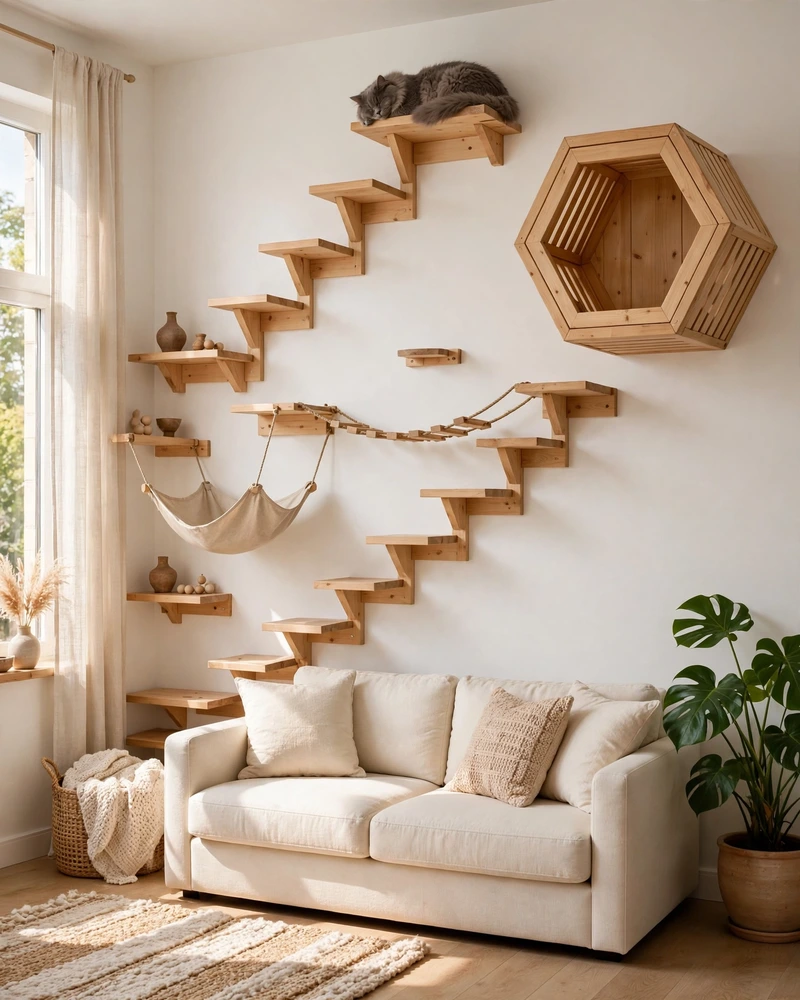
If your cat treats the top of the bookshelf as their personal throne, it is time to give them a kingdom of their own. The best cat wall ideas turn a blank stretch of drywall into vertical territory your cat can climb, perch on, and nap across, all while looking like intentional interior design rather than a pet store aisle.
From floating cat wall shelves and cozy wall hammocks to full cat highways and catified reading nooks, these 18 ideas blend climbing furniture, scratching surfaces, and cat wall decor into rooms you will actually love looking at. Many are simple DIY cat shelves you can build in a weekend, while others are clever modular systems you can expand piece by piece as your budget allows.
Ready to think vertically? Let us climb in.
1. Floating Cat Wall Shelves
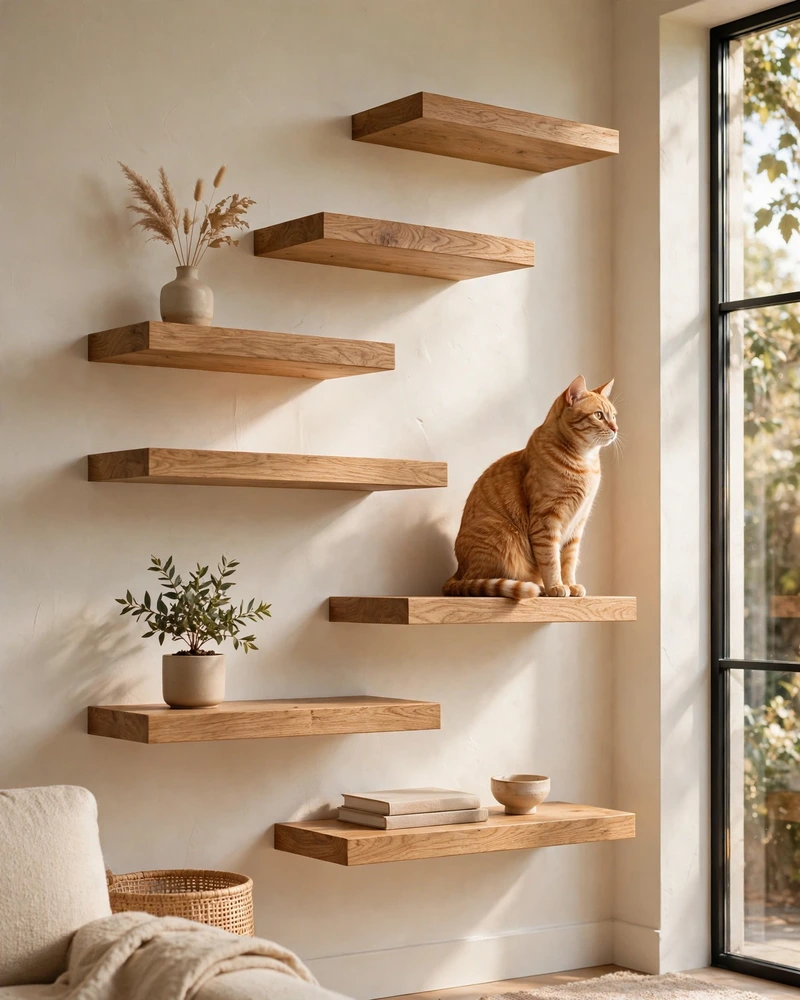
The classic starting point for any feline-friendly room is a set of floating cat wall shelves arranged in a staggered climb. Anchor each shelf into a wall stud with heavy-duty brackets, spacing them 12 to 18 inches apart vertically so most cats can hop comfortably between levels. A warm oak finish keeps the look refined enough for a living room, and you can mix shelf depths so your cat has wide landing pads and narrow perches to choose from.
Style the shelves lightly: one trailing plant (make sure it is non-toxic), a small ceramic piece, and plenty of empty landing room. Cover the landing zones with berber carpet or sisal pads so little paws get grip on every jump, and you have cat wall shelves that double as living wall art.
2. Cozy Cat Wall Hammock
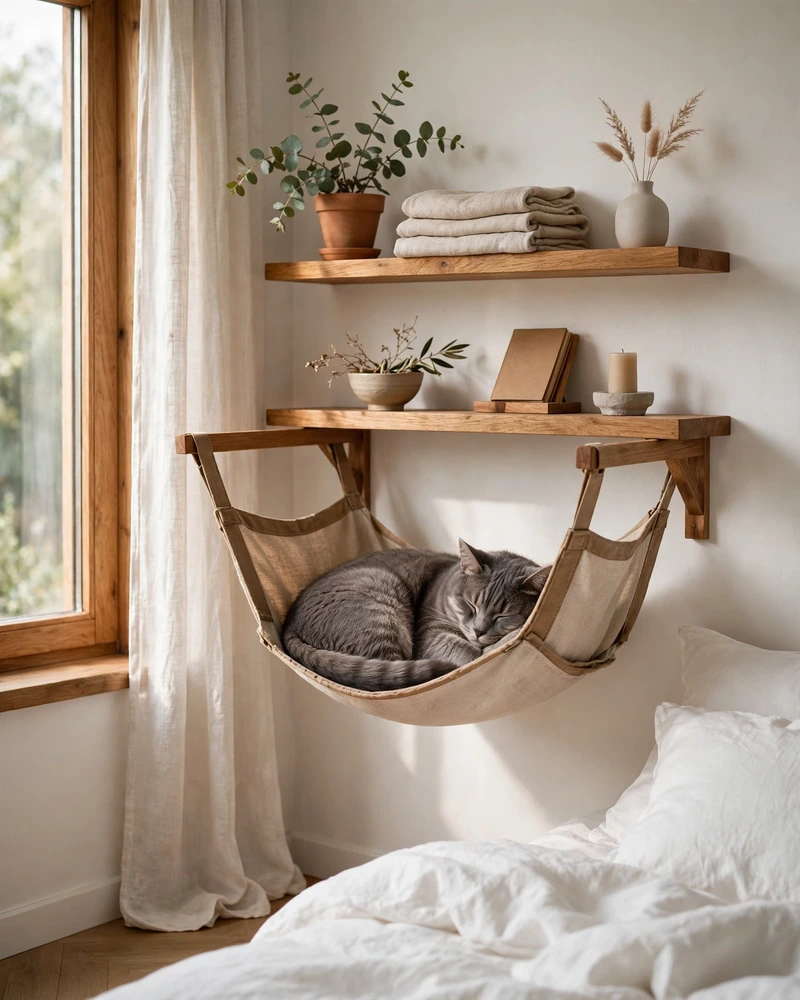
A cat wall hammock is the nap station your vertical layout has been missing. Hung on sturdy wooden dowels or brackets between two shelves, the gently swaying canvas cradles your cat and adds a soft, bohemian texture to the wall. Choose a hammock with a removable, washable pad, since sunbeams will make this the most-used seat in the house.
Mount it at a mid-wall height, around three to four feet, so your cat can step in from a nearby shelf rather than leap into it. Pair the natural canvas with cream walls and light wood for a calm palette, and hang a small toy from one corner so lazy afternoons can turn into playtime without warning.
3. Zigzag Cat Climbing Wall
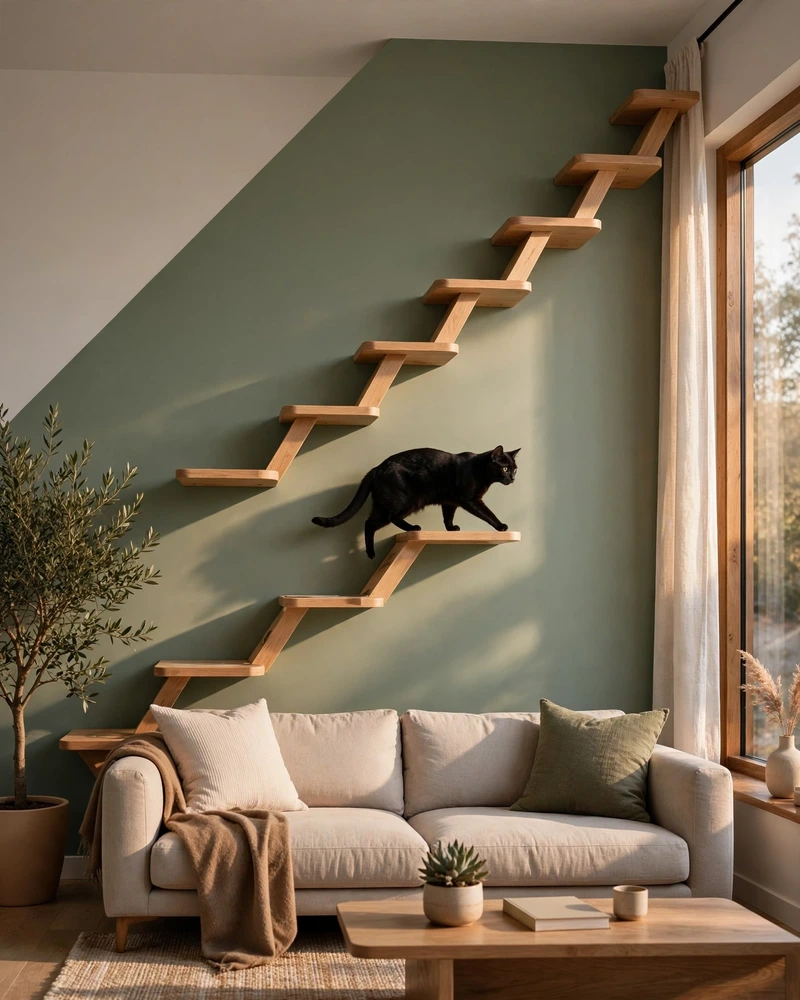
If your cat has the zoomies at midnight, a zigzag cat climbing wall will burn off that energy in style. Alternating shelf directions diagonally creates a playful, architectural pattern that keeps cats mentally engaged as they map out each hop. It is ideal for active, confident cats who treat your home like a parkour course.
Paint the wall a soft sage or warm beige so the wood shelves pop like sculpture, and leave a clear route up, across, and back down: a climbing wall should never be a dead end. Add one carpet-wrapped landing at the top where your cat can survey their domain like a tiny mountain goat.
4. Wall-Mounted Cat Tree Corner

A wall mounted cat tree gives you all the perks of a traditional cat tree without surrendering a square foot of floor space. Mounting platforms and sisal-wrapped posts across two walls of a corner creates a wraparound playground that feels built into the architecture. It is especially smart for small apartments where a bulky floor tree would eat the room.
Mix one tall scratching post, two staggered platforms, and a rounded bed at the top. Secure everything into studs or concrete, since corner setups get heavy use from two directions, and finish the wood to match your trim so the whole corner reads as custom millwork for cats.
5. DIY Cat Shelves From Reclaimed Wood
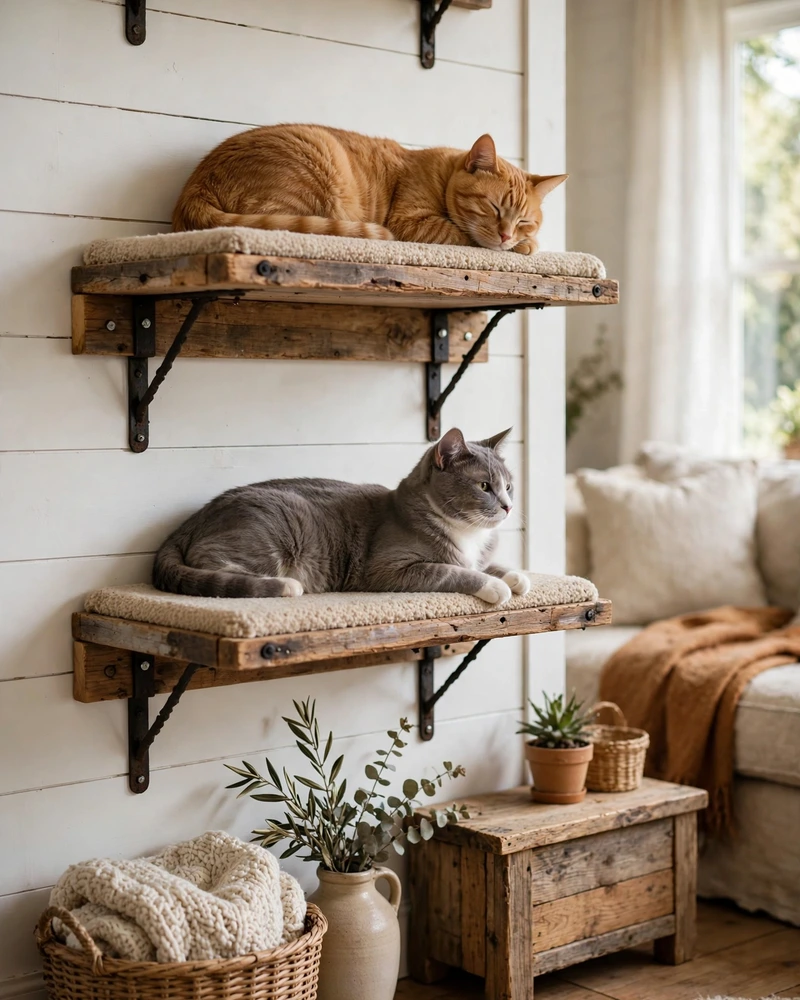
Building DIY cat shelves from reclaimed wood is a weekend project that costs less than one store-bought perch and looks infinitely better. Solid reclaimed boards, cut to 18 by 12 inches and sanded smooth, ride on heavy-duty L-brackets screwed into studs. Skip MDF, which can emit formaldehyde, and finish the wood with a pet-safe oil.
The charm here is imperfection: visible grain, iron brackets, and a carpet remnant stapled on top for traction. Test each shelf with 20 pounds of weight before your cat gets access, and stagger the boards up the wall at 12- to 16-inch horizontal steps for an easy, confident climb.
6. A Full Cat Highway Across the Living Room
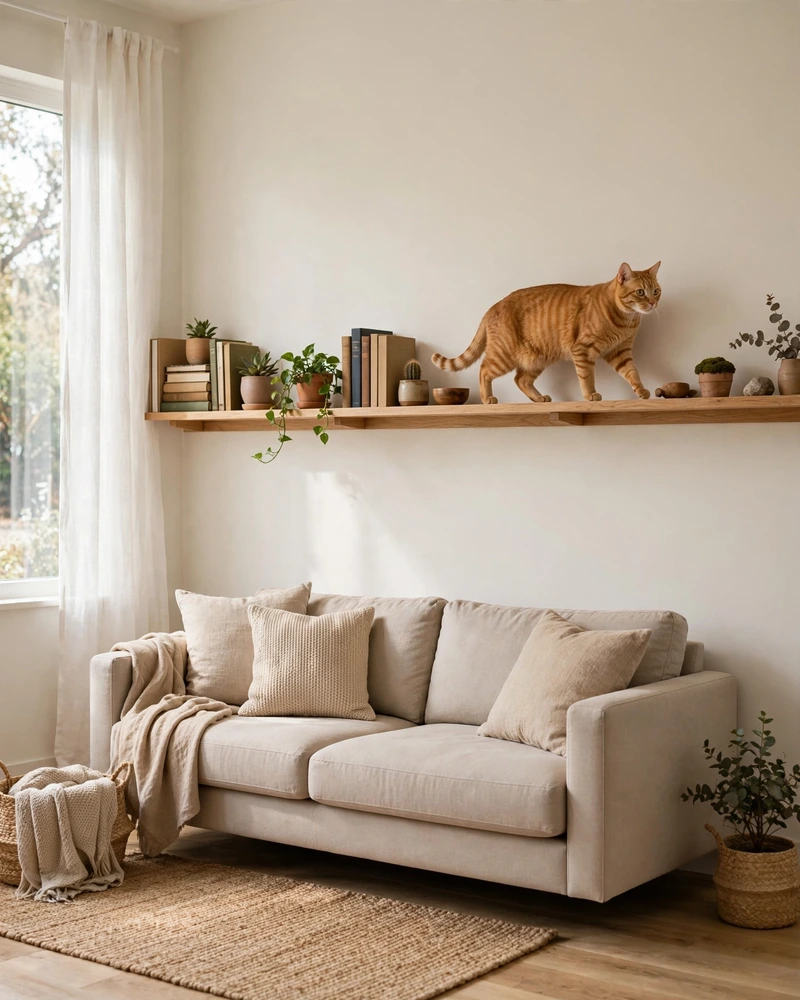
A cat highway is exactly what it sounds like: a continuous shelf run circling the room at picture-frame height, giving your cat an aerial route above the sofa, the bookshelf, and the dog. Cats are tree-dwellers by instinct, and a clear overhead path lowers stress and gives shy cats a way to move through a busy household without touching the floor.
Keep the run level and wide, at least 10 inches deep, and bridge any gaps with small steps so the route never strands anyone mid-journey. Dot a scratching pad along the walkway and add one window-side perch as the highway’s scenic overlook. Guests will think it is modern wall molding; your cat will know it is a freeway.
7. Window-Side Cat Perch Shelf
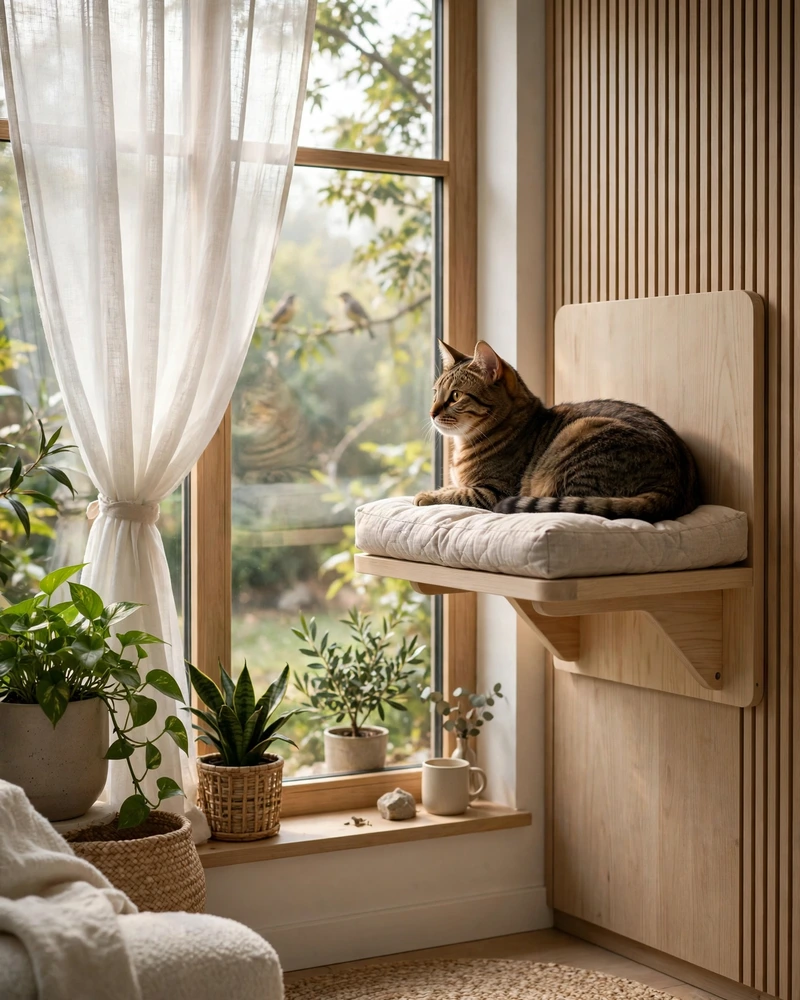
Few things in life delight a cat more than a front-row seat to the bird show. A padded cat perch shelf mounted beside a window turns dead wall space into prime bird-watching real estate. Support it with brackets into the wall or window frame rather than suction cups on glass, which can fail under the shock of a landing cat.
Top the shelf with a plush cushion or washable faux fur, and place a tall plant nearby so your cat gets dappled shade along with the view. Morning sun will warm the cushion, afternoon shade keeps it cool, and you get to watch your cat’s tail swish at passing sparrows like the best reality TV.
8. Suspended Cat Bridge Walkway
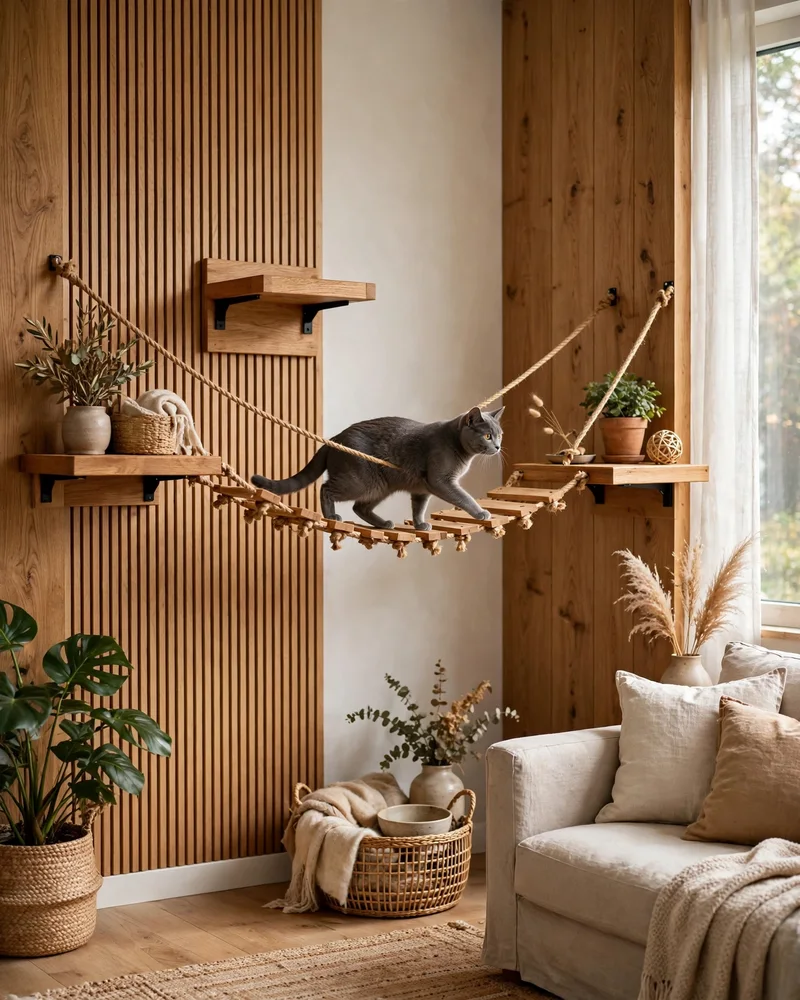
A suspended cat bridge stretched between two wall platforms is the suspension bridge of the feline world: slightly wobbly, wildly fun, and endlessly photogenic. The gentle sway engages your cat’s balance and confidence, and the jute rope sides double as a scratching surface that keeps claws off the sofa.
Hang the bridge between two shelves set only a few inches apart in height, with secure ceiling or wall anchors rated well above your cat’s weight. Keep the span short, two to three feet, so it feels like an adventure rather than a tightrope, and watch the first crossing become a proud, tail-high parade.
9. Hexagonal Cat Wall Pods

Hexagonal wall pods bring a honeycomb, mid-century look to your cat wall while giving each cat their own private nook. Mount three to five pods in a loose cluster at varying heights, and tuck a small cushion inside each one. The enclosed shape appeals to cats who like to nap hidden, and the geometric pattern looks fantastic on a plain white wall.
Choose solid wood pods over thin pressed board for durability, and check that the openings face easy landing shelves so cats can hop in and out without acrobatics. Leave one pod empty for the rotation: cats famously prefer the box you did not designate.
10. Sisal-Wrapped Cat Wall Furniture
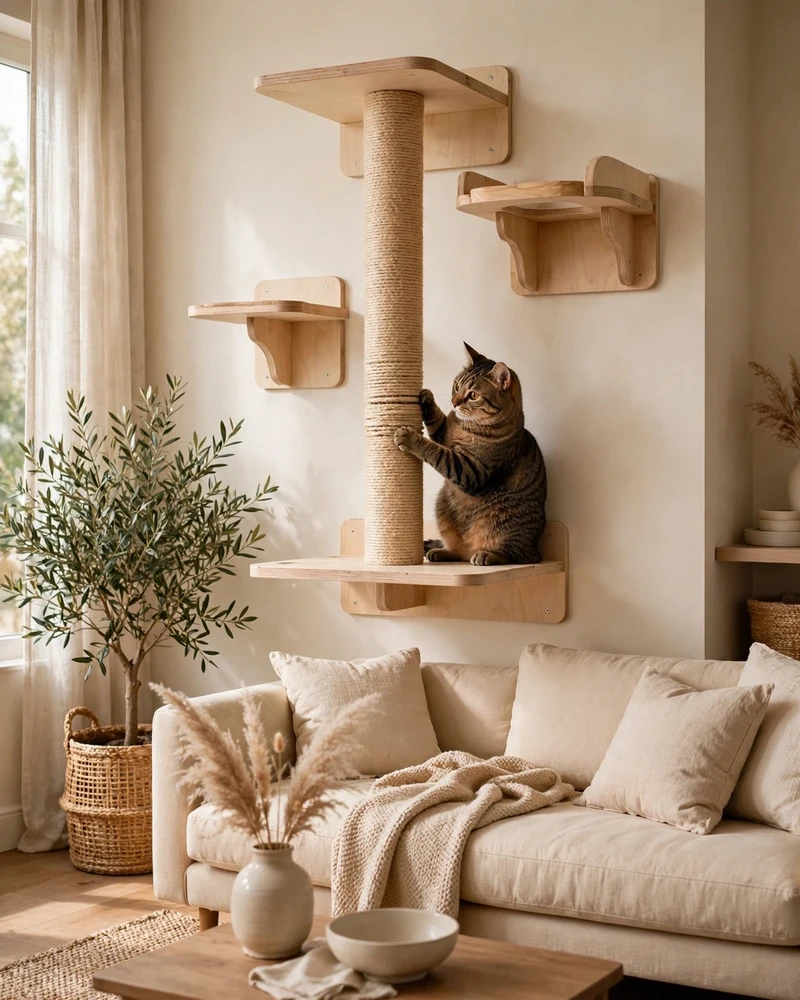
Wall-mounted cat wall furniture with sisal-wrapped columns solves two problems at once: climbing space and a legal place to scratch. Wrap a wall-mounted post in natural sisal rope, flank it with platforms above and below, and your cat gets a full scratch-stretch-climb circuit in about two square feet of wall.
Keep the palette warm and natural, cream, sand, and raw wood, which are trending hard in 2026 pet furniture, and the setup blends into a calm interior instead of screaming cat toy. Replace or re-wrap the sisal yearly, since a well-loved scratcher wears down, and that is a sign your cat approves.
11. Modular Cube Hideouts

Modular cube hideouts with round cutout doors stack, stagger, and rearrange as your cat’s tastes change. Mount two or three boxes at different heights with the openings offset, and you have a puzzle-like wall that hides, reveals, and entertains. Cats who ignore open shelves often claim a cube within hours.
Start small with two cubes and add more as budget allows, keeping one cube’s opening aimed at the room’s main seating so your resident supervisor never misses the action. A coat of the wall color on the outside helps the cubes disappear; the cutout peek-holes give away the secret.
12. Cat Wall Decor Gallery
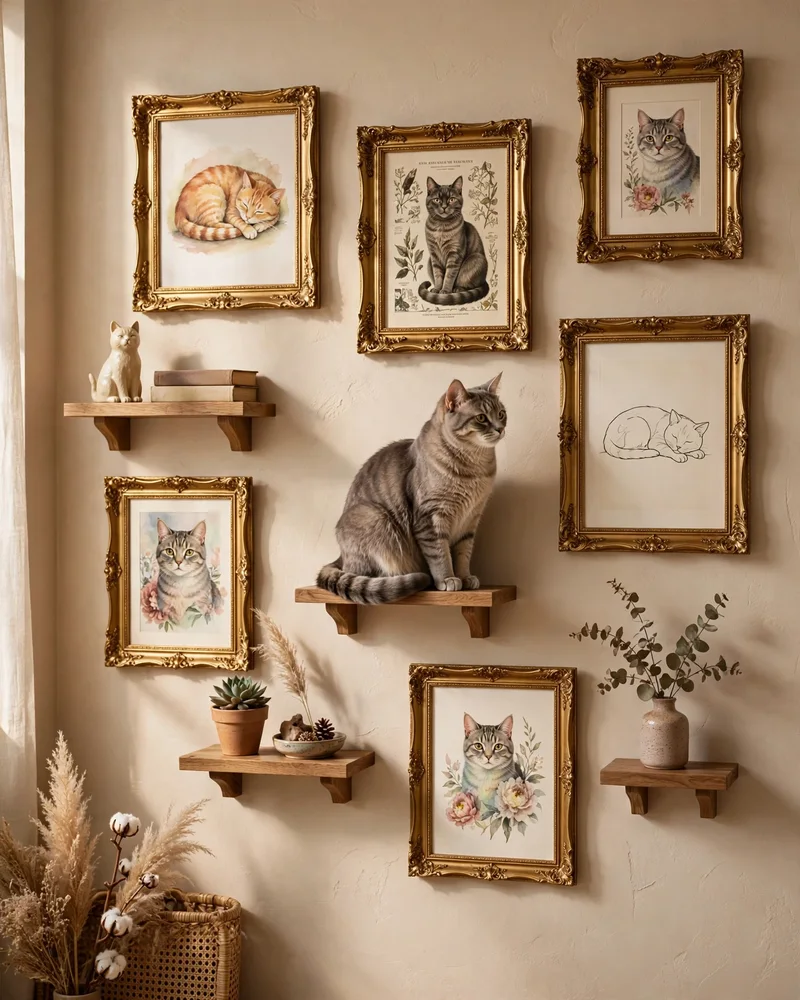
Who says a cat wall cannot be gallery-worthy? A cat wall decor gallery mixes framed cat art prints, ornate gold frames, and small floating shelves into one curated composition. The shelves run through the arrangement as a subtle climbing route, so the wall reads as art first and playground second.
Plan the layout on the floor before hanging anything, leaving a clear lane for your cat between frames. Odd-numbered clusters look most natural, and mixing watercolor portraits with vintage prints keeps the gallery from feeling like a pet store poster wall. Your cat climbing through it is the living exhibit.
13. Corner Staircase Cat Shelves
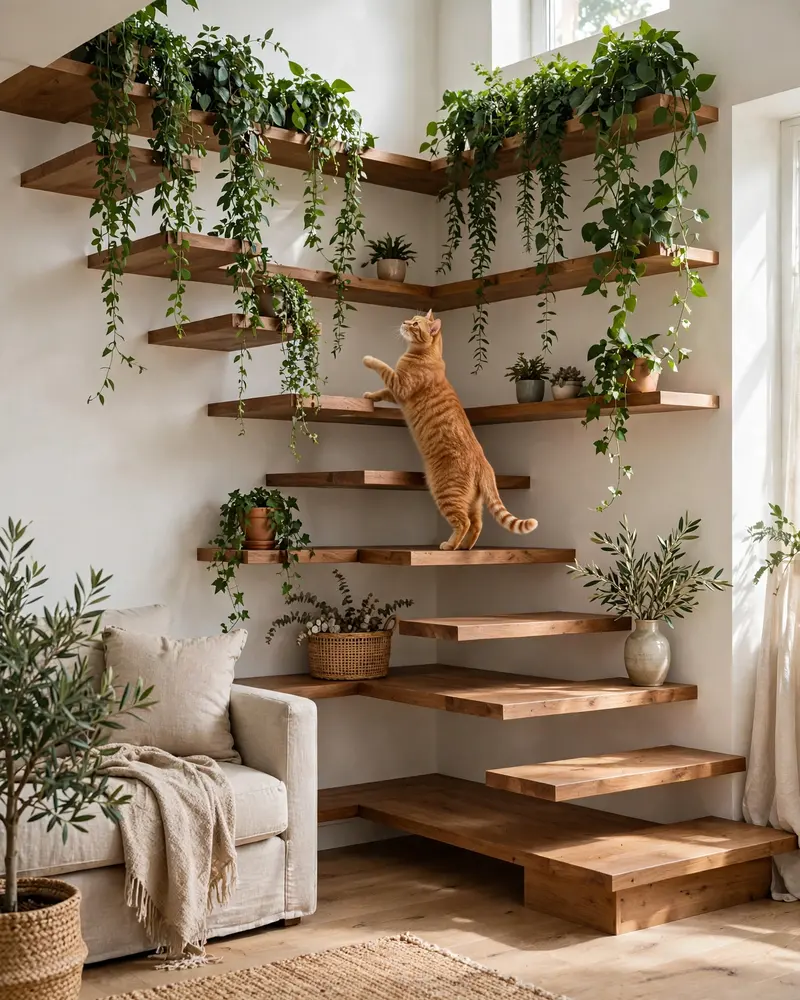
Dead corners become prime real estate with a staircase of cat shelves for wall climbing that wraps from one wall to the next. Small shelves ascending diagonally around the corner suit kittens, seniors, and cautious cats who prefer gradual climbs over vertical leaps, and the corner itself adds natural stability.
Drape a trailing pothos from the top shelf for a jungle feel, keep the middle shelves clear for landings, and add a carpet runner on each step. The staircase turns the most ignored corner of your living room into your cat’s favorite commute.
14. A Catified Reading Nook
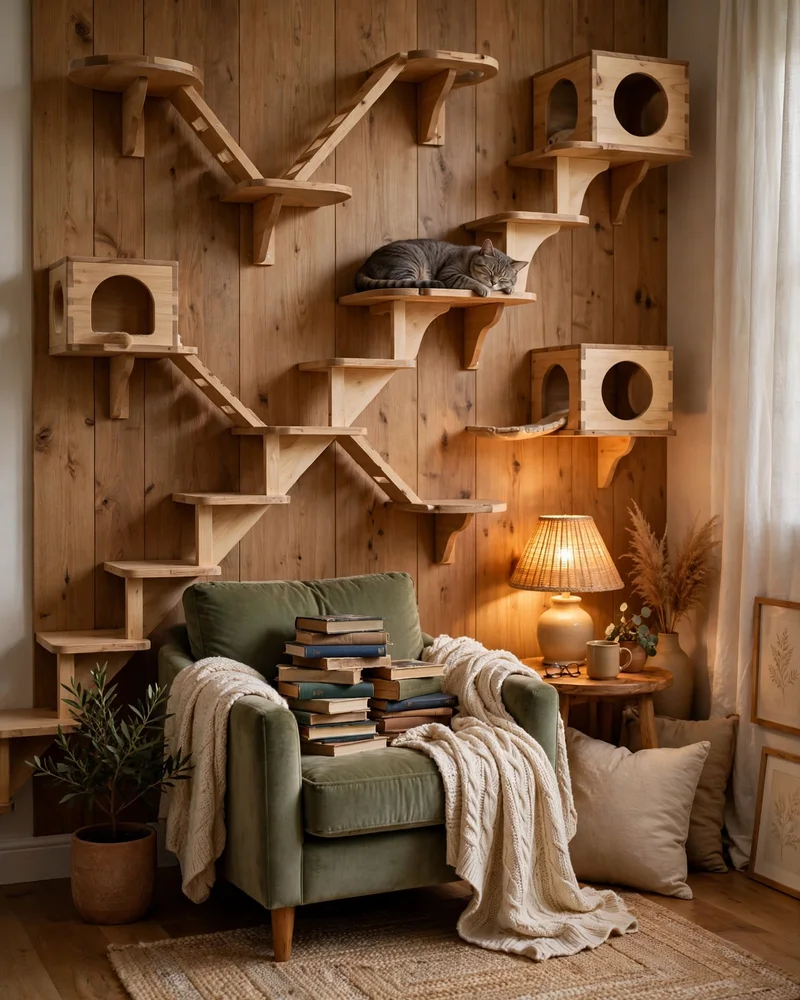
A truly catified room has at least one corner where human comfort and cat territory overlap, and a reading nook is the perfect place. Run wooden shelves up the wall above your armchair, add a cushion-lined perch at shoulder height, and suddenly your cat supervises every chapter from the best seat in the house.
Layer in a warm lamp, a knit throw, and a stack of books, and the nook works for both of you: you get the cozy corner, your cat gets elevation and company. Keep a small scratching panel on the side of the bookcase and the furniture stays safe while the supervisor stays close.
15. Modern Minimalist Cat Wall

Minimalists, rejoice: a cat wall can be as clean as a gallery installation. A single staggered line of light-oak perches on an all-white wall gives your cat the height they crave with almost no visual clutter. The trick is restraint, three to five perches, generous negative space, and materials that match your trim.
Choose hidden metal brackets for a true floating look, and resist the urge to decorate every perch. One cushion on the highest shelf marks the VIP spot, and the empty perches below stay ready for dramatic entrances. This is catification that a design magazine would not notice, until the cat arrives.
16. Boho Rattan Cat Shelves

Woven rattan baskets mounted at staggered heights create dreamy boho cat beds that look like wall decor until your cat curls up in one. The natural weave breathes in summer, the round shape cradles a sleeping cat, and the texture layers beautifully with macrame, jute, and trailing plants.
Choose sturdy, flat-backed baskets rated for your cat’s weight and anchor each one into a stud. Add a soft round cushion inside each basket, and hang one at window height so the occupant gets sunbeams and a view. It is the coziest spot in a boho bedroom, and your cat will claim it first.
17. Bedroom Cat Shelves for the Wall

Installing cat shelves for wall space in the bedroom means your cat can join you at night without claiming your pillow. Mount a couple of wide shelves above the headboard or along the side wall, giving your cat an elevated night watch post with a view of the whole room.
Keep the shelves near the bed low enough for an easy step up, and line them with quiet, washable bedding so midnight arrivals do not wake you. A small nightlight near the route helps older cats navigate after dark, and you both get to sleep in your own favorite spots.
18. Floor-to-Ceiling Cat Playground Wall

Go big or go home: a full floor-to-ceiling cat playground wall turns one accent wall into a complete feline amusement park. Layer shelves, tunnels, a hammock, scratching pads, and hideout boxes from skirting board to ceiling, with clear routes up, across, and back down at every stage.
Start with the climbing spine, then fill in rest spots and one bridge for drama. Keep everything in one material family, natural wood and cream fabric, so the mega-wall feels designed rather than chaotic. Multi-cat homes get the most from this setup: with this much vertical territory, everyone finds their own floor, and the 4 a.m. zoomies finally have a dedicated racetrack.
Frequently Asked Questions
How far apart should cat wall shelves be spaced?
Space cat wall shelves 12 to 18 inches apart vertically and 12 to 16 inches horizontally. That range lets most cats hop comfortably between levels without straining. Smaller, older, or less agile cats do better at the tighter end of that range, while athletic cats enjoy wider gaps, and no single jump should force an awkward landing.
How do I make cat wall shelves safe for my cat?
Always anchor shelves into wall studs with brackets and screws rated for at least 50 pounds, never rely on drywall alone. Sand all edges smooth, cover landings with carpet or non-slip mats, and make sure every route has a way up and a way down. Test each shelf by pressing firmly on all corners before your cat uses it, and recheck the hardware a few times a year.
Can I build cat shelves without damaging my walls?
Renter-friendly options exist, including tension-mounted poles, freestanding cat wall furniture, and strong adhesive hooks for lightweight pieces. These are best for small shelves and gentle cats. For full climbing walls, drilled studs are far safer; if you rent, ask your landlord first, since a collapsed shelf is worse than a few filled screw holes.
Can cat wall shelves replace a cat tree?
Cat shelves complement a cat tree more than they replace it. Shelves excel at creating pathways and perches around a room, while a tree offers a single compact station with scratching and hiding built in. Many cat owners start with two or three shelves and keep the tree, then expand the wall system as their cat’s preferences become clear.
What materials do I need to build DIY cat shelves?
You need solid wood boards or thick plywood, heavy-duty L-brackets, screws and wall anchors, a drill, a level, and a stud finder. For comfort and safety, add carpet scraps or non-slip mats on top, sanded-smooth edges, and a pet-safe wood finish. Avoid MDF and toxic adhesives, and keep sisal rope handy for wrapping any scratching zones.
Conclusion
A wall your cat can own changes the whole dynamic of a home: less counter-surfing, less furniture scratching, and one very smug cat surveying their kingdom from above. Whether you start with three floating shelves or commit to a full playground wall, every vertical foot you add is territory your cat did not have yesterday. Pick the idea that fits your space and your cat’s personality, mount it into the studs, and enjoy the show.
Emma Carter is a home decor writer who believes great rooms work for every member of the family, including the four-legged ones. She covers room makeovers, seasonal decorating, and pet-friendly design for NestStyleLiving.com.
Related ideas: 13 Floating Shelves Ideas to Style Your Living Room · 24 Vibrant Living Room Ideas That Stay Fresh for Years