21 Garden Pool Ideas for a Calm and Natural Backyard
A garden pool does more than cool you down on a hot afternoon — it changes the entire feeling of your backyard. The gentle sound of water, the way light moves across the surface, and the lush planting that gathers around it can turn even a modest yard into a place that feels calm, private, and deeply restorative. These garden pool ideas are all about working with nature rather than against it, so your pool feels like it grew out of the landscape instead of being dropped into it.
Whether you have room for a full natural swimming pool or only a corner for a small garden pool, the key is in the details: soft stone edges instead of harsh concrete, layered poolside planting ideas instead of bare paving, and shapes that echo the curves of your garden. Below you will find 21 calm, natural backyard pool designs — from swimming ponds and plunge pools to Mediterranean retreats and zen-inspired escapes — each with practical tips to help you plan your own.
1. Natural Swimming Pond Pool

A natural swimming pond is the ultimate calm garden pool idea because it blends swimming and wildlife habitat into one living ecosystem. Roughly half the area is a deeper swimming zone, while the rest is a shallow planted regeneration zone filled with water lilies, irises, and rushes that filter the water naturally. A gravel bed underneath keeps the water clear without the harsh chemical smell of a conventional pool.
Plan for a slightly larger footprint than a standard pool, since the planting zone needs real space to work — aim for at least 40 to 50 percent of the total area as regeneration planting. Use a flexible EPDM liner, and keep the swimming zone free of soil so the water stays swimmable. The result feels like a secret pond you get to swim in, and frogs and dragonflies will move in within the first season.
2. Small Corner Plunge Pool
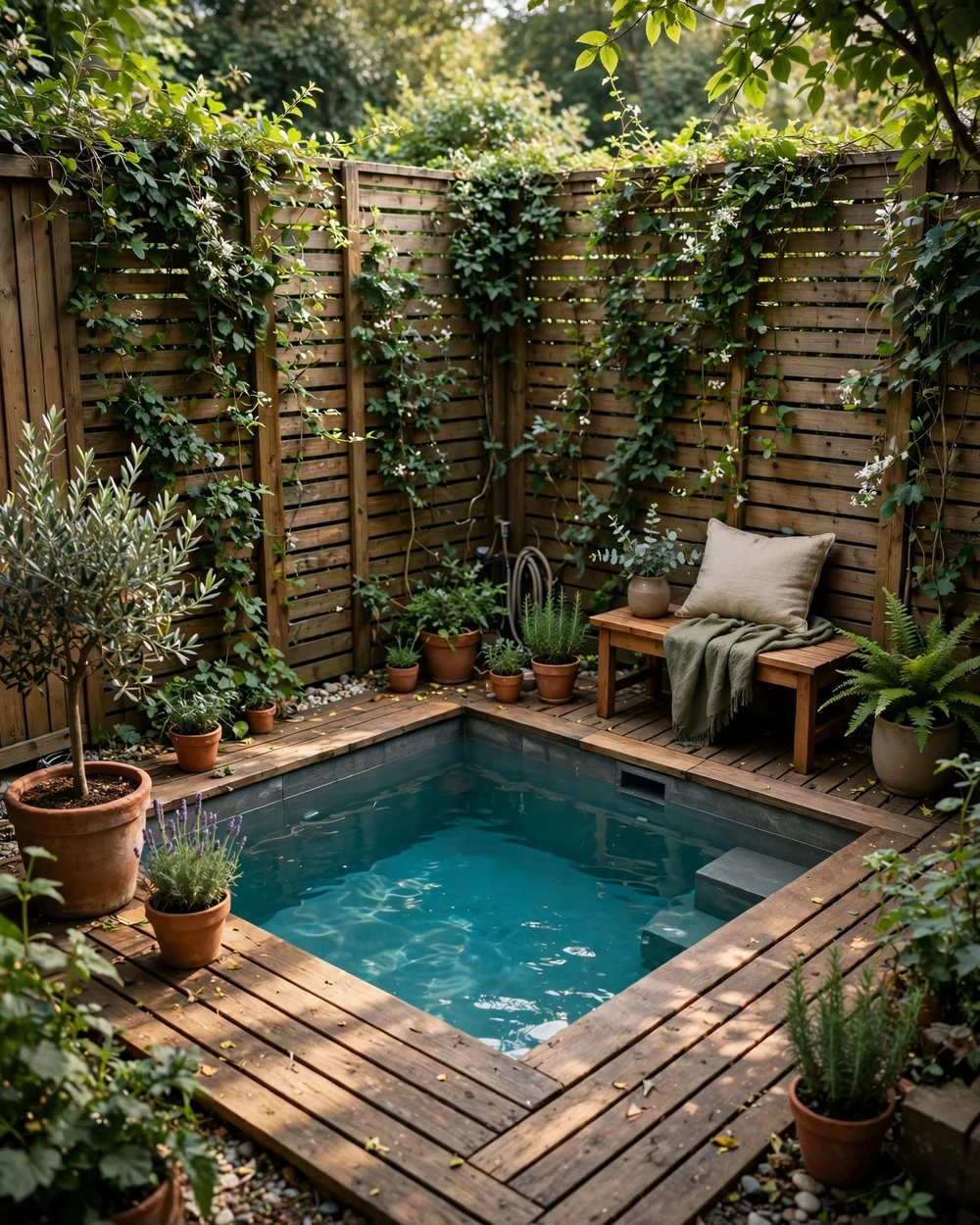
If your yard is compact, a small garden pool does not have to mean no pool at all. A corner plunge pool — typically around 8 by 12 feet — tucks neatly into an underused corner and delivers the full cooling-off experience. Because the footprint is small, you can afford nicer finishes: a warm wooden deck, quality coping, and generous planting that makes the pool feel like a destination rather than an afterthought.
Position the pool where it catches afternoon shade so the water stays refreshing through summer. Raise one edge slightly to create a built-in bench seat, which doubles as a perch for morning coffee. Surround it with potted plants and a small bench, and even the tiniest backyard suddenly has a private plunge pool retreat that feels intentional and calm.
3. Stone-Edged Lagoon Pool

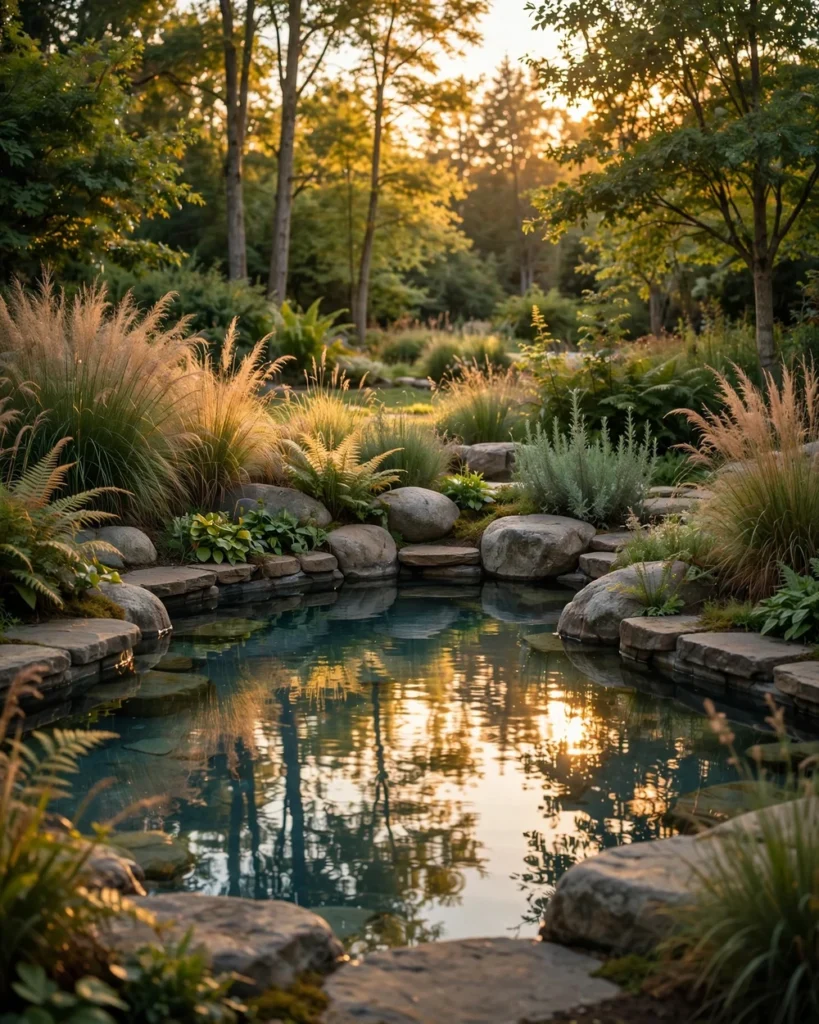
Straight lines and sharp corners can make a pool feel industrial, but a freeform lagoon shape with natural stone coping does the opposite. A kidney or organic curved shape softens the whole yard, and irregular boulders and flagstone edging blur the line between pool and garden. This is one of the most timeless garden pool landscaping ideas because it works in almost any style of backyard.
Choose a local stone so the colors echo your region’s natural landscape — sandstone in warm climates, slate or granite where it fits. Vary the boulder sizes, with a few large feature rocks anchoring the design. Fill the gaps between stones with creeping groundcovers like Irish moss or creeping thyme, which soften the edges further and release scent when brushed against.
4. Wooden Deck Pool Surround
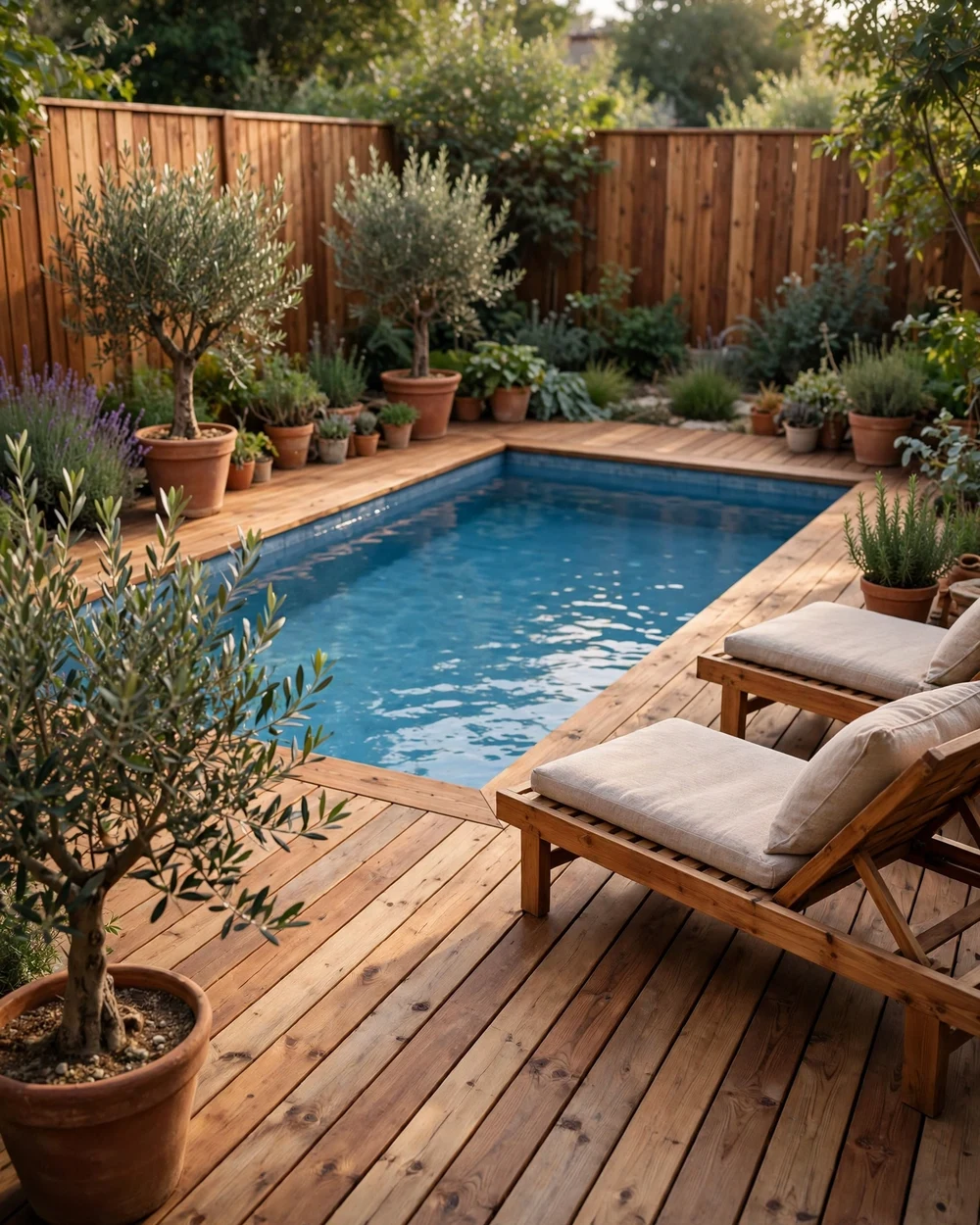
A wooden deck wrapping around your pool instantly adds warmth that concrete and pavers cannot match. Cedar, redwood, or thermally treated boards feel comfortable under bare feet, stay cooler than stone in direct sun, and bring a natural, cabin-like calm to the whole area. For small backyard pool ideas, decking is also practical: it can be built over uneven ground without major excavation.
Leave a narrow gap between the deck and the pool coping for drainage, and slope the deck slightly away from the water. Choose a hidden fastener system so there are no exposed screws underfoot. A simple oil finish every year or two keeps the wood rich and weatherproof. Add two loungers and a potted olive tree, and your deck becomes the quietest seat in the garden.
5. Tropical-Plant Framed Pool
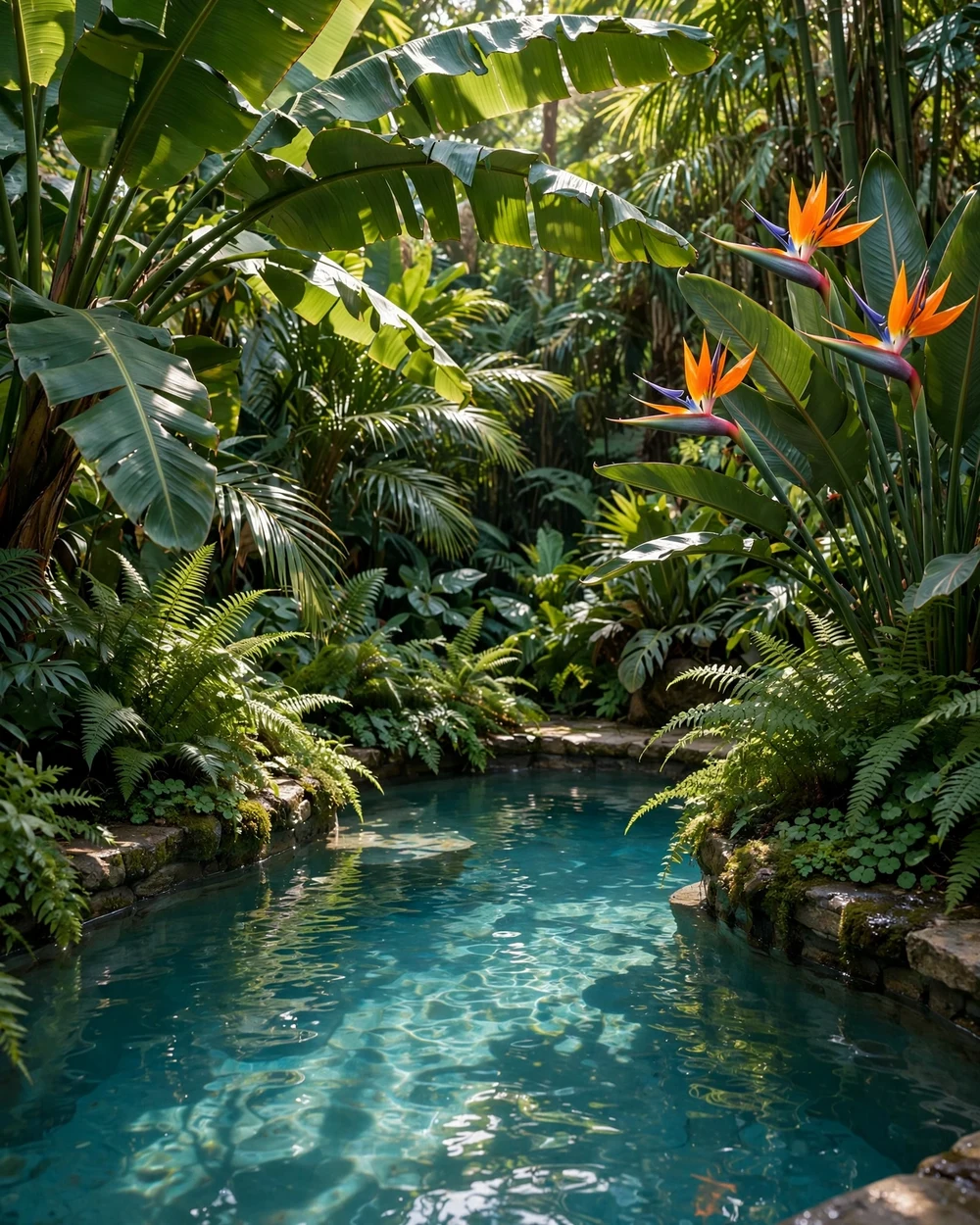
You do not need a flight to the tropics when your pool is wrapped in lush, oversized foliage. Banana plants, bird of paradise, cannas, and tree ferns create a private jungle canopy that makes even a basic rectangular pool feel like a resort escape. Dense planting also muffles neighborhood noise, which is half the battle in creating a calm backyard.
In cooler climates, grow the showiest tropicals in large pots so they can overwinter indoors, and rely on hardy lookalikes — like hardy banana (Musa basjoo) and big-leaf hostas — for permanent structure. Layer heights: tall plants at the back, mid-size shrubs in the middle, and ferns or mondo grass spilling toward the water. Just keep heavy shedders away from the pool edge to cut down on skimming.
6. Rock Waterfall Pool

Moving water is the fastest shortcut to a calm garden. A waterfall built from stacked natural rocks turns your pool into a multi-sensory retreat — you hear it before you see it, and the sound masks traffic and neighbor noise beautifully. Even a modest 2-foot cascade adds drama, while a taller multi-tier fall becomes the undisputed focal point of the yard.
Build the waterfall on the side of the pool opposite your main seating so you face it while you swim or lounge. Tuck ferns and mosses into the crevices between rocks, and use a variable-speed pump so you can dial the flow from a gentle trickle to a lively rush. Keep the rockwork natural-looking by mixing sizes and avoiding perfectly symmetrical stacking — nature never builds in straight lines.
7. Eco-Friendly Bio-Filter Pool

An eco-friendly pool takes the natural swimming pond concept and refines it for swimmers who want crystal-clear water without chlorine. A dedicated bio-filter zone — packed with gravel, beneficial bacteria, and aquatic plants — circulates and cleans the water continuously. The swimming area stays pristine while the planted zone hums with life, giving you the best of both worlds.
The system needs a reliable pump running most of the day to push water through the filter bed, so factor in electricity costs when planning. Stock the filter zone with a mix of submerged oxygenators, marginal plants like rushes and sedges, and a few floating plants for shade. Once established, maintenance is mostly seasonal plant care — no chemical balancing, no stinging eyes, just soft natural water.
8. Mediterranean Tile Pool

For sun-drenched calm, few garden pool ideas rival the Mediterranean look: turquoise water, hand-painted blue and white tiles, warm terracotta underfoot, and the silvery-green of olive trees overhead. The palette is simple — water blue, plaster white, clay red — but the effect is pure vacation, every single day.
You do not need a full renovation to capture it. A tile band at the waterline, terracotta pots planted with lavender and rosemary, and a whitewashed wall or fence section can transform an ordinary pool in a weekend. Add a wrought-iron bench and a gravel patio, and the space feels like a Greek island courtyard. The scented planting is part of the magic — brush past rosemary on your way to swim and the whole experience deepens.
9. Circular Soaking Pool
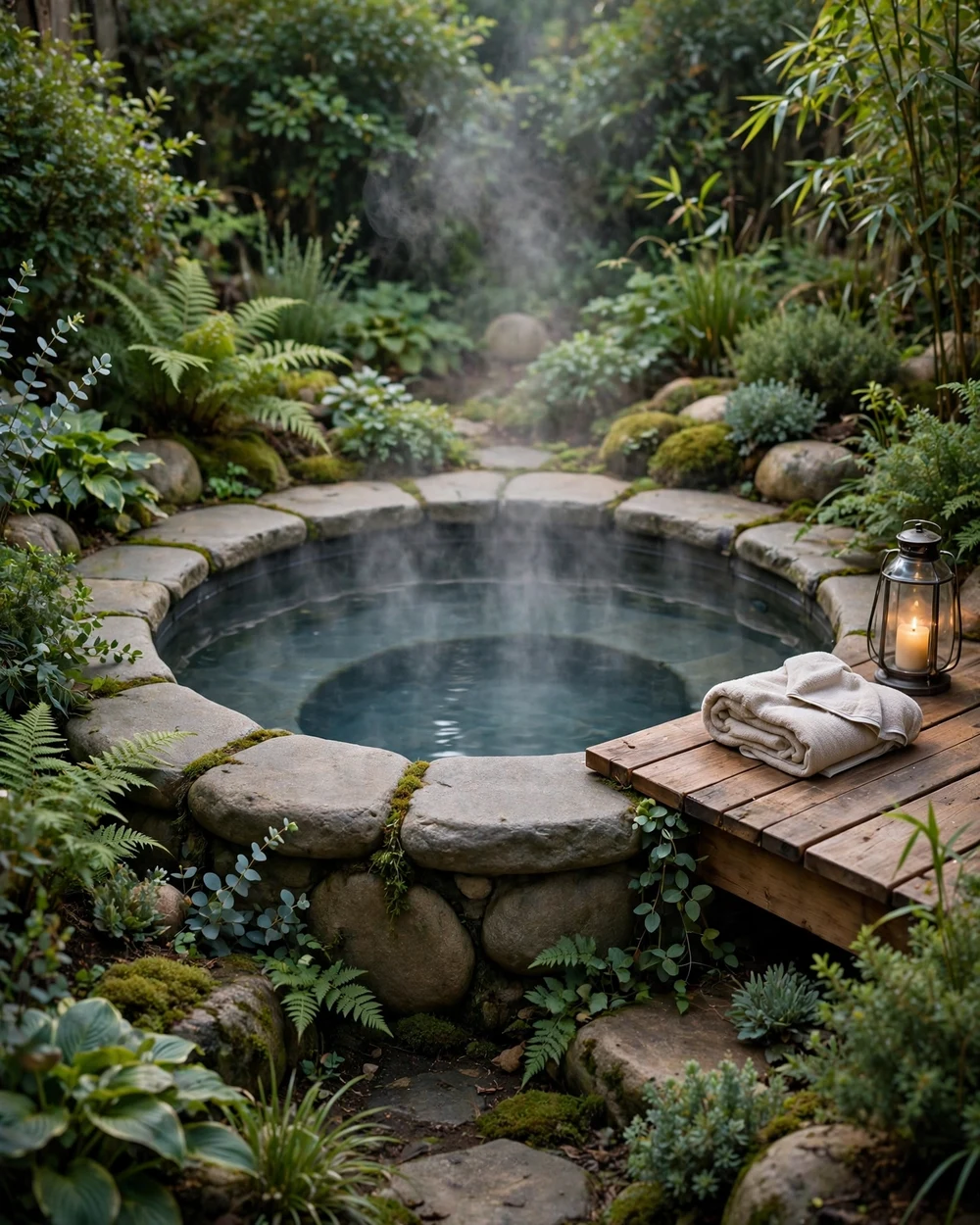
Round pools have a softness that rectangular pools lack, and a circular soaking pool feels more like a natural spring than a built structure. With no corners to navigate, a 10 to 12-foot diameter circle is surprisingly spacious for two people to float and unwind. The curved edge also tucks beautifully into garden beds, making it ideal for small garden pool ideas where every inch counts.
A raised stone or timber surround doubles as seating and keeps soil and mulch out of the water. Consider heating it slightly — even a few degrees extends your swimming season by months and turns evening dips into a ritual. Finish with a small deck platform for towels and a lantern, and this compact circle becomes the most peaceful corner of your property.
10. Poolside Pergola Lounge
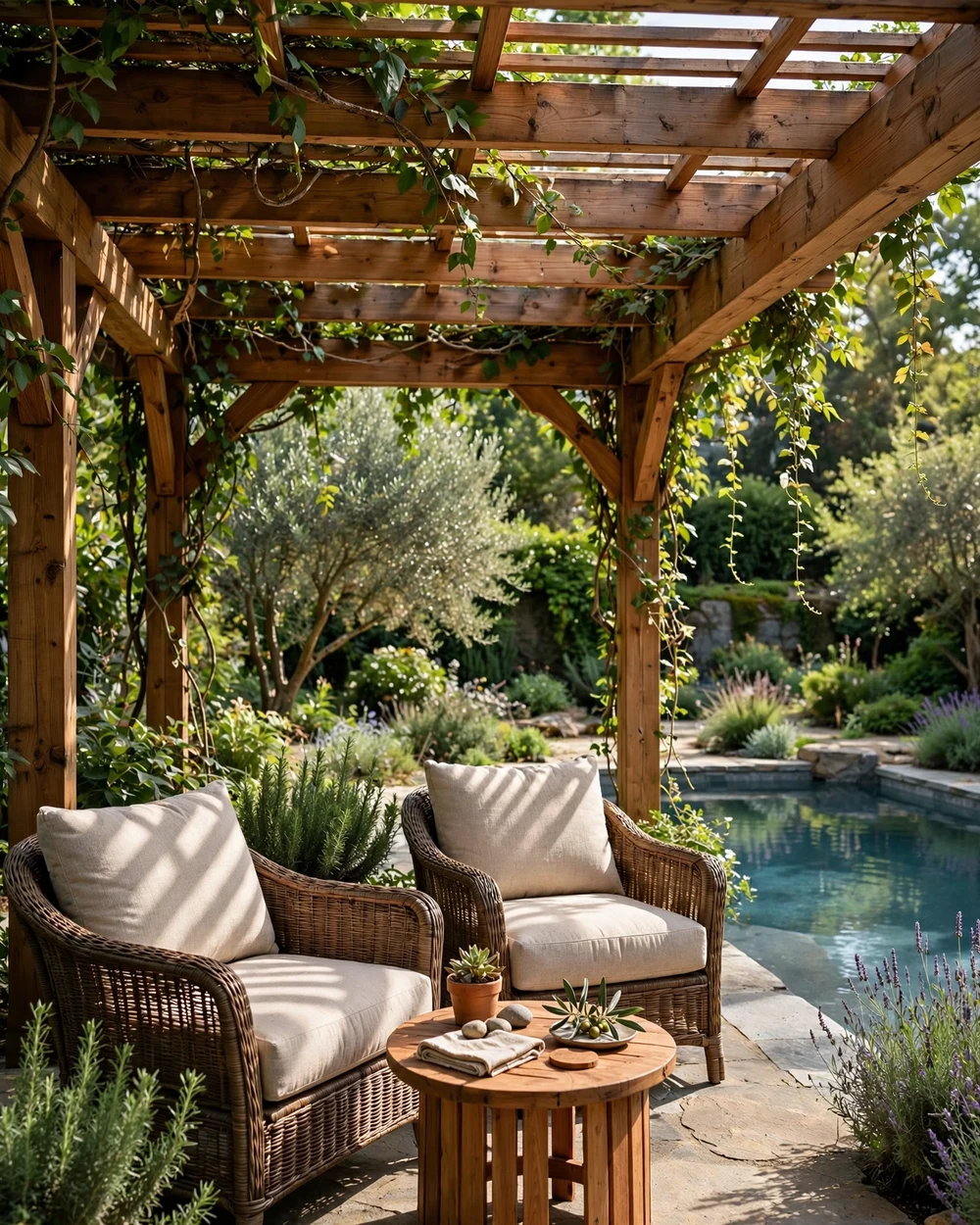
Every calm pool needs a shady place to retreat when the sun gets strong, and a pergola beside the water is the classic answer. Climbing vines — jasmine, wisteria, or grape — weave through the beams to create dappled shade that moves through the day, while the structure itself gives the poolside a sense of enclosure and intention.
Place the pergola on the side of the pool that catches the harshest afternoon sun, and orient the loungers to face the water so you never lose the view. Train one vigorous climber up each post rather than planting several competing vines. A ceiling fan or a couple of outdoor-rated pendant lights extends the pergola’s usefulness into warm evenings, making it the natural gathering spot after a swim.
11. Gravel Beach Entry Pool
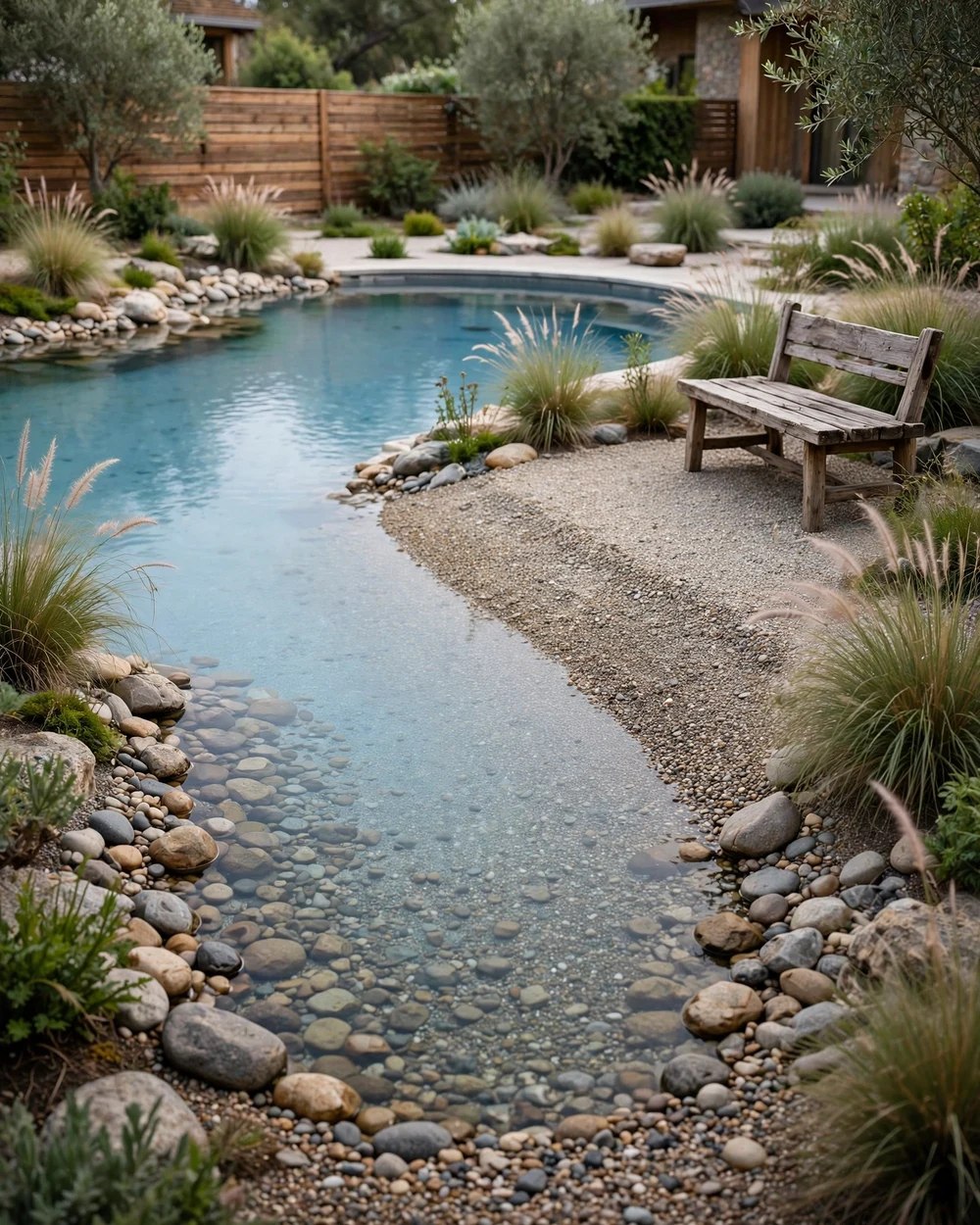
A beach entry — a gently sloping shoreline instead of steps or a ladder — is one of the most natural-feeling ways to enter a pool. Fine gravel and smooth river stones create a gradual wade-in zone where kids can splash safely and adults can sit with just their feet in the water. It reads as a lakeshore rather than a swimming pool, which is exactly the point.
The slope needs to be gentle, roughly one foot of drop for every seven feet of run, and the surface should be a pool-safe aggregate rather than loose gravel that drifts. Extend the stone edging into the surrounding garden so the “beach” feels connected to the landscape. A wooden bench at the water’s edge completes the scene and gives non-swimmers a front-row seat.
12. Raised Infinity-Edge Pool
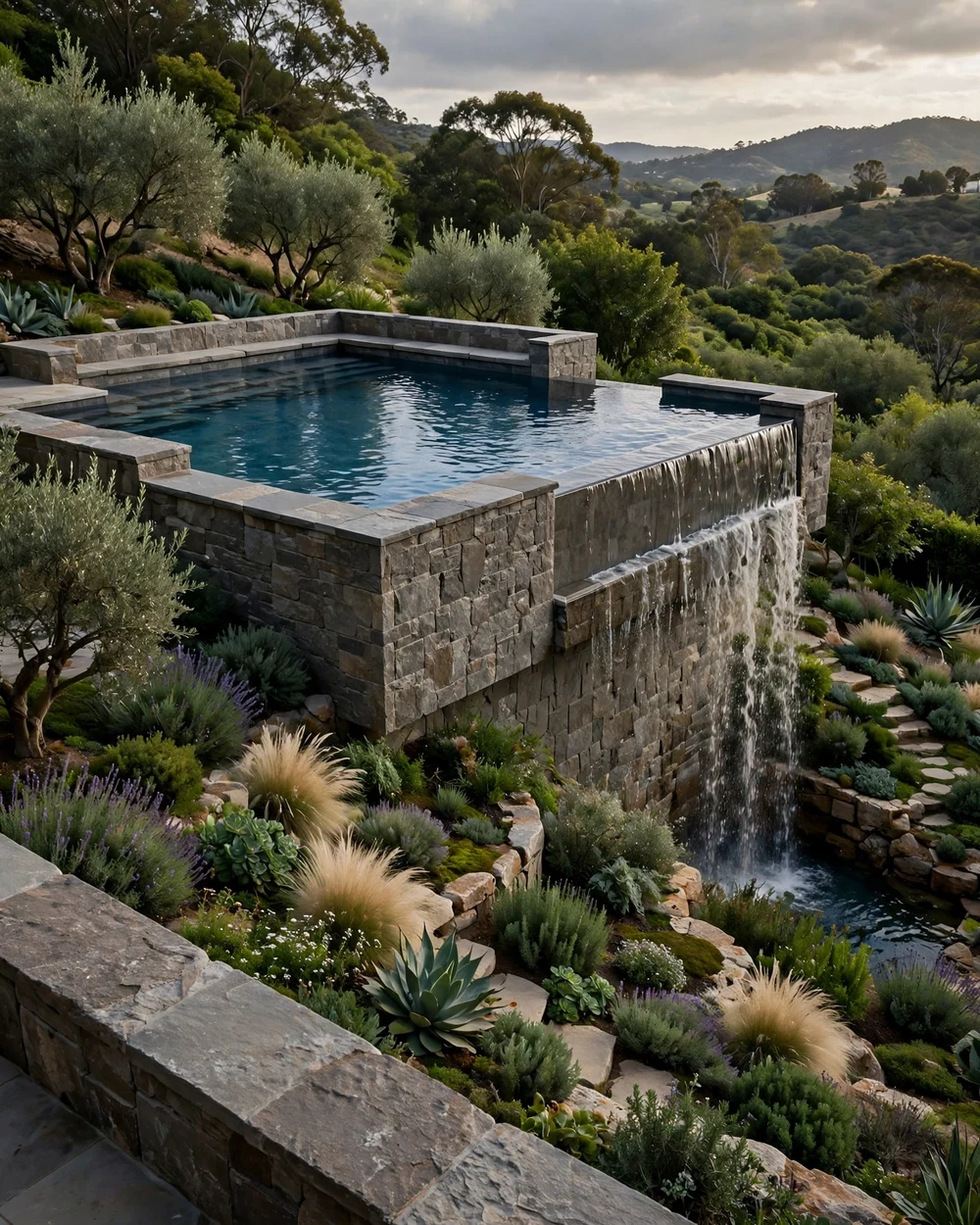
On a sloped yard, a raised pool with an infinity edge turns a tricky site into a showpiece. The water appears to spill over the far edge into the garden below, and the raised stone walls double as casual seating — no extra furniture required. It is a bold look, but the calm comes from the unbroken horizon line of water meeting sky.
This is a job for a professional: the structural engineering, waterproofing, and catch basin below the edge all need to be right. Clad the raised walls in natural stone to keep the look grounded rather than resort-flashy. Because the pool sits elevated, surround the lower side with layered planting — tall grasses, then shrubs, then groundcover — so the structure settles visually into the slope instead of looming over it.
13. Shady Tree-Canopy Pool
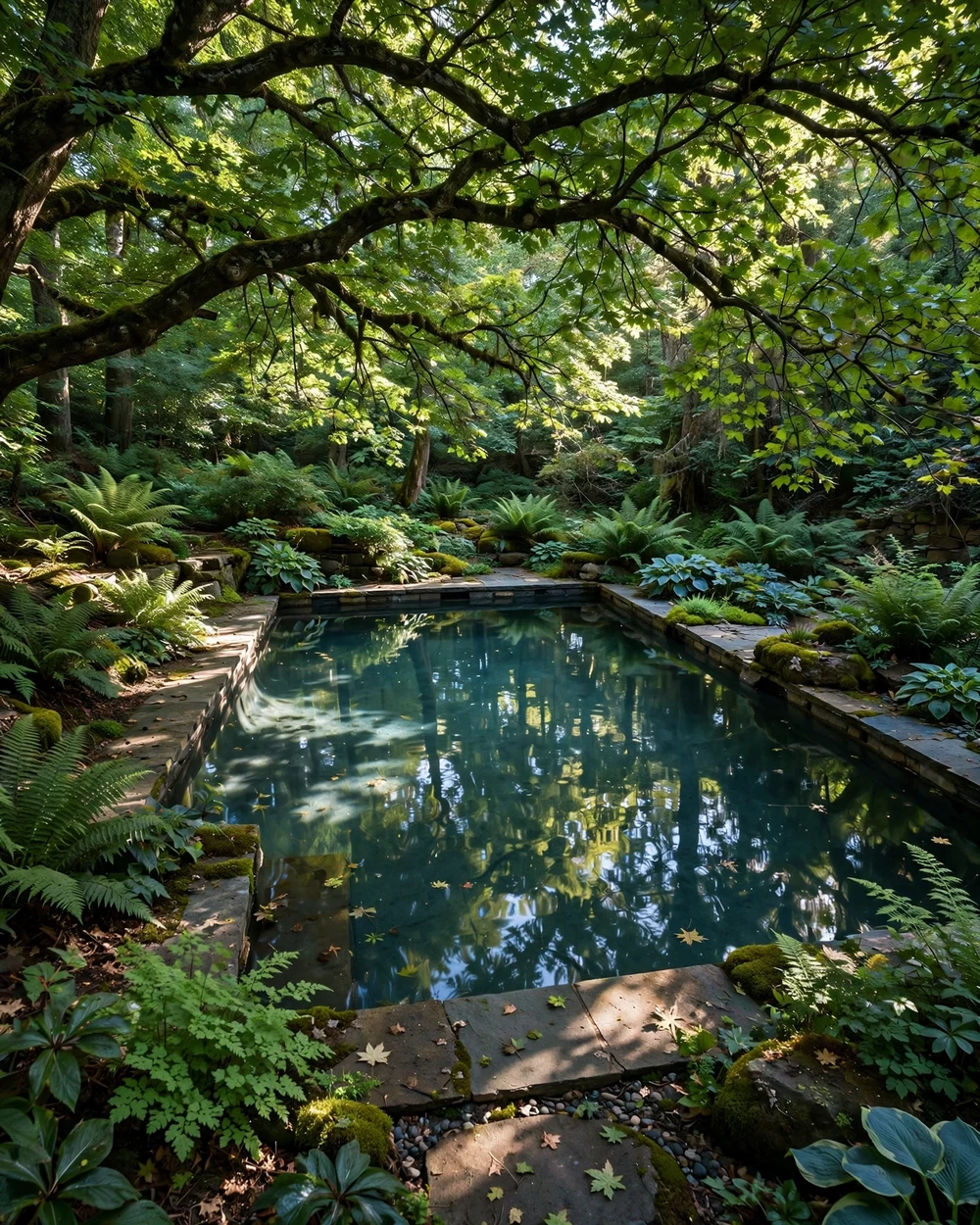
A pool tucked beneath mature trees has a woodland calm that no amount of landscaping can fake — dappled light on the water, birdsong overhead, and naturally cool temperatures on the hottest days. If you already have a big tree in the yard, designing the pool around it is often smarter than clearing the site.
There are practicalities to respect. Install a root barrier between the tree and the pool shell, and choose trees with less aggressive roots where possible. A good skimmer system and a leaf net for autumn are non-negotiable, since canopy pools collect more debris. Avoid heavy fruiting trees directly overhead. Done right, swimming under green branches feels like a forest bathing ritual in your own backyard.
14. Cottage Garden Flower Pool

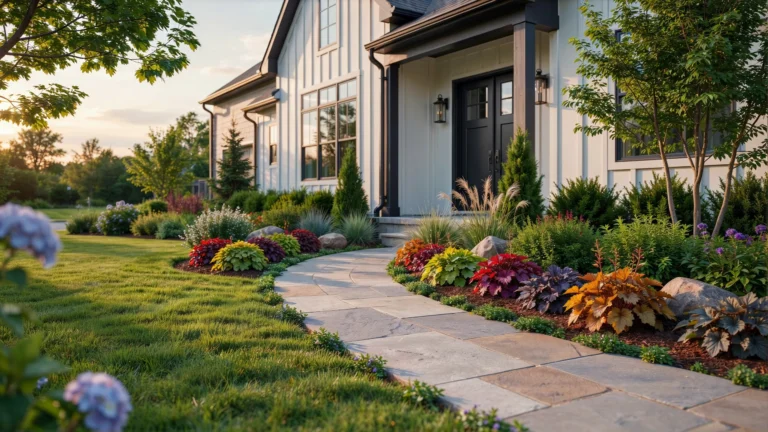
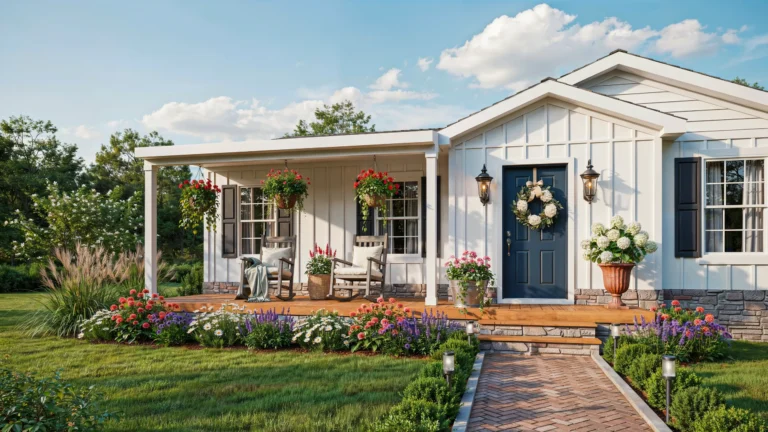
Pairing a pool with a cottage garden might sound unusual, but billowing flower borders softening a pool’s hard edges is pure romance. Roses, lavender, daisies, foxgloves, and catmint spill toward the water in drifts of color, and the scent on a summer evening is unforgettable. The contrast between structured water and joyful planting is what makes it work.
Keep a clean coping strip of at least a foot between the flowers and the water so petals and mulch do not constantly blow in. Choose deadheading-friendly varieties to keep the display going all season, and favor flowers over heavy seeders near the pool. A white picket fence or simple trellis behind the border completes the cottage picture and gives climbing roses something to scramble over.
15. Modern Minimal Concrete Pool

Calm does not always mean rustic — a modern minimal concrete pool finds serenity in restraint. Smooth gray concrete, flush coping, and mirror-still water create a meditative, gallery-like stillness. With almost no visual clutter, your eye rests on the water itself, which becomes the garden’s quiet centerpiece.
The discipline is in the details: one strong material, one or two architectural plants (a sculptural olive, a stand of horsetail reed), and generous negative space around the pool. Keep the waterline tile simple or skip it entirely for an uninterrupted plane. This style demands precision in construction — any flaw shows — so hire a contractor experienced in architectural concrete. The payoff is a pool that feels like a private spa pavilion.
16. Privacy Hedge Pool
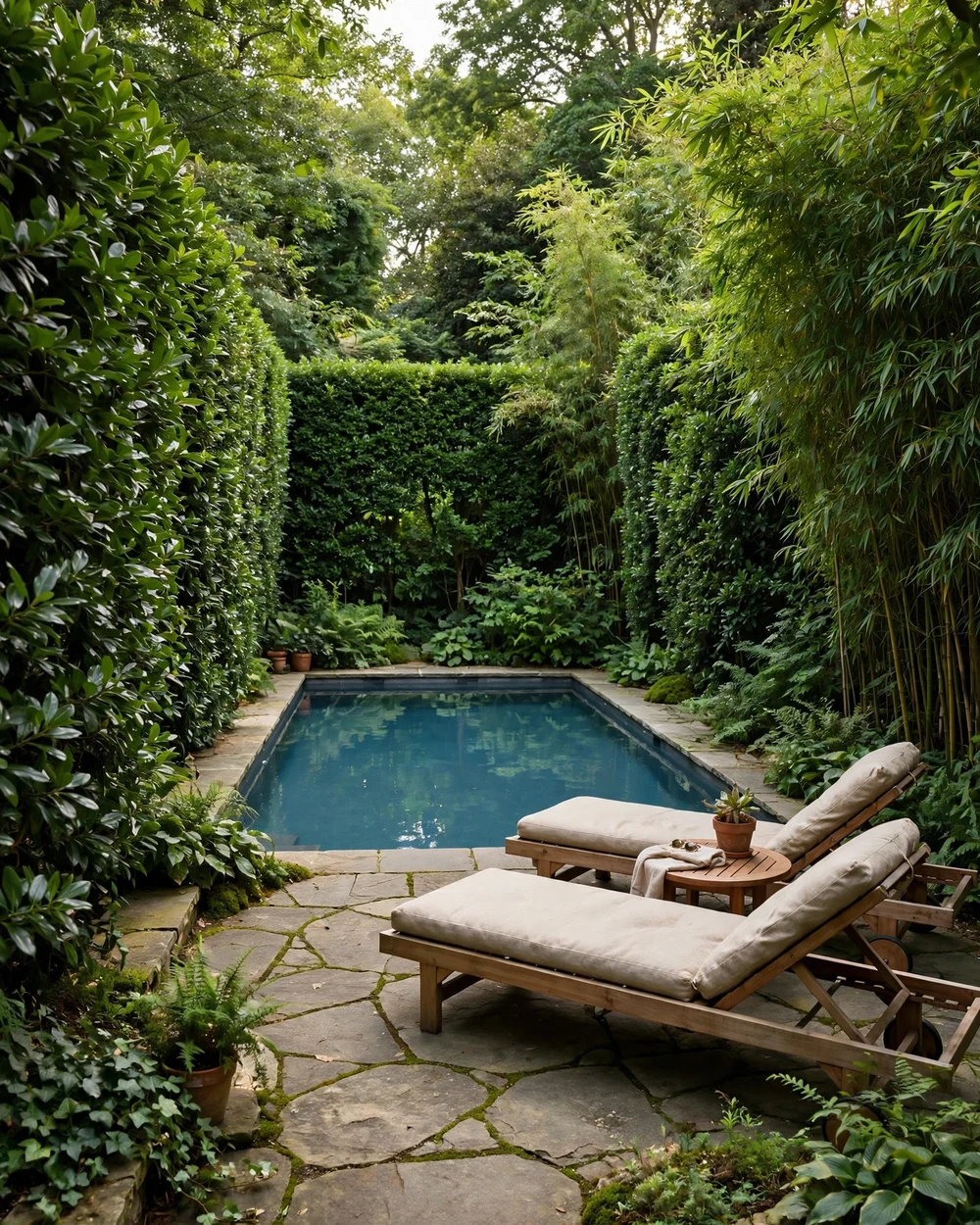
You cannot relax in a pool you feel watched in, which makes pool privacy landscaping one of the most valuable upgrades you can make. Tall evergreen hedges — laurel, arborvitae, or clumping bamboo — create a living wall that blocks sightlines, softens noise, and gives the pool area the secluded feel of a hidden garden room.
Plant hedges at least 6 feet from the pool coping so roots and falling leaves stay manageable, and choose evergreen varieties for year-round screening. A double row — tall hedge behind, lower flowering shrubs in front — looks far more natural than a single flat wall of green. Be patient: even fast growers need two to three seasons to fill in, so consider a temporary reed screen while the hedge matures.
17. Pool with Outdoor Shower
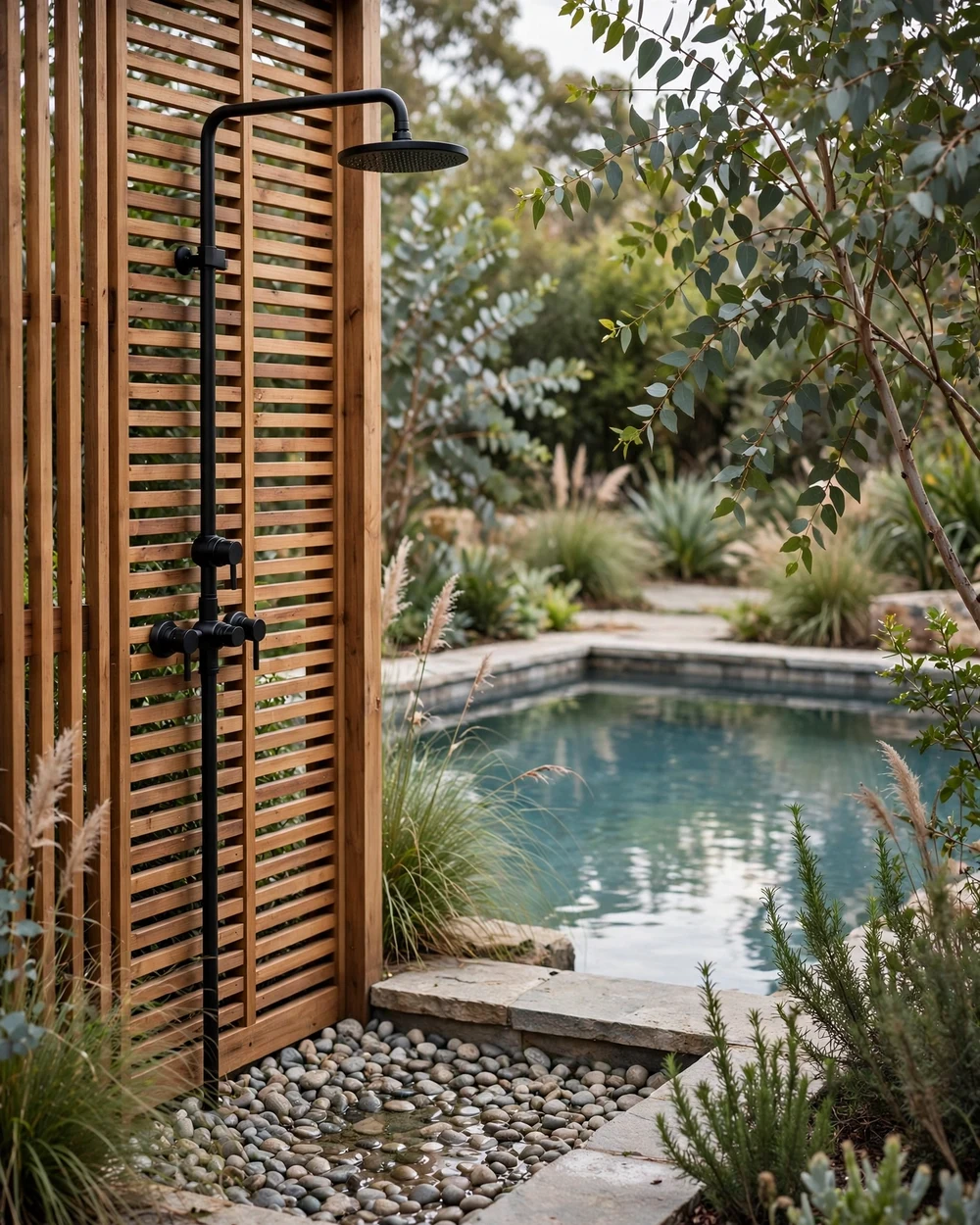
An outdoor shower beside the pool is a small luxury that changes your whole routine — rinse off before swimming to keep the water cleaner, and wash off afterward without trailing through the house. A simple matte-black fixture on a slatted wooden screen looks sharp, drains onto a pebble bed, and costs far less than most people expect.
Plumb it with both hot and cold feeds if your climate allows year-round use; even a cold-only rinse shower is wonderful in summer. Screen it with timber slats or tall grasses for modesty without full enclosure, and plant something fragrant nearby — eucalyptus or jasmine — so the shower becomes a sensory moment rather than a chore. It is the detail guests always remember.
18. Fire Pit by the Pool
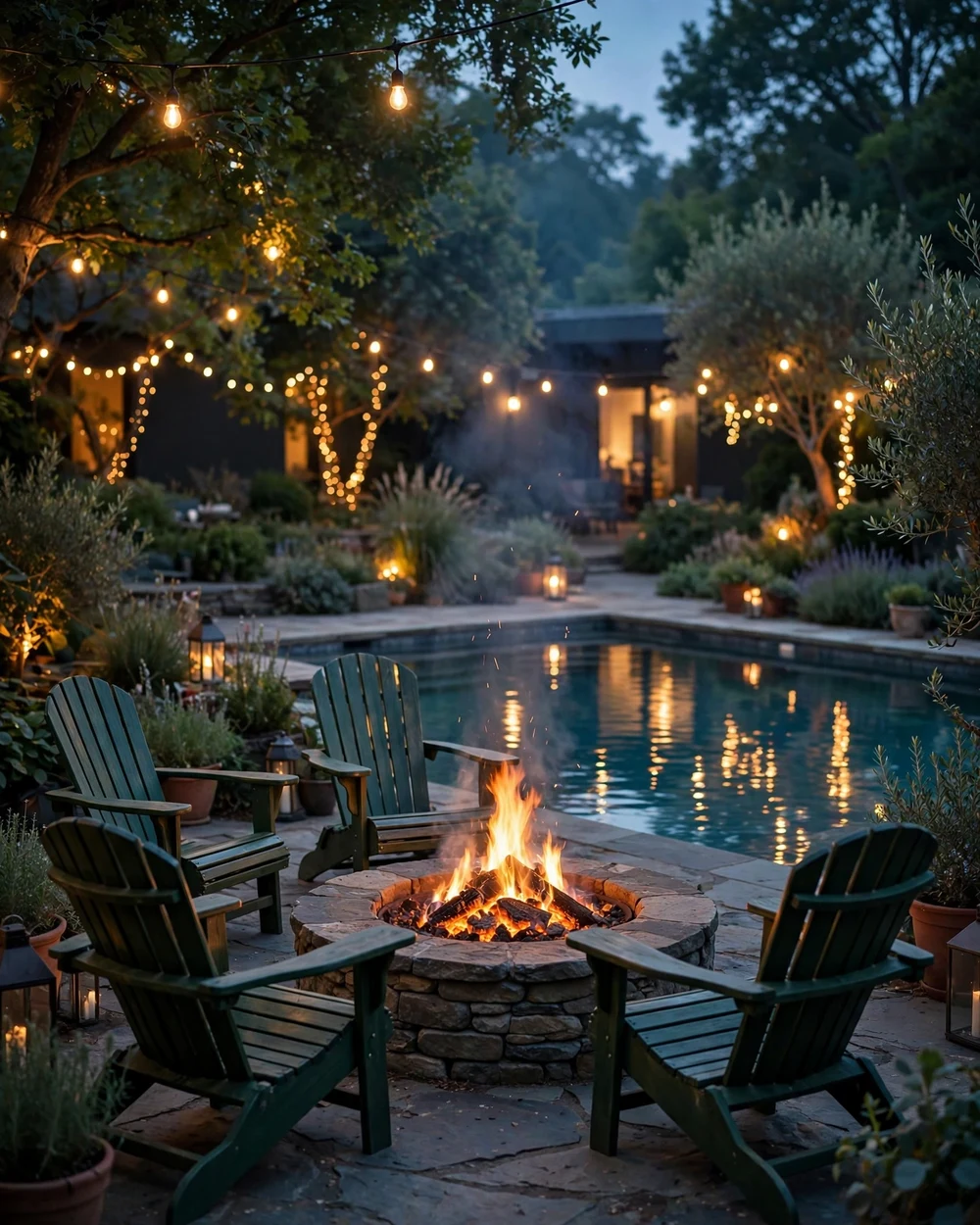
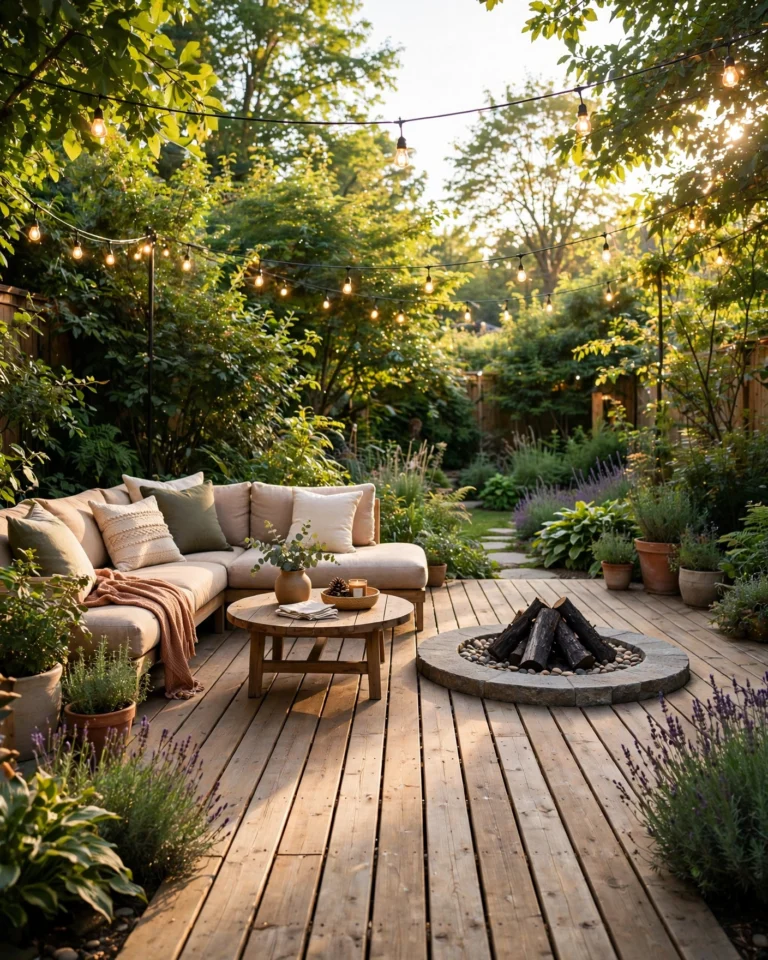
A pool does not have to go quiet after sunset. A fire pit a few steps from the water extends the evening — swim at dusk, then dry off beside the flames with chairs pulled close. The contrast of cool water and warm firelight is deeply relaxing, and it gives the poolside a second life as a gathering space long after swimming season’s peak hours.
Keep the fire pit at least 10 feet from the pool edge for safety and to protect the coping from heat. A low stone wall around the pit doubles as extra seating and a windbreak. Choose a wood-burning pit for crackle and scent, or gas for instant on-off convenience. Either way, the flickering light dancing on the pool’s surface at night is pure magic.
19. String-Lit Evening Pool

Lighting decides whether your pool feels inviting or abandoned after dark, and nothing beats the warm glow of string lights for calm. Festoon lights strung overhead in gentle swags turn the pool area into an outdoor room, their reflections doubling the sparkle on the water’s surface. It is the cheapest transformation on this list with one of the biggest payoffs.
Use outdoor-rated, shatterproof bulbs on a dimmer so you can tune the mood from lively to candlelit. Anchor the strings to the house, a pergola, or sturdy poles set in planters — never to trees in a way that girdles branches. Solar options exist, but plug-in strings give steadier light. Pair with a couple of underwater pool lights and the whole garden glows.
20. Herb and Grass Pool
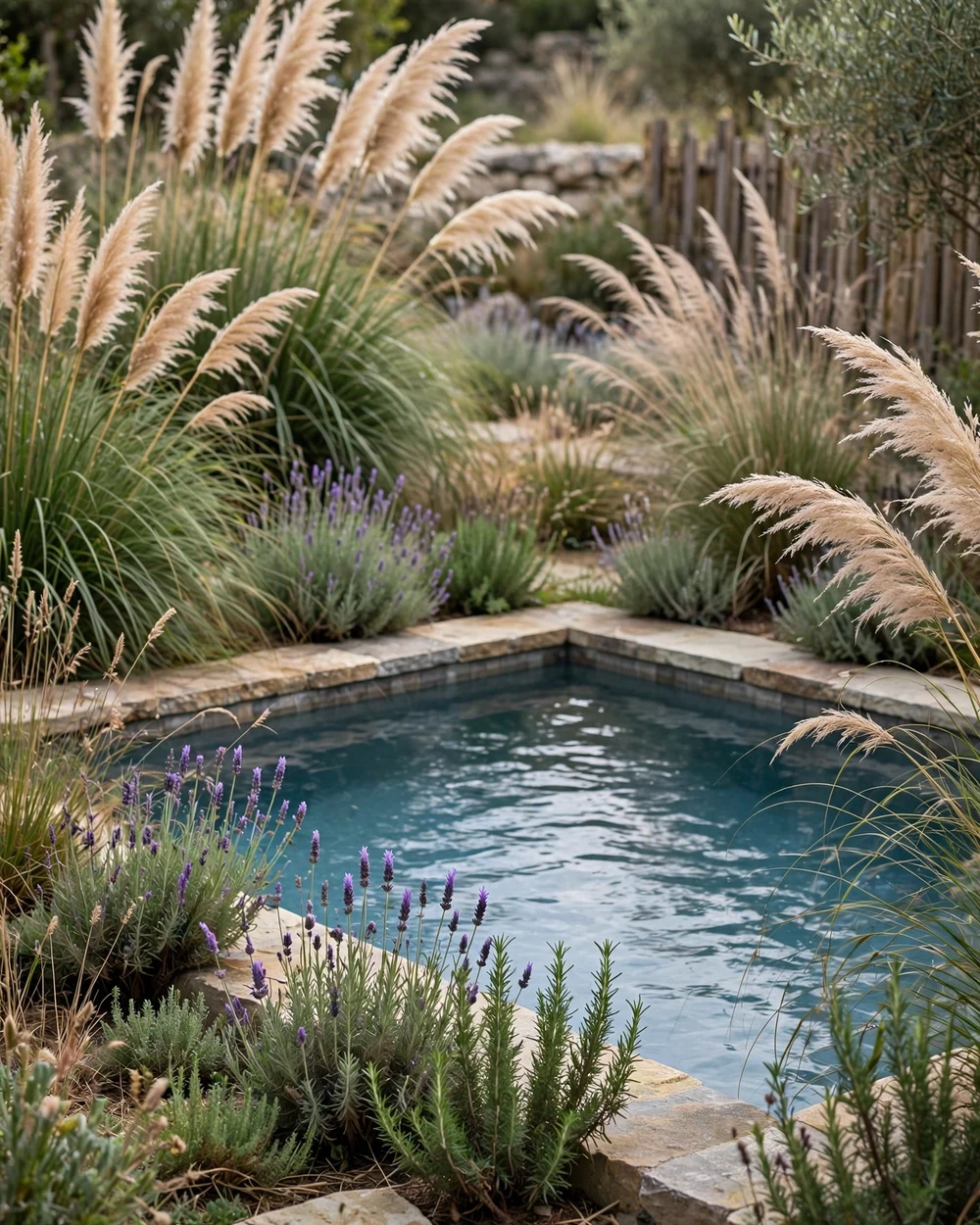
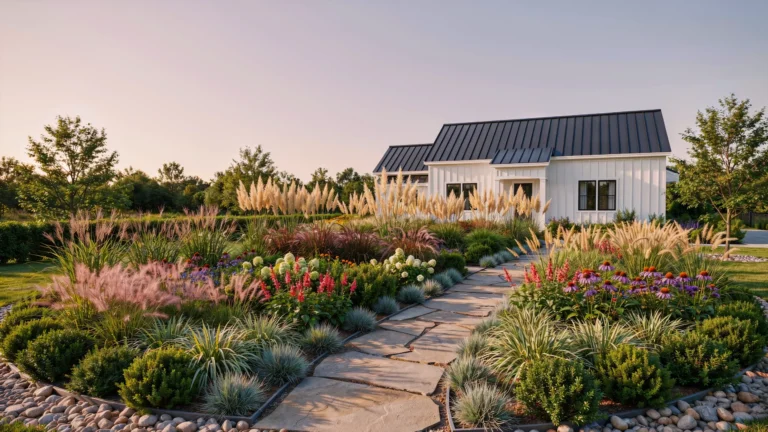
If you love the natural look but dread high-maintenance planting, ornamental grasses and herbs are the answer. Pampas grass, miscanthus, lavender, and rosemary need little water once established, shrug off pool splashes, and move beautifully in the breeze — which adds the gentle motion that makes a garden feel alive and calm.
Plant grasses in clumps of three or five for a natural drift effect, and keep the tallest varieties toward the back of the beds. Herbs pull double duty: rosemary and thyme scent the air, and you can snip them for the kitchen. Cut grasses back hard in late winter before new growth starts. This is genuinely one of the lowest-effort garden pool landscaping ideas, yet it looks effortlessly designed.
21. Zen Stone and Sand Pool

For the deepest calm, borrow from Japanese garden design: a minimalist pool framed by raked gravel, mossy boulders, a stone lantern, and a single pruned pine. The water becomes a still mirror, and the restrained palette of stone, sand, and green quiets the mind the way a temple garden does. Every element earns its place — nothing is decorative filler.
Keep the design asymmetrical, following the Japanese principle of avoiding perfect symmetry. A small area of raked gravel beside the pool can be maintained as a meditation practice in itself. Choose dark stone coping so the waterline reads as a clean, ink-like edge. This is not the pool for cannonballs — it is the pool for floating quietly at dawn, watching mist lift off the water.
Frequently Asked Questions
What is the cheapest type of garden pool to build?
A small above-ground plunge pool or a stock tank pool is the most budget-friendly route, often costing a fraction of an inground pool. If you want an inground look on a budget, a simple rectangular concrete or liner pool with minimal decking keeps costs down — you can always add natural stone edging and planting later as budget allows.
How much space do I need for a garden pool?
A compact plunge pool fits in as little as 8 by 12 feet, while a comfortable family pool usually needs at least 12 by 24 feet plus deck space around it. Natural swimming ponds need the most room, since the planted filtration zone should be roughly half the total area. Always check local setback rules before finalizing placement.
Are natural swimming pools hard to maintain?
They need different care, not necessarily more. Instead of balancing chemicals, you maintain the planted filter zone — trimming aquatic plants seasonally and keeping the pump running. Once the ecosystem establishes (usually one full season), the system largely looks after itself, though you will still skim leaves and clean the pump basket regularly.
What plants are best around a pool?
Choose plants that tolerate occasional splashes and do not drop excessive litter: ornamental grasses, lavender, rosemary, hostas, ferns, and cannas are all excellent. Avoid heavy shedders, thorny plants, and anything with invasive roots near the pool shell. In the water itself, water lilies, irises, and rushes suit natural and bio-filtered pools.
How do I keep my garden pool private?
Layered planting is the most natural solution: a tall evergreen hedge or clumping bamboo for the main screen, with lower shrubs in front for depth. Pergolas with climbing vines, slatted timber screens, and strategically placed trees also block sightlines. Start privacy planting early, since even fast growers need a couple of seasons to fill in fully.
Conclusion
A calm, natural backyard pool is less about the pool itself and more about everything around it — the stone underfoot, the planting at the water’s edge, the sound of moving water, and the sense of being gently enclosed by green. Whether you choose a wild swimming pond, a compact plunge pool, or a zen-inspired retreat, let the garden lead and the pool will feel like it belongs.
Start with the idea that fits your space and budget, then layer in the details that bring calm: soft edges, layered planting, warm light, and a comfortable place to sit. Your backyard is already halfway to a retreat — the water just completes it.