15 Home Office Design Ideas That Boost Focus and Style
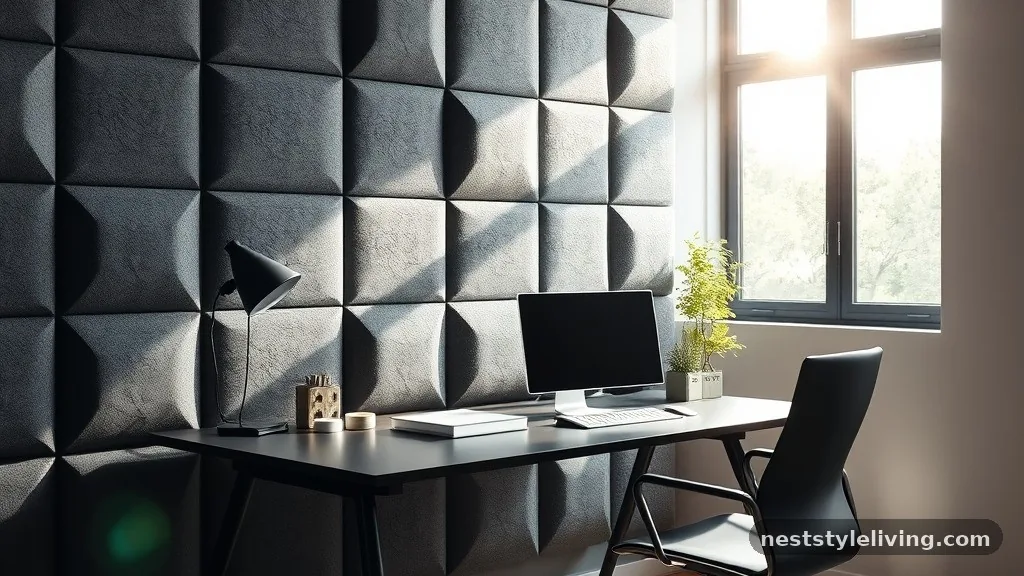
Implementing effective home office design ideas that boost focus and style transforms a standard room into a high-performance environment. By balancing aesthetic appeal with ergonomic functionality, you create a dedicated space where professional productivity thrives alongside personal comfort. This selection of design concepts emphasizes how specific materials, layouts, and lighting choices influence your cognitive clarity and daily output.
1. Acoustic Felt Wall Paneling
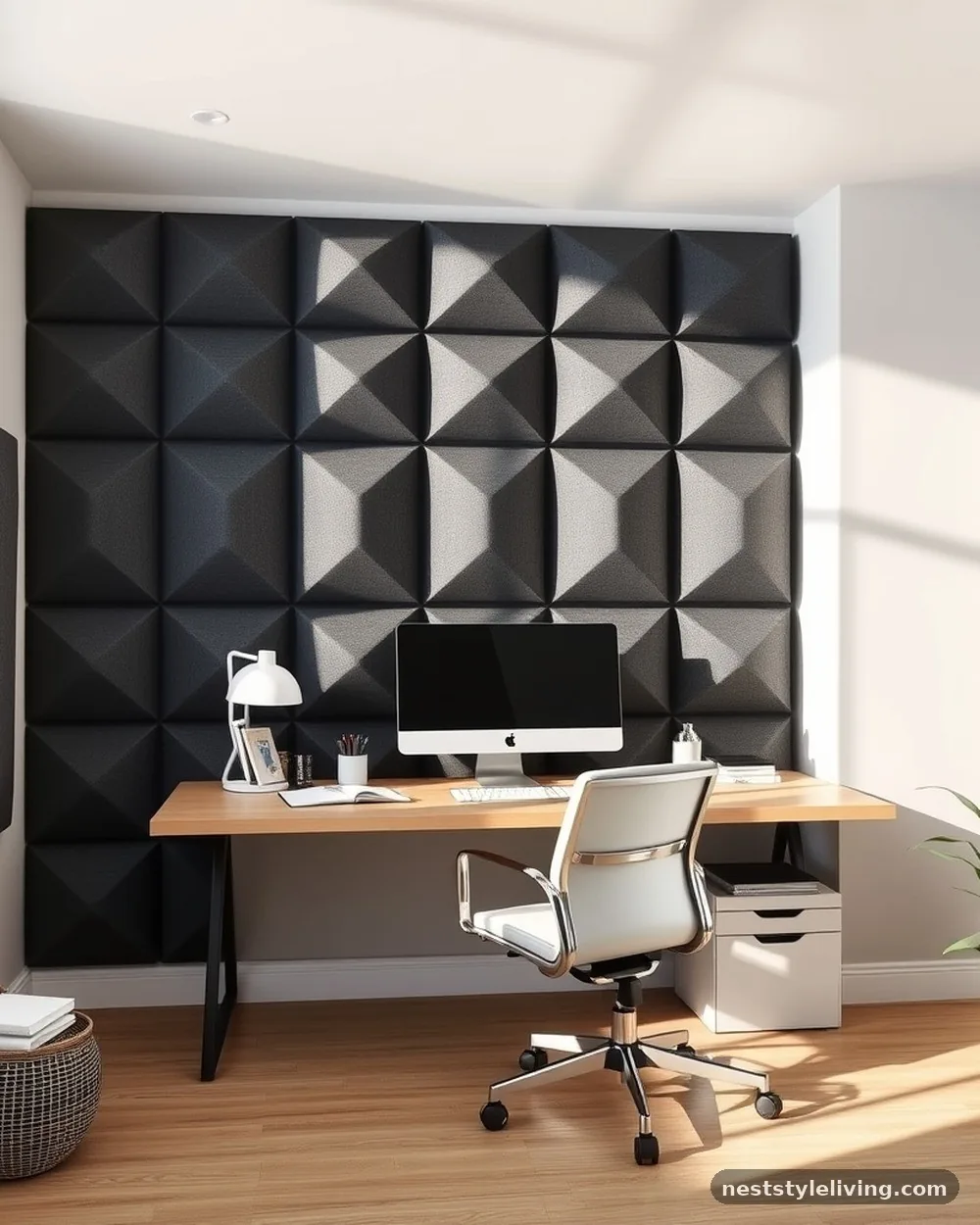
Acoustic felt panels serve a dual purpose: they dampen distracting echoes and provide a textured, modern look to your workspace. Available in modular geometric shapes or full-wall rolls, these panels are typically made from recycled PET plastic.
They are soft to the touch and offer a matte finish that absorbs sound waves, which is particularly useful if your desk sits in a high-traffic area of the house. The depth of the felt adds a layer of visual warmth, breaking up the clinical appearance of flat, painted drywall.
Install these panels using high-strength adhesive strips or construction adhesive directly onto your focal wall. Ensure you clean the wall surface thoroughly with isopropyl alcohol before application to guarantee the adhesive bonds correctly. If you are working in a rental, opt for peel-and-stick versions that are specifically labeled as damage-free to avoid losing your security deposit.
2. Biophilic Desk Integration
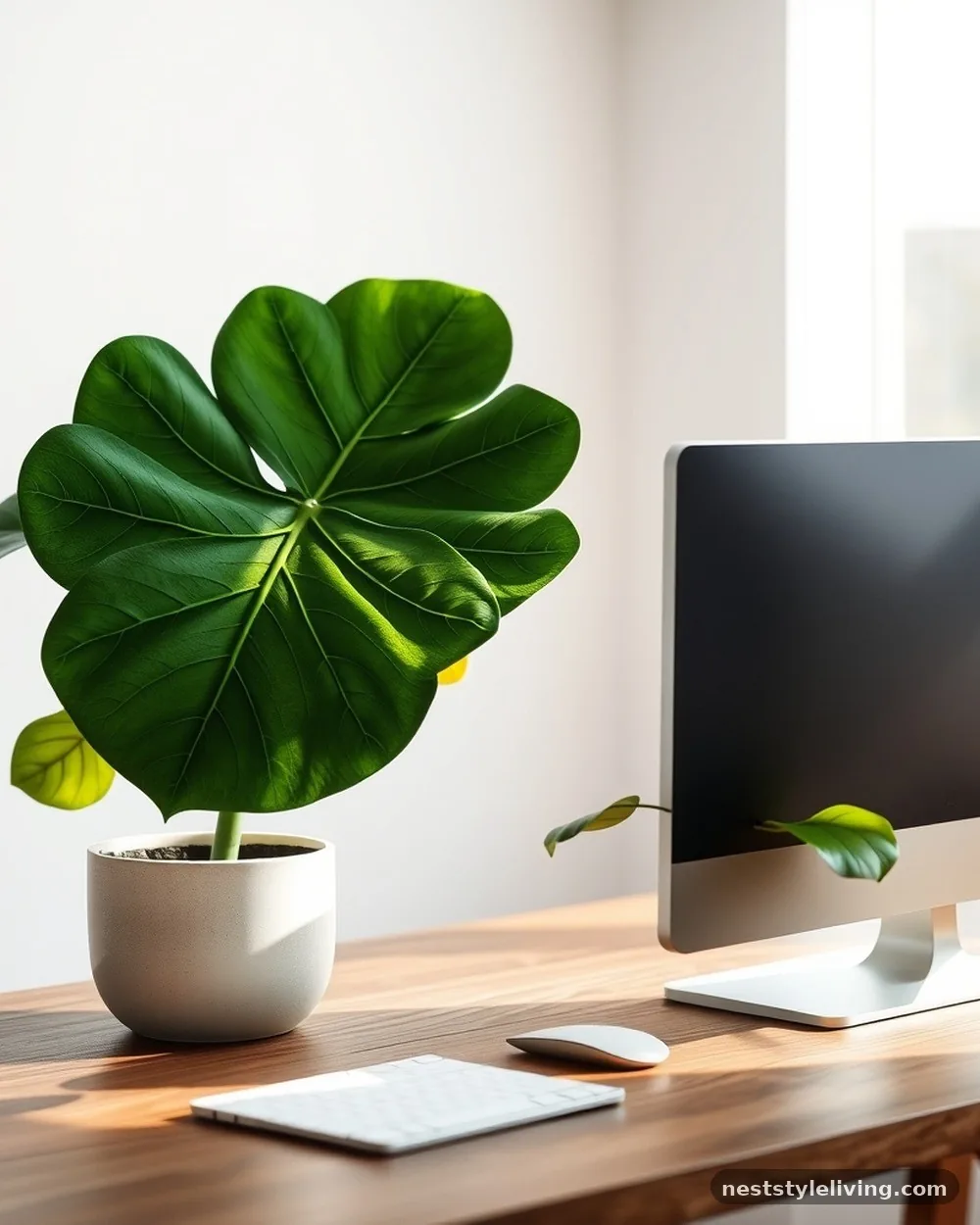
Biophilic design centers on bringing the outdoors inside to reduce stress levels and improve mental stamina. This involves placing large, sculptural plants like a Fiddle Leaf Fig or a snake plant at eye level near your monitor.
The goal is to create a visual break that mimics a natural horizon, allowing your eyes to refocus after long periods of staring at a digital screen. Use terracotta or ceramic pots that match the color palette of your furniture to maintain a cohesive look.
Select plants based on the specific light conditions of your office. A north-facing window is perfect for low-light tolerant plants like ZZ plants, while a south-facing room allows for light-loving varieties. If you struggle with plant maintenance, choose hardy succulents or high-quality silk replicas that offer the same visual benefits without the need for watering schedules.
3. Floating Walnut Ledge Shelves
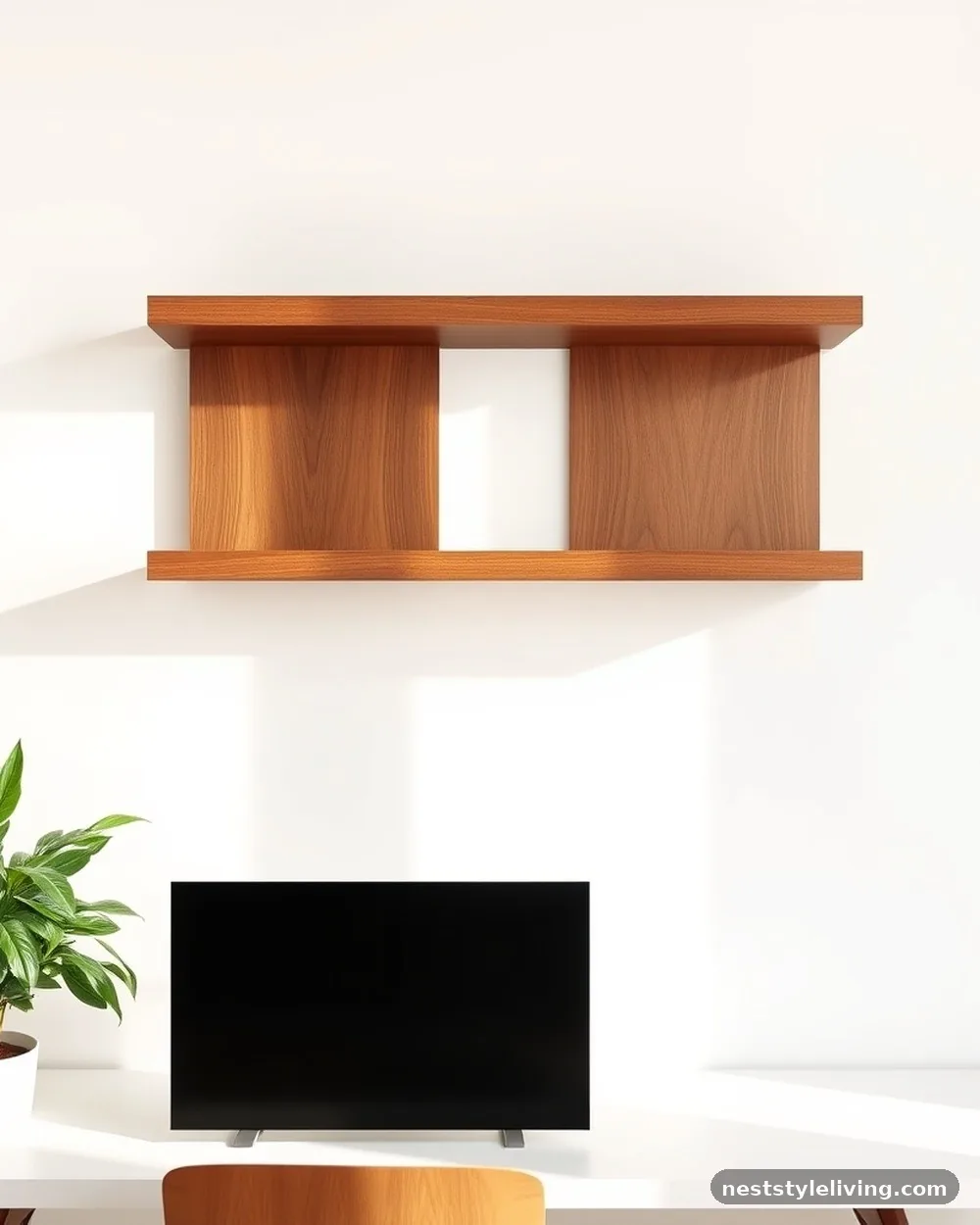
Floating shelves provide a minimalist storage solution that keeps your desktop clear of clutter without adding the heavy footprint of a traditional bookshelf. Walnut wood is a preferred material for this design due to its rich, dark grain and durability. By mounting these shelves directly above your monitor, you create a vertical storage zone that keeps essential reference materials within arm’s reach while maintaining a clean, open floor plan.
Use heavy-duty hidden brackets to ensure the shelves can support the weight of books and heavy equipment. Mark your wall studs with a stud finder before drilling, as mounting floating shelves into drywall alone will cause them to sag over time. Align the shelves perfectly with the top edge of your desk to create a sense of horizontal continuity.
4. Matte Black Task Lighting
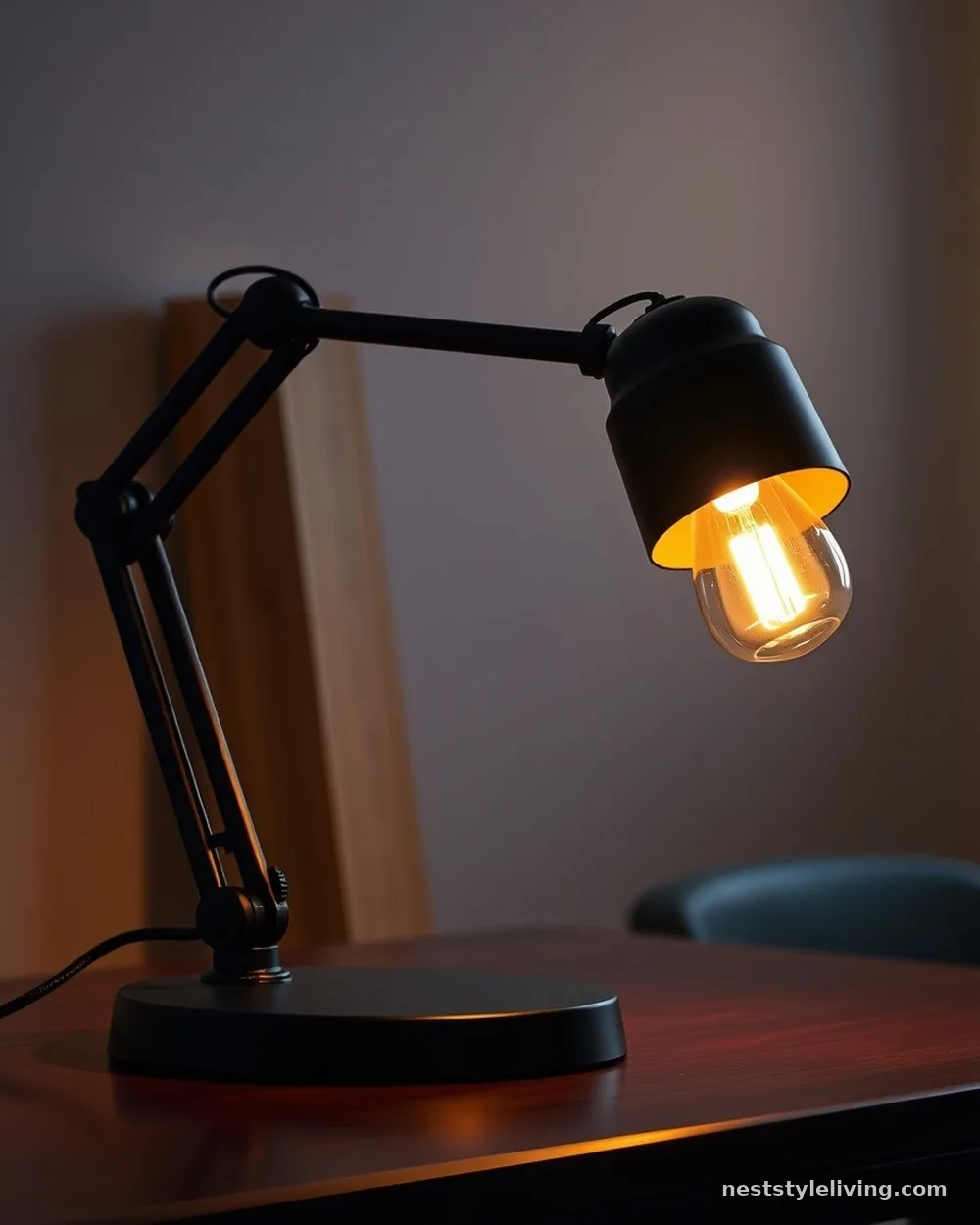
Lighting is the cornerstone of any productive environment, and a matte black desk lamp adds a sophisticated, industrial edge to your setup. The dark finish minimizes glare on the lamp housing itself, preventing distractions while you work.
Look for lamps with adjustable arms and a weighted base, allowing you to direct light exactly where you need it without the fixture shifting. A warm-toned LED bulb, around 3000K, provides the best balance between task visibility and eye comfort.
Position the lamp on the opposite side of your dominant writing hand to eliminate shadows while you work. If your desk space is limited, opt for a clamp-on style that attaches to the edge of the table, freeing up valuable surface area for your keyboard and mouse.
5. Ergonomic Mesh Task Chair
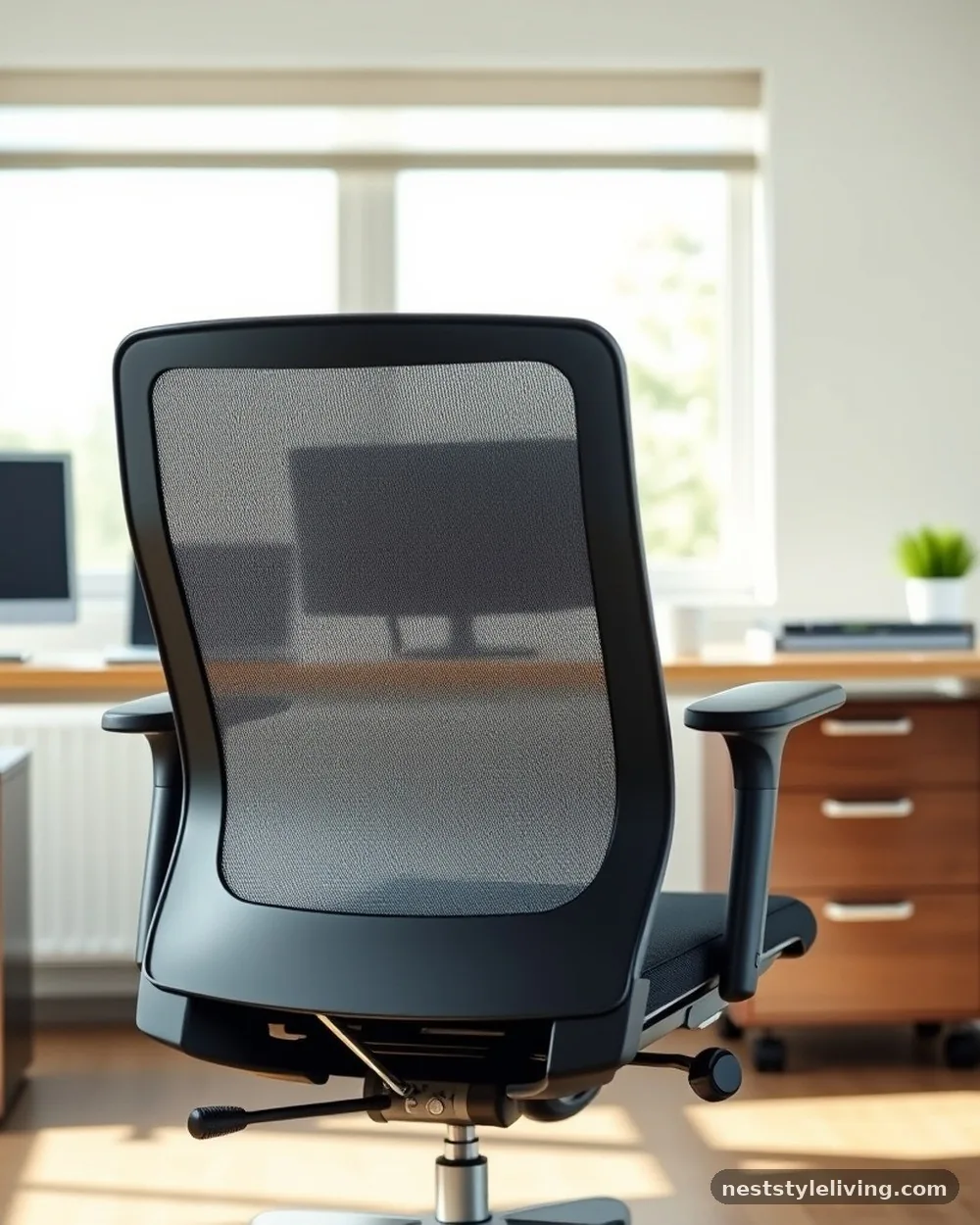
An ergonomic chair is the most critical investment for your physical well-being. A high-back mesh chair offers superior lumbar support and breathability, preventing the heat buildup associated with leather or fabric upholstery during long sessions.
Look for models with adjustable armrests, seat depth, and tilt tension, which allow the chair to conform to your specific body geometry. The mesh material is durable and easy to maintain, resisting wear even after years of daily use.
Adjust the height of your chair so your feet rest flat on the floor and your knees are at a ninety-degree angle. If your chair lacks adequate lumbar support, add a separate memory foam cushion that straps to the backrest to maintain the natural curve of your spine.
6. Neutral Tonal Color Palette
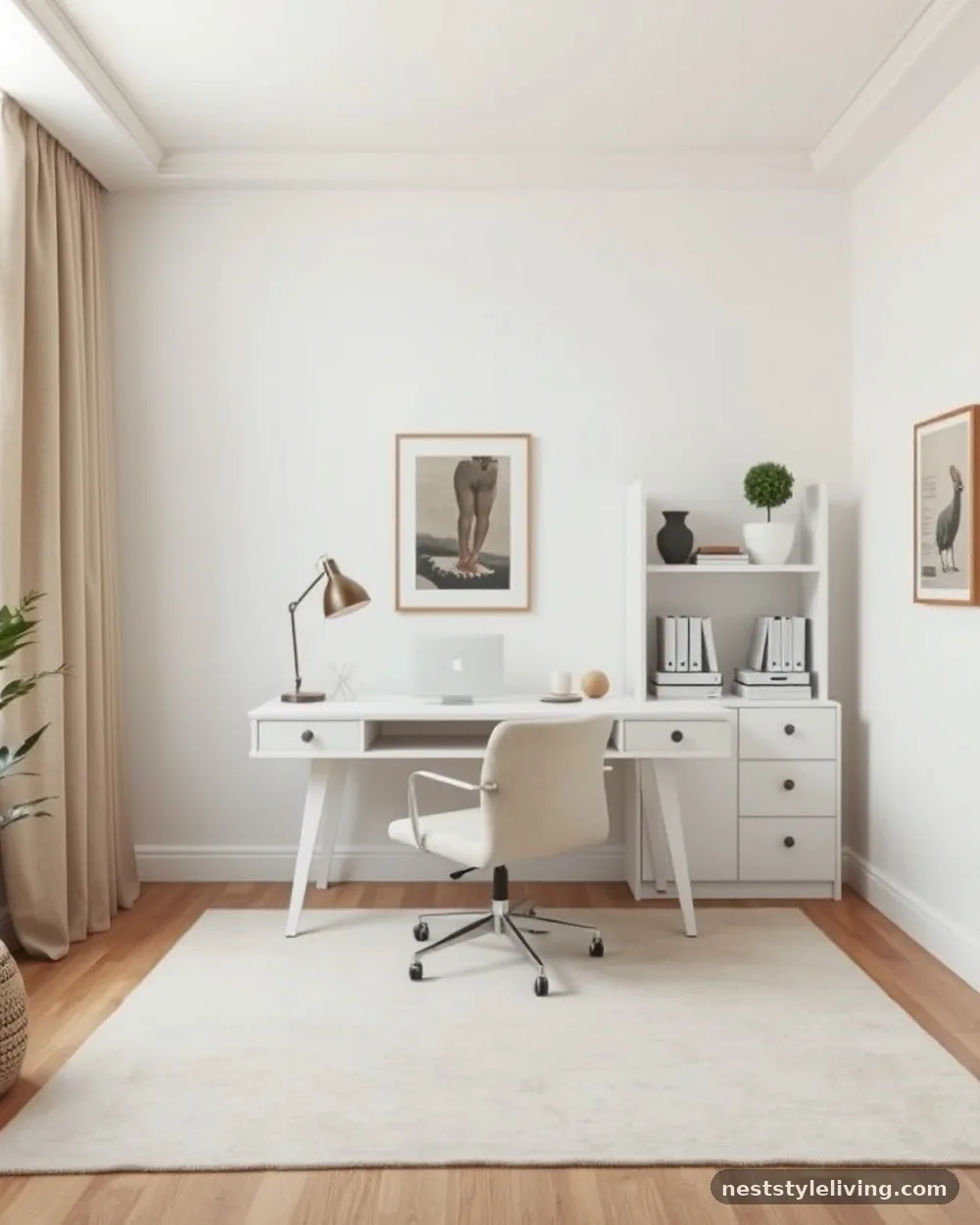
A monochromatic color scheme in shades of cream, taupe, or soft grey creates a calm, non-distracting background that keeps your focus on your tasks. By using varying textures—such as a wool rug, a velvet chair, and a linen curtain—you prevent the room from feeling flat or sterile. This approach to home office design ideas that boost focus and style relies on the interplay of light and shadow, which is inherently soothing to the nervous system.
Apply a high-quality matte paint finish to the walls to reduce light reflections that can cause screen glare. Use a slightly lighter shade for the ceiling to make the room feel taller and more expansive, which helps prevent the feeling of being closed in during long work hours.
7. Integrated Cable Management Trays
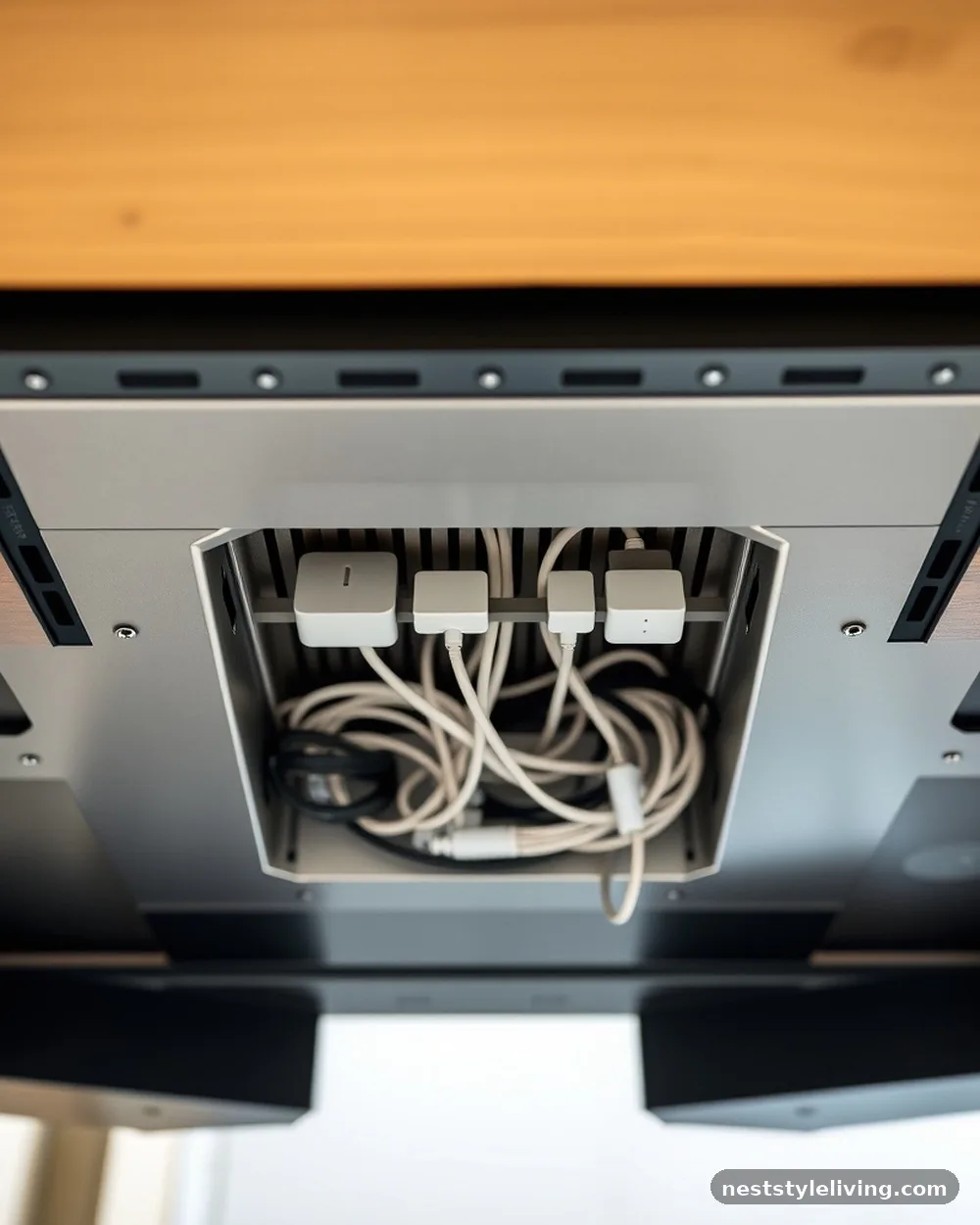
Visible cords are the primary enemy of a clean, focused workspace. A metal or plastic cable management tray mounted to the underside of your desk allows you to hide power strips, transformers, and excess wiring out of sight.
This creates a “floating” look for your hardware, making the desk area feel intentional and tidy. A clean desk surface signals to your brain that it is time to focus, rather than time to organize.
Use Velcro cable ties to bundle cords together before placing them into the tray. This prevents the “spaghetti” effect behind your desk and makes it significantly easier to swap out devices or move your setup in the future.
8. Large-Scale Geometric Area Rug
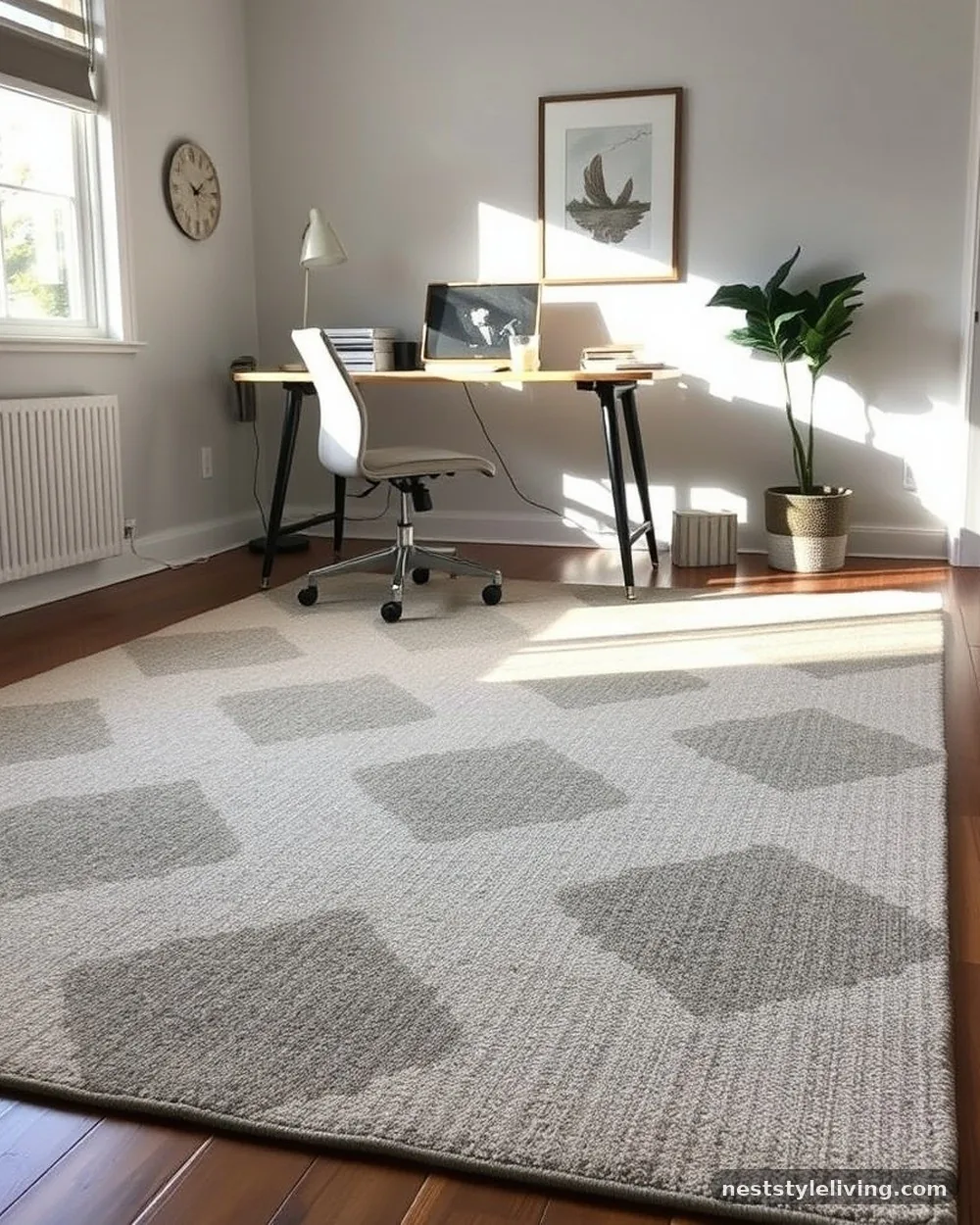
A large area rug defines the office zone within a larger room and provides a soft foundation that dampens ambient sound. Choose a rug with a bold, geometric pattern in muted tones to add visual interest without creating a busy or cluttered feeling.
Natural fibers like jute or wool are durable choices that stand up well to the constant movement of chair casters. Ensure the rug is large enough that all four legs of your chair remain on the rug even when you push back from the desk.
Use a high-quality, non-slip rug pad underneath the rug to keep it perfectly flat and prevent it from bunching up. This safety step also adds a layer of cushioning that makes standing or walking in the office more comfortable.
9. Smart Glass Whiteboard Surface
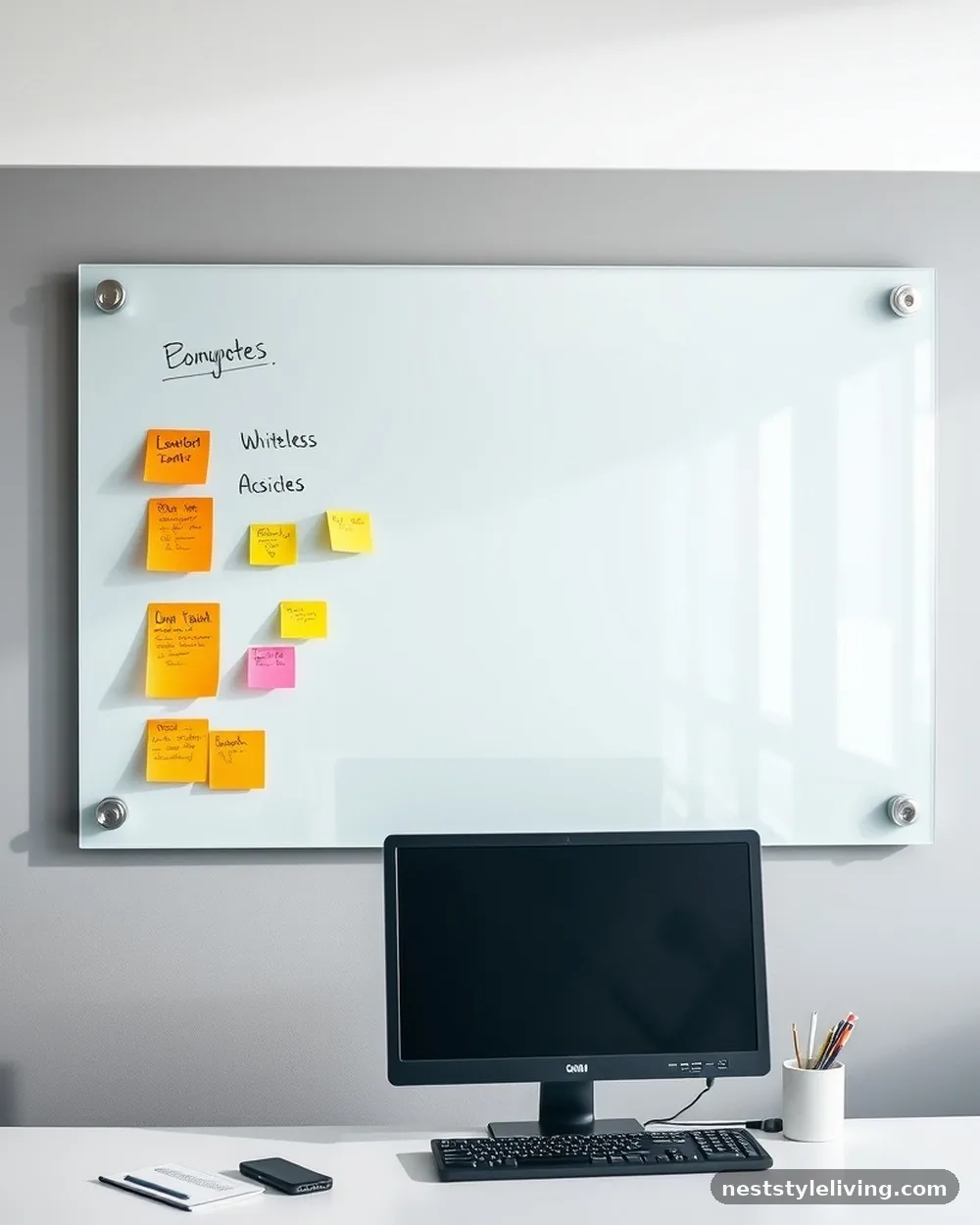
A glass whiteboard is a modern, professional alternative to traditional, stained whiteboards. These boards are typically frameless, making them look like a piece of wall art rather than a standard office supply. The glass surface is easy to clean and does not ghost over time, allowing you to map out projects, brainstorm ideas, or keep a daily to-do list in a highly visible, aesthetic format.
Mount the board at eye level in front of your desk for quick access. Use high-contrast liquid chalk markers to ensure your notes are legible from a distance, and keep a dedicated microfiber cloth nearby to wipe the board clean at the end of each workday.
10. Custom Built-in Desktop Hutch
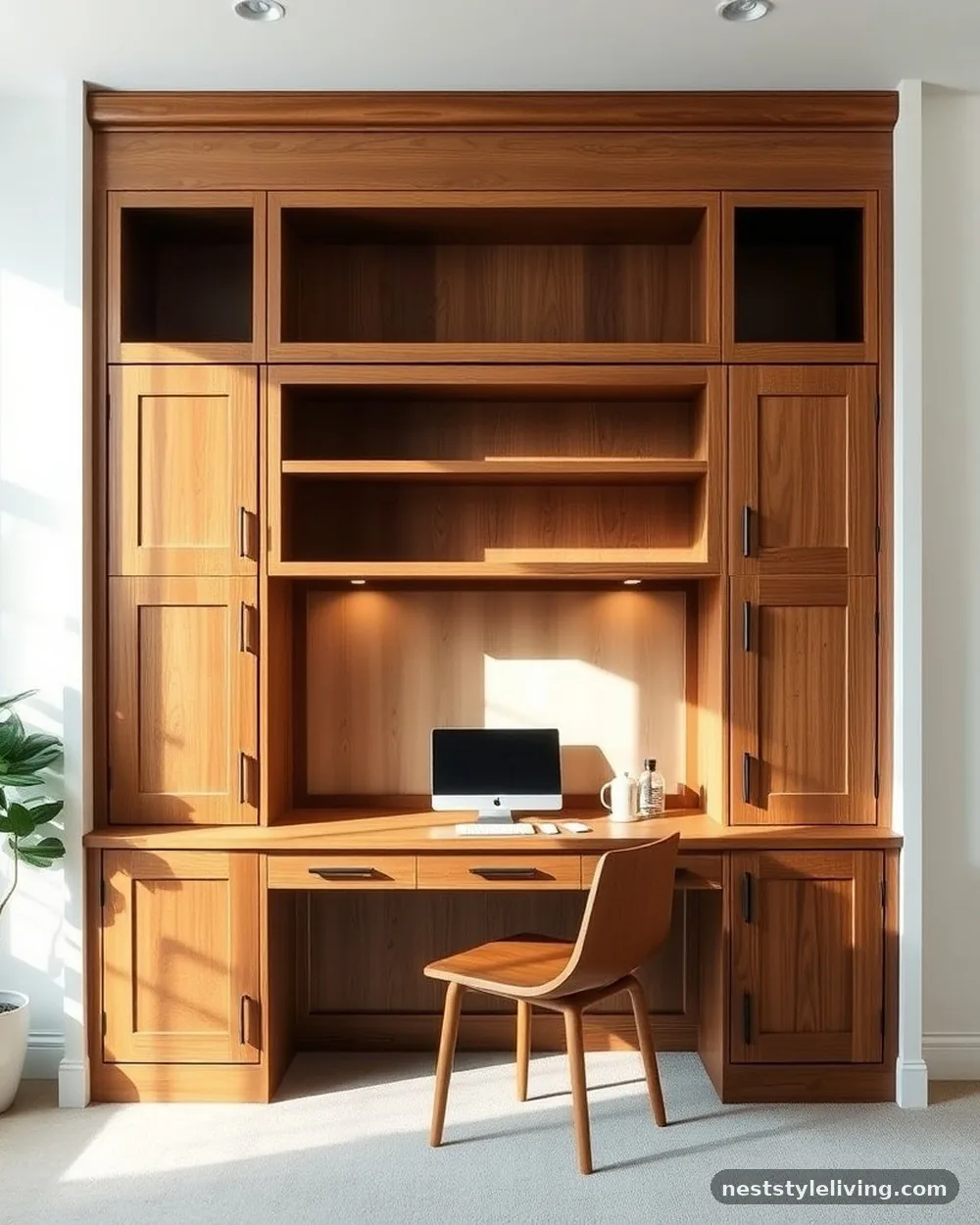
Built-in cabinetry provides a permanent, high-end solution for storage that maximizes your vertical space. A hutch that extends to the ceiling creates a seamless look, making the desk feel like a custom piece of architecture rather than a temporary setup. By enclosing your printer, files, and office supplies behind doors, you remove visual clutter entirely, which is essential for maintaining a high-focus environment.
Use touch-to-open hardware for the doors to maintain a sleek, handle-free aesthetic. If you are DIY-inclined, you can achieve this look by hacking standard modular wall cabinets, ensuring you secure them to the wall studs to support the weight of heavy storage.
11. Soft Linen Roman Shades

Window treatments are essential for managing light levels throughout the day. Roman shades made from heavy linen provide a soft, filtered light that eliminates harsh shadows on your monitor while maintaining privacy.
Linen has a natural, relaxed texture that prevents the office from feeling too formal or cold. Choose a light-filtering liner to ensure that you can still see the outdoors, which helps prevent eye fatigue.
Install the shade inside the window frame for a clean, minimalist look. If your office gets intense direct sunlight, consider a dual-mount system that allows you to drop a blackout shade during the hottest part of the day without sacrificing the aesthetic of the linen topper.
12. Weighted Desk Pad
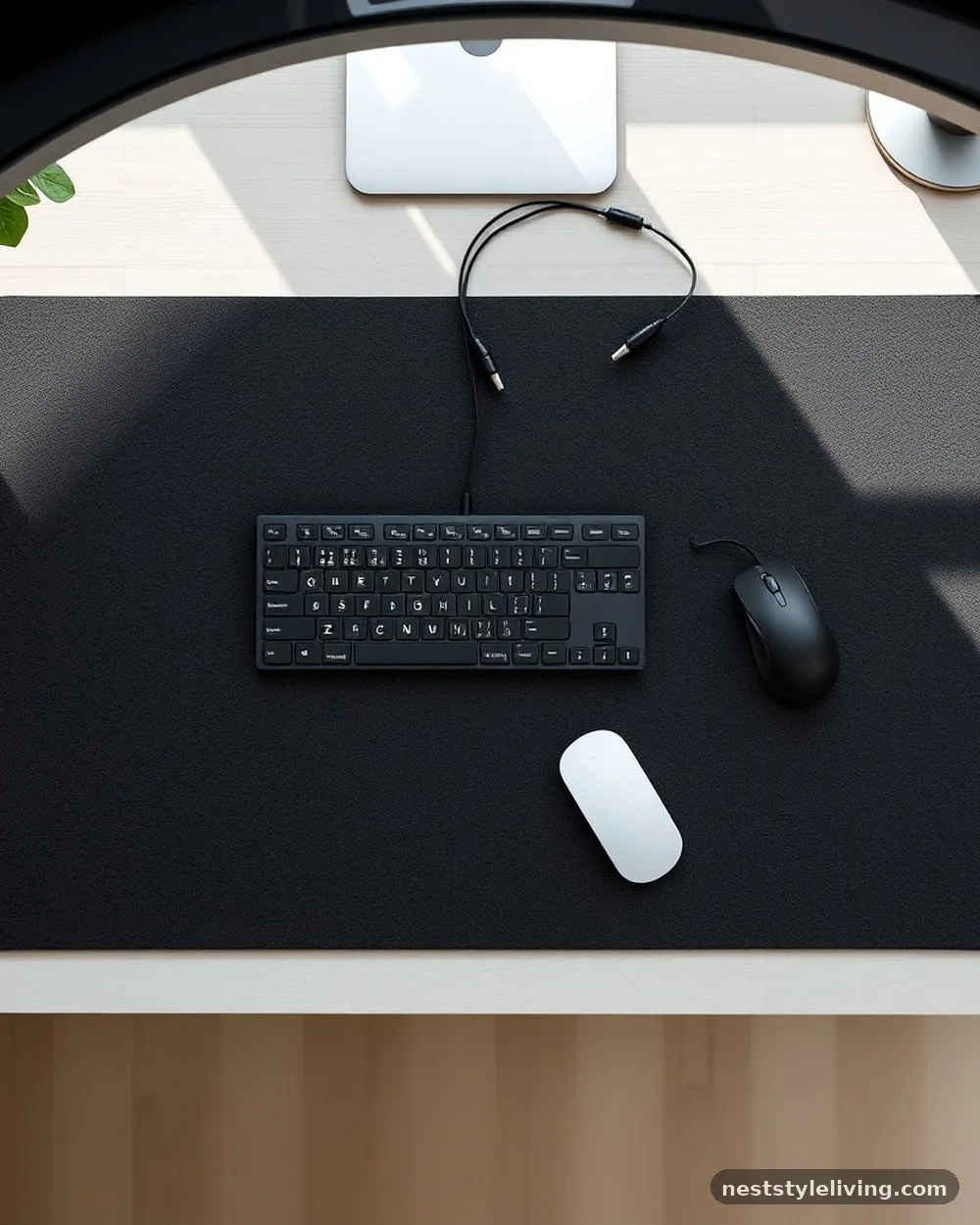
A large, leather or felt desk pad provides a stable, comfortable surface for your mouse and keyboard. It protects your desktop from scratches and provides a tactile, premium feel every time you sit down to work.
A desk pad also acts as a boundary, defining your “active” work area and helping you mentally compartmentalize your tasks. The weight of the pad ensures it stays in place, preventing the annoying sliding common with smaller mousepads.
Choose a material that complements your desk surface; leather works well with wood, while felt is ideal for metal or laminate desks. Clean the pad periodically with a soft brush or a damp cloth to remove dust and keep the surface smooth for your mouse sensor.
13. Hidden Recharge Station
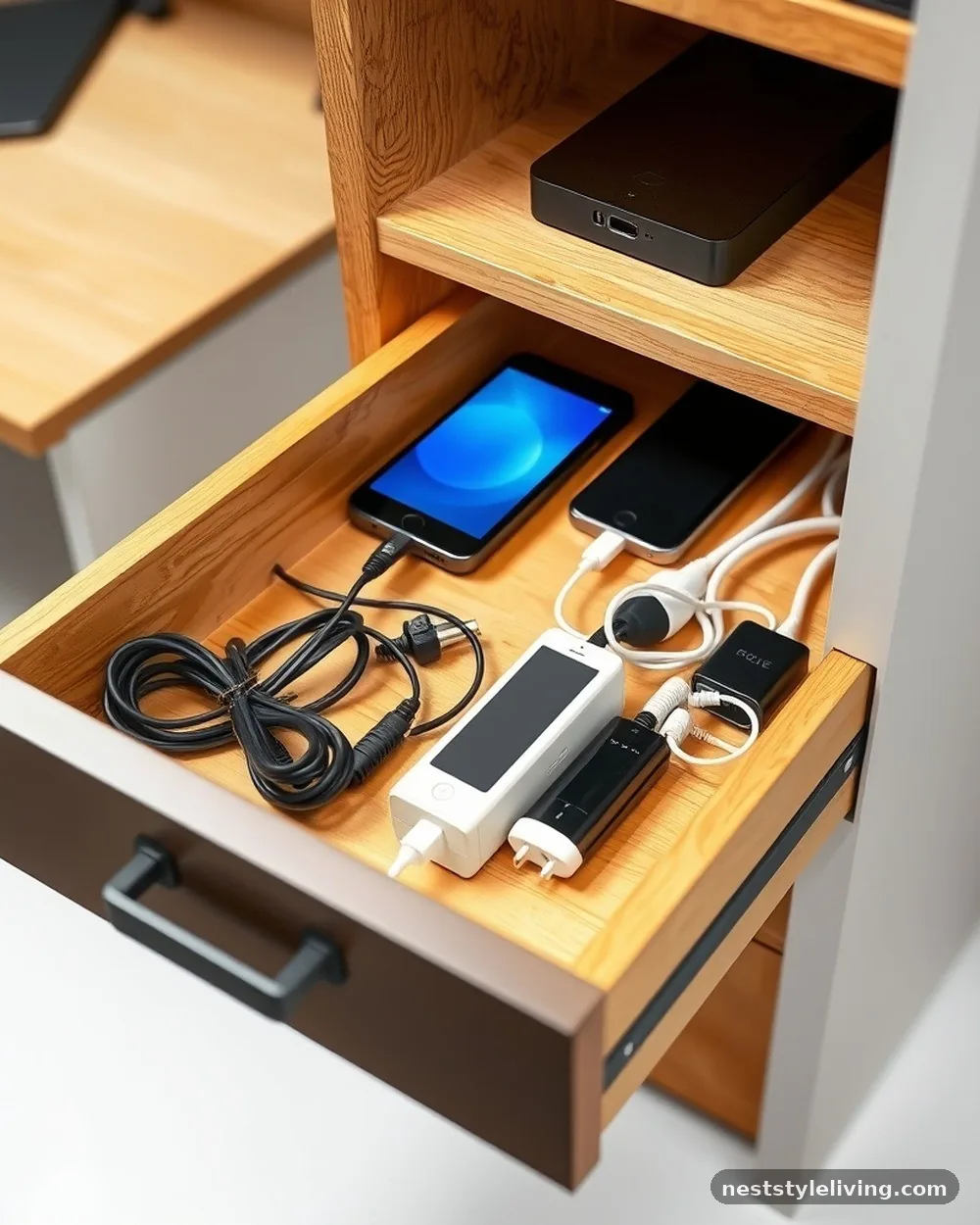
A dedicated charging drawer or a concealed box with integrated power outlets keeps your devices powered without cluttering your desktop with cables. By hiding your phone, tablet, and watch in a specific drawer, you remove the temptation to check notifications, which is one of the biggest killers of productivity. This creates a “charging zone” that is out of sight but easily accessible when you need to power up.
Install a drawer-integrated power strip that is specifically rated for furniture use. This ensures that the wiring remains safe and flexible as the drawer opens and closes, preventing fraying or short-circuiting over time.
14. Adjustable Standing Desk Converter
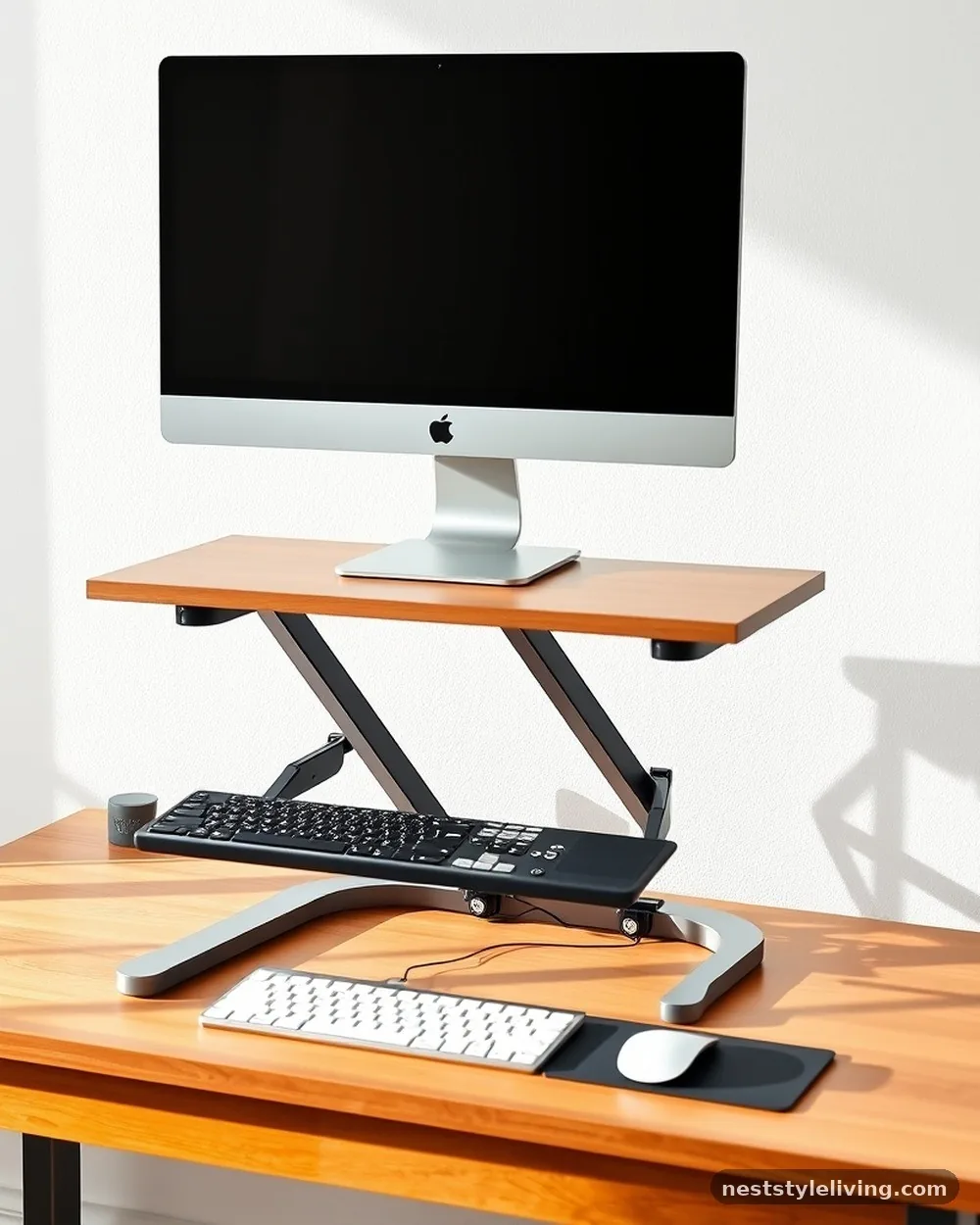
If a full standing desk is not in your budget, a high-quality converter provides the same physical benefits of movement. These units sit on top of your existing desk and use a gas-spring mechanism to lift your monitor and keyboard to standing height.
Changing your posture throughout the day reduces back strain and boosts energy levels. Look for a model with a wide keyboard tray that accommodates a full-sized keyboard and mouse comfortably.
Ensure the converter has a stable base that does not wobble when you type. Before purchasing, measure the depth of your current desk to make sure the unit’s footprint fits securely and leaves enough room for your monitor’s stand or arm.
15. Minimalist Art Prints
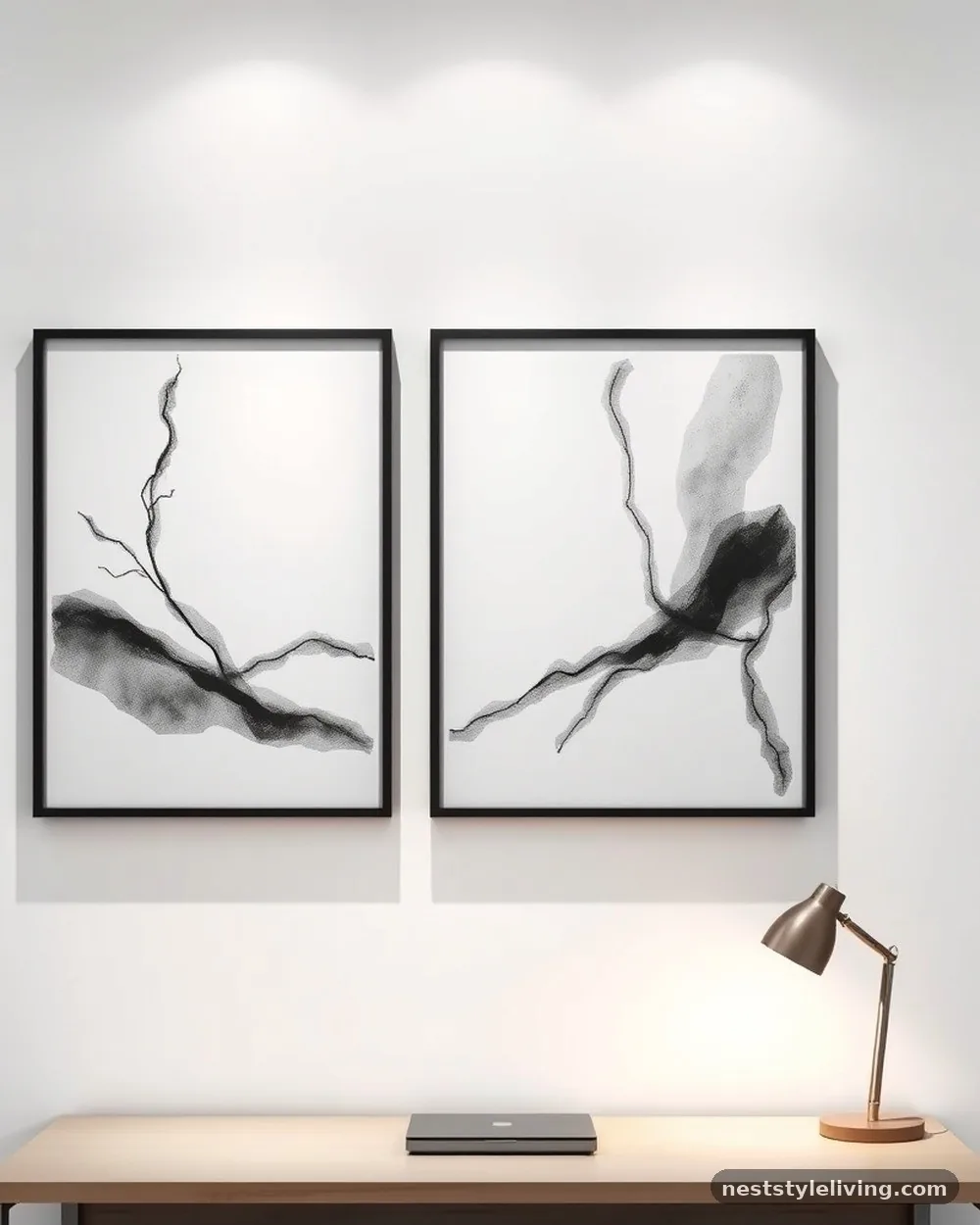
Art in a home office should be calming and non-distracting. Choose prints with simple lines, abstract shapes, or architectural photography in black and white.
These pieces add personality to the space without overwhelming your visual field. By keeping the frames consistent in color and material, you create a gallery-like effect that elevates the room’s style and makes it a space you genuinely enjoy spending time in.
Hang your art at eye level while seated to ensure it is part of your natural line of sight. If you have a small office, lean one large framed print against the wall on a shelf rather than cluttering the walls with multiple small frames, which can make the space feel smaller.
Frequently Asked Questions
How do I make a small office feel more spacious?
To maximize a small footprint, prioritize vertical storage and light colors. Using floating shelves keeps the floor clear, and painting the walls and trim the same shade of off-white creates a seamless effect that pushes the visual boundaries of the room. Incorporating a large mirror can also reflect light and create the illusion of extra depth.
What are the benefits of a standing desk?
A standing desk encourages movement, which improves circulation and reduces the physical fatigue associated with prolonged sitting. By alternating between sitting and standing, you engage your core muscles and can experience a boost in energy and focus, particularly during the mid-afternoon slump.
How can I hide cables effectively?
Cable management is best achieved by using under-desk trays that screw into the underside of your work surface. Bundle all cords together with Velcro ties before placing them in the tray. This keeps them off the floor and out of sight, which instantly creates a cleaner, more professional look for your workspace.
What lighting is best for reducing eye strain?
The ideal office lighting combines ambient light with a focused task lamp. Use a lamp with an adjustable arm and a warm-toned LED bulb (around 3000K) to provide consistent illumination on your work surface. Avoid harsh overhead lighting and ensure your screen brightness is balanced with the light in the rest of the room.
How do I keep my home office desk clutter-free?
The key is to give every item a specific home. Use drawer organizers for small supplies and a desk pad to define your workspace. By committing to clearing your desk at the end of every day, you reset your environment for the next morning, allowing you to start your work without the mental weight of yesterday’s mess.
Conclusion
Creating a workspace that balances form and function is essential for long-term productivity. By integrating these home office design ideas that boost focus and style, you establish a professional sanctuary that supports your workflow rather than hindering it. Start by addressing the most significant physical barriers, such as lighting and ergonomic seating, before moving on to organizational details like cable management and storage solutions.
As you refine your environment, you will find that a thoughtful, intentional space reduces cognitive load and allows you to dedicate your best energy to your work. Take one step at a time, testing each change to see how it improves your daily routine, and enjoy the process of building a space that truly works for you.