16 River Rock Landscaping Ideas for a Polished Yard
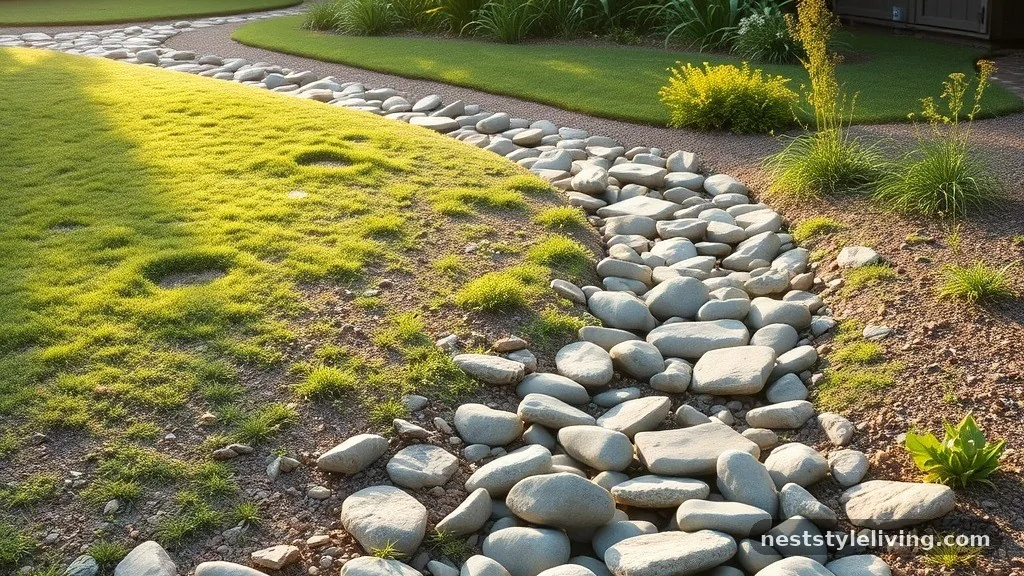
Implementing effective river rock landscaping ideas for a polished yard provides a low-maintenance solution that enhances your home’s curb appeal while managing drainage. By incorporating smooth, rounded stones into your outdoor space, you can replace high-water-demand grass with durable, visually striking textures that define garden borders and pathways.
These natural elements offer a sophisticated, minimalist aesthetic that works across various architectural styles, from modern farmhouse to traditional suburban homes. Whether you are looking to solve soil erosion issues or simply want to simplify your weekend maintenance routine, these versatile stones provide a permanent foundation for a clean and professional-looking exterior environment.
1. Dry Creek Bed Drainage
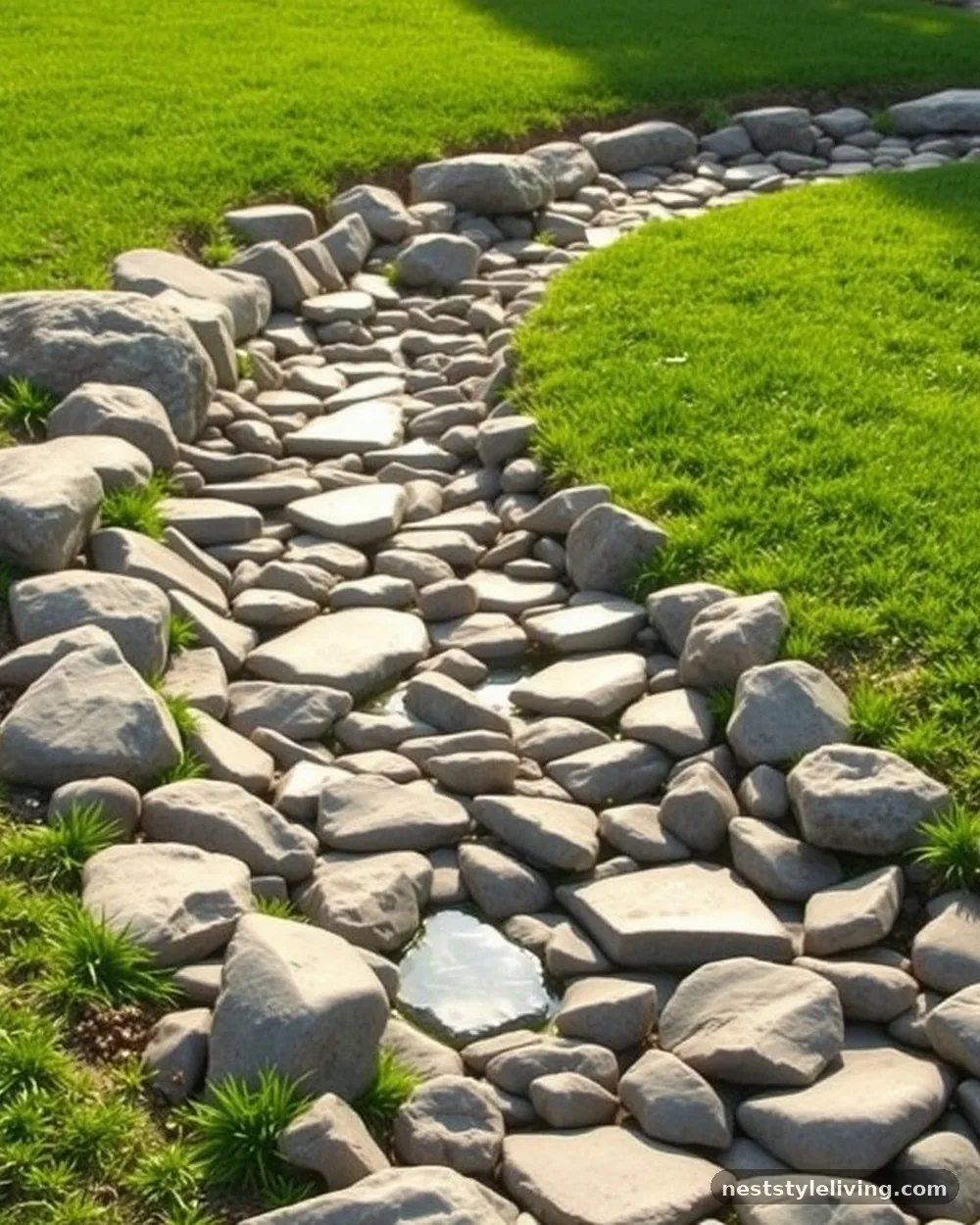
A dry creek bed mimics the look of a natural water feature by using varying sizes of river stones to create a winding channel through your lawn. You should place larger boulders along the edges to anchor the structure and fill the center with smaller, smooth river rocks to simulate the flow of water. This technique is particularly effective for managing heavy runoff in sloped areas, as it directs water away from your foundation while serving as a focal point. The contrast between the dark, wet-look stones and surrounding greenery provides a high-end, intentional design element that feels organic rather than manufactured.
For the best results, dig a shallow, meandering trench and line it with professional-grade landscape fabric before placing your stones to prevent weeds from growing through the gaps.
2. Monochromatic Garden Bed Borders
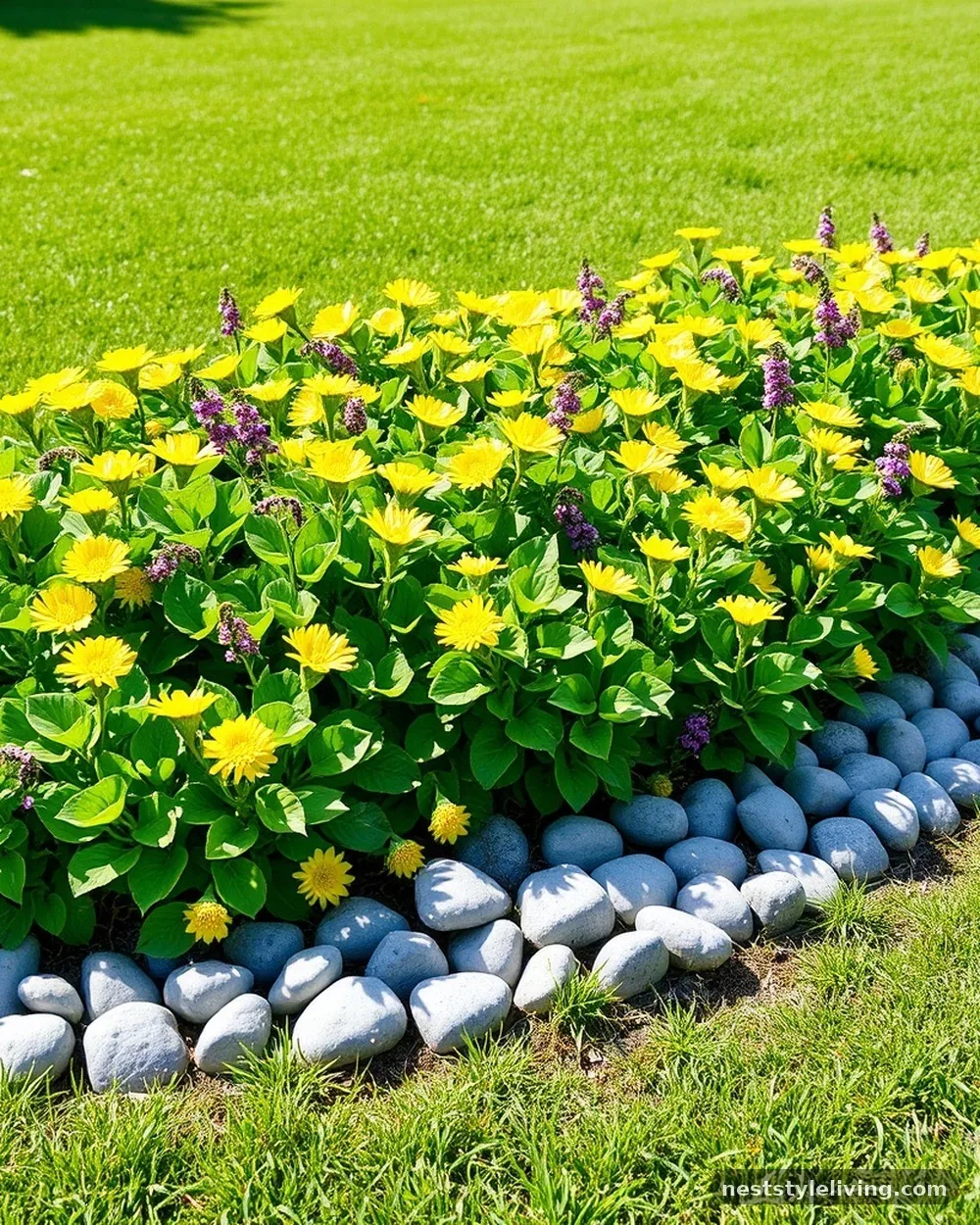
Using uniform, light-gray river stones to border your garden beds creates a clean, architectural line that separates mulch or soil from the lawn. This technique eliminates the need for constant edging, as the heavy stones stay in place and prevent grass from creeping into your flower beds. The light color reflects sunlight, which helps brighten shaded areas of your yard and makes vibrant perennials pop against the neutral background. By choosing stones of a consistent size, such as two-to-three-inch cobbles, you achieve a tidy, uniform look that emphasizes the geometry of your landscape design.
Apply a thin layer of stone-specific adhesive or simply nestle the rocks firmly into a shallow trench to keep them from scattering when you mow the lawn.
3. Floating Stepping Stone Paths

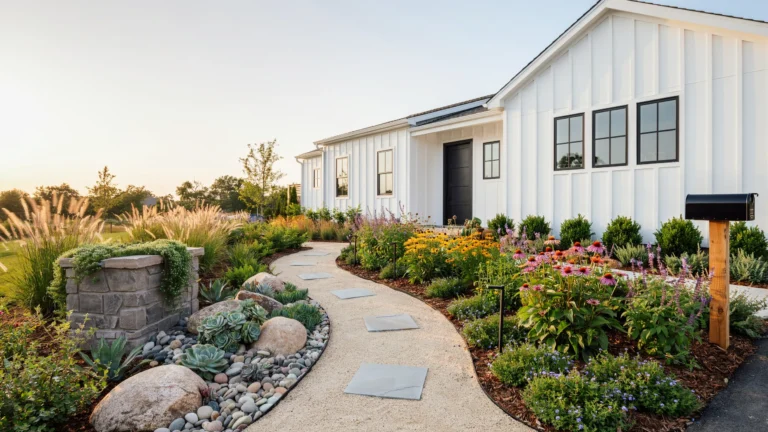
Floating paths use large, flat river stones or flagstones set within a bed of smaller, contrasting river rock to create a sophisticated walkway. You can arrange the larger stones in a non-linear pattern, allowing for natural movement through the yard, while the surrounding smaller pebbles fill the negative space. This approach keeps your shoes clean during rainy weather and prevents soil compaction in high-traffic zones. The mix of textures and sizes adds depth to your yard, making it feel more like a curated botanical space than a standard suburban walkway.
Space your stepping stones about eighteen inches apart, center-to-center, to ensure a comfortable stride for most adults.
4. Modern Minimalist Xeriscaping
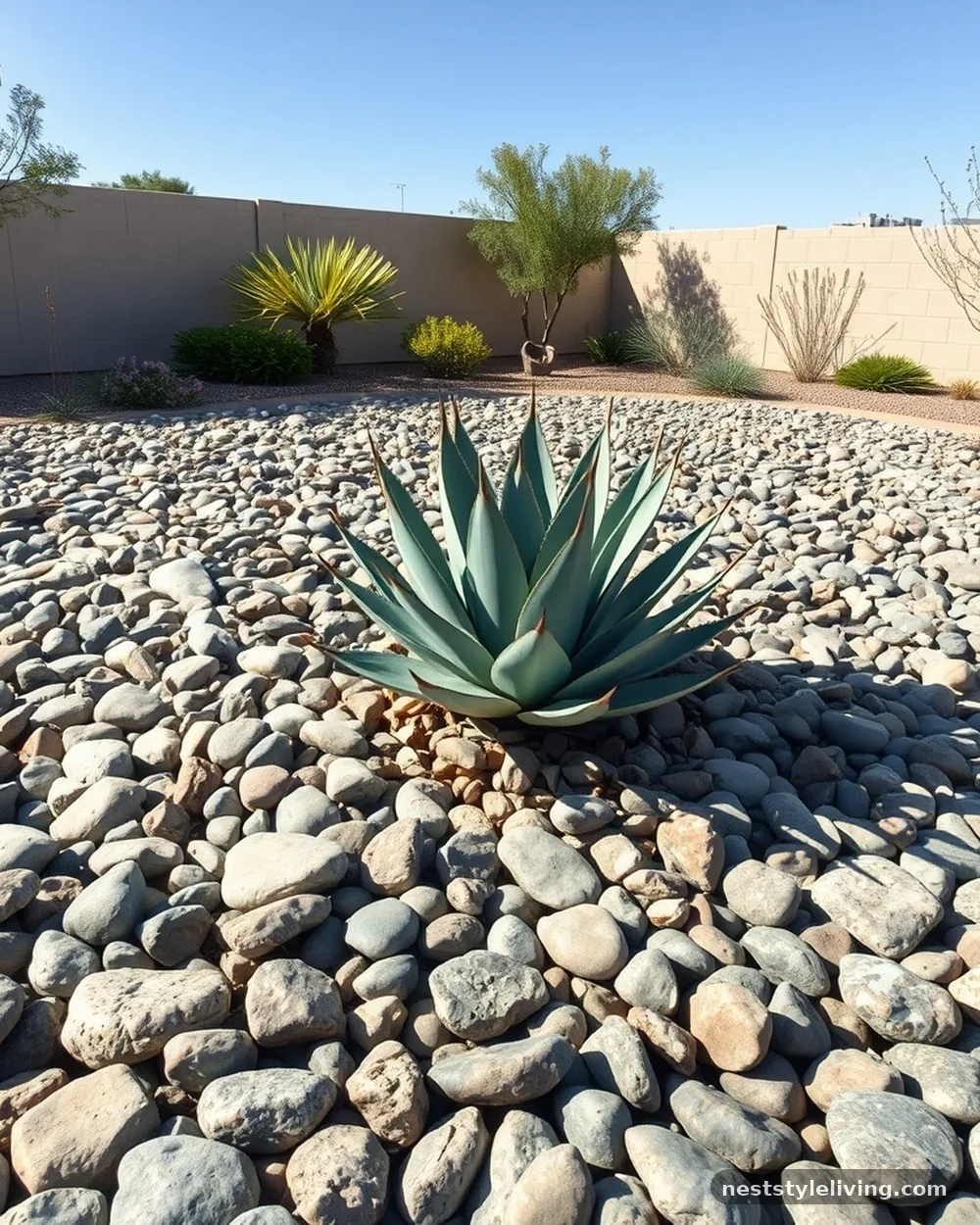
Xeriscaping with river rock focuses on using negative space to highlight a few specimen plants, such as ornamental grasses or architectural succulents. By covering the entire ground plane in a single, muted tone of river rock, you create a blank canvas that draws the eye directly to the plant structures. This method is incredibly efficient for water conservation and requires almost no upkeep beyond occasional leaf blowing to keep the rocks clear of debris. It is an ideal choice for homeowners who want a sleek, contemporary look without the constant demands of traditional gardening.
Use a base layer of crushed gravel topped with a thick layer of river rock to ensure the area remains stable and weed-free for years.
5. Tiered Retaining Wall Accents

If your yard features terraced levels, using river rock at the base of your retaining walls provides a polished transition between the wall and the lawn. Filling this narrow strip with stones prevents mud from splashing up onto the wall during heavy rain, which keeps the stone or wood surface looking pristine. This detail effectively bridges the gap between vertical hardscaping and horizontal green space, creating a cohesive, professional appearance. It also allows for better drainage behind the wall, which can extend the lifespan of your retaining structures by reducing pressure from saturated soil.
Fill the gap with river rocks that are at least two inches in diameter to ensure they stay in place and don’t get kicked into the yard.
6. Zen-Inspired Pebble Mosaics

Pebble mosaics involve setting river rocks into a sand or mortar base to create intricate patterns or pathways that feel like fine art. You can arrange different colors of stones—such as white, grey, and black—to form geometric shapes or organic, swirling designs that mimic the movement of water. This is an excellent way to elevate a small courtyard or a specific entryway, turning a mundane surface into a decorative feature. The tactile quality of the stones, when smoothed over time by the elements, adds a soothing, grounded feeling to your private outdoor sanctuary.
If you are setting the stones in mortar, ensure you use a mix designed for exterior use to prevent cracking during freeze-thaw cycles.
7. Foundation Foundation Strip
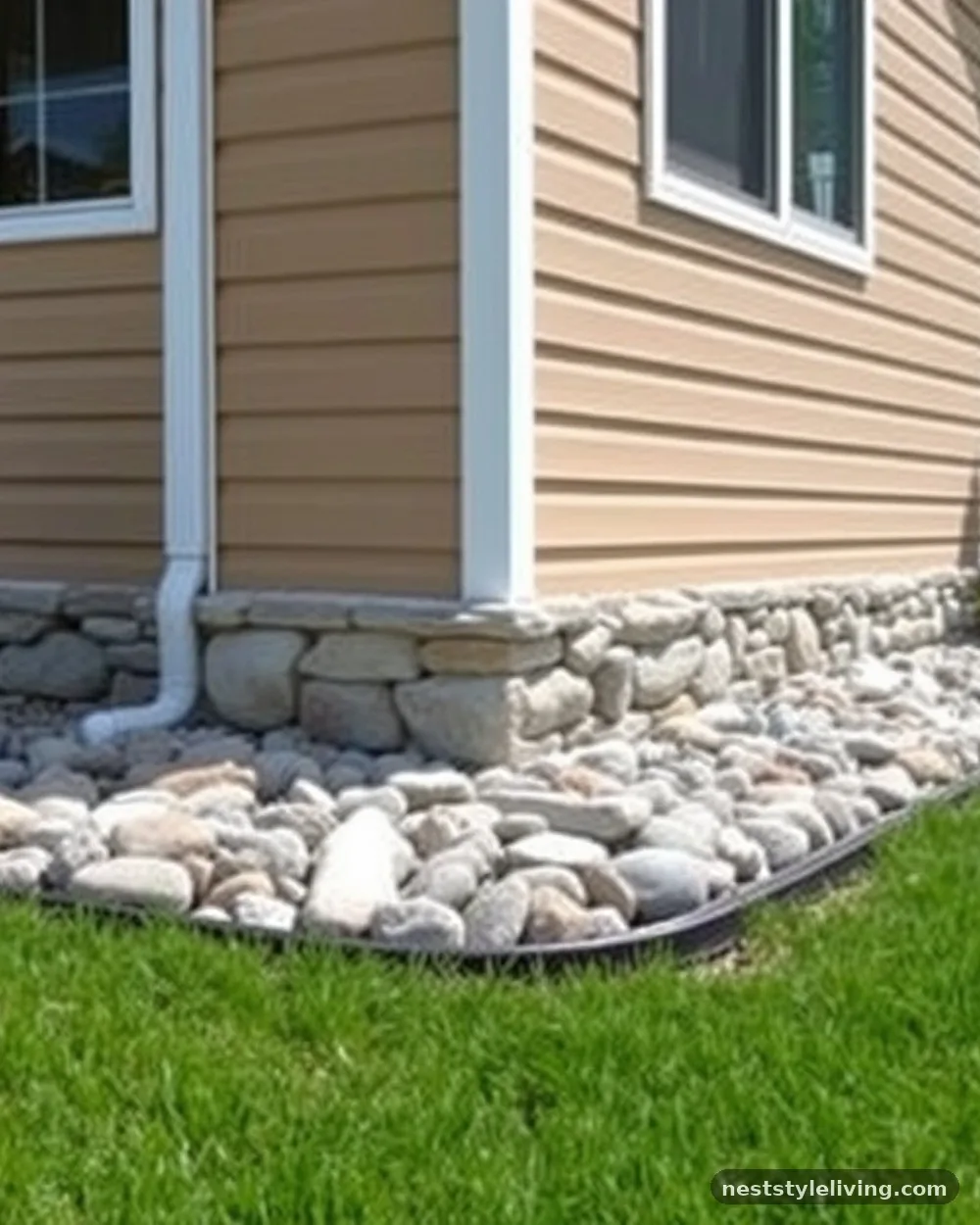
Placing a uniform band of river rock directly against the foundation of your home protects the siding from moisture and eliminates the struggle of trimming grass right up to the wall. This is a classic, practical choice that keeps your exterior walls clean and prevents rot or insect infestations caused by damp vegetation. By choosing a color that complements your home’s trim, you create a finished, intentional look that frames the architecture. This simple addition can drastically improve the curb appeal of your home by providing a clean, crisp transition between the structure and the landscape.
Install a heavy-duty plastic or metal edging strip between the river rock and the lawn to keep the stones from migrating into your grass over time.
8. Elevated Container Garden Bases
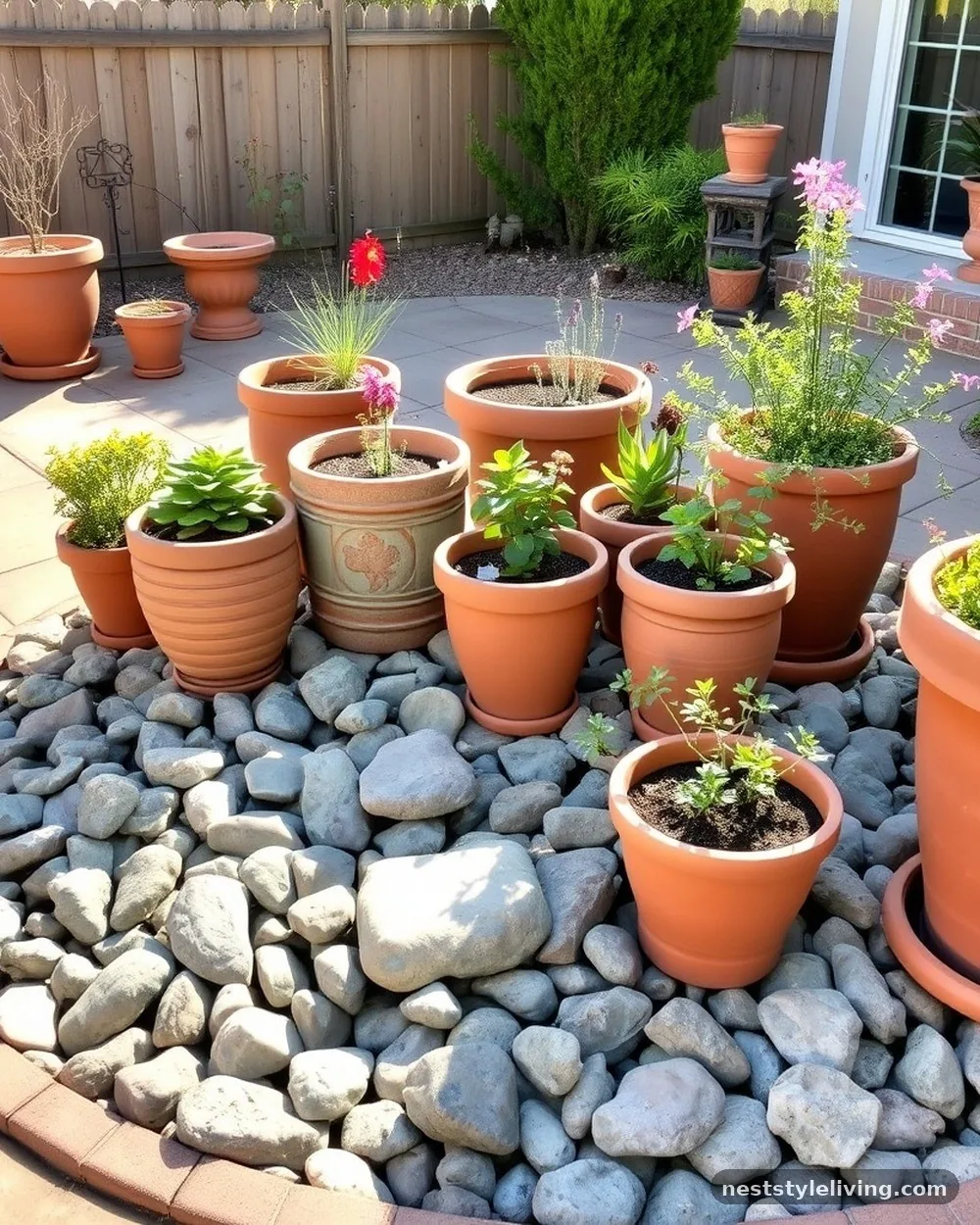
Placing your large outdoor planters on a bed of river rock provides a stable, decorative foundation that improves drainage and prevents the bottoms of the pots from rotting. Instead of sitting directly on wood decking or grass, the planters rest on a bed of stones that allows water to escape freely. This arrangement also creates a cleaner look for your patio, as it hides the inevitable dirt that spills over the edges of pots during watering. You can create a dedicated “potting zone” by grouping containers of varying heights on a bed of river rock, which makes the entire area look like a cohesive, purposeful collection.
Ensure the river rock bed is at least three inches deep to provide enough weight for stability and proper drainage for the containers above.
9. Rain Garden Filtration Zones
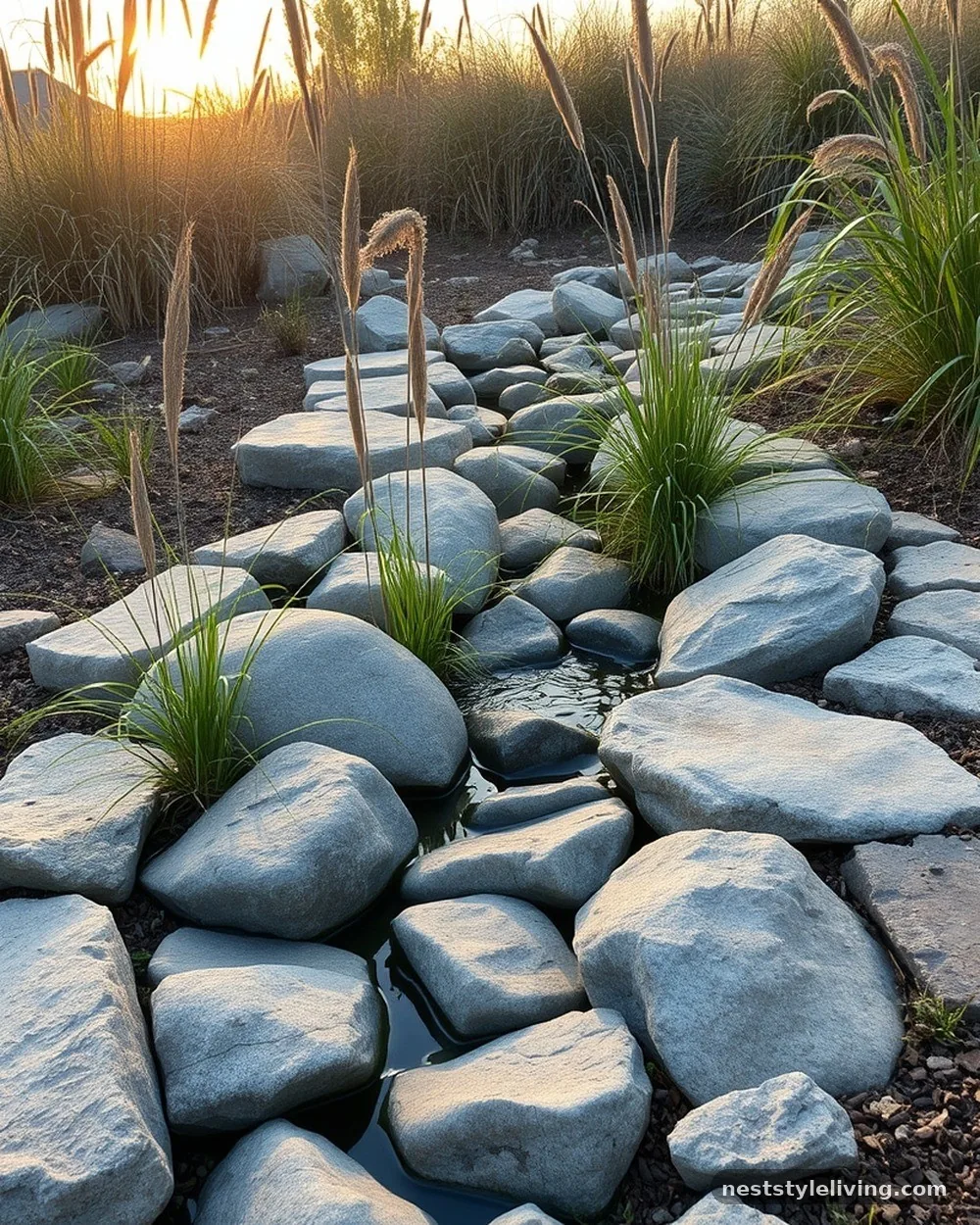
Rain gardens are designed to capture and filter stormwater, and river rock acts as the perfect material to slow the flow of water while preventing erosion. You can place the rocks around the perimeter of the depression to help define the garden’s boundaries and keep the soil in place. During dry periods, the river rocks remain an attractive, low-maintenance feature that adds texture to your landscape. This functional approach to yard management turns a potentially messy drainage area into a beautiful, purposeful design feature that benefits the local ecosystem.
Select native, water-loving plants to plant directly through the rock layer to help absorb the excess water and provide a lush, green contrast to the stones.
10. Tree Ring Mulch Alternatives
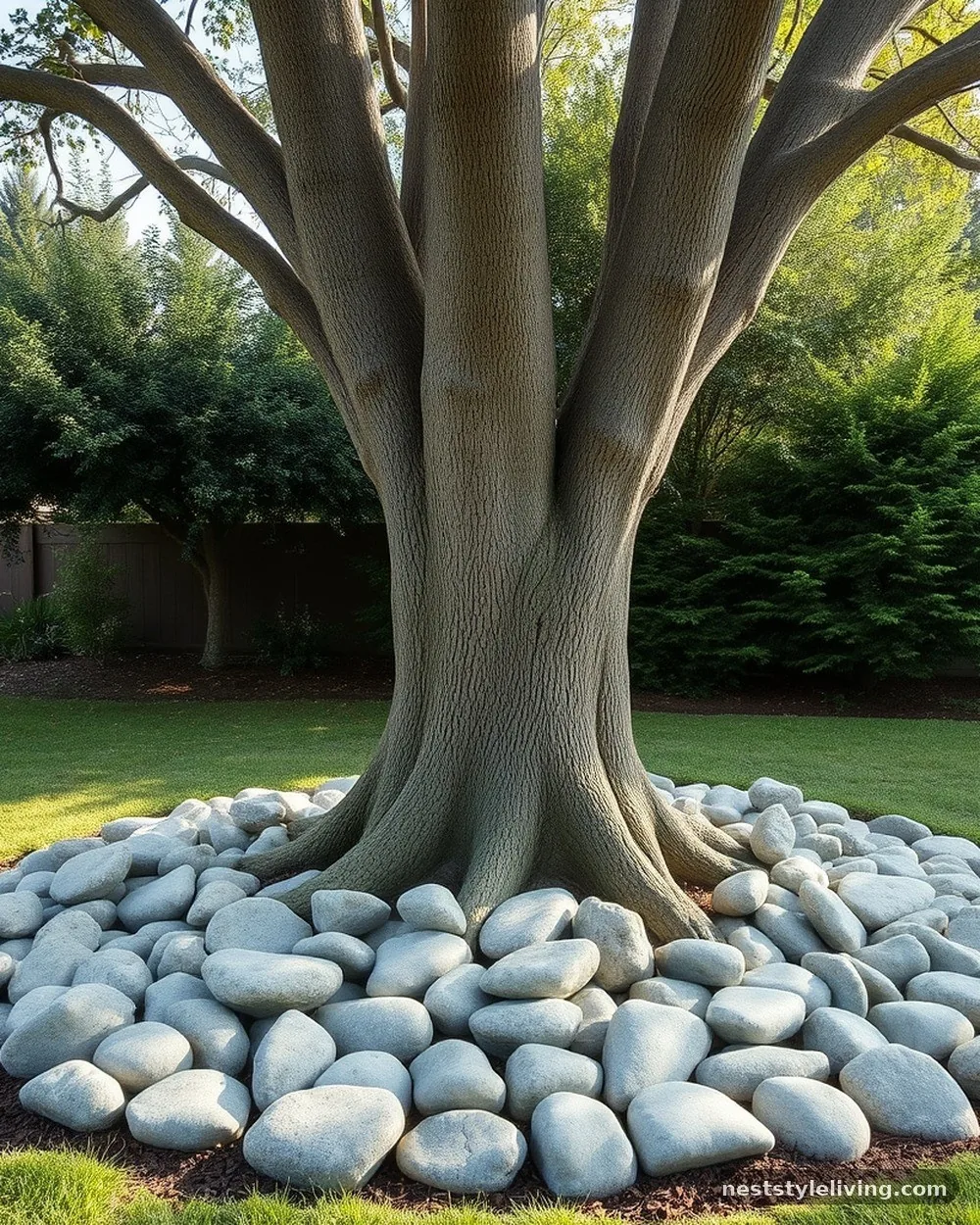
Replacing traditional wood mulch with river rock around the base of trees provides a permanent, clean look that doesn’t need to be replaced every season. Unlike organic mulch, which decomposes and needs refreshing, river rock stays in place and maintains its color and structure indefinitely. This creates a sharp, circular border that makes your trees look well-cared for and intentional. It also helps keep the soil around the base of the tree slightly cooler, which can be beneficial for certain species during the peak of summer heat.
Leave a few inches of space between the trunk of the tree and the river rock to ensure proper airflow and prevent moisture buildup against the bark.
11. Decorative Dry Well Covers
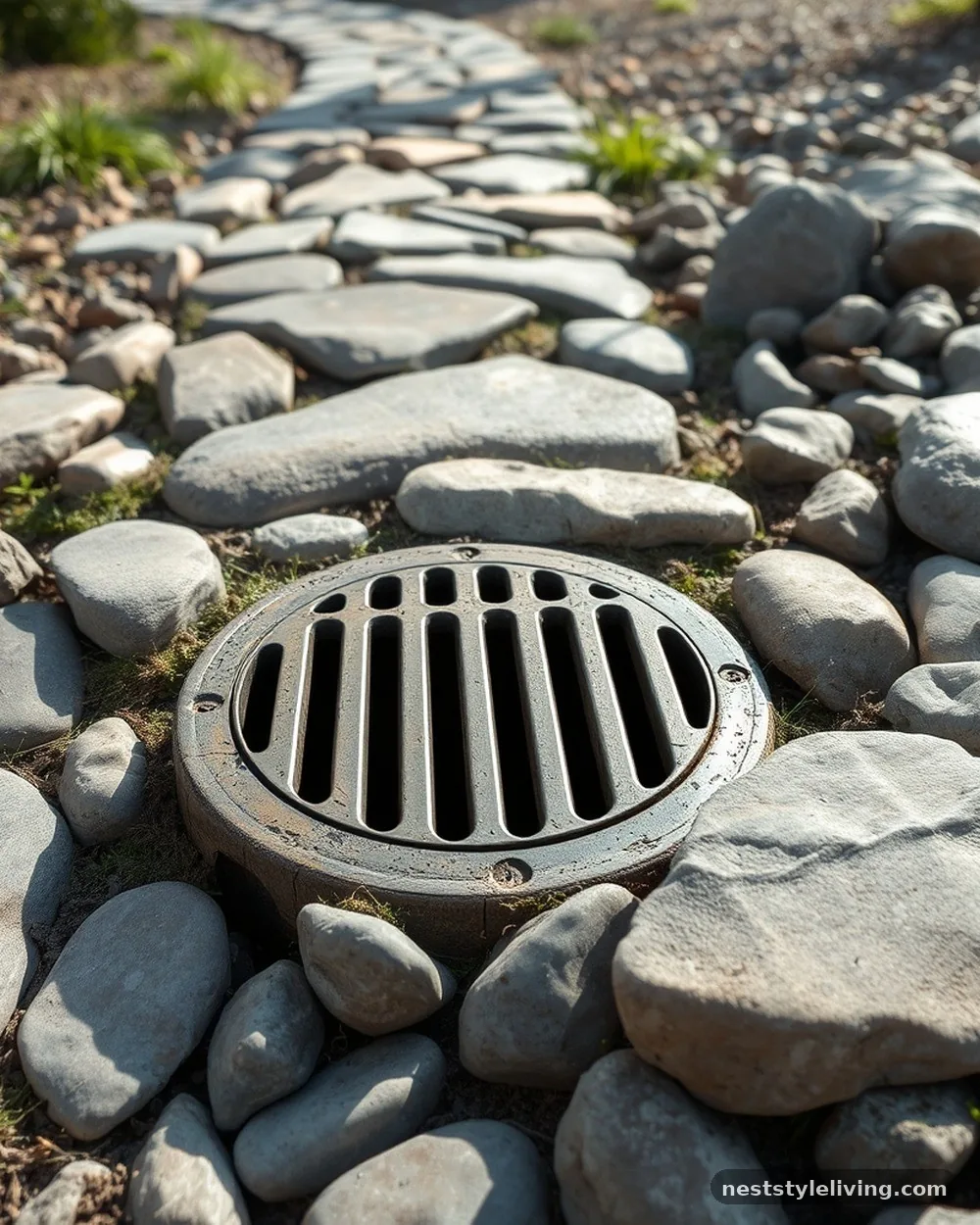
If you have a functional dry well or drainage grate in your yard, covering it with a layer of river rock is a simple way to hide the utility while keeping the drainage efficient. Use a heavy-duty landscaping mesh underneath the rocks to ensure that the grate remains accessible for maintenance while the stones effectively disguise the opening. This prevents the “utility eyesore” that often occurs in suburban yards and keeps the area looking like a natural part of the landscape. It is a subtle but effective way to maintain a polished, high-end look without sacrificing functionality.
Make sure the rocks you choose are large enough that they won’t fall through the drainage grate or cause a blockage in the system.
12. Interlocking Geometric Paver Inlays

Incorporate river rock into the gaps between large concrete or natural stone pavers to create a modern, high-contrast driveway or patio surface. This technique, often called “ribbon paving,” allows for better permeability, meaning rainwater can soak back into the ground rather than running off into the street. The contrast between the smooth, rigid edges of the pavers and the soft, rounded forms of the river rock creates a beautiful visual balance. It is a sophisticated way to expand your hardscaping while adding a touch of natural texture to an otherwise sterile surface.
Use a fine, crushed stone dust beneath the river rock to prevent the stones from sinking into the sub-base over time.
13. Vertical Stone Gabion Walls
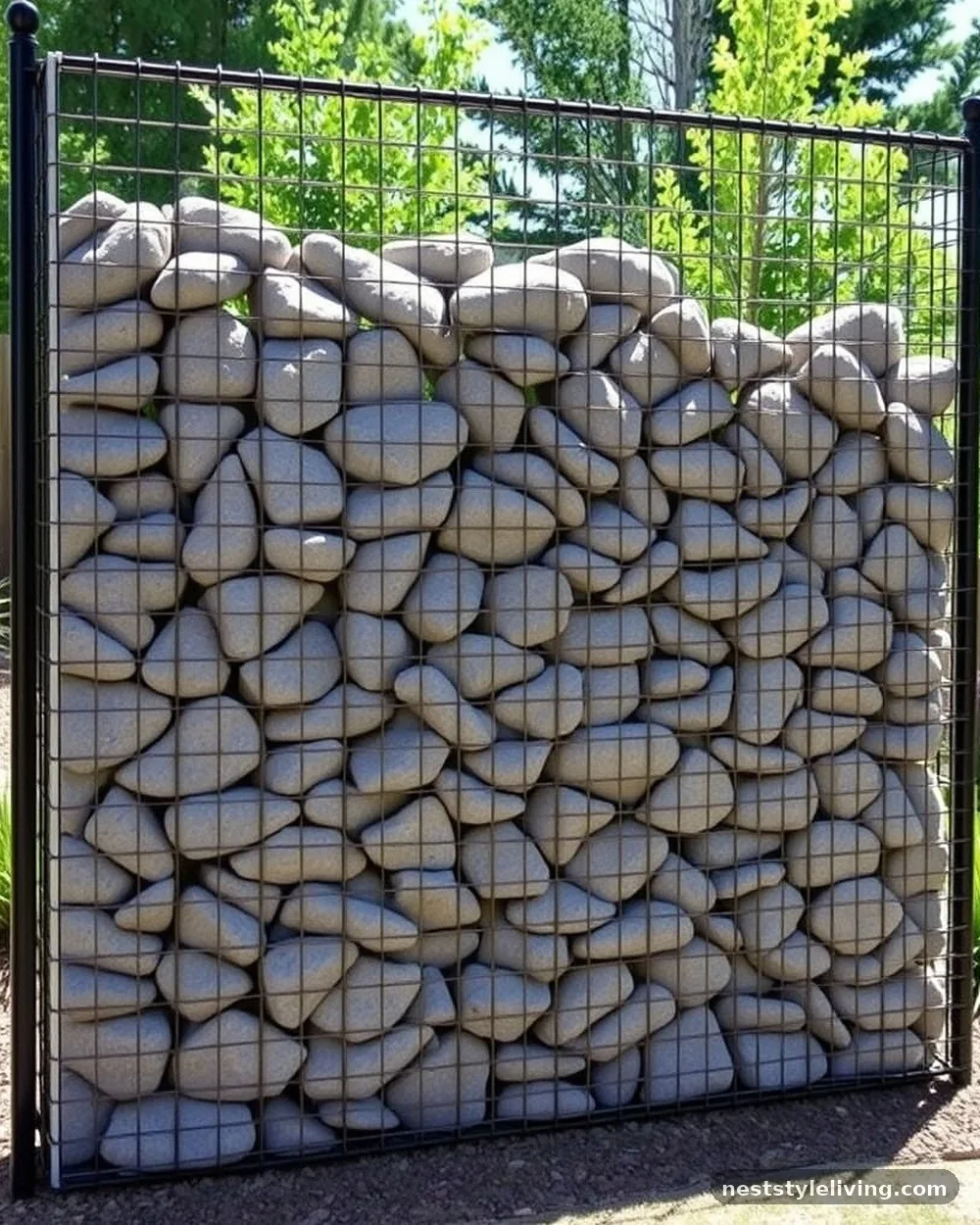
Gabion walls consist of metal wire cages filled with river rock, and they serve as an excellent, modern way to create privacy screens or decorative retaining walls. Because they are filled with loose stone, they are naturally permeable and don’t require the complex drainage systems that solid concrete walls do. You can stack them to create varying heights, which adds vertical interest to a flat yard and provides a sense of enclosure. The industrial look of the wire mesh combined with the organic, smooth river rocks creates a striking, contemporary aesthetic.
Choose a galvanized or powder-coated wire mesh to ensure the structure remains rust-free and durable in all weather conditions.
14. Shadow-Casting Rock Sculptures

Create a focal point by stacking large, flat river rocks into cairns or low, sculptural mounds that catch the light and cast interesting shadows. These small, artistic installations draw the eye and add a sense of personality to an otherwise uniform yard. You can place them near entryways or at the corner of a garden bed to act as a permanent, weather-resistant piece of outdoor decor. Unlike fragile garden statues, these rock sculptures are incredibly durable and only improve in appearance as they weather and settle into the landscape over time.
Use a small amount of construction-grade adhesive between the stones if you want to build a taller, more complex sculpture that won’t topple over.
15. Hidden Hose Hiding Spots
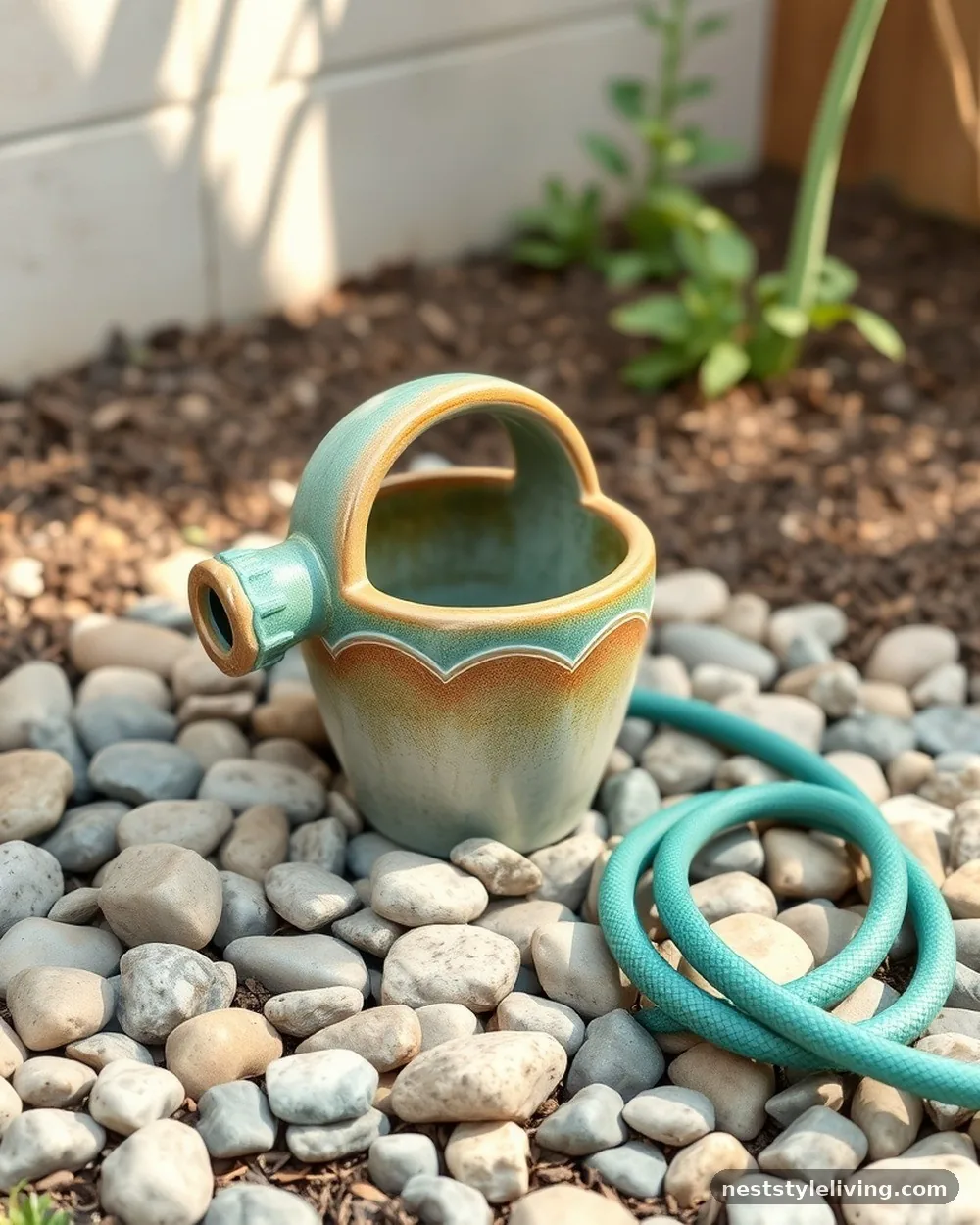
Create a discreet, functional zone for your garden hose by surrounding a decorative hose pot or reel with a bed of river rock. This creates a “utility landing” that keeps your hose off the grass and prevents the area from becoming a muddy mess after watering. By placing the hose storage on a bed of stones, you elevate it from a chore-related item to a purposeful part of your garden design. It keeps the yard looking clean and organized, ensuring that even the most utilitarian tools don’t detract from your overall landscape aesthetic.
Keep the river rock bed large enough that you can easily coil the hose without it dragging on the surrounding soil or lawn.
16. Reflective Pond Edge Accents

If you have a water feature, lining the edges with river rock is essential for a polished, naturalistic look that hides the rubber liner. The stones soften the transition between the water and the land, making the pond appear as if it formed naturally in the earth. You can layer the rocks from small to large, moving away from the water’s edge, to create a realistic shoreline effect. This not only looks beautiful but also provides a stable surface for birds and other wildlife to land on, which adds life and movement to your yard.
Use a mix of different stone sizes and colors to mimic the look of a real stream bed, which makes the pond feel authentic rather than like a pre-formed plastic insert.
Frequently Asked Questions
What is the best size river rock for landscaping?
The best size depends on your specific application. For pathways, choose smaller, uniform stones (half-inch to one-inch) that are comfortable to walk on. For drainage and decorative borders, larger stones (two-to-four inches) are more effective because they stay in place better and provide more visual texture.
What is the rule of 3 in landscaping?
The rule of 3 suggests that objects or plants look more natural and aesthetically pleasing when grouped in odd numbers. When using river rock as an accent, consider grouping three different sizes of boulders or three distinct rock-filled zones to create a balanced, professional, and visually engaging composition in your yard.
What are the downsides of river rock landscaping?
The primary downside is that river rock is heavy and difficult to move once installed. Additionally, if you don’t use a high-quality landscape fabric underneath, weeds can eventually grow up through the rocks. It is also important to note that rocks can become very hot in direct summer sun, which may affect the health of nearby heat-sensitive plants.
What looks good with river rock?
River rock pairs exceptionally well with ornamental grasses, hardy succulents, and bold, architectural shrubs like boxwood. The contrast between the soft, organic forms of plants and the hard, smooth surfaces of the stones creates a balanced look. Additionally, materials like corten steel, weathered wood, and concrete pavers complement the natural tones of the rocks.
How do I keep river rock clean?
To keep your rocks looking polished, use a leaf blower on a low setting to remove debris like twigs and leaves. If the rocks become dull or dusty, a simple rinse with a garden hose will usually restore their natural color and shine. For stubborn stains or moss buildup, a light scrub with a stiff-bristled brush and water is typically sufficient.
Closing Thoughts
Integrating these river rock landscaping ideas for a polished yard is a reliable way to create a low-maintenance, high-impact exterior. By focusing on intentional placement, proper drainage, and the balance of different stone sizes, you can transform your outdoor space into a clean, modern, and durable environment. Whether you are addressing specific drainage needs or simply looking to update your home’s curb appeal, the versatility of these stones offers a permanent solution that stands the test of time.
Start by identifying one area of your yard that needs a refresh and apply these techniques to see how a simple stone installation can change your entire landscape. If you have questions about specific applications or need more inspiration, feel free to share your project goals in the comments below.