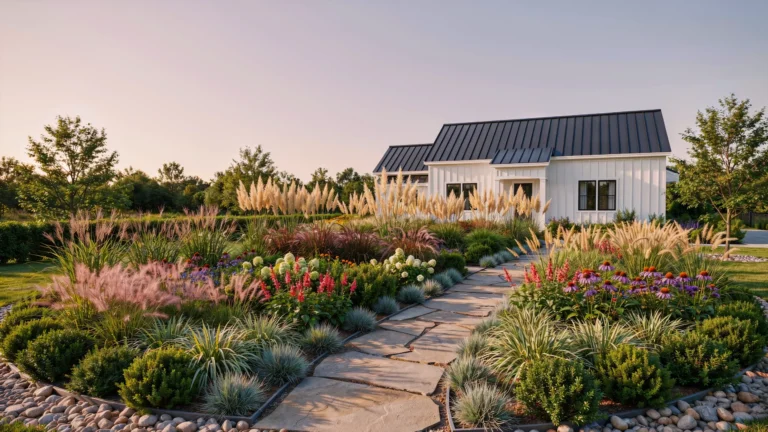
22 Glass Yard Art Ideas to Upgrade Your Landscape Style
By Emma Carter
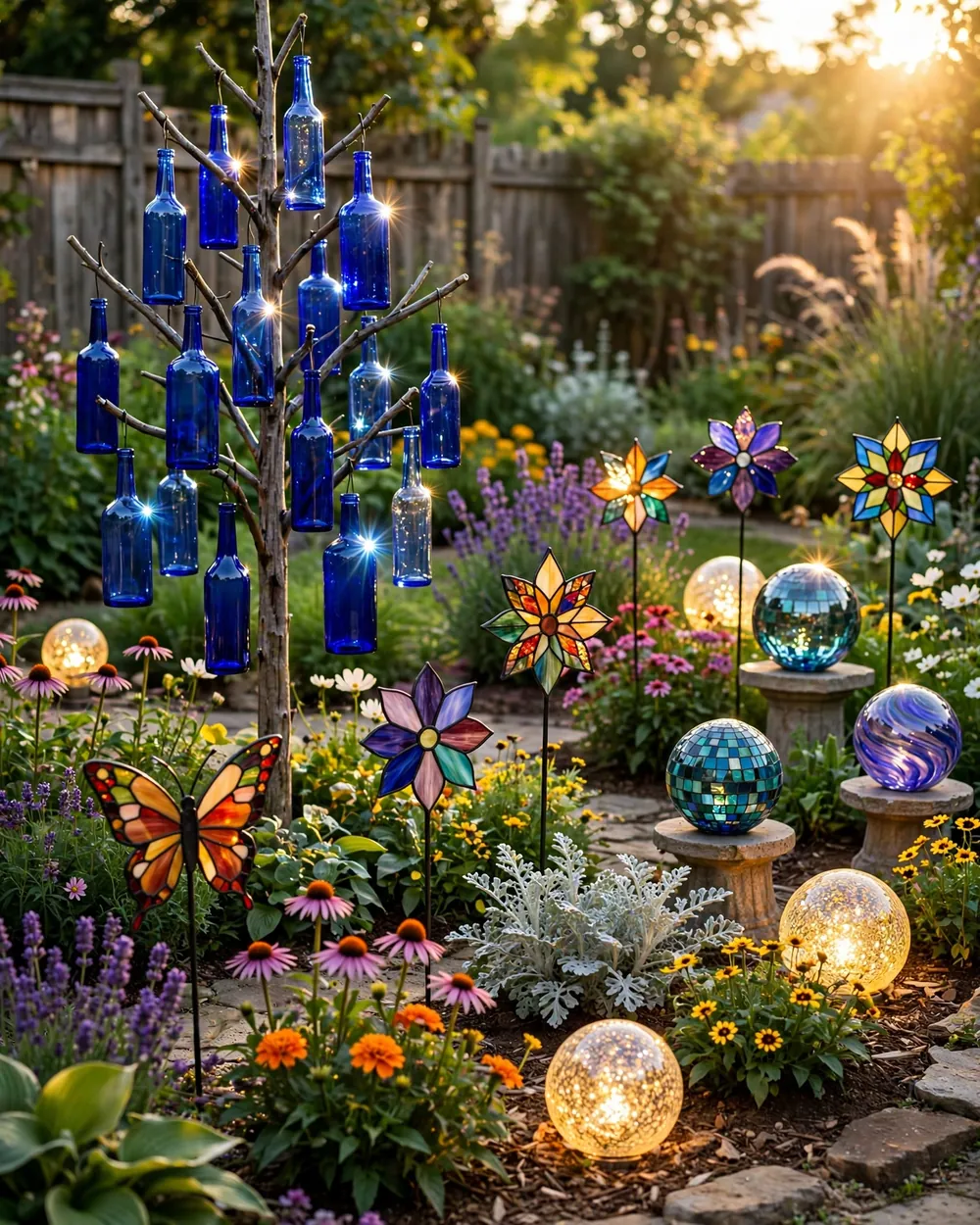
Few materials transform a landscape as quickly as glass. When sunlight passes through a cobalt bottle, a stained glass stake, or a reflective gazing ball, it turns an ordinary flower bed into a small gallery of color and light. Glass yard art works in every season too — it sparkles on bright summer mornings, glows beside garden lights in autumn, and catches low winter sun when the flowers are gone. It is also one of the most affordable ways to upgrade your landscape style, because many of the best projects reuse bottles, jars, and recycled glass you already have.
These 22 glass yard art ideas cover everything from classic bottle trees and stained glass garden stakes to glass gazing balls, solar globes, recycled glass mulch, and fused glass flowers. Some are easy DIY glass yard art projects you can finish in an afternoon, while others are artisan pieces worth saving up for. Whether your style is cottage, coastal, modern, or bohemian, there is a glass garden art idea here that will add shine, color, and personality to your outdoor space.
1. Classic Cobalt Bottle Tree
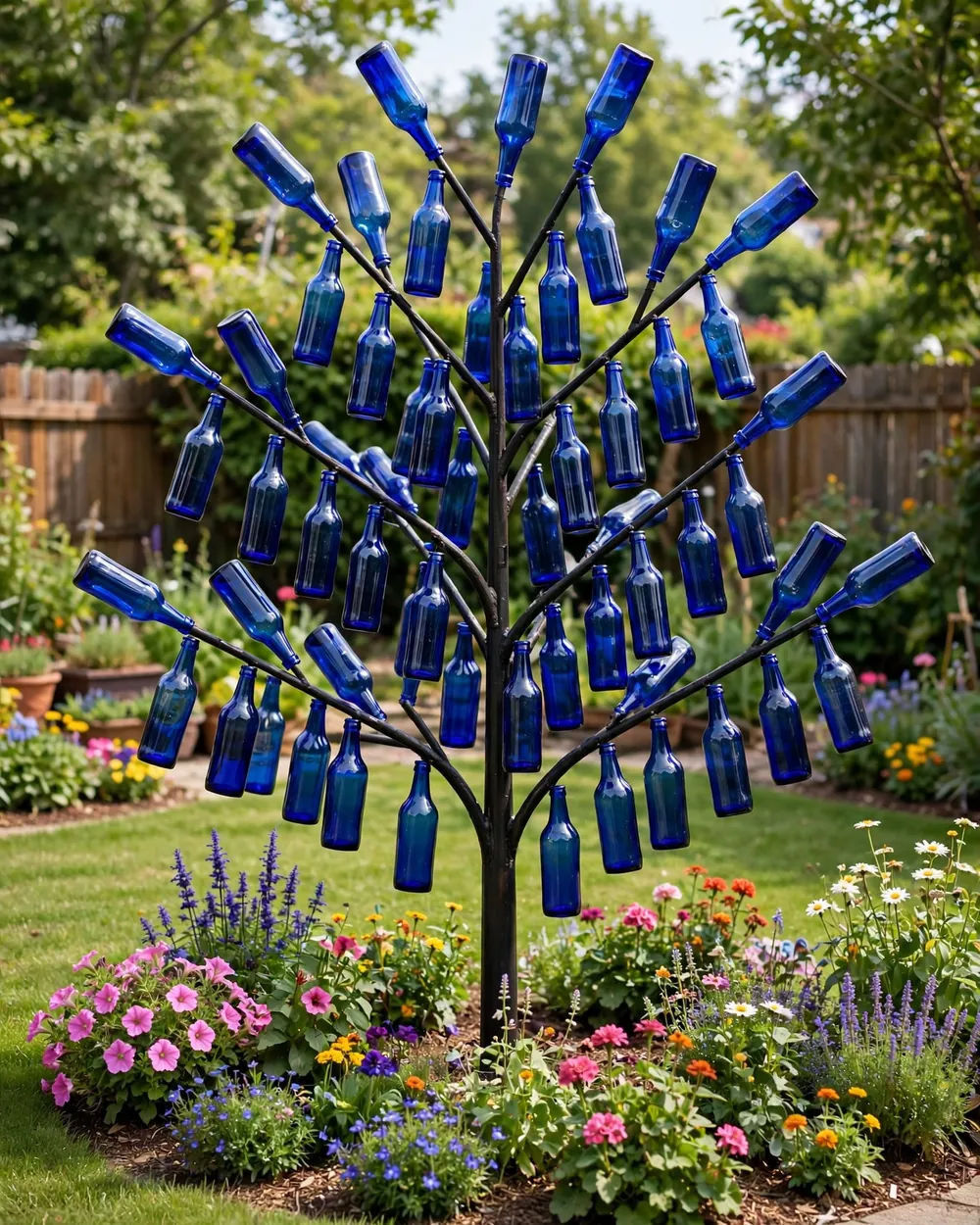
A bottle tree is the most iconic piece of glass yard art in American folk tradition, with roots reaching back to African and Southern folk gardens where blue bottles were believed to trap restless spirits. Today the classic cobalt bottle tree is loved simply for how it looks: a sturdy post or rebar frame dressed with rows of blue glass bottles that glow like sapphires when the sun hits them. Cobalt blue bottles are the traditional choice because the deep blue color stays vivid for decades without fading, and they are easy to find at flea markets, thrift stores, and recycling centers.
To build your own bottle tree, sink a metal post or heavy wooden stake firmly into the ground, add short angled arms or heavy-gauge wire hooks, and slide clean bottles over them neck-first. Mix in a few green, amber, and clear bottles if you like a varied look, but a tree of pure cobalt blue has the most striking, unified effect. Place the tree where it catches morning or late-afternoon light — near a path, at the end of a garden vista, or beside the patio — and it becomes a living sculpture that changes color all day long.
2. Stained Glass Garden Stakes
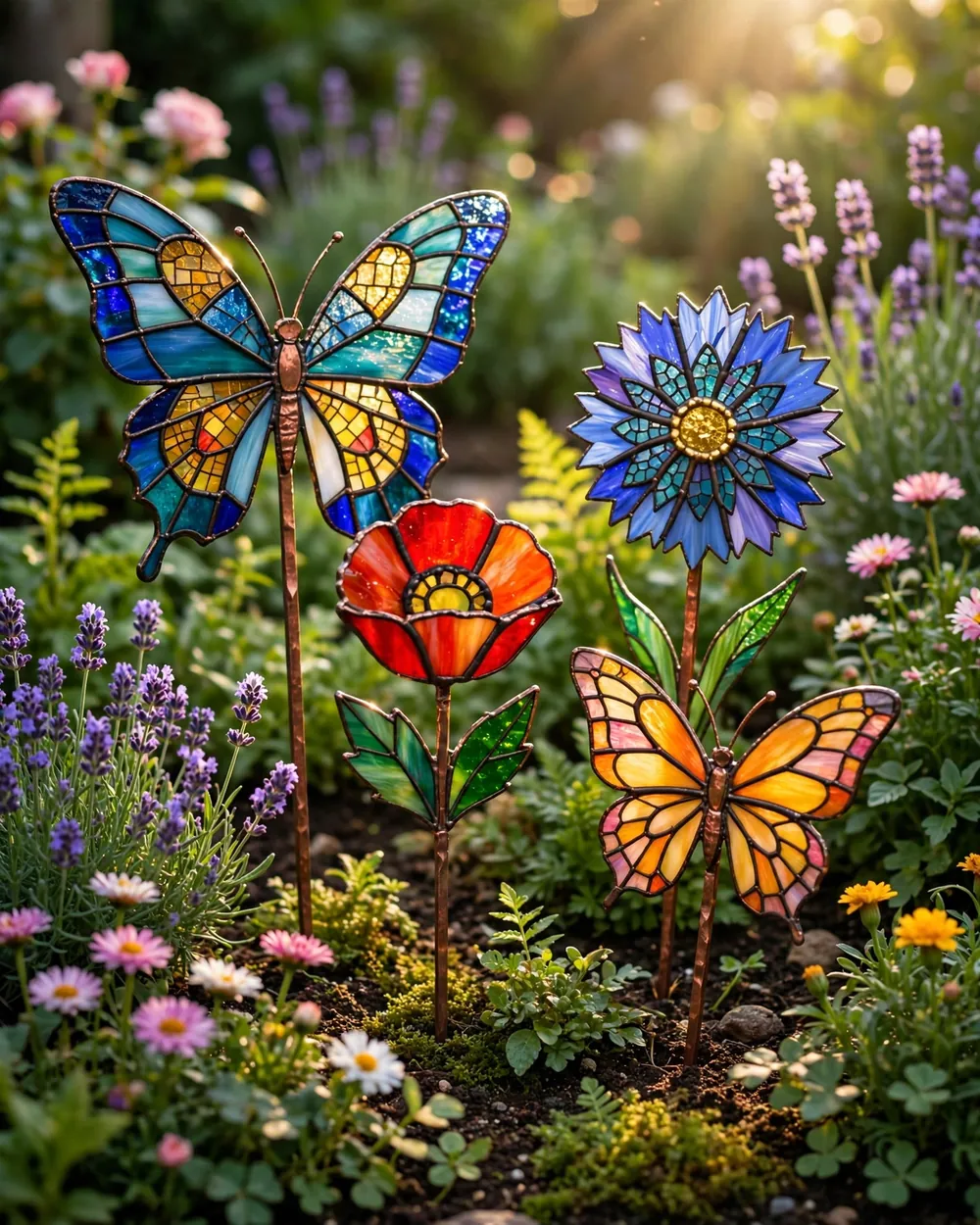
Stained glass garden stakes bring the glow of a cathedral window down to flower-bed height. These handcrafted pieces — flowers, butterflies, dragonflies, and abstract sunbursts made from real cut glass with soldered seams — are mounted on copper or steel rods that push straight into the soil. When the sun shines through, they throw patches of jewel-colored light across the plants and mulch, turning an ordinary perennial border into something that feels quietly magical.
Because they are made from real glass, stained glass garden stakes keep their color permanently, unlike painted metal art that flakes and fades. Cluster three to five stakes of different heights in one bed for a collected look, or tuck a single large statement piece among tall ornamental grasses where it catches the breeze and the light. Buy from artisan sellers who use outdoor-rated solder and copper patina, and bring the most delicate pieces indoors for harsh winters to protect the solder joints from repeated freeze and thaw.
3. Colorful Glass Gazing Balls

Glass gazing balls are the original glass yard art, beloved since Victorian gardeners first floated mirrored spheres among their roses. A gazing ball works like a landscape lens: its reflective surface compresses the whole garden — sky, flowers, and trees — into a single glowing orb, which makes small yards feel larger and gives large yards a jewel-like focal point. Modern versions come in crackled, swirled, and metallic finishes in every color, from classic cobalt blue to mercury-silver mirror.
Display a gazing ball on a pedestal or wrought-iron stand so it sits at or slightly above eye level, where it catches the most light and is easy to admire. Nestle it into a flower bed so blooms reflect in its surface, or place a pair flanking a garden gate for a formal, balanced entry. Choose heavier solid glass or stainless-steel-core balls for windy spots, and lift them onto their stands each spring after winter storage. One well-placed gazing ball adds more drama to a garden than a dozen small ornaments.
4. Solar Glass Globe Lights
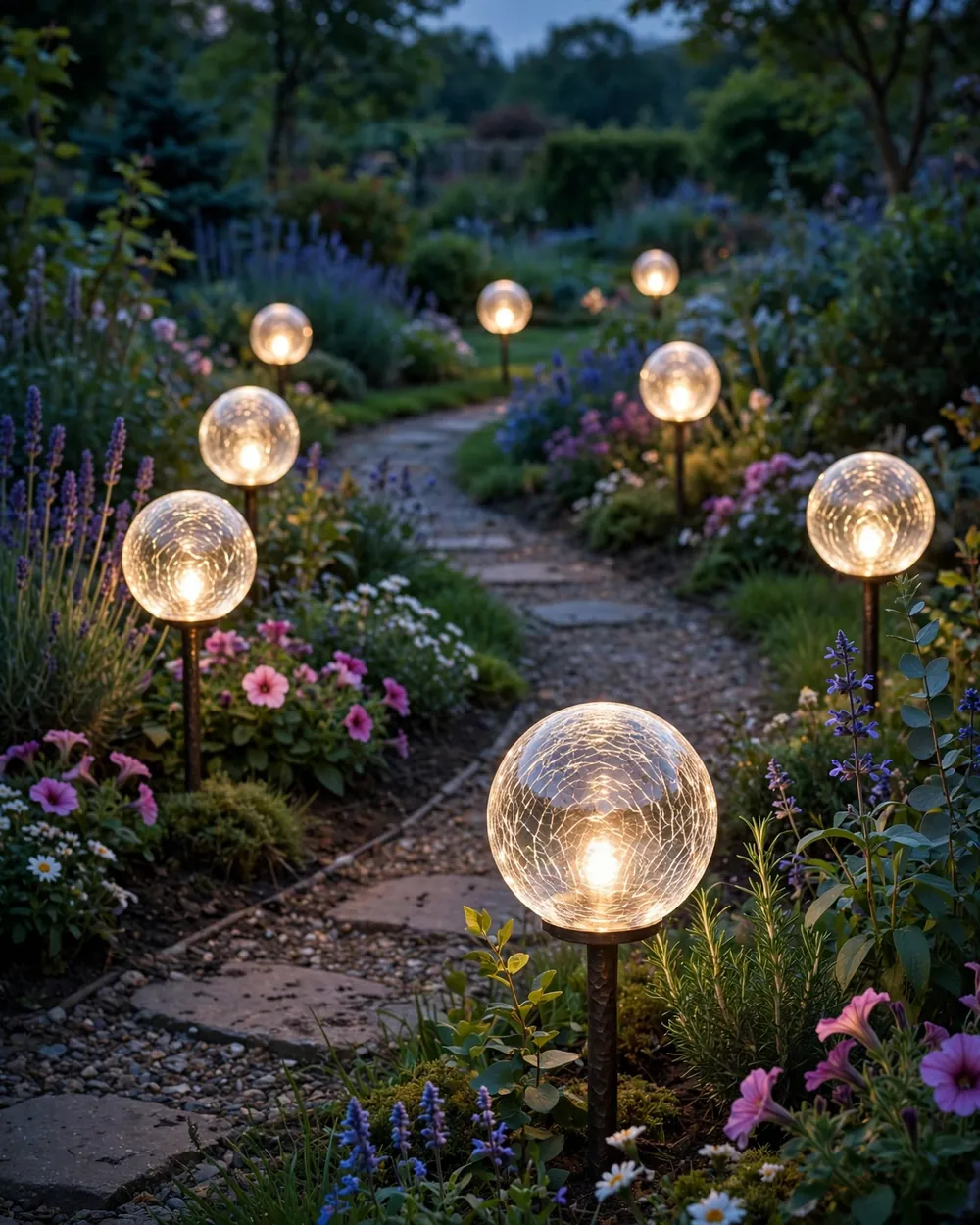
Solar glass globe lights are the one piece of glass yard art that works two shifts: by day they are colorful crackled-glass spheres that sparkle in the sun, and by night they glow softly from within on stored solar power. The crackled glass texture scatters the LED light beautifully, casting a warm, firefly-like shimmer along paths, patios, and flower beds. They need no wiring, no electrician, and no electricity bill — just a sunny spot to charge.
Line them along a walkway for a welcoming approach after dark, cluster three globes of different heights in a dark corner of the yard, or stake them through a flower bed where the glow highlights nearby blooms. Look for waterproof models with replaceable rechargeable batteries, and wipe the solar panels clean a few times a season to keep them charging efficiently. For the most reliable glow, place the globes where they receive at least six hours of direct sun. They are proof that practical garden lighting can also be genuine garden art.
5. Recycled Glass Mulch Beds

Recycled glass mulch — also called tumbled glass or glass aggregate — is landscaping’s best-kept secret for gardeners who love sparkle. Made from post-consumer glass tumbled smooth and safe to handle, it comes in sea-glass shades of turquoise, cobalt, green, and amber that shimmer like water whenever the light moves. Unlike wood mulch, it never fades, never rots, never needs replacing, and never blows away in storms, which makes it a genuinely low-maintenance landscape choice.
Use it as a mulch layer two inches deep over landscape fabric in ornamental beds, around modern sculptures, or as an accent ring around a specimen tree. It pairs beautifully with succulents, ornamental grasses, and minimalist modern landscaping where its jewel tones provide the color that minimal planting lacks. Because it holds heat, keep it away from the crowns of heat-sensitive plants, and always wear gloves when spreading it. A bed of glass mulch looks expensive, lasts for decades, and keeps thousands of bottles out of landfills.
6. Stacked Glass Totem Sculptures

A stacked glass totem is the easiest piece of large-scale glass yard art you will ever make: glass plates, bowls, vases, and orbs layered on a metal pipe and glued into a colorful tower. Gardeners have been making these glass totems for years from thrift-store finds, and no two are ever alike — the charm is in the hunt for interesting shapes and the surprise of how they stack. In the sun, the layered glass glows like a lighthouse beacon; at dusk, it catches the last light long after the flowers have gone dark.
To build one, slide a rebar or copper pipe into the ground for stability, then stack glass pieces from largest at the bottom to smallest at the top, using clear silicone adhesive rated for outdoor use between layers. Add a glass ball or finial on top for a finished look. Keep to one color family — all blues, all ambers — for an elegant, curated tower, or mix every color for a playful bohemian statement. Thrifted glass keeps the cost under twenty dollars, making this one of the most budget-friendly ways to add height and shine to a flower bed.
7. Hanging Glass Float Orbs

Glass fishing floats — the hand-blown spheres once used to keep fishermen’s nets afloat — have become a favorite form of glass yard art, and hanging them from tree branches is the prettiest way to display them. Suspended at different heights on sturdy twine or fishing line, the orbs sway gently in the breeze and catch dappled sunlight through the leaves, scattering pools of colored light on the ground below. It is a look that feels both nautical and woodland-fairy-tale at once.
Authentic vintage floats are collectors’ items, but beautiful reproductions in sea-green, cobalt, and amber are widely available and far more affordable. Hang them in odd-numbered clusters of three or five from a strong branch, varying the drop lengths so the orbs do not knock together in wind. Keep them high enough to clear foot traffic and lawn equipment, and secure the twine with a knot that can be easily undone for winter storage in stormy climates. A hanging cluster of glass floats turns an ordinary shade tree into a destination.
8. Mosaic Glass Stepping Stones

Mosaic glass stepping stones turn the most-walked part of your garden into art. Pressing broken plates, tumbled glass gems, sea glass, and colorful tile shards into concrete pavers creates one-of-a-kind stepping stones that sparkle underfoot and survive years of foot traffic. This is one of the most satisfying DIY glass yard art projects because the materials cost almost nothing — old dishes from the thrift store and a bag of concrete mix are all you need.
Make them in a simple round mold (a cake pan or plant saucer works) by pouring an inch of concrete, pressing the glass pieces face-down into the surface, and letting the stone cure for 48 hours before flipping it. Keep the glass pieces slightly below the surface so the stone stays walkable and safe for bare feet. Arrange the finished stones as a winding path through a flower bed or around a seating area, spacing them at a comfortable stride. Seal the stones yearly with concrete sealer to protect the colors, and they will outlast wooden edging many times over.
9. Glass Bottle Garden Edging
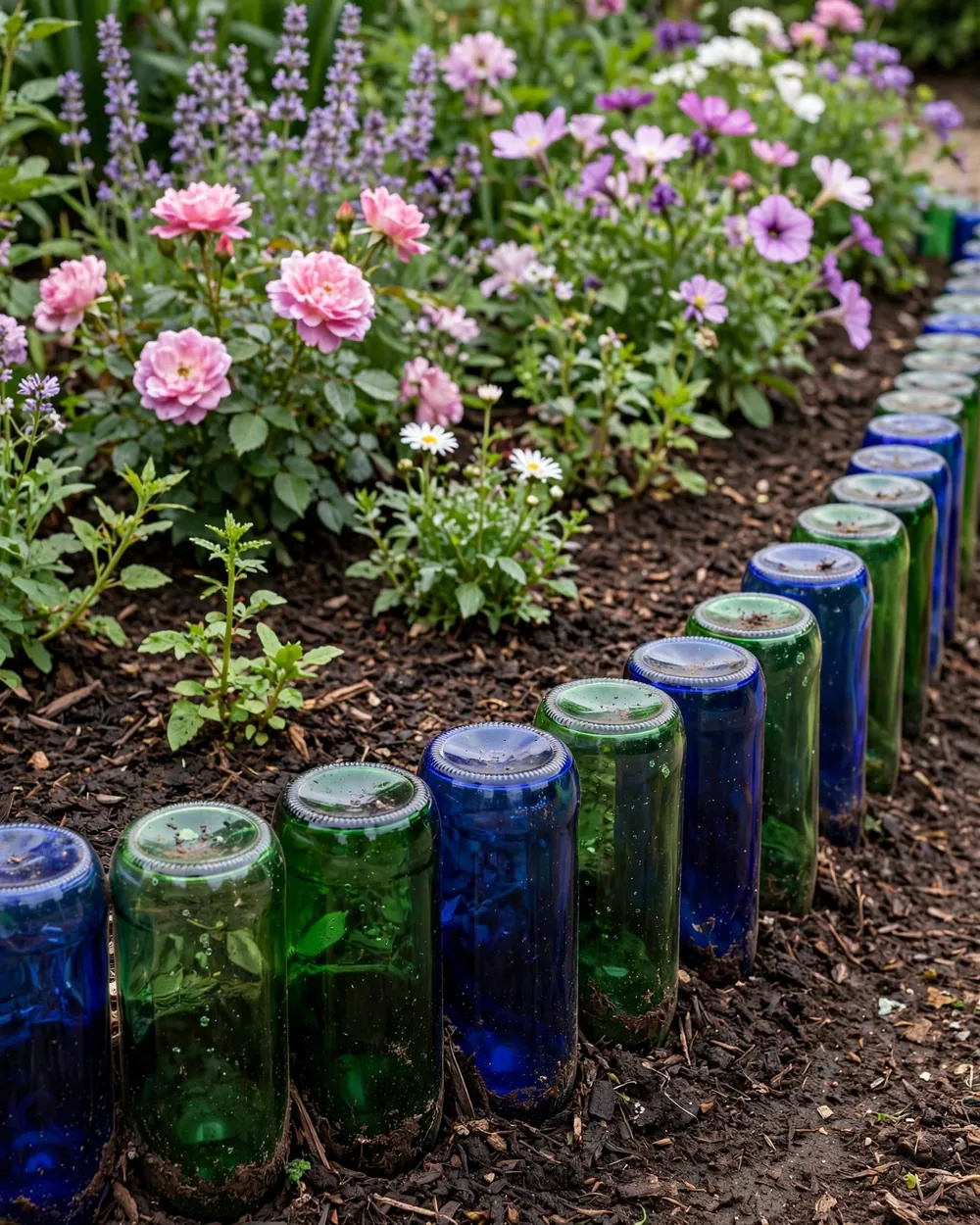
Edging a garden bed with upside-down glass bottles is an old cottage-garden trick that looks far more expensive than it is. Bottles buried neck-down in a trench along the bed’s border create a crisp, scalloped glass edge that holds back mulch, defines the planting area, and glints in the sun like a row of jewels. It is durable, weed-blocking, and practically free if you collect bottles from friends, restaurants, or recycling bins.
Dig a trench about six inches deep along the bed edge, stand the bottles upside down with their bottoms roughly level, backfill firmly, and tamp the soil so the row stays straight. Stick to one bottle color — all green wine bottles or all cobalt — for a tidy, designed look, or alternate colors in a repeating pattern for a folk-art feel. This edging works especially well around herb gardens, cottage flower borders, and curved beds where rigid plastic edging looks clunky. Once set, it needs no maintenance beyond an occasional rinse to keep the glass shining.
10. Fused Glass Flower Blooms
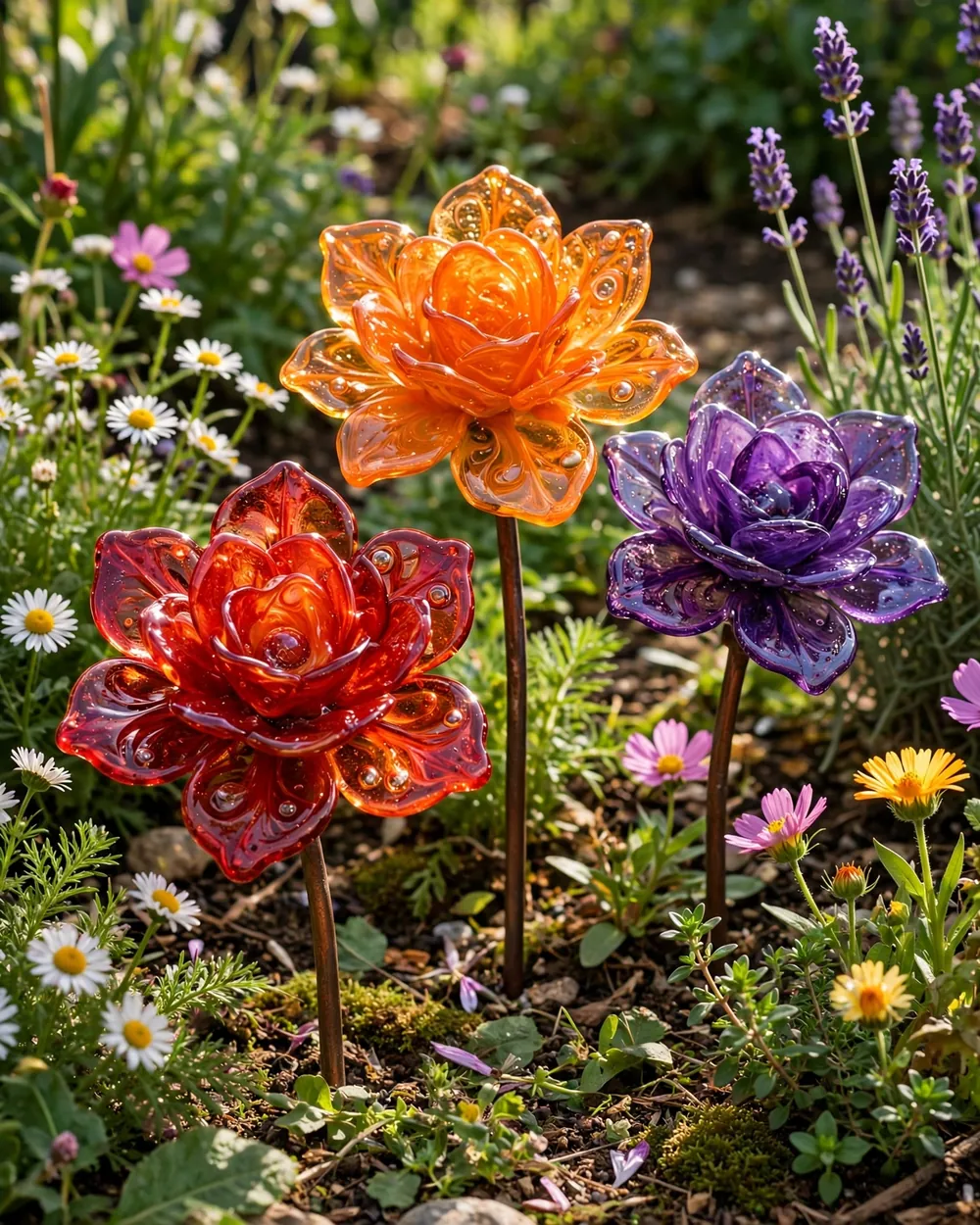
Fused glass flowers solve the oldest gardener’s problem: blooms that never fade, never need watering, and never go out of season. These handcrafted glass blossoms — kiln-fused petals in poppy reds, sunflower ambers, and iris purples mounted on copper or steel stems — hold their color from the first thaw to the last frost. Tucked among real perennials, they fill the gaps between bloom cycles so the bed looks alive even when nothing is flowering.
The trick to making fused glass flowers look natural is to mix them sparingly with real plants rather than clustering them together. A single tall glass bloom rising from a drift of ornamental grasses, or three small glass flowers echoing the color of nearby echinacea, reads as art rather than decoration. Buy pieces with UV-stable glass and weatherproof stems, and push the stems deep enough that the flowers stay upright in wind. They are especially valuable in shade gardens, where real flowers are scarce but glass blooms shine like captured sunlight.
11. Bubbling Glass Fountain Feature
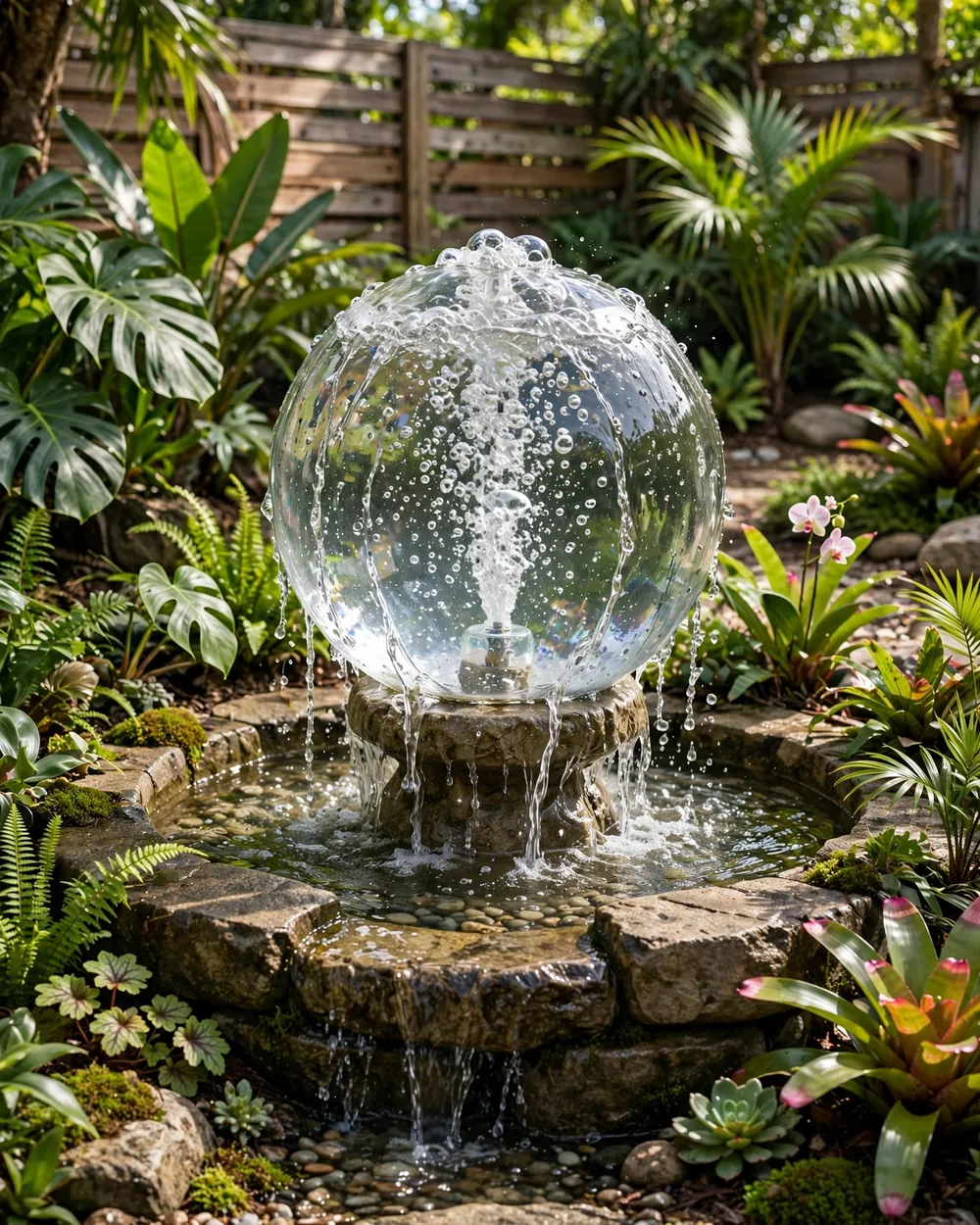
A bubbling glass fountain combines two of the most soothing elements in any landscape — moving water and glowing glass — into one showstopping focal point. Water pumped up through a hollow glass sphere, orb, or column spills in a shimmering sheet over the surface and falls into a hidden basin below, creating the gentle sound of a spring. Lit from within or below at night, the whole piece glows like a lantern, making it the most dramatic glass yard art you can buy.
These fountains work in surprisingly small spaces: compact bubbling orbs fit on a patio corner or balcony, while larger drilled-glass boulders anchor a full garden bed. They recirculate the same water, so there is no plumbing to install — just a nearby outlet for the small pump. Keep the water topped up in summer, bring the glass element indoors before hard freezes, and add a drop of fountain algaecide to keep the glass clear. The sound alone is worth it: nothing relaxes a garden seating area faster than moving water over glass.
12. Sea Glass and Driftwood Sculptures

Sea glass and driftwood sculptures bring the calm of the shoreline into any garden, even one hundreds of miles from the sea. Frosted by years of tumbling in the surf, genuine sea glass has a soft, matte finish in sea-green, aqua, and cobalt that looks nothing like new glass — and when it is wired into a piece of weathered driftwood, the result is sculpture with a story. These pieces suit coastal, cottage, and minimalist gardens equally, adding texture without visual noise.
Look for sculptures where the glass is securely wired or drilled rather than merely glued, since outdoor pieces must survive wind and rain. Set a driftwood-and-sea-glass sculpture where it catches side light — on a porch table, at the edge of a rock garden, or beside a water feature — so the frosted glass glows softly. You can also make your own from collected driftwood and craft-store sea glass, wiring the pieces into the wood’s natural crevices. It is slow, meditative work, and the finished piece carries the memory of the beach walk where every piece was found.
13. Glass Orb Tree Chandeliers
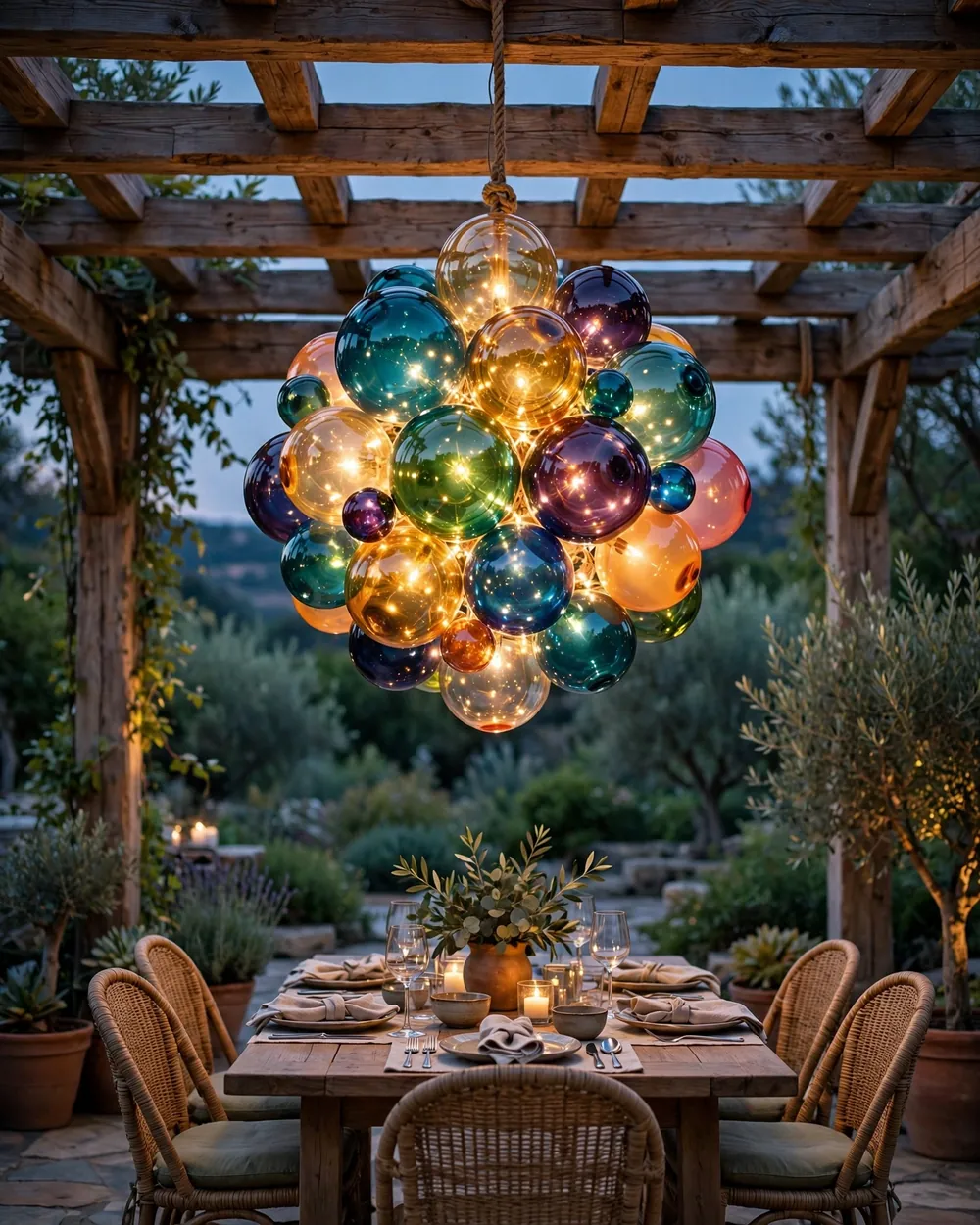
A chandelier of glass orbs hanging from a pergola, tree branch, or porch beam turns an outdoor dining area into an evening venue. Clusters of colorful glass balls — some wired with tiny fairy lights, some left to catch the daylight — hang at staggered lengths from a metal ring or reclaimed wood frame, creating a floating constellation above the table. By day the orbs sparkle; by night, lit from within, they glow like paper lanterns that will never tear or fade.
You can buy ready-made orb chandeliers or build one from a hanging basket frame, clear fishing line, and a collection of glass floats or baubles in your chosen palette. For an evening glow without wiring, thread battery-operated fairy lights through the cluster and hide the battery pack in the frame. Hang the chandelier high enough to clear heads but low enough to feel intimate — about seven feet above the seating is ideal. It is the fastest way to make a plain patio feel like a celebration, and it costs a fraction of a wired outdoor light fixture.
14. Stained Glass Suncatcher Panels

Large stained glass suncatcher panels are like garden windows with no walls around them. Hung in an arbor, a pergola opening, or from a sturdy shepherd’s hook, these mosaic panels of colored glass turn plain sunlight into shifting rivers of color across the lawn and flower beds. Unlike small window suncatchers, garden panels are built in the range of one to three feet across — big enough to read as landscape art from across the yard.
Hang panels where they face the sun for at least part of the day, and where the projected colors land on something visible: a pale fence, a light gravel path, or a patch of lawn. Choose panels framed in zinc or copper came with a hanging chain rather than a single loop, so they hang level and survive wind. In regions with hail or severe storms, bring panels under cover during storm season, since large glass panels are the most fragile form of glass yard art. Treated with that basic care, a stained glass panel becomes a family heirloom that outlives the garden around it.
15. Glass Gabion Stone Pillars

Gabion pillars — wire cages traditionally filled with stone — take on a completely different personality when filled with recycled glass. Columns of turquoise, cobalt, and amber glass chunks glow from within like giant gemstones, making them the most modern form of glass yard art on this list. They work beautifully as gate posts, as flanking pairs at a garden entrance, or as a glowing boundary along a contemporary patio.
Build them from galvanized gabion baskets lined with fine mesh so the glass cannot slip through, and fill with tumbled glass chunks rather than sharp broken glass for safety. The real magic happens at night: a simple uplight or solar spotlight aimed at the base turns each pillar into a luminous column that lights the entrance without a visible fixture. Because glass does not compact or settle like stone, the pillars stay full and even for years. They are a bold choice, but in a modern landscape nothing else delivers this much drama per square foot.
16. Crackle Glass Birdbath

A crackle glass birdbath is where garden art meets wildlife habitat. The basin — hand-blown glass deliberately crackled during cooling so light fractures through a web of fine lines — holds water for birds while glowing like a jewel in the sun. Amber, cobalt, and aqua crackle glass are the most popular finishes, each one throwing a different quality of light across the surrounding plants.
Place the birdbath where you can watch it from a window or patio, since the visiting birds are half the show. Keep the basin shallow — no more than two inches of water — and scrub it weekly to prevent algae, which also keeps the crackled glass looking its best. In freezing climates, empty the basin before the first hard frost or bring the glass bowl indoors, since ice expansion can crack even well-made glass. A heated birdbath de-icer extends the season for the birds without risking the glass. Few pieces of glass yard art earn their keep as charmingly as one the local birds use every day.
17. Glass Jellyfish Garden Stakes
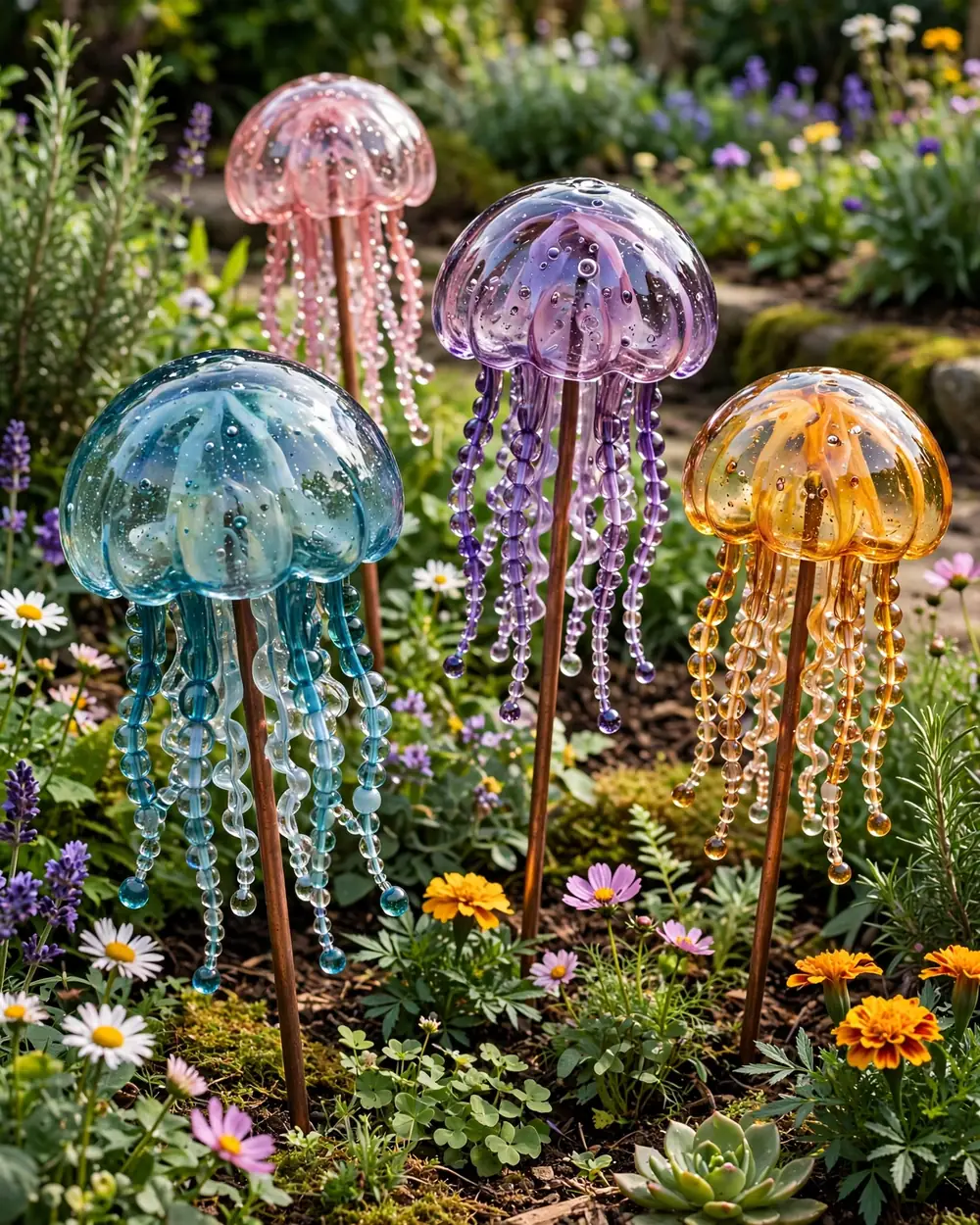
Glass jellyfish stakes are the most playful entry in the glass yard art world — hand-blown glass domes with beaded tentacles, mounted on copper rods that let them bob and sway above the flower beds like creatures floating in a current. In sun they flash color; in breeze they dance. Children love them, and even serious gardeners smile at the whimsy of a jellyfish blooming among the roses.
Because the tentacles are the delicate part, choose pieces where the beads are strung on stainless cable rather than simple thread, and push the rods deep enough that the jellyfish stays upright in gusts. They look best in odd-numbered groups of three or five, at heights staggered between two and four feet, rising from low plantings like ornamental grasses or sedum where nothing blocks the view. Aquas, ambers, and clears read most elegantly; multicolor sets suit bohemian and cottage gardens. They are pure joy in glass form, and proof that landscape art does not always have to be serious.
18. Fire Pit with Fire Glass Rocks
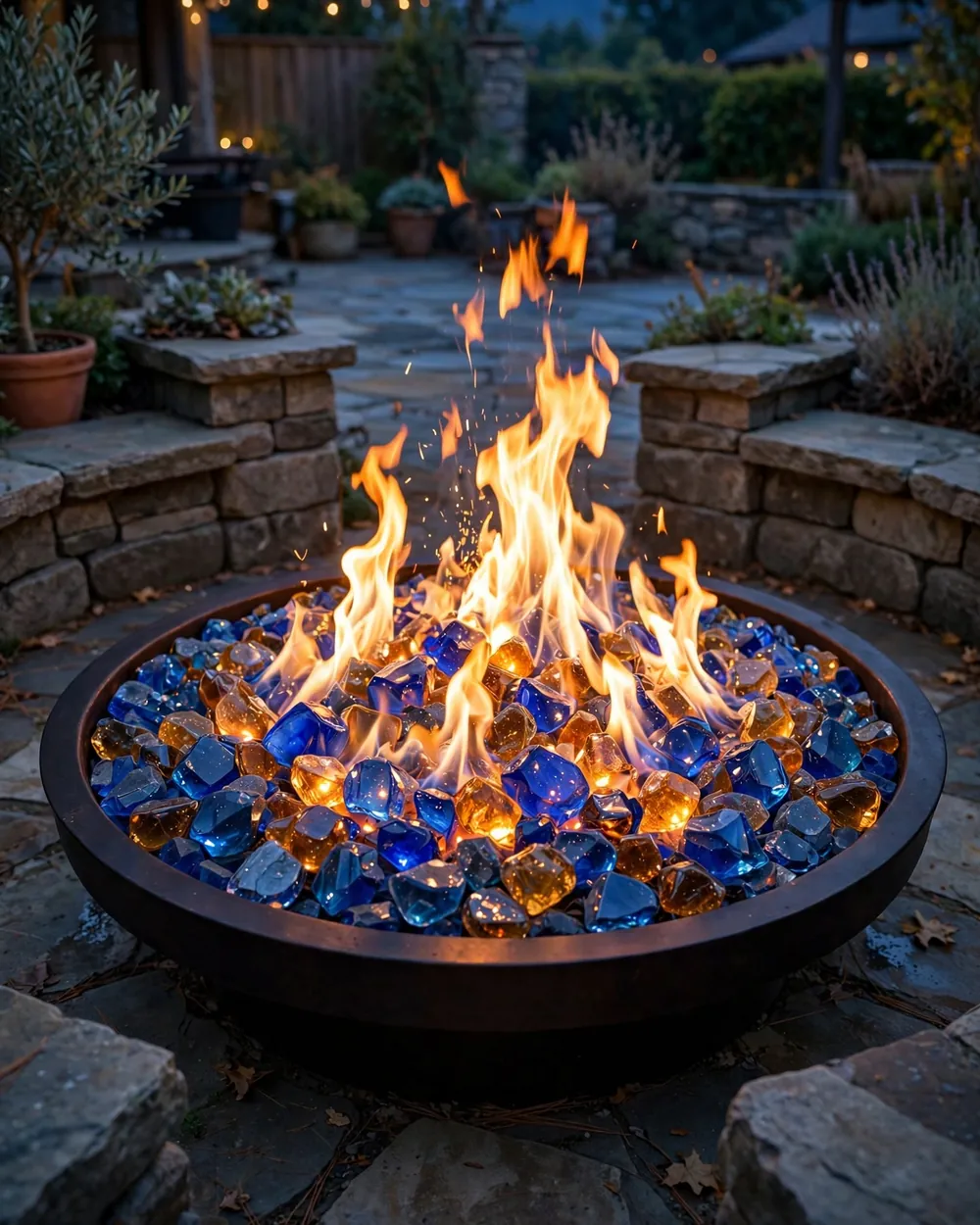
Fire glass — tempered glass chunks engineered to withstand direct flame — turns an ordinary gas fire pit into a bed of glowing embers that never burn down. As the flames play over the glass, the pieces catch and reflect the firelight, creating a shimmering, lava-like effect that logs and lava rock simply cannot match. It comes in every color, from classic cobalt and bronze to reflective platinum and aqua, so the fire pit can match the landscape palette.
Use only glass specifically rated as fire glass in a gas fire pit — never put ordinary glass, bottles, or decorative stones into a fire feature, as they can shatter or explode. A half-inch layer over the burner is all you need; the glass is a cover, not fuel. Clean it yearly with a vinegar soak to remove soot, and cover the pit in rain so mineral deposits do not dull the finish. The effect after dark is unforgettable: a ring of firelight dancing across colored glass, with the whole patio bathed in its glow.
19. Fence-Mounted Glass Wall Art
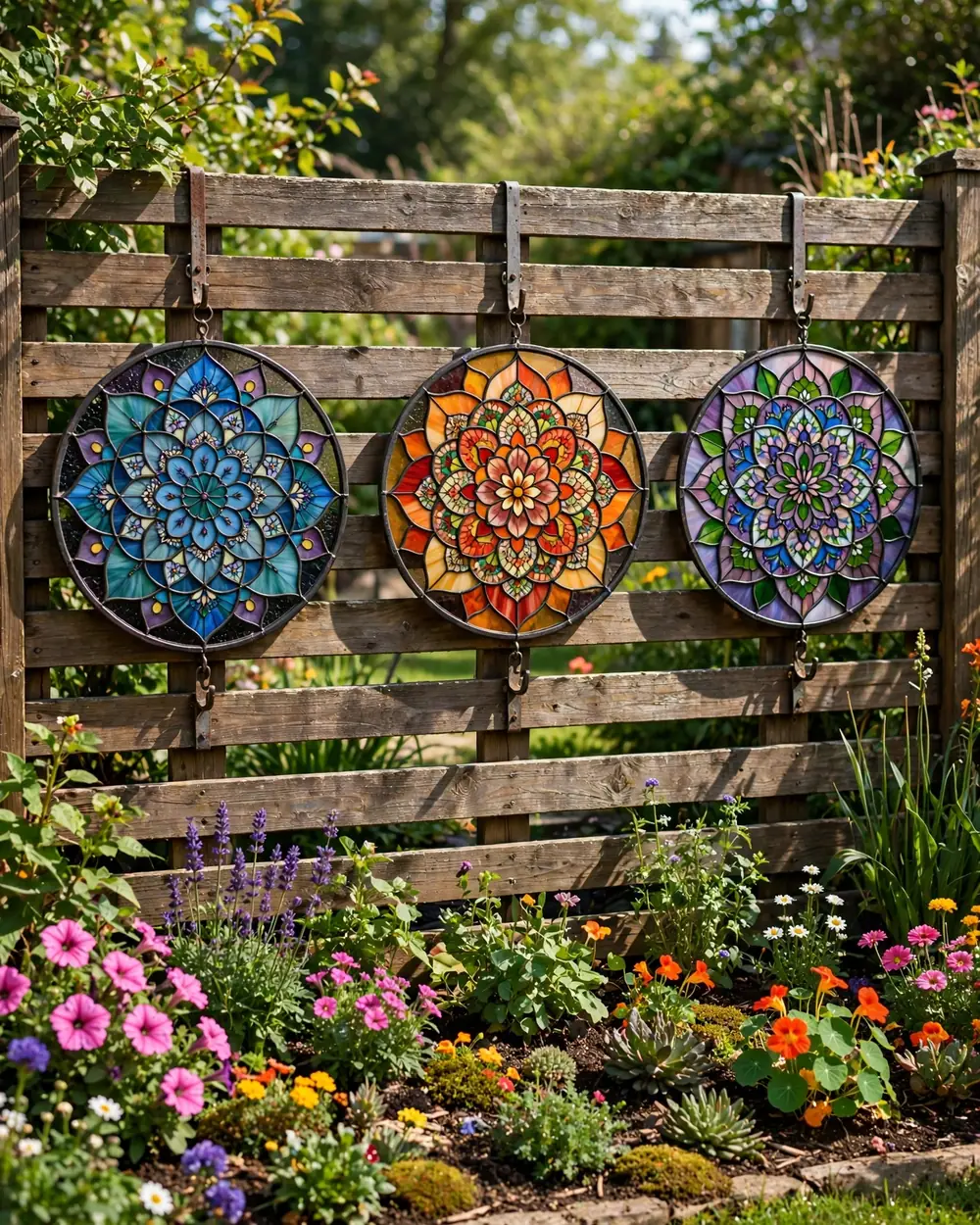
A plain wooden fence is a blank canvas, and glass wall art is the paint. Circular stained glass mandalas, fused glass panels, and clusters of glass plates mounted on the fence turn the least-loved part of the yard — the boundary — into a gallery wall. Because the fence is vertical, the glass catches light differently through the day, and a pale fence behind the glass makes the colors pop like a backlit display.
Mount pieces with exterior-rated stainless hardware and standoff brackets so air circulates behind the glass and moisture does not get trapped against the wood. Arrange three to five pieces of different sizes in an organic cluster rather than a rigid row, mixing circles and squares for a collected feel. Choose shatter-resistant tempered or fused glass for fence art, since fences flex in wind and sit within reach of balls, mowers, and curious hands. It is an ideal project for renters too: mounted on removable brackets, the whole gallery moves with you.
20. Glass Starburst Pathway Markers
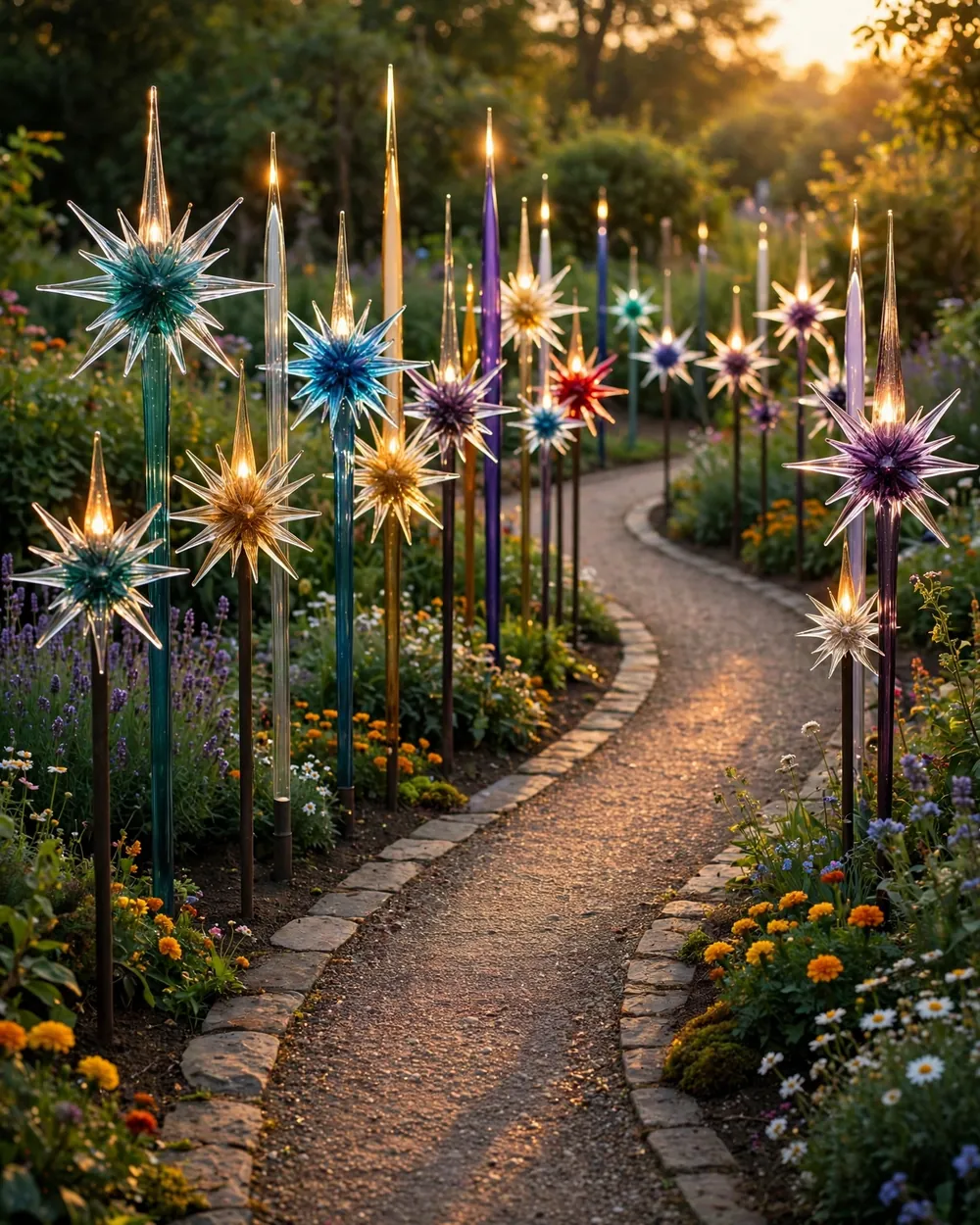
Glass starburst markers — slender rods of colored glass fanning from a central orb, or tall glass spires on metal stakes — line a garden path like a row of frozen fireworks. By day they are sculptural and colorful; at dusk, with a small light at the base or the last sun behind them, they ignite into glowing exclamation points along the walkway. They guide the eye and the feet at once, which makes them both art and genuinely useful landscape lighting accents.
Space markers about four feet apart along one side of a path, alternating heights between eighteen inches and three feet for a natural rhythm. Choose solid, tempered glass rods rather than hollow tubes for the sturdiest pieces, and set each stake in a small concrete footing so lawnmowers and footballs do not topple them. Amber and red starbursts warm up a cool modern landscape; aqua and clear suit coastal and minimalist gardens. They are the rare path light that looks just as good switched off as on.
21. Mason Jar Solar Luminaries
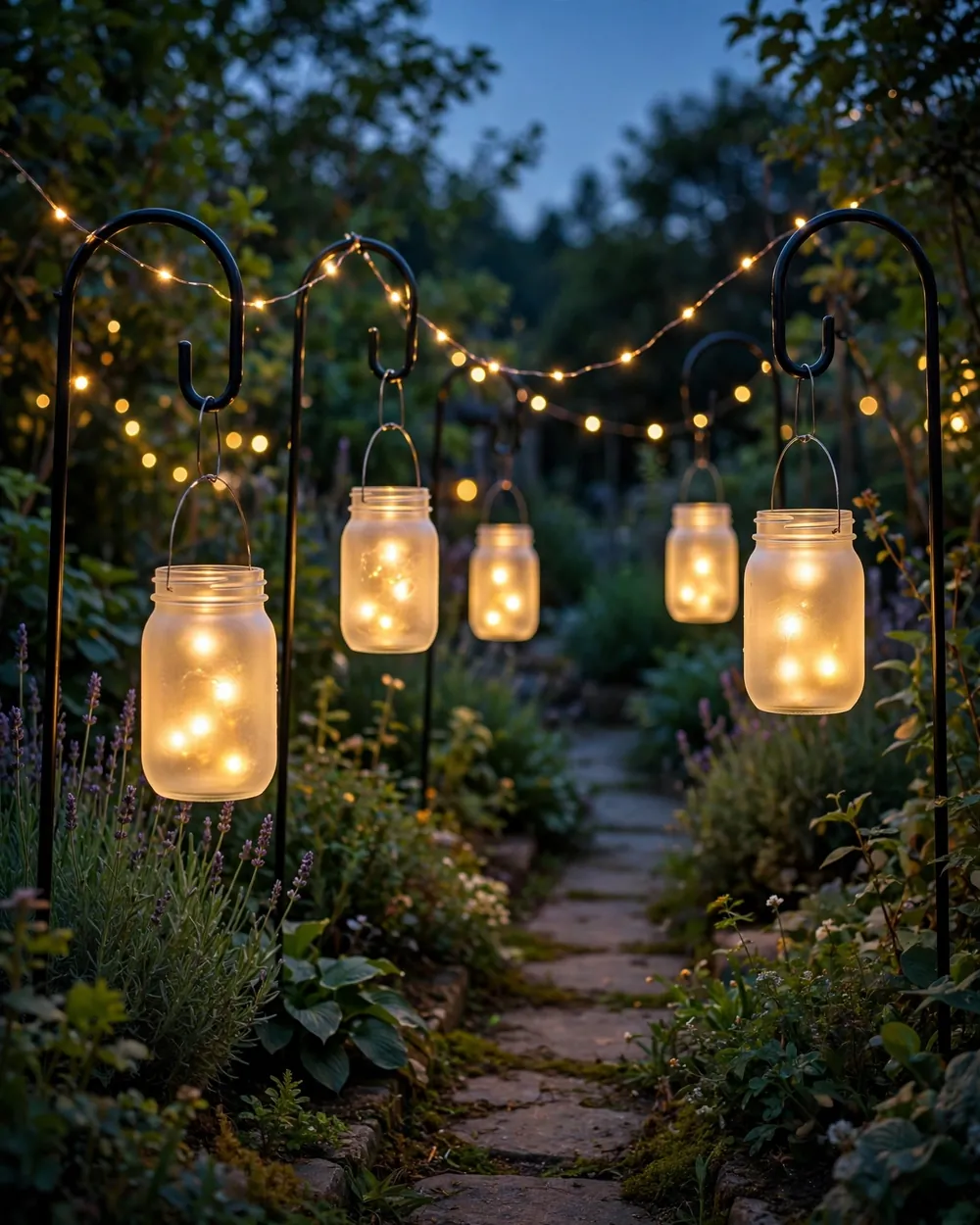
Mason jar luminaries are the folk-art classic of glass yard art: ordinary canning jars fitted with solar lids or fairy lights, hung from shepherd’s hooks or tree branches along a path or patio. Frosted or sea-glass-tinted jars glow like captured fireflies, and the whole project costs a few dollars per jar. It is the perfect first DIY glass yard art project — simple, forgiving, and charming from the very first evening.
Frost the jars with a coat of frosted-glass spray paint for the softest glow, or tint them with translucent glass paint in sea-glass shades. Hang them at varying heights along a walkway, cluster them over an outdoor table from a branch, or line the edge of a deck. Use solar lid inserts so there are no cords to manage, and bring the jars in before the first hard freeze since standard mason jars are not tempered. Add a sprig of dried lavender or a tea light (unlit, for looks) inside for a styled touch. Simple, sustainable, and endlessly re-arrangeable.
22. Whimsical Glass Mushroom Stakes
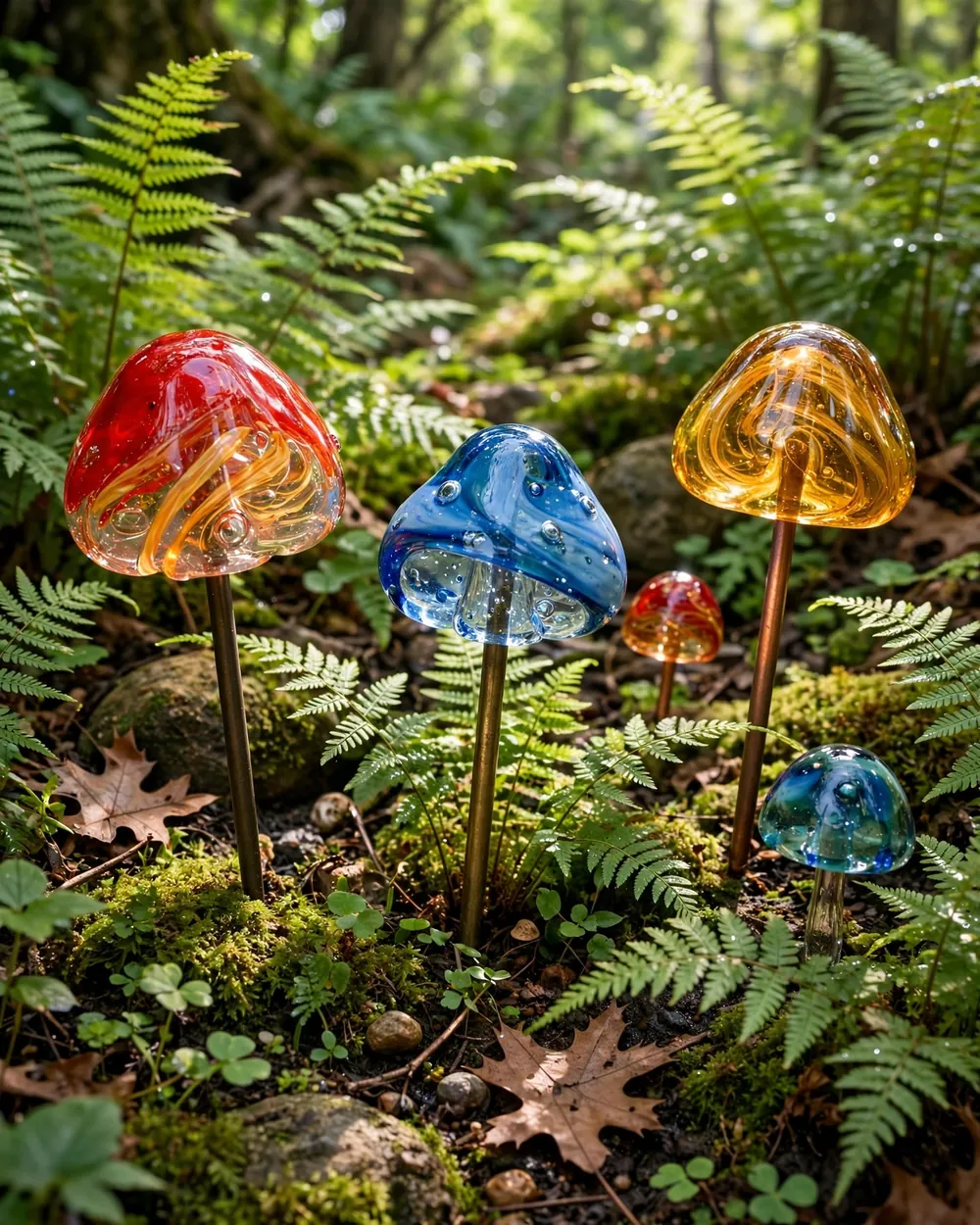
Hand-blown glass mushrooms — spotted caps in cherry red, cobalt, and amber on sturdy metal stems — bring storybook charm to shady corners where real flowers struggle. Scattered through ferns, hostas, and moss, a cluster of glass mushrooms looks like something from a fairy tale, glowing softly in the filtered light. They are the perfect finishing touch for woodland gardens, fairy gardens, and any shady bed that needs a reason to smile.
Group the mushrooms in clusters of three to seven at different heights, half-hidden among the foliage so they feel discovered rather than displayed. Choose pieces with thick, weatherproof glass and rust-proof stems, and push the stems deep into the soil so the mushrooms stay put through storms. Red-and-white spotted caps are the classic fairy-tale look; amber and green caps blend more naturally into the planting. They are irresistible to children and grandchildren, which makes them the ideal final piece of glass yard art for a family garden.
Frequently Asked Questions
What is the best glass for outdoor yard art?
Tempered, tumbled, fused, and stained glass all work outdoors, but each suits different projects. Tempered glass resists impact and heat, making it right for fire pits and path markers. Tumbled recycled glass has smooth, safe edges ideal for mulch and stepping stones. Fused and stained glass offer the richest colors for stakes, suncatchers, and sculptures but should be brought under cover in hail or severe freeze-thaw climates. Avoid ordinary thin glass bottles in structural or high-impact spots, and never put non-rated glass in a fire feature.
How do I keep glass yard art from breaking in winter?
Most glass yard art survives winter fine if you take a few precautions. Bring hollow, delicate, or water-holding pieces — birdbath bowls, fountains, stained glass panels — indoors before the first hard freeze, since trapped water expands and cracks glass. Leave sturdy pieces like bottle trees, gazing balls on stands, and glass mulch in place; they are built for the weather. For anything you leave out, make sure water cannot pool inside it, and store removable pieces in a shed or garage rather than leaving them where falling ice can strike.
Is recycled glass mulch safe for gardens and pets?
Yes — recycled glass mulch made for landscaping is tumbled until the edges are smooth, so it is safe to handle with bare hands and safe around pets and children. It does not splinter or cut. It also deters slugs and snails, does not attract termites, and never needs replacing. The one caution is heat: dark glass mulch absorbs sun and can warm the soil, so keep it a few inches from the crowns of heat-sensitive plants and choose lighter colors in very hot climates.
How do I clean glass yard art outdoors?
Most outdoor glass just needs a rinse with a garden hose every few weeks to wash off dust and pollen. For water spots and mineral film on gazing balls, fountains, and birdbaths, wipe with a soft cloth and a 50/50 mix of white vinegar and water — never use abrasive pads, which scratch glass and dull the finish. Clean solar panels on glass globe lights with a damp cloth so they charge efficiently. A quick seasonal wipe-down keeps every piece of glass yard art sparkling like new.
Where is the best place to put glass yard art in a landscape?
Place glass yard art where light hits it: east-facing spots catch glowing morning sun, and west-facing spots catch dramatic evening light. Use large pieces like bottle trees, totems, and gabion pillars as focal points at the end of a sightline or beside the patio. Tuck smaller pieces — stakes, mushrooms, jellyfish — into flower beds where they are discovered among the plants. Avoid placing fragile glass where lawnmowers, sports balls, or falling branches can reach it, and keep fire glass strictly in rated gas fire features.
Conclusion
Glass yard art is one of the simplest ways to upgrade your landscape style, because it does the heavy lifting of color and light all by itself. From a classic cobalt bottle tree and stained glass garden stakes to glowing solar globes, recycled glass mulch, and a shimmering fire pit, these 22 ideas prove that a little glass goes a very long way. Many of the projects cost almost nothing — bottles, jars, and thrift-store finds — while even the artisan pieces earn their place by lasting for years without fading.
Start with the idea that fits your garden’s style and your weekend’s energy: a bottle tree for folk-art charm, glass mulch for modern polish, or mason jar luminaries for instant evening magic. Then let the light do the rest. Once you see how a single piece of glass transforms a flower bed at golden hour, you will start seeing glowing possibilities in every corner of your yard.