14 Front Yard Design Ideas That Look Professionally Done
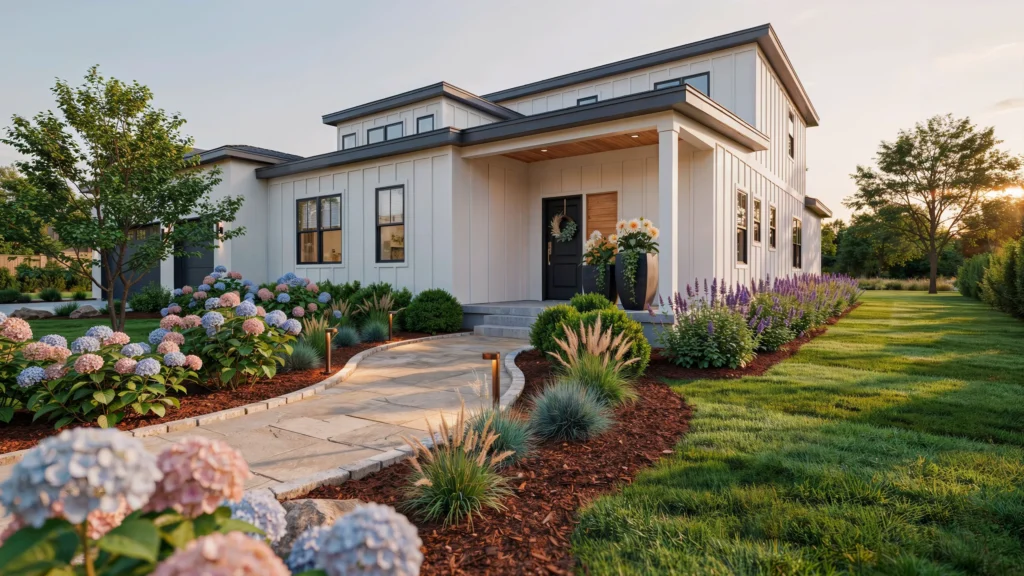
Your front yard design is the first thing people notice, and small changes can make a bigger difference than you might expect.
The right combination of plants, pathways, lighting, and decorative details can completely transform the way your home feels before anyone even steps inside.
Whether you’re refreshing an outdated landscape or starting from scratch, this collection of ideas is filled with practical inspiration that is both beautiful and achievable. You don’t need a massive budget or professional landscaping experience to create an entrance that looks thoughtfully designed. In my experience, focusing on a few well-planned upgrades instead of changing everything at once often produces the most impressive results. I’ve also noticed that simple improvements like defined garden beds, layered planting, or attractive lighting can instantly boost curb appeal while making the space feel more welcoming. These Pinterest-worthy ideas will help you create an outdoor space that reflects your style, increases visual appeal, and gives you fresh inspiration for your next weekend project.
1. Layered Landscaping
- Adds depth and dimension to the landscape.
- Makes every plant stand out without feeling cluttered.
- Creates a polished look with simple plant placement.
- Keeps the garden visually interesting throughout the seasons.
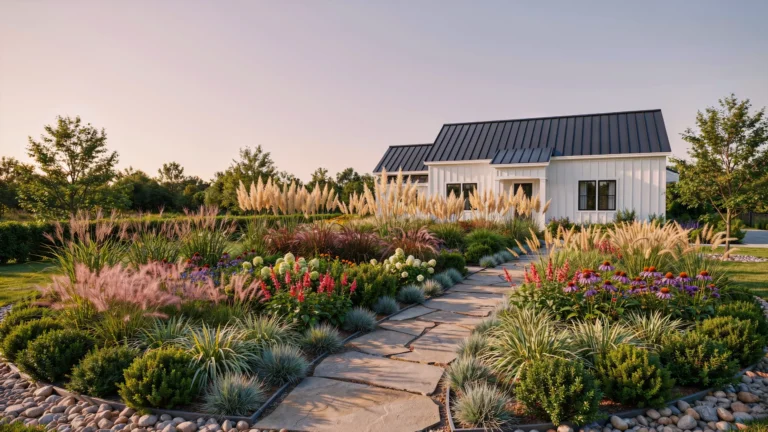
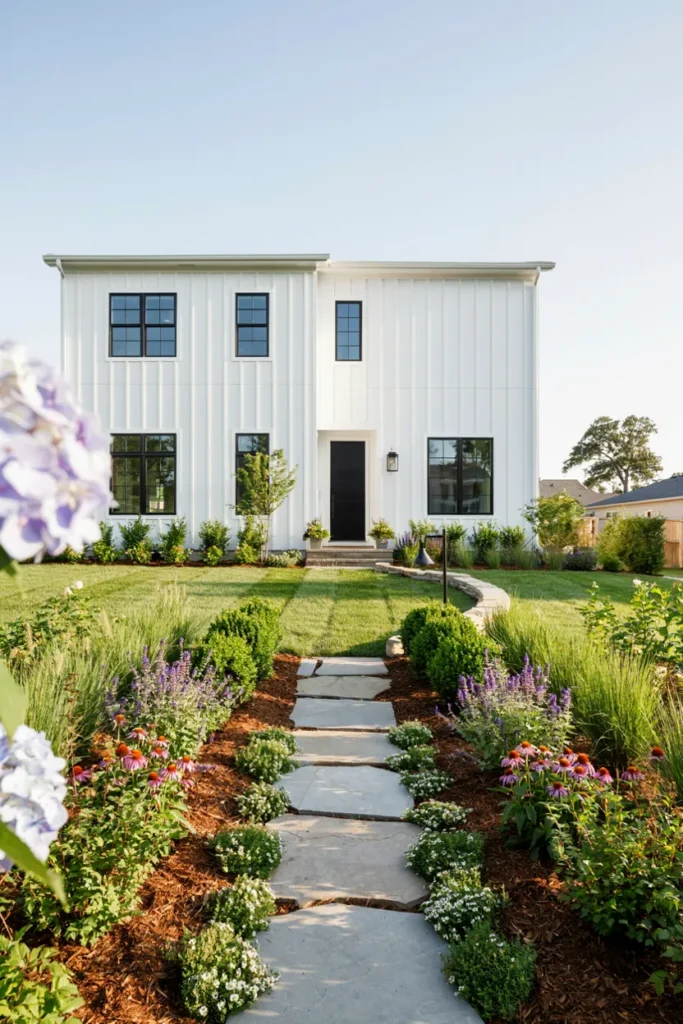
A thoughtfully layered landscape instantly makes an entryway feel more refined and inviting. Instead of placing every plant in a single row, arrange taller shrubs near the house, medium-height plants in the middle, and colorful flowers along the front edge. This approach naturally draws attention across the entire garden while giving each plant enough space to shine. In my experience, layering is one of the easiest ways to achieve a professionally planned appearance without dramatically increasing the landscaping budget or making maintenance more difficult.
One of the smartest ways to improve front yard design is by combining different heights, textures, and foliage colors in balanced groups. Layering creates visual movement while preventing the space from looking flat or unfinished. I’ve noticed that even smaller homes feel more elegant when greenery is arranged with intention instead of being scattered randomly. Finish the beds with fresh mulch to define each planting area, reduce weeds, and create a clean, well-maintained appearance that continues looking attractive throughout the year.
2. Stone Walkways
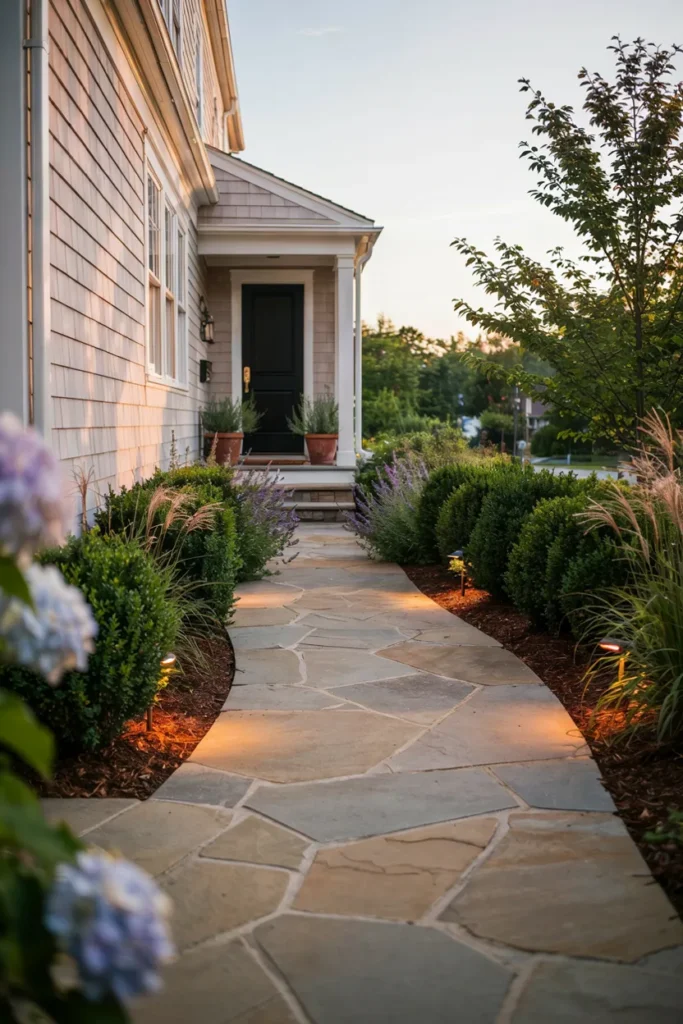
- Creates an inviting route to the entrance.
- Adds texture that breaks up large lawn areas.
- Connects landscaping into one cohesive layout.
- Enhances both beauty and everyday functionality.
A beautiful stone pathway immediately gives the entrance a more welcoming and organized appearance. Gentle curves soften the landscape, while natural materials blend effortlessly with surrounding plants and flowers. Rather than feeling like a simple walkway, it becomes a feature that guides visitors toward the front door. That’s why many designers recommend selecting stone colors that complement the home’s exterior. Even a modest path can dramatically elevate curb appeal when paired with tidy planting beds and carefully maintained edging.
Beyond appearance, a well-designed walkway protects the lawn by directing foot traffic where it belongs. Natural stone also ages beautifully, developing character while remaining durable through changing seasons. I’ve seen this work well in many homes because it ties together the landscape without adding unnecessary decoration. Bordering the path with low-growing greenery or subtle solar lights creates extra charm during the evening, making the entrance feel warm, practical, and professionally finished every day of the year.
3. Symmetrical Planting
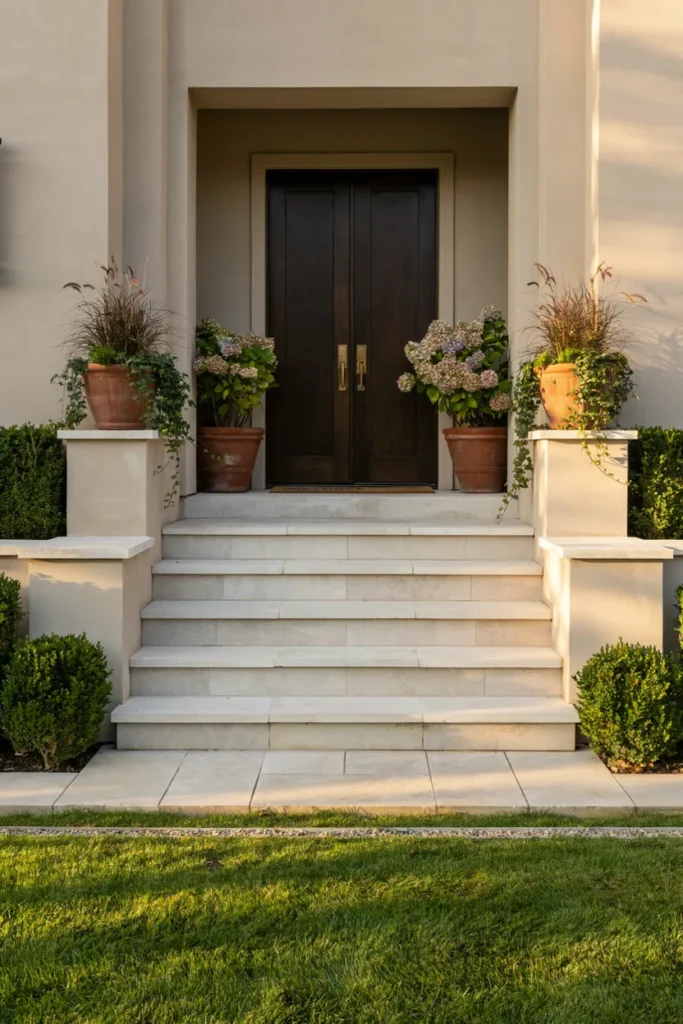
- Frames the entrance with perfect balance.
- Creates a timeless and elegant appearance.
- Makes decorating for each season much easier.
- Gives the entire exterior a polished finish.
Balanced planting is one of the simplest ways to make a home’s entrance feel carefully designed. Matching shrubs, planters, or flowering beds placed on both sides of the front door naturally create order without making the space look rigid. This layout works equally well with traditional and modern architecture because symmetry never goes out of style. Even when using different plant varieties, repeating similar shapes and proportions helps the landscape feel coordinated, welcoming, and visually pleasing from the street.
A symmetrical arrangement also makes future updates easier because every addition has a natural place within the overall layout. Instead of filling empty areas with random decorations, focus on repeating key elements that strengthen visual harmony. I’ve noticed this strategy consistently helps homes appear more expensive than they actually are because the landscaping feels intentional rather than crowded. Small trees, matching containers, and balanced flower beds work together to create an entrance that remains attractive throughout every season.
4. Modern Planters
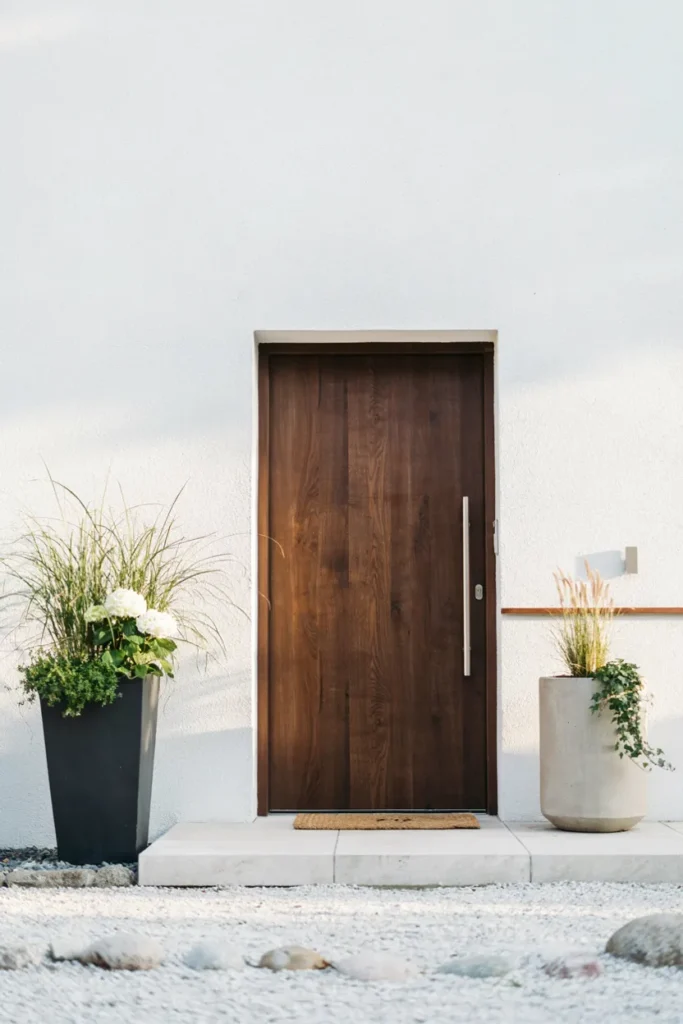
- Defines the entrance without major landscaping work.
- Adds height, texture, and seasonal color.
- Makes small spaces feel intentionally designed.
- Can be refreshed easily throughout the year.
A pair of well-chosen planters can completely transform the look of an entryway. Instead of relying only on flower beds, decorative containers introduce height and structure exactly where the home needs extra visual interest. Large planters make the biggest impact because they feel substantial and balanced against the scale of the house. In my experience, using just two matching containers beside the front door creates a polished appearance that feels custom designed while requiring very little maintenance compared to expanding garden beds.
Choosing simple planter shapes allows the greenery to become the main attraction instead of competing with decorative details. Fill containers with a combination of upright grasses, trailing vines, and seasonal blooms to create movement and texture throughout the year. Neutral colors like black, charcoal, or natural concrete blend beautifully with almost any exterior style. This simple upgrade helps front yard design feel fresh and intentional while giving homeowners an easy way to refresh the entrance whenever the seasons change.
5. Decorative Borders
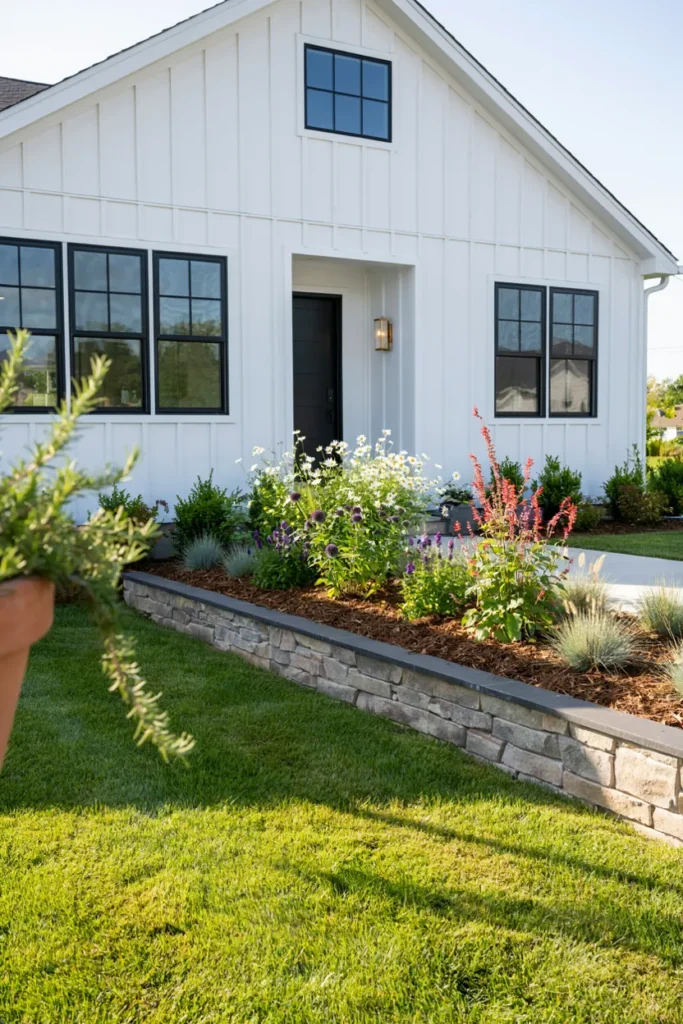
- Creates clean separation between lawn and planting beds.
- Makes the entire landscape look professionally maintained.
- Reduces grass spreading into garden areas.
- Highlights flowers and shrubs with clear definition.
Even the most beautiful plants can look unfinished without clearly defined edges. Decorative borders give every planting bed a clean outline, making the landscape appear organized and thoughtfully planned. Stone, brick, metal, or natural edging materials all create slightly different styles, allowing homeowners to match the character of their house. Well-defined borders also help mulch stay in place, making maintenance easier while keeping the overall appearance neat through changing weather and regular lawn care.
Edging works because it creates visual contrast between soft greenery and structured materials. That balance naturally attracts attention and makes flower beds appear more intentional. I’ve noticed that simple border improvements often create a bigger visual impact than adding extra plants. Fresh mulch inside neatly edged beds further enhances color contrast while protecting the soil beneath. Together, these small upgrades deliver a landscape that feels refined, welcoming, and carefully maintained without requiring an expensive renovation.
6. Statement Lighting
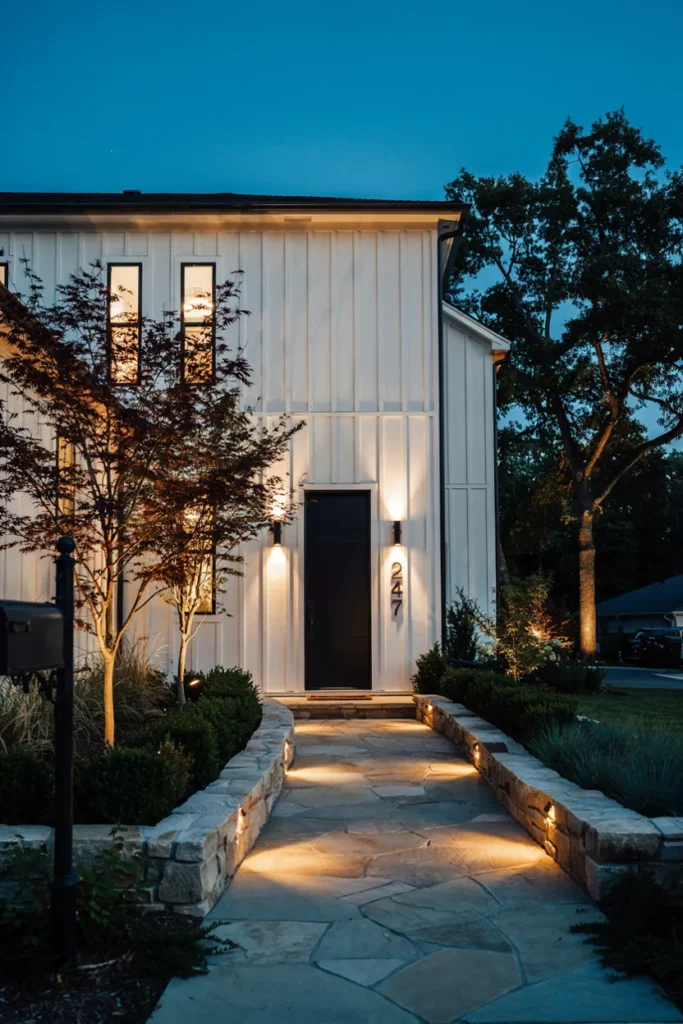
- Highlights the home’s best architectural features.
- Improves safety after sunset.
- Creates a warm and welcoming evening atmosphere.
- Makes the landscape attractive day and night.
Great outdoor lighting transforms a home long after the sun goes down. Soft pathway lights guide visitors safely to the entrance, while uplighting beneath trees and shrubs creates dramatic depth without overwhelming the landscape. Warm white lighting usually produces the most welcoming effect because it enhances natural textures instead of making them appear harsh. That’s why many designers recommend layering several light sources rather than depending on one bright fixture near the front door.
Thoughtfully placed lighting also extends the beauty of the landscape into the evening hours, allowing carefully planned details to remain visible after dark. Accent lights can showcase attractive trees, stonework, or architectural features that might otherwise disappear at night. I’ve seen this work well in many homes because lighting creates an upscale appearance without requiring major structural changes. A balanced combination of function and style helps the exterior feel secure, elegant, and inviting throughout every season.
7. Mixed Stone Textures
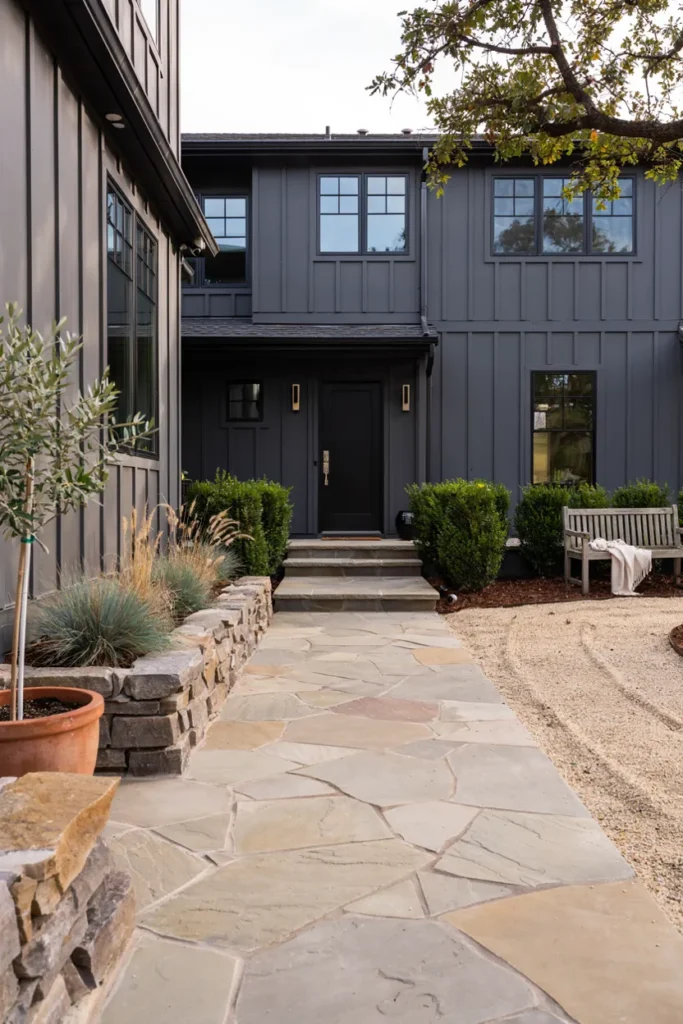
- Adds depth without overwhelming the landscape.
- Creates a custom, designer-inspired appearance.
- Brings natural texture to simple outdoor spaces.
- Pairs beautifully with modern and classic homes.
Mixing natural stone textures gives an outdoor space instant character while keeping the overall design balanced. Instead of using one material everywhere, combine smooth pavers with rough stone edging or decorative gravel to create subtle contrast. The variation feels intentional rather than busy because each texture has its own purpose. In my experience, limiting the palette to two or three complementary materials produces the most polished result while keeping the yard visually calm and easy to maintain.
Texture plays a major role in making landscaping feel professionally designed. Stone surfaces catch natural light differently throughout the day, creating gentle highlights and shadows that add dimension. Pairing these materials with soft greenery prevents the hardscape from feeling too cold or overwhelming. Thoughtful combinations create an inviting entrance that looks timeless instead of following short-lived trends, helping the property maintain strong curb appeal for years with minimal upkeep.
8. Flower Bed Islands
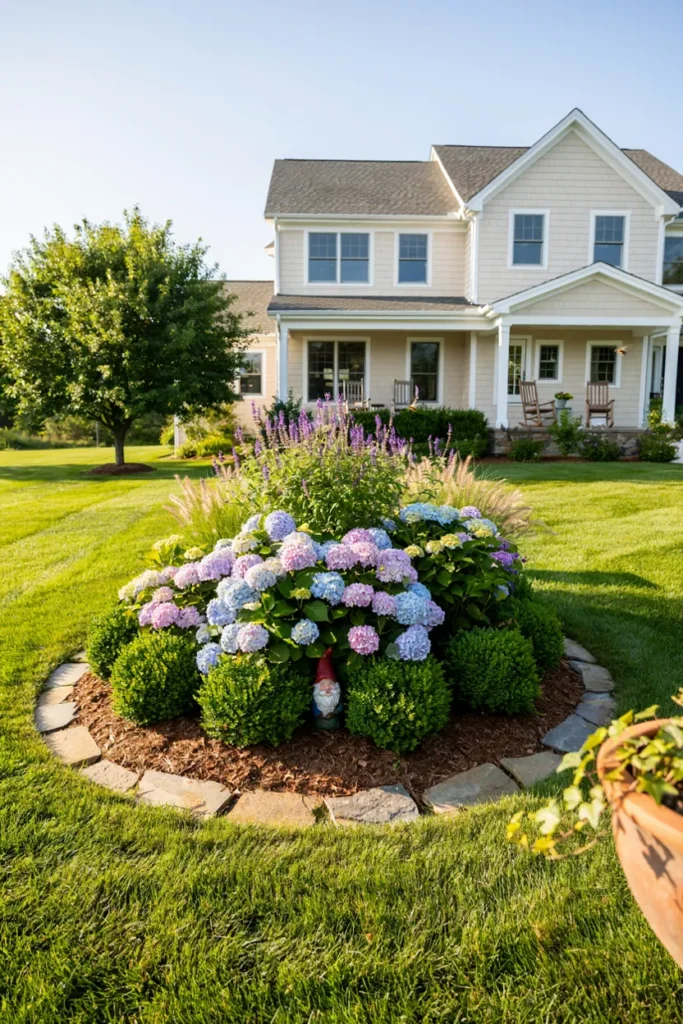
- Breaks up large open lawn areas.
- Creates an attractive focal point.
- Adds color without redesigning the entire yard.
- Offers flexibility for seasonal planting updates.
Large stretches of lawn can sometimes feel empty, but a thoughtfully placed flower bed instantly creates visual interest. Positioning an island bed in an open area gives colorful blooms and sculptural plants room to stand out from every angle. Choosing plants with different heights, bloom times, and foliage colors keeps the display attractive across multiple seasons. Even a modest-sized island becomes a standout feature when surrounded by healthy grass and finished with fresh mulch for a clean appearance.
One carefully designed planting island can completely change how people experience the front of a home. Rather than filling every corner with flowers, concentrating color in one location creates stronger visual impact. I’ve noticed that island beds are especially effective in larger yards because they reduce the feeling of empty space without making maintenance overwhelming. A simple stone border around the bed keeps the layout neat while helping the entire landscape feel balanced and professionally planned.
9. Natural Wood Accents
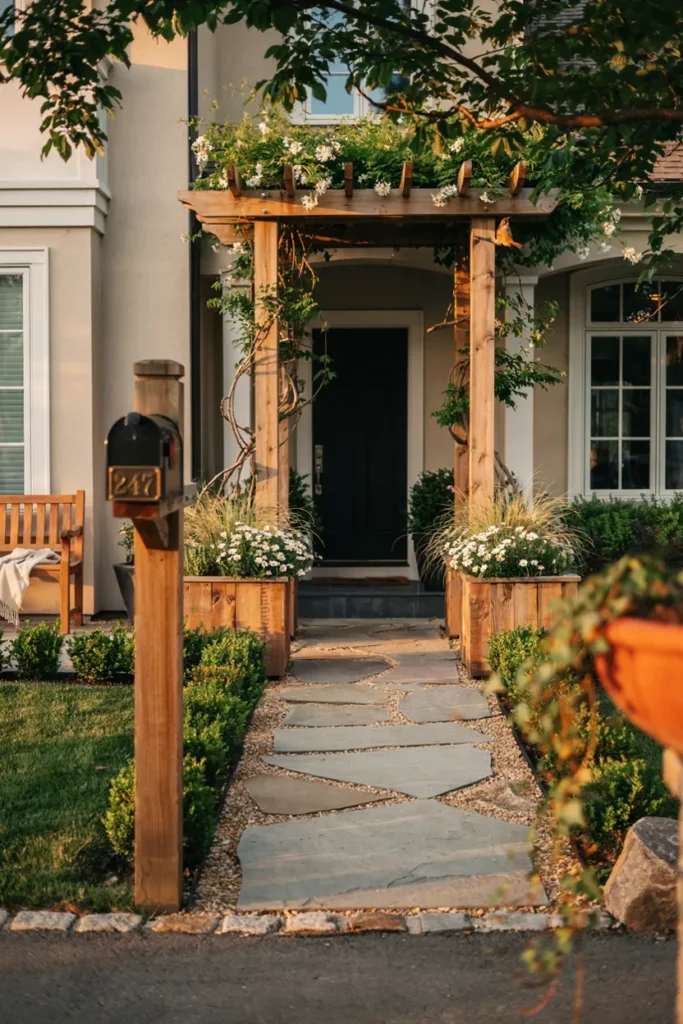
- Brings warmth to stone and concrete features.
- Creates a cozy, welcoming entrance.
- Complements both rustic and modern homes.
- Ages beautifully with proper maintenance.
Natural wood introduces warmth that balances stone, brick, and concrete surfaces around the entrance. Whether used in planter boxes, benches, fencing, or decorative posts, timber adds texture that feels inviting and timeless. Choosing weather-resistant woods like cedar or redwood helps maintain a beautiful appearance while standing up to changing outdoor conditions. Small wooden details often make the landscape feel more personal without requiring a complete renovation or a large investment.
Wood accents also soften modern architecture by introducing natural materials that blend beautifully with surrounding plants. I’ve seen this work well in many homes because the combination of greenery and warm wood creates a relaxed yet refined atmosphere. Sealing outdoor wood regularly helps preserve its color and extends its lifespan through every season. These simple additions bring character and charm while supporting a cohesive front yard design that feels balanced, welcoming, and thoughtfully finished.
10. Curved Garden Beds
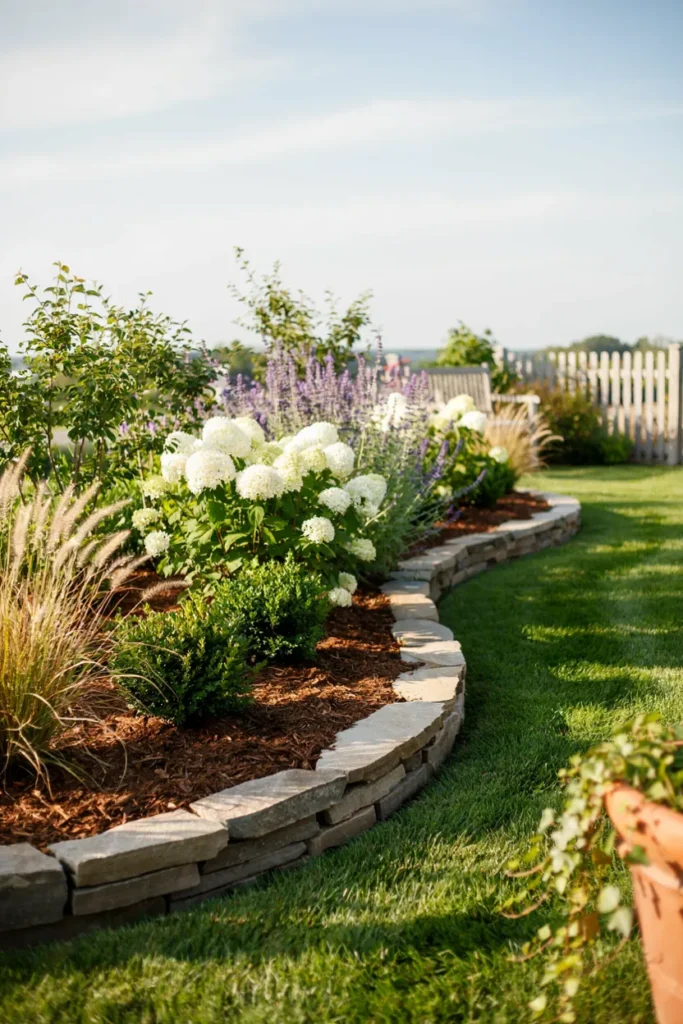
- Softens harsh lines around the yard.
- Creates a natural flow throughout the landscape.
- Makes planting areas feel larger and more inviting.
- Adds movement without increasing maintenance.
Straight planting beds can sometimes make an outdoor space feel rigid, while gentle curves introduce a softer and more welcoming appearance. Flowing borders naturally guide the eye from one area to another, making the landscape feel connected instead of divided into separate sections. Curved edges also provide more opportunities to mix flowers, shrubs, and ornamental grasses in visually pleasing groups. In my experience, even subtle curves create a noticeable difference, giving the entire property a professionally planned look without requiring expensive structural changes.
Curved beds work especially well when paired with stone edging and fresh mulch that clearly define their shape. The contrast between flowing lines and structured materials creates a balanced design that remains attractive throughout the seasons. Homeowners often find these layouts easier to personalize because they offer flexibility for adding new plants over time. A thoughtfully shaped garden border creates lasting visual interest while helping the entrance feel warm, polished, and naturally inviting from every angle.
11. Evergreen Foundation Planting
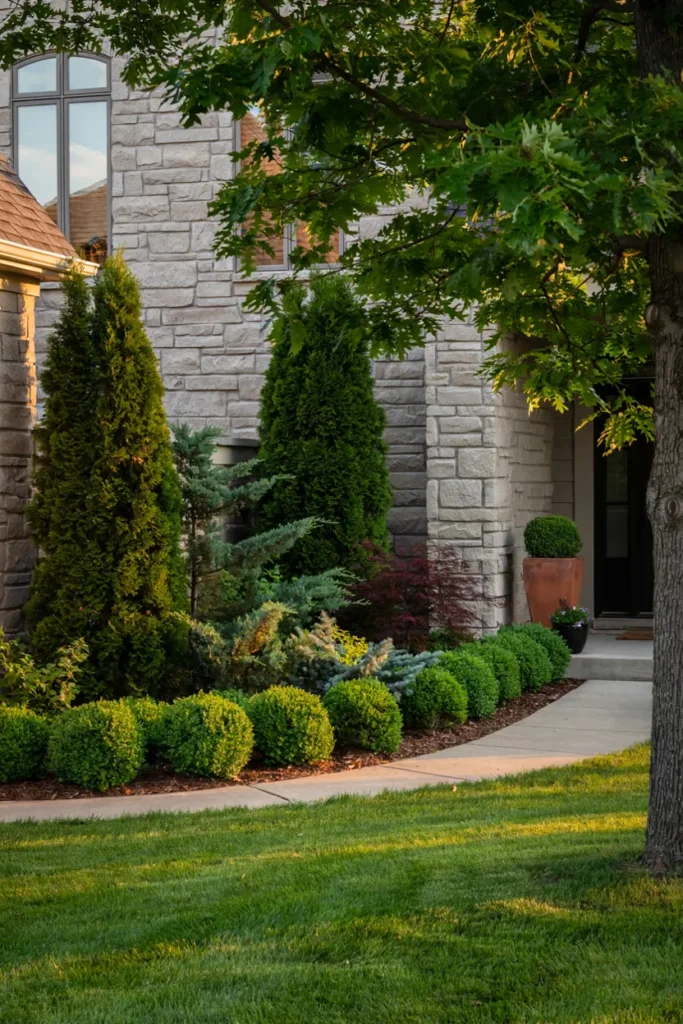
- Keeps the landscape attractive year-round.
- Provides structure during every season.
- Creates a clean backdrop for flowering plants.
- Requires less seasonal replacement than annual flowers.
Evergreen shrubs provide the structure that every well-designed landscape needs. Their consistent color keeps the property looking fresh throughout the year, even when seasonal flowers have faded. Planting compact evergreens along the home’s foundation also softens large walls while creating a balanced transition between the building and surrounding garden beds. That’s why many designers recommend starting with evergreen plants before adding colorful blooms, ensuring the landscape always has a strong visual framework.
Once the evergreen foundation is established, seasonal flowers and ornamental grasses can easily be added for extra color without overwhelming the space. I’ve noticed that homes with year-round greenery always appear more maintained because the landscape never looks completely bare. Mixing different shades of green and varying leaf textures creates subtle depth that feels elegant rather than busy. This dependable combination delivers long-lasting beauty while keeping outdoor maintenance practical and manageable.
12. Layered Porch Decor
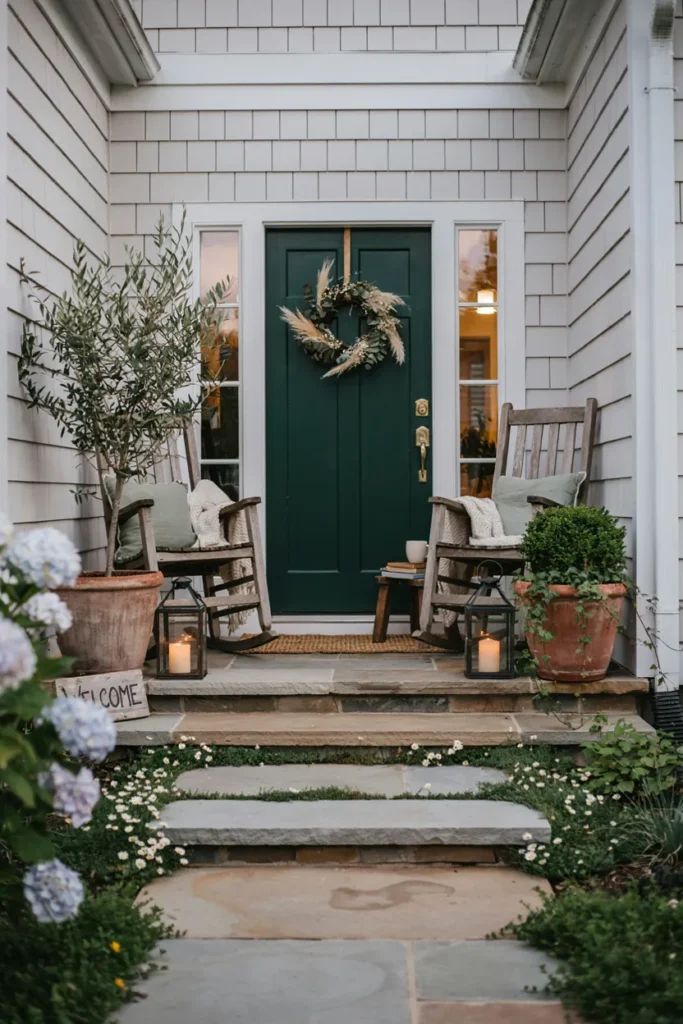
- Makes the entrance feel warm and inviting.
- Adds personality without cluttering the space.
- Creates depth using different decorative heights.
- Can be updated easily with the seasons.
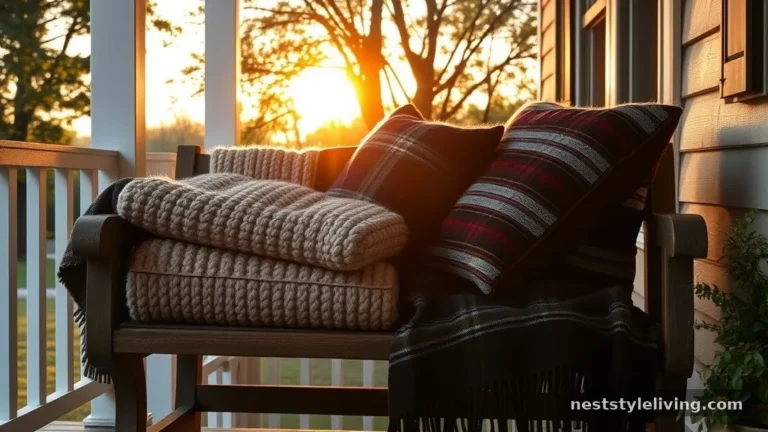
A thoughtfully decorated porch extends the beauty of the landscape right to the front door. Layering planters, lanterns, seating, and outdoor textiles creates a welcoming atmosphere that feels comfortable without appearing overcrowded. Choosing decorations in similar colors keeps everything cohesive while allowing natural materials to stand out. In my experience, combining different heights and textures makes even a small porch appear more spacious and professionally styled with very little effort.
Decorating in layers also makes seasonal updates simple because a few accessories can completely refresh the entrance. Swap cushions, wreaths, or flowering plants throughout the year while keeping the larger furniture pieces in place. Small decorative touches work best when they complement the home’s architecture instead of competing with it. This balanced approach creates an inviting first impression that feels lived in, stylish, and timeless, encouraging visitors to feel welcome before they even step inside.
13. Decorative House Numbers
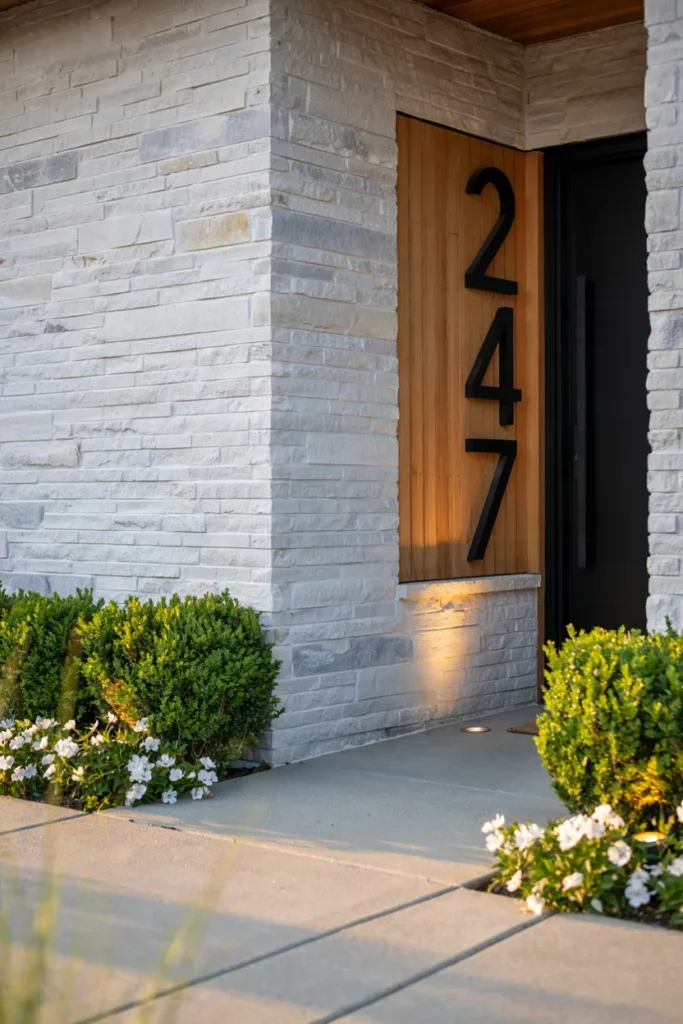
- Makes the home easier to find for guests and deliveries.
- Adds a modern focal point near the entrance.
- Instantly updates an older exterior.
- Complements both contemporary and classic architecture.
Small details often make the biggest difference, and stylish house numbers are a perfect example. Replacing faded or outdated numbers with larger, modern designs instantly refreshes the entrance without requiring a full renovation. Black metal finishes, brushed brass, or matte bronze all pair beautifully with a wide range of exterior materials. That’s why many designers recommend treating house numbers as a decorative feature instead of simply a necessity. The result feels intentional, polished, and surprisingly impactful for such a simple upgrade.
Placement matters just as much as the design itself. Mount the numbers where they are easy to read from the street and highlight them with subtle lighting for better visibility after dark. I’ve noticed that pairing modern numbers with wood accents or stone walls creates a balanced look that feels warm rather than overly contemporary. This small improvement adds personality while enhancing functionality, making the entrance look thoughtfully finished and welcoming throughout the day and evening.
14. Seasonal Color Displays
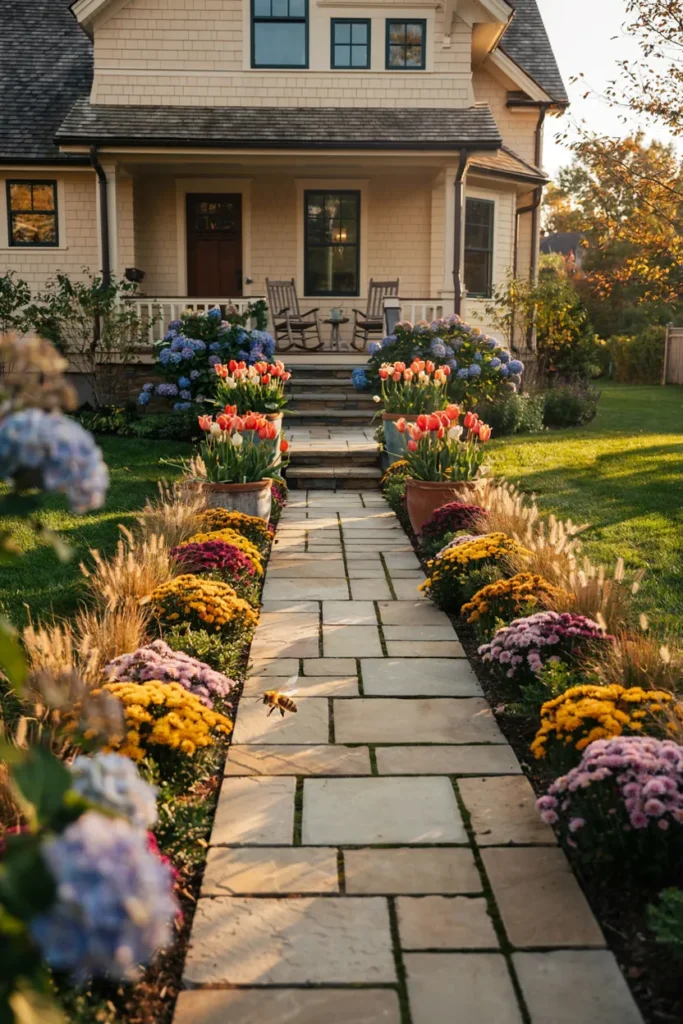
- Keeps the landscape fresh throughout the year.
- Adds vibrant color without permanent changes.
- Creates a welcoming first impression every season.
- Makes decorating easy with simple plant swaps.
Refreshing the landscape with seasonal flowers is one of the easiest ways to keep the entrance looking lively all year. Spring bulbs, colorful summer blooms, rich autumn chrysanthemums, and winter greenery each bring their own charm without changing the overall layout. Rotating plants through decorative containers or selected garden beds keeps the display exciting while maintaining a cohesive appearance. In my experience, repeating similar flower colors across the yard creates a professionally styled look that never feels random or overwhelming.
One of the simplest ways to maintain beautiful front yard design is by planning seasonal color instead of relying on a single planting scheme all year long. Coordinating flowers with the home’s exterior creates harmony while giving the property a fresh appearance every few months. I’ve seen this approach work beautifully because it allows homeowners to experiment with new colors and textures without committing to permanent changes. The landscape continues to feel vibrant, welcoming, and carefully maintained, encouraging visitors to admire the home in every season.
Conclusion
Creating a beautiful entrance doesn’t require a complete renovation. With the right ideas, thoughtful planning, and a few intentional upgrades, your front yard design can feel more welcoming, organized, and professionally finished than ever before. Start with one project that fits your home and build from there, allowing each improvement to enhance the next. I’ve seen how simple changes like fresh planters, better lighting, or layered landscaping can completely transform the overall appearance. If these ideas inspired you, save this post on Pinterest for future projects, share it with someone planning an outdoor makeover, and start bringing your favorite designs to life.