18 Mudroom Laundry Room Ideas That Make Life Easier

Integrating a mudroom laundry room into your home transforms high-traffic zones into efficient hubs for cleaning and organization. By combining these two hardworking areas, you maximize your square footage while creating a dedicated landing strip for muddy boots and dirty clothes. Implementing smart mudroom laundry room ideas that make life easier allows you to streamline daily chores and keep clutter from migrating into your living spaces.
Whether you are working with a expansive layout or a tight corner, focusing on functional design ensures your home stays tidy even on the busiest days. These practical solutions turn chaotic entryways and laundry piles into a cohesive, manageable system for your household.
1. Built-in Lockers with Integrated Hampers
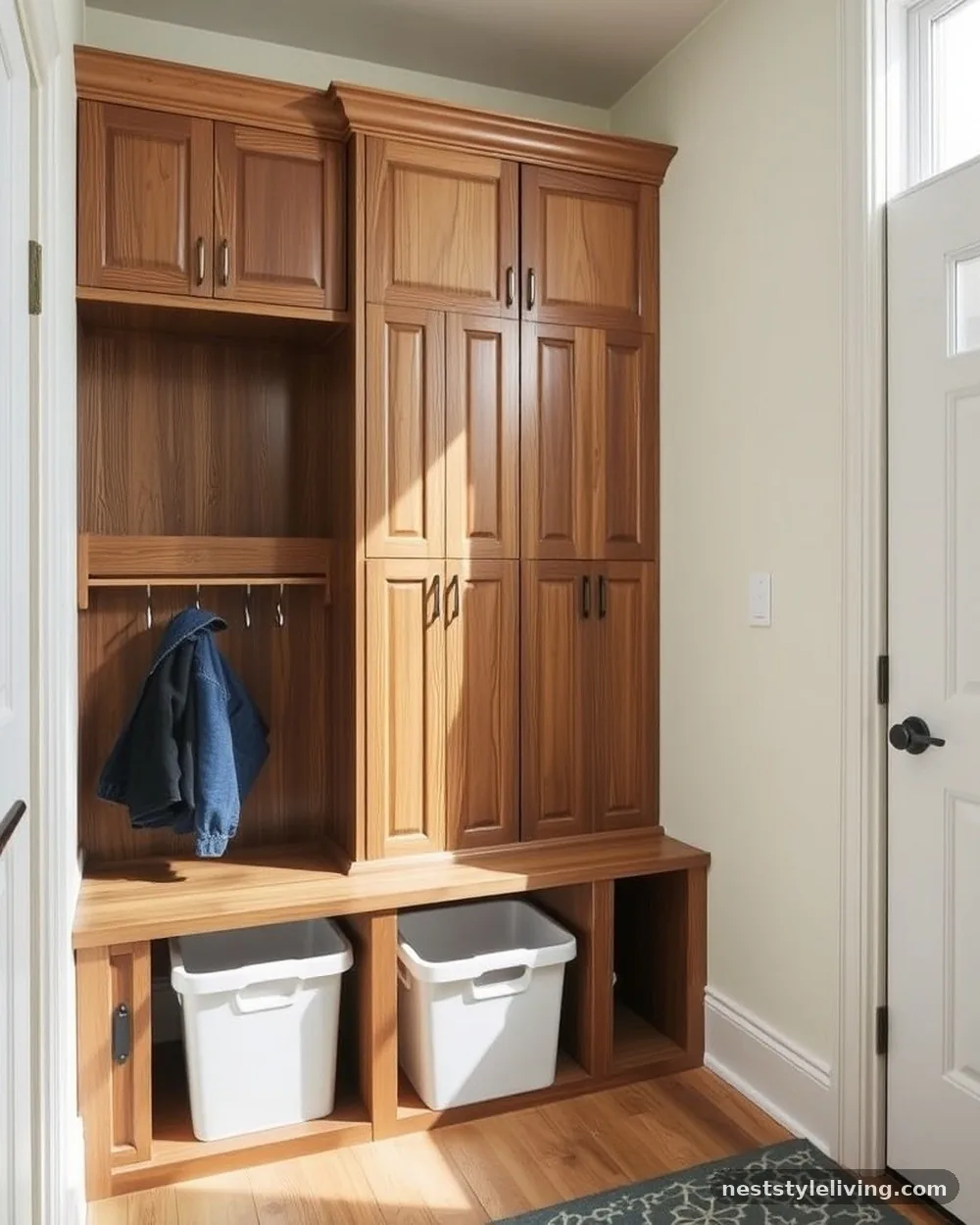
Floor-to-ceiling cabinetry serves as the backbone of a high-functioning mudroom laundry space. By incorporating custom lockers, you provide every family member with a designated spot for coats, bags, and shoes. The secret to maximizing this furniture lies in the base: instead of standard bench drawers, install tilt-out hampers.
These hampers hide dirty laundry immediately as people walk through the door, preventing piles from accumulating on the floor. Use durable materials like plywood with a high-grade laminate or moisture-resistant paint to withstand the daily wear of wet gear and laundry humidity.
To implement this, measure your wall length and depth to ensure the unit doesn’t obstruct foot traffic. Prioritize a depth of at least 24 inches for the lockers to allow for standard coat hangers, while the lower hamper section can operate on heavy-duty drawer slides for smooth access.
2. Durable Porcelain Hexagon Floor Tiles
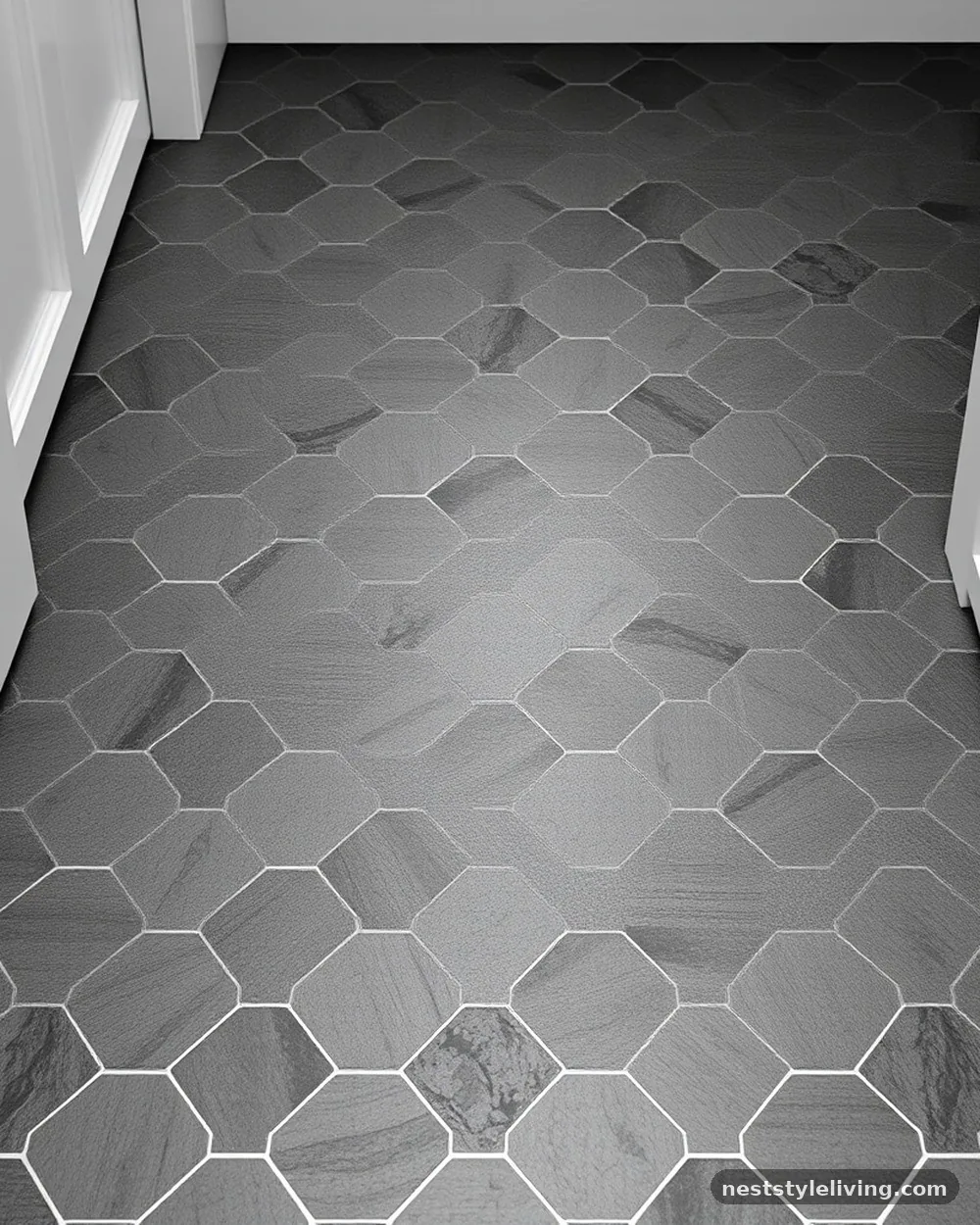
Floors in a combined mudroom and laundry space face significant abuse from water, mud, and heavy equipment vibrations. Porcelain tile is the superior choice here because it is non-porous and resists chipping far better than ceramic or natural stone.
Opt for a matte-finish hexagon pattern in a neutral tone like charcoal or slate gray to hide dirt between cleanings. These tiles provide a slip-resistant surface that stays looking fresh even after a rainy day, making them a cornerstone of mudroom laundry room ideas that make life easier.
When installing, choose a dark-colored grout, such as charcoal or pewter, rather than bright white. White grout will yellow and show stains instantly in a mudroom environment; dark grout maintains a clean appearance with minimal effort and requires less frequent deep scrubbing.
3. Wall-Mounted Drop-Down Folding Tables
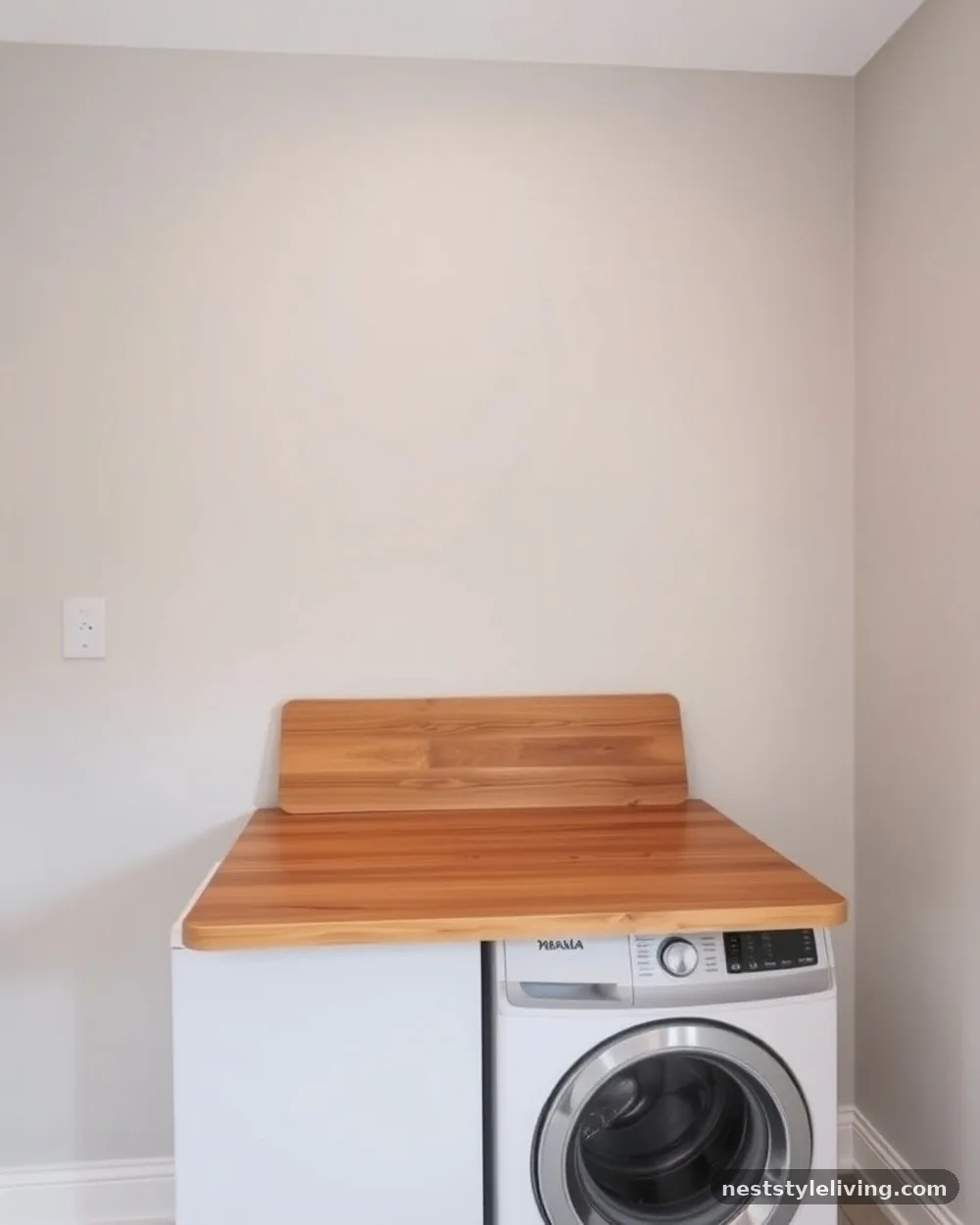
In a tight laundry area, floor space is a luxury you cannot afford to waste. A wall-mounted, drop-down table provides a dedicated surface for folding clothes or sorting mail without permanently encroaching on your walkway.
When not in use, the table folds flat against the wall, often blending into the cabinetry or appearing as a piece of decorative trim. This keeps your floor clear for maneuvering laundry baskets or storing gear, ensuring the room remains flexible for both cleaning tasks and entry storage.
Install the table at a comfortable height for folding, typically around 36 inches from the floor, and use heavy-duty locking hinges to ensure it can support the weight of a heavy laundry basket. Mount it near an electrical outlet so you can also use it for ironing or charging handheld vacuums.
4. Open Cubby Systems for Quick Access
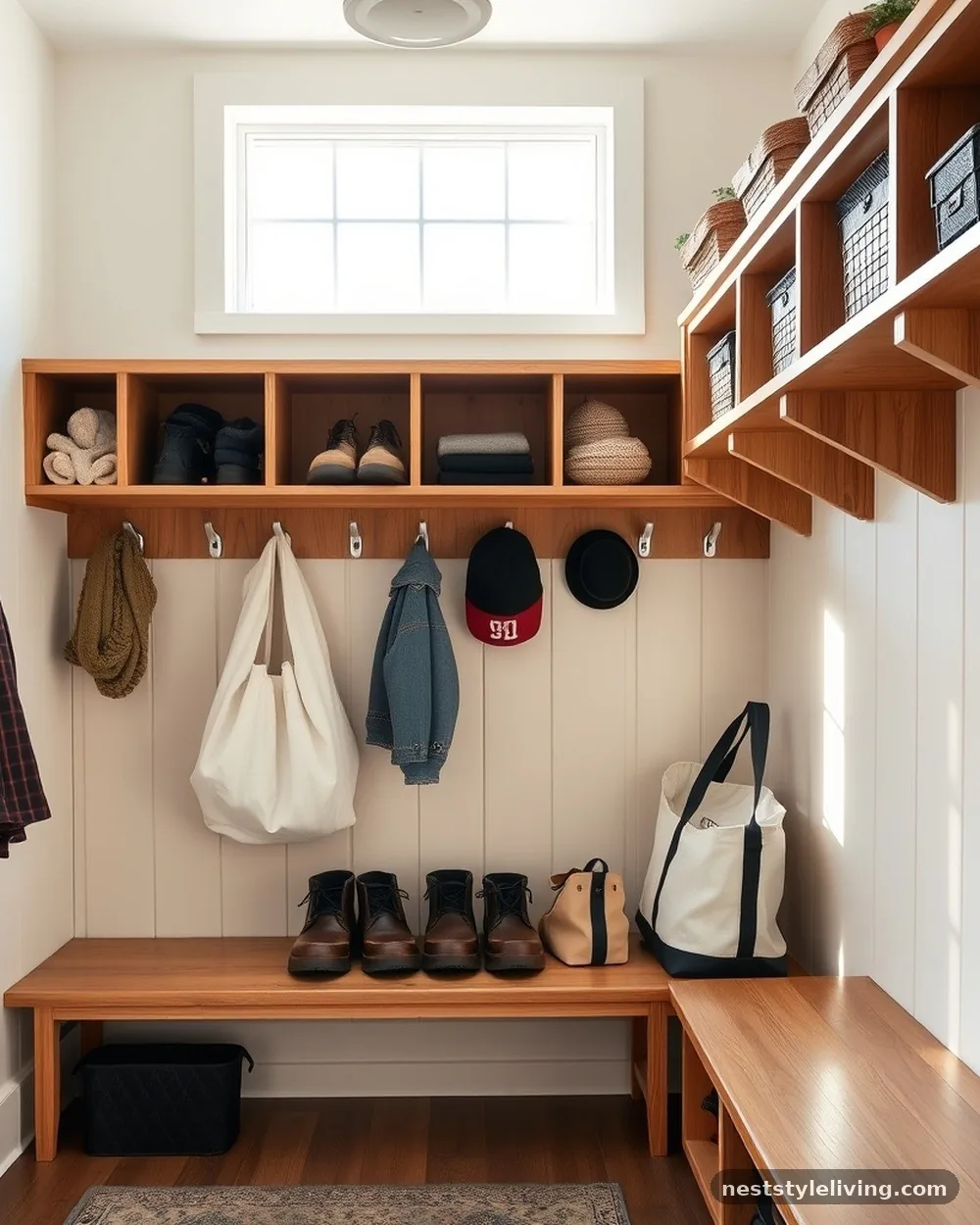
Closed storage is excellent for winter coats, but open cubbies are essential for the items you reach for daily. Position these cubbies at eye level to store gloves, hats, and reusable grocery bags.
By keeping these frequently used items visible, you eliminate the time spent searching for misplaced accessories. Open shelving also encourages air circulation, which is vital in a room that handles wet laundry and damp outdoor footwear, as it prevents musty odors from developing inside the storage units.
Use adjustable shelving tracks so you can change the height of the cubbies as your family’s needs evolve. Label each section with a metal bin or a simple wooden tag to keep the system organized, which prevents the open shelves from becoming a catch-all for random clutter.
5. Deep Utility Sinks with Pull-Down Faucets
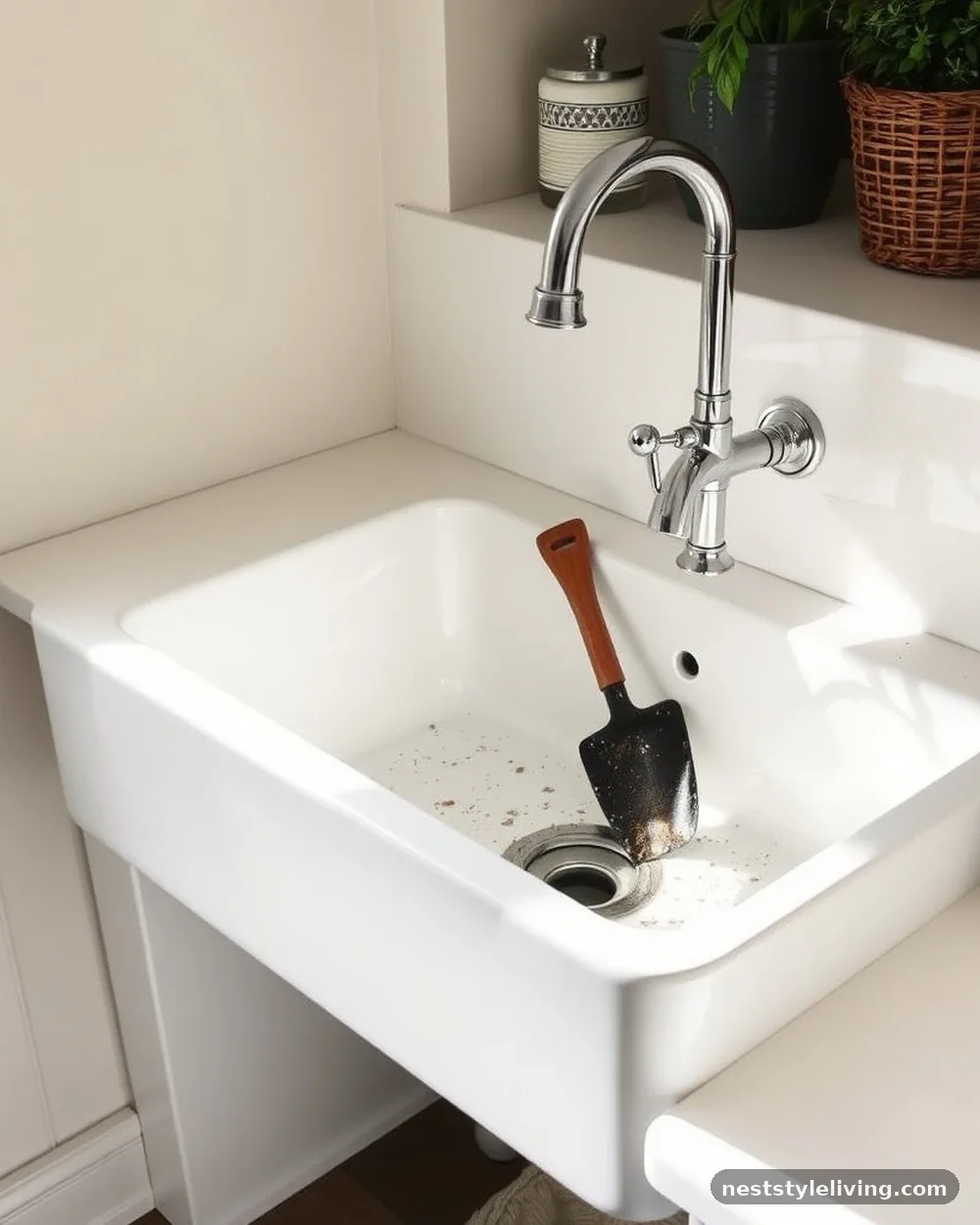
A deep utility sink is arguably the most important feature of a mudroom laundry room. It functions as a station for pre-treating grass-stained pants, soaking muddy garden tools, or washing off pet paws before they track dirt into the house.
A pull-down spray faucet makes this sink significantly more versatile, allowing you to reach every corner of the basin or fill a bucket on the floor. Choose a stainless steel or fireclay basin for the highest level of durability against harsh detergents and heavy scrubbing.
Ensure your sink cabinet is large enough to accommodate the plumbing and a small storage shelf for cleaning supplies. If space is tight, look for a drop-in model with a narrow rim to maximize the interior basin capacity without requiring a massive countertop cutout.
6. Vertical Drying Racks
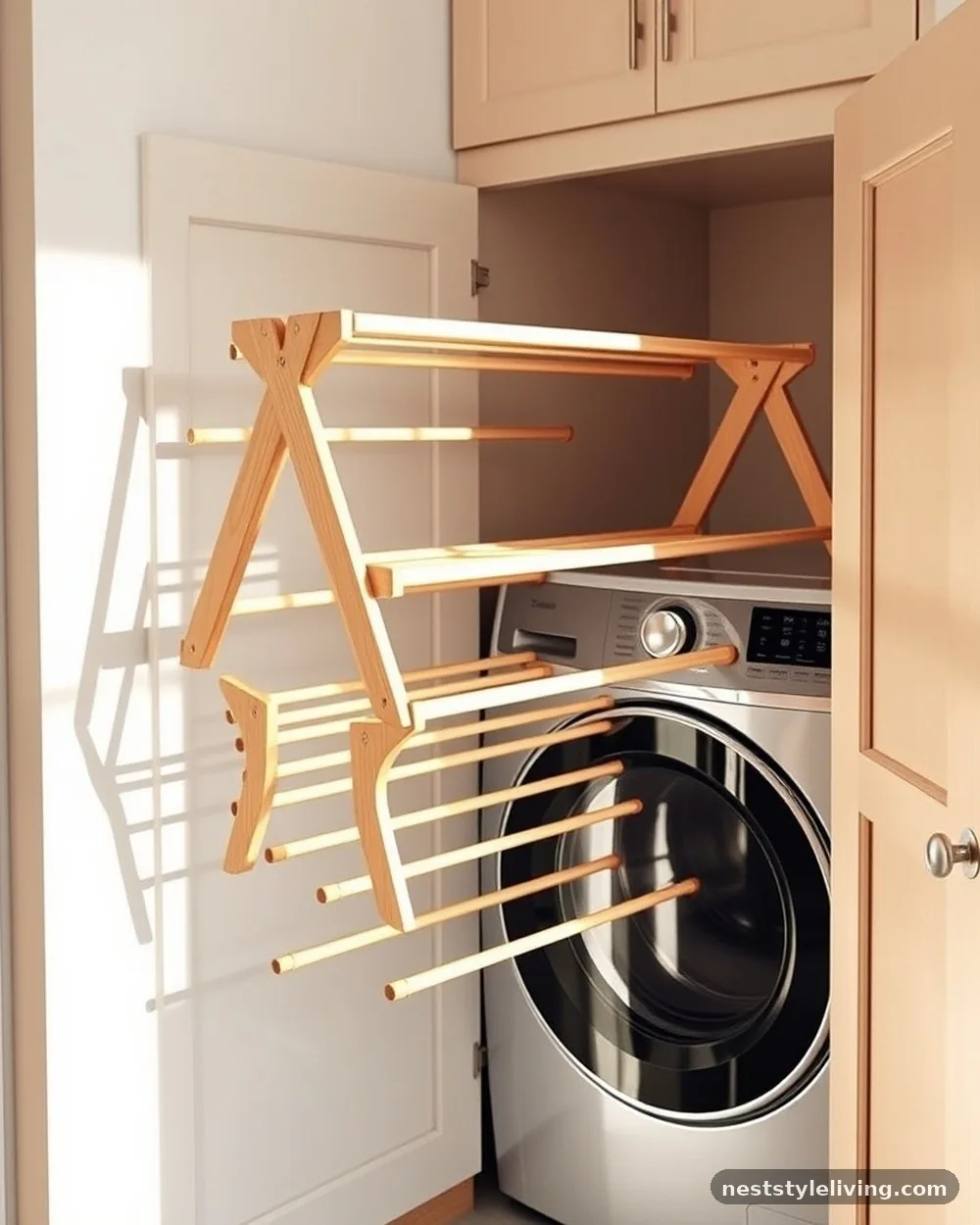
Drying clothes on a flat rack consumes valuable floor space, which is why vertical, wall-mounted drying racks are essential for efficient laundry rooms. These racks can be mounted on the side of a cabinet or directly onto the wall, folding out only when you have a load of delicates to dry. They utilize the vertical air space above your machines or next to your entry door, keeping your clothes out of the way of foot traffic while they air-dry.
Look for stainless steel or powder-coated metal racks that can withstand the weight of damp towels. Install the rack in a location with good airflow, ideally near a window or a ventilation fan, to speed up the drying process and prevent moisture buildup in the room.
7. Integrated Bench Seating with Hidden Shoe Storage
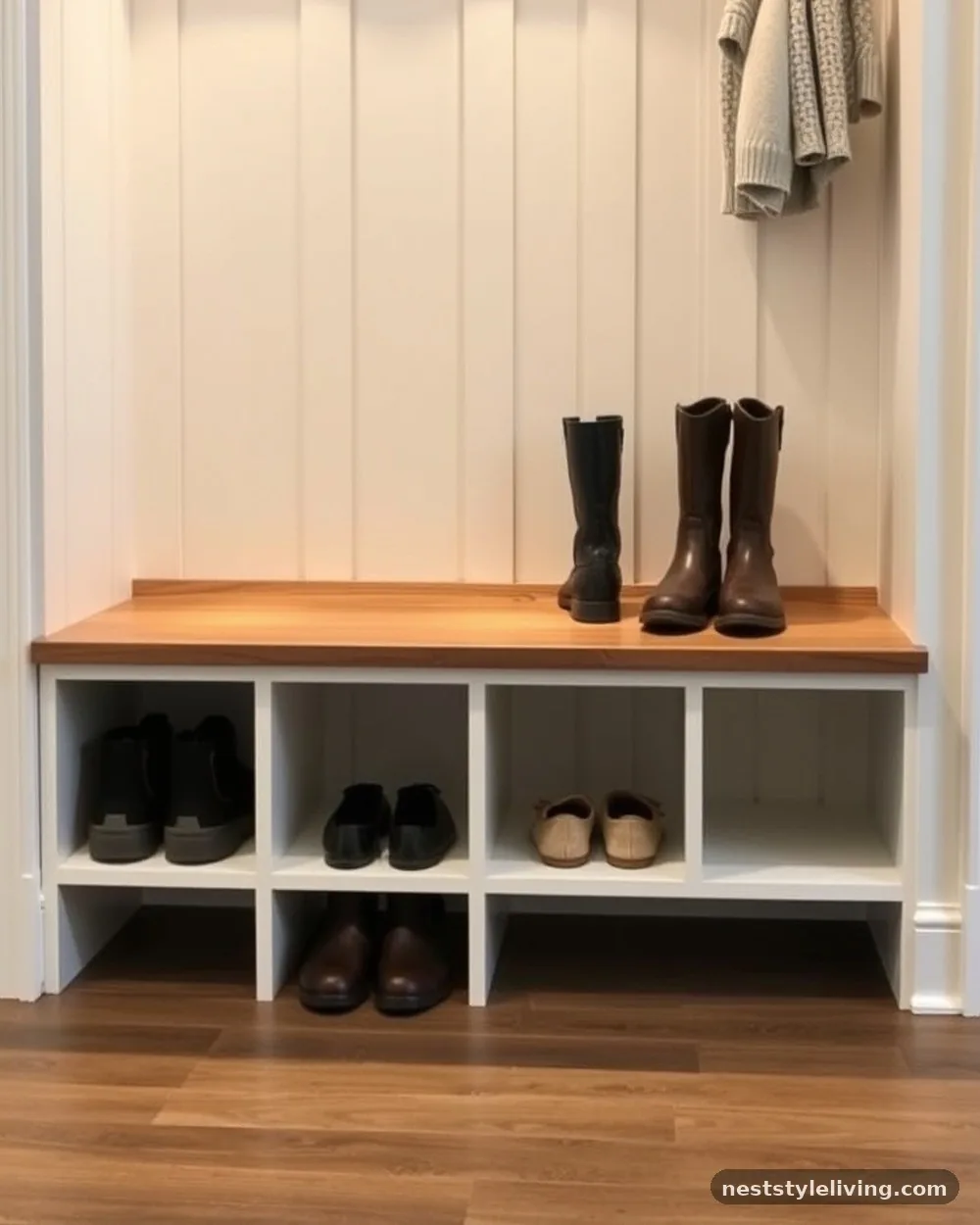
A mudroom is incomplete without a place to sit while putting on or removing shoes. By building a bench into your cabinetry, you create a natural transition point between the outdoors and the interior of your home.
Use the space beneath the bench for open shoe cubbies rather than drawers; open storage allows wet shoes to dry out naturally, preventing the growth of mold and odors. A sturdy wood top with a durable polyurethane finish holds up well to the weight of people and the grit from boot soles.
Add a soft, wipeable cushion made from outdoor-grade fabric to the bench top for comfort. If you have the budget, use a recessed kickplate at the bottom of the bench to protect the cabinet finish from scuffs caused by shoes and vacuum cleaners.
8. Task Lighting Under Cabinets
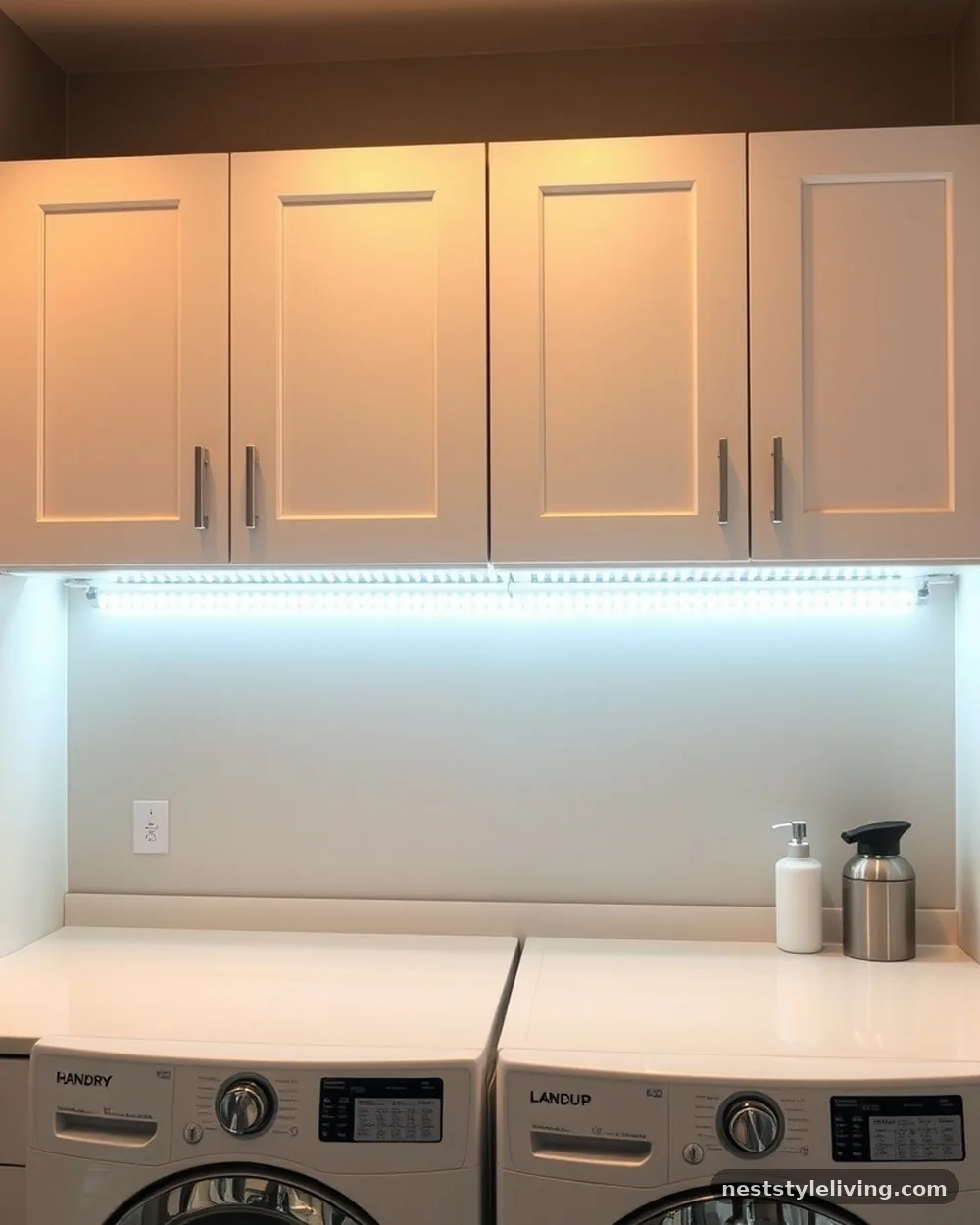
Laundry rooms are often relegated to interior rooms or basements with poor natural light, making it difficult to spot stains or read fabric care labels. Under-cabinet LED lighting is a simple, effective way to brighten your workspace.
Install these lights beneath your upper cabinets to illuminate the folding table or the laundry sink. This focused light improves your accuracy when sorting laundry and makes the room feel larger and more inviting, moving away from the “utility closet” aesthetic.
Use motion-activated strips if you want to avoid fumbling for a switch with full hands. These can be easily installed with adhesive backing and battery packs, or hardwired into your existing electrical system for a more permanent, seamless look that elevates the functionality of your space.
9. High-Gloss White Cabinetry
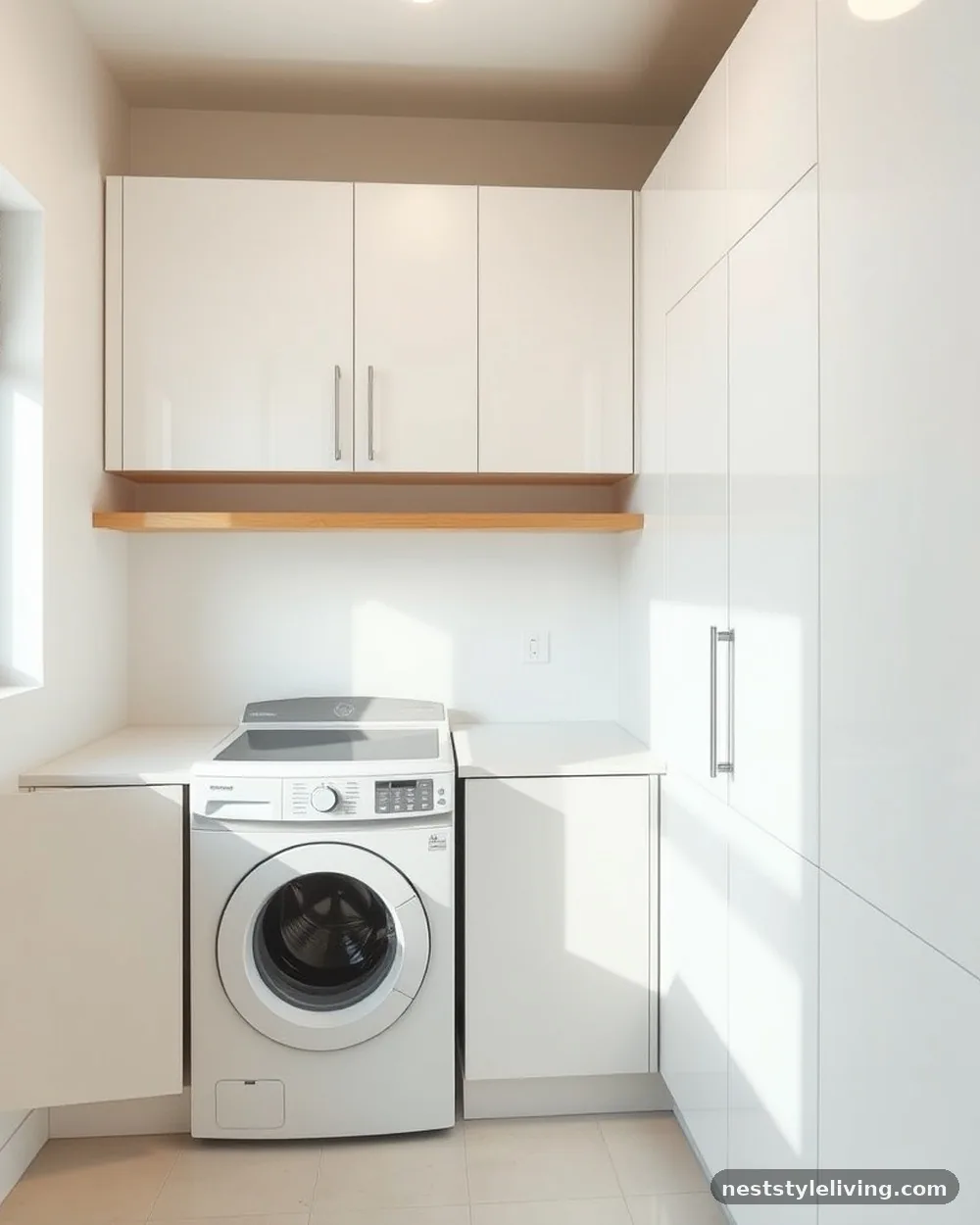
If your mudroom laundry room is small, high-gloss white cabinets will make the space feel significantly larger and brighter. The reflective surface bounces light around the room, which is particularly effective in windowless spaces.
White cabinetry also provides a clean, crisp backdrop that prevents the room from feeling heavy or cluttered, even when it is filled with jackets and cleaning supplies. This finish is also surprisingly easy to clean, as it resists staining and wipes down with a simple damp cloth.
Pair the white cabinets with matte black or brushed nickel hardware to add visual interest. To keep the look balanced, ensure your flooring or wall color provides a subtle contrast, as an entirely white room can sometimes feel clinical without a bit of texture or tone.
10. Magnetic Backsplashes for Organization
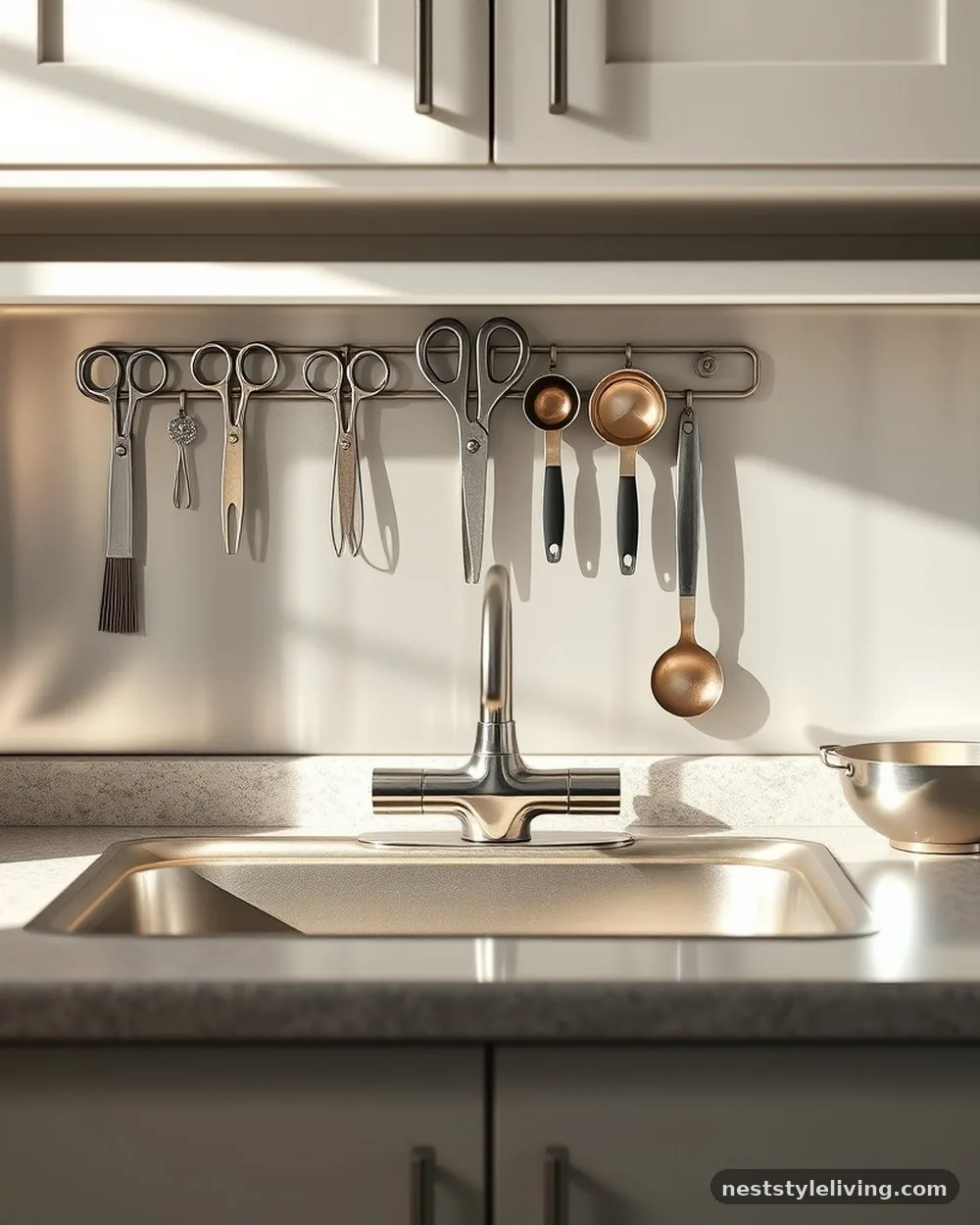
A magnetic backsplash behind your utility sink or folding station acts as a hidden storage tool for small metal items. You can use it to store scissors, measuring spoons for detergent, or even keys that you need to grab on your way out the door.
It keeps these small, easily lost items off your counter space, maintaining a clear area for your primary tasks. This is a subtle but effective way to implement mudroom laundry room ideas that make life easier by reducing visual noise.
Select a stainless steel magnetic board that matches your appliances for a cohesive appearance. Mount it using heavy-duty adhesive or screws into the wall studs, ensuring it is positioned at a height that allows you to easily grab items while standing at your workspace.
11. Pegboard Walls for Modular Storage
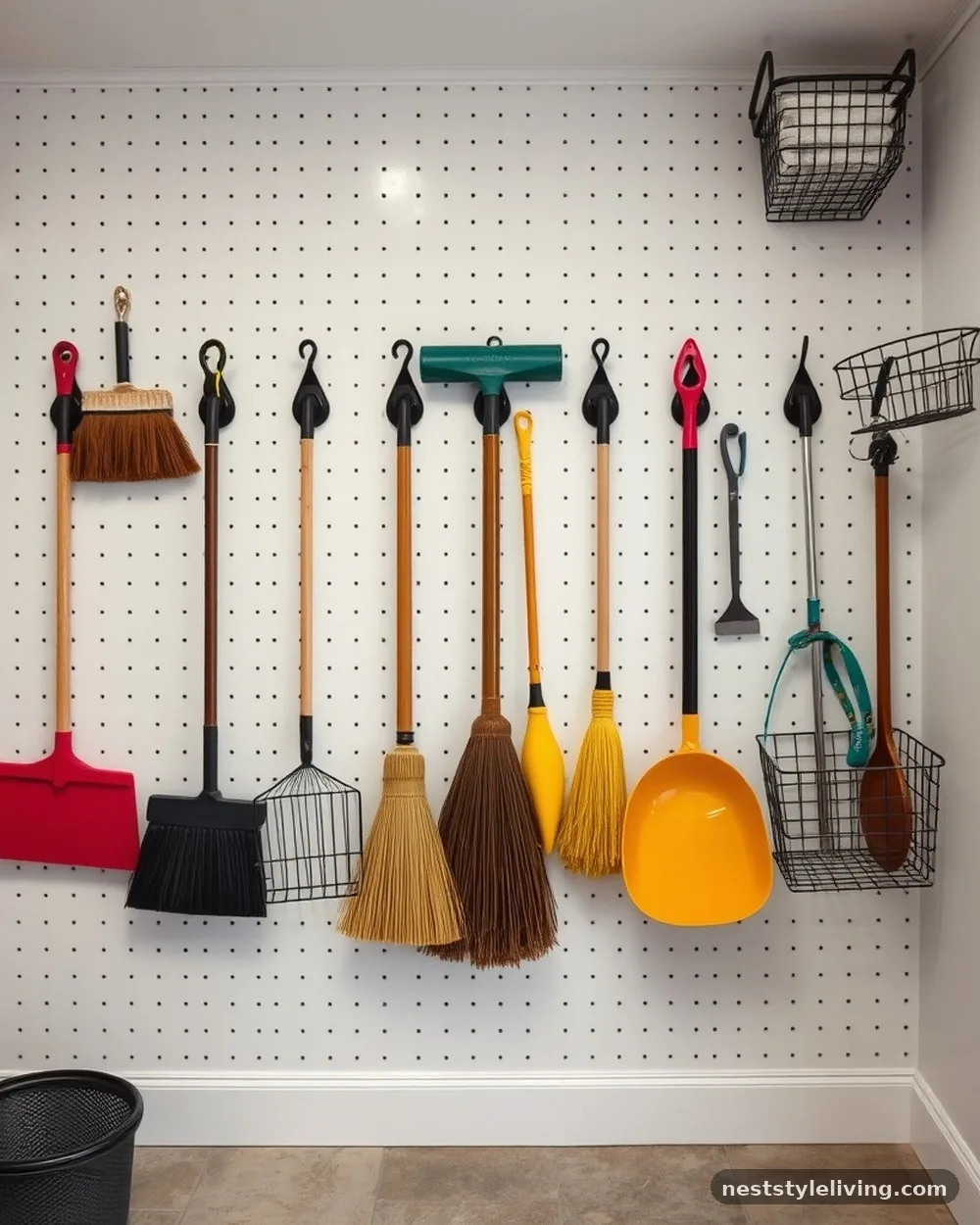
Pegboard is the ultimate solution for a mudroom that needs to adapt to changing needs. By installing a large section of pegboard on an empty wall, you create a customizable grid where you can hang everything from brooms and dustpans to baskets for hats and scarves.
Because the hooks and shelves are adjustable, you can rearrange your storage at any time without needing to drill new holes in the wall. This flexibility is perfect for families whose storage needs change with the seasons.
Paint the pegboard a bold color to turn it into a feature wall, or keep it white to blend into the background. Invest in high-quality metal hooks and accessories rather than plastic ones to ensure they can hold the weight of heavy winter coats or damp towels over the long term.
12. Slide-Out Ironing Boards
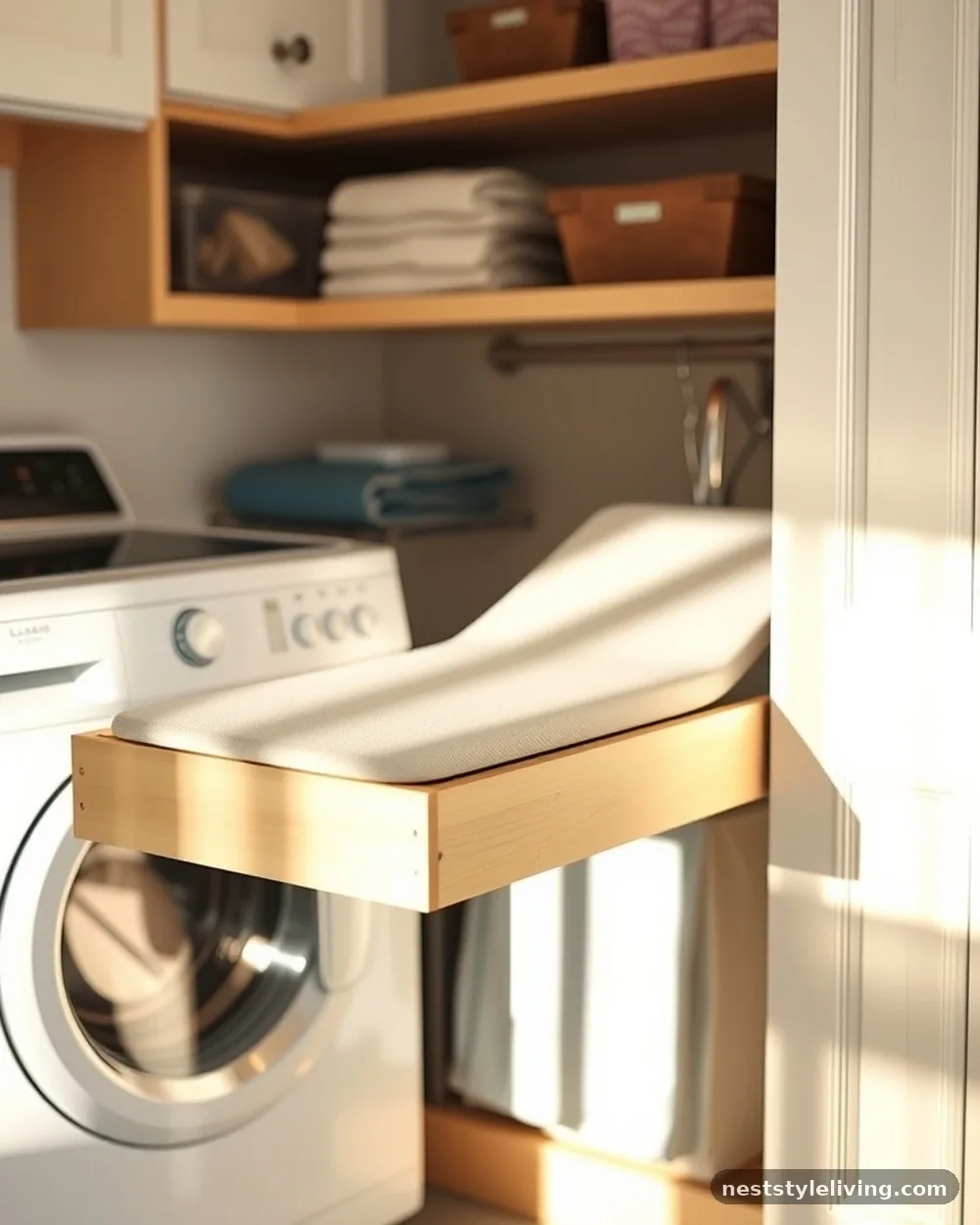
Traditional ironing boards are notorious for being bulky and difficult to store. A slide-out ironing board, which tucks away into a standard cabinet drawer, is a space-saving essential for any laundry room.
When you need to press a shirt, you simply pull the drawer open, and the board unfolds into position. It is always ready to use but stays completely out of sight when you are finished, preserving your floor space for other activities.
Ensure your cabinet maker or installer uses high-quality, full-extension slides that can support the downward pressure of an iron. Also, verify that the cabinet drawer is wide enough to accommodate a standard-sized board, as some slimline versions may be too narrow for pressing larger garments like trousers or tablecloths.
13. Rolling Laundry Carts with Dividers
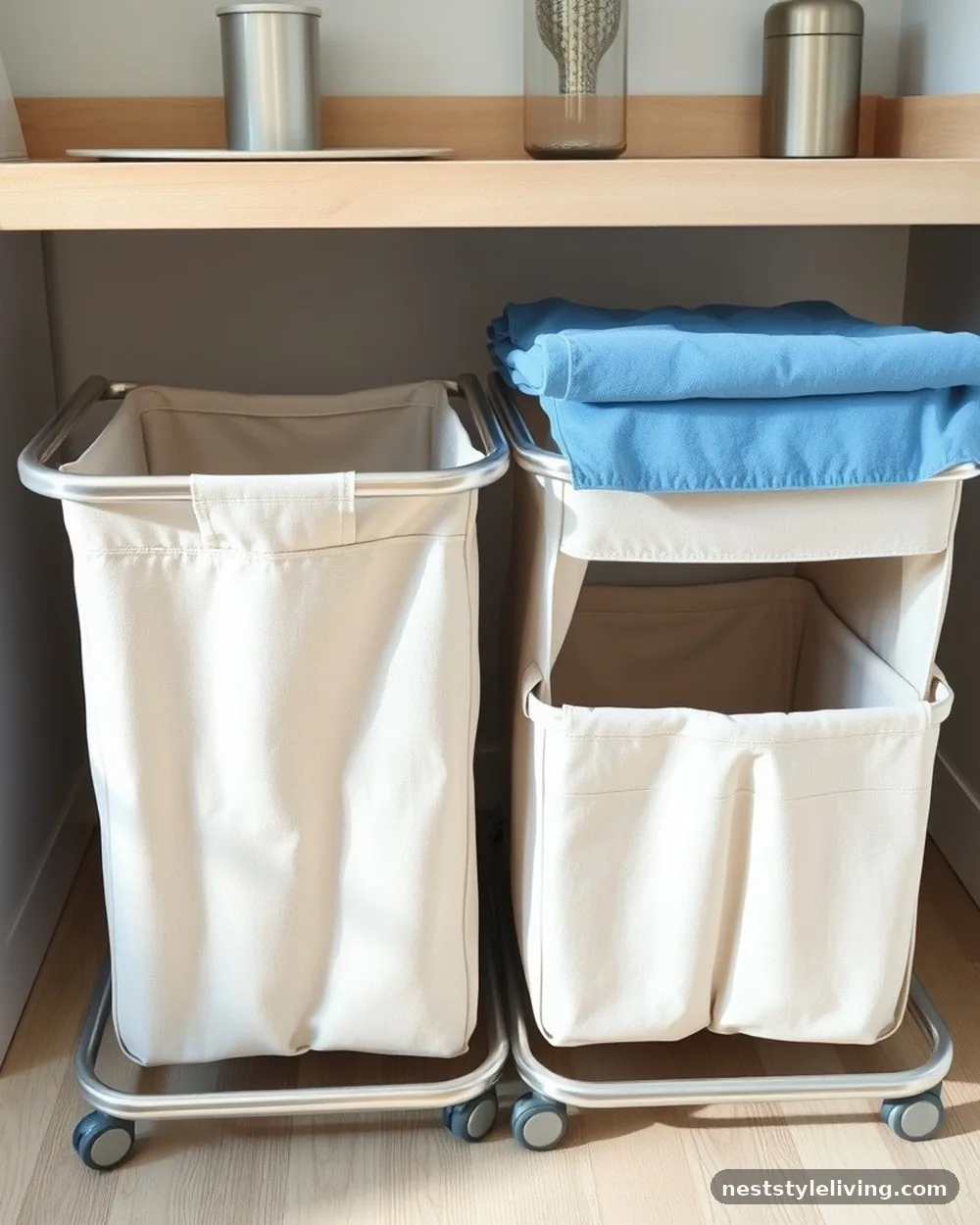
Instead of stationary hampers, use rolling laundry carts that fit neatly under your folding table or inside a tall cabinet. Carts with built-in dividers allow you to sort lights, darks, and delicates as you go, which saves significant time on laundry day.
Because they are on wheels, you can easily roll them to the washer and then back to your bedroom or closet once the clothes are folded. This mobility makes the entire process of managing laundry significantly more efficient.
Choose carts with sturdy metal frames and canvas or heavy-duty plastic liners. Check the height of your folding table or cabinet opening before purchasing to ensure the carts roll easily underneath, and look for wheels with locking mechanisms to prevent the cart from sliding while you are loading it.
14. Moisture-Resistant Shiplap Paneling
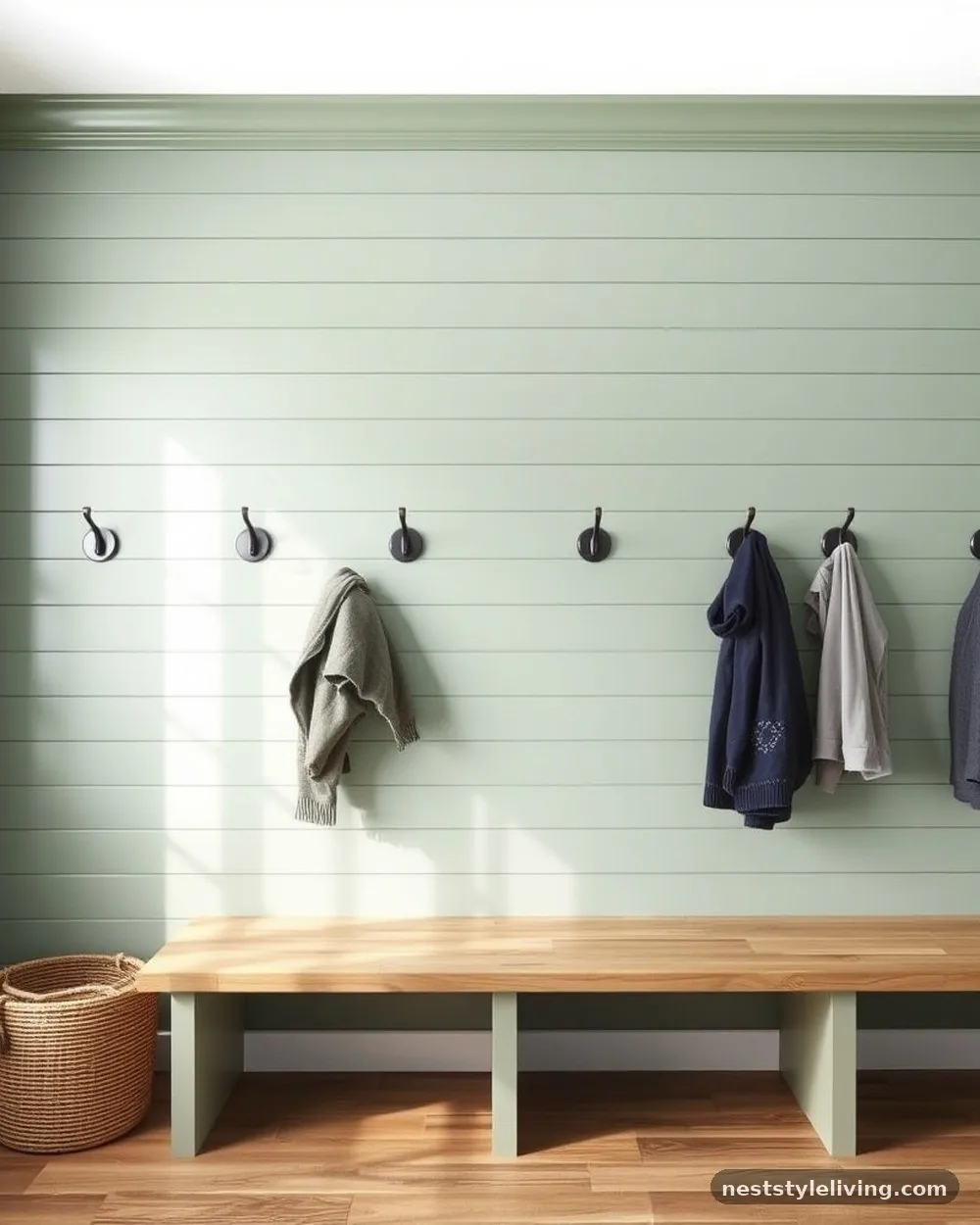
If you want your mudroom to feel like a designed part of your home rather than a utility zone, install shiplap on the walls. Shiplap adds texture and warmth, especially when painted in a soft color like sage or navy.
In a mudroom laundry room, it serves a functional purpose as well: it protects your drywall from the dings and scratches caused by shoes and equipment. When installed properly with moisture-resistant paint, it stands up well to the humid environment of a laundry area.
Use PVC-based or composite shiplap rather than raw wood if you are installing it near a utility sink, as these materials are completely waterproof and won’t warp over time. Install it horizontally to make the room feel wider, or vertically to create the illusion of higher ceilings.
15. Ceiling-Mounted Drying Rods
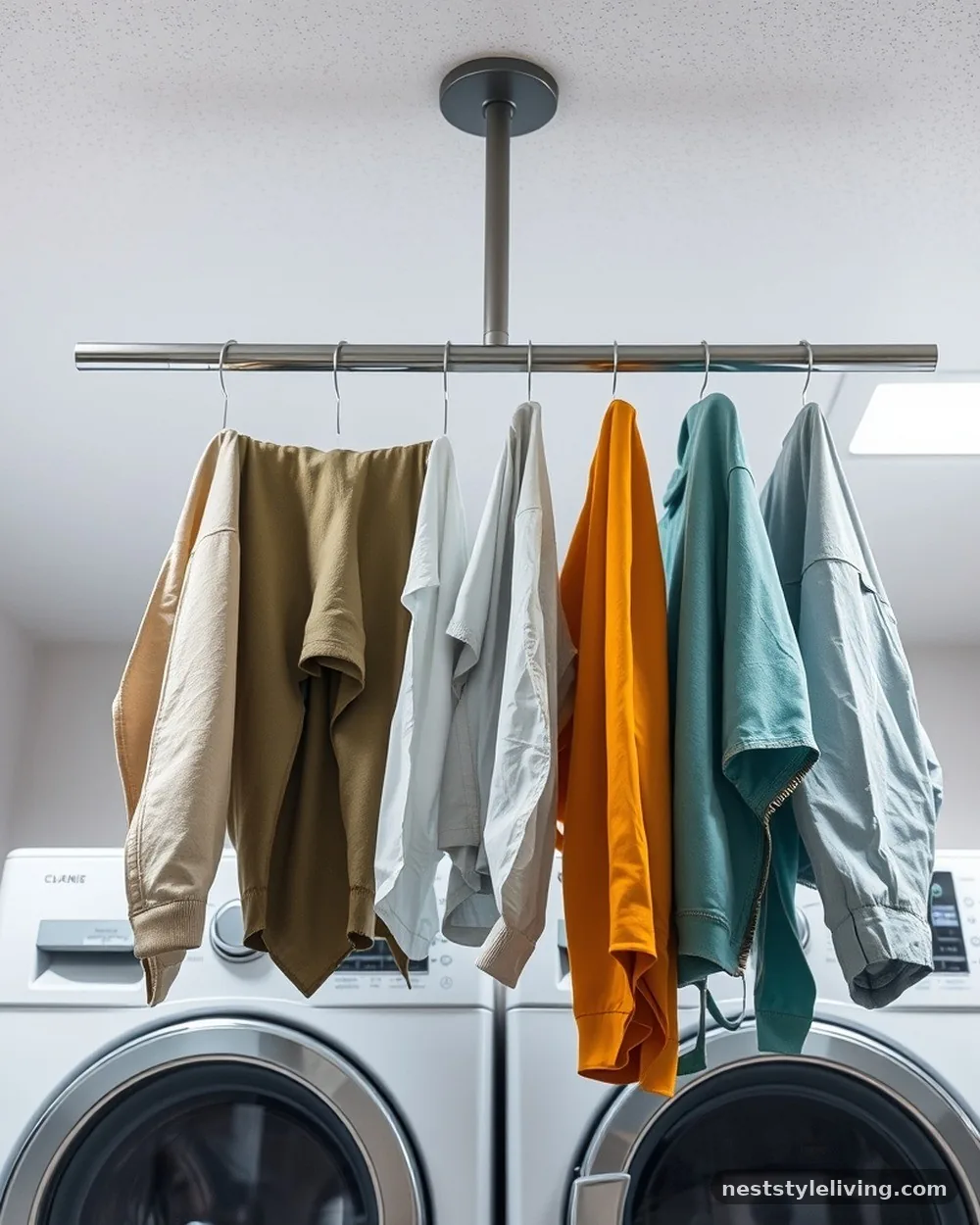
When you have a large amount of laundry to dry at once, such as during the winter months, wall-mounted racks might not be sufficient. A ceiling-mounted rod, suspended above your washer and dryer or in a corner of the mudroom, provides a massive amount of hanging space without touching your floor.
This keeps your wet clothes elevated and out of the way, utilizing the often-wasted space near the ceiling. It is particularly effective for hanging wet coats or ski gear that needs to dry out after a day outside.
Make sure to mount the rod into the ceiling joists for maximum support. You can use a decorative wooden rod or a sleek metal pipe depending on your home’s aesthetic, but ensure the hardware is rated for the weight of multiple wet items to prevent it from sagging.
16. Pull-Out Detergent Shelves
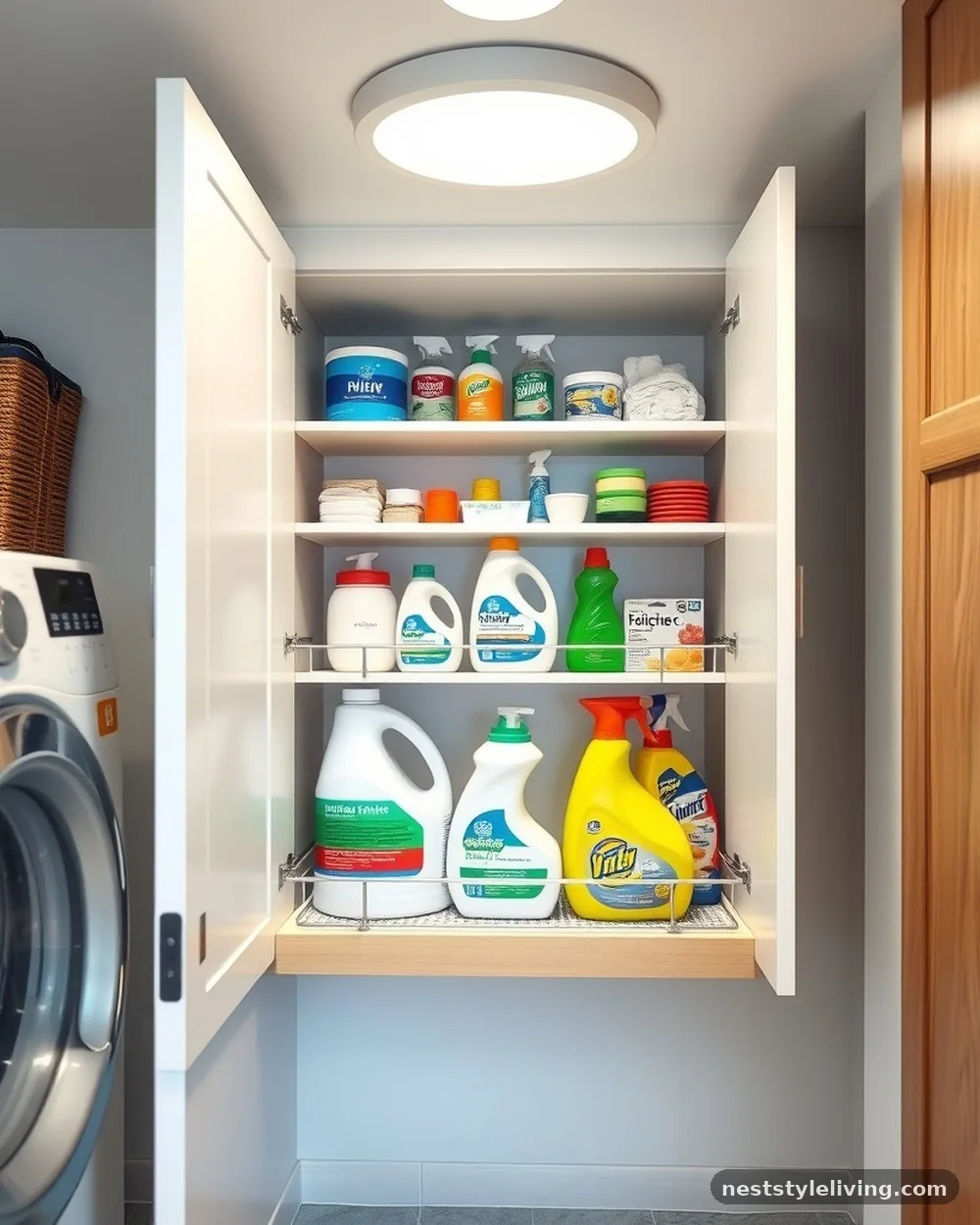
Detergent bottles are heavy, awkward, and prone to leaking. By installing a narrow, pull-out cabinet specifically for laundry supplies, you keep these items organized and accessible.
The pull-out design allows you to see all your bottles at once, so you never have to reach into the dark back of a cabinet. This also keeps chemicals safely tucked away from children or pets, which is a major benefit for busy households.
Use a base cabinet with a width of 9 to 12 inches to accommodate standard detergent jugs. Install a removable plastic tray at the bottom of the pull-out to catch any drips or spills, making it easy to keep the interior of your cabinet clean and odor-free.
17. Heavy-Duty Entry Mats
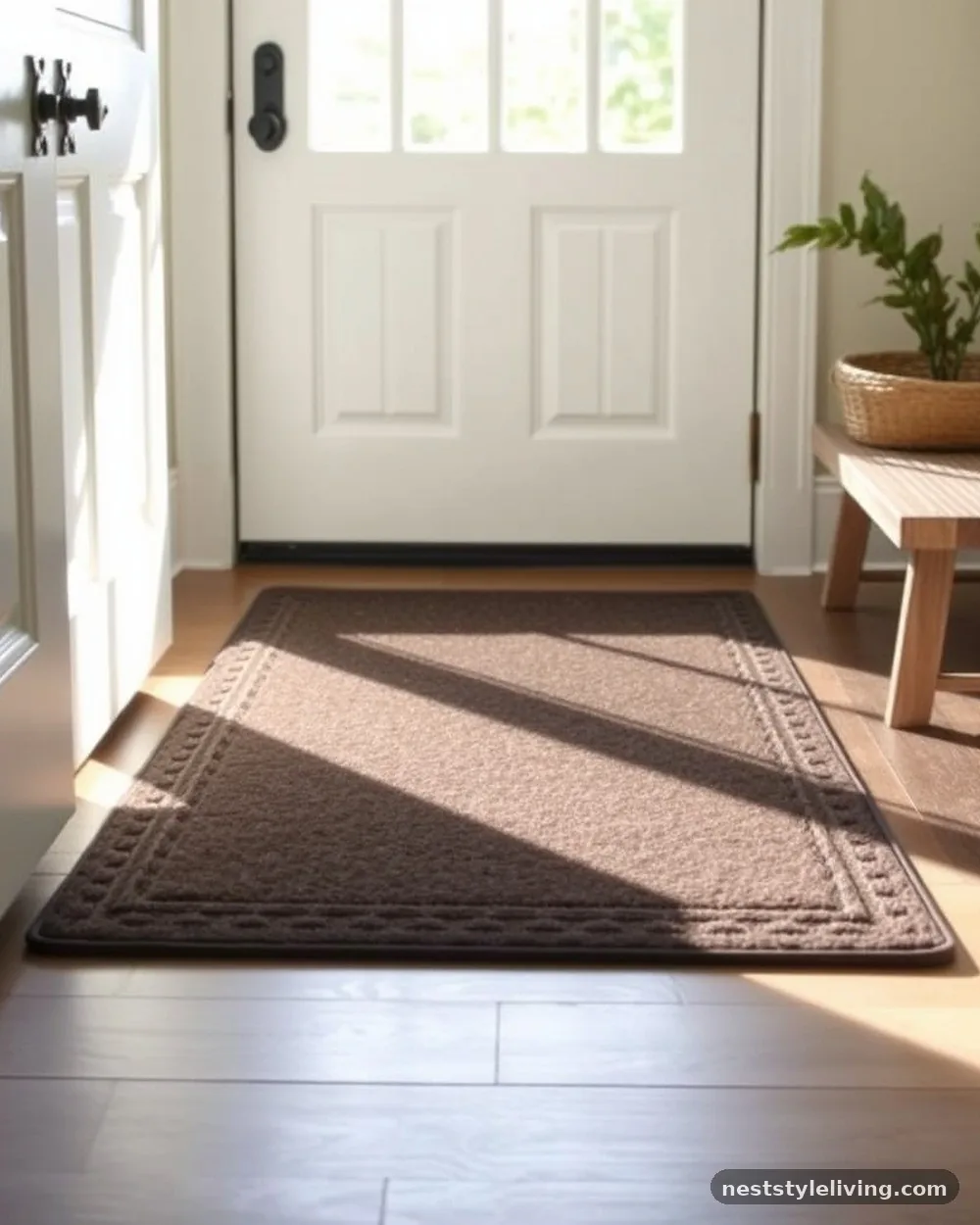
The first line of defense in any mudroom is a high-quality entry mat. Choose a heavy-duty, commercial-grade mat that is designed to trap moisture and grit.
These mats are much more effective than standard decorative rugs, which often slide around and become soaked. By stopping mud at the door, you reduce the amount of cleaning required for the rest of your home, and the mat itself can usually be hosed down outside when it gets too dirty.
Look for a mat with a rubber backing to ensure it stays in place on your tile or wood floor. Ensure the mat is large enough that a person can take at least two full steps on it upon entering, which is the most effective way to remove debris from the soles of shoes.
18. Open Shelving for Decorative Storage Baskets
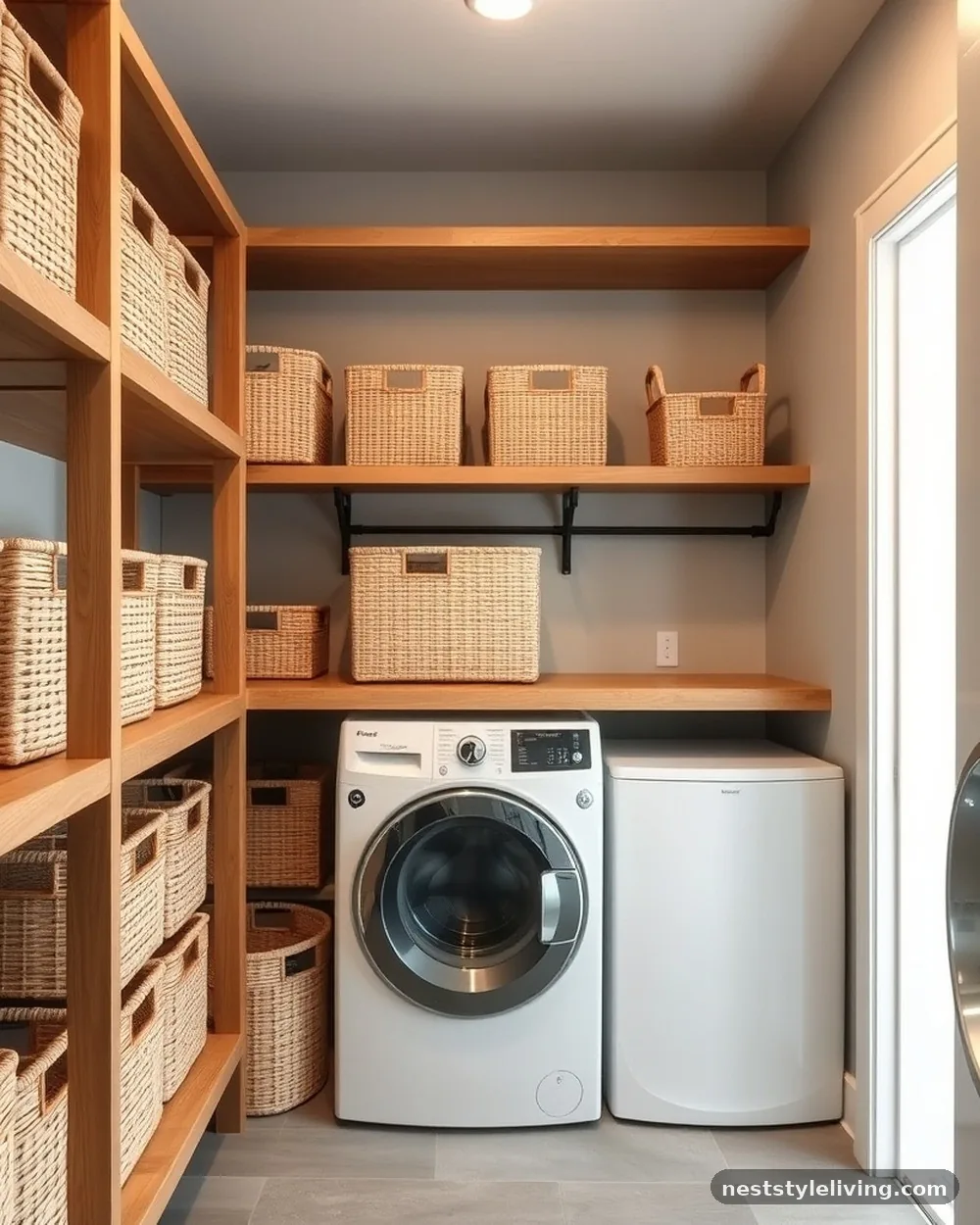
Not everything in your mudroom laundry room needs to be hidden behind a cabinet door. Open shelving allows you to use decorative baskets to store items that are used occasionally but don’t need to be on display.
Wicker or woven seagrass baskets provide a natural, warm texture that contrasts beautifully with the hard surfaces of a laundry room. This is a simple way to keep small items like spare lightbulbs, cleaning rags, or seasonal items organized while maintaining a clean, curated look.
Choose baskets that are uniform in size and color to maintain a sense of order. Label each basket with a tag so you can quickly identify the contents without having to pull every basket off the shelf, which keeps your organization system running smoothly and efficiently.
Frequently Asked Questions
How do I combine a mudroom and laundry room in a small space?
Focus on vertical storage and multi-functional furniture. Use wall-mounted drying racks, a folding table that attaches to the wall, and cabinetry that goes all the way to the ceiling. By keeping the floor clear, you make the room feel larger while ensuring every square inch serves a purpose.
What materials are best for a mudroom laundry room floor?
Porcelain tile is the gold standard for this space. It is incredibly durable, water-resistant, and comes in a wide variety of styles. Avoid hardwood or laminate, as they can warp if exposed to water leaks or wet boots, and stick to materials that can handle heavy traffic and moisture.
How can I hide my laundry appliances in a mudroom?
Cabinetry is the best way to conceal machines. You can build a custom “laundry closet” with doors that match the rest of your mudroom lockers. If you prefer a more open look, consider a rolling cart system or a decorative curtain track that allows you to hide the machines when they aren’t in use.
What is the best way to handle mud and dirt in this room?
Start with a high-quality, commercial-grade entry mat at the door to catch debris. Incorporate a deep utility sink for washing off boots or muddy gear immediately upon entry. Finally, ensure your storage systems are made of wipeable, moisture-resistant materials so that any tracked-in dirt can be cleaned up quickly.
How do I keep my mudroom laundry room smelling fresh?
Proper ventilation is key. Install a strong exhaust fan to pull humidity out of the room, especially if you have a dryer. Use open shelving to encourage airflow, and avoid storing damp clothes in closed containers. Adding a small, moisture-absorbing desiccant pack in cabinets can also help prevent musty odors.
Conclusion
Creating a space that serves as both an entryway and a utility hub doesn’t have to be complicated. By focusing on durable materials, vertical storage, and smart organization, you can easily implement mudroom laundry room ideas that make life easier for your entire family. These improvements reduce daily friction, turning a chaotic high-traffic zone into a streamlined area that supports your routine rather than interrupting it.
Start by identifying your biggest pain point—whether it’s wet gear, piles of dirty clothes, or a lack of folding space—and address that first. As you refine your layout, you will find that a well-organized mudroom laundry room is one of the most valuable assets in your home. Feel free to start with one or two of these projects and watch how quickly your daily chores become more manageable.