14 Black and White Bathroom Ideas That Look Timeless
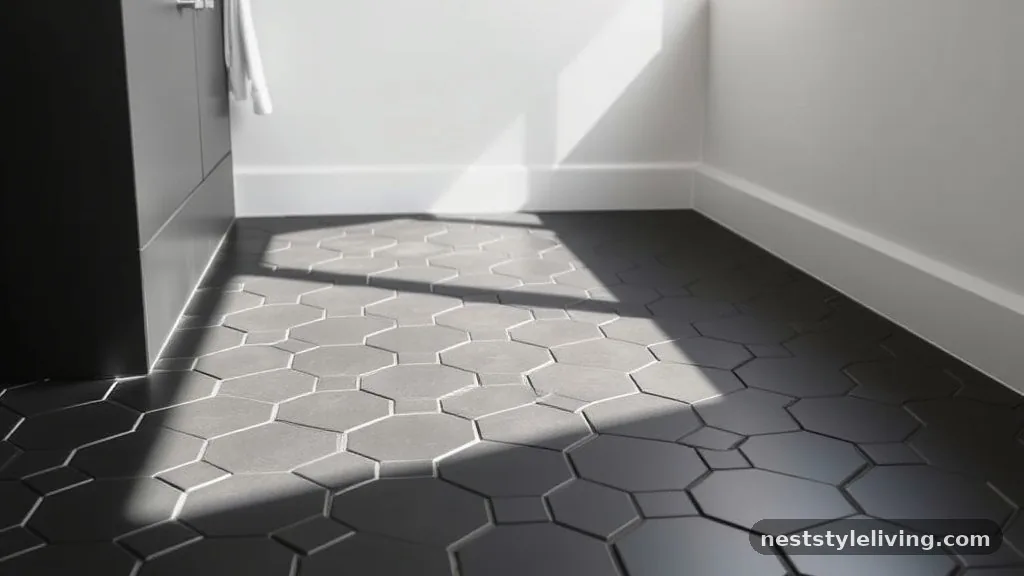
Choosing a monochromatic palette for your home is a decision rooted in longevity, as black and white bathroom ideas that look timeless rely on high-contrast geometry rather than fleeting trends. By stripping away the distraction of color, you expose the quality of your materials and the precision of your layout, creating a space that feels curated and permanent.
Whether you prefer the sharp lines of modern minimalism or the intricate patterns of a Victorian-era renovation, this foundational contrast ensures your space remains relevant for decades. Exploring these options helps you identify the specific textures and fixtures that transform a simple washroom into a sophisticated, enduring environment.
1. Matte Black Hexagonal Floor Tile
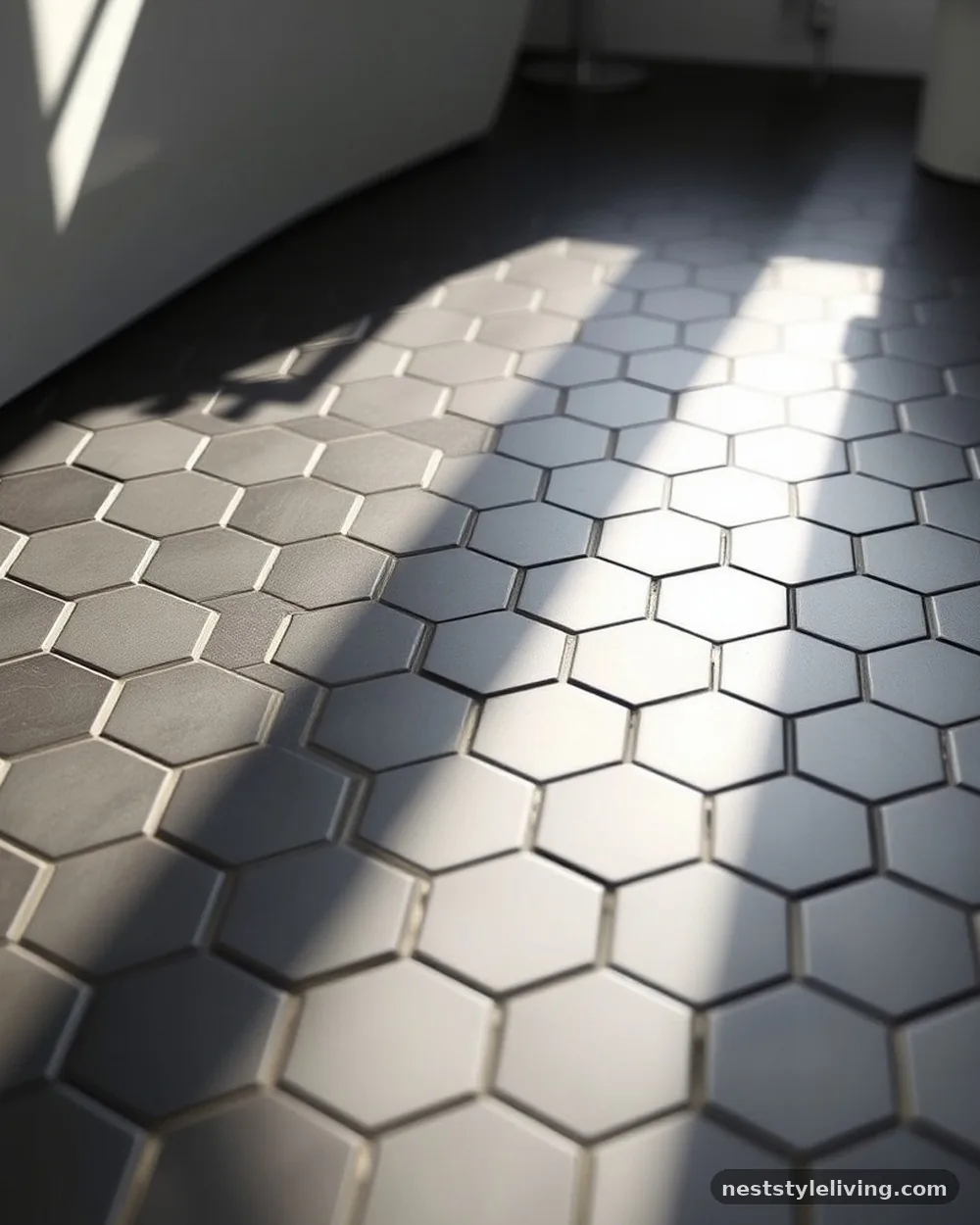
Matte black hexagonal tiles create a honeycomb visual that grounds a white bathroom, offering a sophisticated alternative to standard square grids. The matte finish is particularly effective at hiding water spots and dust, which makes it a practical choice for high-traffic areas.
Because the grout lines are numerous, they provide a subtle, textured geometric pattern that prevents the black floor from feeling like an overwhelming void. This choice works exceptionally well in smaller rooms where you want to draw the eye downward to emphasize the floor space without sacrificing the airy feel of white walls.
To ensure the best result, opt for dark grey or charcoal grout rather than stark white. Stark white grout against black tile is notoriously difficult to keep clean and often looks dated within a few years. Charcoal grout creates a cohesive, uniform surface that feels intentional and high-end.
2. Subway Tile with Contrasting Grout
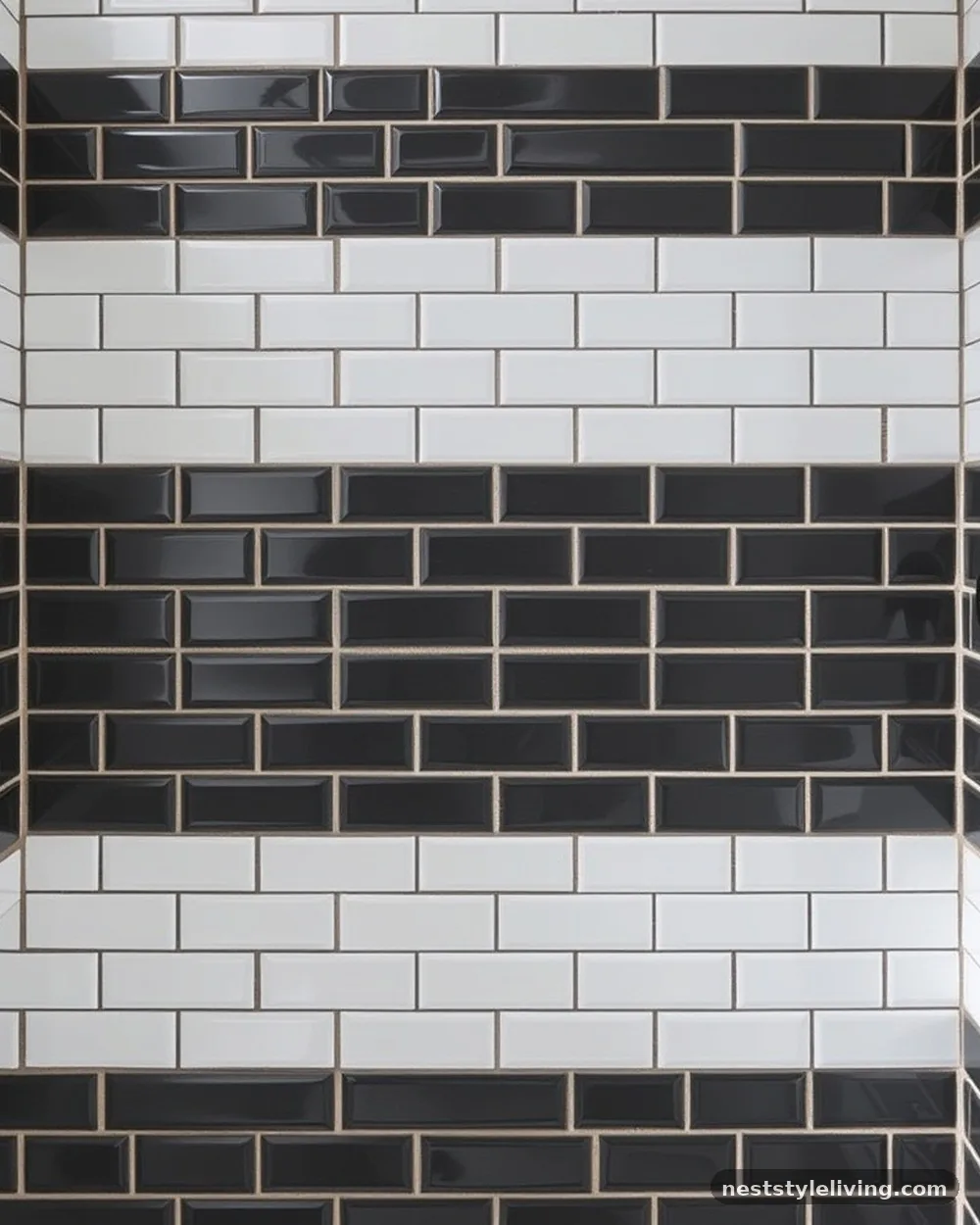
Classic white subway tile is a staple, but it gains a modern, architectural edge when paired with thick, black grout lines. This layout creates a strong grid that acts as a decorative element, effectively turning the wall itself into a piece of graphic art.
It mimics the look of industrial loft windows and provides a sharp contrast that defines the shape and scale of the shower stall or vanity backsplash. The look is clean, utilitarian, and pairs perfectly with both modern black hardware and vintage-style porcelain fixtures.
When installing, request a tight grout joint—no more than 1/8 inch—to maintain a sharp, clean line. If the grout lines are too wide, the wall can begin to look messy rather than intentional. Use an epoxy-based grout to ensure the black color remains deep and resistant to the inevitable staining that occurs in wet areas.
3. Floating Black Oak Vanity
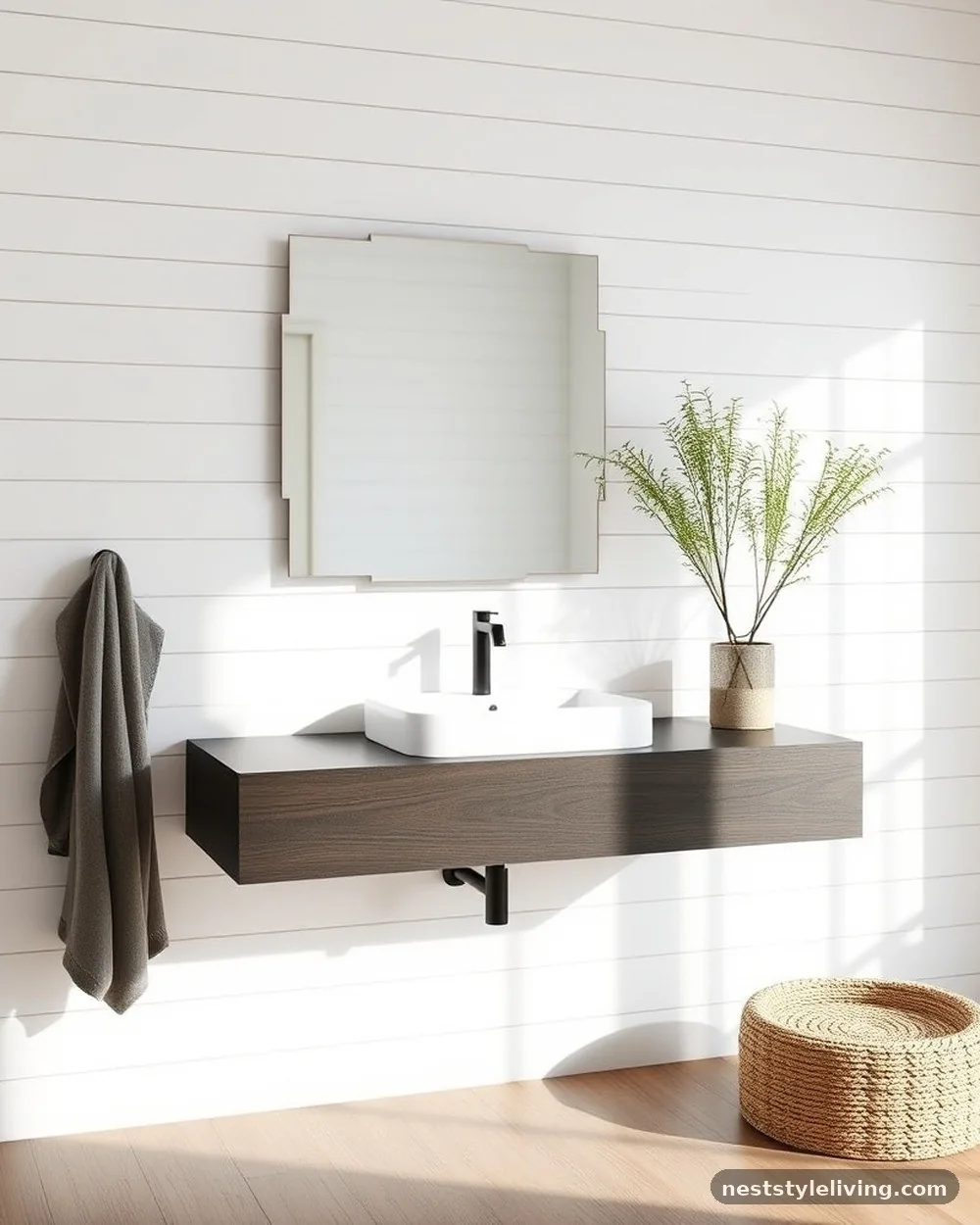
A floating vanity finished in a deep black oak or matte black veneer adds a sense of luxury by exposing more floor space, which makes the entire room feel larger. The natural grain of the wood, even when stained black, provides a touch of organic texture that prevents a room from feeling too clinical or sterile.
This piece serves as the primary anchor for the space and works best when centered on a white shiplap or smooth plaster wall. It is a highly functional choice that balances the rigid, cold nature of ceramic tile with the warmth of wood.
Mount the vanity at a height that allows for easy cleaning underneath, typically around 10 to 12 inches off the floor. Ensure the wall behind the vanity is properly blocked during the framing stage to support the weight of the unit and the stone countertop, as floating vanities require significant structural integrity to avoid sagging over time.
4. Framed Black Crittall-Style Shower Screen
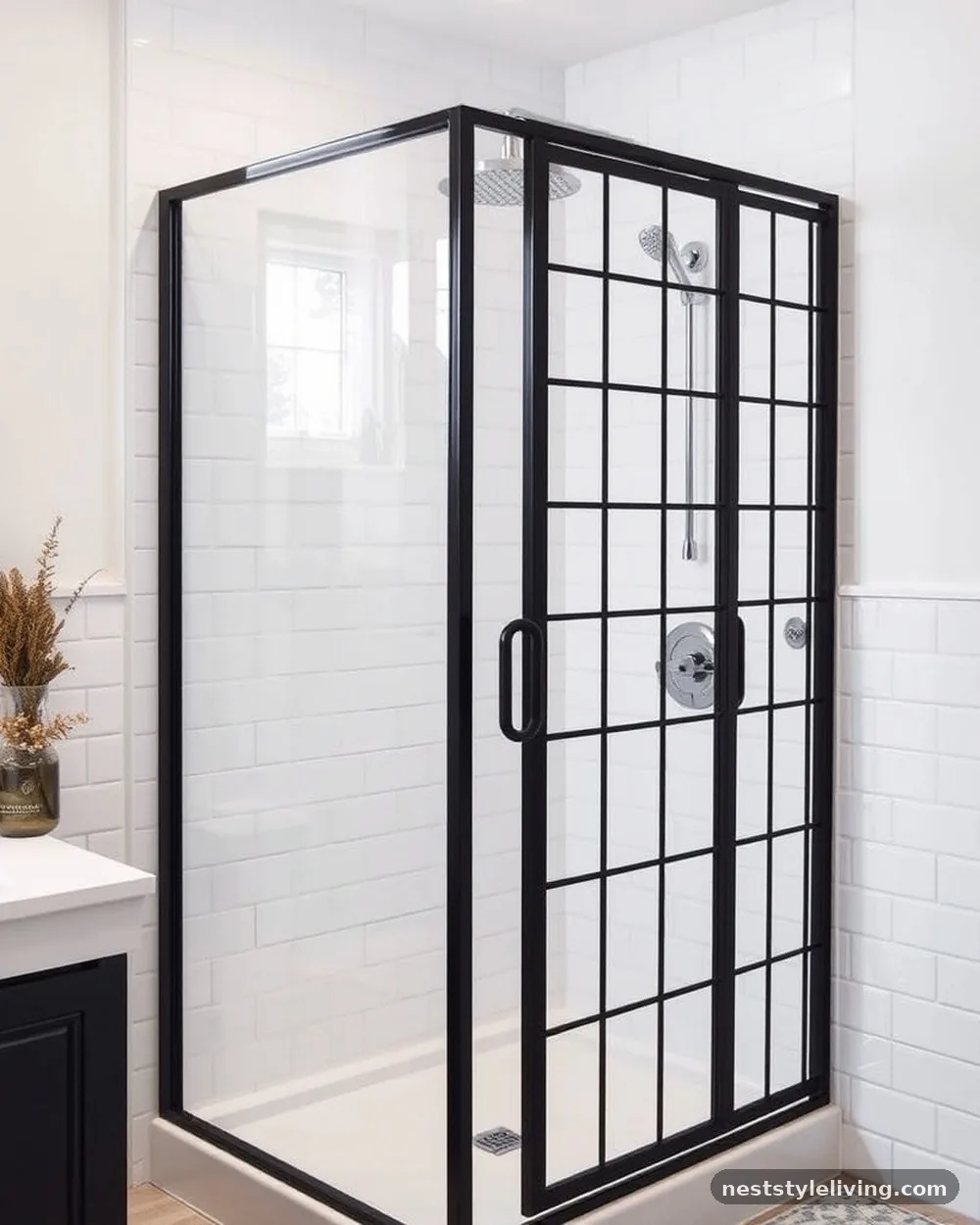
Replacing a standard sliding glass door with a fixed, black-framed shower screen provides an immediate architectural upgrade that feels inspired by classic European design. The grid-like metal frame breaks up the white tile behind it, creating a focal point that feels both expansive and secure.
This style is particularly effective in walk-in showers where a door isn’t necessary, as it keeps the room feeling open and light-filled. The metal frames are typically powder-coated steel or aluminum, which are highly resistant to moisture and rust.
When sourcing your screen, check the thickness of the glass—aim for at least 10mm tempered glass to ensure it feels substantial and premium. Thin, flimsy glass can rattle and feel cheap, whereas a heavier pane provides a solid, high-end experience every time you step into the shower.
5. Herringbone Marble Wall Accents
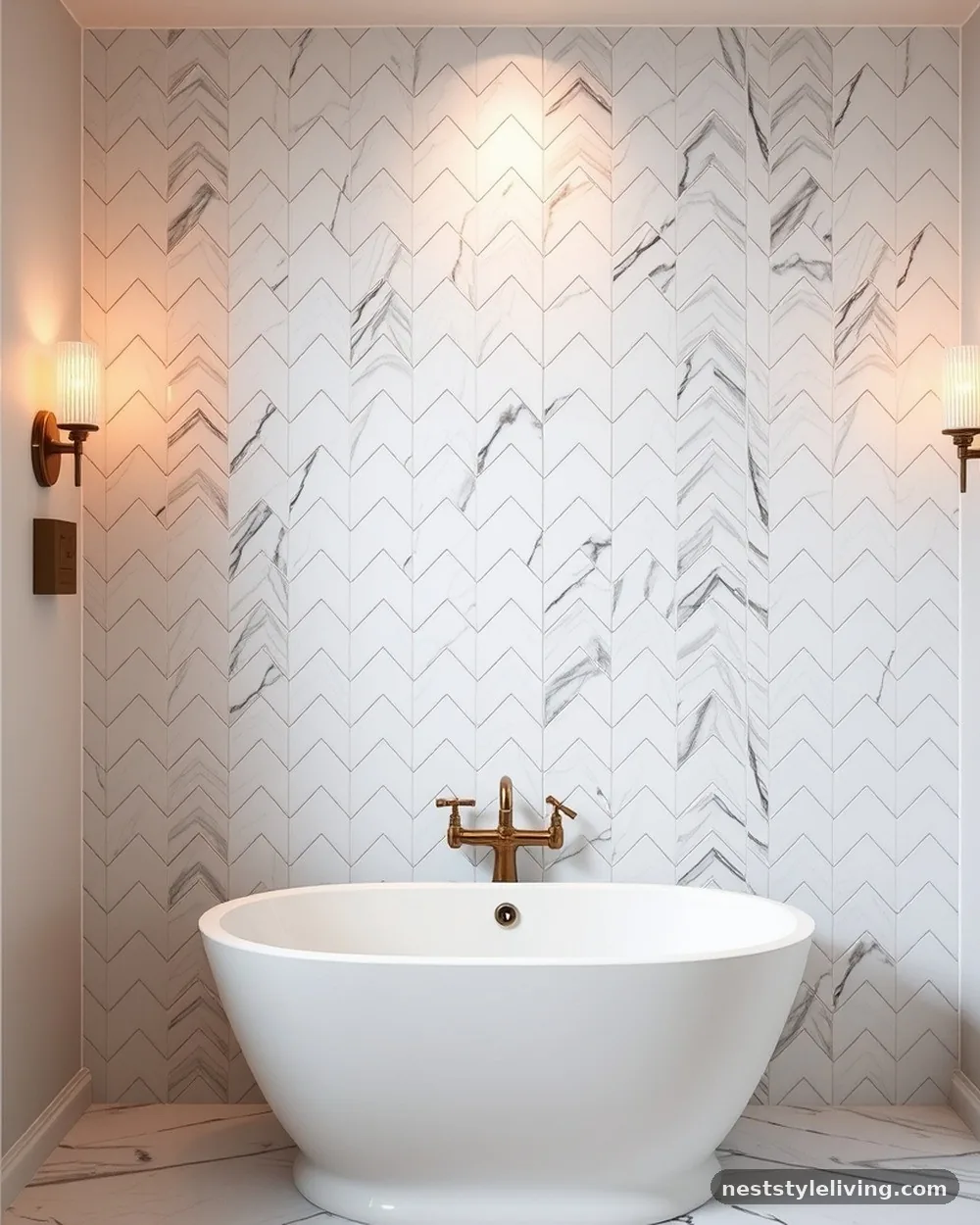
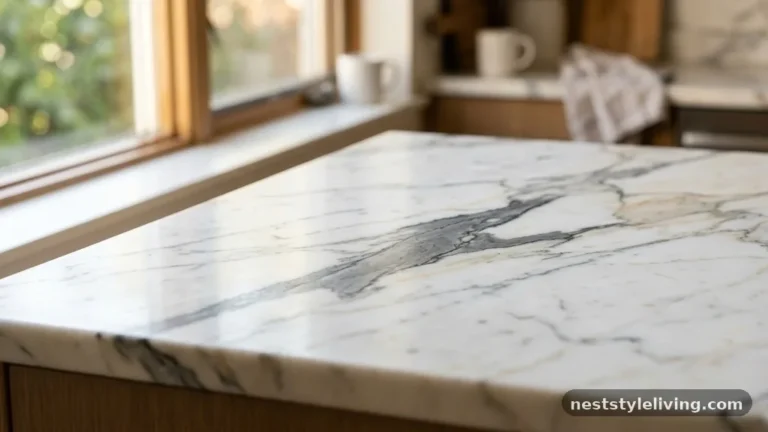
Using white marble tile in a herringbone pattern on a single feature wall adds movement and visual interest to a monochromatic space. The subtle grey veining in the marble provides a natural softness that breaks up the harshness of a pure black-and-white scheme.
This technique creates a sense of luxury and depth, especially when illuminated by wall-mounted sconces that highlight the texture of the stone. It is a timeless choice that elevates the room from a simple utility space to a high-end, spa-like retreat.
To make this look sustainable, seal your marble thoroughly before and after installation to prevent water absorption and staining. Because marble is porous, it requires a specific maintenance routine; avoid acidic cleaners like vinegar or lemon juice, which will etch the surface and ruin the polished finish over time.
6. Brass Hardware Against Black Walls
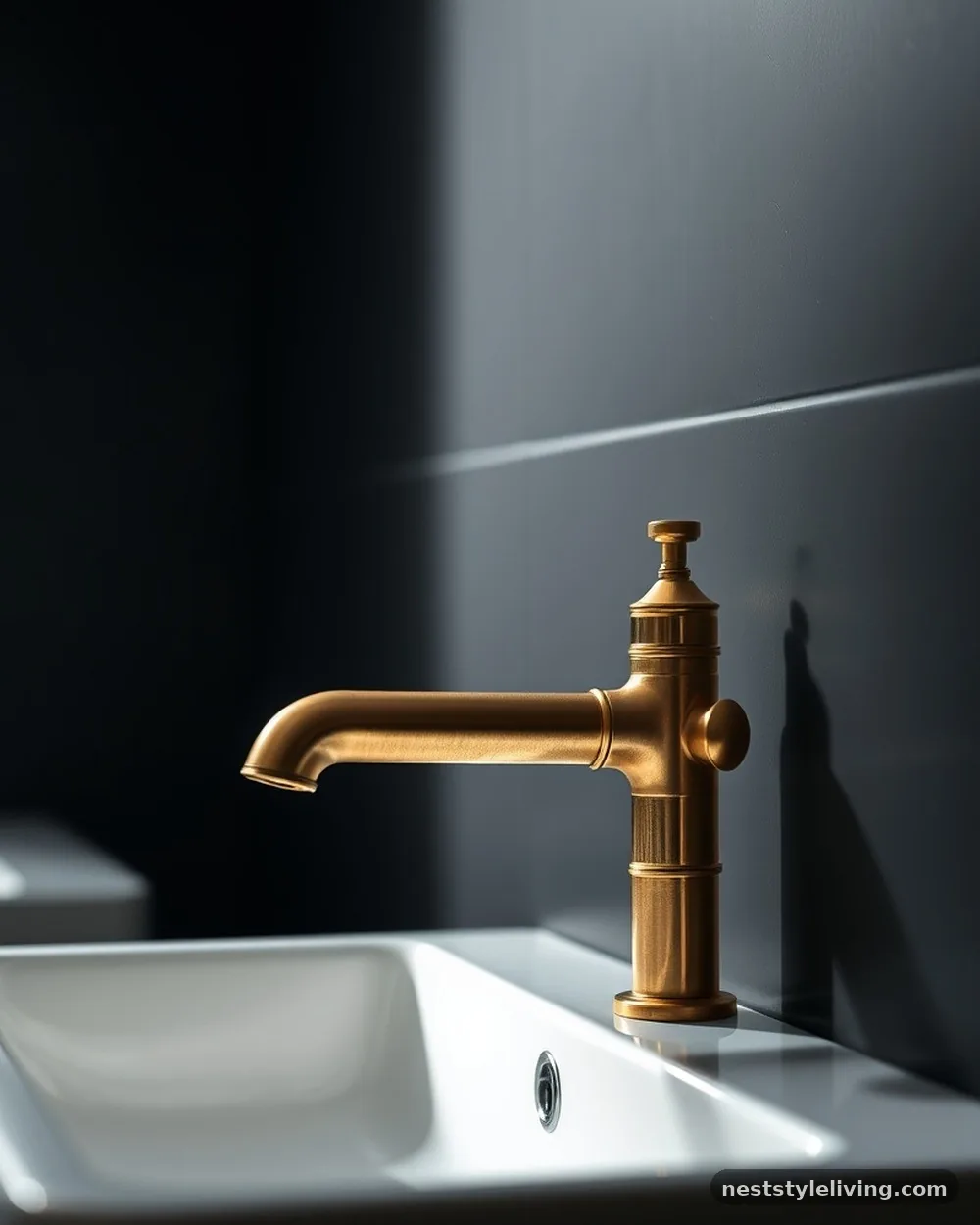
While a black-and-white scheme is the core, introducing antique or unlacquered brass hardware provides a necessary layer of warmth. The contrast of warm metal against a matte black wall creates a sophisticated, jewelry-like effect that feels intentional and expensive.
Whether it is a faucet, a towel ring, or a drawer pull, the brass acts as a refined accent that prevents the room from feeling too stark. This is a classic designer move that bridges the gap between modern minimalism and traditional elegance.
Choose unlacquered brass if you want the hardware to develop a natural patina over time. It will age gracefully with the room, losing its initial shine and gaining a lived-in, vintage character that looks more authentic than a high-gloss, factory-lacquered finish that may peel or chip after a few years.
7. Checkerboard Floor Tiles
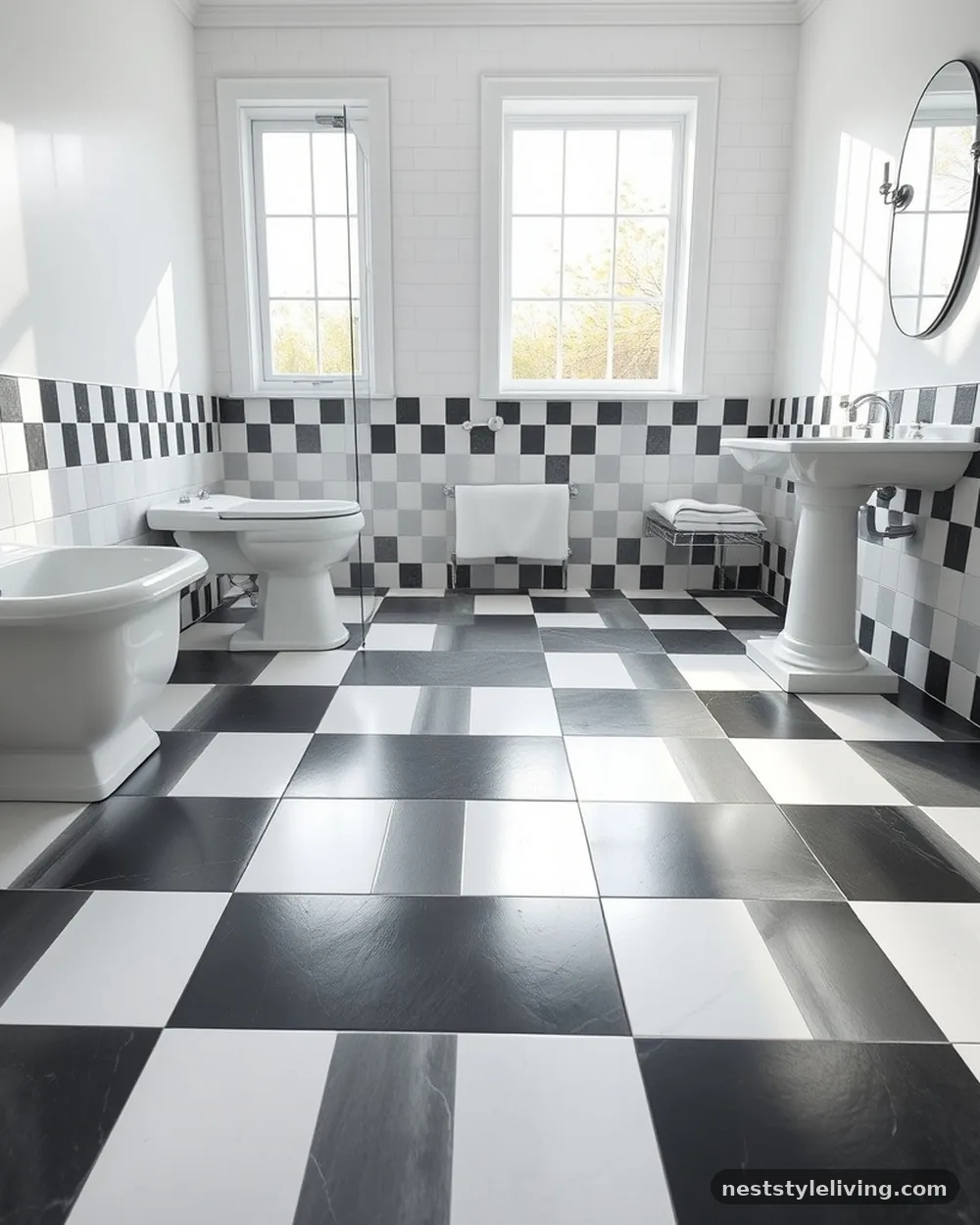
The classic black-and-white checkerboard floor is perhaps the most enduring pattern in interior design, offering a nostalgic yet clean aesthetic. By choosing larger tiles—think 12×12 or 16×16 inches—you reduce the number of grout lines, which makes the pattern feel less busy and more expansive.
This look works beautifully in smaller bathrooms, as the scale of the pattern can actually trick the eye into perceiving the room as larger than it is. It is a bold, historical choice that pairs well with pedestal sinks and clawfoot tubs.
If you are concerned about slipperiness, specify a honed or matte finish for the tiles rather than a polished one. A high-gloss finish becomes extremely dangerous when wet, so look for tiles that have a high slip-resistance rating suitable for bathroom floor installations.
8. Black Wainscoting with White Upper Walls
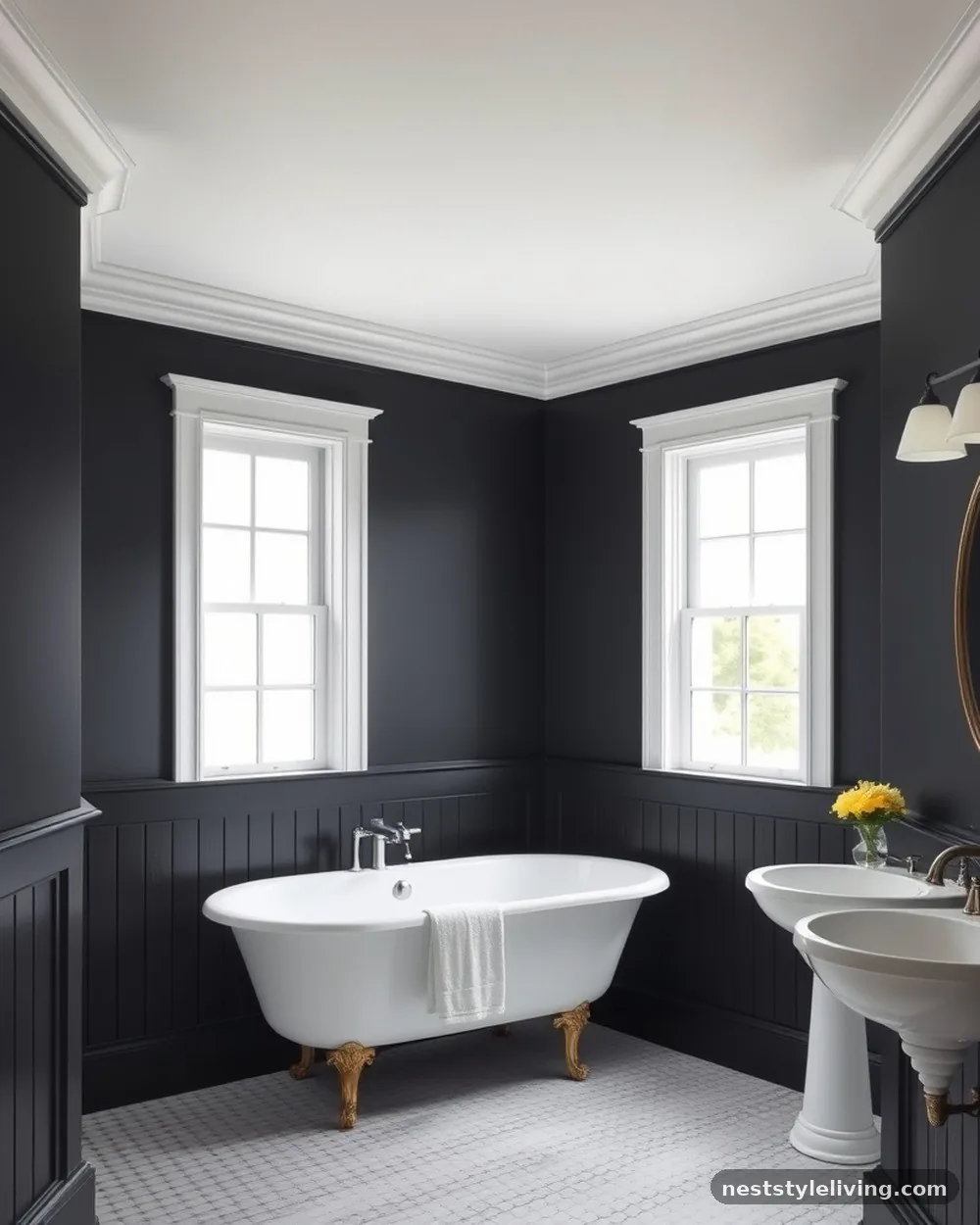
Installing black wainscoting or beadboard on the lower half of your walls creates a classic, grounded look that mimics traditional historic homes. The white upper walls keep the room feeling bright and airy, while the dark lower half hides scuffs and wear that are common in high-traffic bathrooms.
This division of the wall creates a sense of proportion and scale, making the ceiling feel higher and the room more structured. It is a practical, durable solution that adds character to otherwise plain drywall.
Use a semi-gloss or satin paint finish for the wainscoting to ensure it can withstand moisture and frequent wiping. A flat paint on lower wall panels will absorb fingerprints and water splashes, becoming impossible to clean properly without removing the finish entirely.
9. Pedestal Sink with Black Plumbing
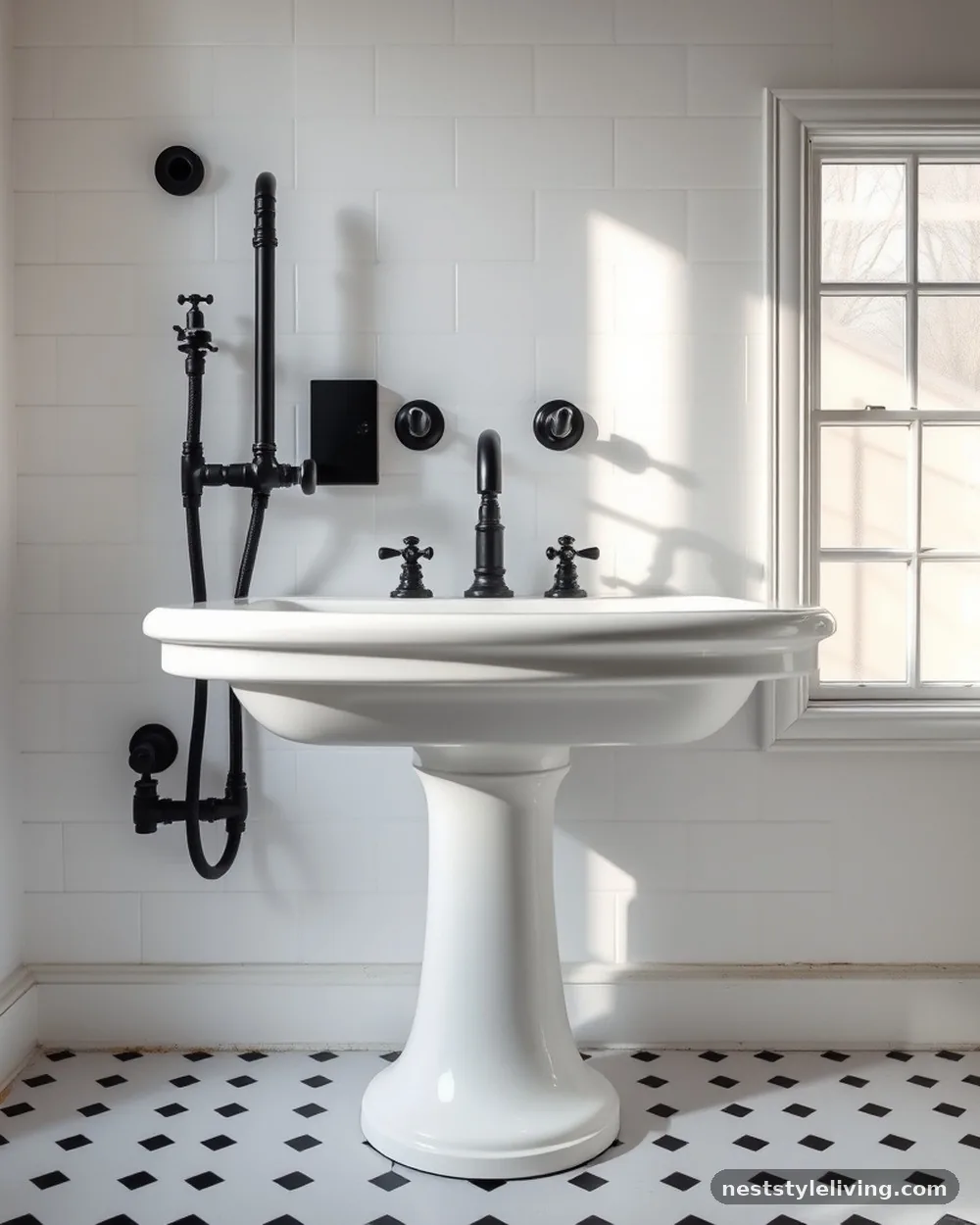
A vintage-inspired white porcelain pedestal sink is a space-saver that looks perfectly at home in a monochromatic bathroom. When you replace standard chrome plumbing with matte black P-traps and supply lines, you transform a basic utility item into a deliberate design statement.
This exposed plumbing look is a nod to industrial design and works well in rooms with limited storage where you want to maintain a sense of openness. It forces you to keep the area tidy, as there is no vanity cabinet to hide clutter.
Ensure your plumber uses high-quality black-finish fittings rather than painting existing chrome pipes. Painted pipes will inevitably chip and scratch, whereas true matte black fixtures are finished with a durable powder coating that is designed to endure the humidity of a bathroom environment.
10. Oversized Round Mirror with Black Frame
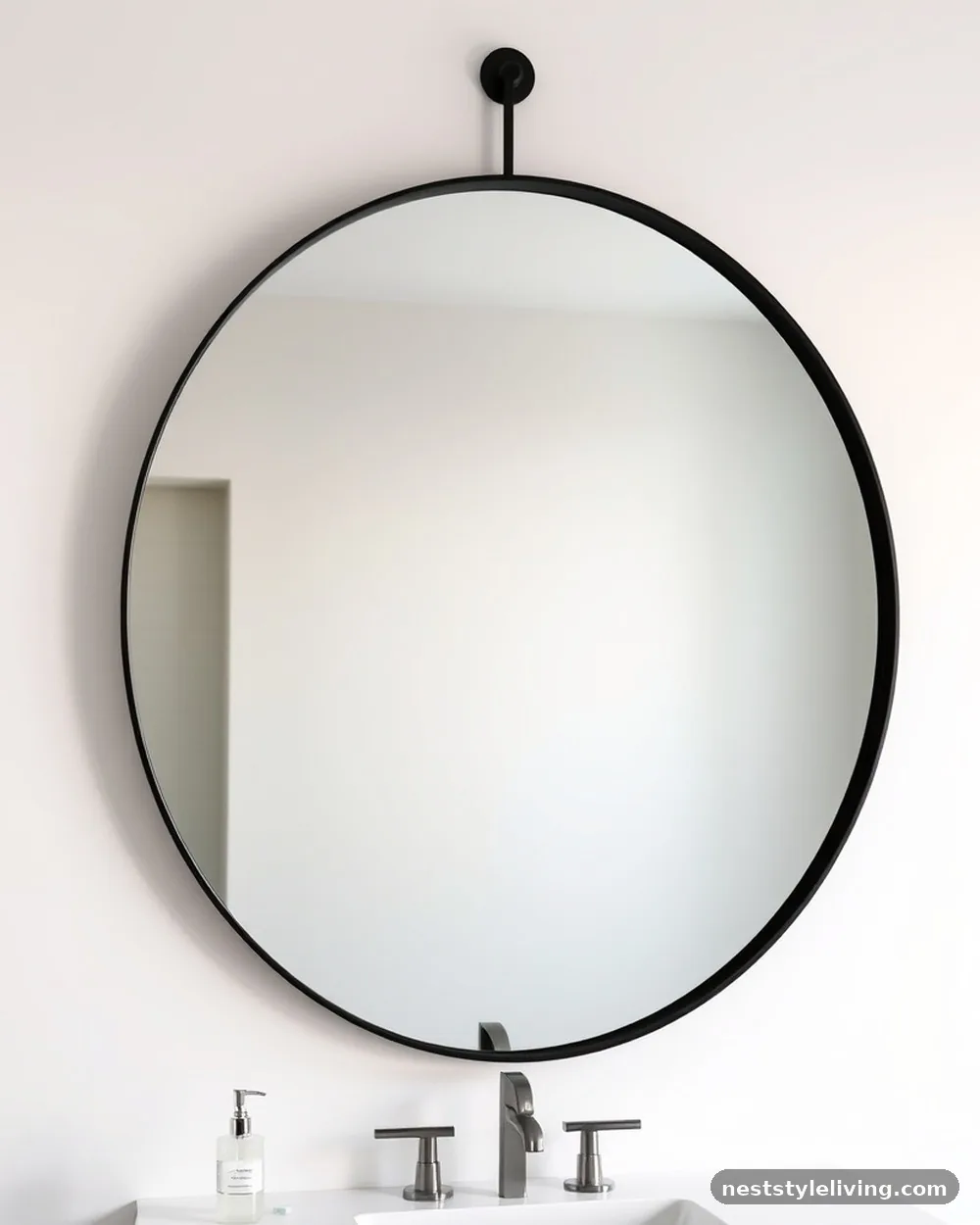
A large, circular mirror with a thin black metal frame acts as a softening agent for the hard, straight lines of tile and cabinetry. The curve of the mirror breaks up the rigid geometry of the room, providing a focal point that draws the eye upward.
Placing this mirror above a vanity creates a clean, minimalist silhouette that is both functional and decorative. It is a simple, budget-friendly update that has a massive impact on the overall feel of the space, especially when paired with a light source that reflects off the glass.
Mount the mirror so that the center is at eye level for the primary user, typically 60 to 65 inches from the floor. If you are placing it above a vanity, ensure there is at least 4 to 6 inches of clearance between the top of the faucet and the bottom of the mirror to prevent water spots from splashing onto the glass.
11. Black Trough Sink
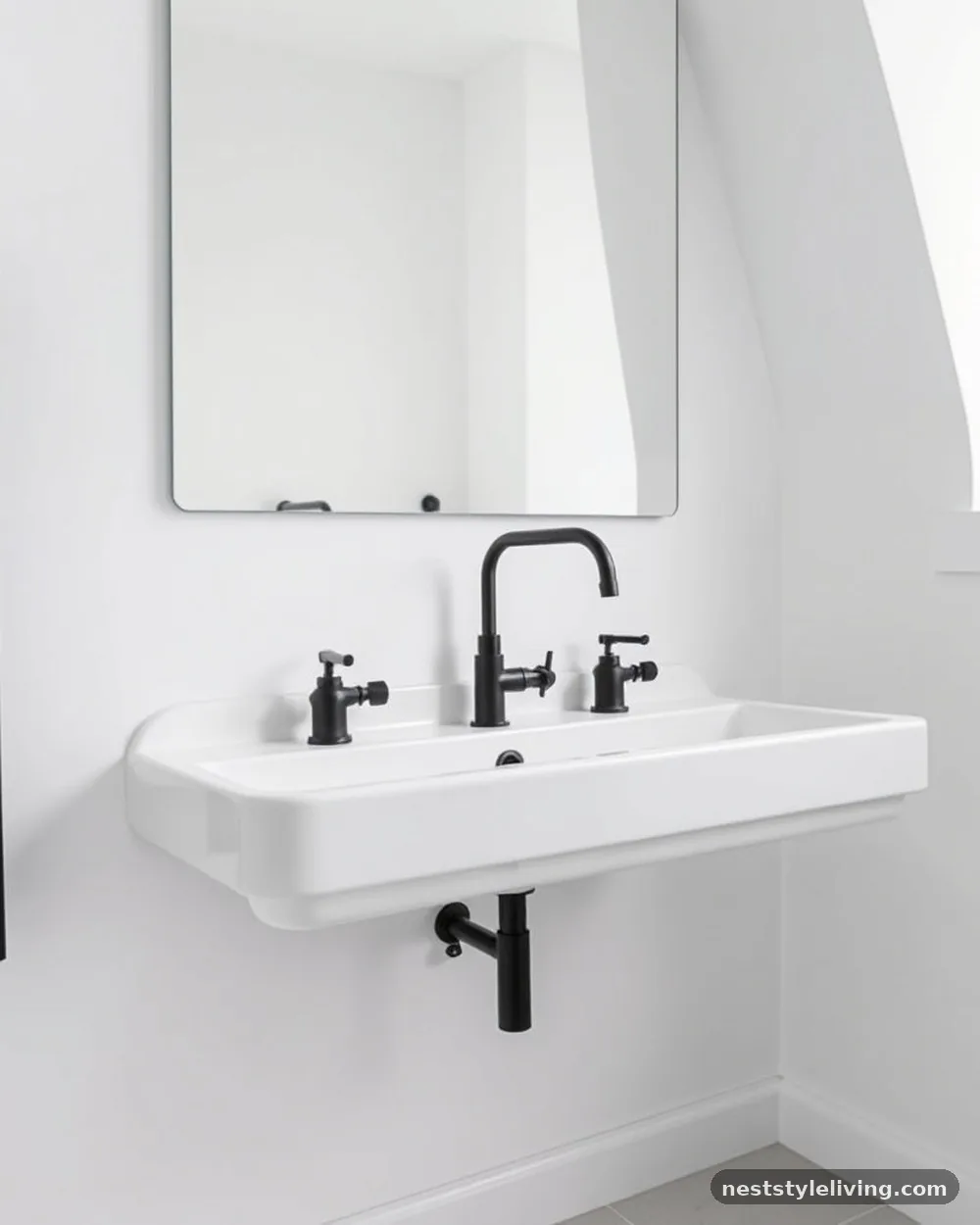
A double-faucet trough sink in white ceramic or porcelain with black wall-mounted fixtures is an excellent way to add functionality to a shared bathroom. This shape is inherently efficient and provides a clean, communal aesthetic that feels professional and refined.
Because the sink is a single, continuous piece, it eliminates the hard-to-clean seam between two drop-in basins, making maintenance significantly easier. It is a bold choice that commands attention and works best in a bathroom with a wide vanity wall.
When selecting a trough sink, make sure the wall-mounted faucets have a spout length that reaches well into the basin to prevent splashing against the back wall. Test the depth of the basin to ensure it is deep enough to accommodate heavy hand washing without water spilling over the edges.
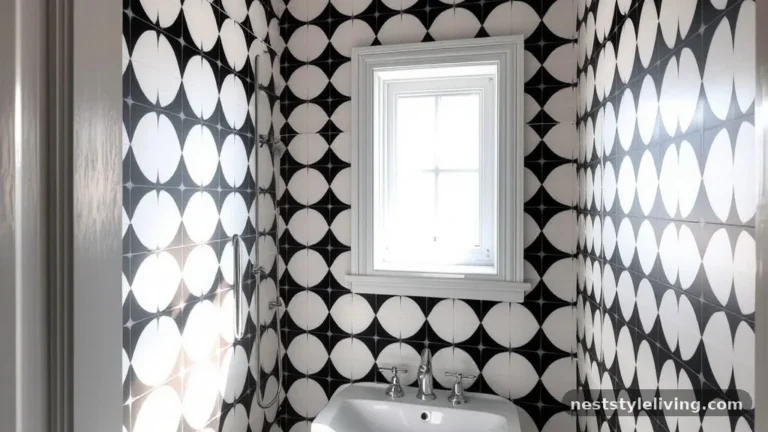
12. Geometric Black-and-White Wallpaper
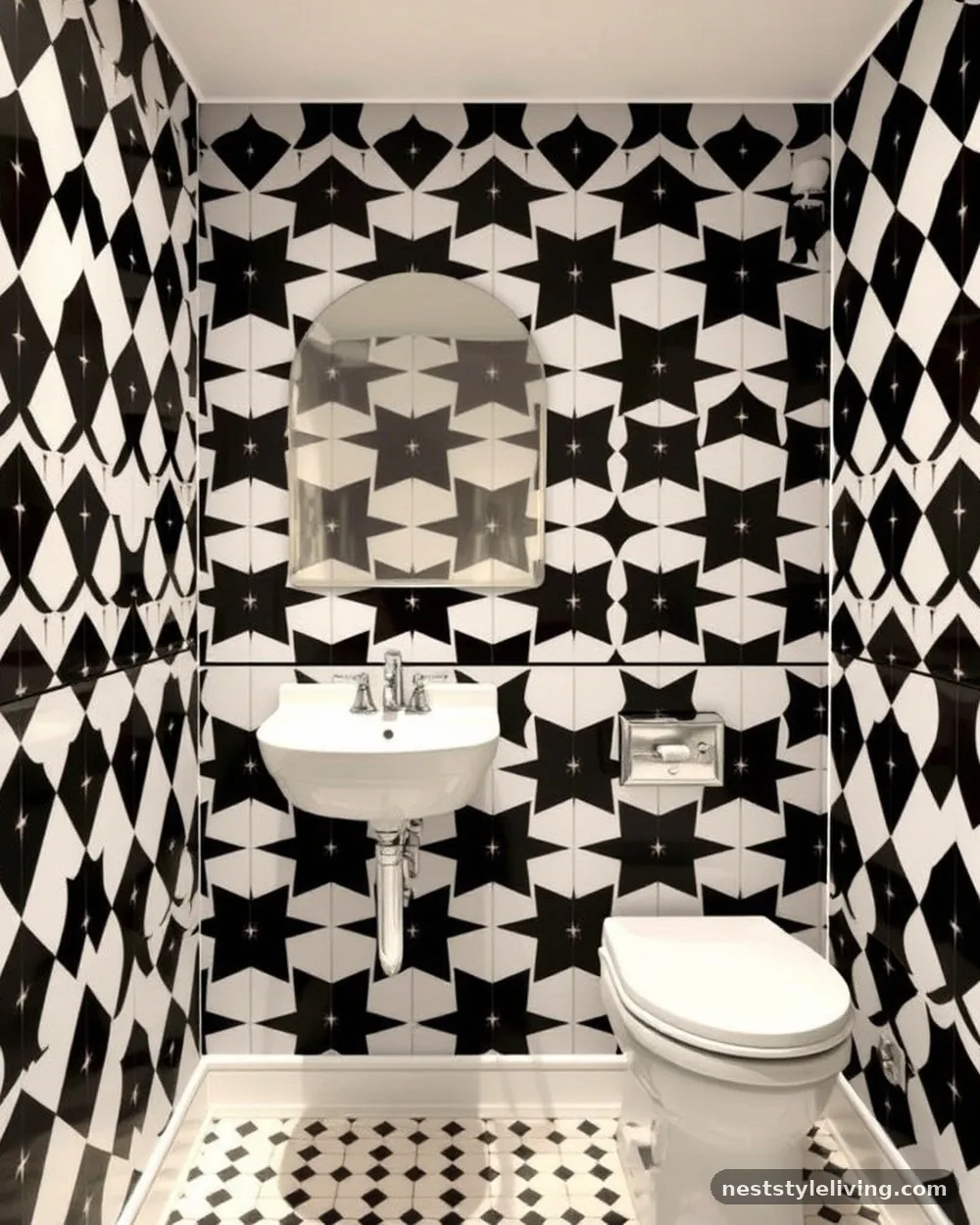
Using a graphic, high-contrast wallpaper in a small bathroom—such as a powder room—is an effective way to inject personality without needing to commit to permanent tile work. Choose a geometric pattern, like a bold stripe or a stylized lattice, to maintain the architectural feel of the space.
This is a great way to experiment with scale; a large-scale print can actually make a small room feel grander and more intentional. Since the palette is restricted to black and white, the pattern will feel sophisticated rather than chaotic.
Select a vinyl-coated or scrubbable wallpaper designed specifically for high-humidity areas. Regular paper will bubble and peel in the steam of a bathroom, so check the label for “washable” or “extra-washable” ratings to ensure the wallpaper can stand up to the moisture generated by showers and sinks.
13. Matte Black Wall Sconces
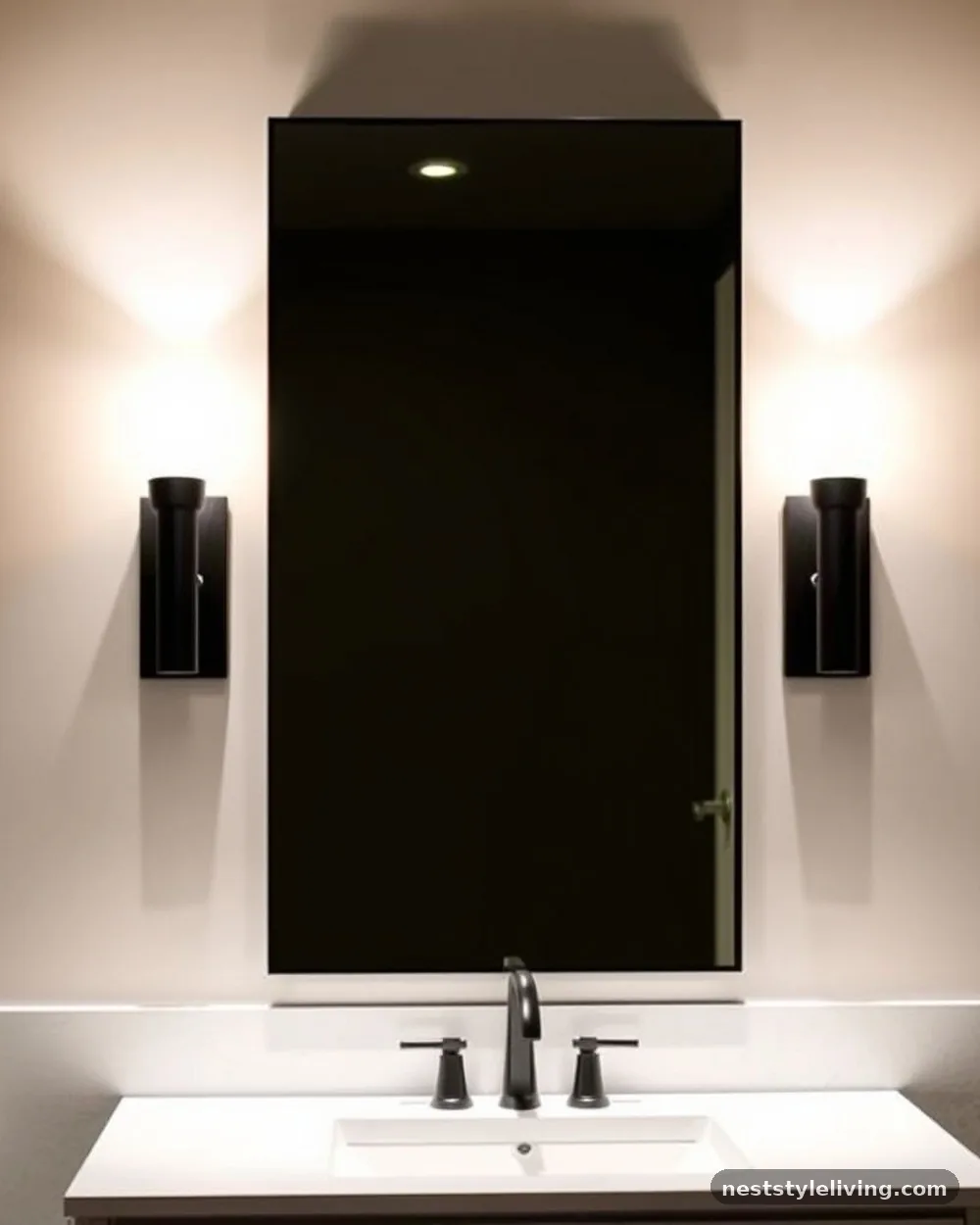
Lighting is the primary tool for defining the mood of a room, and matte black wall sconces provide a sharp, modern contrast against white walls. Placing them on either side of a mirror provides even, flattering light for grooming while simultaneously acting as a decorative element.
This is a classic, symmetrical layout that feels balanced and orderly. The black finish ties the lighting fixtures into the rest of the room’s hardware, creating a cohesive visual thread that connects the floor, the vanity, and the walls.
Choose sconces with clear glass or exposed Edison bulbs to lean into an industrial aesthetic, or opt for milk-glass globes if you prefer a softer, more traditional look. Ensure the fixtures are rated for damp locations to prevent corrosion, as bathroom humidity can quickly damage electrical components not designed for such an environment.
14. Black-Framed Art Prints
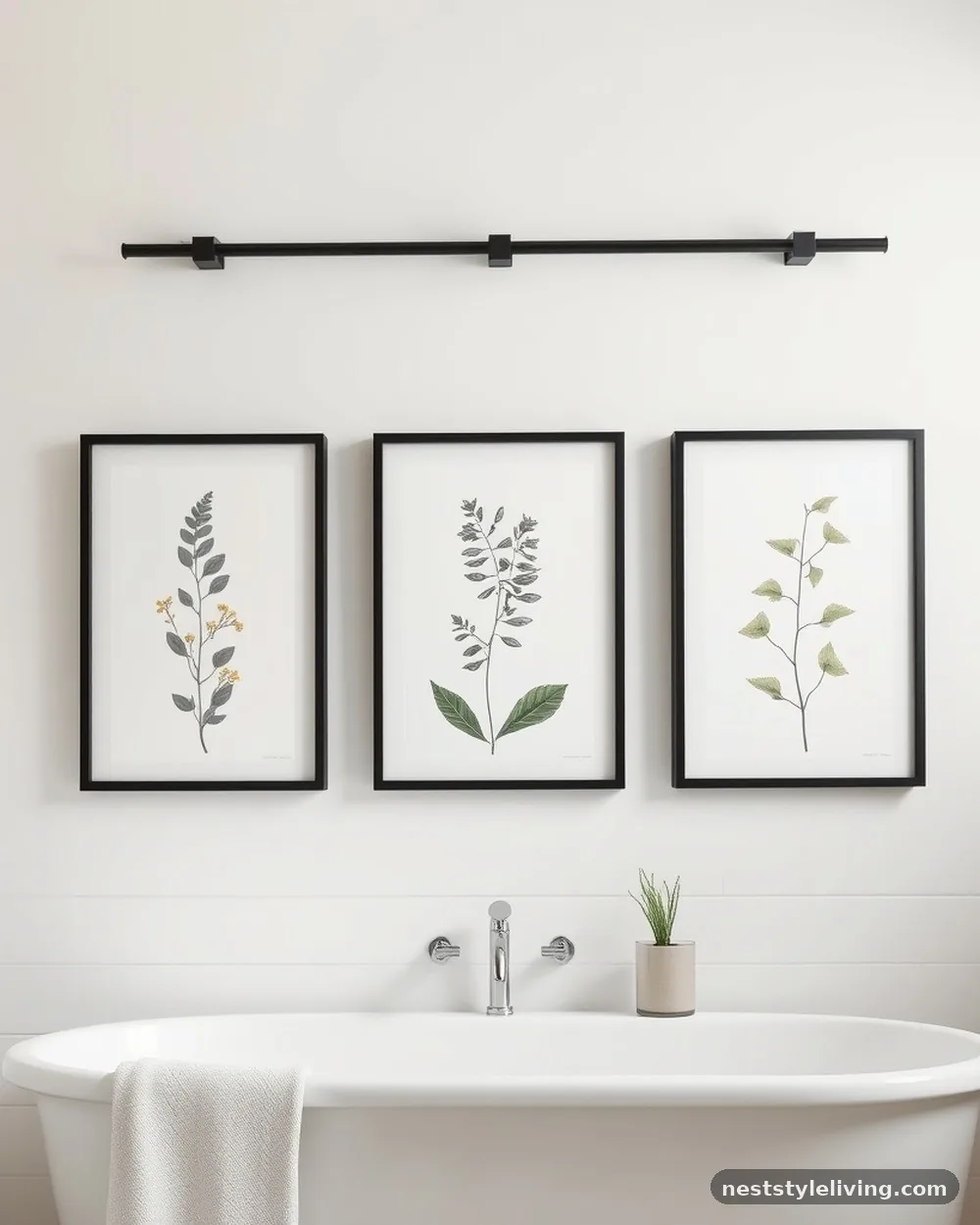
Bringing art into the bathroom is a simple way to make the space feel like a curated part of the home rather than a purely functional area. Using thin, black-framed prints—perhaps botanical sketches or abstract architectural photography—adds depth and a personal touch to the walls.
Keep the subjects black and white or sepia-toned to ensure they remain consistent with the overall theme. This is an easy, reversible way to add character, and it allows you to swap out the imagery whenever you want to change the room’s vibe.
Use acrylic instead of glass for your frames to avoid the risk of shattering, and ensure the backing is sealed to keep moisture away from the paper. If the bathroom is particularly small or prone to heavy steam, consider hanging the art on a wall away from the direct spray of the shower to prolong the life of the print.
Frequently Asked Questions
What accent colors work best in a monochromatic bathroom?
The most successful accent colors for a black and white space are metallic tones like unlacquered brass, copper, or brushed gold, which add warmth without clashing. If you prefer a soft, organic feel, incorporate natural wood tones through a vanity or stool, or add greenery with indoor plants, which provide a vibrant pop of life against the neutral backdrop.
How do I keep a black and white bathroom from looking too cold?
The key is to introduce texture and warmth through your materials. Use plush, high-pile cotton towels, woven baskets for storage, or a wood-framed mirror to soften the hard surfaces of tile and porcelain. Lighting also plays a crucial role; opt for warm-toned LED bulbs (around 2700K to 3000K) to ensure the space feels inviting rather than clinical.
What are the most durable materials for a black-and-white design?
Porcelain tile is the gold standard for durability because it is non-porous and highly resistant to moisture, making it ideal for both floors and shower walls. For countertops, quartz is an excellent choice as it mimics the look of marble while being far more resistant to staining and etching. When it comes to hardware, choose solid brass or stainless steel with a high-quality powder-coated matte finish to ensure longevity.
Should I prioritize black or white as the dominant color?
If your bathroom is small or lacks natural light, make white the dominant color to keep the space feeling open, using black only for hardware, fixtures, and frames. If you have a larger bathroom with plenty of windows, you can afford to use black more liberally on the walls or floors for a dramatic, moody effect.
How can I make a vintage black and white bathroom look modern?
Focus on the hardware and the lines of your fixtures. Replacing ornate, traditional faucets with sleek, matte black minimalist versions immediately modernizes a space. Removing heavy, dated window treatments and replacing them with simple, clean-lined roman shades or frosted glass will also shift the room toward a more contemporary aesthetic without losing its classic charm.
Conclusion
Designing a space around black and white bathroom ideas that look timeless is an exercise in restraint and precision. By focusing on the interplay of texture, lighting, and high-quality materials, you create a room that transcends temporary trends and maintains its appeal for years. These foundational choices provide a clean, elegant canvas that allows you to swap out smaller accessories as your preferences evolve.
Implementing these ideas ensures your home remains grounded, sophisticated, and functional regardless of shifting styles. Start by assessing your current layout and identifying one area where a high-contrast element can make the most significant impact on your daily routine. We hope these suggestions inspire you to refine your space into a place of enduring style and comfort.