13 Coastal Living Room Ideas for a Calm Collected Feel
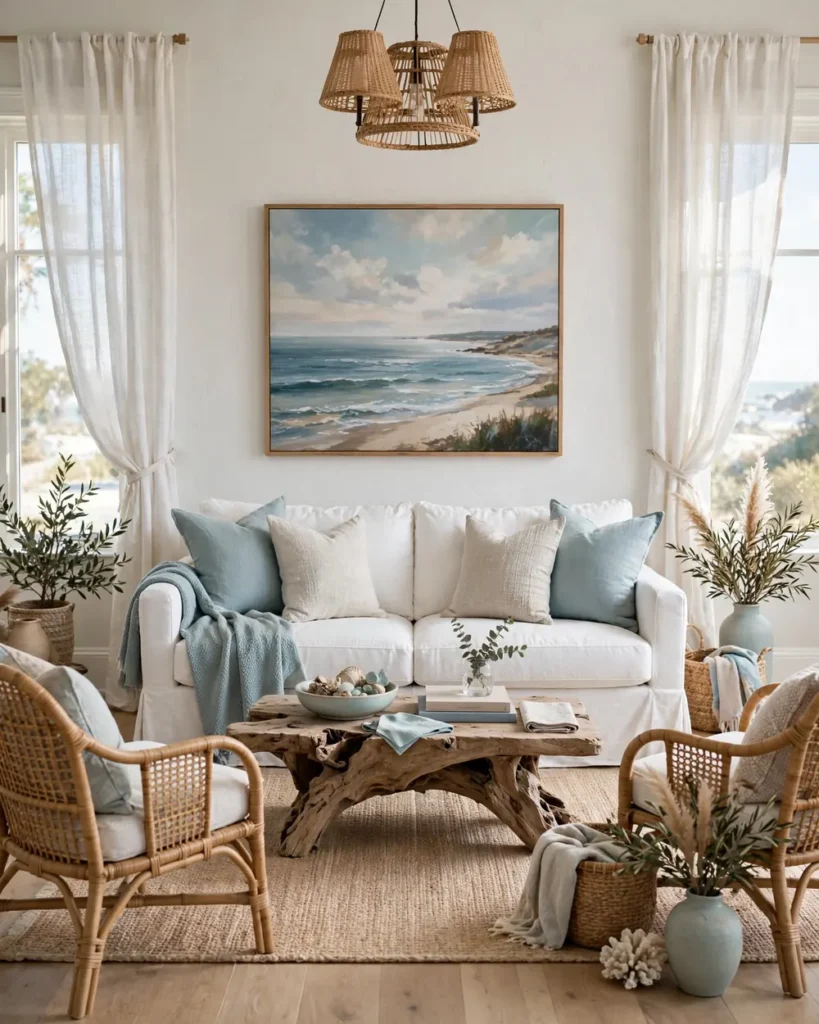
There is a reason the coastal living room keeps showing up in design magazines, on Pinterest boards, and in the dream homes we save without thinking twice. It promises something most of us are quietly chasing: a room that feels calm the moment you walk in, where the colors are soft, the textures are natural, and nothing is trying too hard. A well-designed coastal living room decor scheme captures the ease of a seaside escape without turning your home into a themed gift shop.
The secret to getting it right lies in layering. The best beach living room ideas combine a light, airy color palette with natural materials like rattan, linen, jute, and weathered wood, then finish the look with collected accents that tell a story. Whether you live two minutes from the ocean or two hundred miles from it, these 13 coastal living room ideas will help you build a space that feels collected, relaxed, and timeless rather than decorated in a hurry.
1. Layered Sand and Seafoam Color Palette

Every successful coastal living room starts with color, and the most calming schemes borrow directly from the shoreline. Think warm sand, soft seafoam green, chalky white, and a whisper of stormy blue. Unlike the old red-white-and-blue nautical look, this modern coastal living room palette stays muted and layered, with the deeper blue reserved for small accents like cushions, a throw, or a single ceramic vase rather than splashed across every surface.
To get the balance right, keep your largest surfaces in the neutrals and repeat each color at least three times around the room. If your sofa is a warm ivory, echo that tone in your curtains and rug; let seafoam appear in a throw pillow, an art print, and a small potted plant. This repetition is what makes coastal living room colors feel intentional instead of accidental, and it keeps the room calm even when you layer in plenty of texture and collected objects.
2. White Slipcovered Sofa with Linen Texture
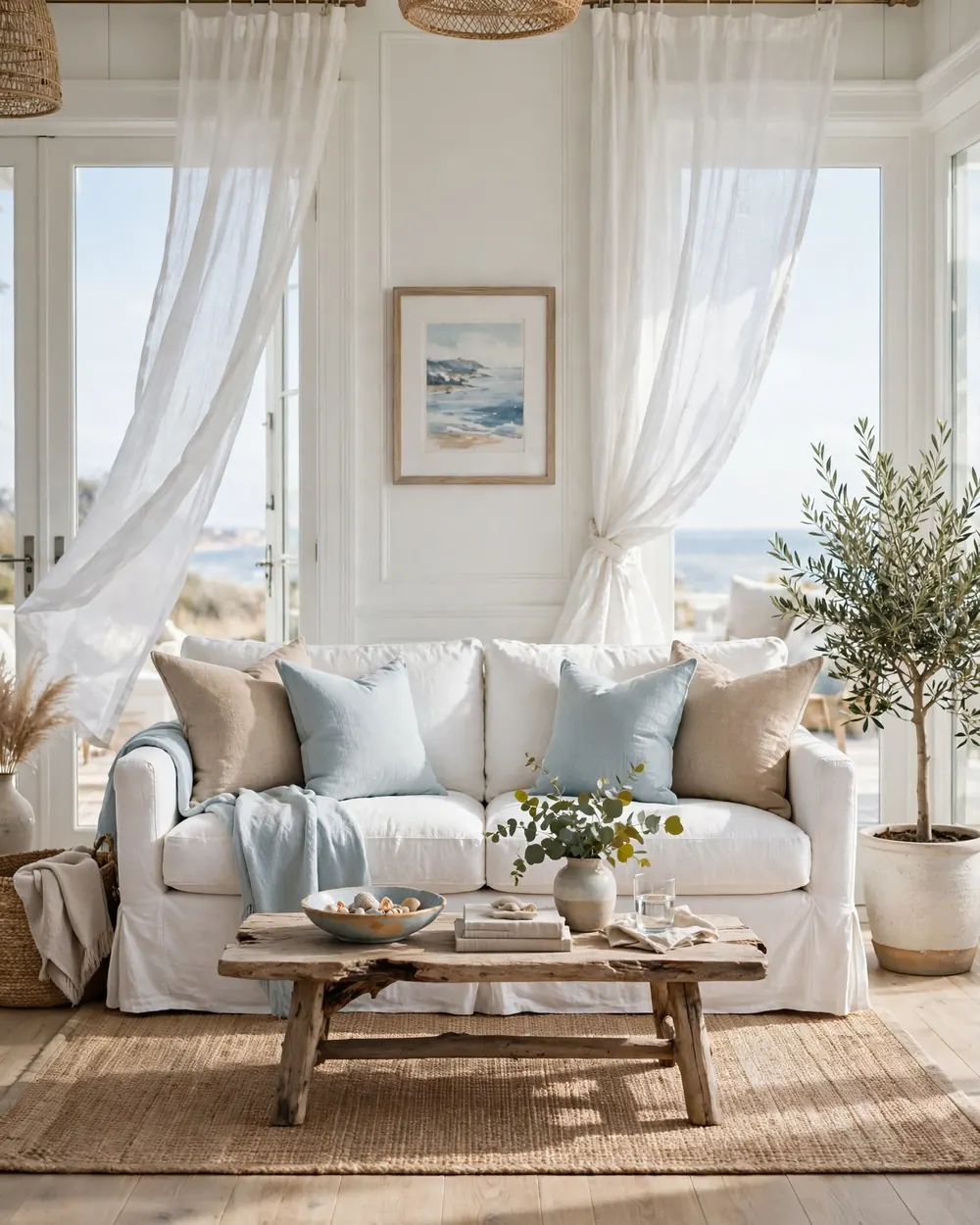
A white slipcovered sofa is the cornerstone of classic coastal living room furniture. The loose, relaxed fit of a linen slipcover reads instantly as breezy and unfussy, and the practical bonus is real: slipcovers can be removed and washed, which makes a pale sofa far more livable than it looks. Choose a natural or warm white rather than a stark, cool white so the room feels sunlit instead of clinical.
Style it with a mix of cushions in sandy beige, pale sky blue, and one deeper denim tone to anchor the arrangement. A loosely woven linen throw draped over one arm adds softness and invites people to actually use the sofa rather than admire it. If a full slipcover feels like too much commitment, a white or cream linen sofa in a relaxed, low-profile silhouette gives you the same collected coastal feel with slightly more structure.
3. Rattan and Wicker Accent Chairs

Nothing says coastal quite like rattan. A pair of rattan or wicker accent chairs instantly warms up a pale living room, adding organic texture and a hand-crafted feel that keeps the space from looking flat. The open weave lets light pass through, so the chairs feel airy rather than bulky — an important detail if you are working with coastal living room small layouts where every piece needs to earn its footprint.
Mix your rattan tones rather than matching everything perfectly; honey-toned rattan next to a slightly darker cane side table looks collected rather than catalog-bought. Top the chairs with simple cushions in white or pale blue linen, and let the natural frames do the talking. Rattan also photographs beautifully, which is one reason coastal living room decor featuring wicker pieces performs so well on Pinterest and home blogs alike.
4. Jute Rug Underfoot for Natural Warmth

A coastal living room rug in jute or sisal is one of the fastest ways to set the seaside tone. The chunky, woven texture reads as beachy the moment you step on it, and it grounds light furniture so a white-and-sand room does not float away visually. A large jute rug under the coffee table and front legs of the seating instantly makes the arrangement feel pulled together.
If pure jute feels rough underfoot, layer a smaller, softer cotton or wool rug on top in a complementary tone — this layered-rug trick is a favorite among designers working in coastal farmhouse living room spaces. Keep the rug pattern simple or skip pattern entirely; the texture itself is the design statement. In high-traffic homes, choose a tightly woven jute that resists shedding and vacuums easily.
5. Driftwood Coffee Table Centerpiece
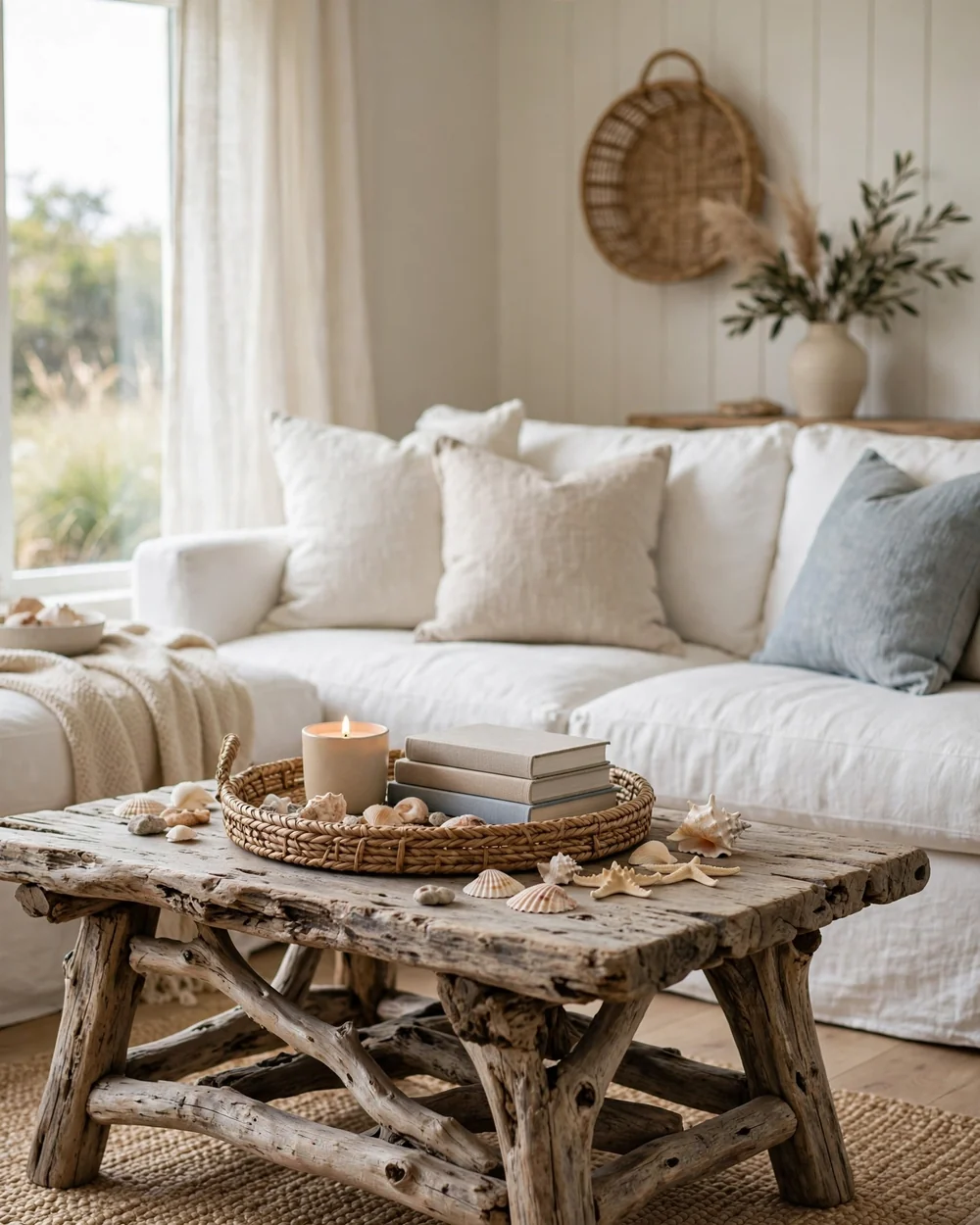
A driftwood coffee table brings the shoreline indoors in the most literal, beautiful way. The silvery, weathered finish of real or faux driftwood pairs effortlessly with white sofas and sand-toned rugs, and its organic, irregular shape keeps the room from feeling too polished. Look for a table with soft, rounded edges to maintain the relaxed coastal mood rather than sharp, modern lines.
Style the surface the way designers do: a woven tray holding a candle, a small stack of books, and a shell or piece of coral creates a collected vignette without clutter. Because driftwood is naturally varied, each table is one of a kind — which fits perfectly with the “calm collected feel” this look is built on. If a full driftwood table is out of reach, a driftwood-finish side table or a single piece of driftwood styled on a simple wooden table gives a similar effect.
6. Seascape Gallery Wall Art

Coastal living room wall art is where the room gets its soul. Large-scale seascapes — whether moody black-and-white coastal photography, soft watercolor horizons, or abstract washes of blue and cream — act as windows to the sea and set the emotional tone of the entire space. One oversized piece above the sofa often works better than a scattered gallery, giving the room a clear focal point.
For a collected feel, mix one large statement piece with smaller framed finds: a vintage nautical map, a framed print of beach grasses, or a simple shell study. Keep frames consistent — thin white, natural wood, or light oak — so the collection feels curated rather than random. Hang art slightly lower than you think; in a relaxed coastal room, artwork that sits close to the furniture feels more intimate and inviting.
7. Sheer Linen Curtains for Soft Light
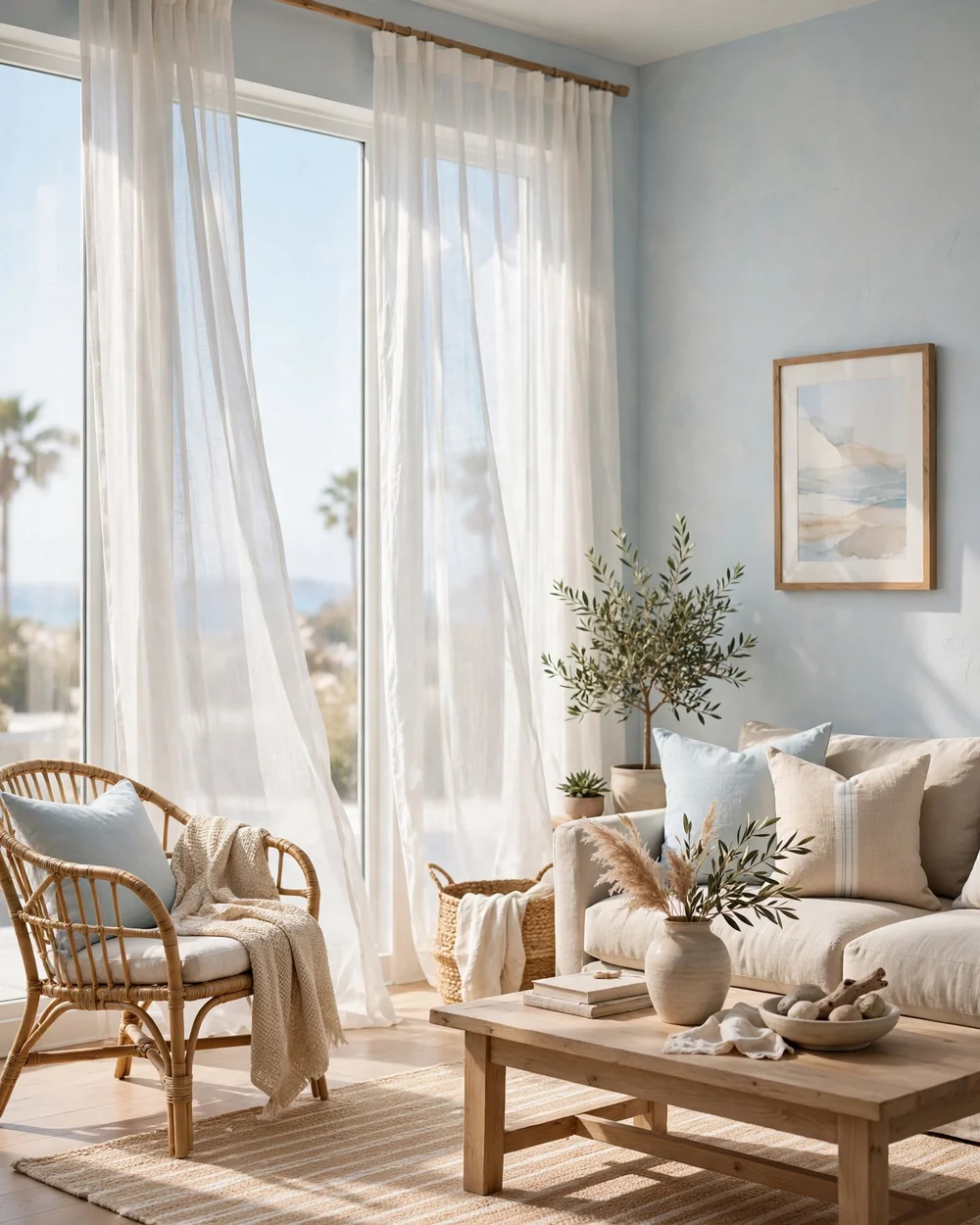
Light is everything in a coastal living room, and coastal living room curtains should protect it, not block it. Sheer linen panels filter harsh sunlight into a soft, diffused glow and move gently with the breeze, which is exactly the effortless effect this style is known for. Heavy, lined drapes work against the look, making pale blues and whites feel flat and the room feel closed in.
Hang the panels high and wide so the window appears larger and the sheers frame the view rather than covering it. White or natural flax linen is the safest choice, but a very pale stripe or tone-on-tone texture can add quiet interest. In the evening, the translucency matters less — this is when warm table lamps take over — so sheer panels carry you beautifully from bright mornings to cozy nights.
8. Nautical Stripes in Pillows and Throws
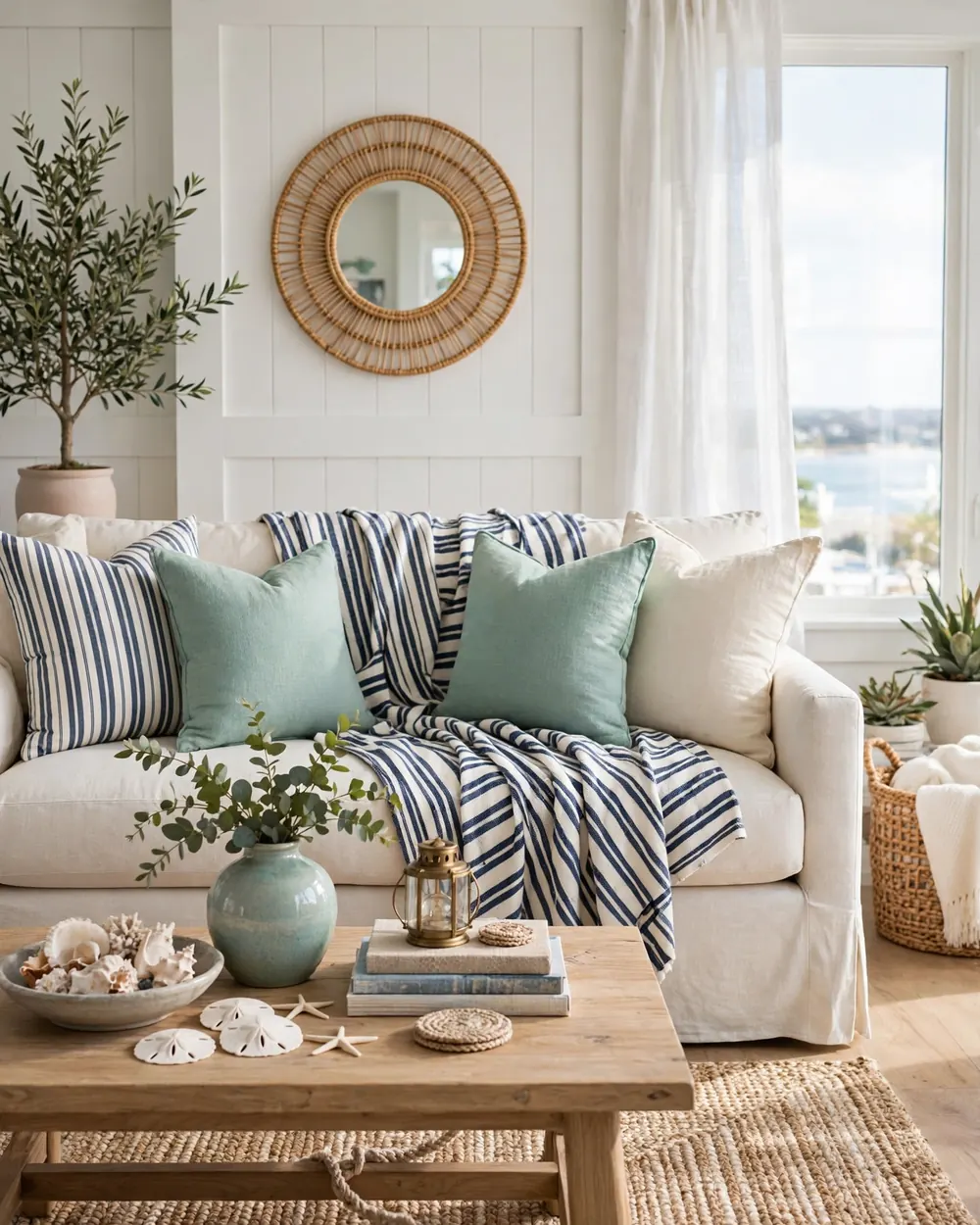
A little nautical stripe goes a long way. Used sparingly in cushions or a throw, classic ticking or Breton stripes give a coastal living room that crisp, maritime nod without tipping into theme-park territory. The trick is restraint: one or two striped pieces among solid linen cushions reads as collected and chic, while stripes on every surface reads as a costume.
Pair navy-and-white or sand-and-cream stripes with solid pillows in seafoam, sky blue, and warm white for a layered, designer look. Vary the scale too — a wide stripe on a lumbar cushion next to a narrow stripe on a throw keeps things interesting. This is also one of the most budget-friendly updates on the list: swapping two pillow covers is a coastal living room on a budget win that takes ten minutes.
9. Collected Shell and Sea Glass Displays
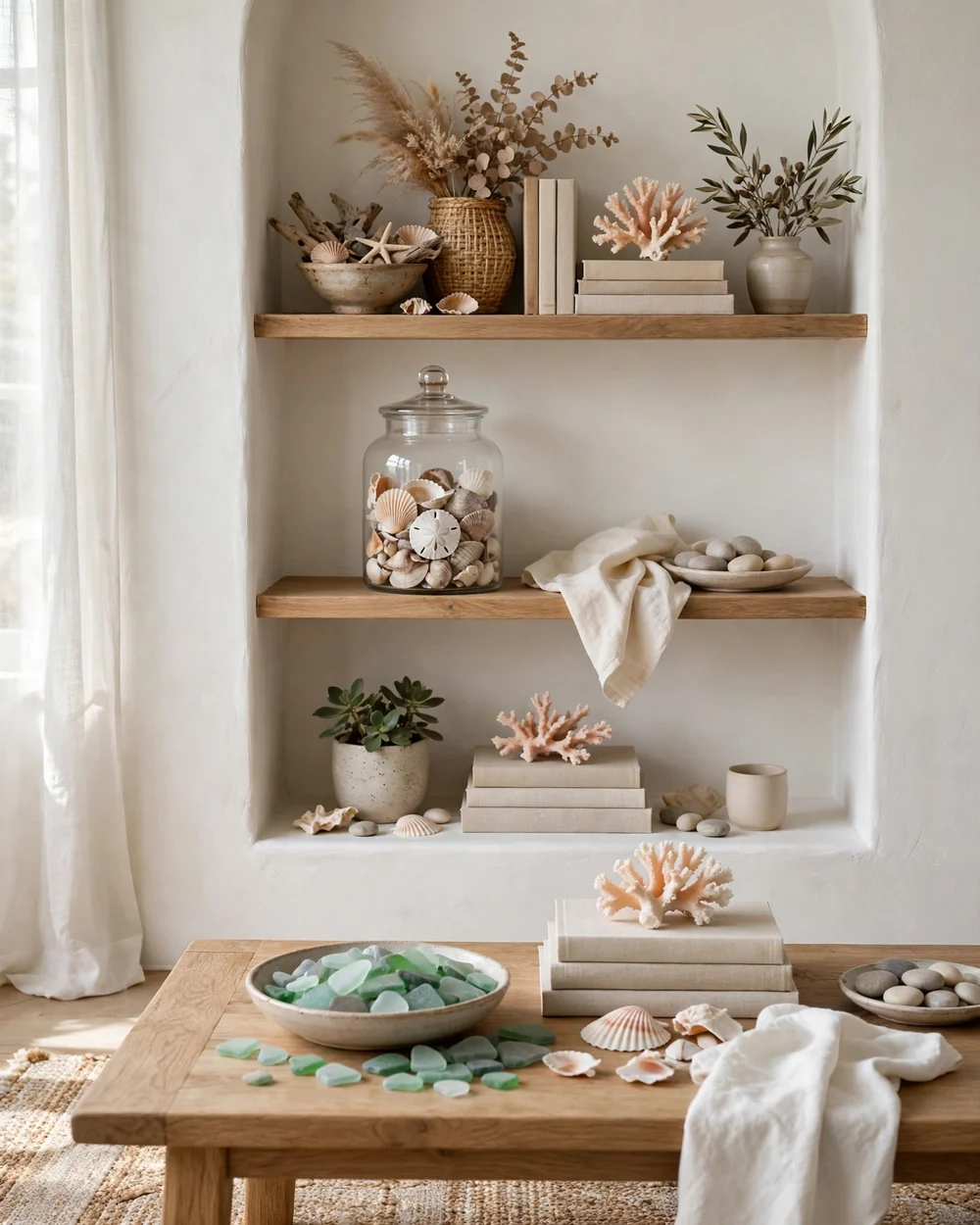
The difference between a coastal room and a coastal-themed room is authenticity, and collected natural objects deliver it. A glass apothecary jar filled with shells gathered on a real trip, a small bowl of sea glass on the coffee table, or a piece of coral on a bookshelf gives the room a personal history that no mass-produced decor can fake. These are the details that make a space feel collected rather than decorated.
Display them in odd numbers and give each piece breathing room — a single beautiful shell on a stack of books makes more impact than a crowded shelf of souvenirs. Mix in other natural textures like a small piece of driftwood or dried sea grass to keep the vignette from feeling one-note. Because these objects are free or nearly free, they are also a cornerstone of coastal living room decor on a budget.
10. Shiplap Accent Wall in Soft White
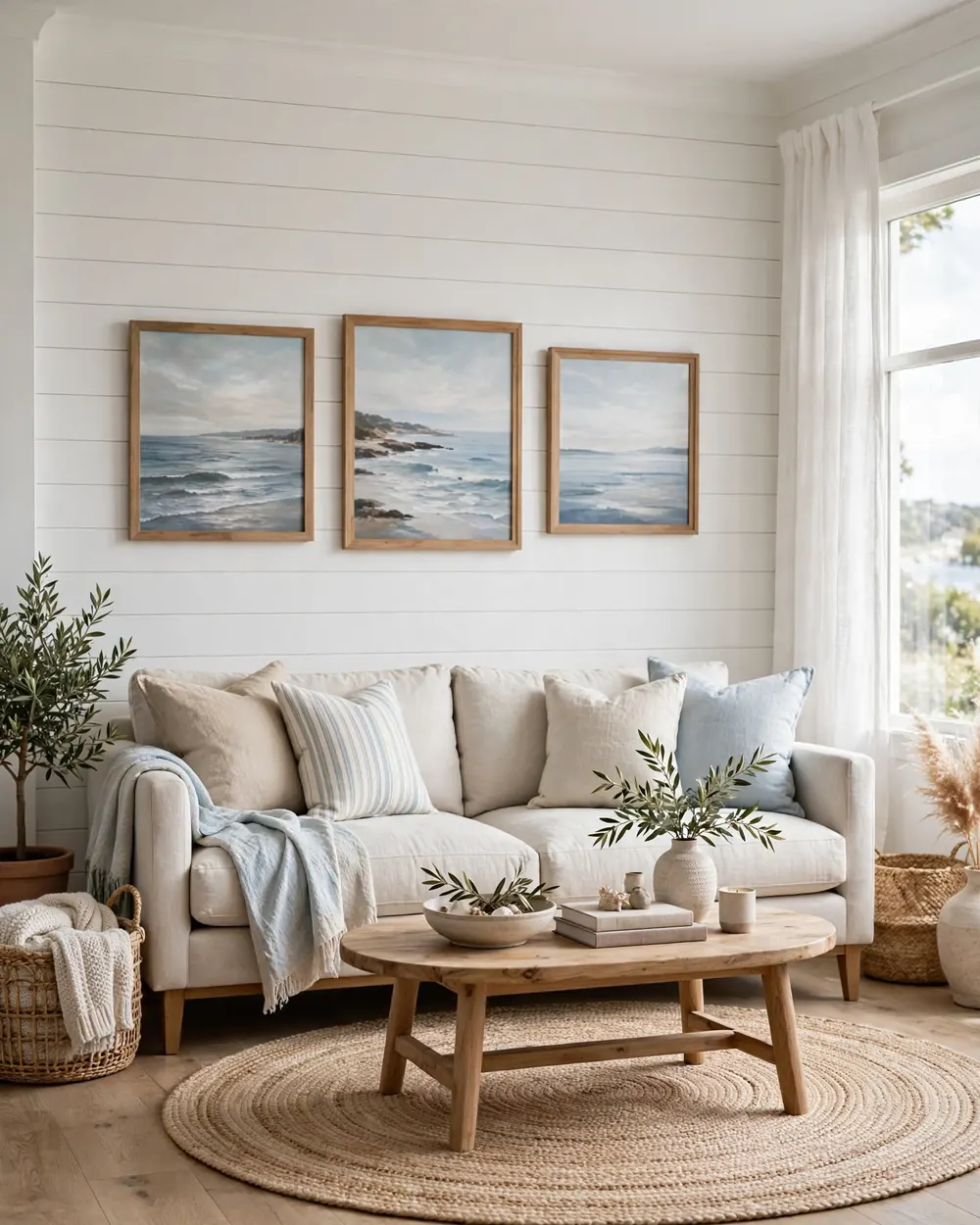
Shiplap is the architectural shortcut to coastal character. A single shiplap accent wall in soft white adds texture and subtle shadow lines that make flat drywall feel instantly more crafted, and it provides the perfect backdrop for seascape art or a gallery of framed prints. The vertical or horizontal lines draw the eye and give the room a sense of structure without any bold color.
Keep the finish matte and the white warm rather than brilliant — chalky, creamy whites sit more comfortably with natural textures than stark white. If real shiplap feels like too big a project, paintable shiplap-look wallpaper or beadboard panels deliver a similar effect for far less effort and cost. One wall is plenty; covering every wall can make the room feel busy rather than calm.
11. Woven Baskets for Relaxed Storage
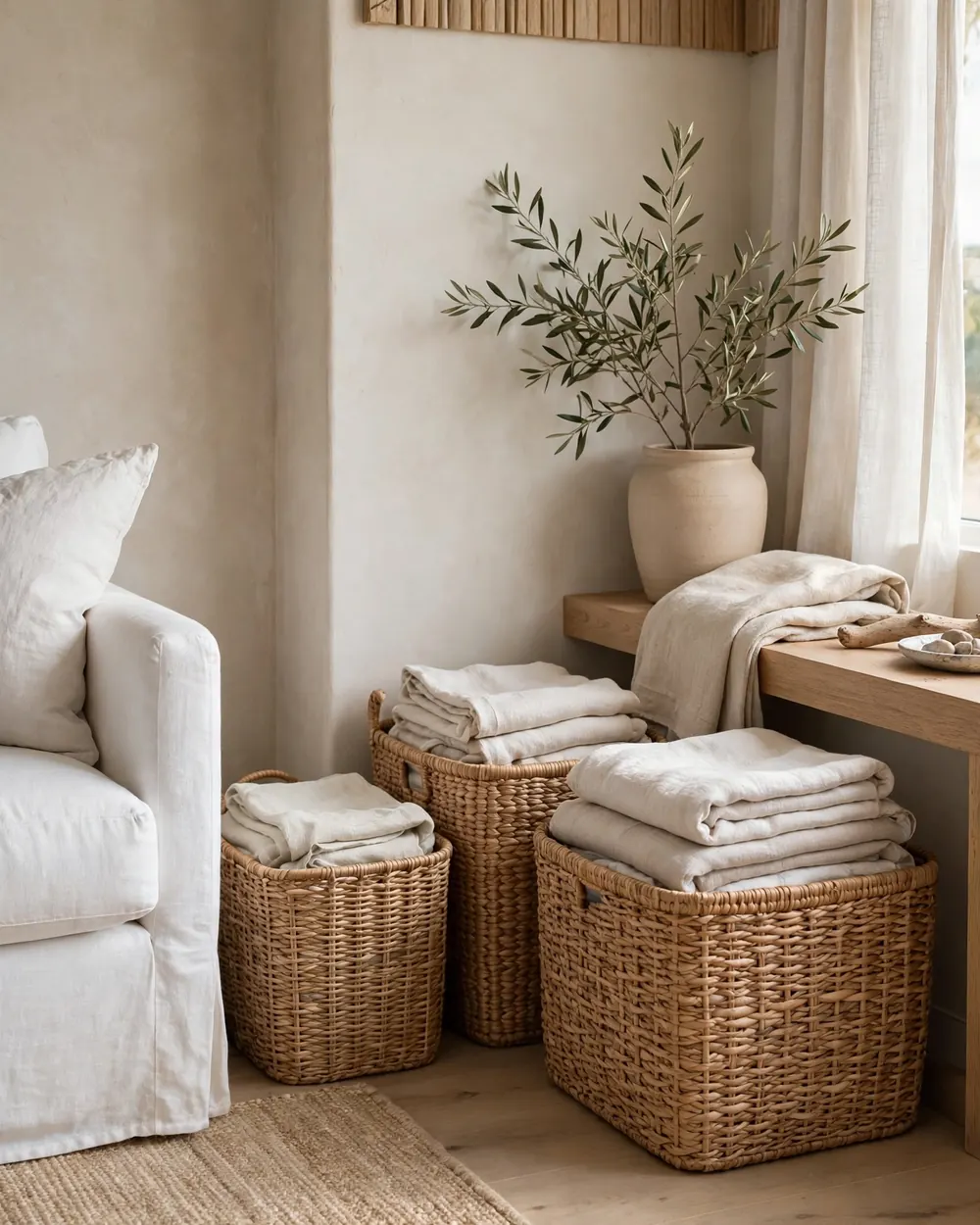
Coastal style and clutter do not mix, which is where woven baskets earn their place. Seagrass, rattan, and water hyacinth baskets hide throws, toys, magazines, and the general drift of daily life while adding exactly the kind of natural texture this look depends on. Tuck a large lidded basket beside the sofa for blankets, and use smaller ones on shelves for remotes and chargers.
Choose baskets in tonal coastal shades — natural, sand, and soft white — rather than dark stained wicker, which can feel heavy against a light palette. A lidded storage ottoman in a woven finish does double duty as a coffee table, footrest, and extra seat, making it a smart pick for small coastal living rooms where every piece must work hard. Baskets are inexpensive, widely available, and instantly make a room look styled.
12. Tropical Greenery and Potted Palms
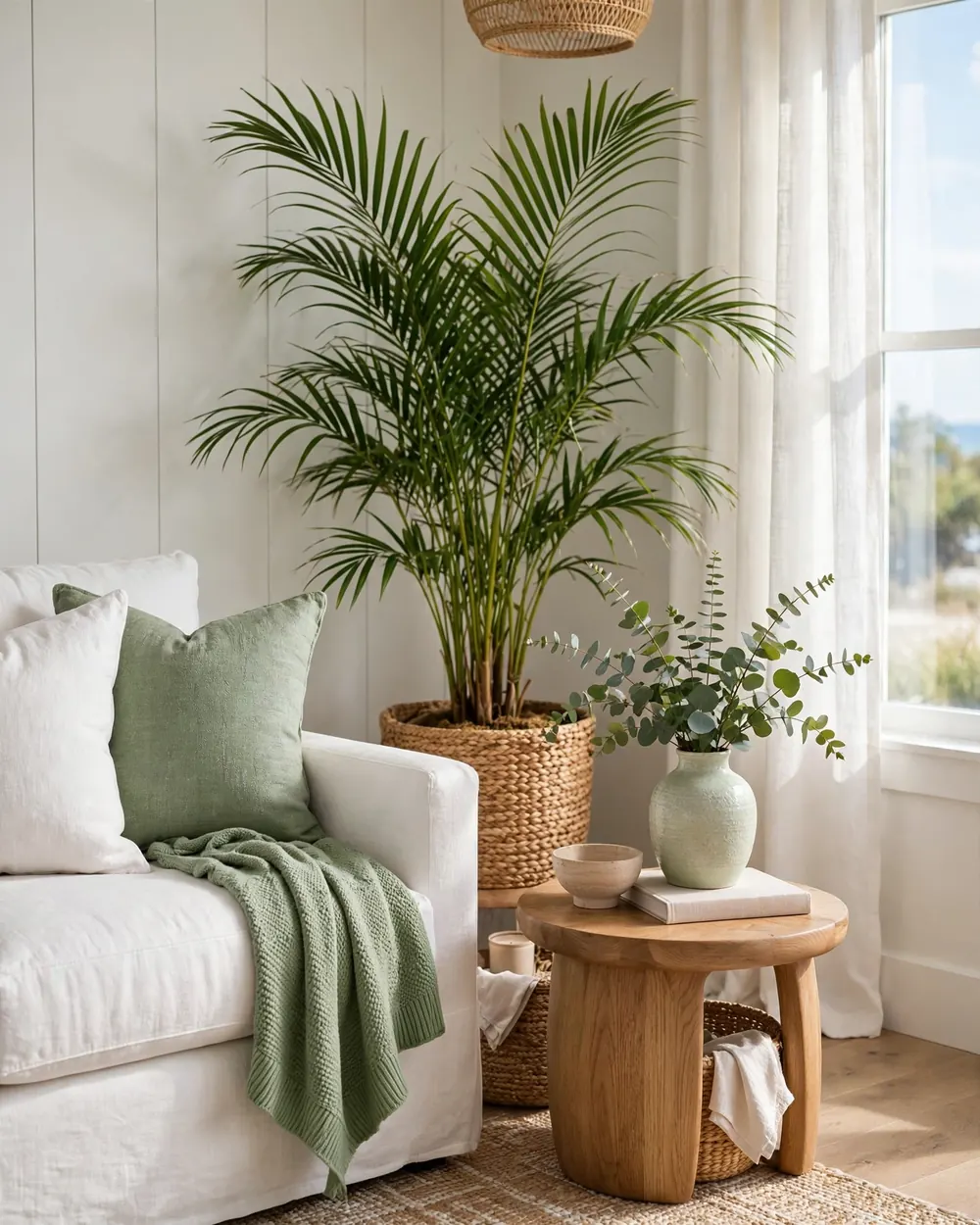
Plants are the living layer that keeps a coastal room from feeling like a showroom. A potted palm in the corner, a fern on a side table, or a vase of eucalyptus on the mantel adds fresh green that echoes sea glass tones and stops the blue-and-white palette from feeling cold. Greenery also softens the straight lines of furniture and fills awkward empty corners beautifully.
If your thumb is not green, high-quality faux palms and preserved eucalyptus look convincing and need zero maintenance — a practical choice for a busy household. Style plants in natural-fiber pots, woven baskets, or simple white ceramic planters to stay on palette. One large plant makes a stronger statement than several tiny ones, so invest in a single generous palm or olive tree rather than scattering small succulents everywhere.
13. Weathered Wood Beams and Ceiling Details
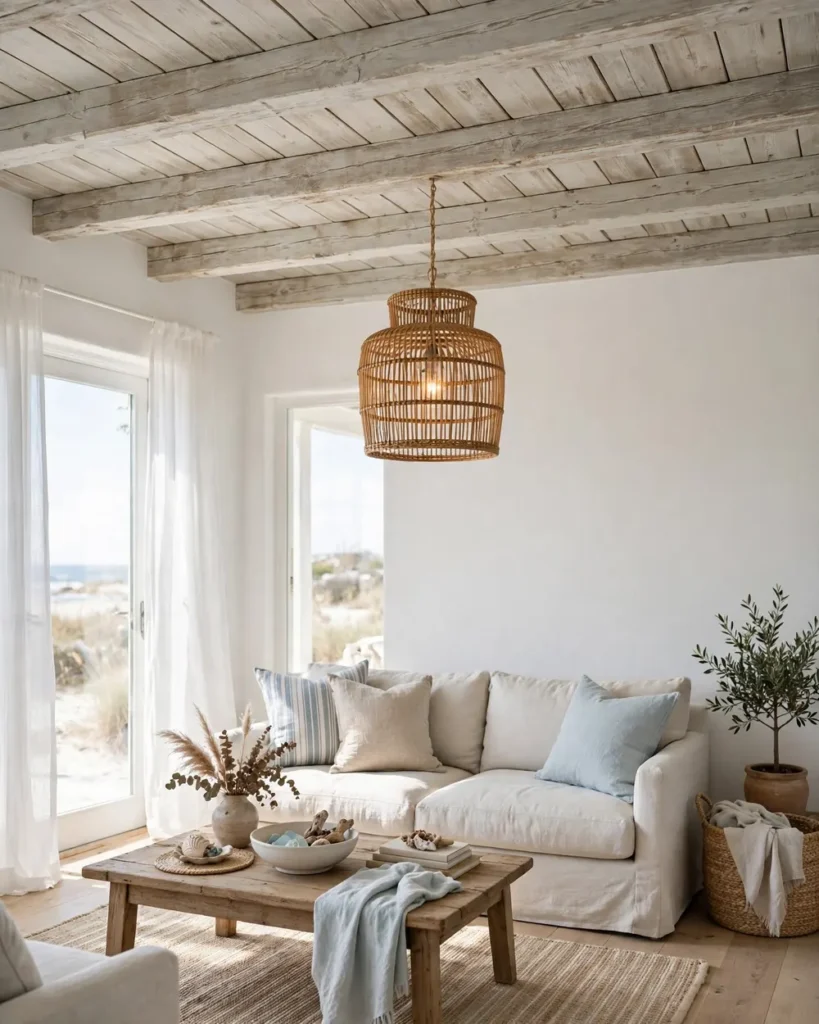
Look up: the ceiling is the most underused surface in most living rooms, and in a coastal space it can be transformative. Exposed weathered wood beams — real, faux, or even box beams wrapped in reclaimed-look planks — add warmth, architectural interest, and a subtle beach-cottage character that no accessory can replicate. Against white walls, pale beams create gentle contrast that feels collected over time rather than newly installed.
If beams are not an option, a beadboard or tongue-and-groove ceiling in soft white gives a similar cottage-coastal feel and bounces light beautifully around the room. Keep wood tones pale and sun-bleached rather than dark and rustic; the goal is airy, not lodge-like. Even a simple whitewashed ceiling medallion around a rattan pendant light adds that finished, intentional touch.
Frequently Asked Questions
What colors work best in a coastal living room?
The most calming coastal living room colors are borrowed from the shoreline: warm whites, sandy beiges, soft seafoam greens, pale sky blues, and one deeper blue like denim or stormy navy used sparingly. Keep large surfaces in the neutrals, repeat each accent color at least three times around the room, and avoid high-contrast or saturated brights, which fight the relaxed mood. A touch of natural green from plants keeps the palette from feeling cold.
How can I decorate a coastal living room on a budget?
Start with what is free or cheap: rearrange furniture to maximize natural light, swap in pillow covers in coastal tones, and style collected shells or driftwood you already own. Thrift stores are goldmines for rattan baskets, white ceramic vases, and wooden frames you can fill with free printable seascapes. Paint is the highest-impact budget move — a soft white or warm beige on one wall can transform the room. Add one natural texture at a time, like a jute rug or woven throw, rather than buying a matching set.
What is the difference between coastal and nautical decor?
Coastal decor is inspired by the feeling of the seaside — light, airy, natural, and relaxed — while nautical decor leans on literal maritime symbols like anchors, ropes, ship wheels, and navy-and-red color schemes. A modern coastal living room might include a single striped pillow as a nod to the sea, whereas a nautical room builds the whole look around sailing motifs. If you want the calm collected feel, stay coastal: natural textures, soft colors, and collected objects beat themed accessories every time.
How do I make a small coastal living room feel bigger?
Light and restraint do the heavy lifting. Keep walls and large furniture pale, use sheer linen curtains hung high and wide to enlarge the windows, and choose leggy, open-weave pieces like rattan chairs that let light pass through. A large jute rug that extends under the front legs of all seating unifies the space, while one oversized piece of seascape art draws the eye outward. Limit accessories to a few meaningful pieces — in a small room, breathing space is the ultimate luxury.
What kind of lighting suits a coastal living room?
Layered, warm lighting. Start with natural-fiber pendant shades — rattan, wicker, or capiz shell — as the statement fixture, then add table lamps with linen shades and warm-toned bulbs so pale blues do not turn cold and grey after dark. A floor lamp with an arc or tripod base in a natural finish fills dark corners without visual weight. Candles in glass hurricanes or lanterns add the final flickering layer that makes a coastal room feel collected and cozy in the evening.
Conclusion
A calm, collected coastal living room is not about following a formula — it is about layering soft colors, natural textures, and meaningful objects until the room feels like a deep breath. Start with the palette, anchor the space with honest materials like linen, rattan, jute, and weathered wood, and finish with collected details that tell your story rather than a catalog’s.
Take these 13 ideas one at a time rather than all at once. Swap the pillow covers this weekend, hunt for the perfect driftwood table next month, and let the room evolve the way a shoreline does — slowly, naturally, and always inviting. The most beautiful coastal rooms are the ones that feel gathered over time, and yours will be no exception.