12 Rooms With Plants Ideas for a Fresh Natural Look
Integrating greenery into your home environment transforms stagnant corners into vibrant, oxygenated sanctuaries. Implementing various rooms with plants ideas for a fresh natural look requires more than just placing a pot on a table; it demands a strategic eye for texture, scale, and light requirements.
By blending organic forms with your existing interior design, you can cultivate a space that feels both grounded and renewed. This collection of approaches provides actionable ways to invite nature indoors, ensuring your living space thrives with lush, living elements that enhance your daily well-being and visual comfort.
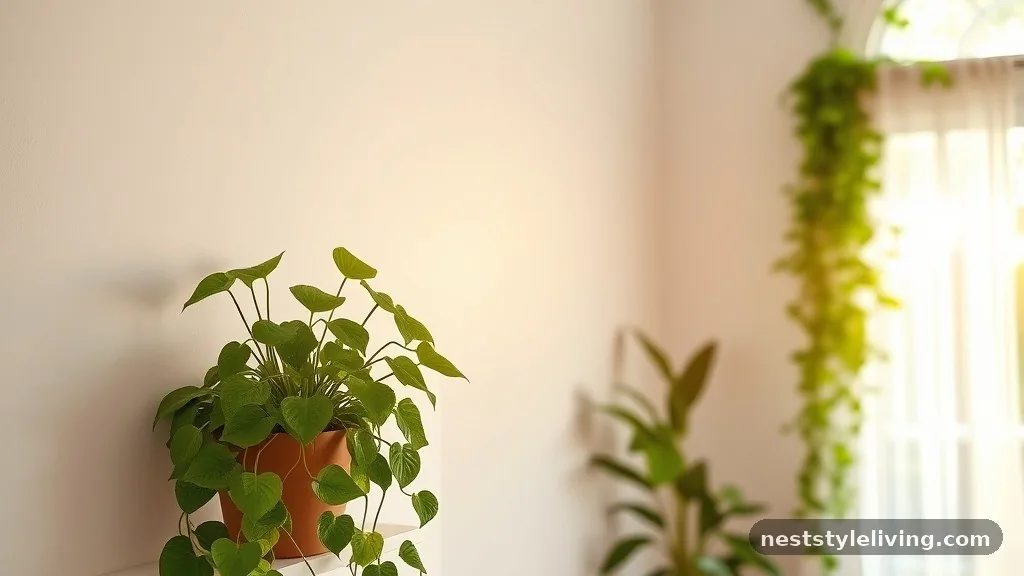
1. Cascading Pothos on Open Shelving
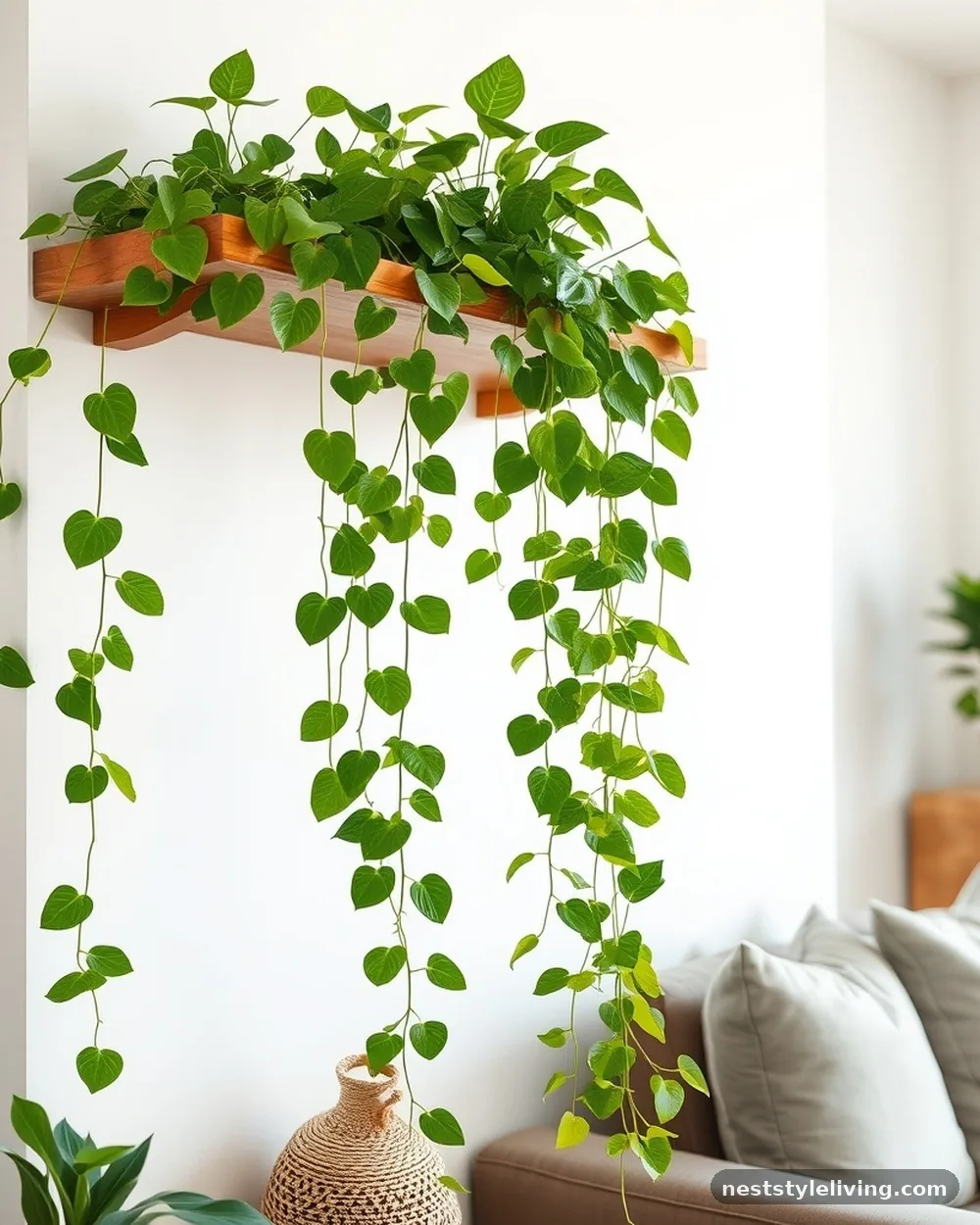
Open shelving provides the perfect architecture for vining plants to create a vertical garden effect. By placing a trailing Pothos or Philodendron on the highest shelf, you allow the foliage to drape downward, softening the rigid lines of the furniture. This approach mimics the way plants grow in a canopy, drawing the eye upward and making the room feel taller.
The lush, heart-shaped leaves add depth to the wall, contrasting beautifully with books, ceramics, or decorative objects. It turns a standard storage unit into a living art installation that changes as the vines extend further toward the floor.
To achieve this, mount your shelves at varying heights to allow for different vine lengths. Use a lightweight, porous potting mix to ensure the shelves aren’t overburdened, and place the plant on the side of the shelf that receives indirect light to encourage even, downward growth.
2. Floor-to-Ceiling Fiddle Leaf Fig Statement
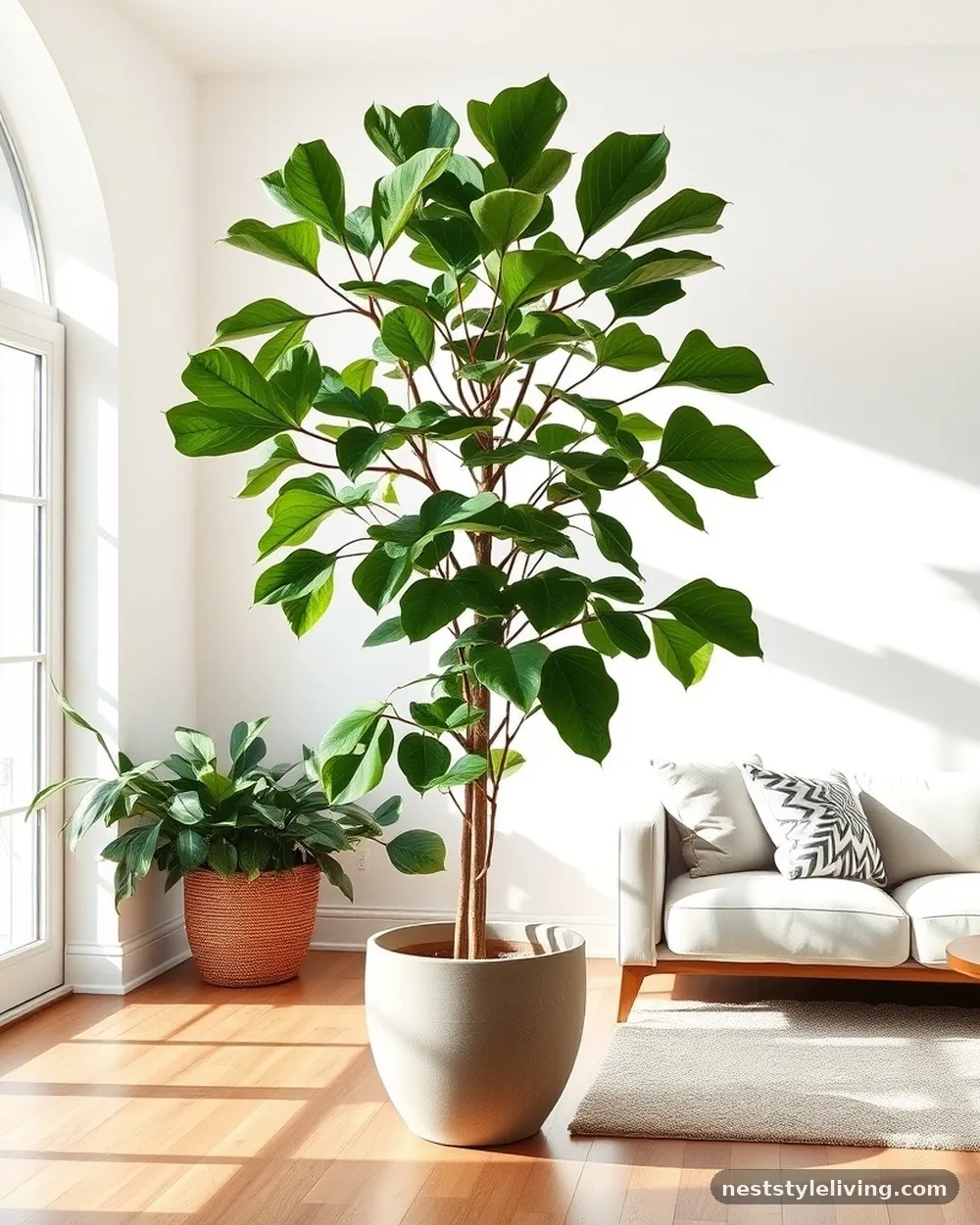
A single, towering Fiddle Leaf Fig serves as a living sculpture, grounding a spacious living room with its bold, violin-shaped leaves. Its architectural presence is best suited for corners that receive bright, filtered sunlight, as the plant acts as a focal point that anchors the surrounding furniture.
When you choose a specimen that reaches at least six feet in height, it creates a sense of maturity and permanence in the room. Pair it with a neutral-colored ceramic pot or a woven basket to let the deep, waxy green of the foliage remain the primary visual element.
When selecting your specimen, look for one with a sturdy, upright trunk that doesn’t lean significantly toward the light. Rotate the pot a quarter turn every time you water it to ensure the plant grows symmetrically rather than reaching lopsidedly toward the window.
3. Hanging Macramé Planters in Breakfast Nooks
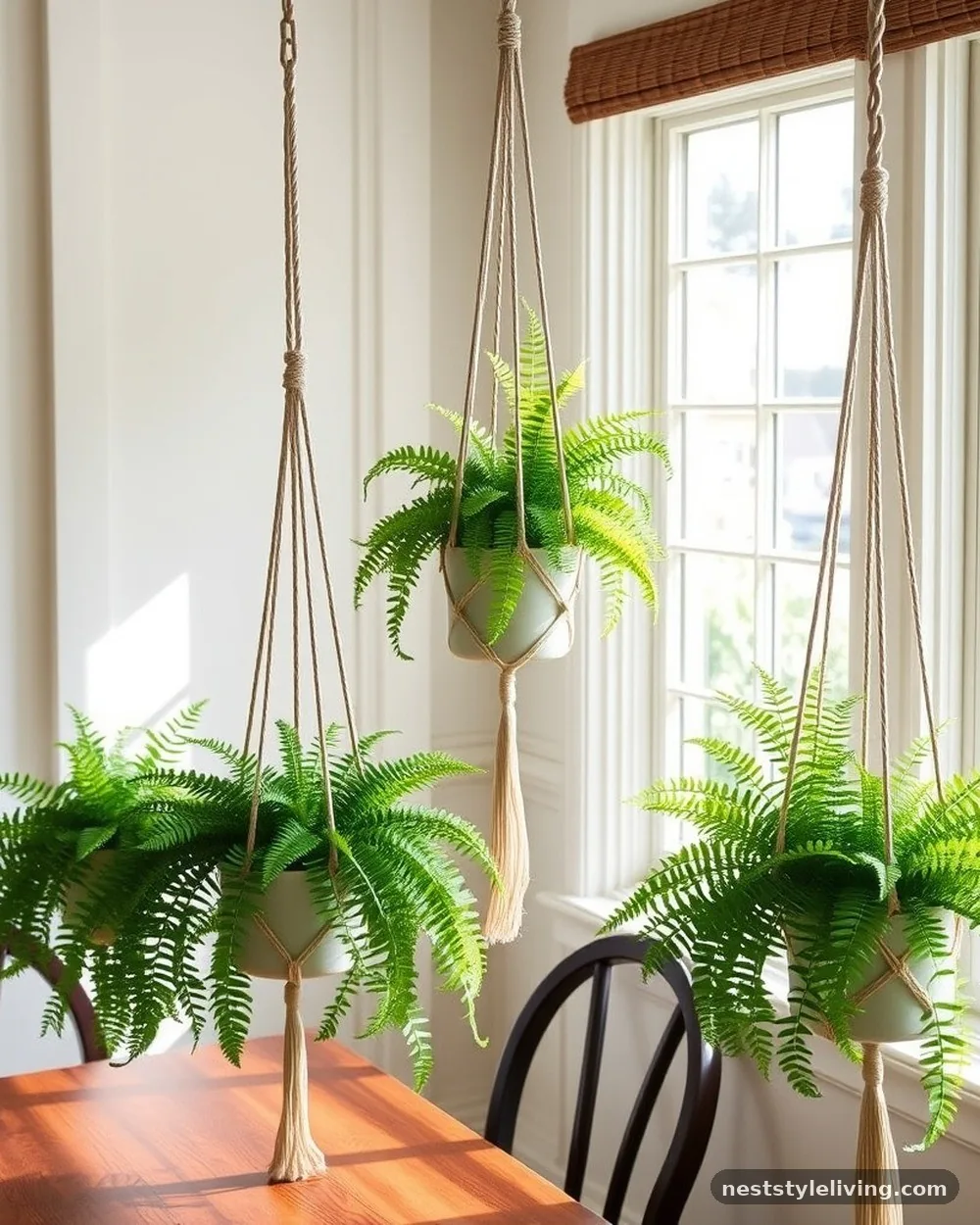
Hanging planters free up valuable surface area while adding a bohemian, tactile element to breakfast nooks or dining areas. Using cream-colored or natural jute macramé hangers allows the plant to become a suspended feature, creating a dynamic visual layer at eye level.
This works exceptionally well in smaller rooms where floor space is limited, as the hanging plants draw attention away from the tight footprint of the floor. Choose plants with interesting textures, such as the crinkled leaves of a Hoya or the delicate fronds of a Boston Fern, to contrast with the soft, knotted ropes of the hanger.
Install a heavy-duty ceiling hook into a stud or use a toggle bolt if you are mounting into drywall to ensure stability. Place a removable plastic saucer inside the decorative pot to catch excess water, protecting your furniture or flooring from moisture damage.
4. Terracotta Groupings on Kitchen Countertops
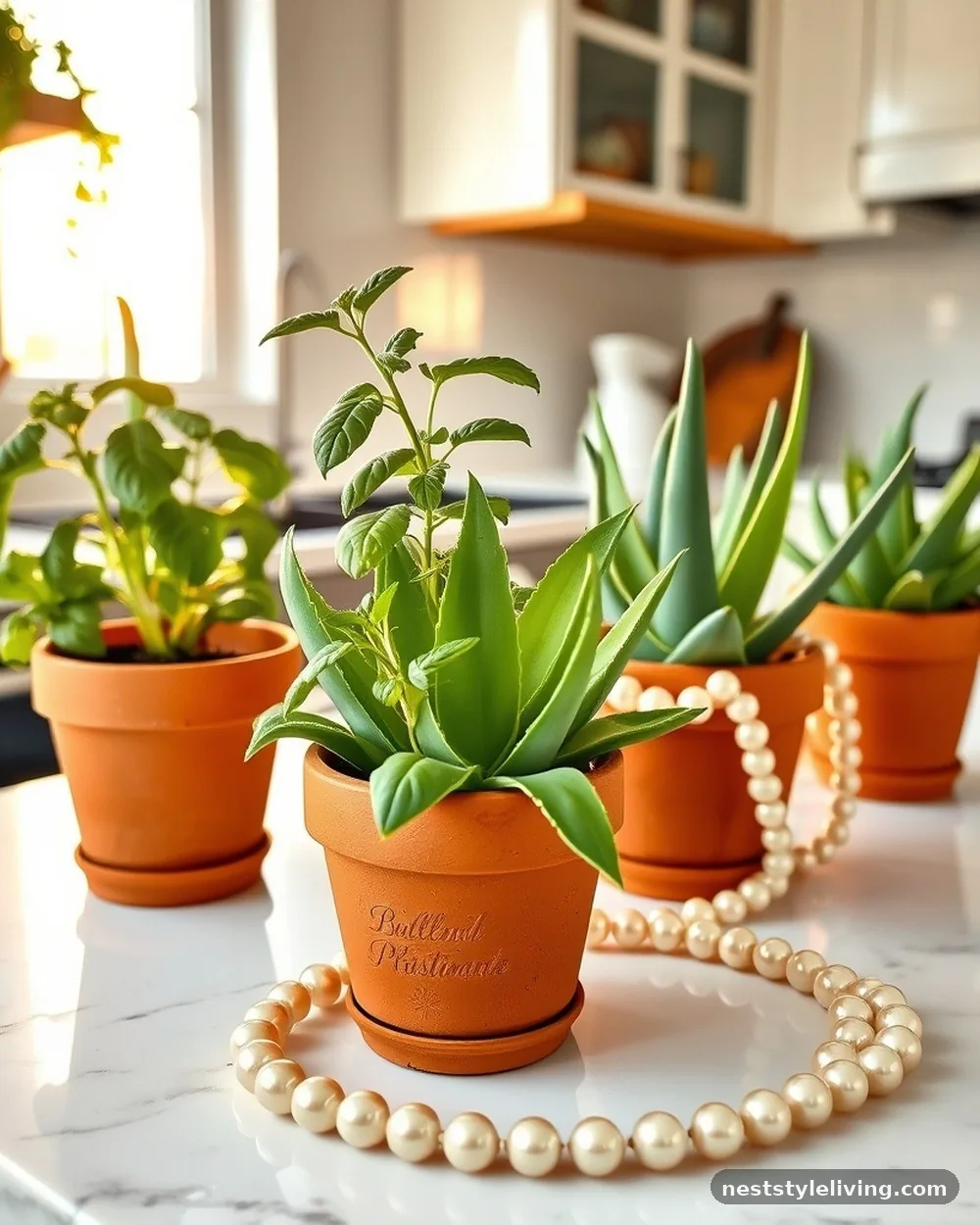
Clustering plants in terracotta pots brings a warm, Mediterranean aesthetic to the kitchen, one of the most functional rooms in the home. The porous, earthy orange of the clay provides a beautiful color contrast against white marble or dark stone countertops.
Grouping plants of varying heights—such as a small Aloe Vera, a bushy Basil, and a trailing String of Pearls—creates a layered, collected look that feels intentional rather than cluttered. This arrangement not only looks fresh but also puts culinary herbs within arm’s reach, adding a practical layer to your kitchen decor.
To maintain this look, use terracotta pots that all share a similar design language, such as classic rims or matching saucers. Ensure the kitchen area has enough ambient light or supplement with a small, discreet grow bulb tucked under cabinetry if the corner is particularly dark.
5. Bathroom Ferns for Humidity and Texture
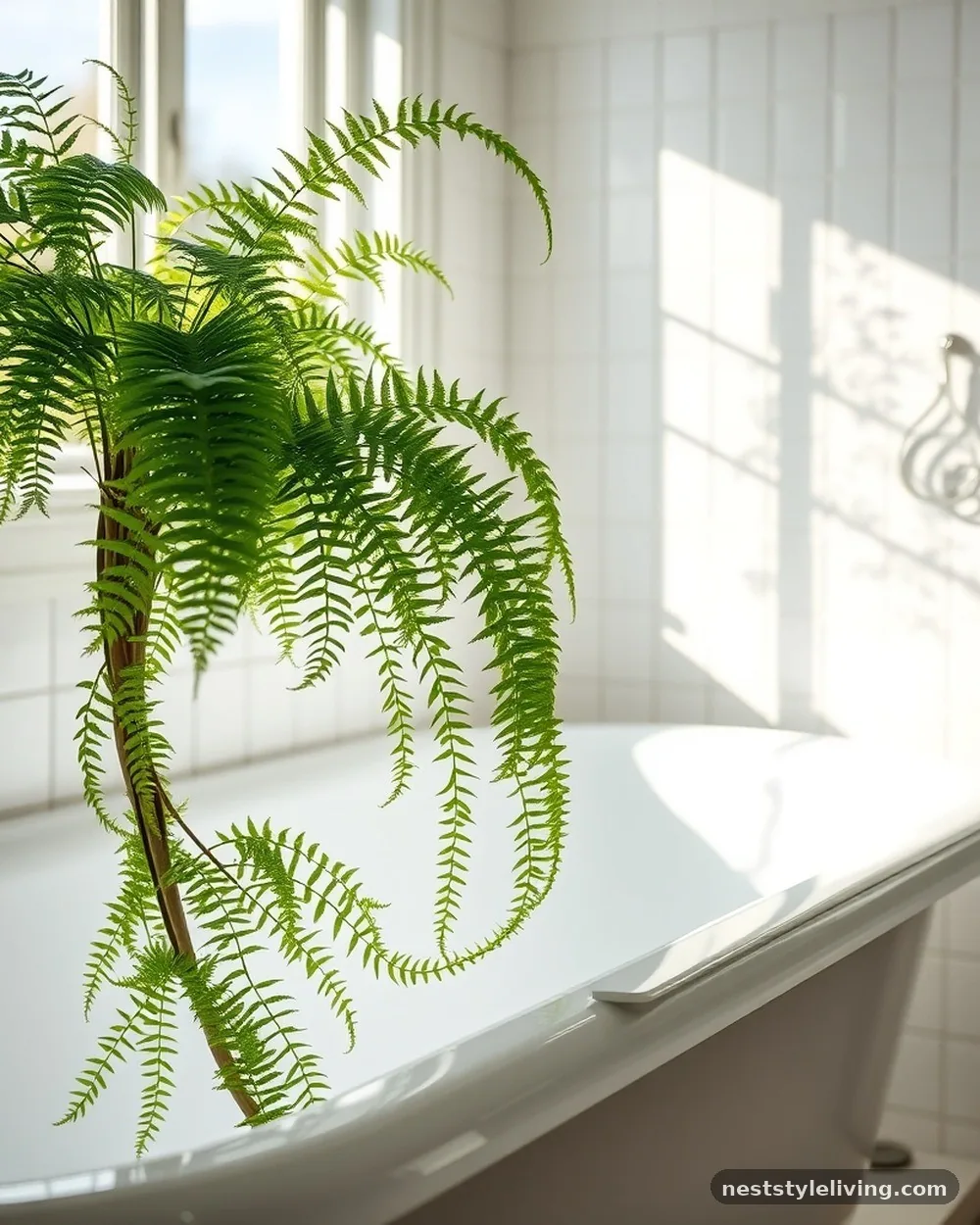
Ferns thrive in the humid, low-light environment of a bathroom, making them the ideal choice for creating a spa-like atmosphere. The feathery, delicate leaves of a Maidenhair or Bird’s Nest Fern provide a striking visual contrast to the hard, reflective surfaces of mirrors, glass, and tile.
Placing them on the edge of a vanity or atop a bathtub ledge softens the entire room, turning a utility space into a relaxing retreat. The moisture-retaining nature of these plants means you’ll spend less time worrying about their hydration, as they effectively “breathe” in the steam from your shower.
Select a spot that receives indirect light, such as a windowsill or a shelf near the vanity. If your bathroom lacks a window, rotate your plants with a counterpart in a brighter room every two weeks to keep them healthy and vibrant.
6. Minimalist Sansevieria in Modern Entryways
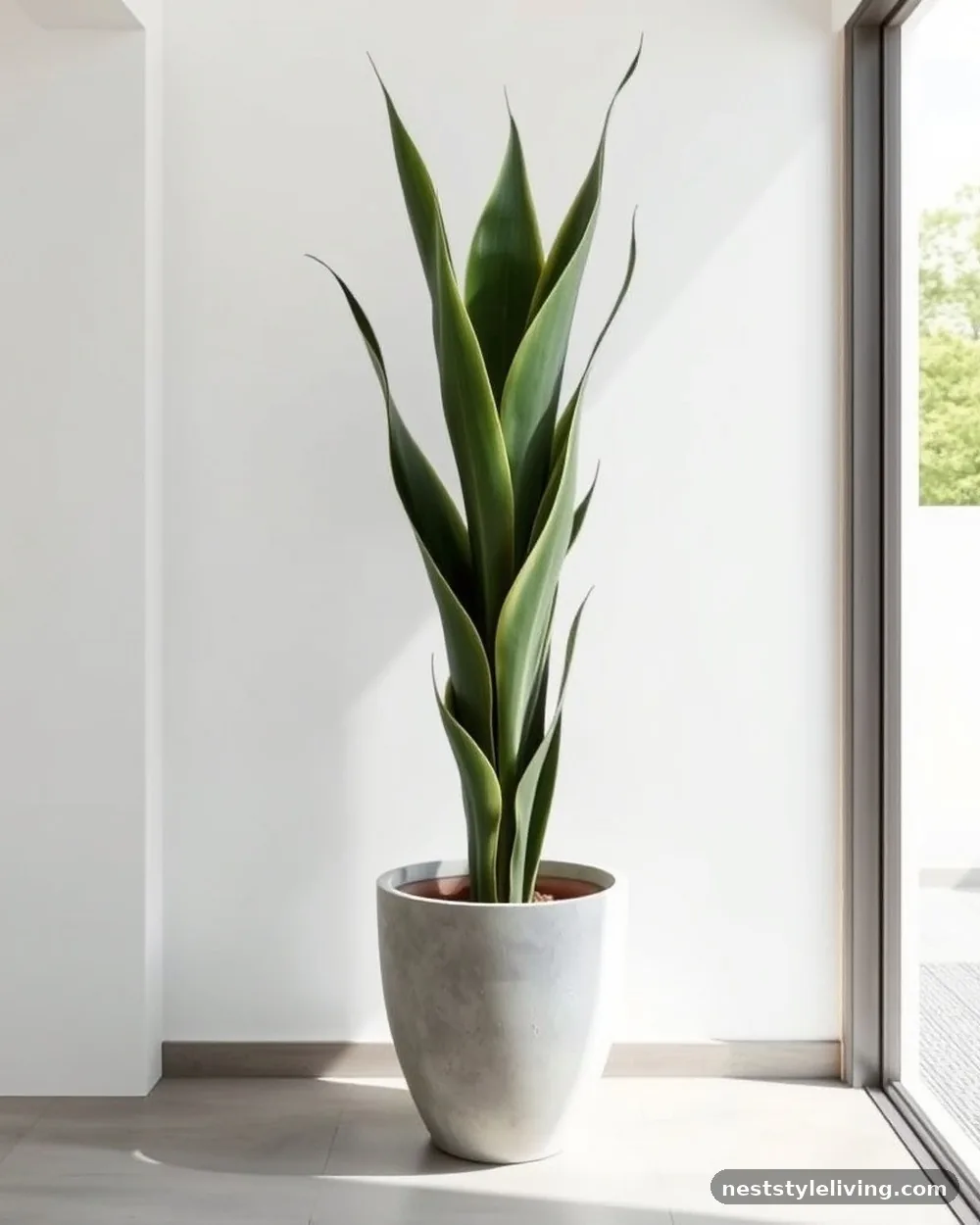
For a clean, sophisticated look in an entryway, the architectural silhouette of a Sansevieria—or Snake Plant—is unmatched. Its stiff, upright, sword-like leaves demand very little space, making it perfect for narrow corridors or small entry consoles.
The dramatic, vertical lines of the plant complement modern interior design, offering a sharp contrast to softer decor elements like rugs or wall art. Because it is incredibly hardy and tolerant of low light, it serves as a reliable greeter that stays fresh-looking even in entryways that lack consistent natural illumination.
Place the plant in a matte black or polished concrete pot to reinforce a contemporary, minimalist aesthetic. Wipe the leaves with a damp cloth once a month to remove dust, ensuring they maintain their deep green luster and structural impact.
7. Oversized Monstera Deliciosa in the Living Room
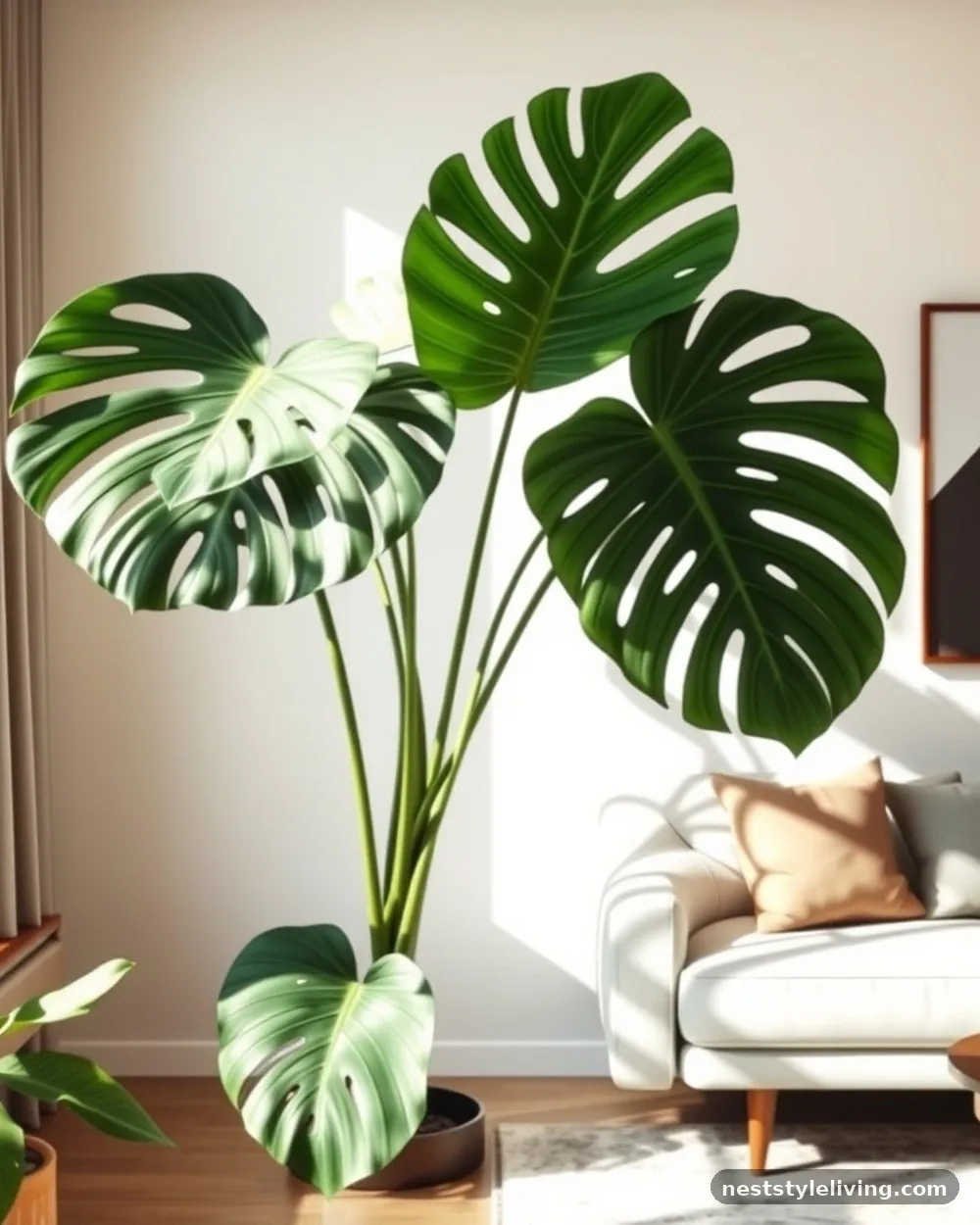
The iconic fenestrated leaves of a Monstera Deliciosa create an instant jungle vibe in any living room. When given space to spread out, this plant becomes a massive, sprawling presence that defines the room’s character.
Its glossy, dark green leaves add a sense of luxury and depth, making it a standout feature against minimalist or mid-century modern furniture. Because of its wide spread, position it away from high-traffic walkways to prevent the leaves from being brushed against or damaged, allowing the plant to reach its full, majestic scale.
Use a moss pole to support the stems as they grow, which encourages larger leaf production and helps the plant maintain an upright, healthy posture. If the leaves become too wide for your space, prune the older, smaller leaves at the base to encourage the plant to focus its energy on new, larger growth.
8. Wall-Mounted Planters in Home Offices
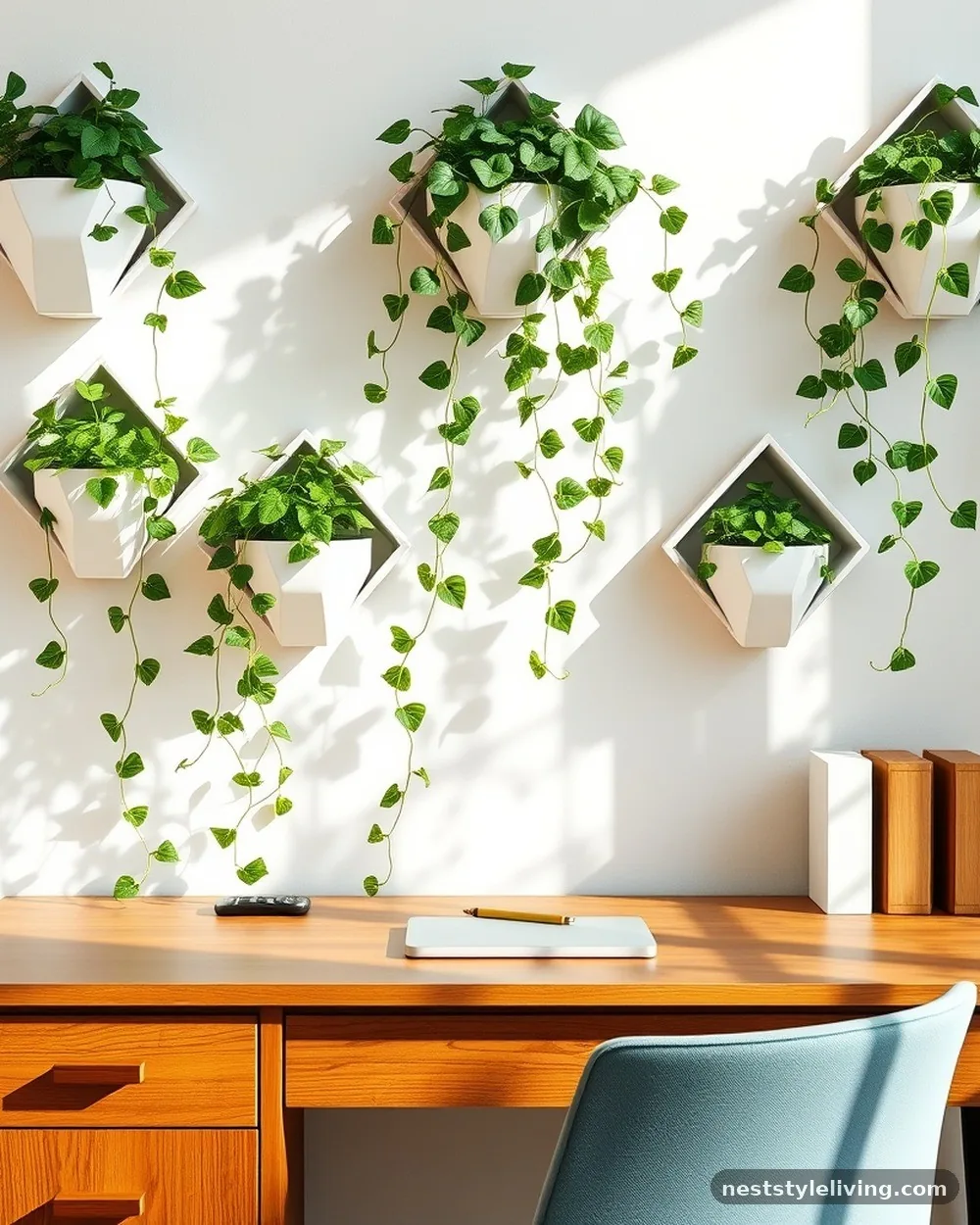
Wall-mounted planters turn blank office walls into living, breathing canvases, reducing visual stress while you work. By using geometric wall pockets or ceramic wall-mounted half-pots, you can create a vertical garden that doesn’t interfere with your desk space.
Trailing plants like Silver Pothos or English Ivy look particularly effective here, as they grow down the wall, adding a sense of movement to an otherwise static workspace. This setup is excellent for fostering a calm, focused environment, as the presence of green leaves has been shown to improve concentration and mood during long hours of productivity.
Ensure your wall planters are secured with appropriate anchors for the weight of the wet soil. Choose plants that have similar light requirements and group them together to maintain a consistent watering schedule, simplifying the care process in your busy office environment.
9. Herb-Filled Window Boxes in Kitchens
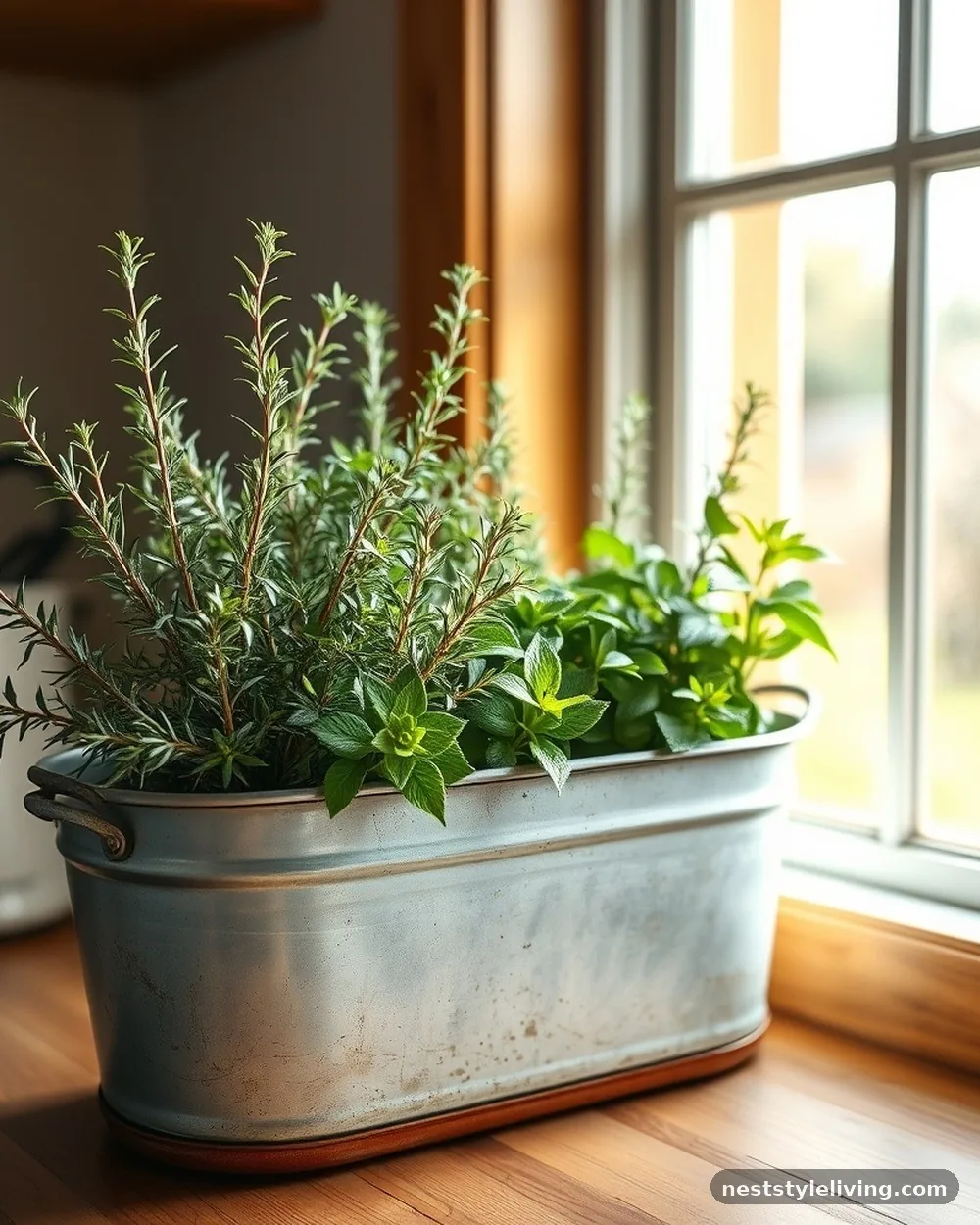
Window boxes are not just for the exterior; bringing them inside creates a lush, functional focal point in a kitchen window. Filling a wooden or galvanized metal trough with culinary herbs like rosemary, thyme, and mint provides a constant source of fresh ingredients.
The uniform, linear arrangement of the plants creates a tidy, organized appearance that works well in both farmhouse and modern kitchens. Beyond their utility, the varying shades of green and the woody textures of the herbs add natural complexity to the window area, bridging the gap between your home and the outdoors.
Place the window box on a tray or a waterproof liner to catch any drainage, protecting your windowsill from water damage. Ensure the window faces south or west to provide the intense light these herbs need to remain flavorful and bushy rather than leggy and weak.
10. Driftwood-Mounted Air Plants in Living Areas
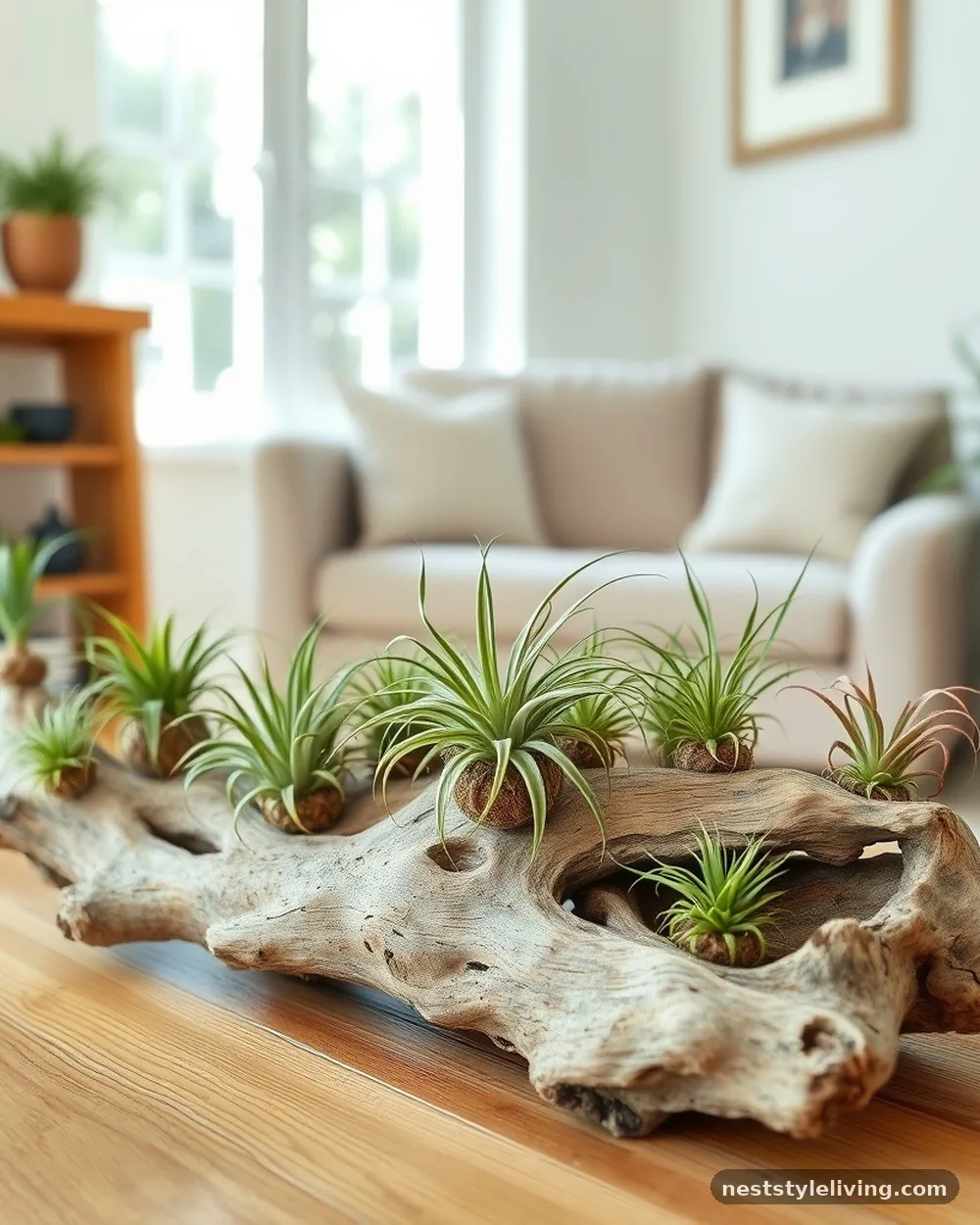
Air plants, or Tillandsia, offer a unique, soil-free way to decorate that feels both sculptural and ethereal. Mounting them on pieces of weathered driftwood or interesting stones allows you to place them on coffee tables, bookshelves, or mantels without the need for traditional pots.
The silver-green, wispy foliage provides a soft, organic texture that pairs perfectly with rustic or coastal decor. Because they don’t require soil, they are exceptionally clean and easy to maintain, making them a great choice for areas where you want to avoid the mess of potting mix or heavy planters.
Mist your air plants with a spray bottle two to three times a week, or soak them in a bowl of water for twenty minutes once a week. After soaking, gently shake off excess water and let them dry completely upside down before placing them back on their mounts to prevent rot.
11. Clustered Succulents on Coffee Tables
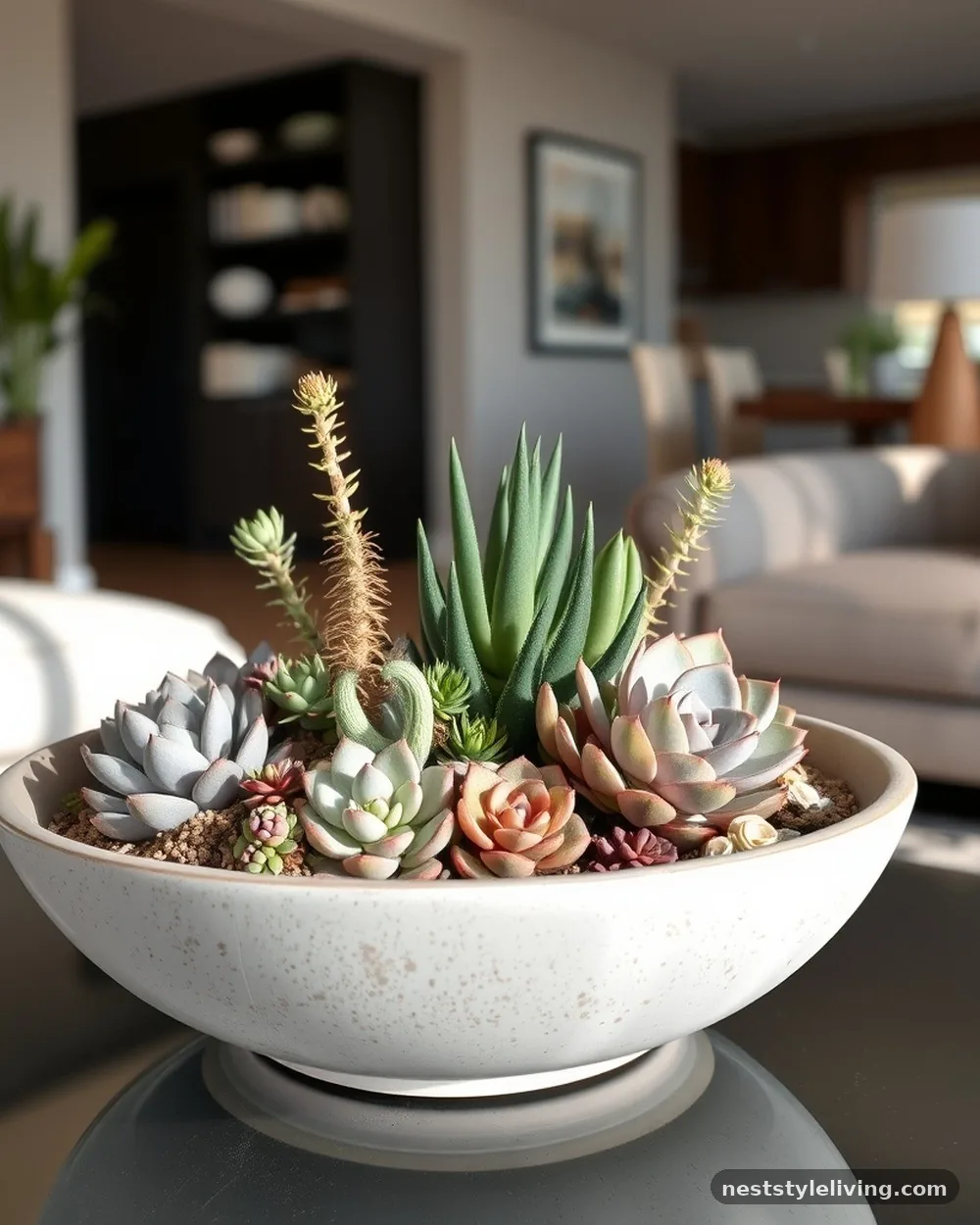
Succulents are the masters of variety, offering an endless array of shapes, colors, and textures that look fantastic when clustered in a shallow, wide bowl on a coffee table. Mixing Echeveria, Haworthia, and Sedum in a single vessel creates a miniature, desert-inspired landscape that serves as a conversation piece.
The low-profile nature of these arrangements ensures they don’t block your view across the room, making them ideal for central seating areas. The geometric patterns of the succulents add a layer of sophisticated, natural detail that complements everything from velvet sofas to glass-topped tables.
Use a specialized succulent potting mix that drains very quickly to prevent the roots from sitting in moisture. Place the arrangement in a spot that receives at least six hours of bright, indirect sunlight daily to keep the succulents from stretching out and losing their compact, rosette shapes.
12. Large Palms for Tropical Bedroom Retreats
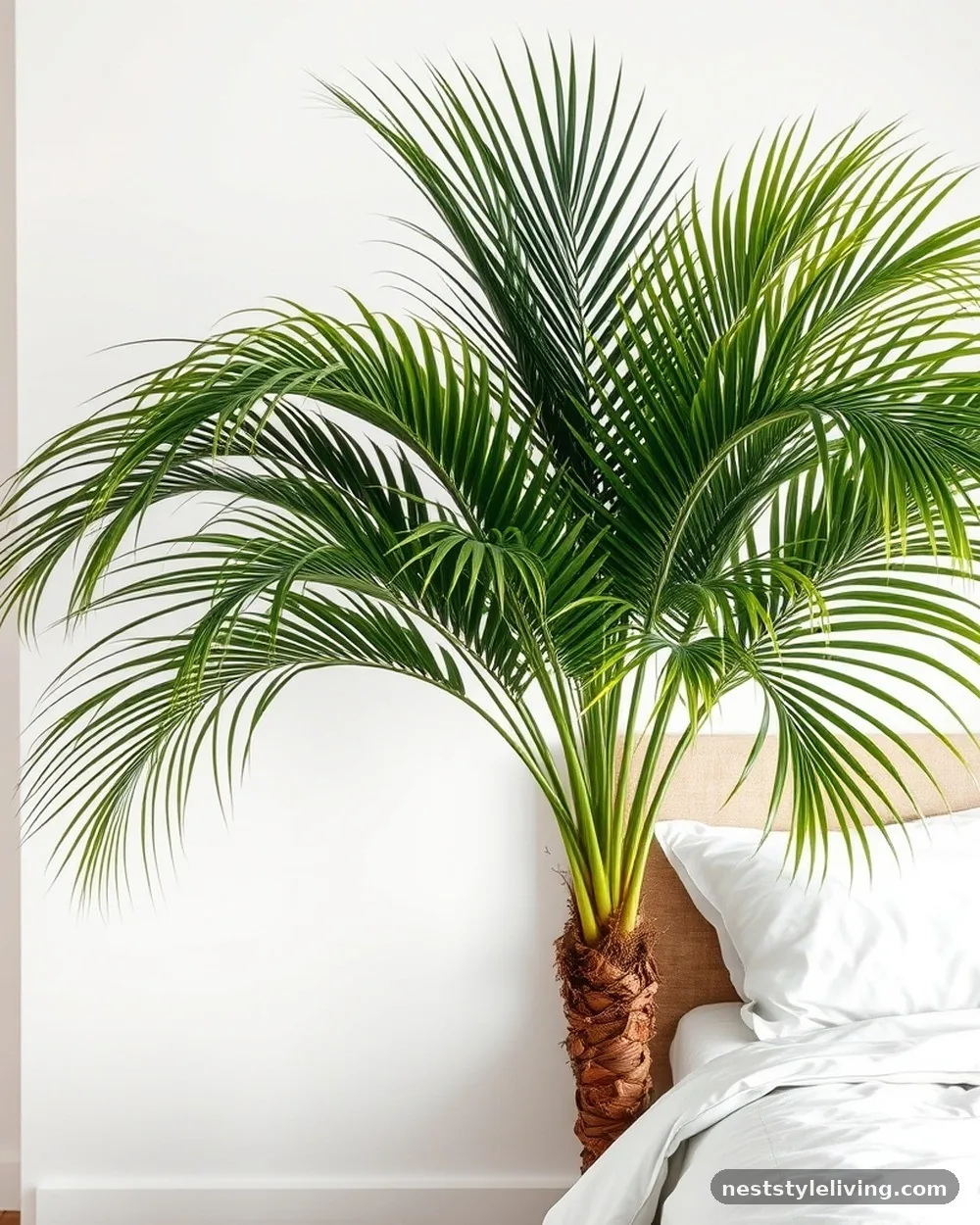
Bringing a large, feathery palm into the bedroom instantly transforms the space into a tranquil, tropical retreat. The long, arching fronds of a Majesty or Kentia Palm soften the corners of a room and create a sense of movement, even in the absence of a breeze.
Their presence adds a layer of organic texture that pairs beautifully with soft bedding and natural textiles like linen or cotton. Because palms are excellent at purifying the air, they contribute to a healthier sleeping environment, providing a functional benefit alongside their aesthetic appeal.
Keep the palm away from direct, harsh afternoon sun, which can scorch the delicate fronds, and ensure it is placed in a corner where it won’t be cramped by bedroom furniture. Regularly mist the foliage with water to increase humidity, which helps prevent the tips of the leaves from turning brown in the drier air of an indoor bedroom.
Frequently Asked Questions
How do I choose the right plant for a low-light room?
Focus on species that naturally occur in the lower levels of forest canopies, such as Snake Plants, ZZ Plants, or Pothos. These plants have adapted to thrive in filtered light and are generally more resilient to the lower intensity found in interior spaces.
What is the best way to prevent pests on indoor plants?
Maintain good airflow around your plants and avoid overwatering, as damp soil is a primary attractant for fungus gnats. Regularly wipe down leaves with a damp cloth to remove dust, which also helps you spot any early signs of spider mites or aphids before they spread.
Can I safely keep plants in a bedroom?
Absolutely, as plants are safe for bedrooms and can contribute to better air quality. Contrary to the myth that plants consume too much oxygen at night, the amount they use is negligible, and they provide a calming, psychological benefit that promotes relaxation before sleep.
How often should I fertilize my houseplants?
Fertilize only during the growing season, which is typically spring and summer, using a balanced, water-soluble fertilizer at half the recommended strength. Avoid fertilizing in the autumn and winter when the plant’s metabolism slows down, as this can lead to salt buildup in the soil.
How do I know when it is time to repot a plant?
Look for signs such as roots growing out of the drainage holes, water running straight through the pot without soaking in, or the plant showing stunted growth despite being in the right light. These are clear indicators that the plant has outgrown its current container and needs more space to thrive.
Conclusion
Integrating these rooms with plants ideas for a fresh natural look is a rewarding endeavor that bridges the gap between your living space and the natural world. Whether you choose to anchor a room with a large, architectural specimen or add subtle movement with trailing vines, the addition of greenery brings a sense of vitality that artificial decor simply cannot replicate. Start by assessing the light conditions in your favorite rooms and selecting one or two plants that fit your specific environment.
As you become more comfortable with their care, you can gradually expand your collection, creating a cohesive, healthy, and visually stunning home. We invite you to experiment with these arrangements and observe how they transform the atmosphere of your space, making your home feel more connected to nature every single day.